Pakistan’s Economic and Security Landscape: Capacity for Military Conflict
Introduction
Pakistan's current economic and security situation presents a complex picture of a nation facing multiple challenges.
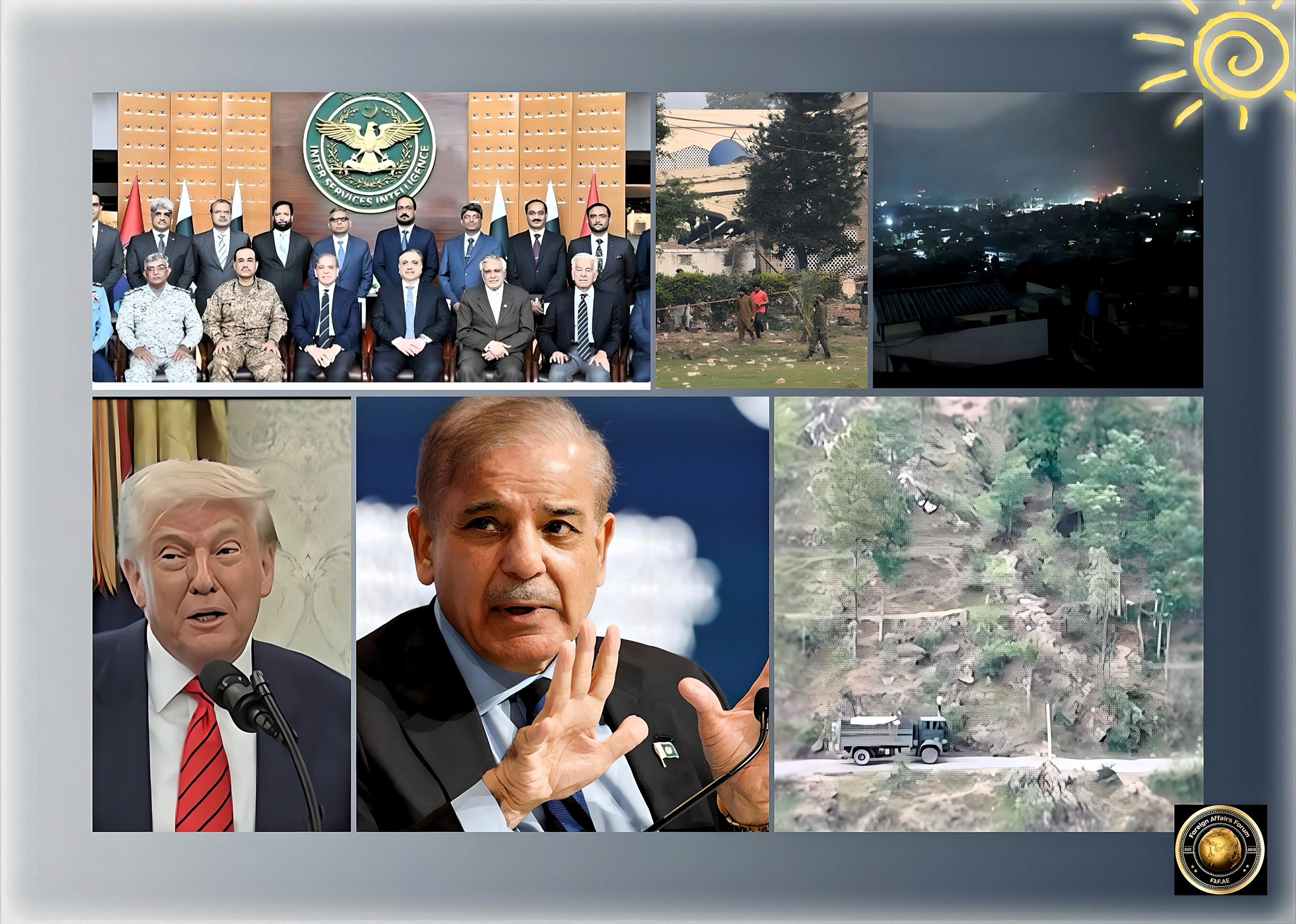
FAF analysis examines Pakistan’s financial capacity to engage in a potential conflict with India, its ongoing IMF commitments, security challenges, and alleged links to terrorism.
Economic Resources and War-Funding Capacity
Pakistan’s economy shows signs of stabilization but remains constrained by significant limitations that would hamper its ability to finance a full-scale conflict with India.
Current Economic Indicators
Pakistan’s GDP stood at $337.91 billion in 2023, with modest growth projections of 2.7% for the fiscal year ending June 2025.
While this represents an improvement from 2.5% in the previous year, economic growth remains tepid and insufficient to generate robust government revenues.
The economy is showing some positive signs with easing inflation, which fell to 1.5% in February 2025, prompting the central bank to reduce its policy rate to 12%.
Despite these improvements, Pakistan’s government debt, which was 80% of GDP in 2024, remains problematic.
While this represents a decrease from 91%, it still indicates a heavily indebted economy with limited fiscal space.
Foreign exchange reserves, critical for international payments, including military imports, stood at only $16.04 billion as of January 31, 2025.
Defense Budget vs. Economic Capacity
Pakistan’s coalition government has approved an 18% increase in defense spending for the upcoming 2025-26 budget, pushing it above Rs 2.5 trillion.
This significant increase was reportedly due to heightened tensions with India.
However, given Pakistan’s overall economic constraints, even this enlarged defense budget would likely be insufficient to sustain a prolonged, high-intensity conflict with India, which maintains a substantially larger economy and military budget.
IMF Loan Situation and Financial Dependencies
Pakistan has repeatedly turned to the IMF for financial support, indicating persistent economic vulnerabilities.
Current IMF Programs
In September 2024, the IMF approved a 37-month Extended Arrangement under the Extended Fund Facility (EFF) for Pakistan, amounting to approximately US$7 billion, with an immediate disbursement of about US$1 billion.
In March 2025, the IMF recently agreed with Pakistan on an additional $1.3 billion loan program focused on climate change adaptation. It also reviewed the existing bailout to unlock another $1 billion potentially.
Outstanding Loan Obligations
As of March 31, 2025, Pakistan’s outstanding IMF loans totaled SDR 6,229,520,839, consisting of SDR 2,376,937,500 in Stand-by/Credit Tranche and SDR 3,852,583,339 in Extended Fund Facility arrangements.
In 2025, the country made repayments of SDR 409,624,999, with interest charges of SDR 67,753,707.
IMF Conditions and External Financing Challenges
The IMF programs have strict conditions requiring fiscal consolidation, tax reforms, and structural economic changes.
Prime Minister Shehbaz Sharif acknowledged that implementing these conditions would only be possible with support from China and Saudi Arabia.
Pakistan faces significant external financing challenges, with over $22 billion in external debt repayments due. Diverting resources to a considerable military conflict would likely trigger a sovereign default.
Security Challenges on Multiple Fronts
Pakistan is currently dealing with significant security threats that already strain its military and financial resources.
Afghanistan Border Conflict
Since 2024, Pakistan has been engaged in escalating border clashes with Afghanistan, involving cross-border airstrikes and exchanges of gunfire.
In April 2025, tensions intensified with Pakistani forces launching several airstrikes targeting suspected militant hideouts in eastern Afghanistan, particularly in Paktika and Khost provinces.
These operations have resulted in numerous casualties and diplomatic tensions with Afghanistan’s Taliban-led government.
Balochistan Insurgency
The Baloch insurgency has intensified sharply since early 2025, with sophisticated attacks demonstrating the groups’ growing capabilities.
In March 2025, the Baloch Liberation Army-Jeeyand faction (BLA-J) hijacked the Jaffar Express, resulting in over 400 passengers being taken hostage and at least 26 deaths.
Baloch militant groups have conducted suicide bombings and temporarily seized territories, particularly targeting Chinese nationals and China-Pakistan Economic Corridor (CPEC) projects.
These security challenges represent significant drains on Pakistan’s resources and stability, further complicating any potential military confrontation with India.
Alleged Support for Terrorist Organizations
Pakistan has faced persistent international allegations regarding its links to various terrorist organizations.
Historical Accusations
In 2011, Osama bin Laden was located and killed by US forces in Abbottabad, Pakistan, raising serious questions about the potential safe harbor provided to the Al-Qaeda leader.
The US Intelligence Community subsequently analyzed materials recovered from bin Laden’s compound, which were later partially released to the public.
The Indian government has repeatedly claimed that Dawood Ibrahim, wanted for the 1993 Mumbai serial blasts, “has bases in Pakistan though he keeps shifting his location from time to time.”
According to the Indian government’s statements to their parliament, they have provided Pakistan with details, including passports and reported addresses.
ISI Activities and Terrorist Group Funding
Lashkar-e-Toiba (LeT), implicated in various terrorist attacks including those in Kashmir, is reportedly “based in Muridke near Lahore in Pakistan” and “receives considerable financial, material and other forms of assistance from the Pakistan government, routed primarily through the ISI.”
The ISI is alleged to be the primary source of LeT’s funding, with additional financial support coming from sources in Saudi Arabia and fundraising among Pakistani diaspora communities.
Dawood Ibrahim, ISI, and the 1993 Bombay Bomb Blasts
Dawood Ibrahim’s Role in the 1993 Bombay Bombings
Dawood Ibrahim, the leader of the D-Company crime syndicate, is widely recognized as the mastermind behind the 1993 Bombay (now Mumbai) bombings.
These coordinated attacks resulted in 257 deaths and over 1,400 injuries, marking one of the deadliest terror incidents in India’s history.
The bombings were meticulously planned and executed by Dawood and his associates, including Tiger Memon and Yakub Memon.
Harboring in Pakistan and ISI Involvement
After the bombings, Dawood Ibrahim fled India and eventually established his base in Karachi, Pakistan.
Multiple credible sources, including Indian government dossiers, intelligence reports, and investigative journalism, indicate that Dawood has enjoyed protection and sanctuary in Pakistan, specifically under the auspices of the Inter-Services Intelligence (ISI).
Protection by ISI
Evidence suggests that the ISI provided Dawood with shelter and protection in exchange for a share of his criminal proceeds (reportedly at least 30% to fund terror activities).
This arrangement allowed Dawood to operate with impunity in Pakistan, invest in real estate, and continue his criminal and terror-related enterprises.
Official Pakistani Involvement
Former Pakistani President Ghulam Ishaq Khan reportedly confronted then-Prime Minister Nawaz Sharif with proof of ISI’s involvement in the bombings and the harboring of key accused, including the Memon brothers, as government guests in Karachi.
ISI’s Role in the Bombings
Indian and independent sources assert that the ISI pressured Dawood and the D-Company to carry out the bombings, partly as retaliation for communal riots in India and as part of a broader anti-India agenda.
The ISI allegedly facilitated the smuggling of explosives and provided logistical support for the attacks.
Dawood Ibrahim, the mastermind of the 1993 Bombay bombings, was indeed harbored in Pakistan after the attacks, with substantial evidence indicating the involvement and protection of the ISI.
The ISI not only provided Dawood with sanctuary but also leveraged his criminal network to further its own strategic and terror-related goals against India.
Despite repeated denials by the Pakistani government, multiple independent and official sources corroborate this nexus between Dawood Ibrahim and the ISI.
Conclusion
Pakistan lacks the economic resources necessary to fund a full-fledged war against India without facing severe financial consequences. This would also affect India's economic situation.
The country’s high debt levels, limited foreign reserves, existing security burdens, and dependence on international financial institutions like the IMF significantly constrain its ability to mobilize for a significant conflict.
The ongoing security challenges from Afghanistan and Balochistan already stretch Pakistan’s military and financial resources thin.
Additionally, allegations of harboring terrorists and supporting militant groups further complicate Pakistan’s international standing and relationships.
While Pakistan has increased its defense budget significantly, given its overall economic situation, this appears more defensive than offensive.
The financial realities suggest Pakistan could not sustain a prolonged military conflict with India without triggering economic collapse or defaulting on its international obligations.