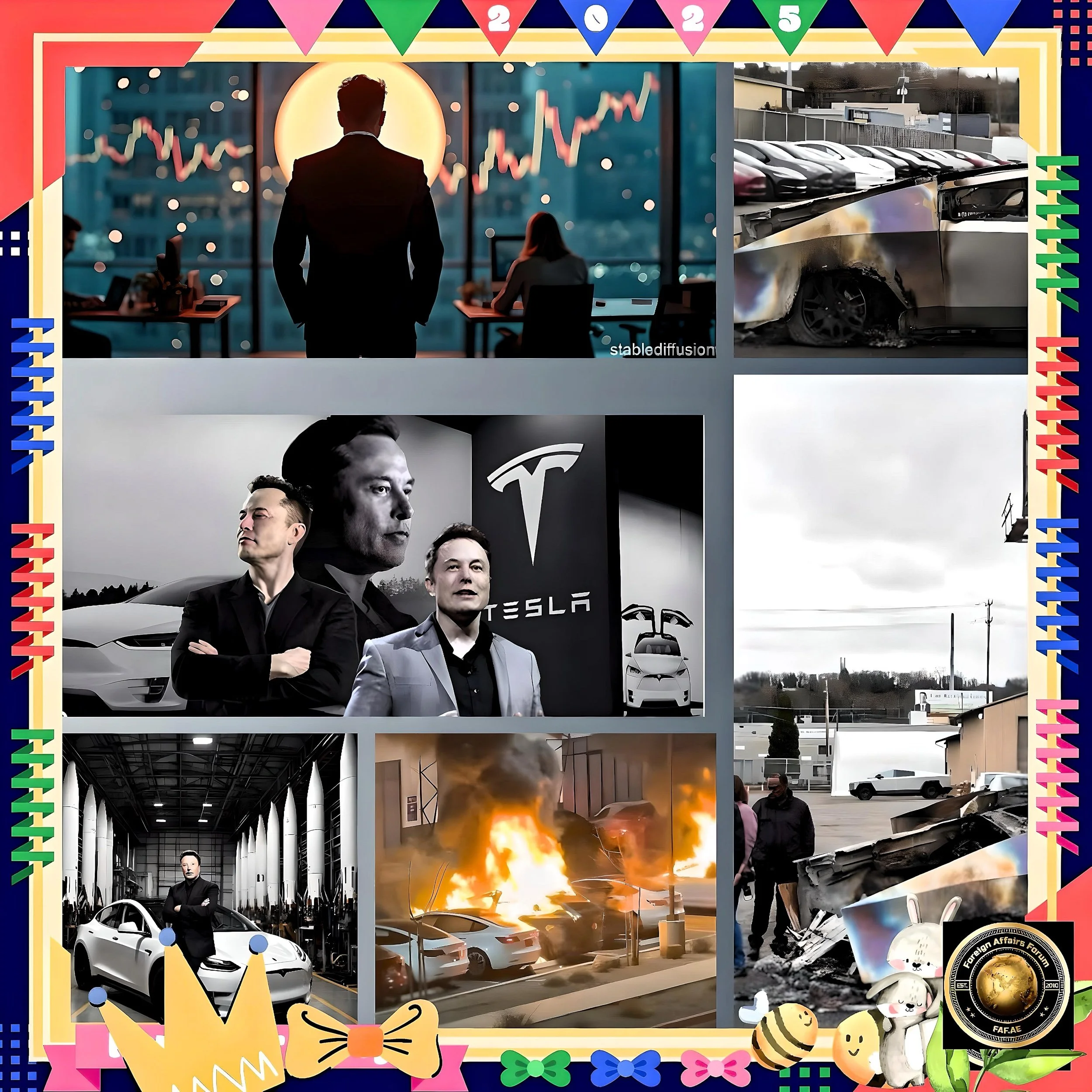
Elon Musk’s Precipitous Fall: From Visionary Innovator to Polarizing Figure
Introduction
Elon Musk’s trajectory from 2024 to 2025 represents one of the most dramatic reversals of fortune in modern business history.
Once hailed as a visionary entrepreneur who revolutionized electric vehicles and space exploration, Musk has experienced unprecedented wealth accumulation and a staggering financial decline within months.
His net worth peaked at a historic $500 billion in December 2024, making him the first individual to reach such heights before plummeting by $132 billion in early 2025.
FAF analysis shares that Musk's dramatic decline coincides with his increasingly controversial political involvement and divisive public statements, raising critical questions about whether his salvation lies in returning to innovation or doubling down on political influence.
The Peak and the Precipice
Musk’s Financial Rollercoaster
Record-Breaking Wealth Accumulation
Elon Musk’s ascent to unprecedented wealth represented a remarkable achievement in modern capitalism.
In December 2024, the Bloomberg Billionaires Index reported that he became the first person in history to reach a net worth of $500 billion.
This milestone was driven primarily by his substantial holdings in Tesla, which owns approximately 13% of the company, and SpaceX, which holds about 42% through a trust.
The surge was particularly dramatic considering that his net worth stood at $229 billion at the start of 2024, meaning he gained $245 billion in a year—a 112% increase.
The financial success was built on Tesla’s remarkable market performance, with the company becoming the world’s most valuable carmaker in July 2020.
Tesla’s market capitalization reached over $1.5 trillion following the 2024 US election, reflecting investor optimism about the regulatory environment under a Trump administration that could benefit Tesla’s autonomous vehicle initiatives.
SpaceX’s valuation also contributed significantly, reaching $350 billion by December 2024, with the company securing billions in government contracts from NASA and positioning itself as a leader in commercial spaceflight.
The Dramatic Decline
However, Musk’s financial fortunes experienced a dramatic reversal in early 2025.
By March 2025, his net worth had plummeted to approximately $301 billion, representing a loss of $132 billion since the beginning of the year.
Musk lost $29 billion on a single day in March, marking one of the most significant single-day wealth destructions in history.
This decline was primarily attributed to Tesla’s stock performance, which fell nearly 40% during this period, erasing approximately $800 billion in market value.
Musk’s wealth fluctuated throughout 2025, with various sources reporting different figures.
As of May 2025, Bloomberg’s Billionaires Index estimated his net worth at $381 billion, while Forbes placed it at $424.7 billion.
Despite these fluctuations, Musk remained the world’s richest person, maintaining a substantial lead over competitors like Oracle’s Larry Ellison, whose net worth was approximately $235 billion.
From Innovator to Agitator
The Transformation of Public Perception
The Charming Visionary Era
Elon Musk’s initial prominence was built on his reputation as a visionary entrepreneur who tackled humanity’s most significant challenges.
His work with Tesla revolutionized the electric vehicle industry, while SpaceX achieved groundbreaking advances in reusable rocket technology and commercial spaceflight.
During this period, Musk was widely viewed as a charismatic leader who combined ambitious goals with practical execution, earning him recognition as Time magazine’s Person of the Year in 2021.
His self-described “cash-poor” status characterized his public persona during this era despite his massive wealth and commitment to using his resources for humanity’s benefit, particularly space exploration.
Musk defended his wealth accumulation by arguing that he was gathering resources for humanity’s expansion into space. This narrative resonated with many supporters who saw him working toward noble goals rather than personal enrichment.
The Controversial Political Figure
Musk’s transformation into a polarizing political figure accelerated significantly after he acquired Twitter for $44 billion in October 2022.
The platform, which he later rebranded as X, became a vehicle for his increasingly controversial statements and political positions.
Analysis by The Conversation in early 2025 described Musk’s evolution within the context of “the libertarian to the alt-right pipeline,” noting his shift from politically liberal positions to authoritarian agitation.
His political controversies intensified dramatically following his support for Donald Trump’s 2024 presidential campaign, to which he contributed approximately $300 million.
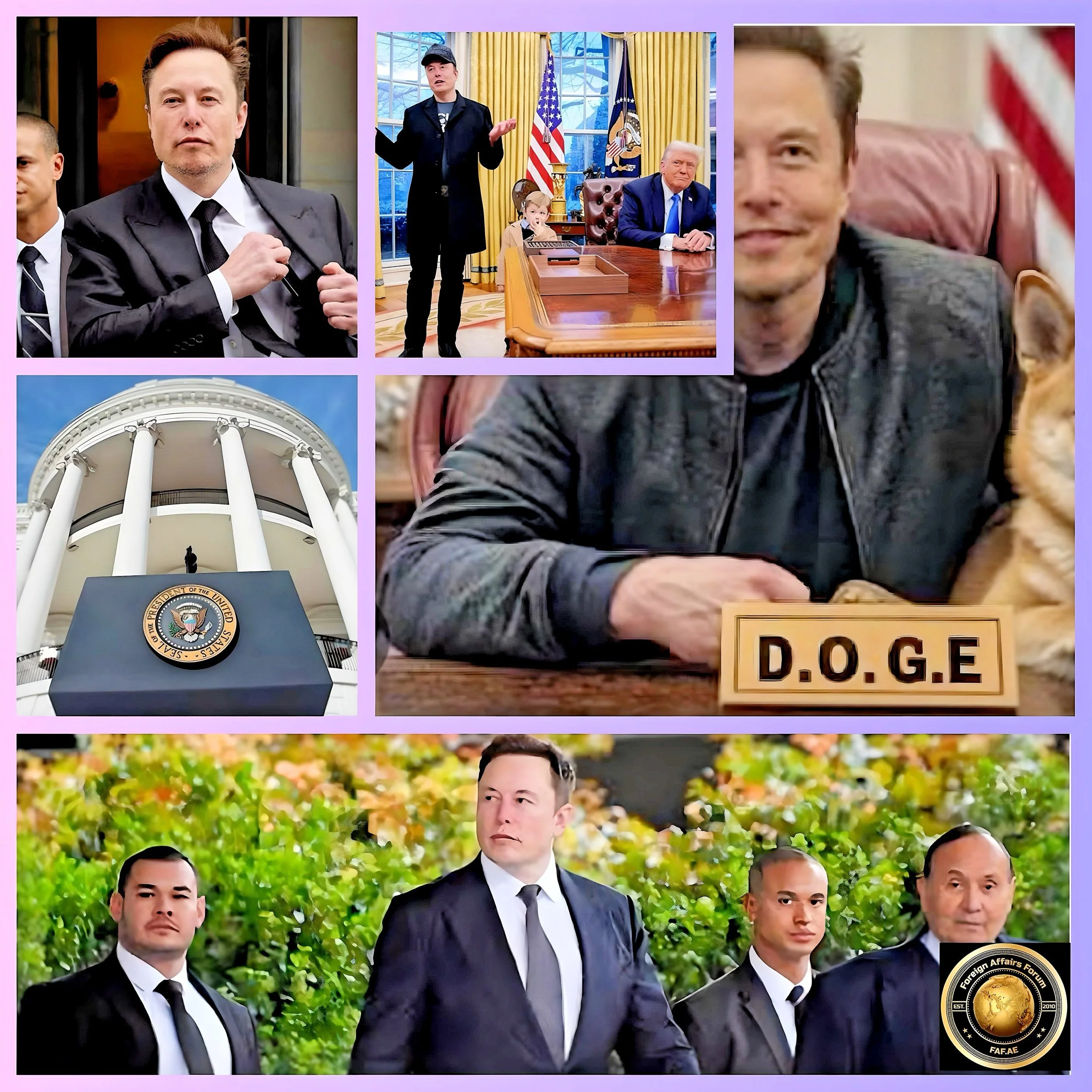
After Trump’s victory, Musk was appointed the de facto head of the Department of Government Efficiency (DOGE), which granted him significant influence over federal agencies and spending.
This role has generated substantial criticism, with reports indicating that DOGE has used artificial intelligence to surveil federal communications for hostility to Trump’s agenda.
International Political Interference
Musk’s political activities extended beyond US borders, creating international controversies that further damaged his reputation.
His endorsement of Germany’s far-right Alternative for Germany (AfD) party ahead of the 2025 national elections sparked widespread criticism and had immediate business consequences.
At a campaign event for the AfD, Musk controversially stated, “There is too much focus on past guilt, and we need to move beyond that,” comments that Israeli Holocaust memorial officials condemned.
His social media platform X became a conduit for controversial content, with antisemitic and racist tweets spiking dramatically after his acquisition.
The Anti-Defamation League reported more than 1,200 antisemitic tweets and retweets in just the first 24 hours after his purchase, while The Washington Post documented a 500% increase in the use of racial slurs.
Musk himself faced accusations of promoting antisemitic content, including a November 2023 incident where he agreed with an antisemitic tweet, later acknowledging it as a mistake.
The Business Backlash
When Politics Meets the Market
Tesla’s Global Sales Decline
The most tangible consequence of Musk’s political controversies has been the dramatic impact on Tesla’s business performance across global markets.
The data reveals a stark correlation between Musk’s political activities and consumer behavior.
In Germany, where Musk endorsed the far-right AfD party, Tesla registrations plummeted by 76% in February 2025 compared to the previous year, even as overall electric vehicle registrations surged by nearly a third.
Similar patterns emerged across other key markets. France experienced a 45% decline in Tesla sales during the first two months of 2025, while Australia saw sales drop by more than a third in the four months following Trump’s reelection.
In California, traditionally Tesla’s strongest market and a bellwether for electric vehicle adoption, Tesla sales fell for the fifth consecutive quarter, with 2024 registrations dropping by 11.6%.
These declines occurred against the growing global adoption of electric vehicles, suggesting consumers avoided Tesla rather than rejected electric cars.
The phenomenon was further evidenced by reports of Tesla owners placing oppositional stickers on their vehicles with slogans opposing Musk’s political shift.
Consumer Boycotts and Protests
The business impact extended beyond sales figures, including active consumer resistance and protests.
Reports emerged of sabotage attacks on Tesla vehicles, charging stations, and production facilities, prompting President Trump to condemn these incidents as “domestic terrorism.”
The severity of the situation was highlighted when Trump felt compelled to make an unprecedented public endorsement of Tesla by purchasing a Model S for White House staff use, an action interpreted as an attempt to shore up support for Musk’s beleaguered company.
Consumer sentiment research revealed the depth of Tesla's challenge.
Many of the company’s traditionally eco-conscious, politically liberal customer base began actively avoiding the brand due to Musk’s political associations.
This represented a fundamental threat to Tesla’s market position, as the company had built its brand primarily on environmental consciousness and progressive values that increasingly conflicted with Musk’s political trajectory.
Innovation Pipeline
The Potential for Redemption
Continuing Technological Advances
Despite the political controversies, Musk’s companies continue to pursue ambitious technological innovations that could potentially restore his reputation and business performance.
Tesla’s development pipeline includes several groundbreaking projects that showcase the company’s continued commitment to innovation.
The Tesla Bot unveiled at the “We, Robot” event in October 2024, represents an ambitious entry into humanoid robotics designed to handle dangerous or mundane tasks.
The autonomous vehicle program remains a cornerstone of Tesla’s innovation strategy, with Musk pushing toward fully autonomous taxis, buses, and vans.
This technology could represent a fundamental shift in transportation and potentially justify Tesla’s high valuation relative to traditional automakers.
The company’s market capitalization of $845 billion in March 2025, despite selling only 1.8 million units compared to 44 million from the next nine largest automakers combined, reflects investor belief in these transformative technologies.
SpaceX continues to achieve remarkable milestones in space exploration and commercial spaceflight.
The company’s valuation reached $350 billion by December 2024, driven by successful missions, growing NASA contracts, and the expansion of the Starlink satellite internet service.
These achievements maintain SpaceX’s position as a leader in the commercial space industry and provide a foundation for Musk’s long-term vision of Mars colonization.
Emerging Ventures and Diversification
Musk’s newer ventures demonstrate his continued commitment to addressing fundamental challenges through innovation. xAI, his artificial intelligence company, represents an ambitious attempt to understand the universe through advanced AI systems.
Neuralink continues developing brain-computer interfaces that could revolutionize treatment for neurological conditions.
The Boring Company pursues tunnel infrastructure solutions for urban transportation challenges.
These diverse ventures provide multiple pathways for Musk to demonstrate continued innovation leadership.
Success in these areas could potentially overshadow political controversies and restore confidence in his business acumen.
The key question remains whether these innovations can develop and scale quickly enough to offset the ongoing damage from political activities.
The Political Double-Edged Sword
Government Influence and Contracts
Musk’s political involvement through DOGE provides opportunities and risks for his business empire.
His role in government efficiency initiatives could position his companies favorably for federal contracts and regulatory decisions.
SpaceX already holds billions in government contracts, and both SpaceX and its subsidiary Starlink could receive additional billions under the Trump administration
This government support could significantly boost Musk’s ventures and partially offset private sector challenges.
However, the political appointment also creates substantial conflicts of interest and ethical concerns.
Critics note that Musk’s companies have received extensive government support while he simultaneously advocates for reducing federal spending in other areas.
His financial disclosure requirements as a government official remain limited compared to cabinet members, raising transparency concerns about potential conflicts between his business interests and government role.
The Polarization Risk
Musk’s deep political involvement risks alienating customers and investors who oppose his political positions.
The data from European markets demonstrates how political associations can directly impact business performance in regions where his positions are particularly unpopular.
As Musk becomes more identified with specific political movements, he risks permanently associating his brands with those ideologies, potentially limiting their appeal to broader markets.
The polarization extends beyond consumer sentiment to include institutional investors and business partners.
Major advertisers have withdrawn from X following controversial content and Musk’s statements, demonstrating how political positions can have immediate business consequences.
This dynamic creates a challenging environment where business losses in other areas may offset political benefits in some areas.
Trump's efforts to save Musk?
Trump’s Efforts to Support Elon Musk
Financial and Global Image
Donald Trump has taken several concrete steps to bolster Elon Musk’s financial standing and global reputation, especially as Musk faced growing backlash and business headwinds in 2025.
These efforts span public endorsements, regulatory relief, government contracts, and diplomatic support abroad.
Public Endorsements and Image Rehabilitation
Direct Public Support
Amidst calls for boycotts and protests against Tesla due to Musk’s political activities, Trump issued highly public statements of support.
He announced plans to purchase a Tesla personally. He urged Republicans, conservatives, and “all great Americans” to support Musk and his companies, framing Musk as a patriotic figure under attack by political opponents.
Musk publicly thanked Trump for this endorsement, signaling a coordinated effort to shore up Musk’s domestic image.
Praise and Joint Appearances
As Musk stepped down from his government role, Trump called him “terrific” and announced a joint press conference at the White House, emphasizing that Musk “will always be with us, helping all the way.”
This public praise is designed to reassure investors and the public of Musk’s ongoing influence and value to the administration.
Regulatory and Legal Relief
Reduced Scrutiny
Under Trump’s administration, several government investigations into Musk’s businesses have been closed or stalled.
This includes dropping lawsuits against SpaceX and easing regulatory hurdles for Tesla’s autonomous vehicle ambitions.
Such actions have provided Musk’s companies a more favorable operating environment and reduced legal risks.
Expedited Regulatory Approvals
The Trump administration has actively worked to expedite regulatory approvals for Musk’s ventures, particularly in the autonomous vehicle space.
Federal regulatory complexities around full self-driving technology have been eased, and administration officials have publicly visited Tesla facilities to highlight support for Musk’s technological initiatives.
Government Contracts and International Support
Federal Contracts
SpaceX is now positioned as a major government contractor to secure billions in new federal contracts, including potential involvement in high-profile defense projects like the proposed “Golden Dome” missile defense system.
The administration’s support has also helped Starlink, Musk’s satellite internet venture, gain traction in international markets.
Diplomatic Backing Abroad
U.S. embassies and State Department officials have actively advocated for Starlink’s regulatory approval in foreign countries, explicitly mentioning the company and facilitating meetings with foreign leaders.
This diplomatic push has opened new markets for Musk’s businesses and enhanced his global business profile.
Mitigating Political Backlash
Framing Musk as a Victim of Unfair Attacks
Trump has repeatedly compared the political and legal challenges Musk faces to his own, casting both as victims of partisan attacks.
This narrative aims to rally conservative support and counter negative perceptions in the media and among consumers.
Continued Association Despite Resignation
Even as Musk resigned from his official government post, Trump emphasized that Musk would “always be with us,” signaling ongoing informal influence and support.
Financial Impact
Surge in Musk’s Wealth
Since endorsing Trump, Musk’s net worth has increased by approximately $170 billion despite recent volatility in Tesla’s stock.
This financial gain is attributed to the regulatory and contractual advantages Musk’s companies have received under the Trump administration and improved business prospects for SpaceX and xAI.
Trump’s support for Musk has been multifaceted—combining public endorsements, regulatory and legal relief, expanded government contracts, and international advocacy.
These efforts have directly benefited Musk’s finances and are designed to rehabilitate his image amid controversy, even as Musk steps back from formal government roles.
Conclusion
Innovation or Politics as Salvation
Elon Musk stands at a critical juncture where his future success depends on navigating the tension between his roles as an innovator and political figure.
The evidence suggests that innovation offers a more promising path to sustained success and reputation recovery.
His companies’ technological achievements demonstrate genuine value creation and market leadership, providing a foundation for long-term growth regardless of political cycles.
The correlation between his political activities and business performance decline indicates that continued political involvement carries significant risks.
Tesla’s sales declines in key markets, consumer boycotts, and the broader backlash against his political positions suggest that doubling down on politics could further damage his business empire.
The global nature of his companies requires broad appeal across diverse markets and political systems, making polarizing political positions particularly costly.
However, Musk’s path forward likely requires a careful balance rather than completely abandoning either sphere.
His government role through DOGE provides opportunities to secure favorable conditions for his companies, but the long-term value creation will ultimately depend on the success of his innovative ventures.
The key to Musk’s salvation lies in refocusing primary attention on technological innovation while managing political involvement to minimize business disruption.
Success in emerging technologies like autonomous vehicles, space exploration, and artificial intelligence could restore his reputation as a visionary leader, while political controversies risk permanently damaging the brands he has spent decades building.