Federal Appeals Court Temporarily Reinstates Trump Tariffs: Legal Precedent, Judicial Authority, and Constitutional Implications
Introduction
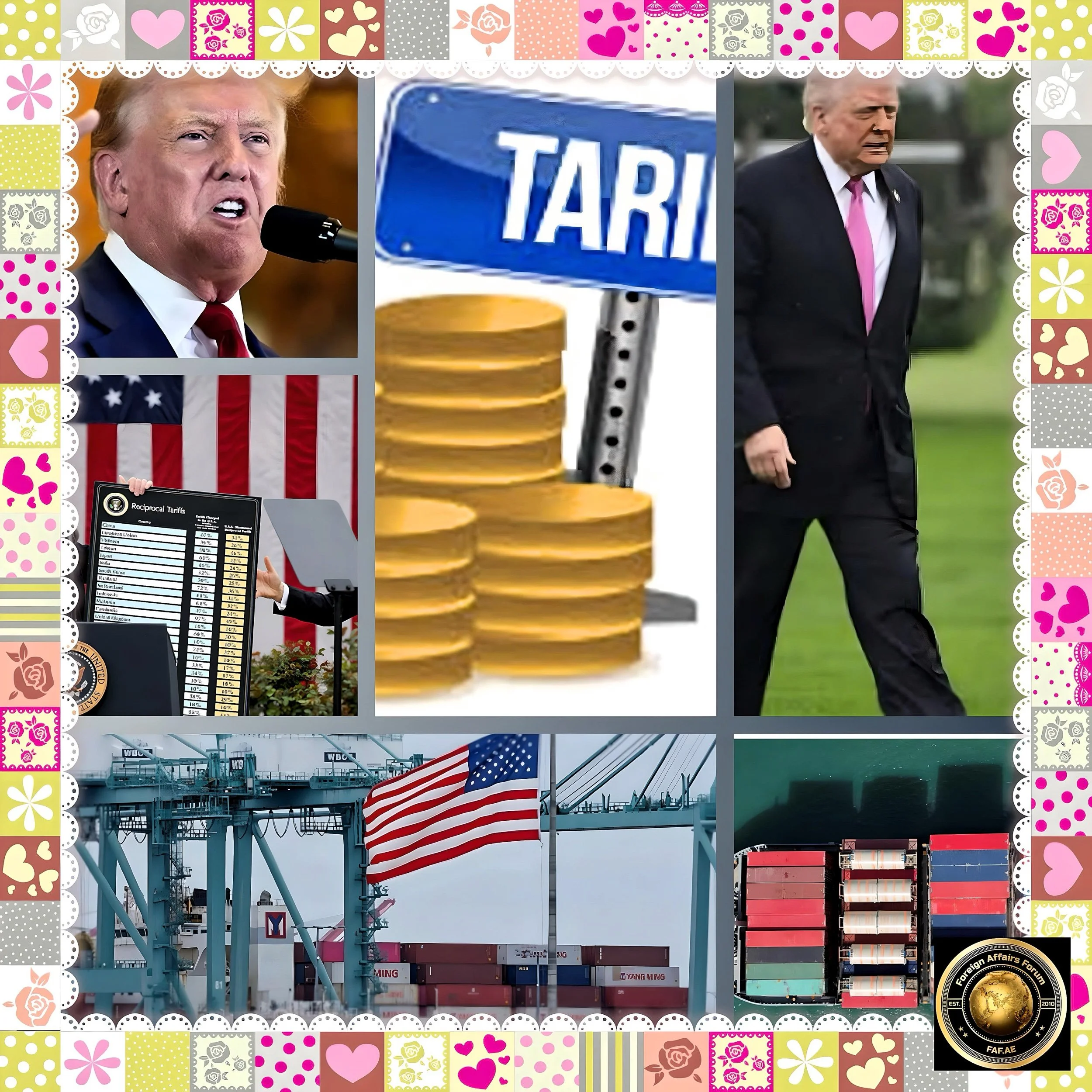
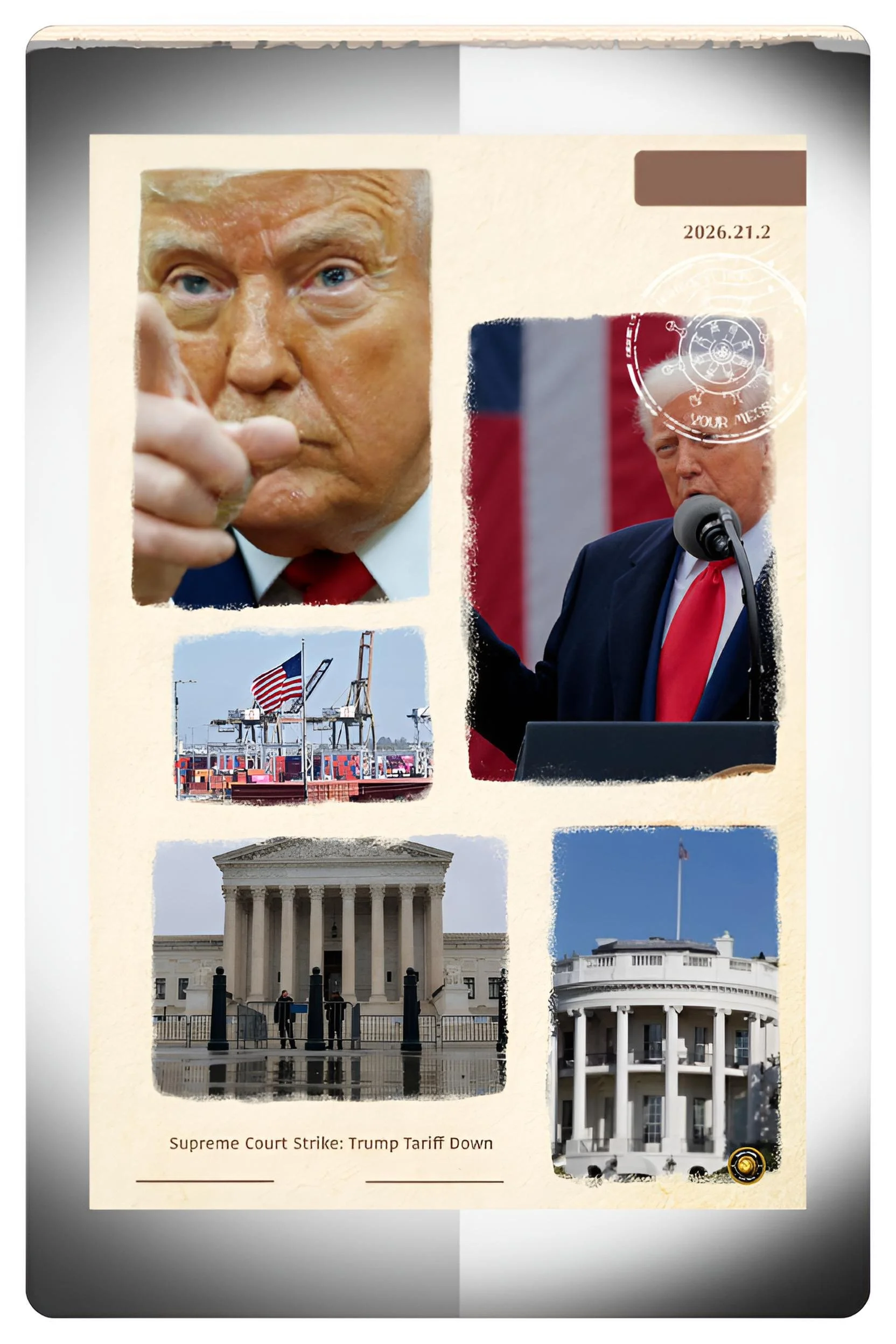
The ongoing legal battle over President Donald Trump’s sweeping tariff policies has reached a critical juncture, with federal courts engaging in an unprecedented clash over executive authority and constitutional limitations.
On May 29, 2025, the U.S. Court of Appeals for the Federal Circuit granted a temporary stay of a lower court ruling that had declared most of Trump’s global tariffs unlawful.
This ruling created significant uncertainty about the future of American trade policy and raised profound questions about the balance of power between the executive and judicial branches.
FAF, Trump.Forum analyzes this judicial intervention as one of modern history's most significant challenges to presidential economic authority.
It involves complex constitutional questions about the separation of powers, the scope of emergency presidential powers, and the role of courts in constraining executive overreach.
The case has broader implications for American democracy.
It occurs amid growing tensions between the Trump administration and federal judges, with administration officials publicly questioning judicial authority and threatening to defy court orders.
The Initial Trade Court Ruling and Constitutional Foundation
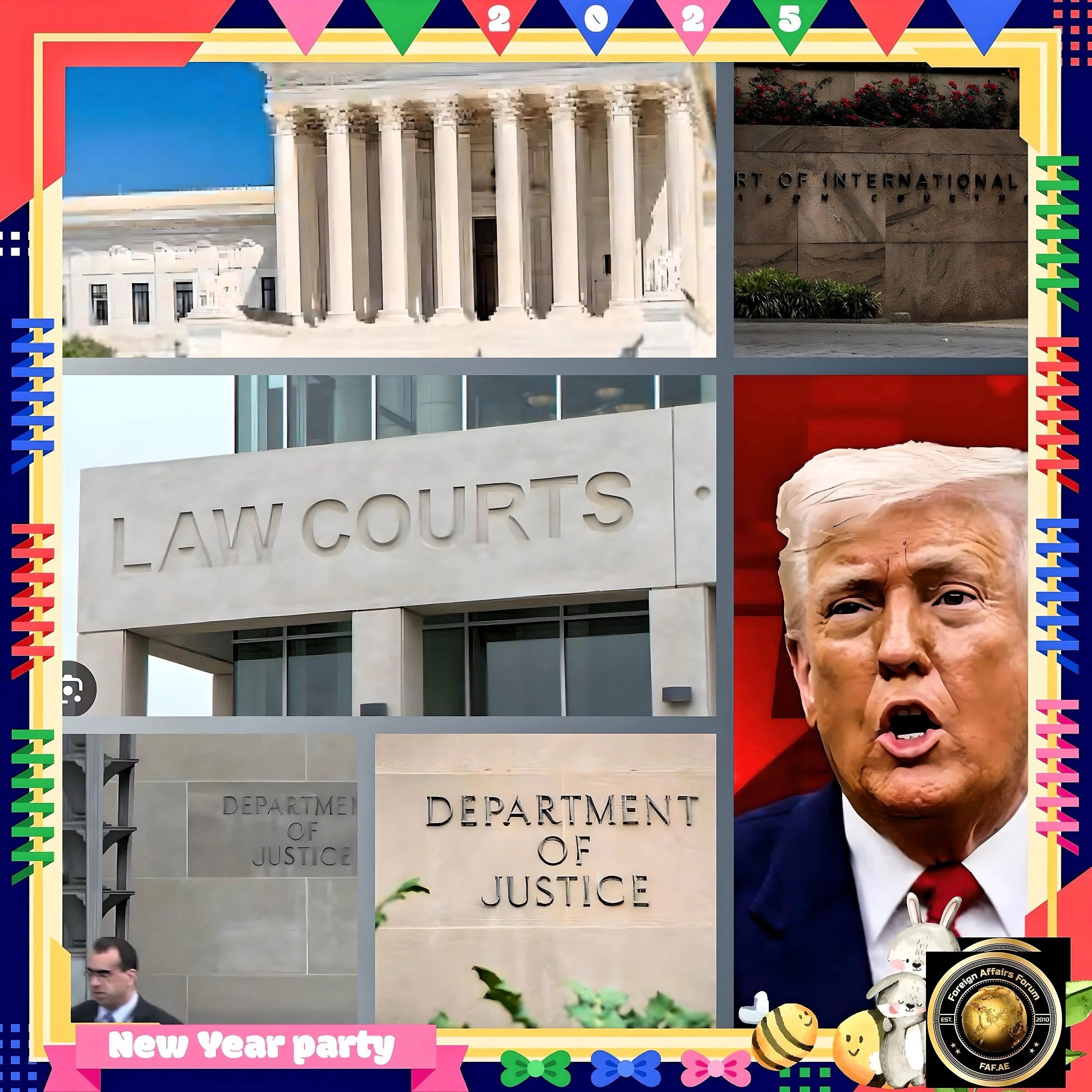
The U.S. Court of International Trade delivered a unanimous and sweeping rejection of Trump’s tariff authority on May 28, 2025, in a decision that fundamentally challenged the president’s use of emergency powers for trade policy.
The three-judge panel, consisting of Judge Timothy Reif (appointed by Trump), Judge Jane Restani (appointed by Reagan), and Judge Gary Katzmann (appointed by Obama), ruled that Trump had exceeded his legal authority by invoking the 1977 International Emergency Economic Powers Act (IEEPA) to impose tariffs on nearly every U.S. trading partner
This bipartisan composition of the panel undermines claims that the ruling represented partisan judicial activism, as noted by Al Jazeera correspondent Mike Hanna, who emphasized that “this specific court cannot be labeled as an activist, as Trump and his supporters have claimed about other courts that have ruled against him.”
The Court of International Trade’s decision was grounded in fundamental constitutional principles regarding the separation of powers.
The judges emphasized that the Constitution explicitly assigns Congress the exclusive power to “lay and collect Taxes, Duties, Imposts and Excises” and to “regulate Commerce with foreign Nations.”
The court determined that IEEPA, enacted in 1977 to limit rather than expand presidential power following the Watergate scandal, could not be interpreted to grant “unbounded tariff authority to the President” without creating serious constitutional infirmities.
This constitutional interpretation reflects a structuralist approach to statutory construction, emphasizing that emergency powers must be narrowly construed to avoid undermining the legislative branch’s fundamental authority over taxation and trade regulation.
The ruling specifically addressed two categories of tariffs: the “Liberation Day” tariffs announced on April 2, 2025, which imposed a 10% baseline duty on most countries with additional “reciprocal” tariffs on nations deemed to have trade surpluses with the U.S., and separate tariffs on Canada, Mexico, and China allegedly linked to fentanyl trafficking.
The court found that these tariffs lacked “identifiable limits” and were too broad to fall within IEEPA’s narrow scope for addressing specific national emergencies.
The judges noted that the United States has run trade deficits for nearly fifty years, hardly constituting the “unusual and extraordinary threat” IEEPA designed to address.
Appeals Court Intervention and Administrative Stay
The dramatic reversal came swiftly, as the U.S. Court of Appeals for the Federal Circuit issued an emergency administrative stay on May 29, 2025, just one day after the trade court’s ruling.
The unsigned order from an 11-judge panel temporarily suspended the lower court’s decision without providing detailed reasoning, allowing the Trump administration’s tariffs to remain in effect while the appeals process unfolds.
This intervention created immediate uncertainty in global markets and among businesses that had begun preparing for the potential elimination of the contested duties.
The composition of the appeals court panel adds another layer of complexity to the legal proceedings.
According to reporting, all but three of the eleven judges on the Federal Circuit panel were appointed by Democratic presidents, which could influence how the administration and its supporters frame any eventual adverse ruling.
This demographic composition is particularly significant given the Trump administration’s pattern of attacking judges who rule against them as partisan activists despite the bipartisan nature of many unfavorable rulings.
The procedural timeline established by the appeals court reflects the urgency and high stakes of the case.
The court provided plaintiffs until June 5, 2025, to submit their responses to the administration’s motion for a longer-term stay, with a full briefing schedule extending through June 9.
This compressed timeline suggests the court recognizes the economic and diplomatic implications of prolonged uncertainty surrounding the tariffs, as businesses and trading partners have expressed concerns about the unpredictability of U.S. trade policy.
Trump Administration’s Arguments for National Security Exception
The Trump administration’s legal strategy for securing a temporary stay centers on claims of national security necessity and irreparable harm to American interests.
In their emergency motion to the appeals court, administration lawyers argued that maintaining the tariffs is “essential for the nation’s security,” framing the dispute as fundamental to presidential authority in foreign affairs rather than merely a matter of trade policy.
This approach reflects a broader strategy of characterizing tariffs as national security measures rather than purely economic tools, thereby invoking the president’s stronger constitutional authority in foreign relations and defense matters.
The administration’s legal brief emphasized that the lower court’s ruling had “unjustly questioned the president’s decisions and jeopardized months of painstaking negotiations” with foreign governments.
This argument suggests that the tariffs serve as diplomatic leverage in ongoing trade discussions and that their sudden removal would undermine the president’s ability to conduct foreign policy effectively.
The brief stated that “political branches, not courts, make foreign and chart economic policy,” reflecting the administration’s view that judicial intervention in trade matters constitutes an inappropriate intrusion into executive prerogatives.
White House trade adviser Peter Navarro’s public statements further illuminated the administration’s strategic thinking, declaring that “we can assume even if lose tariff, we will find another way” to achieve their trade objectives.
This statement suggests that the administration views the current legal challenge as potentially temporary and is prepared to pursue alternative legal authorities if IEEPA is deemed insufficient.
Such alternative approaches might include the Trade Expansion Act of 1962, which permits tariffs during national emergencies but requires the Commerce Department to study and limit duties to specific products.
The administration also argued that allowing the trade court’s ruling to stand would create “irreparable harm” to national security and the economy, necessitating emergency intervention by higher courts.
This framing attempts to shift the legal standard from whether the tariffs are legally justified under IEEPA to whether their immediate removal would cause more harm than continuation during the appeals process.
The Justice Department filing warned that without “at least temporary relief,” the administration would seek “emergency intervention from the Supreme Court” to prevent such alleged harms.
Supreme Court Implications and Pathway
The possibility of Supreme Court review looms large over this case, with the Trump administration explicitly threatening to seek emergency intervention from the nation’s highest court if the appeals court had not granted relief.
This threat reflects the administration’s view of the case’s fundamental importance and their calculation that the current Supreme Court composition might be more receptive to broad executive power arguments.
The Supreme Court’s conservative majority, strengthened during Trump’s first presidency, could view tariff authority as falling within the president’s constitutional foreign affairs powers.
The legal pathway to the Supreme Court involves several potential routes.
If the Court of Appeals for the Federal Circuit ultimately upholds the trade court’s ruling, the administration could petition for certiorari, arguing that the case involves fundamental questions of presidential authority and constitutional interpretation that warrant Supreme Court review.
Alternatively, the administration might seek emergency relief through a stay application, particularly if they argue that immediate compliance with an adverse ruling would cause irreparable national harm.
The Supreme Court’s current composition includes Chief Justice John Roberts and Associate Justices Samuel Alito, Amy Coney Barrett, Neil Gorsuch, Ketanji Brown Jackson, Elena Kagan, Brett Kavanaugh, Sonia Sotomayor, and Clarence Thomas.
The ideological breakdown shows a 6-3 conservative majority, with three justices appointed by Trump himself (Gorsuch, Kavanaugh, and Barrett), two by George W. Bush (Roberts and Alito), and one by George H.W. Bush (Thomas).
The liberal wing comprises three justices: Sotomayor, Kagan (both Obama appointees), and Jackson (Biden appointee).
According to Martin-Quinn's ideological scoring, Justice Samuel Alito currently ranks as the most conservative member of the court (2.568), followed closely by Justice Clarence Thomas (2.358). At the same time, Justice Sonia Sotomayor represents the most liberal position (-4.09).
This ideological composition suggests that the Trump administration might expect a favorable reception for arguments emphasizing broad executive authority in foreign affairs and national security matters.
However, the Court’s approach to separation of powers issues has not always been predictably partisan, with Chief Justice Roberts occasionally serving as a swing vote on institutional questions.
Judicial Independence and Democratic Institutions Under Pressure
The broader context of this legal battle reveals concerning trends regarding attacks on judicial independence and democratic norms.
The Trump administration’s relationship with federal courts has been characterized by unprecedented public criticism and implicit threats to defy court orders, raising serious questions about the health of American democratic institutions.
Administration officials, including Vice President JD Vance and advisor Elon Musk, have called for removing judges who rule against the government.
In contrast, other officials have refused to rule out defying court orders entirely.
This pattern of judicial criticism follows established authoritarian playbooks observed in countries experiencing democratic backsliding, including Turkey, Poland, Hungary, and Russia, where autocratic leaders have systematically undermined court independence.
Supreme Court Justice Ketanji Brown Jackson has warned explicitly against the Trump administration’s characterization of judges as actively undermining democracy, recognizing the dangerous precedent such rhetoric establishes.
The administration’s approach creates what scholars term “legalistic noncompliance,” where legal language and procedures mask actual defiance of court orders.
Specific instances of potential court defiance have emerged in the Trump administration’s first months.
D.C. District Court Judge James E. Boasberg has determined he has probable cause to believe that administration officials defied his order halting deportations under the Alien Enemies Act.
Similarly, Judge Paula Xinis of the District of Maryland has found the administration non-responsive to court orders regarding the return of individuals to the United States.
These examples suggest a pattern of testing judicial authority that could escalate if courts continue ruling against administration policies.
The targeting of individual judges has become particularly concerning, with Trump specifically advocating for the impeachment of Judge James Boasberg and labeling him and other adverse judges as “left-wing activists.”
Attorney General Bondi has characterized Boasberg as seeking “to protect those who invaded our country over our citizens,” while Trump has declared at rallies that “we cannot allow a group of communist radical-left judges to obstruct the will of our democracy.”
This rhetoric fundamentally mischaracterizes the judicial role and could encourage public hostility toward independent courts.
What are the possible options and arguments the Supreme Court may have?
Trump.Forum analyzes that If the Trump tariff case reaches the U.S. Supreme Court, the justices will face complex constitutional and statutory questions about presidential authority, congressional delegation, and judicial oversight.
Here’s an analysis of the Court’s potential options and arguments
Supreme Court’s Procedural Options
Grant Emergency Stay
The Court could issue an emergency stay to maintain Trump’s tariffs during ongoing litigation, citing potential “irreparable harm” to national security or the economy.
This would align with the administration’s argument that abrupt tariff removal would destabilize trade negotiations and economic planning.
Deny Review
The Court might decline to hear the case, allowing lower court rulings against the tariffs to stand.
However, this is less likely given the case’s national significance and the administration’s escalated threat.
Grant Certiorari
The Court could agree to review the case on its merits, focusing on :
Whether the International Emergency Economic Powers Act (IEEPA) authorizes broad tariffs for trade deficits.
The validity of the central questions doctrine and nondelegation doctrine in limiting presidential power.
Key Legal Arguments
Trump Administration’s Likely Claims
National Security Prerogative
Assert that tariffs fall under the president’s constitutional foreign policy and national security authority, requiring judicial deference.
Statutory Authority
Argue that IEEPA’s broad language allows tariffs to address “unusual and extraordinary threats,” including trade imbalances and drug trafficking.
Separation of Powers
The claim is that courts lack the expertise to second-guess executive judgments on trade policy, which are inherently political.
Opponents’ Counterarguments
Congressional Intent
IEEPA was designed for narrow emergencies (e.g., wartime sanctions), not decades-long trade deficits.
The Trade Act of 1974 explicitly limits tariff durations and rates, which Trump bypassed.
Major Questions Doctrine
Congress must “speak clearly” when authorizing economically significant actions. IEEPA’s vague language cannot justify sweeping tariffs.
Nondelegation Principle
Congress cannot transfer its exclusive power to “lay and collect Duties” (Article I, Section 8) without clear guidelines, which IEEPA lacks.
Potential Outcomes
Uphold Lower Courts
The Court could rule that IEEPA does not authorize tariffs for trade deficits, affirming the trade court’s injunction. This would force Trump to seek congressional approval or use narrower statutes like the Trade Expansion Act 1962.
Reverse Lower Courts
A conservative majority might side with the administration, deferring to executive authority on national security grounds. This would set a precedent for expanded presidential power over trade.
Remand for Clarification
The Court could send the case back to lower courts to reassess whether specific tariffs (e.g., those linked to fentanyl) meet IEEPA’s emergency criteria.
Brotherhood Court Dynamics
Conservative Justices
Gorsuch, Kavanaugh, and Barrett have shown skepticism of unchecked agency power but may split on executive authority in foreign affairs.
Swing Vote
Chief Justice Roberts often prioritizes institutional legitimacy and might resist expanding presidential power beyond historical norms.
Liberal Justices
Sotomayor, Kagan, and Jackson would likely emphasize congressional primacy in trade policy and strict adherence to statutory limits.
Implications
A Supreme Court decision favoring Trump could
Cement presidential authority to unilaterally impose tariffs under emergency statutes.
Encourage future administrations to bypass Congress on trade policy.
A ruling against Trump would
Reassert congressional control over tariffs.
Limit the use of emergency powers for economic policy, reinforcing checks on executive overreach.
The case represents a pivotal test of judicial willingness to constrain presidential power in an era of heightened executive assertiveness.
Economic and Global Trade Implications
The uncertainty surrounding Trump’s tariffs has created significant domestic and international economic disruption.
Major corporations, including Diageo, General Motors, and Ford, have withdrawn their financial forecasts for the year due to tariff-related uncertainty, while international companies such as Honda, Campari, Roche, and Novartis are reportedly considering relocating operations to the United States to mitigate tariff impacts.
This corporate response demonstrates the real-world consequences of legal uncertainty surrounding trade policy.
Financial markets globally have responded with cautious optimism to the trade court’s initial ruling while remaining wary of the ongoing appeals process.
Analysts note that the effective U.S. tariff rate remained near 15% following the appeals court stay, compared to the 6% rate that would have resulted from the trade court’s order taking effect.
Before Trump’s return to office, tariffs averaged between 2% and 3%, highlighting the dramatic increase in trade barriers under the current administration.
The international response has been notably restrained. Foreign governments treat the legal battle as a domestic American matter while privately expressing hope for tariff reduction.
The UK government explicitly characterized the court proceedings as a “domestic matter,” while Germany and the European Commission declined to comment.
Canadian Prime Minister Mark Carney stated that the ruling was “consistent with Canada’s longstanding position” that the tariffs were unlawful.
This diplomatic caution reflects respect for American judicial processes and recognition that the legal uncertainty makes immediate policy responses premature.
Economic experts suggest that if the IEEPA tariffs are permanently eliminated, U.S. economic growth could rebound in late 2025. Capital Economics projects an annual increase of 2% rather than its previous 1.5% forecast.
Additionally, suppose the trade court's decision is ultimately upheld.
In that case, importers may eventually be eligible for refunds of tariffs already paid, though the government will likely delay such payments until all appeals are exhausted.
Conclusion
The temporary stay granted by the Federal Appeals Court represents a pivotal moment in American constitutional law, trade policy, and democratic governance.
While the immediate legal question concerns whether President Trump exceeded his authority under IEEPA in imposing sweeping global tariffs, the broader implications extend to fundamental questions about executive power, judicial independence, and the health of American democratic institutions.
The case will likely determine not only the fate of billions of dollars in trade duties but also the establish essential precedents regarding the scope of presidential emergency powers and the judiciary’s role in containing executive overreach.
The path forward remains highly uncertain, with potential Supreme Court review, ongoing economic disruption, and continued tensions between the administration and federal courts
The ultimate resolution of this case may well determine whether American democratic institutions can effectively check executive power or whether the erosion of judicial independence will continue to accelerate.
As businesses, trading partners, and legal observers await further developments, the stakes extend far beyond trade policy to encompass the fundamental architecture of American constitutional government.