Trump Doubles Steel and Aluminum Tariffs to 50%: A Comprehensive Analysis of Market Impacts and Global Implications
Introduction
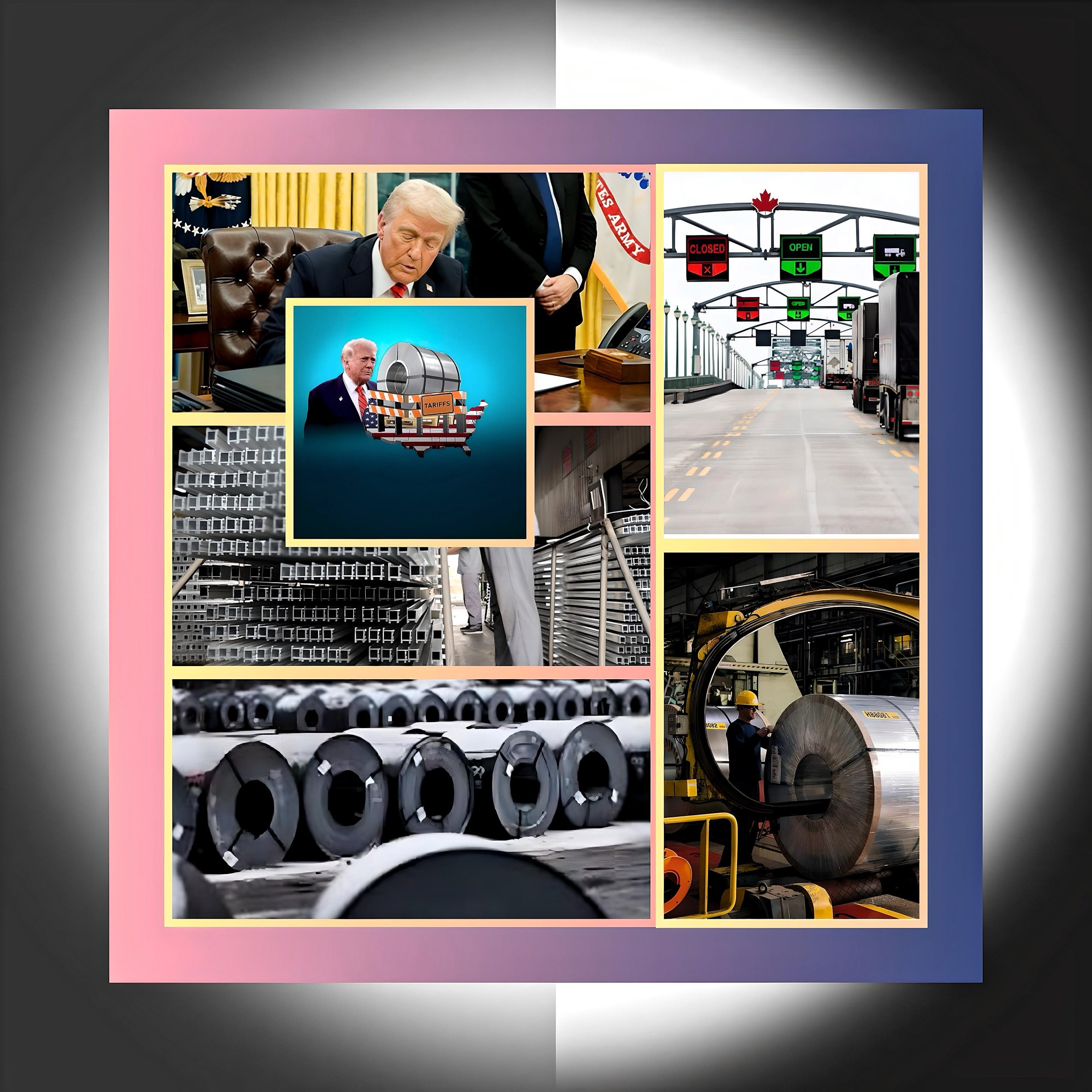
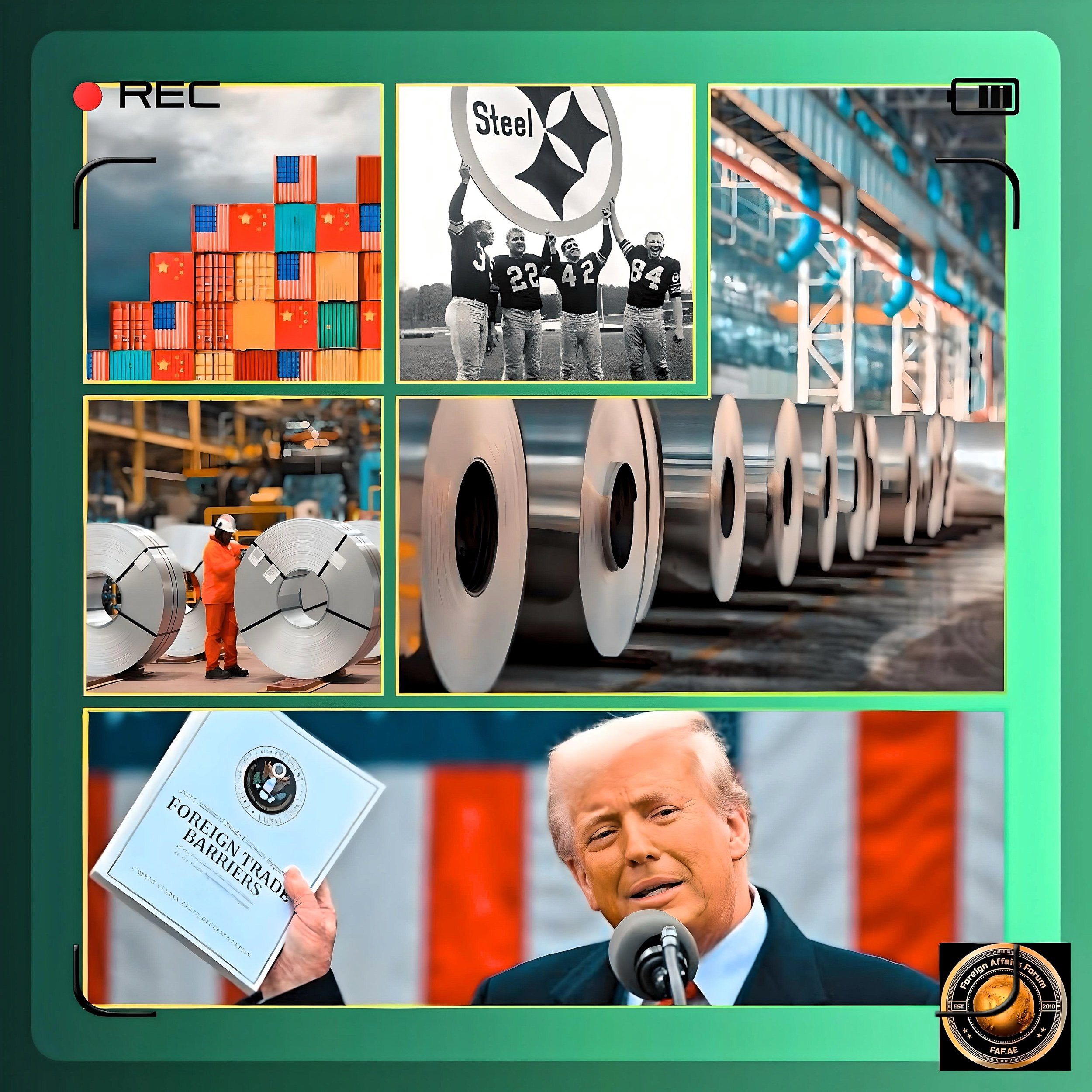
President Donald Trump announced on Friday, May 30, 2025, that he would double steel and aluminum import tariffs from 25% to 50%. This significantly escalated his protectionist trade agenda and sent shockwaves through global markets.
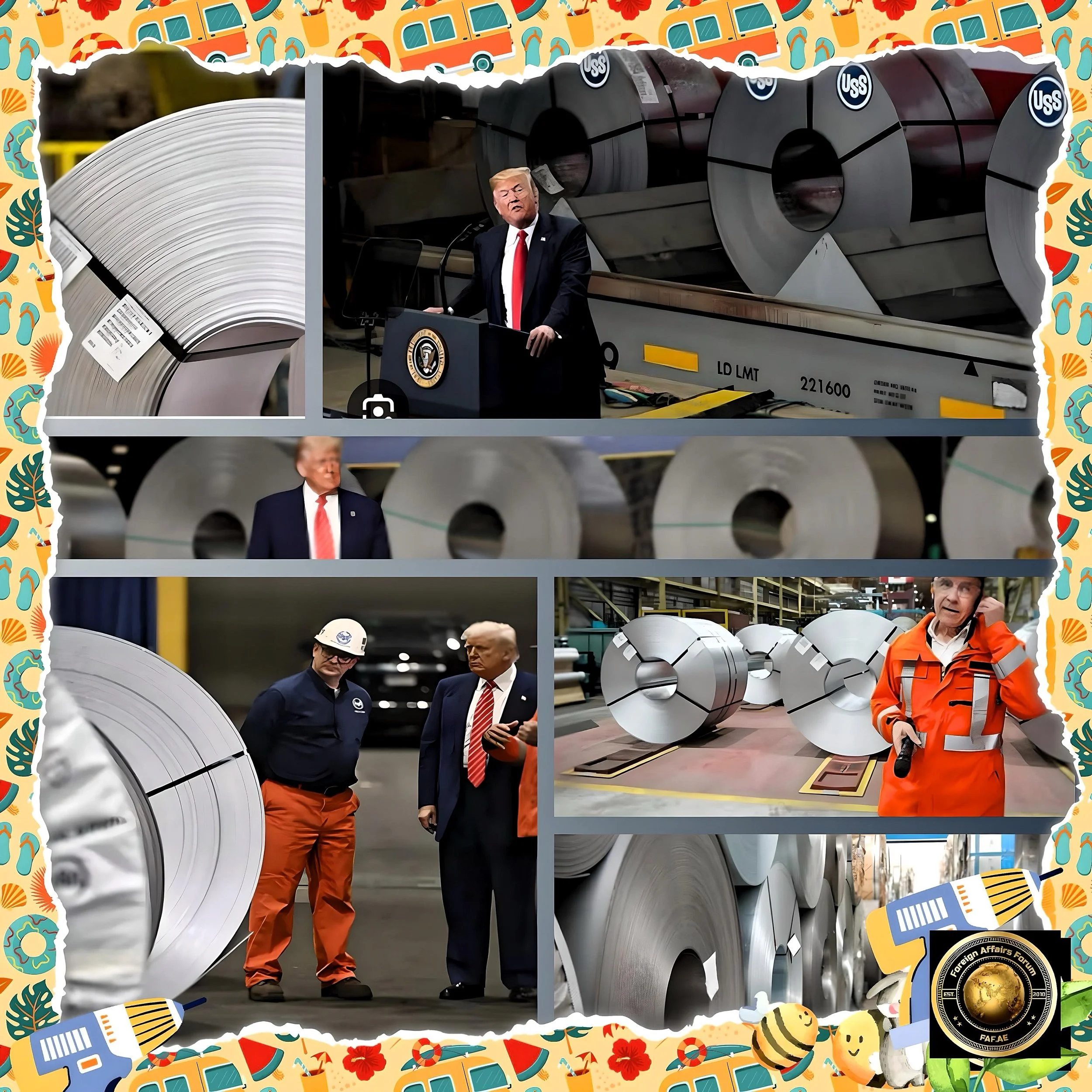
This dramatic policy shift announced at US Steel’s Mon Valley Works plant in Pennsylvania represents a reversal of his previous position on foreign investment in American steel companies and a deepening of his trade war strategy.
FAF, Economy.Inc analyzes that new tariffs will take effect on June 4, 2025, and are expected to substantially impact global steel producers while potentially raising costs for American consumers and manufacturers who rely on these critical materials.
The Tariff Announcement
Scope and Implementation
Details of the New Tariff Structure
Trump’s announcement represents a 100% increase in existing tariffs, bringing steel and aluminum import duties to unprecedented levels for his administration.
Speaking to steelworkers at the Pennsylvania facility, Trump declared, “We are going to be imposing a 25% increase. We will bring the tariffs on steel from 25% to 50% into the United States of America, which will further secure the steel industry in the United States”.
The president emphasized that “at 25%, they can sort of get over that fence. At 50%, nobody’s getting over it”.
The tariffs apply to a comprehensive range of steel and aluminum products beyond raw materials, encompassing derivative products, including stainless steel sinks, gas ranges, air conditioner evaporator coils, horseshoes, aluminum frying pans, and steel door hinges.
According to US Census Bureau data, the 289 affected product categories had a total 2024 import value of $147.3 billion, with steel accounting for approximately one-third and aluminum comprising the remainder.
This scope significantly exceeds Trump’s initial two rounds of punitive tariffs on Chinese industrial goods during his first term, which covered $50 billion in annual import value.
Legal Authority and Implementation Timeline
The tariffs are being implemented under Section 232 of the Trade Expansion Act of 1962, which allows the president to impose duties citing national security concerns.
This authority differs from the International Emergency Economic Powers Act (IEEPA) that Trump has used for other tariff measures, which recently faced legal challenges.
Section 232 provides Trump with solid legal footing, as these steel and aluminum tariffs have withstood previous court challenges during his first term.
The implementation timeline is remarkably swift, with the new rates taking effect just five days after the announcement.
This rapid deployment reflects Trump’s confidence in the tariffs' legal authority and political messaging value, particularly given their announcement in Pennsylvania. This crucial swing state helped secure his electoral victory.
Strategic Context and Policy Evolution
Reversal on Foreign Investment Policy
Trump’s tariff announcement coincided with a remarkable policy reversal regarding foreign ownership of US Steel, one of America’s most iconic industrial companies.
During his 2024 campaign, Trump vehemently opposed Nippon Steel’s proposed $14.9 billion acquisition of US Steel, stating he would block any foreign company purchases.
However, in a dramatic change of heart, Trump now supports what he terms a “planned partnership” that maintains US Steel’s American identity while allowing Japanese investment.
This policy evolution reflects Trump’s broader strategy of attracting foreign investment to support American manufacturing while maintaining protectionist barriers against imports.
The president framed the arrangement as ensuring that “this storied American company stays an American company,” though specific details of the ownership structure remain undisclosed.
The deal reportedly includes commitments for multibillion-dollar investments across five states—Pennsylvania, Indiana, Alabama, Arkansas, and Minnesota—along with promises to maintain US Steel’s headquarters in Pittsburgh.
Economic Justification and Market Dynamics
Trump’s justification for the tariff increase centers on protecting American steelworkers and rebuilding domestic manufacturing capacity.
The announcement comes as domestic steel prices have surged 16% since Trump’s return to office in January. US steel traded at $984 per metric ton in March 2025—significantly above Europe’s $690 and China’s $392.
This price differential underscores the protective effect of existing tariffs and the potential for further cost increases under the new regime.
The president argued that higher tariffs would encourage foreign companies to establish manufacturing operations in the United States rather than export to the American market. “The higher it goes, the more likely it is they’re going to build,”
Trump explained to business leaders that foreign direct investment represents “a bigger win than the tariffs themselves.”
However, this approach carries significant risks of inflation and supply chain disruption across industries dependent on steel and aluminum inputs.
Market Reactions and Economic Implications
Immediate Stock Market Response
Financial markets reacted swiftly to Trump’s announcement, with American steel companies experiencing significant gains in after-hours trading.
Cleveland-Cliffs Inc. shares surged 26% immediately following the announcement, as investors anticipated higher profits under the enhanced tariff protection.
Other major US steel producers, including Nucor Corp. and Steel Dynamics Inc., also saw substantial gains, with increases of at least 5% in after-hours trading.
The positive reaction from steel company investors reflects market confidence that higher tariffs will translate directly into improved profitability for domestic producers by reducing foreign competition.
However, this enthusiasm must be weighed against potential negative impacts on downstream industries that rely on steel and aluminum as raw materials, including construction, automotive, and appliance manufacturing.
Impact on Construction and Manufacturing Sectors
The tariff increase poses significant challenges for industries that depend heavily on steel and aluminum inputs.
Construction companies have warned that the levies will likely increase the cost of critical building materials, reducing supply and increasing the cost of new housing.
Given that approximately 17% of US steel needs are met through imports, with the majority coming from Canada, Brazil, and Mexico, the tariff increase will likely create substantial cost pressures across multiple sectors.
The automotive industry, which relies extensively on both steel and aluminum components, faces particular vulnerability to these cost increases.
The sector has already experienced disruptions from previous tariff implementations and may need to pass additional costs on to consumers or absorb them through reduced profit margins.
Similarly, appliance manufacturers and other steel-intensive industries may face difficult decisions about pricing strategies and production locations.
Inflationary Pressures and Consumer Impact
Economic analysts warn that the tariff increases will likely contribute to inflationary pressures across the American economy.
As importers pass increased costs from tariffs to consumers, average Americans will pay more for goods either imported from abroad or manufactured using imported steel and aluminum.
The government’s Producer Price Index has already recorded a 16% increase in steel product prices since Trump took office, indicating that further tariff increases will likely accelerate this trend.
The inflationary impact extends beyond direct steel and aluminum products to encompass a wide range of consumer goods, from automobiles and appliances to construction materials and infrastructure projects.
This broad-based price pressure could offset some of the economic benefits that Trump’s policies aim to achieve, particularly for working-class Americans who spend a higher proportion of their income on manufactured goods.
International Responses and Trade Tensions
Canadian Industry Reaction
Canada, as the largest steel supplier to the United States accounting for nearly 25% of all imports in 2023, faces particularly severe consequences from the tariff increase.
Bea Bruske, president of the Canadian Labour Congress, characterized Trump’s plan as “yet another direct attack on Canadian workers and a reckless move that will send shockwaves across the Canadian economy”.
Canadian industry leaders warn that the new tariffs will “shut us out of the U.S. market completely, devastating Canada’s steel and aluminum industry and threatening thousands of good-paying, unionized Canadian jobs”.
The Canadian Chamber of Commerce has criticized the unwinding of “efficient, competitive and reliable” cross-border supply chains in steel and aluminum, arguing that such disruption “comes at a great cost to both countries”.
Canadian officials are calling for immediate government action to protect workers, including emergency reforms to employment insurance and wage subsidies to mitigate the economic impact.
The severity of Canada’s response reflects the deep integration of North American steel and aluminum supply chains that have developed over decades of trade cooperation.
Broader International Implications
The tariff announcement has generated concern among other major trading partners who worry about the precedent it sets for future trade relations.
During Trump’s first term, similar steel and aluminum tariffs prompted retaliatory measures from the European Union, though these were later suspended.
The current escalation raises questions about whether international partners will respond with their own trade restrictions, potentially triggering a broader trade war.
Australia’s Prime Minister Anthony Albanese called the tariffs “entirely unjustified” and “against the spirit” of the nations’ “enduring friendship,” noting that Australia had been exempt from similar tariffs during Trump’s first term.
The European Union has indicated it will consider “firm and proportionate countermeasures” in response to the new tariff regime.
These international tensions highlight the global nature of steel and aluminum markets and the difficulty of isolating domestic industries from international competition through unilateral trade measures.
Impact on Global Supply Chains
The tariff increase threatens to disrupt established global supply chains that have developed around North American and international steel and aluminum trade.
Approximately 25% of European steel exports go to the United States, making the American market crucial for European producers.
The sudden doubling of tariffs creates immediate challenges for companies that have structured their operations around existing trade arrangements.
Global steel producers will likely need to seek alternative markets for products previously destined for the United States, potentially creating oversupply conditions in other regions.
This displacement effect could trigger price competition in international markets while simultaneously raising prices within the protected American market.
The resulting distortions may undermine the efficiency of global steel production and allocation, leading to higher costs worldwide.
The US Steel-Nippon Steel Connection
Political Symbolism and Economic Reality
Trump’s announcement at the US Steel facility served multiple political and economic purposes, combining celebration of foreign investment with protection of domestic industry.
The president positioned the Nippon Steel partnership as validation of his broader strategy to attract foreign investment while maintaining protective barriers against imports.
By announcing the tariff increase at the same event celebrating the Japanese investment, Trump sought to demonstrate that his policies could simultaneously welcome beneficial foreign capital while blocking harmful foreign competition.
The symbolic importance of US Steel extends beyond its economic role to encompass questions of national identity and industrial heritage.
Trump emphasized repeatedly that “this storied American company stays an American company,” reflecting broader concerns about foreign ownership of critical industrial assets.
The president’s ability to frame the Nippon Steel deal as preserving American control while securing foreign investment represents a significant political achievement, particularly given his previous opposition to the transaction.
Investment Commitments and Job Promises
The Nippon Steel partnership includes substantial financial commitments that Trump has highlighted as justification for both the deal and the tariff increase.
The president announced that US Steel workers would receive a $5,000 bonus and that $2.2 billion of the $14.9 billion total investment would be earmarked for increasing steel production at the Mon Valley Works plant where he spoke.
An additional $7 billion is reportedly designated for modernizing steel mills, expanding ore mining, and building new facilities across Indiana, Minnesota, Alabama, and Arkansas.
Trump also provided specific operational guarantees, stating that US Steel would not announce layoffs or outsourcing and that its blast furnaces would remain at “full capacity” for at least 10 years.
These commitments address concerns from the United Steelworkers union, which has expressed skepticism about the merger’s impact on job security and community welfare.
However, union president David McCall has noted particular concern about “the implications this merger of US Steel with a foreign competitor will have on security, our members, and the communities where we live and work”.
Strategic Industry Positioning
The combination of increased tariff protection and foreign investment represents Trump’s attempt to rebuild American steel industry competitiveness through multiple policy tools.
The enhanced tariffs provide immediate protection against foreign competition, while the Nippon Steel investment promises to modernize facilities and increase production capacity.
This dual approach reflects recognition that trade protection alone may be insufficient to restore American industrial leadership without accompanying investments in technology and capacity.
The timing of these announcements also serves broader political objectives, particularly in Pennsylvania, a crucial swing state where steel production carries both economic and symbolic importance.
By delivering tangible benefits to steelworkers—including job security, investment commitments, and enhanced trade protection—Trump aims to solidify support among working-class voters who were central to his electoral success.
The Mon Valley Works facility itself symbolizes both the historical strength and recent decline of American manufacturing, making it an ideal venue for announcing policies aimed at industrial revitalization.
Conclusion
Trump’s decision to double steel and aluminum tariffs to 50% represents a significant escalation in his trade war strategy, with far-reaching implications for both domestic and global markets.
The announcement demonstrates his continued commitment to protectionist policies despite legal challenges to other aspects of his tariff program.
By combining enhanced trade protection with approval of foreign investment in US Steel, Trump has attempted to balance competing priorities of industrial protectionism and capital attraction.
The immediate market response suggests that investors view the tariff increase as beneficial for American steel producers, though the broader economic implications remain uncertain.
Higher steel and aluminum prices will likely impose costs on downstream industries and consumers, potentially offsetting some of the benefits to steelworkers and shareholders.
International partners have signaled strong opposition to the tariff increases, raising the prospect of retaliatory measures that could escalate trade tensions.
The success of Trump’s approach will ultimately depend on whether the combination of trade protection and foreign investment can genuinely rebuild American industrial competitiveness without imposing excessive costs on other sectors of the economy.
The tariff announcement, effective June 4, 2025, will provide an immediate test of these policies’ economic and political viability.
As global markets adjust to this new trade reality, the durability of Trump’s protectionist strategy will face scrutiny from both domestic constituencies and international trading partners who must navigate an increasingly complex and unpredictable trade environment.