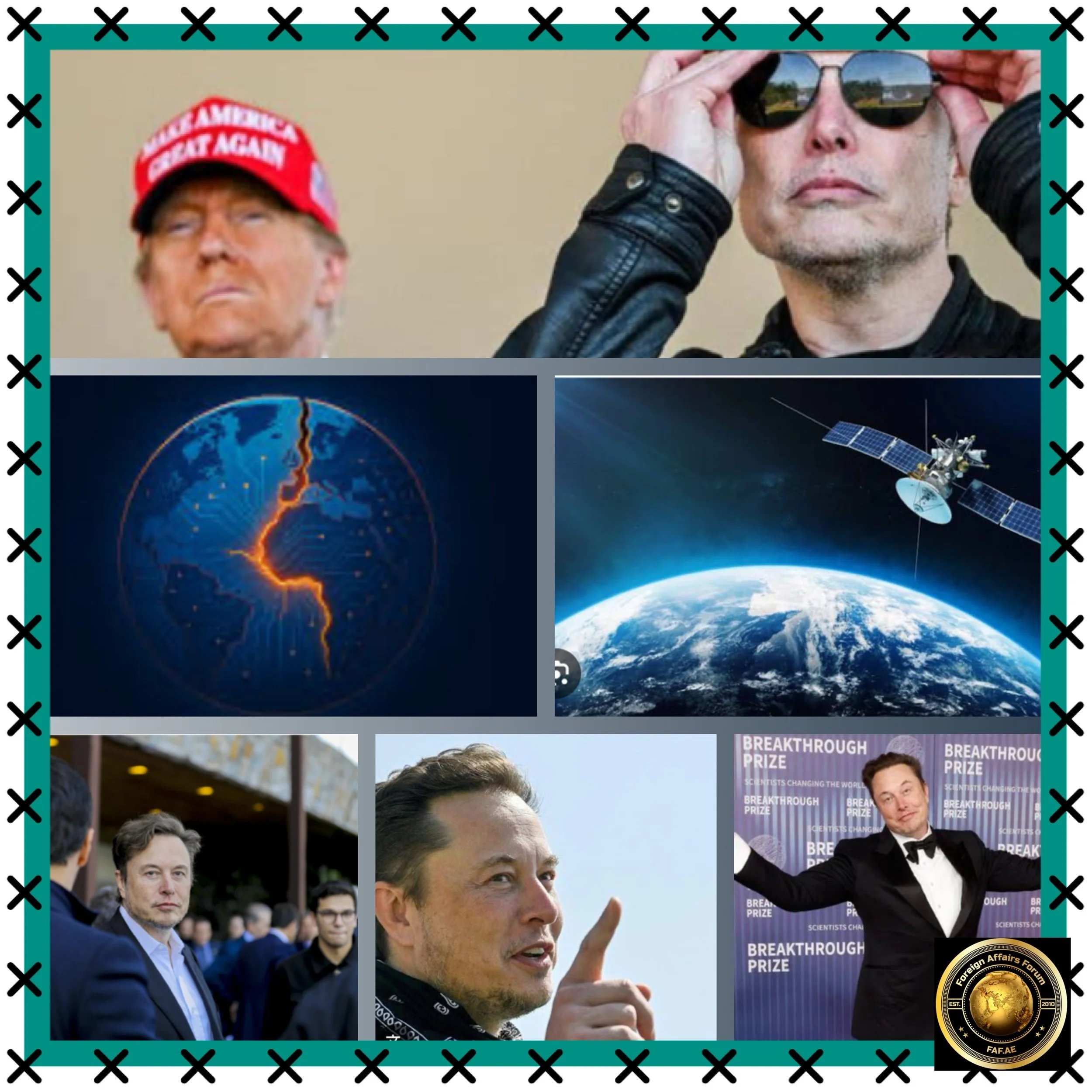
The Elon Musk Paradox: From Technological Visionary to Controversial Figure and the Golden Dome Gambit
Introduction
Elon Musk’s career trajectory presents a compelling case study of how technological innovation, wealth accumulation, and political involvement intersect unpredictably.
FAF, Washington.Forum analyzes Musk's staying: “Once celebrated as a visionary entrepreneur who revolutionized multiple industries, Musk now faces mounting challenges across his business empire, raising questions about whether ambitious government contracts like the Golden Dome missile defense system can restore his former dominance.”
His journey from a promising young entrepreneur to the world’s richest individual and subsequently to a polarizing figure whose political activities have arguably damaged his core businesses illustrates the complex relationship between personal brand, corporate success, and public perception in the modern era.
The Ascendancy: Building a Technological Empire
Elon Musk’s rise to prominence began with remarkable early entrepreneurial success that established him as a formidable force in the technology sector.
Born in Pretoria, South Africa, on June 28, 1971, Musk demonstrated exceptional technical aptitude from childhood, creating and selling a video game called Blastar for $500 at age 12.
His formal journey into entrepreneurship began after he left Stanford University’s physics program after just two days in 1995.
The foundation of Musk’s empire was built through a series of strategic ventures capitalizing on the emerging internet economy.
In 1995, Musk co-founded Zip2 with his brother Kimbal, using $28,000 borrowed from his father. They developed an internet city guide for newspapers, including maps, directions, and yellow pages.
The company’s sale to Compaq for $307 million in 1999 netted Musk $22 million for his 7% stake, providing the capital for his next venture.
He subsequently co-founded X.com, an online financial services company that evolved into PayPal following a merger with Confinity.
When eBay acquired PayPal for $1.5 billion in 2002, Musk received $175.8 million as the largest shareholder.
These early successes established Musk’s reputation as a serial entrepreneur with an exceptional ability to identify and capitalize on emerging technological trends.
His ventures consistently challenged established industries through innovative approaches, a characteristic that would define his subsequent career trajectory.
The substantial financial returns from these early companies provided Musk with the resources necessary to pursue more ambitious projects that would ultimately transform entire industries.
The Tesla and SpaceX Revolution
Musk’s transformation from a successful internet entrepreneur to a revolutionary figure in the aerospace and automotive industries began with his involvement in Tesla and the founding of SpaceX in 2002.
His entry into Tesla came through a $6.35 million Series A investment in February 2004, making him the majority shareholder and chairman of the board.
Initially not deeply involved in day-to-day operations, Musk’s role expanded significantly following the 2008 financial crisis and internal conflicts that led to the departure of founder Martin Eberhard.
Assuming the CEO position in 2008, Musk guided Tesla through its early production challenges and established it as a leader in electric vehicle technology.
SpaceX was Musk’s most audacious venture. He founded it with $100 million of his early fortune and the goal of making space travel more affordable through reusable rocket technology.
Despite early failures that nearly bankrupted him, SpaceX achieved its first successful orbital launch in 2008 and subsequently secured a $1.6 billion NASA contract for International Space Station resupply missions.
The company’s achievements in reusable rocket technology, culminating in the successful landing and reuse of Falcon 9 first stages, fundamentally altered the economics of space launch services.
The parallel development of Tesla and SpaceX during the 2010s established Musk as perhaps the most influential entrepreneur of his generation.
Tesla’s mass-market Model 3, launched in 2017, demonstrated that electric vehicles could achieve mainstream appeal while maintaining premium performance characteristics.
Meanwhile, SpaceX’s achievements in commercial crew transportation and ambitious Starship development program positioned the company at the forefront of next-generation space exploration.
By 2021, these successes had elevated Musk to the world’s wealthiest individual, with his net worth reaching unprecedented levels driven primarily by Tesla’s soaring stock price.
The Political Entanglement and Its Consequences
Musk’s trajectory began to shift dramatically with his increased political involvement, particularly following his acquisition of Twitter in October 2022 for approximately $44 billion.
This purchase began a period characterized by controversial decisions and polarizing public statements that would eventually impact his business empire.
The transformation of Twitter into X involved significant changes, including mass layoffs, altered content moderation policies, and the introduction of paid verification systems.
These changes sparked widespread criticism and contributed to increased scrutiny of Musk’s leadership across all his ventures.
The 2024 presidential election represented a pivotal moment in Musk’s political engagement.
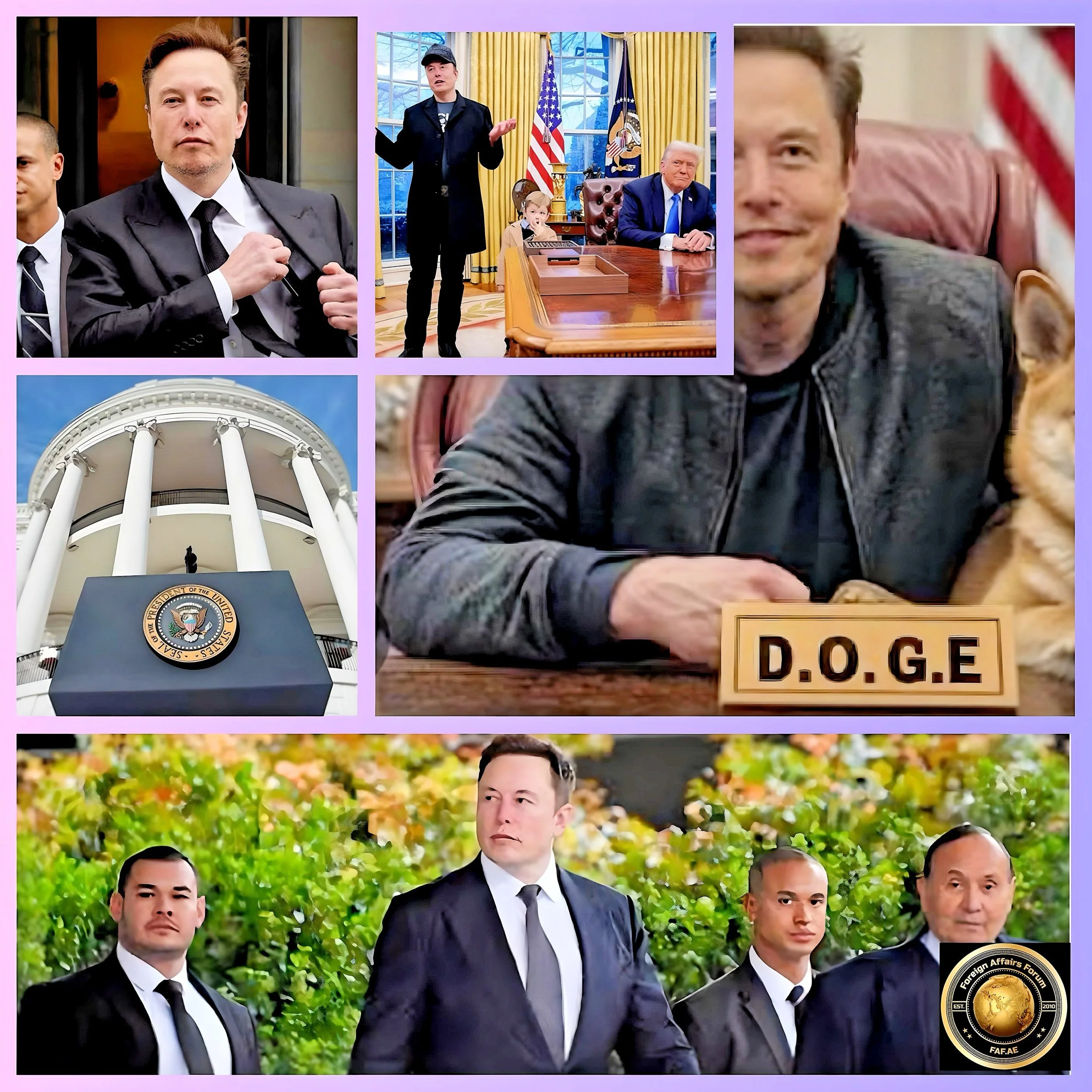
He contributed over $250 million to support Donald Trump’s campaign and accepted antment as head of the Department of Government Efficiency (DOGE).
This role, designed to reduce government spending and eliminate bureaucratic inefficiencies, positioned Musk at the center of contentious political debates about federal operations.
However, his tenure was marked by significant conflicts with other administration officials, particularly Treasury Secretary Scott Bessent, over jurisdiction and authority.
Musk’s political activities have negatively affected his core businesses, notably Tesla.
His support for controversial political figures and movements, including Germany’s far-right AfD party, has generated significant backlash among consumers and investors.
The impact has been particularly pronounced in key markets, with Tesla’s market share in California dropping from 55.5% to 43.9% in the first quarter of 2025, despite overall electric vehicle sales growing 7.3% in the state.
Similarly, European sales declined by 49% in April 2025, with market share falling from 1.3% to 0.7%.
These declines have been explicitly attributed to consumer backlash against Musk’s political positions, with some critics referring to Tesla vehicles as “Swasticars” about controversial gestures at political rallies.
The DOGE Debacle and Administrative Conflicts
Musk’s brief tenure as head of DOGE ended in May 2025 after just over four months, falling short of the maximum 130-day limit for exceptional government employees. His departure followed escalating conflicts with other administration officials over policy direction and jurisdictional authority.
The confrontation with Treasury Secretary Bessent, described in The Atlantic as a dramatic shouting match in the West Wing, symbolized the broader dysfunction surrounding Musk’s government role.
His attempts to unilaterally implement cuts to agencies such as the United States Agency for International Development without proper coordination generated significant resistance from established bureaucratic structures.
Musk’s government efficiency initiative's failure highlights the challenges inherent in applying private-sector disruption models to public-sector operations.
Unlike his previous ventures where he maintained controlling ownership and could implement changes rapidly, the government role required collaboration and compromise with multiple stakeholders holding competing interests.
While his confrontational approach was effective in driving innovation within his own companies, it proved incompatible with the federal administration's collaborative requirements.
Public polling data suggests that Musk’s political involvement has significantly damaged his personal brand, with his approval ratings declining substantially during his DOGE tenure.
GOP insiders have reportedly described him as “finished, done, gone” in political circles, citing poor polling numbers and negative public perception.
This reputational damage has created additional headwinds for his business ventures, as consumers increasingly associate his personal brand with his companies’ products and services.
The Business Empire Under Pressure
The convergence of political controversy and competitive pressures has created significant challenges across Musk’s business empire, with Tesla bearing the brunt of the damage.
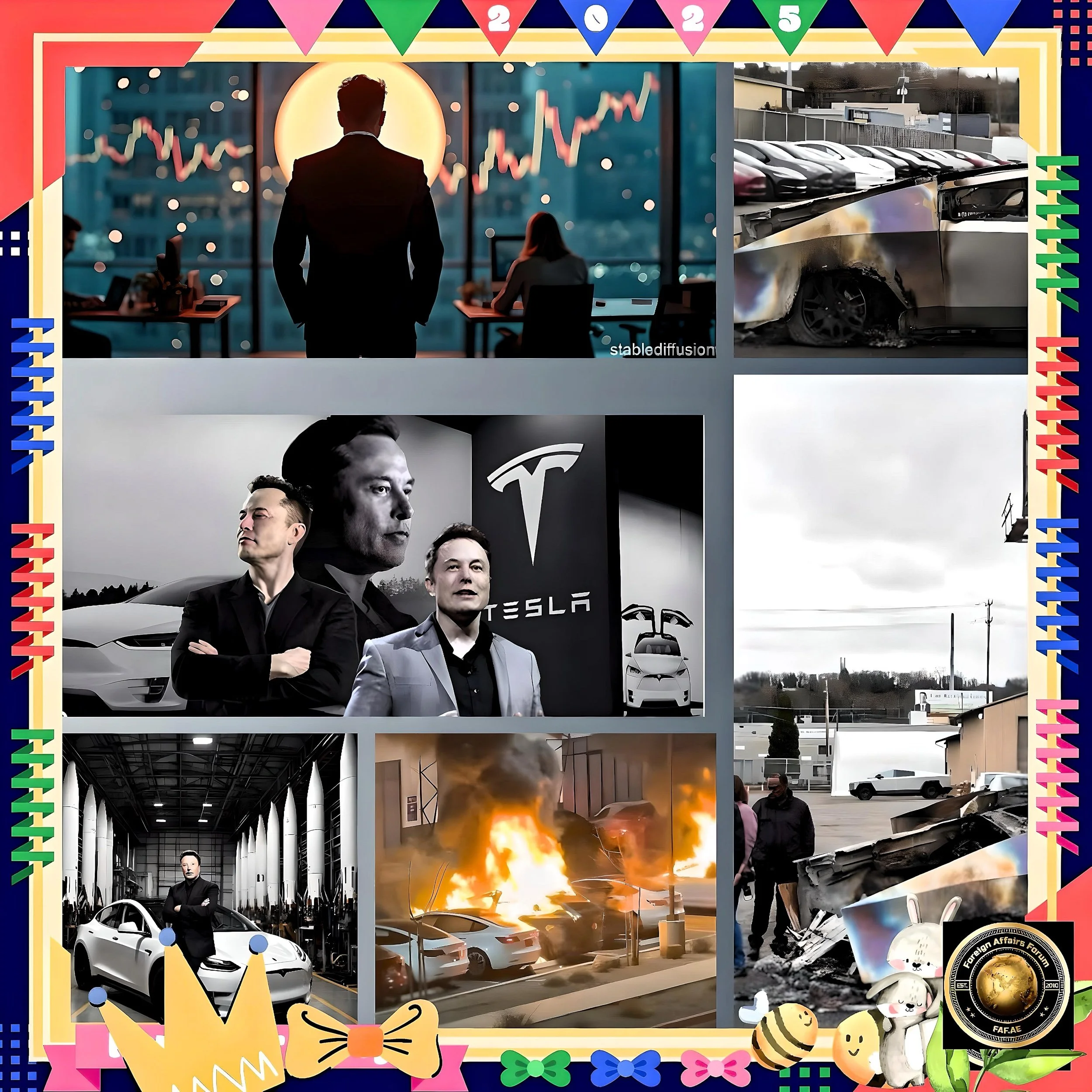
The company’s global delivery decline of 13% in the first quarter of 2025, missing analyst expectations by a substantial margin, reflects both increased competition and consumer resistance to the brand.
The 70% decline in German orders and 49% reduction in Chinese shipments demonstrate that the challenges extend beyond individual markets to encompass global operations.
Tesla’s stock performance has reflected these operational difficulties, with shares declining 15.43% in a single day in March 2025 and losing nearly half their value since peaking in mid-December 2024.
This volatility has directly impacted Musk’s personal wealth, with his net worth declining by $132 billion since the beginning of 2025, including a $29 billion loss in a single day.
Despite these substantial losses, Musk remains the world’s wealthiest individual with an estimated net worth of $386-424 billion, primarily due to his holdings in Tesla and SpaceX.
The challenges facing Tesla extend beyond political controversy to include fundamental competitive pressures in the electric vehicle market.
The company’s failure to introduce new mass-market vehicles in 2025, coupled with the rise of Chinese competitors like BYD, has eroded its market position.
The lack of hybrid options in Tesla’s lineup has proven particularly problematic in European markets where consumers have increasingly favored such vehicles.
Additionally, the company’s aging product lineup has made it vulnerable to newer offerings from established automakers who have rapidly expanded their electric vehicle portfolios.
Investor Concerns and Governance Issues
Tesla’s institutional investors have begun expressing serious concerns about Musk’s divided attention and its impact on company performance.
Major shareholders holding nearly eight million Tesla shares have formally requested that Musk dedicate at least 40 hours per week to the electric vehicle company.
These investors have also proposed that future compensation packages include requirements for full-time commitment and that the board establish clear limitations on directors’ external business activities.
The governance concerns extend to Musk’s ongoing legal battles over executive compensation, with a Delaware judge twice rejecting his $56 billion pay package, describing it as an “unfathomable sum” and citing his undue influence over the board.
Musk’s request to increase his voting power at Tesla to 25% has further unsettled shareholders who view this as an attempt to consolidate control while his attention remains divided across multiple ventures.
These governance issues have contributed to Tesla’s brand value decline, with the company now ranking 95th in prominent surveys of U.S. companies.
The investor pressure reflects broader concerns about Musk’s leadership style and strategic focus.
His acknowledgment of personal flaws during a 2022 TED interview, where he stated that his list of shortcomings would make him “maybe the last person on Earth” he would want to hang out with, has been interpreted by some observers as evidence of self-awareness regarding his management challenges.
However, critics argue that this awareness has not translated into meaningful changes in his approach to corporate leadership or public communications.
The Golden Dome Opportunity: A Potential Lifeline
The Golden Dome missile defense initiative represents a potentially transformative opportunity for Musk’s business empire, offering the prospect of substantial government contracts that could offset declining performance in consumer markets.
SpaceX, in partnership with Palantir and Anduril, has emerged as the frontrunner to win significant portions of this ambitious $175-524 billion project.
The consortium’s proposal focuses on the “custody layer” component, involving the deployment of 400-1,000 satellites to detect and track incoming missiles.
The project’s scope and scale align well with SpaceX’s core competencies in satellite deployment and space-based systems.
The company’s extensive experience with the Starlink constellation provides a foundation for the rapid deployment of surveillance satellites required for the Golden Dome’s initial phase.
Preliminary engineering and design work for the custody layer alone is estimated to cost between $6-10 billion, representing a substantial revenue opportunity for SpaceX.
The consortium’s innovative “subscription service” model, where the government would pay for access to the satellites rather than owning them outright, could accelerate deployment timelines and reduce upfront government investment.
This approach leverages SpaceX’s operational expertise while potentially generating recurring revenue streams that could provide long-term financial stability.
The model has garnered support from some Pentagon officials who view it as a way to circumvent traditional procurement delays that have historically plagued defense projects.
Political Advantages and Competitive Positioning
Despite his resignation from DOGE, Musk’s previous role in the Trump administration may provide competitive advantages in securing Golden Dome contracts.
His substantial campaign contributions exceeding $250 million and personal relationship with President Trump have positioned SpaceX favorably in the selection process.
Reports indicate that Pentagon officials have felt pressure to be “sensitive and deferential” to Musk due to his relationship with Trump, potentially influencing the evaluation process.
The Golden Dome initiative represents Trump’s attempt to fulfill a campaign promise for an “Iron Dome for America,” drawing inspiration from Israel’s successful missile defense system.
Trump’s ambitious timeline of completing the project before leaving office in January 2029 creates urgency that may favor SpaceX’s rapid deployment capabilities over traditional defense contractors’ more deliberate approaches.
The president’s emphasis on working with “the brightest minds in Silicon Valley” suggests a preference for technology companies over established defense contractors.
However, the project faces significant political and financial obstacles that could limit its ultimate scope and impact.
Democratic lawmakers have called for investigations into Musk’s involvement, citing potential conflicts of interest related to his government advisory role and campaign contributions
A coalition of 42 Democratic representatives has demanded a review of the bidding process, arguing that Musk’s political connections may provide unfair advantages to SpaceX.
These investigations could potentially delay or complicate contract awards, reducing the project’s near-term benefits for Musk’s companies.
Critical Analysis: Can Golden Dome Save the Empire?
The Golden Dome project, while representing a significant revenue opportunity, faces substantial limitations in its ability to fundamentally resolve the challenges facing Musk’s business empire.
The project’s estimated value, even at the high end of $524 billion over 20 years, would be distributed among multiple contractors and spread across two decades.
SpaceX’s portion, focused primarily on the custody layer satellites, represents a fraction of this total amount and may not generate sufficient revenue to offset declining performance in Musk’s consumer-facing businesses.
The fundamental challenge lies in the different market dynamics governing government contracts versus consumer products.
While defense contracts can provide stable, long-term revenue streams, they typically involve lower margins and greater regulatory oversight than commercial ventures.
The subscription model proposed by SpaceX, while innovative, has raised concerns among Pentagon officials about long-term costs and operational control.
These concerns could lead to modifications in the contract structure that reduce its financial attractiveness to SpaceX.
Moreover, the Golden Dome project’s success depends heavily on political continuity and Congressional funding approval.
The $25 billion initial investment proposed by Republican lawmakers is tied to a controversial reconciliation bill facing significant obstacles in Congress.
Industry executives have noted that without passage of this legislation, the project’s financing “may not come to fruition,” potentially jeopardizing the entire timeline.
This political uncertainty creates substantial execution risk that could undermine the project’s ability to provide reliable revenue streams.
Structural Challenges Beyond Revenue
The more fundamental challenge facing Musk’s empire extends beyond revenue generation to encompass brand reputation, market positioning, and competitive dynamics.
Tesla’s decline in key markets reflects not merely temporary political backlash but structural shifts in the electric vehicle industry.
The rise of Chinese competitors, expansion of traditional automakers into electric vehicles, and Tesla’s aging product lineup represent competitive pressures that government contracts cannot address.
The reputational damage from Musk’s political activities has created what analysts describe as a “Musk discount” affecting Tesla’s brand value and consumer appeal.
This brand erosion impacts not only vehicle sales but also ancillary services such as charging, insurance, and autonomous driving subscriptions that represent important revenue streams.
The subscription-based nature of many of Tesla’s newer revenue sources makes them particularly vulnerable to consumer sentiment shifts that could persist beyond any individual political cycle.
Furthermore, Musk’s governance challenges and investor concerns about his divided attention represent structural issues that government contracts cannot resolve.
The demands from major Tesla shareholders for increased time commitment and board oversight reflect deeper concerns about corporate leadership and strategic focus.
Even substantial SpaceX revenue from Golden Dome contracts would not address these fundamental governance and leadership challenges that have contributed to Tesla’s recent struggles.
Conclusion
The trajectory of Elon Musk’s career embodies the complex interplay between entrepreneurial vision, political engagement, and market dynamics in the contemporary business environment.
His rise from internet entrepreneur to global technology leader demonstrated exceptional ability to identify and capitalize on transformative opportunities across multiple industries.
However, his recent political involvement and controversial public statements have created significant headwinds for his consumer-facing businesses, particularly Tesla, while his brief tenure in the Trump administration ended in conflict and resignation.
The Golden Dome project represents a significant opportunity for SpaceX but cannot be considered a panacea for the broader challenges facing Musk’s business empire.
While the project could generate substantial revenue and leverage SpaceX’s core competencies in satellite deployment and space-based systems, it faces political uncertainty, competitive pressures, and limitations in addressing the fundamental brand and governance issues affecting Tesla.
The subscription model proposed by SpaceX offers innovative approaches to government contracting but raises concerns about long-term costs and operational control that could limit its ultimate attractiveness.
The question of whether Golden Dome can “save” Musk’s empire ultimately depends on how one defines success and failure in the context of his broader business portfolio.
While Musk remains the world’s wealthiest individual with a diversified technology empire, the challenges facing Tesla reflect deeper issues of brand management, political positioning, and competitive strategy that extend beyond any single contract or revenue stream.
The Golden Dome opportunity may provide financial stability and demonstrate continued innovation capabilities, but addressing the structural challenges facing his empire will require fundamental changes in approach to public engagement, corporate governance, and market positioning that government contracts alone cannot provide.