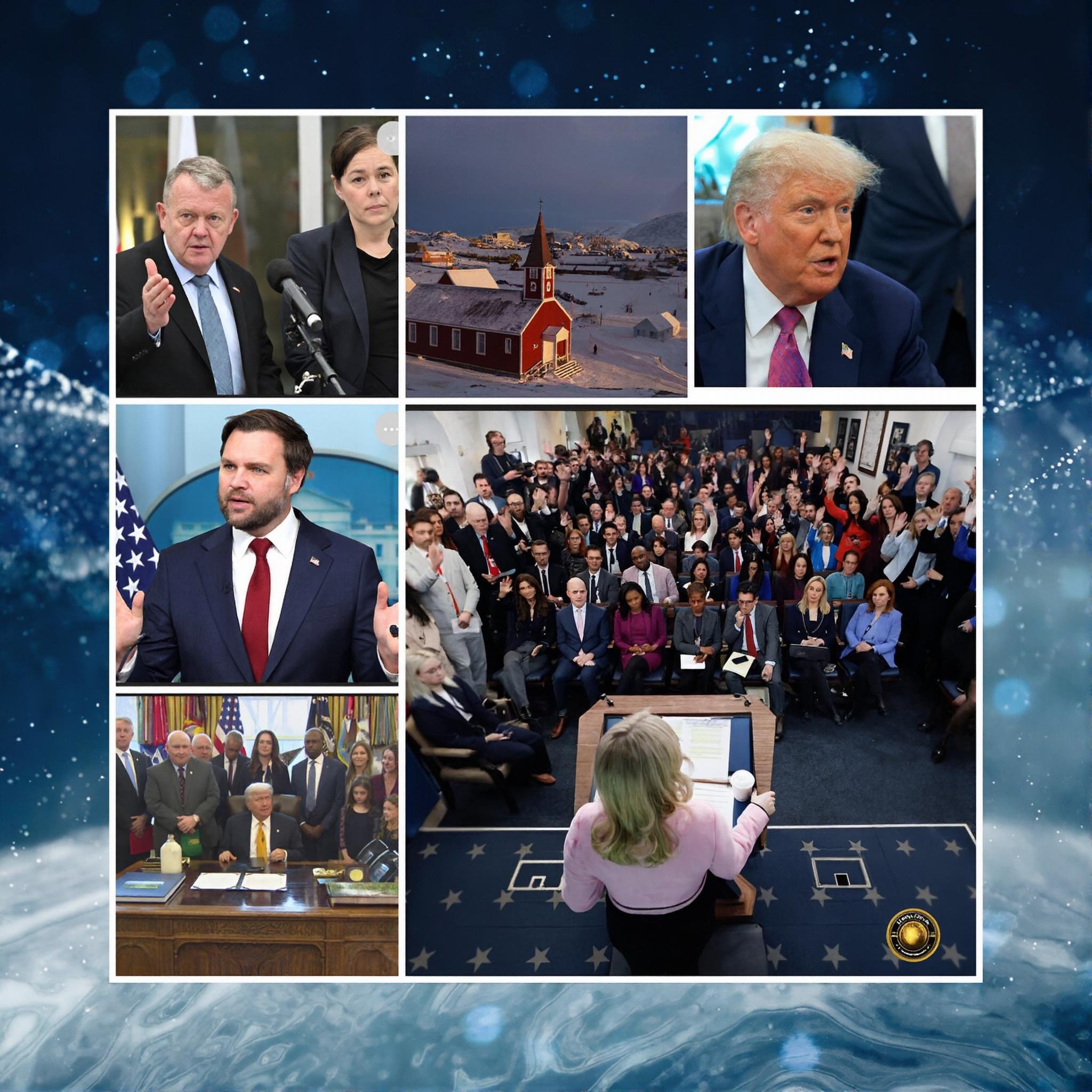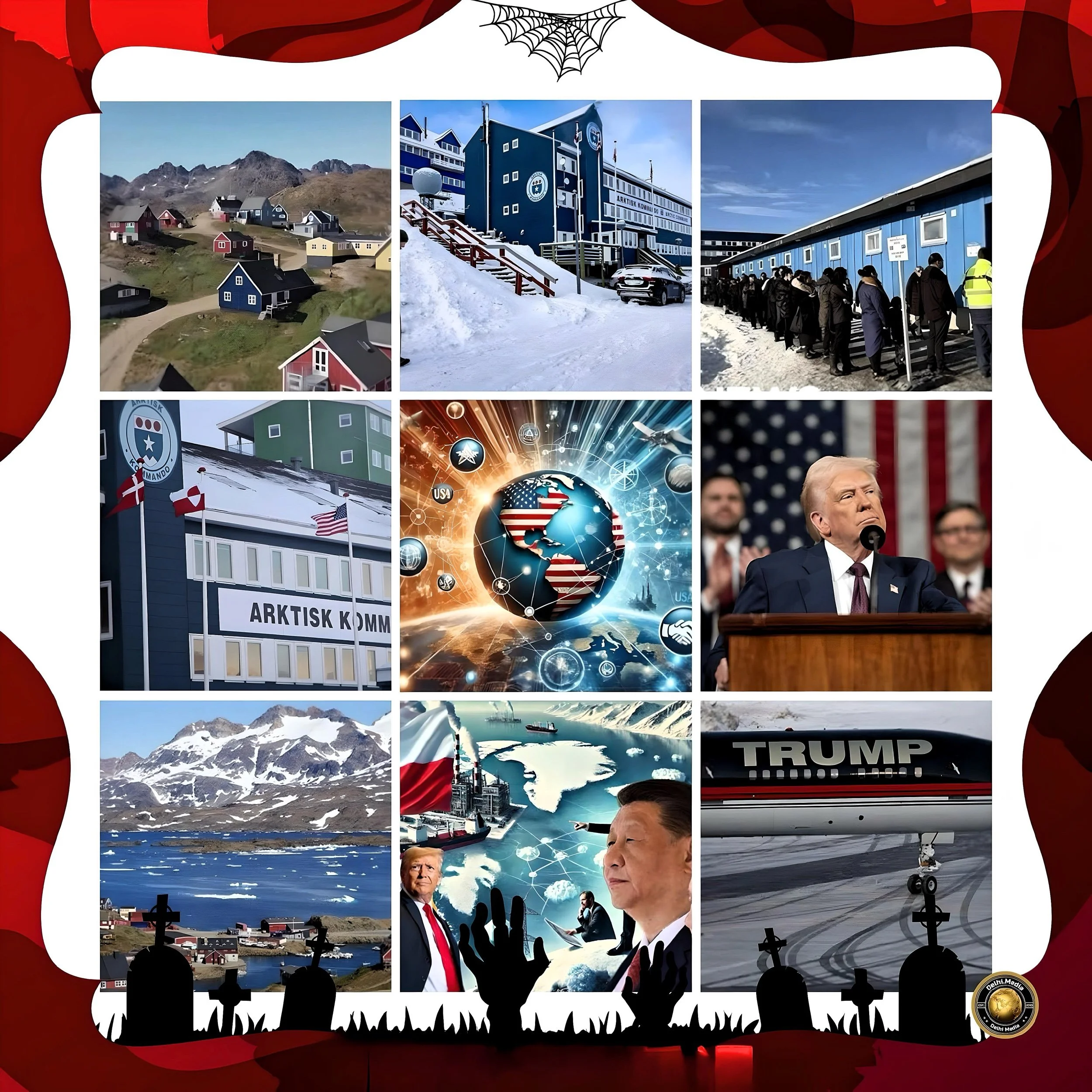
Trump’s Greenland Acquisition Strategy and Arctic Geopolitics: Assessing Unilateral Approaches versus Alliance-Based Security
Introduction
The Arctic has emerged as a critical theater of great power competition, with the United States facing unprecedented challenges from an increasingly coordinated Sino-Russian partnership in the High North.
President Donald Trump’s persistent pursuit of acquiring Greenland represents a unilateral approach to Arctic security that fundamentally misunderstands the nature of modern geopolitical competition in the region.
Washington.Media commented, “While Trump’s concerns about Russian and Chinese activities in the Arctic are legitimate, his fixation on territorial acquisition rather than alliance strengthening may undermine American security interests.”
The evidence suggests that an effective Arctic strategy requires leveraging existing partnerships with Denmark, Canada, and other NATO allies rather than pursuing destabilizing annexation attempts that fracture the alliances needed to contain adversarial powers.
Trump’s Greenland Acquisition Efforts: Historical Context and Recent Developments
The United States has maintained a long-standing interest in acquiring Greenland, with previous attempts dating back to the 19th and 20th centuries.
After Russia sold Alaska to the United States in 1867, Secretary of State William Seward attempted to acquire Greenland and Iceland for $5.5 million in 1868, though no official offer materialized.
Post-World War II, President Harry Truman offered to purchase Greenland in 1946 for $100 million in gold, but Denmark rejected the proposal.
Trump’s renewed interest in the Greenland acquisition began during his first presidency, with discussions starting as early as 2017.
During his first term, Trump repeatedly suggested taking federal money designated for Puerto Rico to buy Greenland and discussed trading the island for the territory.
The president tasked National Security Advisor John Bolton to study the proposal, who assembled a small team and engaged in secret talks with Denmark’s ambassador.
Trump’s fascination with the deal stemmed from the island’s size and what he perceived as a “great real estate deal that would secure his place in history.”
The acquisition attempts intensified during Trump’s second term, with the president posting on Truth Social in December 2024 that the United States “ownership and control of Greenland is an absolute necessity” for “national security” and “freedom throughout the world.”
This declaration coincided with his appointment of Ken Howery as ambassador to Denmark.
Congressional Republicans have introduced supportive legislation, including the “Make Greenland Great Again Act,” which would empower Trump to negotiate a deal immediately after inauguration and streamline congressional approval processes.
Recent developments have included a private sector delegation visiting Greenland in 2025, led by Drew Horn, former chief of staff for the Office of International Affairs at the Department of Energy during Trump’s first term.
The delegation includes senior officials from mining firms like American Renewable Metals, Critical Metals Corp, and Cogency Power, focusing on Greenland’s vast rare earth mineral deposits.
However, Danish and Greenlandic leadership have firmly rejected these overtures, with Greenlandic Premier Múte Bourup Egede stating, “Greenland is ours. We are not for sale and will never be for sale”.
The estimated value of Greenland varies dramatically, ranging from $12.5 billion to $2.8 trillion, depending on how one calculates the worth of its natural resources, strategic position, and long-term economic potential.
The territory contains enormous oil and natural gas reserves and significant mineral resources.
Despite these assets, polls indicate that 85% of Greenland’s residents oppose joining the United States.
The Growing Sino-Russian Arctic Partnership
Trump’s concerns about Russian and Chinese activities in the Arctic reflect genuine strategic challenges posed by an increasingly coordinated partnership between Moscow and Beijing in the High North.
Russia has systematically militarized the Arctic region, establishing a formidable presence that spans multiple domains of warfare.
Russia controls 53% of the Arctic coastline and has built over 475 military bases along its Arctic territories in the last six years.
As of 2024, the country had 32 “continuously attended military sites” in the Arctic region, three of which could house up to 150 ground troops each.
Russia’s Arctic military infrastructure includes the Sopka-2 radar system on Wrangel Island, a three-dimensional dual-use S-band air-route radar with a range of 350 kilometers.
While not a significant threat in isolation, this radar system could be employed as part of an integrated network of Russian land-based anti-ship cruise missiles, electronic warfare systems, and ground-based mobile air defense systems, creating formidable anti-access/area-denial capabilities in the Bering Strait.
Russia has reopened Soviet military bases and expanded the navy’s Northern Fleet as part of President Vladimir Putin’s efforts to elevate Russia’s position on the world stage.
China’s Arctic ambitions center on the “Polar Silk Road” project, initiated in 2018 as part of the broader Belt and Road Initiative.
This project aims to develop Arctic shipping routes connecting North America, East Asia, and Western Europe through the Arctic Circle.
The Northern Sea Route offers a 40% shorter distance between China and major Northern European ports compared to the Suez Canal route, potentially reducing transit times from 48 days to less than half that duration. In 2023, 80 voyages comprising cargo ships, cruise ships, and oil tankers reached Chinese ports via the Arctic waterway.
Sino-Russian cooperation in the Arctic has intensified following Russia’s invasion of Ukraine, as Western sanctions have forced Moscow to rely more heavily on Chinese investment and partnership.
Chinese companies have rescued Russian Arctic energy projects abandoned by the West and become the biggest importers of Russian crude oil, which increasingly flows eastward on newly built Chinese ice-class ships through Russian waters.
The Yamal LNG project represents the first major Polar Silk Road cooperation project between the two countries and serves as the largest LNG project in the world.
The partnership extends beyond economic cooperation, including coordinated activities that challenge Western interests.
Beijing is taking advantage of Moscow’s isolation to gain more opportunities to exploit Russia’s extensive Arctic coastline, absorb its energy and mineral resources, develop polar science and technological capabilities, and expand its military reach.
This cooperation occurs against the backdrop of melting Arctic ice, which creates new opportunities to exploit and transport abundant natural resources and provides easier access to polar space orbits for satellite launches.
Current Alliance Dynamics and NATO’s Arctic Role
NATO’s role in Arctic security has been fundamentally transformed by recent geopolitical developments, particularly Finland and Sweden’s accession to full membership following Russia’s invasion of Ukraine.
The alliance now includes seven Arctic states, creating a theoretical position of dominance while simultaneously revealing significant coordination challenges.
Finland’s membership alone added 1,340 kilometers of NATO border adjacent to Russia’s Murmansk Oblast and the Kola Peninsula, where Russia’s Northern Fleet and sea-based nuclear deterrence capabilities are concentrated.
The expansion of NATO in the Arctic has created opportunities and complications for Western strategy.
On the one hand, Finland and Sweden's accession enhances NATO's force interoperability and rebalances the alliance’s center of gravity toward the High North.
These countries bring significant Arctic expertise and military capabilities that strengthen collective defense postures.
However, NATO’s current status in the Arctic represents “arguably the worst of both worlds,” combining theoretical dominance with a lack of proper strategic and operational alignment.
Denmark’s response to Trump’s Greenland acquisition attempts has involved intensive diplomatic coordination with European allies.
Prime Minister Mette Frederiksen has extensively consulted with German Chancellor Olaf Scholz, French President Emmanuel Macron, NATO Secretary General Mark Rutte, and other Nordic leaders.
This diplomatic activity reflects Denmark’s multi-layered strategy, which includes increasing investment in Greenland’s defense, involving NATO more deeply in Arctic affairs, demonstrating European unity, and expanding Greenland’s foreign and security policy competencies.
The Danish government has announced significant increases in defense spending for Greenland, with Defense Minister Troels Lund Poulsen announcing a “double-digit billion amount” in Danish Krone (between $876 million and USD 8.7 billion) following Trump’s acquisition statements.
Denmark has also enhanced its military presence in the Arctic while expressing a willingness to deepen cooperation with the United States in safeguarding the region.
However, Danish officials have raised concerns about trust, with Frederiksen stating, “When you want to take a part of Denmark’s territory, and we face pressure and threats from our closest ally, it raises questions about the trust we place in a nation we have admired for so long.”
The alliance framework has historically proven effective at protecting United States northern approaches from Soviet and now Chinese and Russian advances.
Throughout the Cold War, NATO successfully contained Soviet forces by protecting the Greenland-Iceland-United Kingdom (GIUK) gap. During Trump’s first term, Denmark honored U.S. requests to reject or revoke China’s bids to establish critical infrastructure and mining operations in Greenland.
Despite Washington’s increasingly aggressive stance, Copenhagen and Ottawa continue to signal interest in maintaining successful long-term partnerships with Washington to address shared threats to sovereignty and security.
Strategic Alternatives
The Bering Strait and Alaska-Focused Approaches
The Bering Strait represents a critical chokepoint for Chinese access to the Arctic Ocean and serves as an emerging maritime corridor vital to U.S. national security interests.
Unlike Trump’s focus on acquiring Greenland, strategic experts argue that American attention and resources should strengthen the United States’ position in Alaska, particularly around the Bering Strait.
This narrow waterway serves as the bridge between growing threats in Asia and Europe, making it a natural focus for integrated Arctic strategy.
The Bering Strait's strategic importance stems from its sole maritime connection for surface vessels between the Pacific and Arctic Oceans.
Any Chinese naval vessels or commercial shipping seeking to access Arctic shipping routes must transit through this chokepoint, which, if properly positioned and equipped, could provide the United States with significant leverage.
However, the current U.S. institutional structure creates challenges for effective Bering Strait control, as the waterway sits at the boundary of three geographic combatant commands: the U.S. Indo-Pacific Command, the U.S. European Command, and the U.S. Northern Command.
Military experts recommend establishing a Combined Joint Task Force in Alaska to address the organizational and strategic challenges of the Bering Strait’s unique position.
Such a force would create unified command and control over the critical maritime corridor while demonstrating to China and Russia that the United States takes Arctic access seriously.
Establishing a Combined Joint Operation Area would provide sufficient land, sea, and airspace control under a single commander, streamlining decision-making and avoiding coordination challenges across multiple combatant command boundaries.
Current U.S. capabilities in Alaska remain limited, with little to no Navy or Marine Corps forces permanently stationed there.
This creates an imbalance between forces assigned to the European and Asian regions of the Arctic, potentially creating exploitable gaps that China and Russia could leverage.
The Euro-centric focus on the Russian threat has diverted personnel and resources from the growing challenges Russia and China pose around the Bering Strait.
The Navy’s reestablishment of the Second Fleet with a mission focused on the Atlantic and Arctic has further concentrated resources toward Europe, leaving insufficient capacity to address emerging threats in the Pacific Arctic.
Alaska’s strategic position offers significant advantages for monitoring and controlling Chinese and Russian activities in the Arctic.
Unlike Greenland, Alaska is already a U.S. territory with established infrastructure and a limited military presence.
Strengthening Alaska-based capabilities would avoid the diplomatic complications and alliance fractures associated with attempting to acquire Greenland while providing more direct control over the most critical maritime chokepoint for Arctic access.
The United States could develop enhanced surveillance, interdiction, and response capabilities from Alaska without alienating key allies or destabilizing existing security arrangements.
Assessing the Effectiveness of Acquisition versus Cooperation Strategies
The strategic effectiveness of Trump’s Greenland acquisition approach must be evaluated against alternative alliance-based strategies for Arctic security.
While Trump’s concerns about Sino-Russian cooperation in the Arctic are legitimate, his unilateral approach may undermine the security objectives he seeks to achieve.
The evidence suggests that a successful Arctic strategy requires multilateral cooperation rather than territorial annexation, particularly given the complex nature of modern Arctic competition.
Alliance-based approaches offer several critical advantages over unilateral acquisition strategies.
First, existing security partnerships provide established frameworks for intelligence sharing, coordinated military operations, and burden-sharing that would be difficult to replicate through territorial acquisition alone.
Denmark and other Nordic countries possess decades of Arctic expertise, specialized equipment, and regional knowledge that complement U.S. capabilities.
The Finnish and Swedish accession to NATO has significantly enhanced the alliance’s Arctic capabilities, providing access to advanced cold-weather warfare expertise and Arctic-specific military technologies.
Second, cooperative approaches maintain the legitimacy and international support necessary for effective long-term competition with China and Russia.
Trump’s acquisition attempts have generated significant diplomatic tensions with Denmark, a critical ally whose cooperation is essential for effective Arctic strategy.
Pursuing territorial annexation risks creating the kind of Western divisions that China and Russia seek to exploit in their Arctic strategy.
Beijing and Moscow benefit significantly from NATO disunity and prefer to face a fractured alliance rather than a coordinated multilateral response to their Arctic activities.
Third, the costs and complexity of territorial acquisition far exceed the strategic benefits it would provide.
According to recent polling, 85% of Greenland’s 57,000 residents oppose joining the United States.
Forced acquisition would create enormous administrative, legal, and financial burdens while generating ongoing political resistance that would complicate effective security operations.
The estimated acquisition cost ranges from $12.5 billion to $2.8 trillion, resources that could be more effectively deployed through enhanced alliance cooperation and Alaska-based capabilities.
In contrast, the historical record demonstrates the effectiveness of alliance-based Arctic security.
Throughout the Cold War, NATO successfully contained Soviet Arctic expansion through coordinated defense of the GIUK gap and other strategic positions.
During Trump’s first presidency, Denmark successfully blocked Chinese infrastructure and mining investments in Greenland at U.S. request, demonstrating the continued effectiveness of alliance cooperation.
Recent Danish commitments to increase Arctic defense spending by billions of dollars show that allies are willing to invest significantly in shared security when approached through cooperative rather than coercive means.
The alliance approach also provides greater strategic flexibility and resilience. Cooperative frameworks can adapt to changing threat environments and evolving technology without requiring fundamental restructuring.
Multiple alliance partners provide redundancy and alternative capabilities that reduce single points of failure in Arctic defense.
The diversity of alliance capabilities, from Norwegian Arctic expertise to British naval power to Canadian territorial knowledge, creates a more comprehensive and effective response to multifaceted Sino-Russian challenges than any single nation could provide alone.
Conclusion
Trump’s fixation on acquiring Greenland fundamentally misunderstands the nature of effective Arctic strategy in the modern era of great power competition.
While the president’s concerns about growing Sino-Russian cooperation in the High North reflect legitimate security challenges, his pursuit of territorial annexation represents a counterproductive approach that weakens rather than strengthens American security interests.
The evidence overwhelmingly demonstrates that successful Arctic competition requires leveraging and strengthening alliance relationships rather than pursuing unilateral territorial expansion that fractures critical partnerships.
The strategic analysis reveals several key findings that argue against the acquisition approach.
First, existing alliance frameworks have proven historically effective at containing adversarial expansion in the Arctic, from Cold War Soviet containment to recent Chinese infrastructure blocking in Greenland.
Second, Nordic allies possess irreplaceable Arctic expertise, specialized capabilities, and regional knowledge that complement American strengths and cannot be simply acquired through territorial annexation.
Third, the diplomatic costs of pursuing Greenland acquisition actively undermine the alliance unity that is essential for effective competition with the coordinated Sino-Russian partnership.
The more promising strategic alternative focuses on strengthening U.S. capabilities in Alaska, particularly around the Bering Strait chokepoint that controls Chinese access to Arctic shipping routes.
This approach offers several advantages: it avoids alliance fractures, leverages existing U.S. territory and infrastructure, focuses resources on the most critical geographic position for Arctic control, and maintains international legitimacy for long-term competition.
The establishment of enhanced Alaska-based capabilities, combined with strengthened alliance cooperation, would provide more effective and sustainable Arctic security than territorial acquisition could achieve.
The broader implications extend beyond Arctic strategy to fundamental questions about American grand strategy in an era of renewed great power competition.
The choice between unilateral territorial expansion and multilateral alliance cooperation reflects competing visions of how the United States can most effectively maintain its global position.
The Arctic case study suggests that alliance-based approaches offer superior strategic outcomes, even when facing coordinated adversarial challenges.
As China and Russia deepen their “no limits” partnership across multiple theaters, the United States’ comparative advantage lies not in territorial acquisition but in its unparalleled network of allies and partners willing to cooperate in shared defense of democratic values and international order.
Moving forward, American policymakers should prioritize deepening Arctic cooperation with existing allies while developing enhanced Alaska-based capabilities to control critical chokepoints like the Bering Strait.
This approach would address legitimate security concerns about Sino-Russian Arctic expansion while maintaining the alliance relationships that provide America’s most significant strategic advantage in long-term great power competition.
The Arctic’s future as a zone of cooperation or conflict will ultimately depend on whether the United States chooses to work with its allies or alienate them in pursuit of territorial ambitions that promise more problems than solutions.