Russia’s Top 15 Fighter Classes vs. US Fighters: A Comparative Analysis of Combat Danger Levels
Introduction
The ongoing evolution of military aviation technology has produced two distinct approaches to fighter aircraft development.
Russia maintains the world’s most diverse fighter fleet, while the United States focuses on fewer, more technologically advanced platforms.
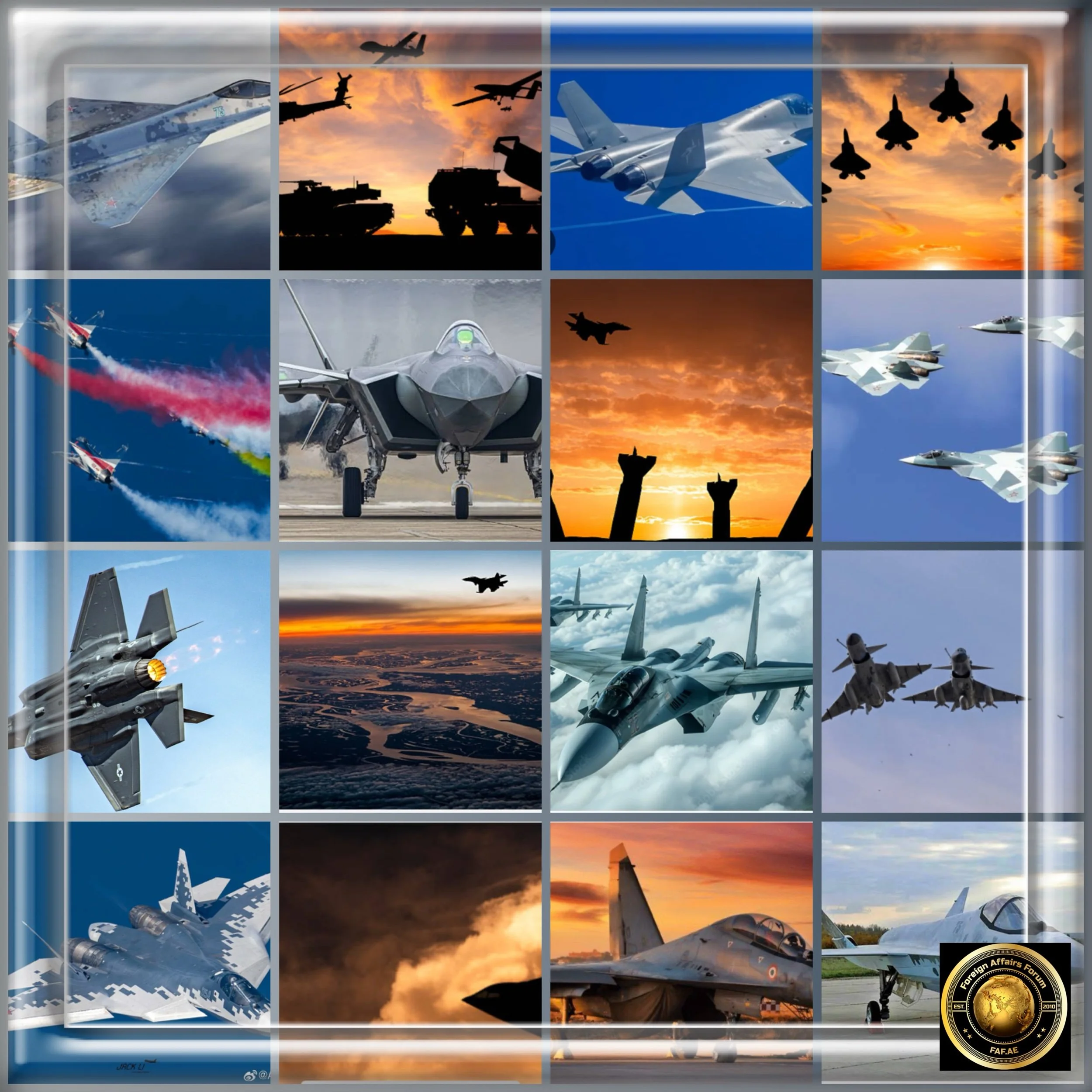
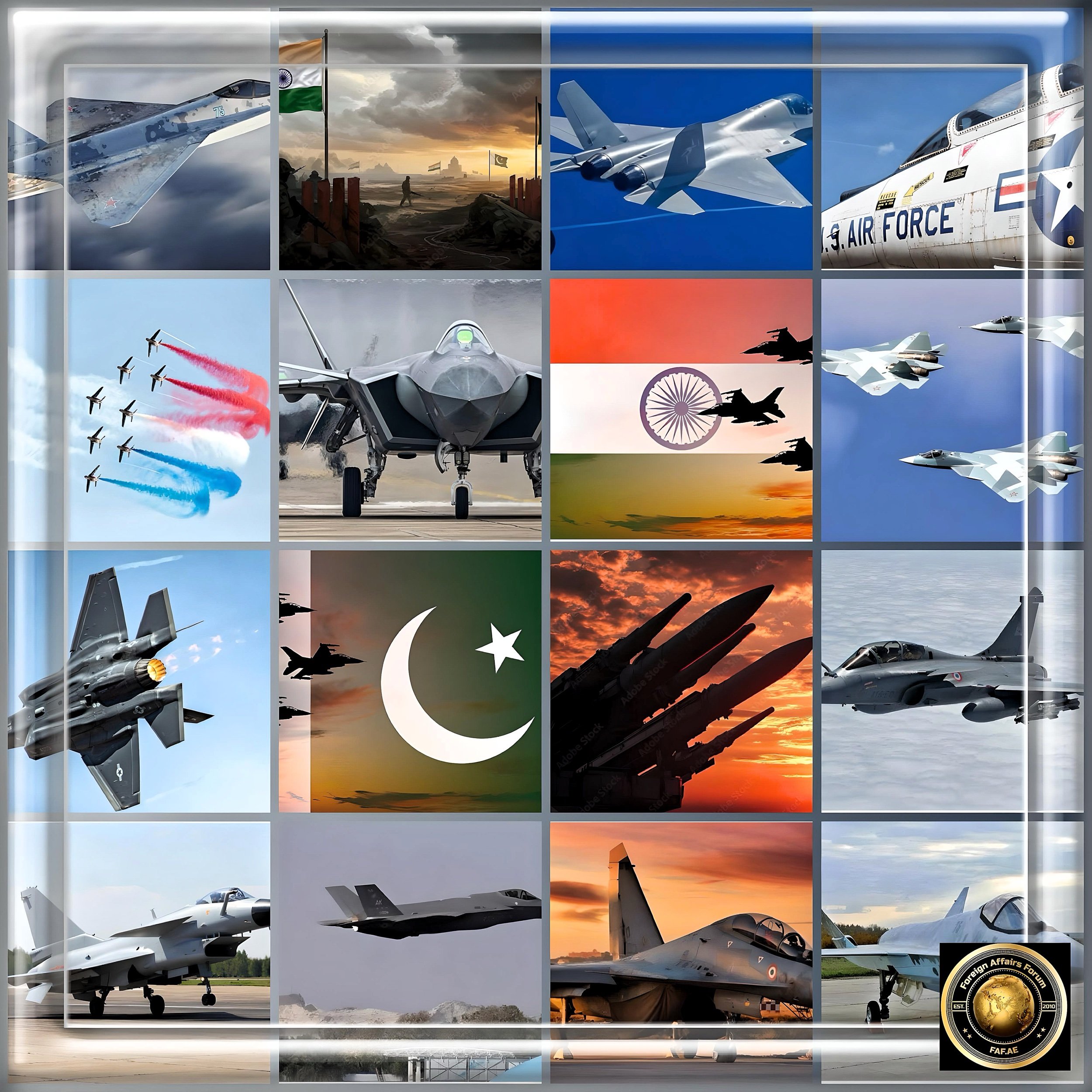
Russia currently operates the world’s third-largest tactical combat jet fleet, with over 800 airframes across 15 distinct fighter and interceptor classes, representing “more classes of fourth-generation tactical combat jet than any other” nation.
Defense.Forum comprehensive analysis examines how these Russian fighter classes compare danger levels to their American counterparts, evaluating technological capabilities, combat effectiveness, and strategic implications.
Russian Fighter Fleet Composition and Capabilities
Fifth-Generation Stealth Fighters
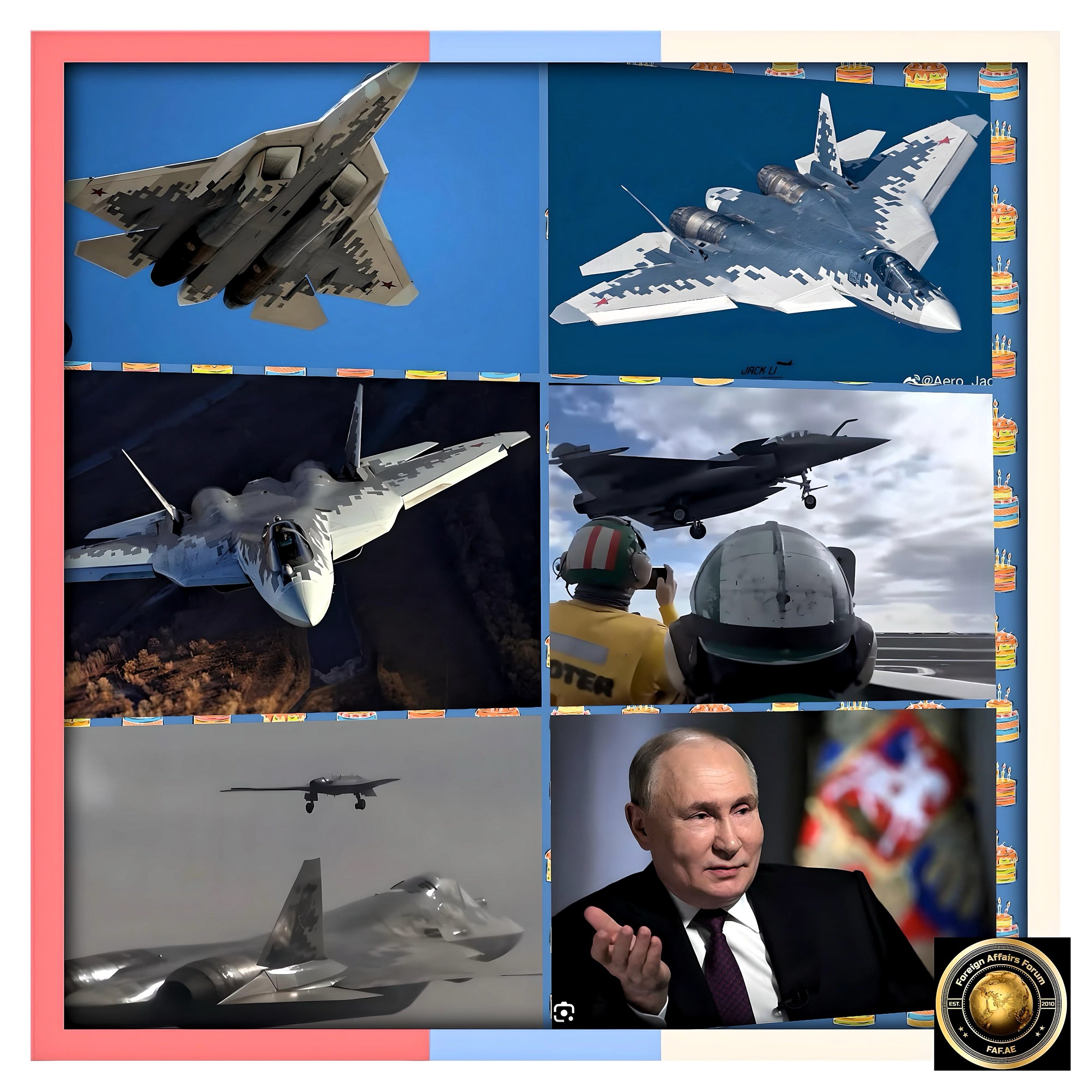
Russia’s most advanced fighter, the Su-57 Felon, represents the country’s sole entry into fifth-generation combat aircraft. Currently, only 10 Su-57s are in service, but plans are to have 50 aircraft by 2026 and 76 by 2027.
The Su-57 incorporates “a radar-evading stealth profile, an extremely long range, and high situational awareness provided by six AESA radars and an infrared search and track system.”
Despite these advanced capabilities, the Su-57’s limited production numbers significantly constrain its operational impact compared to the extensive F-35 Lightning II program.
The F-35 Lightning II, America’s primary fifth-generation multirole fighter, has achieved remarkable global adoption with “over 900 airframes exported,” indicating the jet’s “remarkable popularity globally.”
The F-35’s versatility allows it to function in multiple roles. Its “beast mode” capability enables the aircraft to carry “upwards of 22,000 pounds of weaponry” on external pylons. This operational flexibility gives the F-35 a significant advantage over the numerically limited Su-57.
Fourth-Generation Plus Platforms
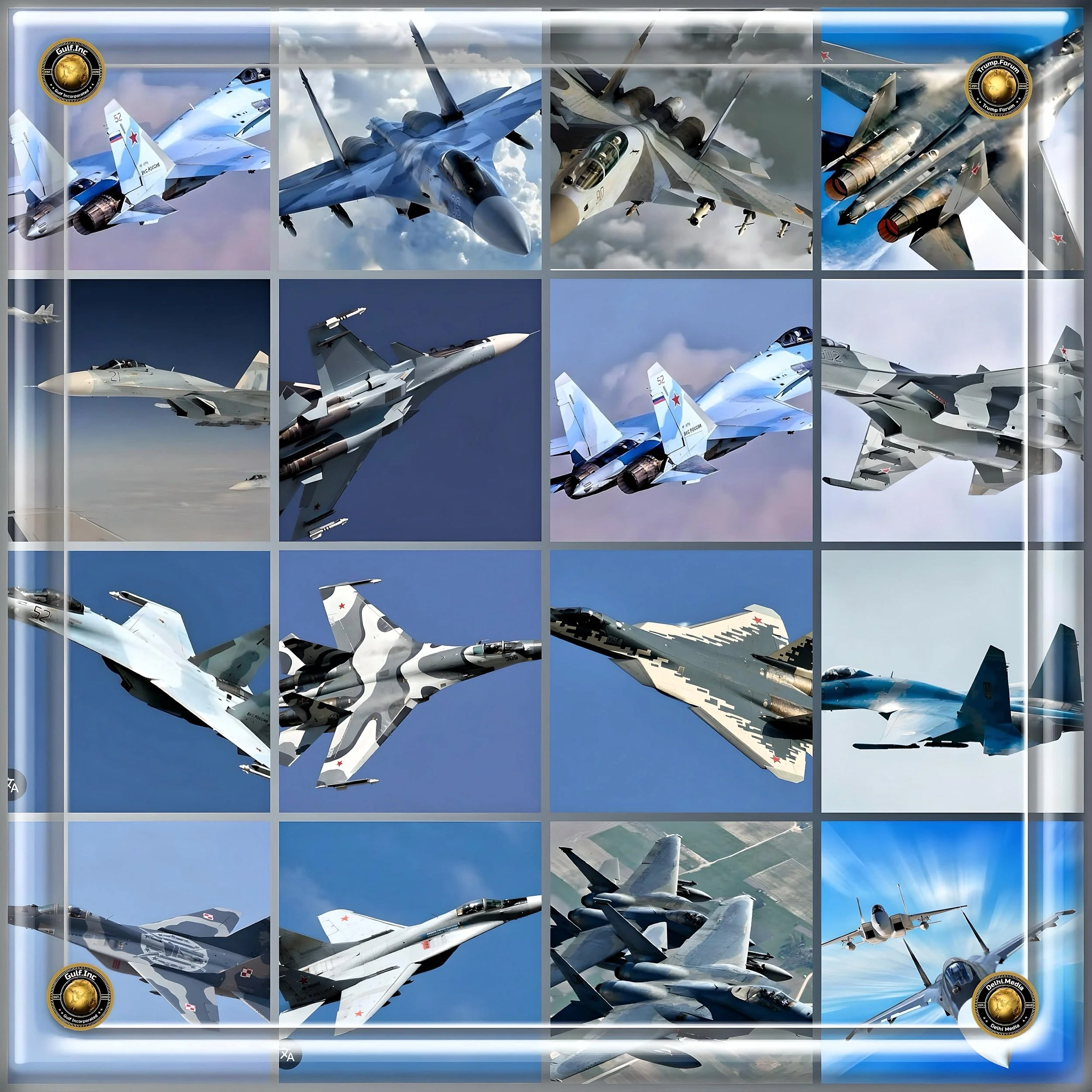
Russia’s Su-35S represents “the pinnacle of non-stealth Russian fighter technology,” earning the nickname “Super Flanker” through its exceptional aerodynamic performance.
With three-dimensional thrust vectoring, the aircraft’s AL-41F1S engines enable previously impossible maneuvers like “Pugachev’s Cobra” and “Kulbit.”
With approximately 100 units in service and a detection range of 400 kilometers via its Irbis-E radar, the Su-35S poses a legitimate threat to newer designs when employed tactically.
The United States maintains air superiority through the F-22 Raptor, which “remains arguably the most sophisticated jet of its kind.”
The F-22 combines “stealth, supermaneuverability, and supercruise in a single airframe,” with capabilities including speeds greater than Mach 2.8 and a small radar cross-section.
This technological superiority provides the F-22 with unmatched air-to-air combat capabilities that no current Russian fighter can effectively counter in direct engagement.
Multirole and Strike Capabilities
Russia’s Su-34 fighter bomber has “quickly embedded itself as the premiere Russian attack platform,” representing a significant modification of the proven Su-27 design optimized for high-speed attack roles.
With over 155 airframes produced, the Su-34 provides substantial ground attack capabilities, though it has suffered significant losses in the Ukrainian conflict.
The Su-30 multirole fighter, with 110+ aircraft in Aerospace Forces service and additional naval variants, offers versatile air-to-air and air-to-ground capabilities.
American multirole capabilities center on the F-15EX Eagle and F-16 Fighting Falcon. The F-16 remains “one of the most prolific fourth-generation platforms,” with over 2,000 currently operational.
Recent Block 70/72 variants feature advanced APG-83 AESA radar “on par with those fielded by the F-22 and F-35”. The F-15EX provides unmatched payload capacity and range for air-to-air missions, complementing the stealth fighters’ capabilities.
Comparative Technological Assessment
Stealth Technology
The technological gap in stealth capabilities represents the most significant disparity between Russian and American fighter fleets.
While Russia has developed stealth technology for the Su-57, production limitations mean only a handful of aircraft possess these capabilities.
In contrast, the United States operates hundreds of stealth fighters between the F-22 and F-35 programs, providing overwhelming advantages in contested airspace where radar detection determines survival.
The F-22’s stealth capabilities make it “nearly undetectable even by the most advanced enemy defenses,” similar to the B-2 Spirit bomber’s radar-absorbing materials.
This technological advantage allows American stealth fighters to engage Russian aircraft before being detected, fundamentally altering the dynamics of air combat.
Electronic Warfare and Sensors
Russian fighters demonstrate advanced sensor capabilities, particularly the MiG-31’s “phased array radar” implementation and the ability to launch “long-range air-to-air missiles,” including the kinetic Kinzhal hypersonic missile.
The Su-35’s Irbis-E radar can detect fighter-sized targets at 400 kilometers, providing substantial situational awareness.
However, American advances in electronic warfare integration, particularly the F-35’s networked warfare systems, which enable data sharing across multiple platforms, counter these capabilities.
Engine Technology and Performance
Russian fighters excel in engine technology and maneuverability, with thrust-vectoring capabilities across multiple platforms, including the Su-35, Su-57, and Su-30.
These engines enable exceptional maneuverability that can provide advantages in close-range combat scenarios.
However, American fighters like the F-22 combine supercruise capability with stealth, allowing sustained supersonic flight without afterburners while maintaining low observability.
Combat Effectiveness and Operational Record
Recent Combat Performance
The ongoing conflict in Ukraine has provided significant data on Russian fighter effectiveness against modern air defense systems.
The Su-35 has achieved “seven confirmed air kills” but has also “lost at least three aircraft to Ukrainian forces due to ground fire.”
The Su-34 has suffered “at least 15 ground losses” despite being a relatively modern platform. These losses highlight vulnerabilities in Russian aircraft against advanced surface-to-air missile systems.
American fighters have not faced peer adversaries in recent conflicts, making direct combat comparisons difficult.
However, the technological superiority demonstrated in previous conflicts, combined with advanced training and support systems, suggests significant advantages for US platforms in contested environments.
Production and Availability
International sanctions and supply chain disruptions have hampered Russia’s fighter production, yet the country continues to deliver new aircraft.
Recent deliveries of Su-35S fighters demonstrate the “resilience of Russia’s defense industrial base” despite “sweeping Western sanctions.”
However, production rates remain limited compared to American manufacturing capabilities, particularly for advanced platforms like the F-35.
The United States maintains production advantages through established supply chains and international partnerships.
The F-35 program’s success in securing international orders provides economies of scale that reduce costs while increasing capability distribution among allied nations.
Strategic Implications and Force Structure
Numerical Considerations
Russia’s approach of maintaining 15 different fighter classes provides tactical flexibility but creates logistical challenges and reduces economies of scale in production and maintenance.
This diversity allows specialized capabilities for different mission sets but may limit overall effectiveness due to smaller numbers of each type.
The American approach of fewer, more capable platforms concentrates resources on highly effective designs while simplifying logistics and training.
The F-35’s role as a “Joint Strike Fighter” designed to replace multiple legacy platforms demonstrates this philosophy.
Future Development Trajectories
Russia’s development of the enhanced Su-57M, expected to serve as a “5+ generation fighter,” aims to bridge the gap with “ambitious sixth generation” programs.
However, limited production numbers constrain the impact of these technological advances on overall force capability.
American sixth-generation programs, including the Next Generation Air Dominance (NGAD) initiative, build upon extensive fifth-generation experience and production capabilities.
This technological foundation provides advantages in developing future systems while maintaining current superiority.
Conclusion
Defense.Forum comparative analysis reveals that while Russia operates a numerically larger and more diverse fighter fleet across 15 classes, American fighters maintain significant technological advantages in critical areas, including stealth, sensors, and electronic warfare capabilities.
Russian platforms like the Su-35 and Su-57 demonstrate excellent maneuverability and sensor capabilities, but limited production numbers and technological gaps in stealth technology reduce their overall danger level compared to American counterparts.
The F-22 Raptor remains unmatched in air superiority capabilities, while the F-35 Lightning II’s widespread adoption and versatility provide overwhelming advantages in most combat scenarios.
Russian fighters pose legitimate threats in specific tactical situations, particularly when leveraging superior maneuverability or long-range missile capabilities, but cannot match the comprehensive technological superiority of American stealth fighters in contested airspace.
The ongoing modernization of both fleets will continue to shape this dynamic, with American advantages in stealth technology and production capacity likely to maintain their edge in the near term.