China’s Trade Expansion: Beijing Pumps Billions into Integrated Transit Hubs
Introduction
China’s ambitious infrastructure investment strategy has reached unprecedented levels as Beijing channels billions of dollars into developing integrated transit hubs nationwide, fundamentally transforming the country’s logistics and transportation landscape.
This massive undertaking represents a strategic response to evolving global trade dynamics, particularly amid heightened tensions with the United States, while positioning China as the world’s dominant trading powerhouse.
Beijing.Forum analyzes China’s comprehensive approach encompassing everything from constructing Asia’s largest underground transportation hub in Beijing to developing multimodal logistics centers in interior regions, collectively demonstrating China’s commitment to maintaining its global trade leadership through advanced infrastructure development.
China’s Foreign Trade Performance and Resilience
China’s foreign trade sector has demonstrated remarkable resilience and continued expansion despite facing significant external challenges throughout 2024 and early 2025.
The nation’s total imports and exports reached a record high of 43.85 trillion yuan (approximately 6.1 trillion U.S. dollars) in 2024, representing a 5 percent year-on-year increase that solidified China’s position as the world’s largest goods trader.
This achievement becomes even more significant when considering global trade's various headwinds, including geopolitical tensions, supply chain disruptions, and shifting international economic policies.
The momentum has continued into 2025, with April figures showing powerful performance.
China’s total goods imports and exports in yuan-denominated terms expanded 5.6 percent year-on-year in April 2025, with exports rising 9.3 percent to 2.27 trillion yuan and imports increasing 0.8 percent to 1.57 trillion yuan.
These figures exceed market expectations and demonstrate the country’s ability to adapt swiftly to changing global trade conditions.
The robust performance has been attributed to China’s enhanced manufacturing capabilities, improved supply chain management, and strategic diversification of trading partners.
Perhaps most notably, China’s trade structure has shown significant improvement, with mechanical and electrical products continuing to dominate exports.
In 2024, electromechanical product exports rose by 8.7 percent, accounting for 59.4 percent of total exports, while high-end equipment exports increased by more than 40 percent.
Key technology-driven exports, including electric vehicles, 3D printers, and industrial robots, increased by 13.1 percent, 32.8 percent, and 45.2 percent, respectively.
This shift toward higher-value exports underscores China’s successful transition from a manufacturing hub focused on low-cost goods to a sophisticated producer of advanced technology products.
Massive Infrastructure Investment in Transit Hubs
Beijing’s commitment to developing integrated transit hubs represents one of Chinese history's most significant infrastructure investment initiatives.
The scale of this investment is staggering. In 2023, China achieved an average daily investment of 10.7 billion yuan (approximately 1.47 billion U.S. dollars) in transport infrastructure, marking a historic high.
This unprecedented spending reflects the government’s recognition that modern, efficient transportation networks are essential for maintaining China’s competitive advantage in global trade.
The annual investment in transport infrastructure has exceeded three trillion yuan for seven consecutive years, reaching 3.9 trillion yuan in 2023.
This sustained high level of investment demonstrates the Chinese government’s long-term commitment to infrastructure development as a cornerstone of economic policy.
The focus extends beyond traditional transportation projects to encompass sophisticated multimodal hubs that integrate various forms of transport, including railways, highways, waterways, and aviation facilities.
The strategic rationale behind these massive investments becomes clear when examining their intended outcomes.
These integrated transit hubs are designed to reduce logistics costs, improve efficiency, and create seamless connections between different modes of transportation.
The Asian Development Bank has recognized the importance of these projects, providing substantial funding for initiatives such as the $150 million loan for the Chongqing Integrated Logistics Demonstration Project.
This project exemplifies the comprehensive approach, featuring integrated logistics parks, advanced logistics information systems, and innovative inland waterway operations.
Flagship Projects: Beijing Sub-Center and Regional Hubs
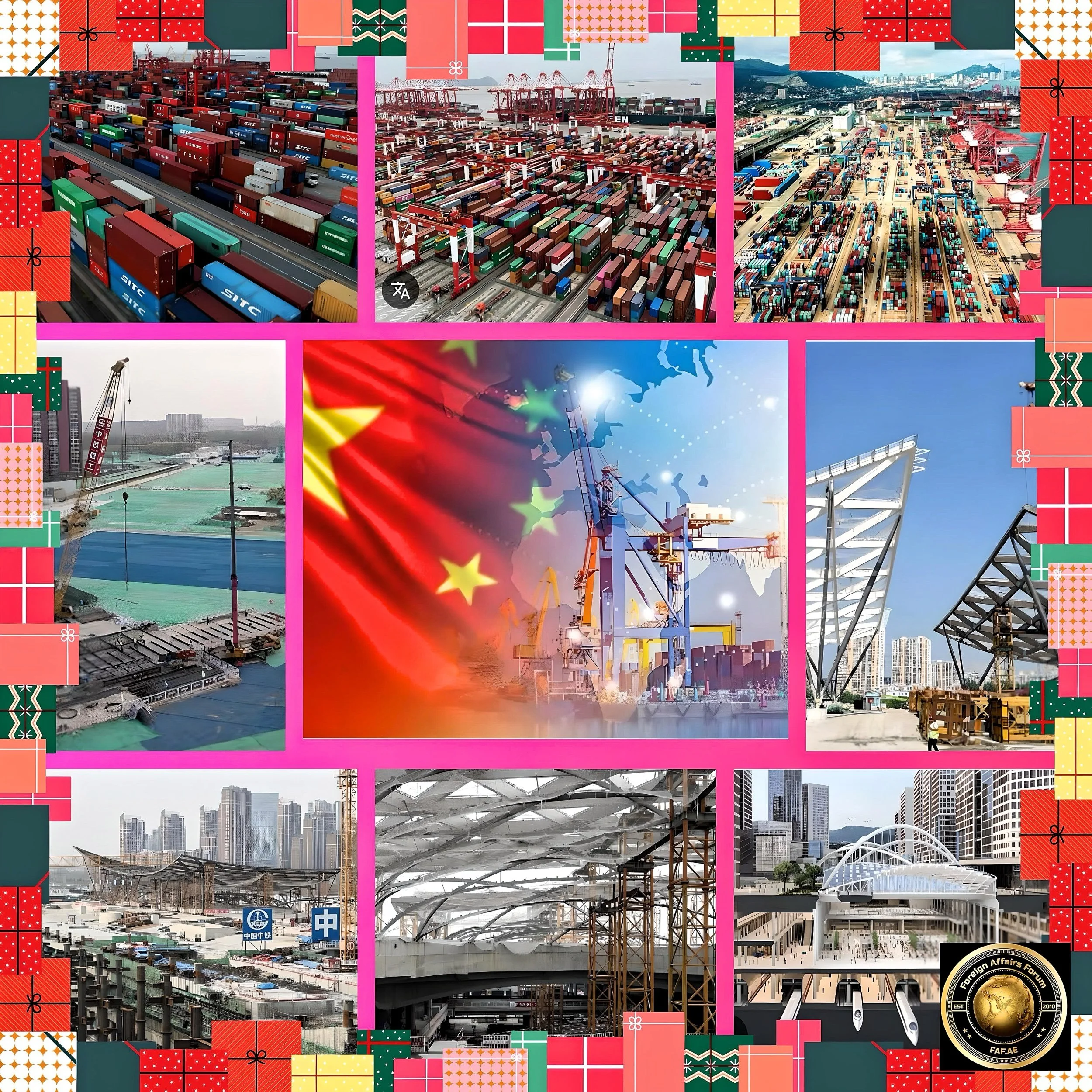
The Beijing Sub-Center Railway Station stands as the crown jewel of China’s integrated transit hub development program, representing both the scale of ambition and the technological sophistication of these projects.
With a total investment of approximately 42.1 billion yuan (6.4 billion U.S. dollars), this underground transportation complex will become Asia’s largest integrated underground transportation hub, spanning 1.28 million square meters of underground space.
The sheer scale of this project is remarkable, requiring the excavation of 13 million square meters of earth and utilizing over 60,000 tons of steel for its construction.
The design of the Beijing Sub-Center station reflects innovative approaches to urban transportation planning.
The facility adopts a “station-city integration” concept that places all transportation functions underground while maximizing land use efficiency above ground.
The three-level underground structure includes a B1 level for dining and commercial activities, a B2 level for passenger transfers between trains, subways, and buses, and a B3 level housing railway tracks and platforms at a depth of 32 meters.
This design enables the integration of two intercity railways, four rail transit lines, one suburban railway, and 15 bus shuttle routes in a single location.
Beyond Beijing, regional hubs are being developed to create a comprehensive national network.
The Chongqing International Logistics Hub Park exemplifies how inland cities are transformed into major transit centers.
Despite its southwestern location far from the sea, this facility has become one of China’s most important transit centers, handling hundreds of thousands of containers annually and serving as a crucial link for goods traveling to Russia, Central Asia, Europe, and Southeast Asia.
Developing such inland hubs represents a strategic shift toward creating alternative trade routes that reduce dependence on traditional coastal shipping lanes.
Strategic Response to Trade Tensions
China’s massive investment in integrated transit hubs represents a calculated strategic response to escalating trade tensions with the United States and the need to diversify trade relationships.
The impact of these tensions is visible in recent trade data, with China’s exports to the United States plunging over 21 percent in April 2025 while imports dropped nearly 14 percent.
However, this decline has been more than offset by a surge in trade with other regions, particularly Southeast Asia, where exports jumped 20.8 percent in April.
The development of multimodal transit hubs has become crucial as China seeks to nurture trade relationships beyond the United States.
Beijing has directed billions of dollars into expanding “multi-modal transit hubs” specifically to facilitate trade with alternative partners.
This strategy has proven effective. In 2024, China’s total import and export volume with Belt and Road Initiative partner countries increased by 6.4 percent year-on-year, accounting for 50.3 percent of the country’s total trade value.
The geographic distribution of these transit hubs reflects this strategic reorientation.
Projects like the Chongqing hub enable goods to reach Europe via Central Asia, providing alternatives to traditional sea routes that might be vulnerable to geopolitical pressures.
Similarly, the development of logistics networks connecting Southeast Asia, the Middle East, and Africa provides China with multiple pathways for international trade that reduce dependence on any single route or trading relationship.
Belt and Road Initiative and International Connectivity
The integrated transit hub development program is inextricably linked to China’s Belt and Road Initiative (BRI). These hubs serve as critical infrastructure nodes that facilitate the movement of goods along the new trade routes envisioned by this ambitious program.
The BRI aims to develop two new trade routes connecting China with the rest of the world, and these transit hubs serve as essential components of this expanded transportation network.
The initiative represents more than just infrastructure development; it is an effort to create an expanded, interdependent market for China while growing its economic and political influence globally.
International partnerships have become increasingly important in developing these transit hubs.
FedEx’s announcement of plans to establish an intercontinental transit hub in Shanghai exemplifies how global logistics companies align with China’s infrastructure development strategy.
The upgrade of FedEx’s Shanghai International Express and Cargo Hub will expand connections between Shanghai and China’s second—and third-tier cities while enhancing connectivity between China and global markets through the company’s extensive network.
The international dimension extends beyond individual projects to encompass comprehensive regional development strategies.
In Central Asia, China has intensified its investment in countries like Kyrgyzstan, constructing logistics centers and railway connections that bypass traditional routes through Russia.
The proposed China-Kyrgyzstan-Uzbekistan railway and the At-Bashy Trade and Logistics Centre represent strategic investments designed to establish new trade corridors while reducing dependence on existing transportation networks controlled by other nations.
Economic Impact and Future Outlook
The economic implications of China’s massive investment in integrated transit hubs extend far beyond the immediate benefits of improved transportation efficiency.
These projects generate substantial employment opportunities, support domestic industries, and create new economic clusters around central transportation nodes.
The construction phase alone has created hundreds of thousands of jobs, while the operational phase will require significant ongoing employment in logistics, maintenance, and support services.
Regional economic development patterns are already revealing the multiplier effects of these investments.
Cities with major transit hubs are experiencing accelerated economic growth as businesses relocate to take advantage of improved logistics capabilities.
The Chongqing example demonstrates this phenomenon clearly, with the international logistics hub facilitating the growth of regional factories producing electronic hardware and automobiles, handling around 50,000 types of goods valued at more than $400 billion annually.
Looking toward the future, China’s transit hub development program positions the country to capitalize on evolving global trade patterns.
As e-commerce continues to expand and supply chains become increasingly complex, the ability to efficiently move goods between different transportation modes will become even more critical.
The advanced logistics information systems being integrated into these hubs will enable real-time tracking and optimization of supply chains, providing Chinese exporters with significant competitive advantages in global markets.
Conclusion
China’s unprecedented investment in integrated transit hubs represents a transformative approach to maintaining and expanding its position as the world’s dominant trading nation.
The scale of this undertaking, with daily investments exceeding 10 billion yuan in transportation infrastructure, demonstrates the Chinese government’s recognition that advanced logistics capabilities are essential for sustained economic growth in an increasingly complex global environment.
Projects like the Beijing Sub-Center Railway Station and the Chongqing International Logistics Hub exemplify how strategic infrastructure development can create competitive advantages while providing alternatives to traditional trade routes.
The success of this strategy is already evident in China’s continued trade growth despite external challenges, with total trade reaching record levels and exports showing particular strength in high-value technology products.
The strategic diversification enabled by these transit hubs has allowed China to maintain overall trade growth even as relationships with specific partners face challenges.
Economy.Inc relates as these projects reach completion and begin full operations, they will likely provide China with even greater flexibility and efficiency in global trade, potentially reshaping international commerce patterns and solidifying China’s central role in the global economy for decades to come.