America’s Frozen Ambition: Inside Trump’s Plan to Lock Down Greenland Before China and Russia Do
Executive Summary
Donald Trump’s eye remains firmly fixed on Greenland. In his second presidency, the idea of bringing the island under U.S. control has shifted from an eccentric 2019 sideshow to a persistent, structured policy vector embedded in Washington’s Arctic and great‑power strategy.
What is now emerging is not a one‑off real estate fantasy but a sustained campaign to increase U.S. leverage over Greenland’s security, resources, and long‑term political trajectory in the middle of intensifying U.S.–China–Russia competition in the Arctic.
Introduction
Trump’s renewed Greenland push must be understood as the convergence of three imperatives: national security anxieties about the Arctic as a new front in great‑power rivalry, economic concerns over critical minerals and supply‑chain resilience, and domestic political incentives to dramatize American power and transactional statecraft.
Greenland, a vast, sparsely populated, self‑governing territory of Denmark, now sits at the intersection of melting ice, emerging sea lanes, and the scramble for rare earths and strategic resources that underpin twenty‑first‑century industry and defense. The question today is no longer whether Trump is serious, but how far he is prepared to go, and how Denmark, Greenland, NATO, the European Union, Russia, and China are likely to respond.
History and current status
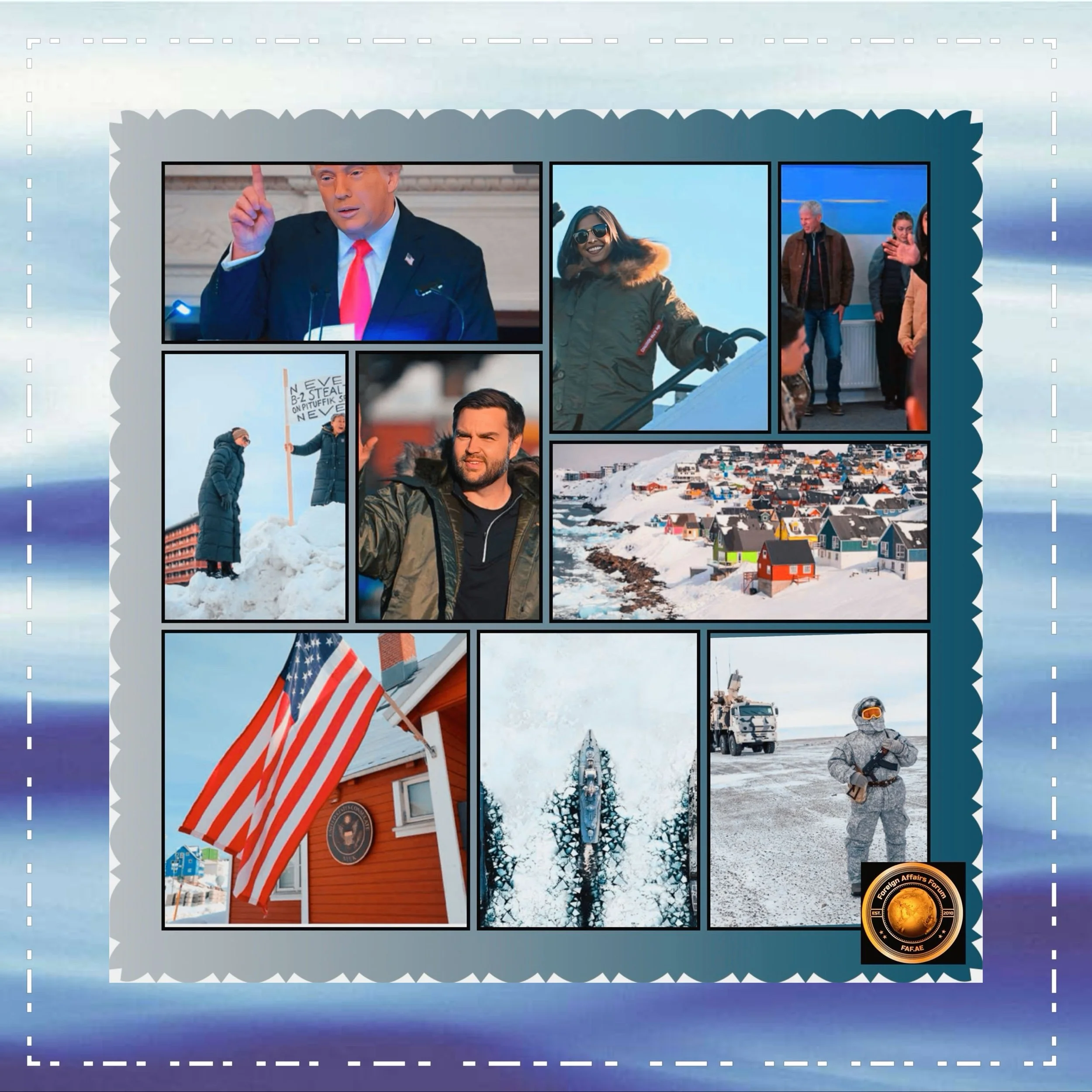
American designs on Greenland are not new. As early as 1946, President Harry Truman quietly offered Denmark a substantial sum to purchase the island outright, motivated by its location astride the North Atlantic and the Greenland‑Iceland‑UK (GIUK) gap, a critical choke point for naval and air operations between North America and Europe. Denmark refused, but U.S. military presence took root regardless, culminating in Thule Air Base (now Pituffik Space Base), a key radar, missile‑warning, and space‑tracking facility that remains central to U.S. and NATO early‑warning architecture.
Trump’s first term revived this dormant acquisition instinct spectacularly. In 2019, he floated the idea of buying Greenland from Denmark, publicly describing the island as “strategically nice” for the United States and prompting a rare diplomatic spat when Danish officials dismissed the suggestion as “absurd,” leading Trump to cancel a planned state visit.
The episode was widely mocked, but beneath the ridicule lay a genuine geostrategic logic: the belief that, in an era of melting ice and shifting power, a physical claim to Greenland could lock in U.S. primacy in the Arctic.
Constitutionally and politically, Greenland remains an autonomous territory within the Kingdom of Denmark, exercising extensive self‑rule under the Self‑Government Act. At the same time, Copenhagen retains responsibility for foreign affairs, security, and the currency.
Greenland’s political class is divided between gradualist paths to greater autonomy or eventual independence and pragmatic recognition that Danish subsidies and security guarantees remain critical in the near term. Against that backdrop, any notion of outright U.S. annexation is rejected in Copenhagen and Nuuk alike as incompatible with international law and the principle of self‑determination.
Key developments in Trump’s renewed push
Trump’s return to the White House in 2025 transformed Greenland from a rhetorical obsession into an operational agenda item. Since January, he has repeatedly declared that the United States “needs” Greenland for national security and has conspicuously declined to rule out some form of annexation, whether by purchase, treaty, or a more coercive approach. In March, during a primary address, he framed Greenland as “essential” for U.S. defense and strategic stability, insisting that the primary motive is security rather than mineral wealth, even as his own advisers highlight resource competition with China.
The most striking institutional move has been Trump’s appointment of Louisiana Governor Jeff Landry as a “special envoy” for Greenland, tasked with deepening U.S. influence and, in Landry’s own words, working to “make Greenland a part of the U.S.” This unilateral designation, made without Danish consent, triggered an immediate diplomatic backlash: Denmark summoned the U.S. ambassador, declared the remit “completely unacceptable,” and issued a joint statement with the Greenlandic leadership reiterating that “Greenland is not for sale” and cannot be annexed by security argument or otherwise.
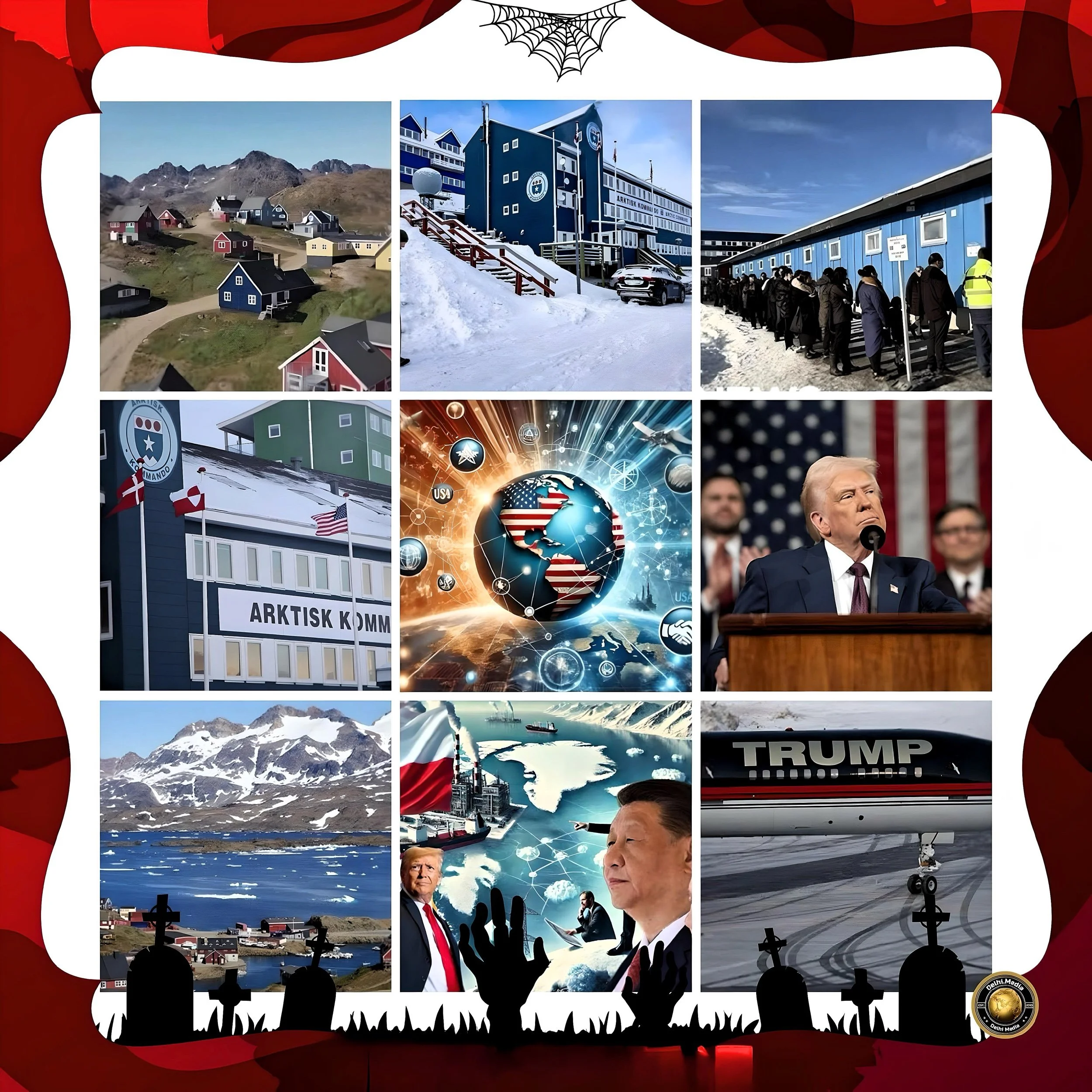
At the same time, the Trump administration is expanding the broader toolkit around Greenland. Washington has intensified Arctic diplomacy, elevated Arctic research and security portfolios, and used NATO forums to foreground concerns about Russia's military buildup and China's economic penetration around Greenland’s periphery. U.S. pressure continues on Denmark and Greenland to block or scrutinize Chinese investments in airports, mining, and dual‑use infrastructure, in line with a broader effort to shut Beijing out of the “Polar Silk Road” and Arctic supply chains.
Strategic logic and latest facts
The underlying logic of Trump’s fixation on Greenland rests on geography, minerals, and military positioning. Geographically, Greenland straddles the North Atlantic and Arctic oceans and sits near emerging trans‑Arctic shipping routes that could, over time, shorten Asia–Europe transit and reconfigure global trade flows. Its coastline touches the maritime approaches to North America, and control or heavy influence there provides surveillance, early warning, anti‑submarine, and power‑projection advantages across the GIUK gap and into the central Arctic.
Economically, Greenland is rich in resources that have taken on outsized importance in the age of decarbonisation and high‑tech industry. The island holds deposits of rare earth elements and other critical minerals used in batteries, wind turbines, electronics, and advanced weapons systems, at a time when the United States is deeply dependent on Chinese refining and supply chains for many of these inputs. For Trump’s economic nationalists, securing alternative sources of such minerals is both a hedge against Chinese leverage and a symbolic assertion of American self‑reliance.
Militarily, Greenland offers basing rights, radar and satellite infrastructure, and potential future nodes for missile defense and space operations that tie directly into North American Aerospace Defense Command (NORAD) and NATO posture. Russian modernization of Arctic bases, new ice‑capable naval deployments, and dual‑use infrastructure—combined with China’s bid to embed itself as a “near‑Arctic state” through research stations, ports, and mining—feed an American perception that failing to lock in dominance around Greenland risks ceding an entire strategic theater.
The latest wave of statements from Trump and his envoys has sharpened these themes. He has publicly invoked the specter of “Russian and Chinese ships all over the coast” of Greenland and framed U.S. action as a necessary response to that encroachment. In the same breath, he has hinted that Washington would “go as far as we have to” to secure its interests, language that alarms European capitals because it appears to flirt with the idea of coercive leverage, even though most analysts judge outright forcible acquisition highly improbable.
Concerns in Denmark, Greenland, and Europe
For Denmark and Greenland, Trump’s revived campaign is destabilizing on multiple levels. Politically, it undermines the careful balancing act between Greenlandic self‑government and Danish sovereignty by introducing an external power seeking to short‑circuit the gradual, negotiated evolution of status within the Kingdom. Copenhagen’s leadership has been unusually blunt, stressing that “you cannot annex another country, not even with an argument about international security,” and characterizing the envoy’s mandate as a breach of diplomatic norms.
In Greenland, where debates over independence, resource exploitation, and environmental protection are already contentious, the prospect of being courted—or pressured—by the world’s pre‑eminent power adds a layer of tension. Some political figures see expanded U.S. presence and investment as an opportunity to diversify away from Danish dependence.
In contrast, others fear becoming a pawn in a larger contest that could override local democratic choices and environmental safeguards. Legislation restricting certain forms of mining and resource extraction has already reflected a defensive turn against becoming an unregulated resource frontier.
Across the European Union and NATO, Trump’s Greenland gambit is perceived less as a one‑off affront and more as a symptom of a broader U.S. unilateralism that risks undercutting allied cohesion in the Arctic. EU policy documents now explicitly flag the Arctic as strategically vital for raw materials, climate, and security, and Trump’s rhetoric has pushed Brussels to craft firmer, more integrated positions on how to manage Greenland’s future within a European framework.
European officials worry that if Washington treats allied territories as objects of acquisition rather than partners in a joint strategy, trust in transatlantic security arrangements will erode precisely as Russia and China push into the region.
Cause‑and‑effect analysis
Trump’s renewed focus on Greenland arises from and, in turn, reshapes several intertwined dynamics: Arctic climate change, great‑power rivalry, domestic U.S. politics, and the evolving constitutional identity of Greenland itself. As Arctic ice retreats, sea routes lengthen their navigable season, and new maritime corridors become thinkable, transforming what was once viewed as a frozen periphery into a nascent global commons linking the Pacific and Atlantic. This environmental shift has set off a scramble among Arctic and non‑Arctic powers for position—physical presence, legal claims, and economic stakes—and Greenland is both gateway and prize in that race.
In that context, Trump’s securitized rhetoric about Greenland functions as both signal and accelerant. By declaring that the United States must “have” the island for national security and appointing an envoy to pursue that aim, Washington signals to Moscow and Beijing that it views the central Arctic approaches as a core national interest—potentially deterring adversary moves, but also inviting symmetrical countermeasures. Russia’s ongoing militarisation of its Arctic coastline and China’s persistent efforts to insert capital and infrastructure into Greenland and nearby territories are likely to intensify in response to perceived U.S. attempts at exclusion.
Domestically, Trump’s Greenland push plays to themes of deal‑making, territorial expansion, and resource nationalism that resonate with his political base. Presenting Greenland as a strategic bargain—an asset to be acquired, integrated, and exploited for the national good—allows the administration to dramatize foreign policy as a series of bold moves rather than incremental stewardship. The more Trump talks about annexation, the more the idea becomes normalized in segments of American discourse, creating a feedback loop that sustains political pressure on the bureaucracy to “do something” in the Arctic, even if formal annexation remains unrealistic.
The effect on Denmark and Greenland is to compress their strategic choices. Denmark, long accustomed to balancing its modest defense posture with deep reliance on U.S. security guarantees, now must weigh how hard it can push back against a Washington that is, in many respects, indispensable. Greenlandic leaders, for their part, see the prospect of increased U.S. presence as both leverage and liability: leverage to demand more investment, infrastructure, and political recognition, but liability because overt alignment with U.S. preferences could polarize domestic politics and strain ties with Copenhagen and Brussels.
At the systemic level, Trump’s Greenland campaign nudges the Arctic further away from the cooperative governance model that characterized the early decades of the Arctic Council and toward a more overt arena of bloc confrontation. Incidents involving undersea cables, pipelines, and shadow fleets in adjacent regions have already sensitized Europeans to the vulnerabilities of critical infrastructure; overlaying a sovereignty‑tinged dispute over Greenland risks entwining these anxieties with broader questions of alliance reliability. In effect, the more Trump insists on unilateral rights over Greenland’s future, the more Europe coalesces around treating the island as a test case of whether small democracies inside the Western camp can resist pressure from their own security guarantor.
Future steps and possible trajectories
Looking ahead, several trajectories emerge, each shaped by the interplay of U.S. ambition, European resistance, and Greenlandic agency. One plausible path is a deepening of de facto American influence without formal annexation. Under this scenario, Washington would expand military facilities, sign long‑term basing and cooperation agreements with Greenland (with Danish assent), and pour funding into research, infrastructure, and resource mapping, effectively binding the island into U.S. strategic networks while formally respecting its legal status.
Another trajectory is intensified political and information campaigning aimed at reshaping Greenlandic opinion. Reports have already surfaced of concerns in Denmark about attempts by external actors to encourage Greenlandic separatism; in an environment where independence debates are real but complex, the injection of targeted narratives and inducements could polarize society. The U.S. could seek to position itself as the guarantor of a future independent Greenland—promising security and investment in exchange for basing and resource rights—thereby reframing annexation not as absorption into the U.S. but as a “partnership” with a newly independent micro‑state.
Europe, meanwhile, is likely to respond by embedding Greenland more firmly into the EU and NATO Arctic strategies. That may entail increased European investment, expanded research missions, and greater diplomatic visibility for Greenland’s leadership in Brussels and allied forums, all designed to demonstrate that alternatives to an overwhelming U.S. embrace exist. However, unless the EU can match U.S. financial and security heft, its ability to act as a counterweight may remain limited, especially if Greenlandic politicians calculate that their immediate gains lie with Washington rather than with a more process‑heavy European framework.
For Russia and China, the U.S.–Greenland dynamic presents both a challenge and an opening. A more assertive, unilateral American posture in Greenland can be framed as evidence that Washington disregards international norms when its interests are at stake, thereby bolstering Moscow and Beijing’s narratives in the Global South. At the same time, heightened U.S. attention may push them to seek influence through subtler means: diversified investment in Iceland and other North Atlantic nodes, increased Arctic research cooperation with non‑Western partners, and legal maneuvering in international bodies over continental shelf claims and shipping rules.
Finally, Greenland’s own internal debates will be decisive. Choices about mining regulation, environmental protections, foreign investment, and the pace of any move toward independence will determine how much leverage external powers can exert. A Greenlandic political consensus that prioritizes strict environmental standards and carefully sequenced autonomy could constrain the appeal of rapid, U.S‑backed resource exploitation, while a more fragmented or opportunistic domestic landscape would make it easier for Washington—or any other major player—to exploit divisions.
Conclusion
Trump’s revived quest for Greenland encapsulates the transformation of the Arctic from a peripheral theater into a central arena of twenty‑first‑century geopolitics. What began as an apparently off‑hand proposal to “buy” the world’s largest island has evolved into a sustained U.S. push to lock in security dominance, secure critical mineral access, and pre‑empt Sino‑Russian encroachment in the high north. In the process, Washington has unnerved an ally, complicated Greenland’s delicate constitutional evolution, and accelerated the Arctic’s slide toward sharper bloc politics.
Ultimately, the structural drivers behind Trump’s obsession—climate‑driven accessibility, the scramble for critical resources, and the logic of great‑power competition—will outlast his personal fascination with maps and deals. The crucial variables will be the strategies adopted in Copenhagen, Nuuk, Brussels, Moscow, Beijing, and Washington to manage these pressures without allowing Greenland to become a flashpoint that undermines the very security and stability that all sides profess to seek.
Whether Trump’s Greenland campaign is remembered as a tipping point toward a more dangerous Arctic or as an early, clumsy phase in the construction of a new, more balanced governance order will depend on decisions taken in the next few years, under the glare of melting ice and rising strategic urgency.