A New Authoritarian Era in the Middle East: Trump’s Embrace of Syria’s Al-Sharaa
Introduction
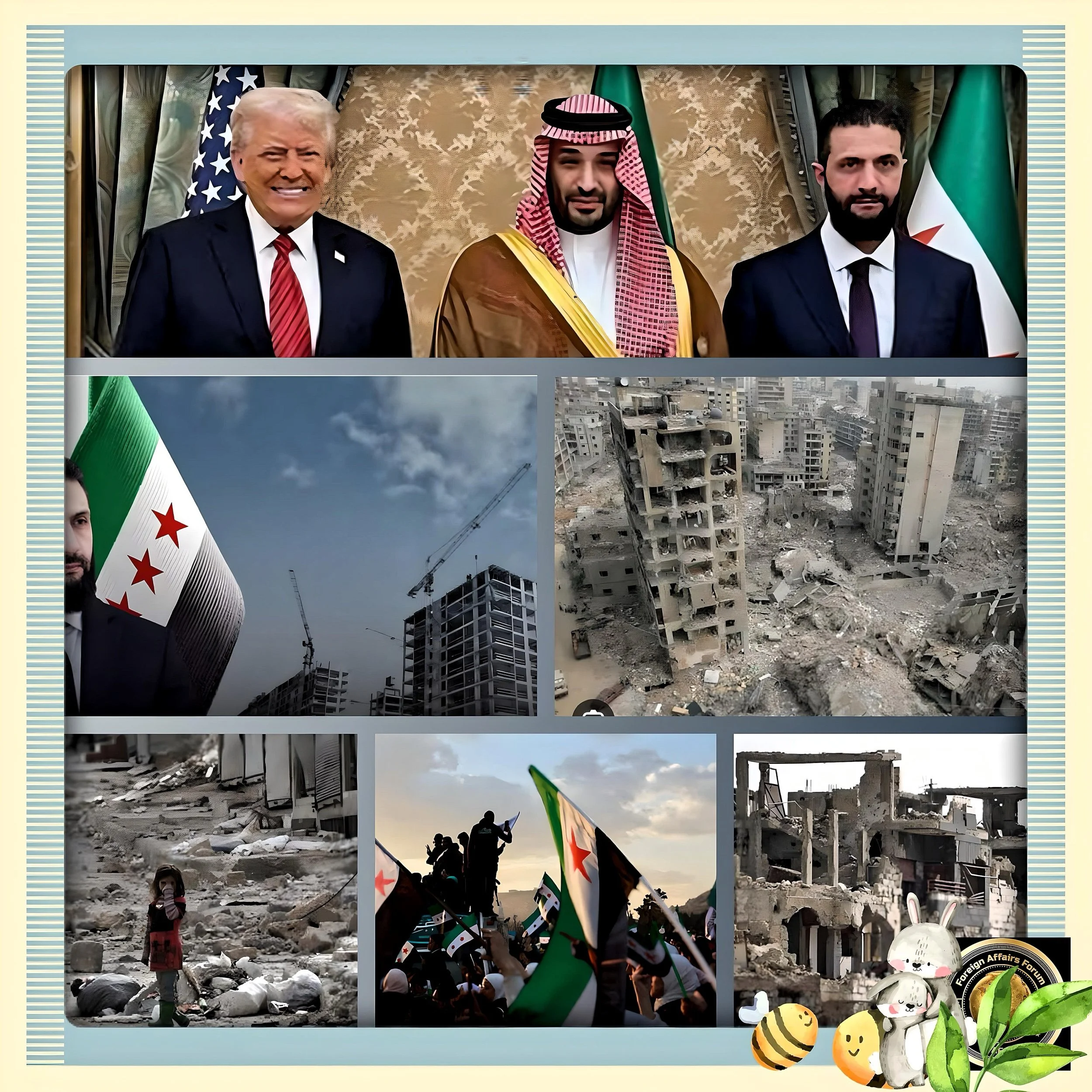
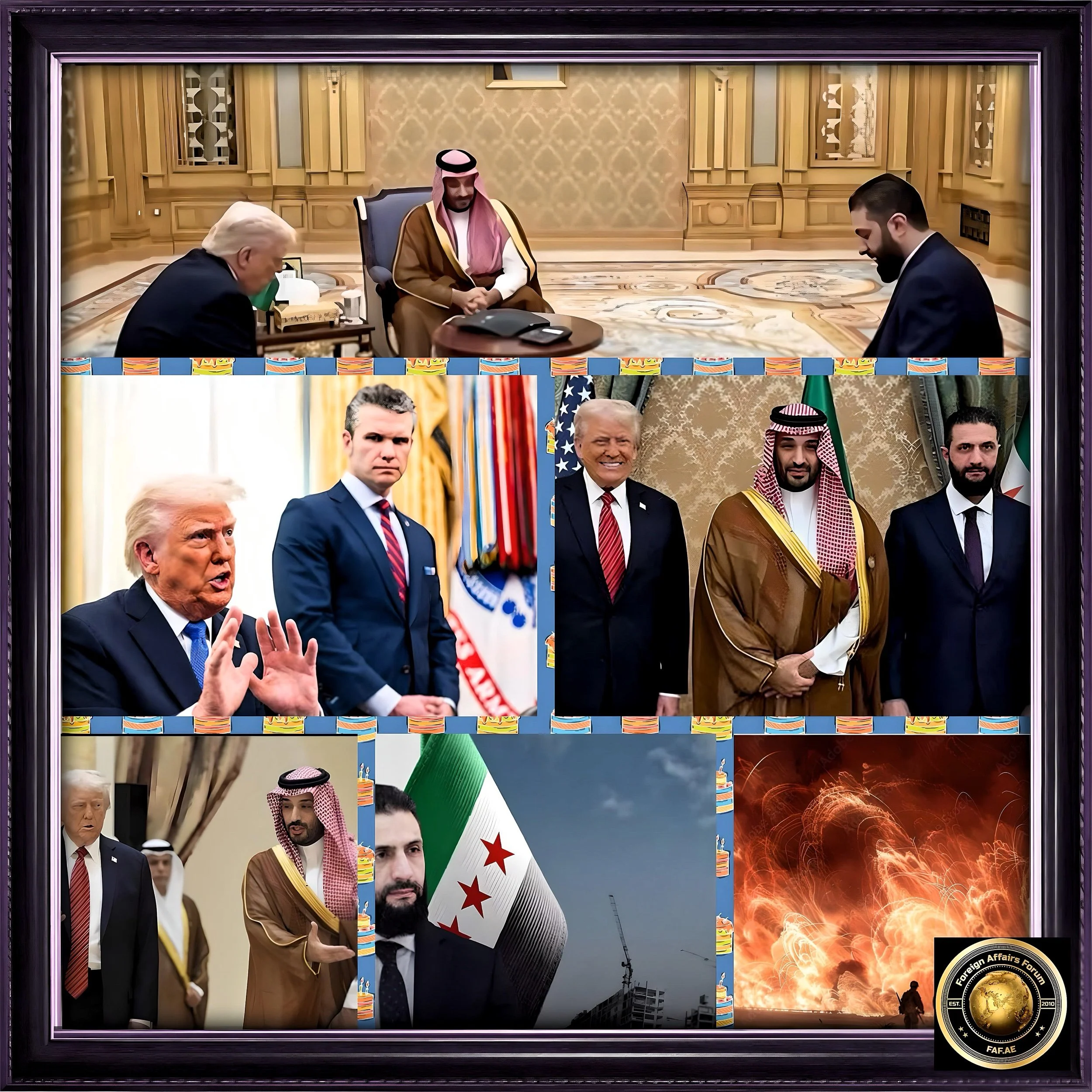
The historic meeting between U.S. President Donald Trump and Syria’s interim president Ahmad al-Sharaa on May 14, 2025, represents more than just a diplomatic breakthrough- it signals a potential paradigm shift in Middle Eastern geopolitics.
This meeting, which would have been unthinkable just months ago, has sharply focused on the emergence of what FAF calls a “new authoritarian era” in the region, with far-reaching implications for democracy, human rights, and U.S. foreign policy.
The Historic Trump-Sharaa Meeting in Riyadh
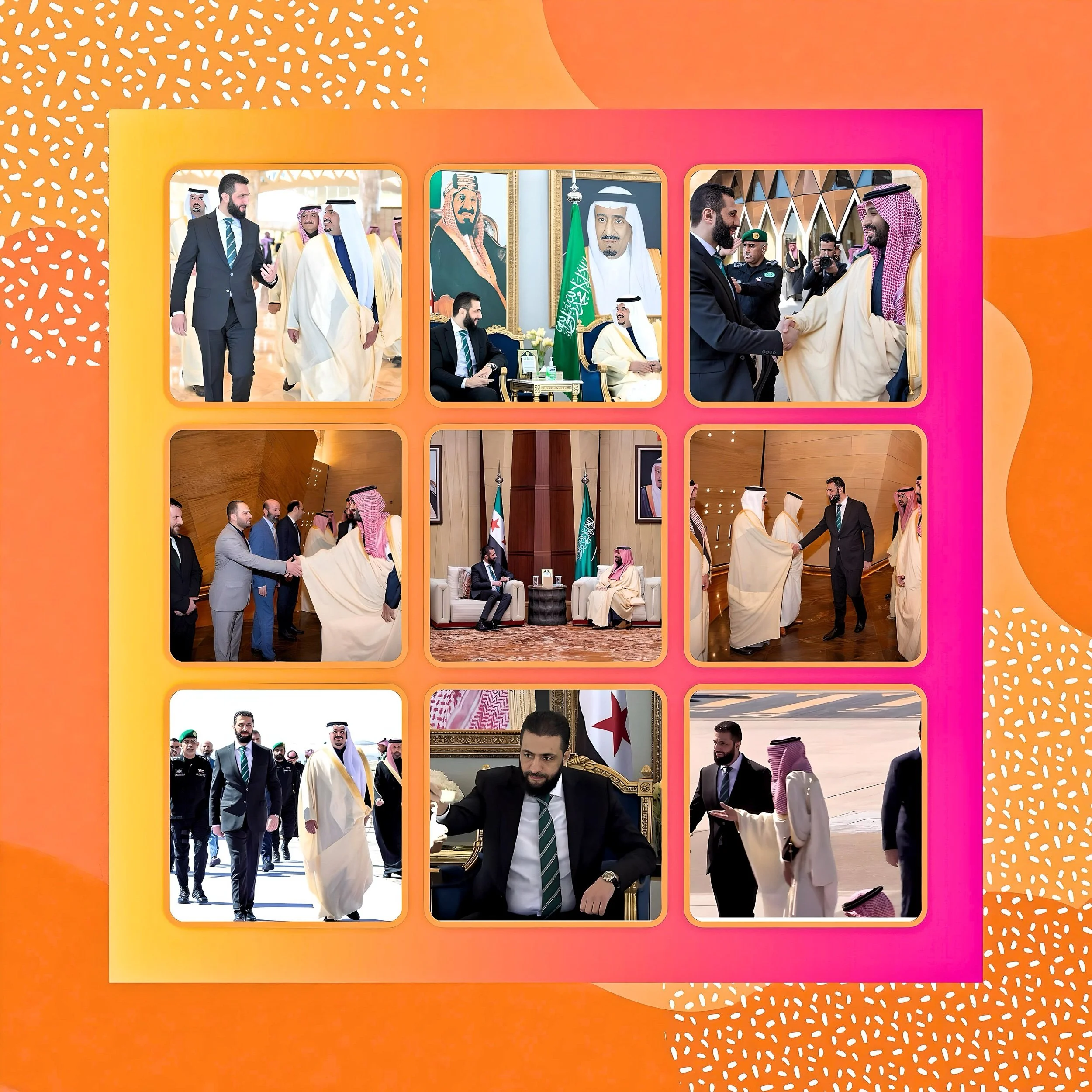
In a move that dismantled decades of U.S. policy treating Syria as a pariah state, President Trump met with Ahmad al-Sharaa in Riyadh at the request of Saudi Arabia’s Crown Prince Mohammed bin Salman.
The meeting occurred just one day after Trump announced the lifting of sweeping sanctions against Syria that had been in place since 1979.
The 37-minute discussion took place in an opulent Saudi royal palace, with the Saudi Crown Prince present and Turkish President Recep Tayyip Erdogan joining via phone.
After the meeting, Trump characteristically praised al-Sharaa, calling him a “young, attractive, tough guy” with a “powerful past” who has “a real shot at holding it together.”
Trump suggested that al-Sharaa has “a real shot at doing a good job” with war-torn Syria despite the Syrian leader’s controversial background. This meeting marked the first encounter between U.S. and Syrian presidents in 25 years.
The Saudi Crown Prince and Turkish President reportedly persuaded Trump to ease the stringent sanctions on Syria. The announcement during a U.S.-Saudi investment forum in Riyadh garnered a standing ovation, particularly from the Saudi Crown Prince.
Reaction in Syria
The impact of Trump’s announcement was immediately felt in Syria.
Following his declaration about lifting sanctions, fireworks illuminated the skies in some of Syria’s largest cities, and billboards expressing gratitude to Trump and Prince Mohammed were quickly erected.
Syria’s Lira currency surged by 27% against the U.S. dollar.
Syria’s economy minister, Nidal-Shaar, became emotional during a live broadcast, emphasizing that Syria is “now entering a new phase.”
Ahmad Al-Sharaa: The Transformation from Terrorist to Head of State
A Militant Background
The meeting between Trump and al-Sharaa represents one of the most remarkable political rehabilitations in recent history.
Al-Sharaa, previously known by his nom de guerre Abu Mohammad al-Jolani, was once the leader of Hayat Tahrir al-Sham (HTS), an offshoot of al-Qaeda that was designated as a terrorist organization by the United States government.
Born in 1982 in Riyadh, Saudi Arabia, al-Sharaa spent years fighting U.S. forces in Iraq before transitioning to Syria to lead an armed Islamist uprising.
In 2013, he was designated as a Specially Designated Global Terrorist by the U.S. for leading al-Qaeda’s Syrian affiliate, the Nusrah Front, and allegedly orchestrating suicide bombings throughout Syria. Until recently, he had a $10 million U.S. bounty on his head.
The Rise to Power
Al-Sharaa led the lightning offensive in late 2024 that toppled the decades-long rule of Syrian dictator Bashar al-Assad.
In January 2025, the rebel coalition that ousted Assad officially proclaimed al-Sharaa president of Syria’s interim government and announced the formation of a temporary legislative council and the dissolution of all armed factions, including HTS.
Image Transformation
In recent years, al-Sharaa has worked diligently to reinvent his image. He shed his military garb and turban for a buttoned shirt and trousers.
He severed connections with al-Qaeda in 2016, though HTS remains classified as a terrorist organization by the UN, U.S., and UK.
He has emphasized pluralism in post-Assad Syria and stressed his intention to respect the rights of religious and ethnic minorities.
Trump’s Approach to Middle East Foreign Policy
Business-First Diplomacy
Trump’s meeting with al-Sharaa exemplifies his “America First” foreign policy approach, prioritizing business deals and strategic interests over traditional concerns about human rights or democratic values.
His four-day visit to Gulf Arab countries was conducted mainly like a business trip, with announcements of hundreds of billions of dollars in contracts for U.S. defense industries and investments in American artificial intelligence and microchip enterprises.
Personal Relationships with Arab Leaders
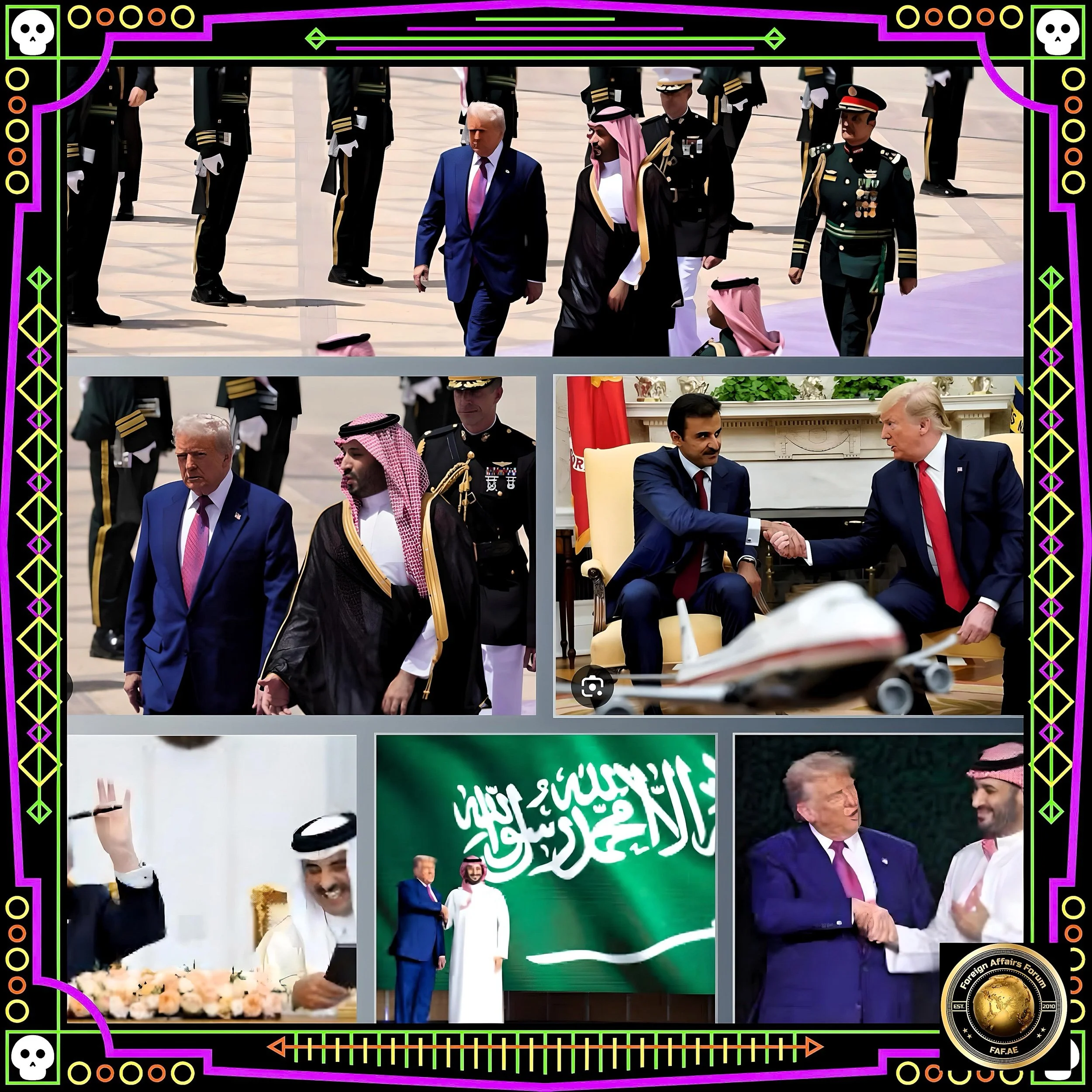
The meeting highlighted Trump’s tendency to personalize foreign policy through his relationships with world leaders. His glowing praise for al-Sharaa mirrors his interactions with other Arab leaders during his Middle East tour.
He told Saudi Crown Prince Mohammed bin Salman, “I like you too much,” and called Qatar’s ruling emir and his family “tall, handsome guys.”
To UAE President Sheikh Mohamed bin Zayed Al Nahyan, Trump said, “You’re a magnificent man.”
These close ties with Arab leaders stand in stark contrast to Trump’s often contentious interactions with some traditional U.S. allies, including European counterparts.
As Trump stated in his Riyadh speech, the days when American officials would fly to the Middle East “to give you lectures on how to live and how to govern your affairs” are over.
Rejection of “Nation-Building”
Trump has explicitly rejected the approaches of his predecessors, criticizing what he called the “neocons” and “nation-builders” who “spent trillions and trillions of dollars failing to develop Kabul, Baghdad, and so many other cities.”
Instead, he has embraced a more limited set of U.S. responsibilities in the region, using hard power more forcefully but in more targeted ways.
The Emerging Authoritarian Order in the Middle East
Regional Trends Toward Authoritarianism
Trump’s embrace of al-Sharaa fits into a broader pattern of authoritarian governance strengthening across the Middle East and North Africa.
As Nader Hashemi, a scholar of Islamic politics at Georgetown University, observed: “We’re headed for a new form of authoritarianism in Syria and the region,” adding that “because you have an authoritarian-leaning president of the United States who’s coordinating with leaders who are also authoritarian, any commitment to human rights and democracy will be nonexistent.”
The region has witnessed three parallel trends in recent years: failed democratization efforts following the Arab Spring, increased cooperation between authoritarian regimes despite rivalries, and external powers supporting non-democratic regimes.
The diplomatic rapprochement between longtime rivals Saudi Arabia and Iran in 2023 exemplifies this trend toward regional reconciliation under authoritarian governance.
Al-Sharma's Governance Model
In March 2025, al-Sharaa signed a temporary constitution that left Syria under Islamist rule for five years during a transitional phase.
The constitution maintains some provisions from the previous one, including stipulating that the head of state must be a Muslim and that Islamic law is the primary source of jurisprudence.
Joshua Landis, head of the Center for Middle East Studies at the University of Oklahoma, noted that “the consolidation of Sharaa’s government and power is also likely to mean that a highly authoritarian and Islamist government will rule Syria.
The constitution gives the president all power. He can directly or indirectly appoint all parliamentarians, nominate the Supreme Court, and head the army and security forces. “
While al-Sharaa has pledged an open and inclusive Syria, many experts remain skeptical.
A former U.S. diplomat, Charles Dunne, observed that “both sets of backers, Turkey and Gulf states, will be fine with authoritarian rule and suppression of civic and political rights as necessary.”
Economic and Humanitarian Implications
Economic Relief
For many Syrians, lifting sanctions represents a desperately needed economic lifeline. Ranim Sakhal, a resident who has lived under sanctions since the 1970s, reflected, “I don’t know how life would be without sanctions.
The country has been suffocating”. She expressed optimism that “Arab countries will assist us, something we haven’t witnessed in years due to Bashar’s conflicts with Arab leaders.”
Natasha Hall from the Center for Strategic International Studies noted that Trump’s announcement “indicates tacit approval for potential investors in Syria” and signifies that Trump is granting advantages to Mohammed bin Salman.
Concerns for Minorities
However, not everyone shares this optimism. The removal of sanctions could lend legitimacy to al-Sharaa’s administration without ensuring accountability for human rights abuses.
One Damascus resident, identified only as George, expressed concern about how minorities would be treated under the former jihadist’s rule, noting the existence of extremist factions that limit personal freedoms: “If a guy and a girl are seen together, they could be arrested… Men can be beaten for wearing shorts… it’s an extreme infringement on personal freedoms”.
In March 2025, reports emerged of armed personnel loyal to the new Syrian regime carrying out field killings against the Alawite minority, with entire families, including women and children, reportedly killed during these incidents.
Regional and Global Power Dynamics
Middle East Realignment
Trump’s embrace of al-Sharaa has significant implications for regional power dynamics. For decades, Gulf Arab nations were sidelined in Syria as Iran expanded its influence through its alliance with the Assad regime.
Now, Saudi Arabia and Qatar have intensified efforts to reintegrate the new regime into the global community, seeing an opportunity to counter Iranian influence.
The U.S. president has urged al-Sharaa to join the Abraham Accords, the 2020 deal that normalized relations between Israel and several Arab states.
According to Trump, al-Sharaa said he might eventually be open to joining but noted, “Yes, but they have a lot of work to do.”
External Powers as Enablers
The shifting dynamics in the Middle East are influenced by two fundamental changes in the global landscape: the increasingly insular priorities of Western powers and the growing influence of non-democratic powers such as China and Russia.
These external stakeholders are vested in maintaining the status quo and supporting authoritarian stability in the region.
Conclusion
A Turning Point in U.S. Middle East Policy
Trump’s meeting with al-Sharaa represents a significant departure from decades of U.S. policy toward Syria and the broader Middle East.
It signifies a move from promoting democracy and human rights toward a more transactional approach based on strategic interests and personal relationships with leaders, regardless of their democratic credentials or past associations.
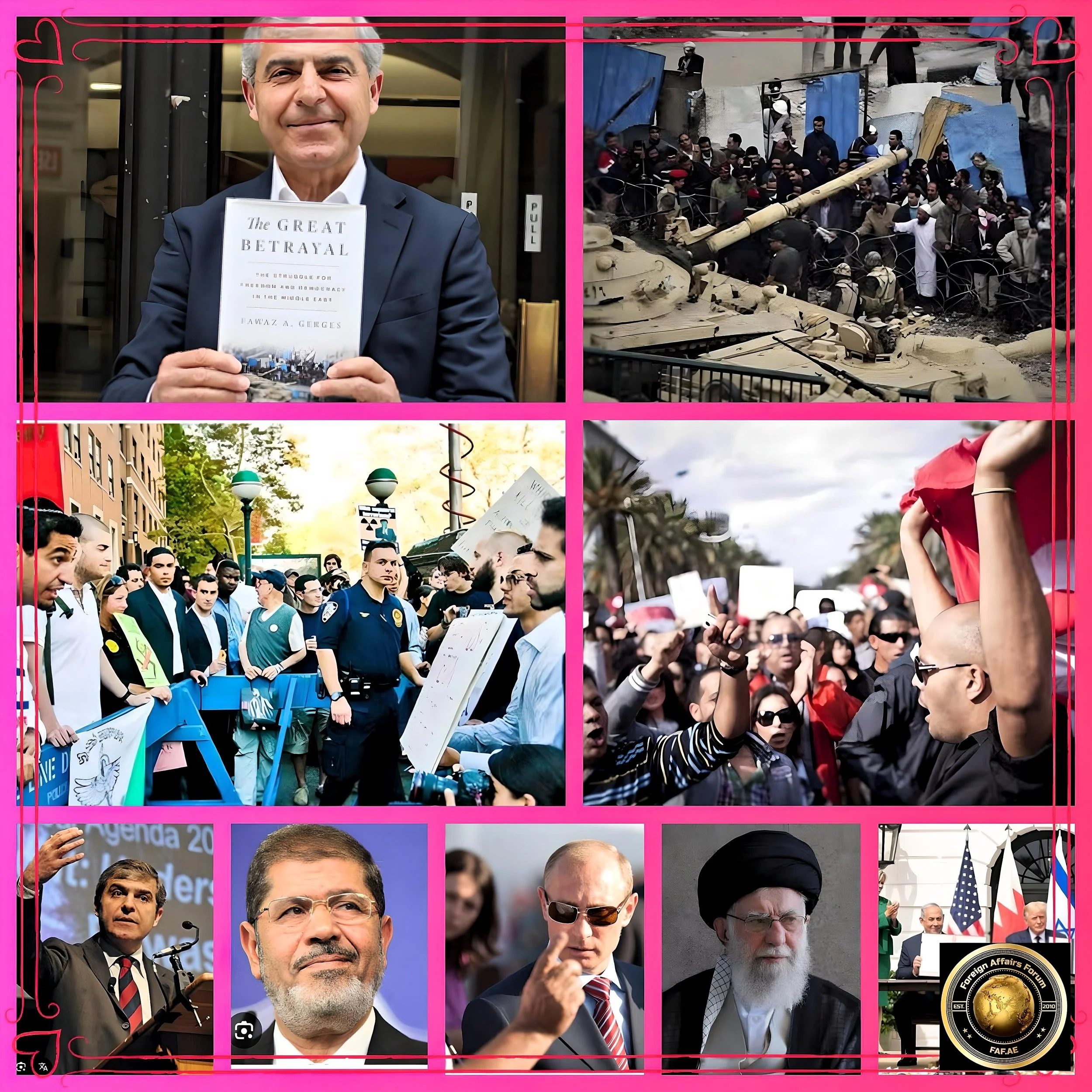
As Fawaz Gerges, author of “The Great Betrayal: The Struggle for Freedom and Democracy in the Middle East,” put it, the question is not whether al-Sharaa “has shed his jihadist skin but what kind of government he has set up in Syria: a typical authoritarian Arab government with a Sunni-Salafi identity.”
This shift could have profound implications for the future of governance in the Middle East, potentially accelerating the trend toward what scholars call a “new authoritarian order.”
It remains to be seen whether this approach will bring stability and prosperity to the region or further entrench repressive regimes.
However, it is clear that the United States under Trump has pivoted away from its traditional role as an advocate for democratic values in its foreign policy.