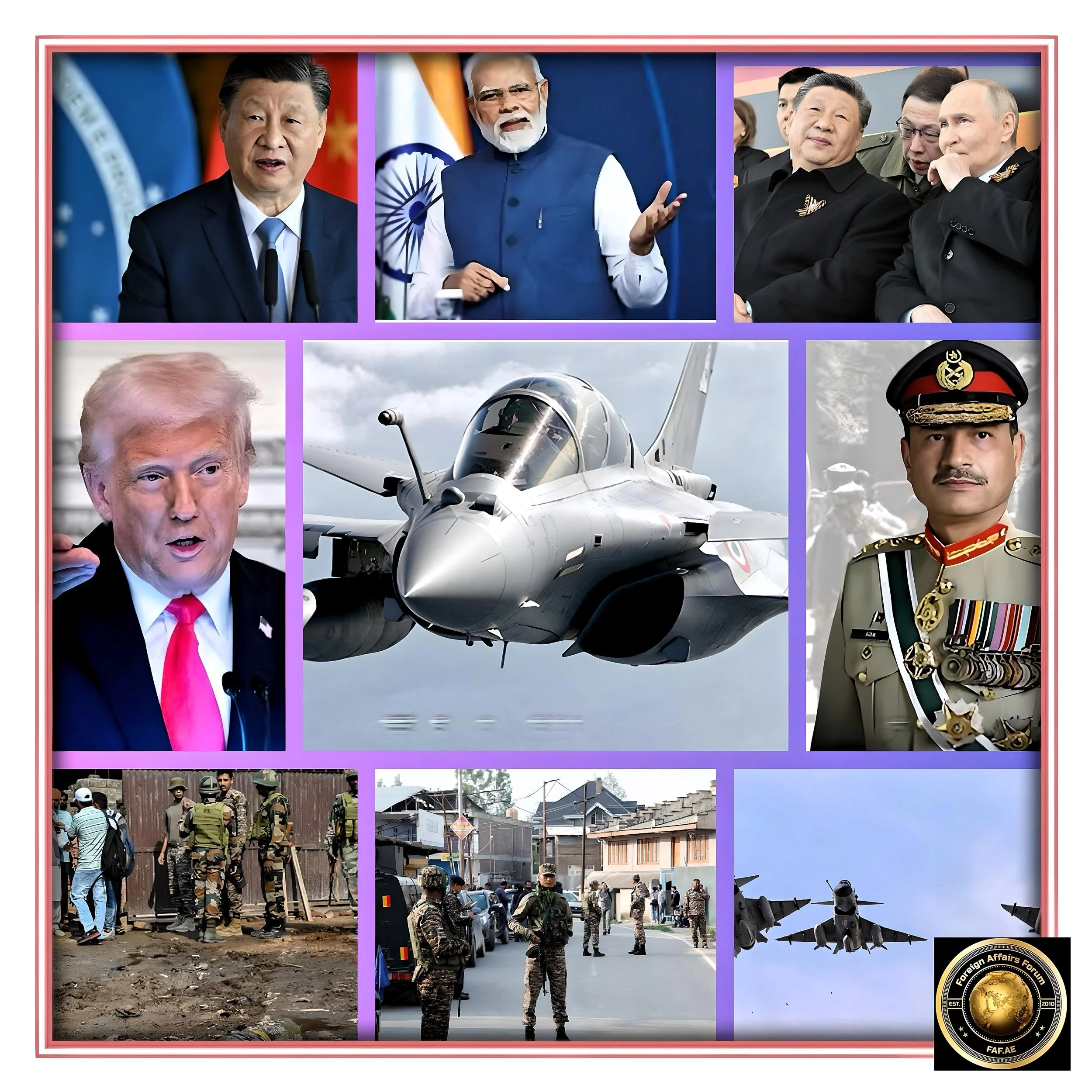
Whom to blame : India-Pakistan Ceasefire: Agreement, Violations, and Global Reactions
Introduction
The recent ceasefire agreement between India and Pakistan marked a critical turning point in the Escalating military confrontation between the two nuclear-armed neighbors.
While initially bringing relief to millions across the subcontinent, the agreement quickly faced challenges with reported violations.
FAF, Defense.Forum examines the facts behind the ceasefire, diplomatic dynamics, allegations of violations, and the complex web of misinformation surrounding the conflict.
We have further analyzed the blame game in warfare.
Timeline of Escalation and Ceasefire
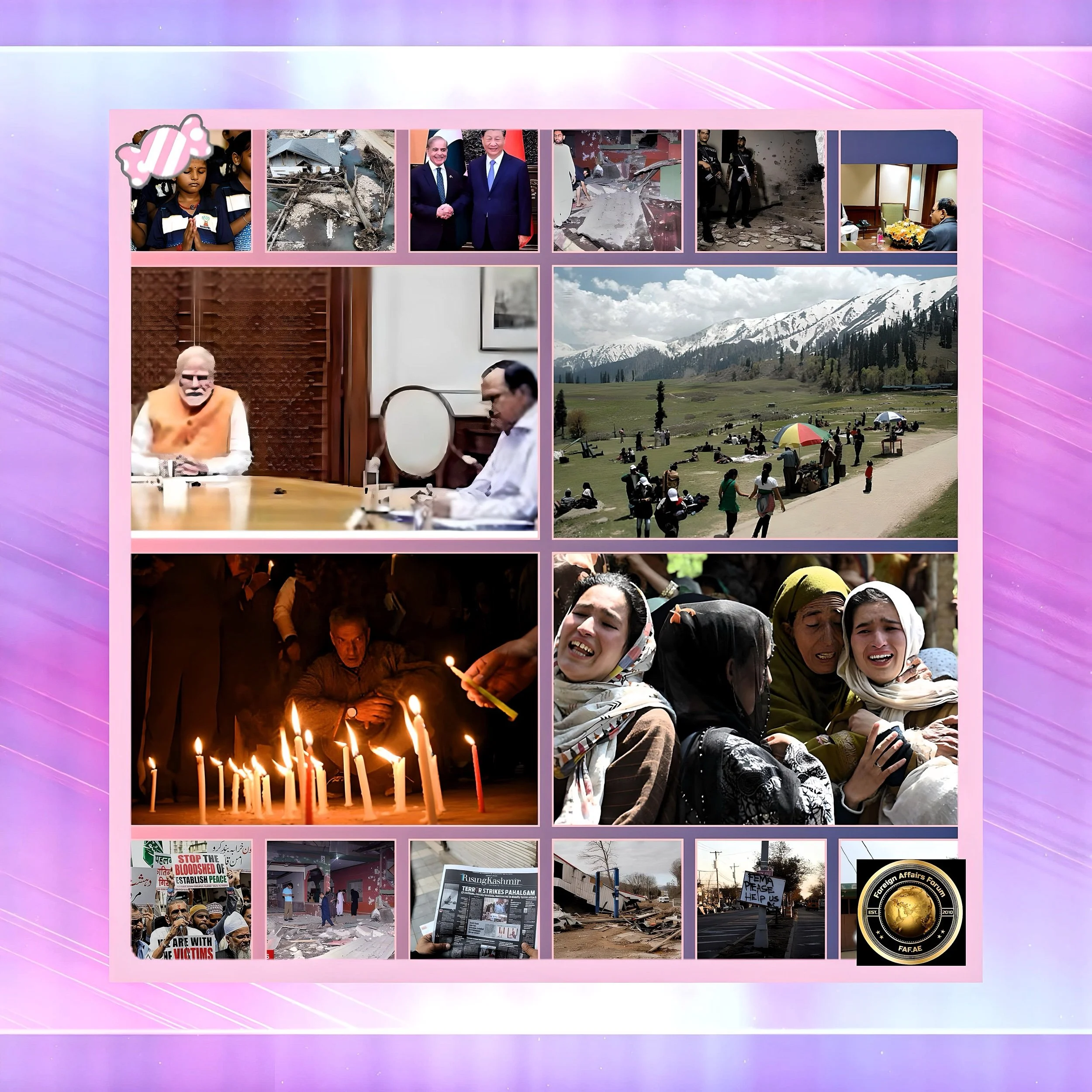
The recent conflict between India and Pakistan unfolded rapidly following a terrorist attack in Pahalgam, Indian-administered Kashmir, on April 22, 2025, which claimed 26 lives.
India attributed the attack to Pakistan-supported militants, subsequently reducing diplomatic relations, closing borders, and suspending a significant water agreement with Pakistan. Pakistan denied these allegations.
Tensions escalated dramatically when India executed missile strikes on May 7 under “Operation Sindoor,” targeting what it described as “terrorist infrastructure” in Pakistan.
Pakistan condemned these strikes as an “act of war,” claiming they resulted in 26 civilian casualties. On May 10, Pakistan announced it had executed retaliatory strikes on Indian airbases.
The same day, both countries announced an immediate ceasefire.
Pakistan's Director General of Military Operations (DGMO) contacted his Indian counterpart at 15:30 hours IST.
They agreed to halt all firing and military action on land, air, and sea, effective from 17:00 hours IST.
US President Donald Trump quickly claimed credit for brokering the agreement.
Terms of the Ceasefire Agreement
The ceasefire involved several key terms, although some details remain disputed between the parties.
According to Indian Foreign Secretary Vikram Misri, both sides agreed to stop all military operations by land, air, and sea from 5 pm IST on May 10.
The DGMOs of both countries were scheduled to speak again on May 12 at noon IST to review the situation.
According to some reports, Pakistan agreed that any terrorist incident occurring within India would be regarded as an “act of war,” a significant shift in Pakistan’s position.
However, there is disagreement about whether the ceasefire includes talks on broader issues at a neutral location.
US Secretary of State Marco Rubio claimed the agreement included plans for discussions on “a broad range of issues at a neutral location,” which India’s Ministry of Information and Broadcasting contradicted.
Indian sources maintain that Prime Minister Modi made it clear to National Security Advisor Ajit Doval and External Affairs Minister S. Jaishankar that a ceasefire would only proceed “on our terms.”
Despite the temporary halt to hostilities, India has reportedly kept in place all punitive measures imposed against Pakistan after the Pahalgam attack, including trade and visa restrictions.
Modi’s Decision and India’s Position
According to sources cited by the FA.Media, Modi agreed to the ceasefire strictly on India’s terms.
Following Operation Sindoor, Pakistan’s National Security Advisor and ISI chief Asim Malik reportedly sought to initiate communication with Indian NSA Ajit Doval.
Throughout the negotiations, Doval and Jaishankar kept Prime Minister Modi closely updated.
India has maintained that the ceasefire was a bilateral agreement that was worked out directly between the two countries, without third-party mediation.
External Affairs Minister S. Jaishankar emphasized that “India has consistently maintained a firm and uncompromising stance against terrorism in all its forms and manifestations. It will continue to do so”.
Did Modi Lose an Opportunity to End Terrorism by Agreeing to a Ceasefire?
Expert Opinion and Analysis
Prime Minister Narendra Modi’s decision to agree to a ceasefire with Pakistan following the recent escalation after the Pahalgam terror attack has sparked debate among security analysts and policy experts.
The central question is whether this move constituted a missed opportunity to end terrorism emanating from Pakistan decisively or whether it was a prudent step to prevent wider conflict.
FAF Perspectives
Measured Retaliation and Policy Shift
India’s response to the Pahalgam attack involved “Operation Sindoor,” a series of precision strikes on terror infrastructure in Pakistan, signaling a significant policy shift.
India declared that any future act of terrorism would be treated as an act of war, adopting an “Israel-like” stance of zero tolerance and promising full-spectrum retaliation-including military, intelligence, and economic measures against terrorists and their patrons.
Ceasefire as Strategic Pause, Not Capitulation
The ceasefire brokered after three days of military conflict, and experts widely view it as a tactical reprieve rather than a solution.
FAF emphasizes that while the ceasefire halts immediate hostilities and averts a potentially catastrophic escalation between two nuclear-armed states, it does not resolve the underlying issues that fuel cycles of terrorism and retaliation.
Cycle of Escalation and Restraint
Defense.Forum caution that military escalation beyond a certain threshold inevitably draws in global diplomatic intervention, often resulting in a pause rather than a resolution.
During such pauses, terrorist groups have historically regrouped, strategized, and prepared for future attacks, perpetuating the cycle of violence.
This pattern has been observed in both the India-Pakistan context and in Israel’s experience with terrorism.
International Mediation and Regional Stability
Behind-the-scenes diplomatic efforts from the United States and other global powers concerned about the risk of a broader regional conflict facilitated the ceasefire.
It noted that while the ceasefire preserves economic stability and opens a window for dialogue, it is inherently fragile and susceptible to violations, as seen in the hours following its announcement.
India and Pakistan Ceasefire: Was It Due to Nuclear Threat?
India and Pakistan, both nuclear-armed nations, agreed to a ceasefire in May 2025 following several days of intense military conflict, which included missile and drone strikes targeting each other’s military installations and border areas.
The immediate trigger for this escalation was a deadly attack on tourists in Indian-administered Kashmir, which India blamed on Pakistan, while Pakistan denied involvement.
Was the Ceasefire Motivated by Nuclear Threat?
Neither side publicly issued direct nuclear threats during this crisis. However, the specter of atomic escalation was a significant underlying concern throughout the conflict:
Both nations have a history of nuclear posturing and possess significant atomic arsenals.
During the recent hostilities, there were “momentary concerns regarding the potential involvement of nuclear arsenals” as Pakistan’s military announced that a key body overseeing its nuclear capabilities would convene. However, the defense minister quickly denied this.
International mediators, especially the United States, were acutely aware of the nuclear risk, and this concern drove urgent diplomatic efforts to broker a ceasefire.
Experts and officials repeatedly highlighted the danger of escalation between the two nuclear powers.
For example, Dan Smith of the Stockholm International Peace Research Institute stated, “The likelihood of nuclear arms being deployed is low, but that does not render it impossible.”
Retired Col. Stephen Ganyard, a former U.S. State Department official, remarked, “Of any place in the world, the easiest to imagine a nuclear exchange happening is between Pakistan and India.”
What Led to the Ceasefire?
The ceasefire was brokered primarily through U.S.-led diplomatic intervention, with support from the U.K., Saudi Arabia, and Turkey.
These were all proxy players but with significant influence.
The urgency of these efforts was heightened by fears that continued escalation could inadvertently trigger a nuclear exchange, given the intensity of the fighting and the history of differing countries’ nuclear doctrines.
India and Pakistan agreed to a ceasefire after days of intense conflict, with the risk of nuclear escalation serving as a critical backdrop that spurred international mediation and urgent diplomatic efforts.
Defense. Forum stated while there was no direct exchange of nuclear threats, the possibility of the conflict spiraling into a nuclear confrontation was a significant factor influencing the rapid push for a ceasefire.
The ceasefire itself was fragile, with both sides accusing each other of violations soon after it was announced, underscoring the persistent volatility in the region.
These are common tactics in warfare.
Analysis: India’s Opportunity Lost or Strategic Prudence?
Not a Missed Opportunity, but a Calculated Decision
FAF, Defense.Forum analyses suggest that Modi’s agreement to the ceasefire was not a capitulation or a lost chance to end terrorism outright.
Instead, it was a calculated move to avoid uncontrolled escalation, which could have led to a broader war with unpredictable consequences given both nations’ nuclear capabilities.
Ceasefire as Leverage
The new Indian doctrine- treating terrorism as an act of war and promising immediate, forceful retaliation- serves as a deterrent and a warning to Pakistan.
The ceasefire allows Pakistan to reconsider its support for terrorism under the explicit threat that future attacks will trigger severe consequences.
Long-Term Mission
Combating terrorism, especially state-sponsored or proxy terrorism, is widely acknowledged by defense experts as a long-term mission.
Quick, decisive military action can disrupt terror networks, but ending terrorism requires sustained pressure, international cooperation, and addressing root causes.
Defense.Forum broadly agreed that agreeing to the ceasefire was not a missed opportunity to end terrorism but a prudent step to prevent a catastrophic conflict while laying down a new, tougher doctrine against future attacks.
The ceasefire is a tactical pause, not a solution. Its effectiveness will depend on sustained vigilance, credible deterrence, and international pressure on Pakistan to dismantle terror infrastructure.
The cycle of violence can only be broken if the root causes-especially Pakistan’s support for proxy groups-are addressed through a combination of military, diplomatic, and economic measures.
Controversy Over US Involvement
The role of the United States in brokering the ceasefire has become a significant point of contention.
US officials, including President Trump and Secretary of State Marco Rubio, claimed credit for mediating the agreement.
Trump announced on social media: “After a long night of talks mediated by the United States, I am pleased to announce that India and Pakistan have agreed to a FULL AND IMMEDIATE CEASEFIRE.”
CNN reported that US Vice President JD Vance called PM Modi after receiving “alarming intelligence” that could lead to “dramatic escalation.”
Vance informed Modi of a “potential off-ramp that the US understood the Pakistanis would be amenable to.” However, both Defense.Forum and Indian officials denied US mediation, insisting the ceasefire was worked out bilaterally.
This discrepancy has sparked debate within India, with opposition parties expressing unease over the US role.
Congress leader Manish Tewari compared the situation to 2019, noting: “Like in 2019, after the Pulwama-Balakot dynamic, it was a US intervention that had calmed things down”.
Ceasefire Violations and Current Status
Within hours of the ceasefire announcement, reports emerged of violations.
Explosions were heard in Srinagar and Jammu, with projectiles and flashes seen in the night sky.
India’s Foreign Secretary Vikram Misri held a late-night press conference to confirm “repeated violations of the understanding arrived at earlier this evening between the Directors General of Military Operations of India and Pakistan.”
Misri stated that the armed forces responded " adequately and appropriately” to these violations and that India took “very, very serious note” of them.
He called for Pakistan to “take appropriate steps to address these violations and deal with the situation with seriousness and responsibility.”
Pakistan’s Foreign Ministry, meanwhile, asserted the nation’s commitment to the ceasefire and accused India of infractions.
They claimed, “Our forces are managing the situation responsibly and restraint.”
By May 11, Prime Minister Modi was holding key security meetings with Defense Minister Rajnath Singh, the Chief of Defence Staff, and military chiefs to address the situation.
The Indian Air Force confirmed that Operation Sindoor was still ongoing despite the ceasefire, stating operations were “conducted deliberately and discreetly, aligned with National Objectives.”
Defense.Forum continues to monitor the situation periodically.
Opposition Criticism of Modi: Misleading or Democratic Dissent?
Context of Opposition Critique
In the wake of the 2024 Indian general election, Prime Minister Narendra Modi and his Bharatiya Janata Party (BJP) won a third term.
Still, they failed to secure an outright majority, marking a significant seat drop compared to previous elections.
The opposition, particularly the Congress party, framed this outcome as a public rebuke of Modi’s leadership, citing issues like joblessness, rising prices, inequality, and divisive rhetoric as reasons for BJP’s reduced mandate.
Congress leader Rahul Gandhi stated, “Voters have punished the BJP,” highlighting the electorate’s dissatisfaction with the ruling party’s approach.
Allegations of Misleading the Public
Prime Minister Modi has accused opposition parties of misleading citizens and “plotting against the country,” suggesting their criticisms are motivated by a desire for power rather than genuine concern for the nation.
He described their actions as challenging to awakened citizens and called for vigilance against what he termed a “shop of lies and rumors” run by the opposition for decades.
Defense.Forum suggests India stand United during these times and avoid unnecessary dialogue with each other.
Is Opposition Critique Unpatriotic or Ill-Informed?
Patriotism and Democratic Values
Indian constitutional principles and historical experience clearly distinguish loyalty to the government and love for the nation.
As articulated by constitutional scholars and leaders like Jawaharlal Nehru, true patriotism is rooted in upholding the nation’s values-justice, equality, and democracy- not in unquestioning support for any particular government.
Critiquing the government, participating in protests, and holding leaders accountable are essential aspects of a vibrant democracy and do not equate to a lack of patriotism.
Indian history shows that resistance to unjust government actions, such as during the Emergency or recent mass protests-has often been motivated by a desire to protect constitutional values.
Knowledge of Warfare and Events
Opposition parties have criticized Modi’s handling of security incidents, such as the Pahalgam attack, with some former BJP leaders and security officials publicly questioning the government’s response and demanding accountability.
These critiques do not necessarily reflect limited knowledge of warfare or events but are part of the democratic process of demanding transparency and better governance.
In democracies, it is normal and necessary for opposition parties to scrutinize the government’s performance, including on matters of national security.
Labeling opposition criticism as a “lack of patriotism” or “limited knowledge” oversimplifies the role of dissent in a democracy.
The Indian Constitution protects the right to question, critique, and oppose the government as a fundamental aspect of patriotism and citizenship.
While political rhetoric may frame opposition as misleading or unpatriotic, the broader democratic tradition and India’s history support the view that robust debate and dissent are vital for the nation’s health and progress.
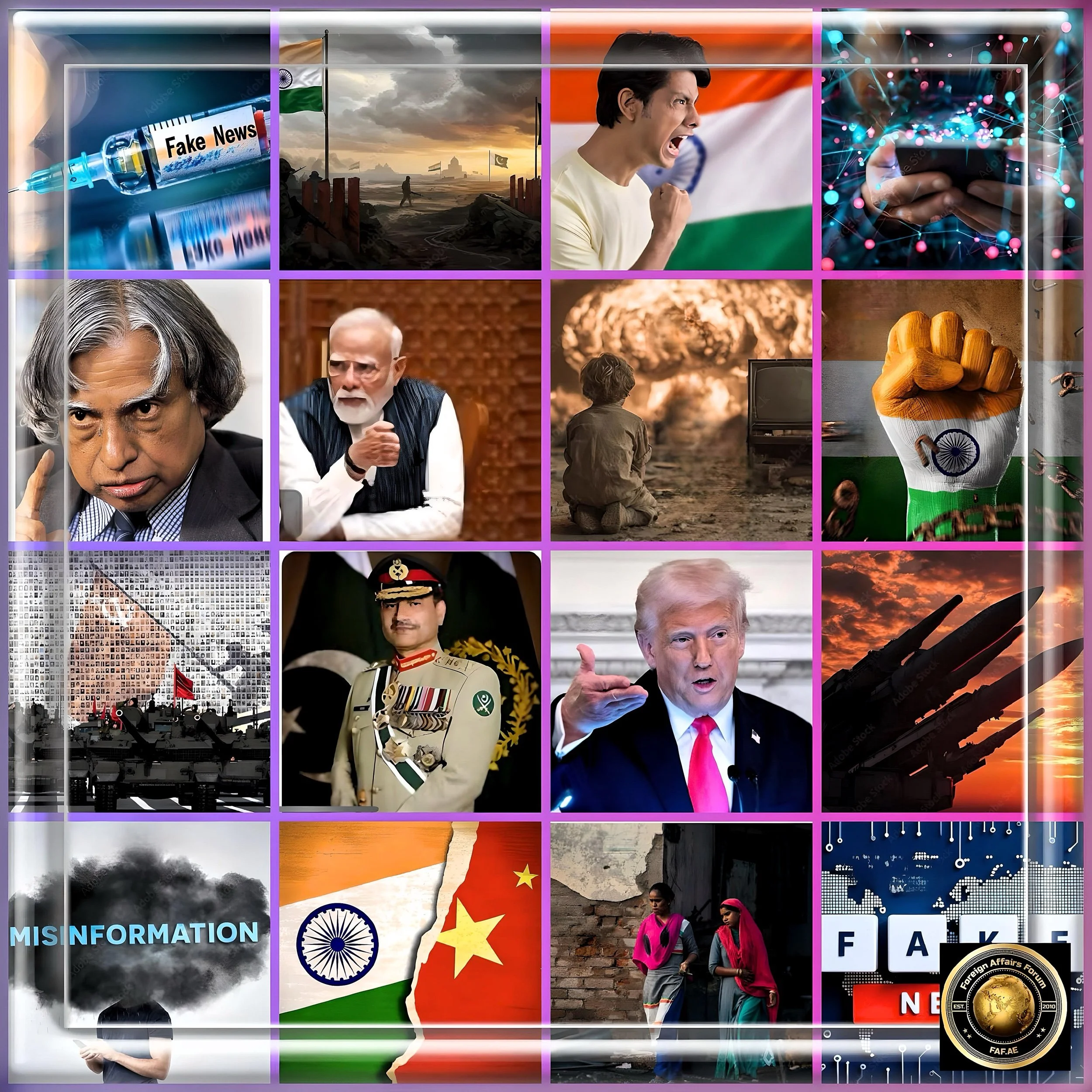
Misinformation Warfare
Alongside military actions, both nations engaged in an information war, with Pakistan accused of ramping up misinformation campaigns.
Indian officials identified numerous false claims propagated by Pakistan, including allegations that Indian armed forces fired missiles on Amritsar and attacked the Nankana Sahib Gurdwara in Pakistan.
An Indian official stated: “Pakistan is running a widespread campaign full of lies targeting India, using both official channels and social media to incite communal unrest, spread false reports about military events, cause panic among Indian citizens, and create international confusion regarding India’s actions.”
To counter this, India established a specialized command center- informally called the ‘war room ’- at Delhi’s National Media Centre.
Since the Pahalgam attack, the Press Information Bureau’s Fact-Check Unit dramatically expanded operations, issuing at least 50 fact-checks on its X platform alone.
Global and Domestic Reactions
The ceasefire announcement was initially met with relief internationally and domestically. Civilians in border areas expressed gratitude for the truce, with one shopkeeper from Amritsar stating: “I am relieved that, at the very least, there will be no violence on either side.”
The ruling BJP hailed Prime Minister Modi and the Indian armed forces.
Madhya Pradesh Chief Minister Mohan Yadav praised the “resolute response” that had brought “enemies to their knees.”
At an inauguration event for the BrahMos missile, Uttar Pradesh Chief Minister Yogi Adityanath referenced Operation Sindoor, saying, “You must have seen the power of the BrahMos missile during Operation Sindoor; if not, ask any Pakistani.”
Defense.Forum suggests avoiding provoking speeches during sensitive times and recommends a more balanced and diplomatic approach to sharing information.
Opposition parties initially welcomed the ceasefire but raised concerns about foreign involvement.
FAF firmly believes whatever may be the case, war should be avoided if necessary. It does not matter who brokers the deal.
The Congress called for an all-party meeting and a special Parliament session to discuss the events of the past weeks.
Congress MP Manish Tewari called for a special Parliament session on the “US-brokered ceasefire.”
Conclusion
A Fragile Peace
The ceasefire between India and Pakistan is a crucial and necessary pause in the escalating tensions that have brought two nuclear-armed nations to the brink.
While this agreement prevents immediate conflict, it is fragile at best. Early violations remind us that fundamental disputes remain unresolved and that lasting peace is far from assured.
The U.S. involvement in this situation reveals the intricate geopolitical challenges, highlighting both nations' intense sensitivity regarding sovereignty in conflict resolution.
Additionally, the ongoing struggle against misinformation stresses that modern warfare is conducted not only on battlefields but also in the digital realm.
As of May 11, 2025, tensions continue to simmer while there is a semblance of stability, with both nations on high alert militarily.
The upcoming talks between military leaders on May 12 will be decisive. These discussions will determine if this ceasefire is the first step towards sustainable peace or merely a temporary halt in hostilities.
Political discourse underscores the urgency of Prime Minister Modi's address to the nation, which is vital to clarifying uncertainties for all stakeholders involved.
India must reassess its nuclear deterrent strategy, adopting a more aggressive posture to address its neighbor's intentions.
Similarly, Pakistan needs to consider a more restrained approach to its nuclear capabilities, which could be essential for achieving lasting peace.
Any nation harboring or supporting terrorism must be met with a unified response.
A global consortium must be established to monitor terrorist activities, organizations, and diligently sleeper cells worldwide.