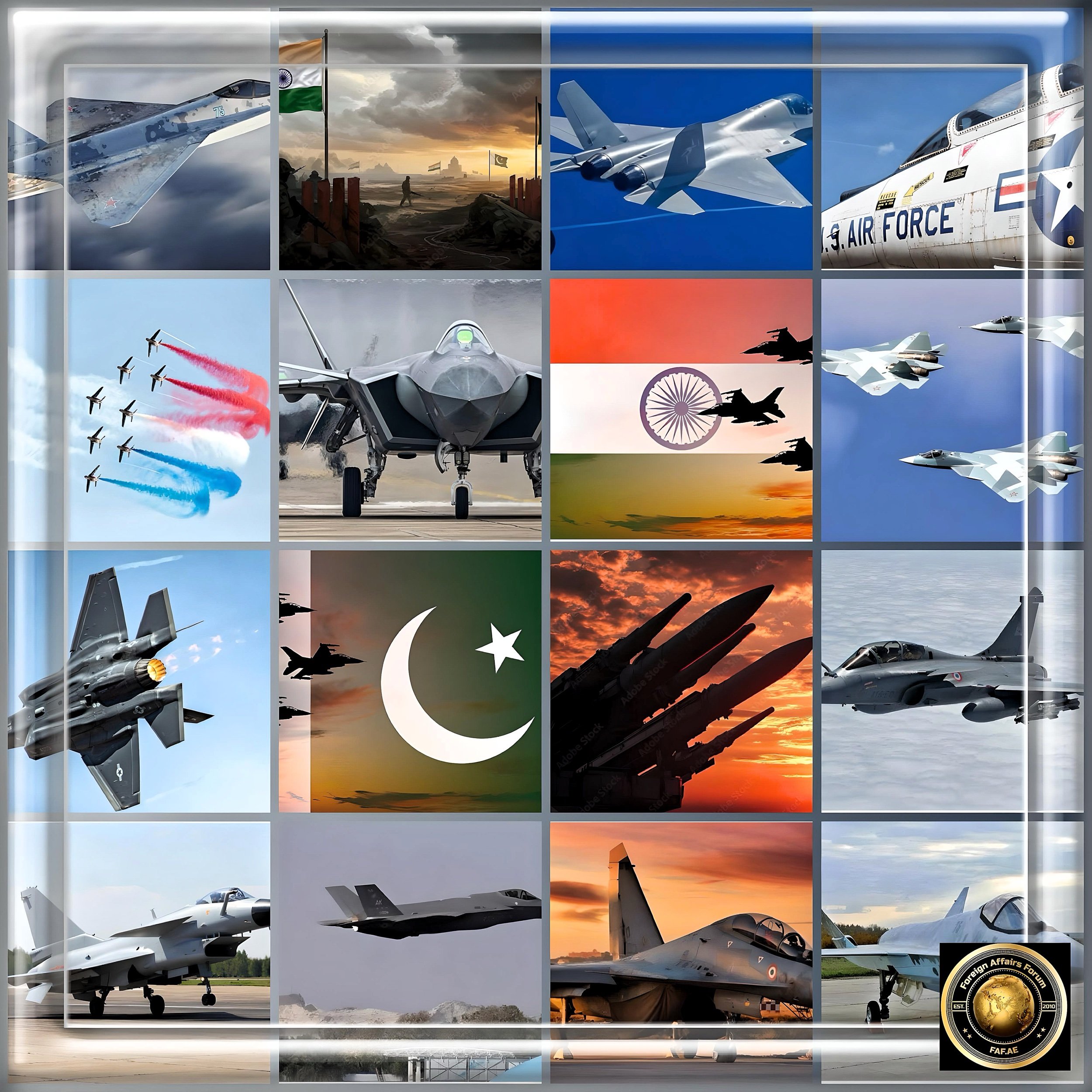
Global Fifth-Generation Fighter Jet Analysis: A Comparative Assessment of Chinese, Russian, French, and American Combat Aircraft
Introduction
The global landscape of advanced fighter aircraft is evolving rapidly, with significant powers developing and deploying increasingly sophisticated platforms.
FAF, Defense.Forum, examines the current status, capabilities, and prospects of key fifth-generation and advanced fourth-generation fighters from China, Russia, France, and the United States.
Chinese Advanced Fighters: Expanding Capabilities and Production
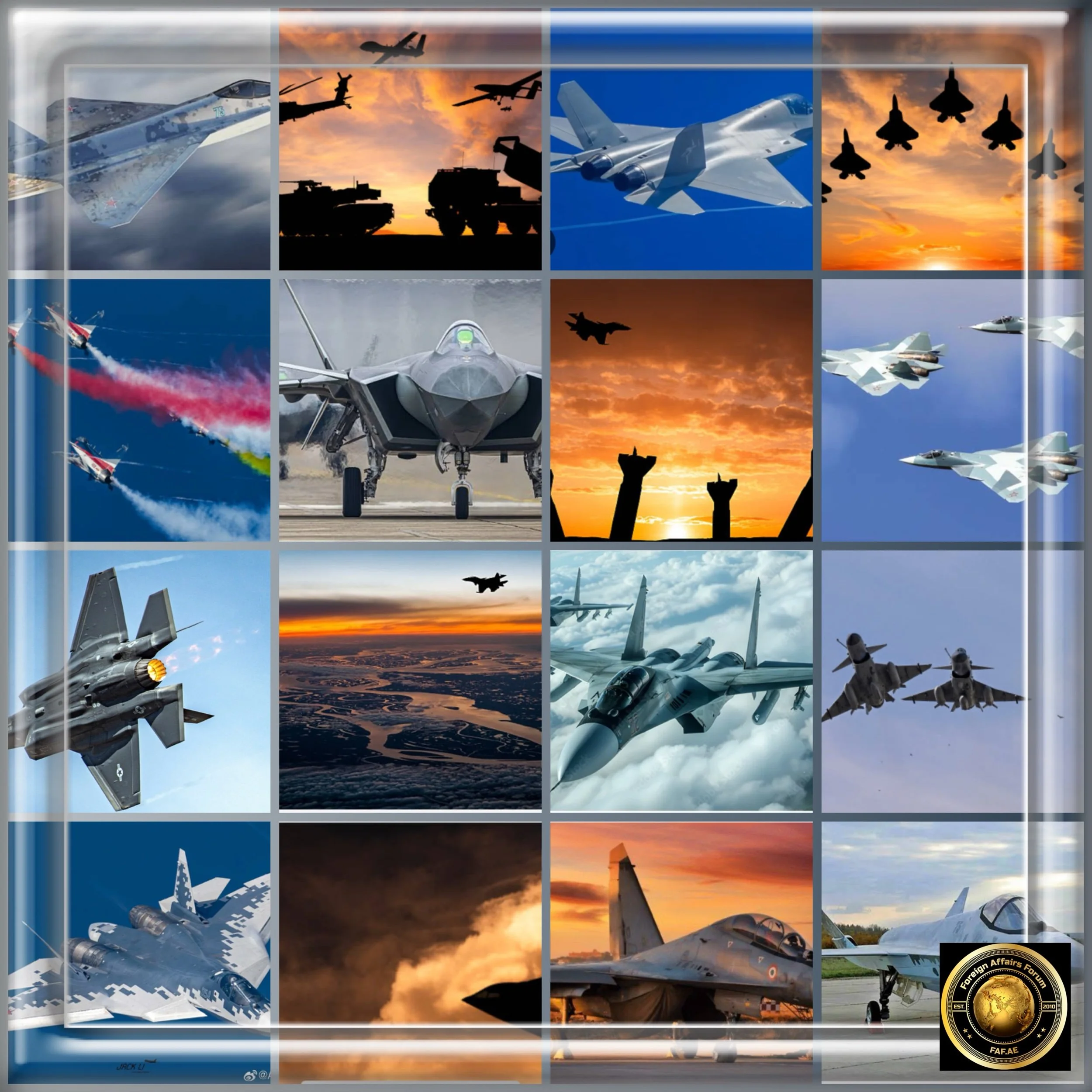
Chengdu J-20 “Mighty Dragon”
China’s premier fifth-generation fighter has seen remarkable capabilities and deployment numbers advances.
The J-20 represents China’s entry into the elite club of nations operating actual stealth fighters.
Approximately 195 J-20s are in service with the People’s Liberation Army Air Force (PLAAF).
Production rates have surged impressively, increasing from around 30 to 100 aircraft annually.
This acceleration suggests China could field as many as 800 J-20s by 2030, potentially outnumbering the entire Indian Air Force fighter fleet.
Recent developments have seen the J-20 deployed in “beast mode” - carrying external weapons similar to American stealth fighters.
New imagery shows J-20s carrying eight PL-15 medium-to-long-range air-to-air missiles on underwing hardpoints, supplementing the four PL-15s carried internally and two PL-10 short-range missiles housed in unique side weapon bays.
The J-20’s specifications include:
Top speed: Mach 2
Combat range: 1,100 nautical miles
Service ceiling: 66,000 feet
Armament capacity: Up to 14 missiles in current configuration
Most significantly, China has recently deployed J-20s to Shigatse airbase in Tibet, approximately 150km from the Indian border near Sikkim.
This strategic positioning has profound implications for regional power dynamics, especially considering India’s countermeasure of Rafale fighters based at Hasimara, less than 290km away.
The J-20 continues to face engine challenges. It currently utilizes Russian AL-31 engines or indigenous WS-10C variants rather than the planned WS-15 powerplants.
Shenyang FC-31/J-35 “Gyrfalcon”
China’s second stealth fighter program represents a complementary approach to the J-20 - smaller, potentially exportable, and now being adapted for naval operations.
The FC-31/J-35 remains in the developmental stage, with the original prototype first flying in 2012 and a carrier-based variant taking flight in 2021.
Recent reports suggest a variant designated “J-31B” may be nearing operational readiness.
Key aspects of this platform include
A twin-engine, fifth-generation fighter with stealth features
Maximum takeoff weight of approximately 28,000 kg
Top speed of Mach 1.8
Internal weapons bay plus external hardpoints for varied mission profiles
Dimensional and conceptual similarities to the American F-35
The naval J-35 variant features modifications for carrier operations, including folding wings, a catapult launch bar, and an arresting hook, which can be used on China’s Type 003 aircraft carrier with electromagnetic catapult systems.
The program demonstrates China’s determination to develop a comprehensive fifth-generation fighter portfolio.
Russia’s Fighter Development: Ambition Amid Challenges
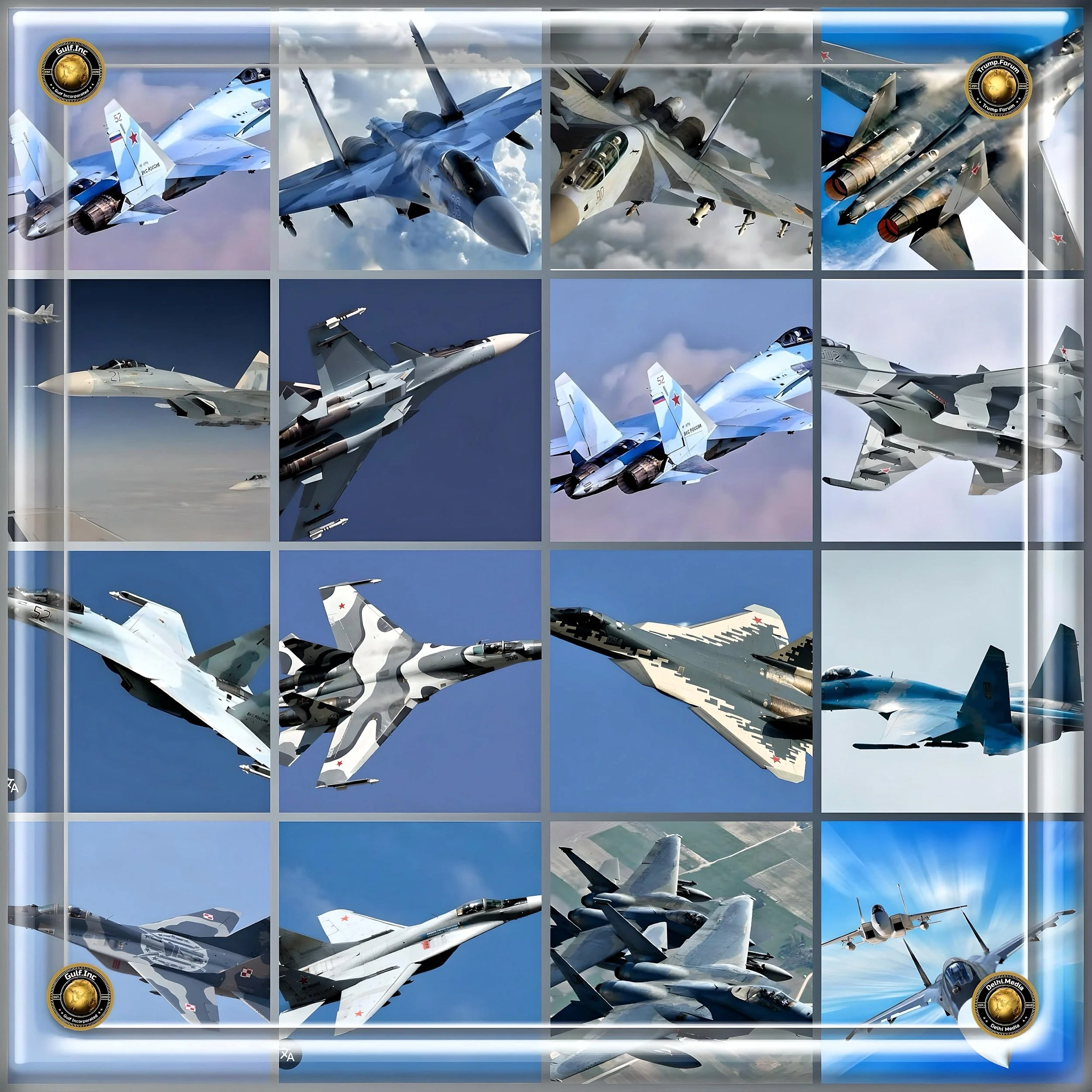
Sukhoi Su-57 “Felon”
Russia’s first stealth fighter has progressed from protracted development to limited operational deployment.
As of December 2023, 32 Su-57s had been built (including 10 prototypes).
Production has accelerated somewhat, with reports suggesting 20 new aircraft are expected in 2024.
The Su-57 has seen limited combat deployment in Ukraine, with reports of missile strikes in February and May 2024 using Kh-69 cruise missiles launched from Russian airspace.
However, the program suffered a setback when Ukrainian forces reportedly damaged or destroyed two Su-57s in a drone strike on the Akhtubinsk air base in June 2024.
The Su-57’s notable features include
Stealth design with internal weapons bays
Superior maneuverability with thrust-vectoring engines
Supercruise capability (supersonic flight without afterburners)
Advanced avionics and sensor fusion capabilities
Despite Russia’s ambitions, sanctions and resource constraints limit production rates and export potential.
Sukhoi Su-75 “Checkmate”
Russia’s lightweight, single-engine stealth fighter concept remains in early development.
Originally scheduled to fly in 2023, the maiden flight has been delayed to 2025. Initial deliveries are planned for 2026-2027.
Designed as a lower-cost alternative (projected at $25-30 million per unit) with export markets in mind, the Su-75’s development has reportedly been hampered by international sanctions that have cut off access to critical components and foreign investment.
The United Arab Emirates, once expected to help fund the program, has reportedly withdrawn support due to sanctions.
Sukhoi Su-30MKI
India’s primary heavyweight fighter, the Su-30MKI, is a Russian design adapted to Indian requirements and manufactured under license by Hindustan Aeronautics Limited.
India operates 259 of these twin-engine, supermaneuverable fighters and plans a comprehensive “Super Sukhoi” upgrade program.
The first batch of 84 aircraft will receive indigenous “Virupaksha” AESA radars (increasing detection range by 1.5-1.7 times) and integration with longer-range weapons, including the 350km-range Astra-3 missile.
The upgrade program, estimated at Rs 63,000 crore (approximately $7.5 billion), will unfold over 15 years. Seven years of development and testing will be followed by progressive aircraft modernization.
These improvements aim to keep the Su-30MKI viable until 2055, potentially rivaling fifth-generation fighters in non-stealth capabilities.
French Rafale: Continuous Evolution
The Dassault Rafale exemplifies the concept of evolutionary development, with progressive standards maintaining competitiveness despite its fourth-generation origins.
The newest F4.1 standard entered operational service with the French Air and Space Force in February 2024.
This update includes improved connectivity through new satellite and intra-patrol links, helmet-mounted sights, enhanced targeting systems, a new 1-ton precision-guided bomb, and improvements to self-protection systems.
Production rates are set to increase. Plans call for delivering three aircraft monthly in 2025, rising to four per month from 2028 to 2029.
The Rafale has achieved significant export success, serving with Egypt, India, Greece, Croatia, Indonesia, the UAE, and Serbia.
India’s 36 Rafales (delivered by April 2022) provide a counterbalance to China’s J-20 deployment near the border.
Eight Indian Rafales participated in the June Red Flag-Alaska 2024 exercise, demonstrating interoperability with Western forces.
American F-35 Lightning II: Production Maturity
The Lockheed Martin F-35 remains the most widely produced fifth-generation fighter globally, with over 1,110 aircraft delivered and production exceeding 150 units annually.
Manufactured at Lockheed’s mile-long factory in Fort Worth, Texas, each F-35 takes approximately 18 months to build.
Despite being the world’s most expensive weapons program (lifetime costs exceeding $2 trillion) and facing criticism for cost overruns and sustainability challenges, the F-35 defines the standard for fifth-generation capabilities.
The F-35’s widespread adoption by U.S. allies creates a significant network advantage through interoperability and shared tactics, techniques, and procedures.
Conclusion
The landscape of advanced fighter development reveals varying approaches and capabilities:
China has achieved impressive production rates and deployment of the J-20 while developing a complementary FC-31/J-35 platform that could potentially match or exceed the capabilities of early F-35 variants.
Russia continues to struggle with production volumes for the Su-57 despite its advanced capabilities, while the Su-75 faces significant development hurdles amid sanctions. Russia’s strength remains in upgrading proven fourth-generation designs.
France demonstrates that advanced fourth-generation designs can remain competitive through continuous evolution, with the Rafale maintaining relevance in a fifth-generation environment.
Despite cost and sustainability challenges, the United States maintains its lead in fifth-generation fighter production volume and deployment experience with the F-35.
These fighter aircraft represent military capabilities and strategic positioning in an increasingly complex global security environment.
The coming decade will likely see the continued evolution of these platforms as nations invest in maintaining their aerial combat capabilities.