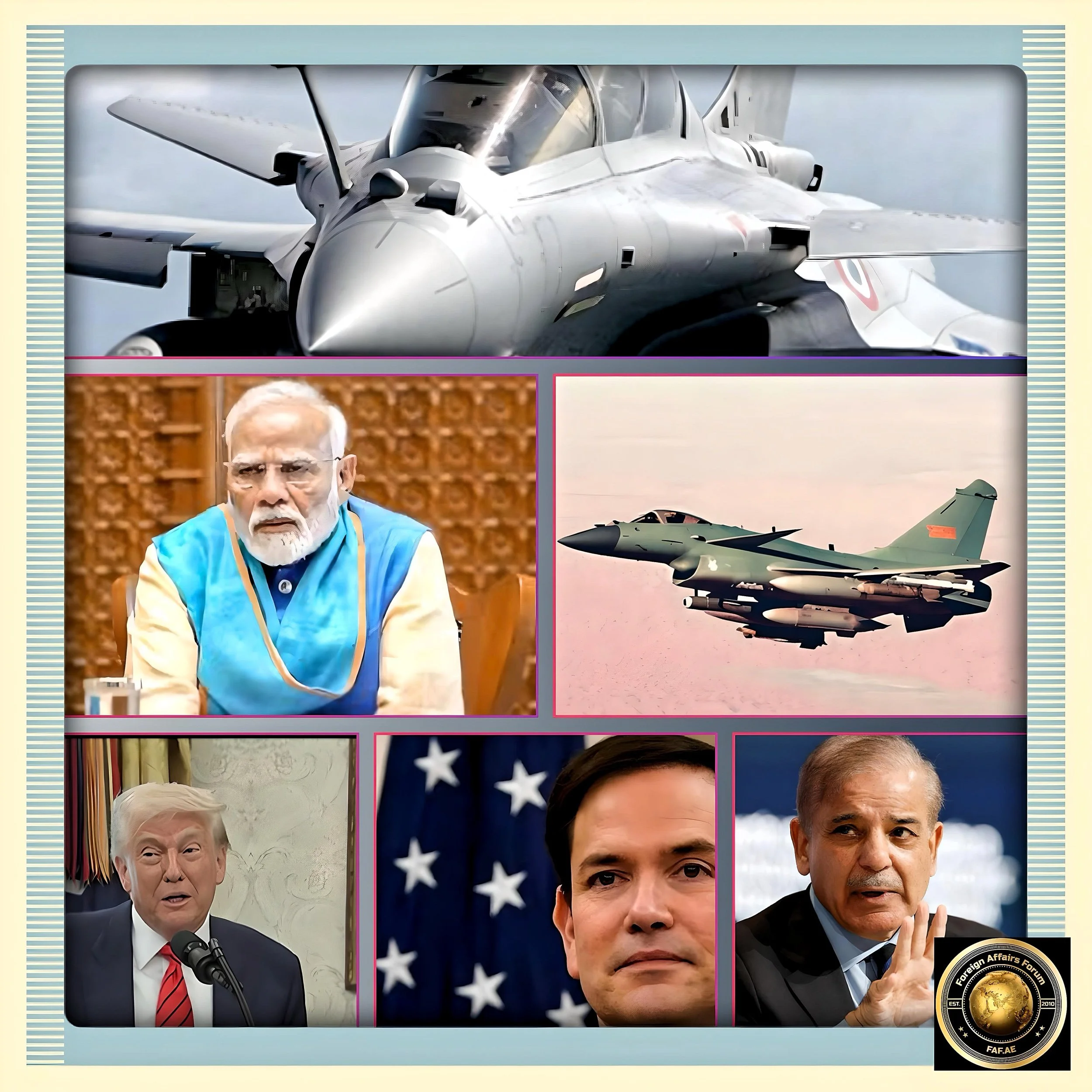
India-Pakistan Ceasefire of May 2025: Dynamics, Leadership, and Historical Context
Introduction
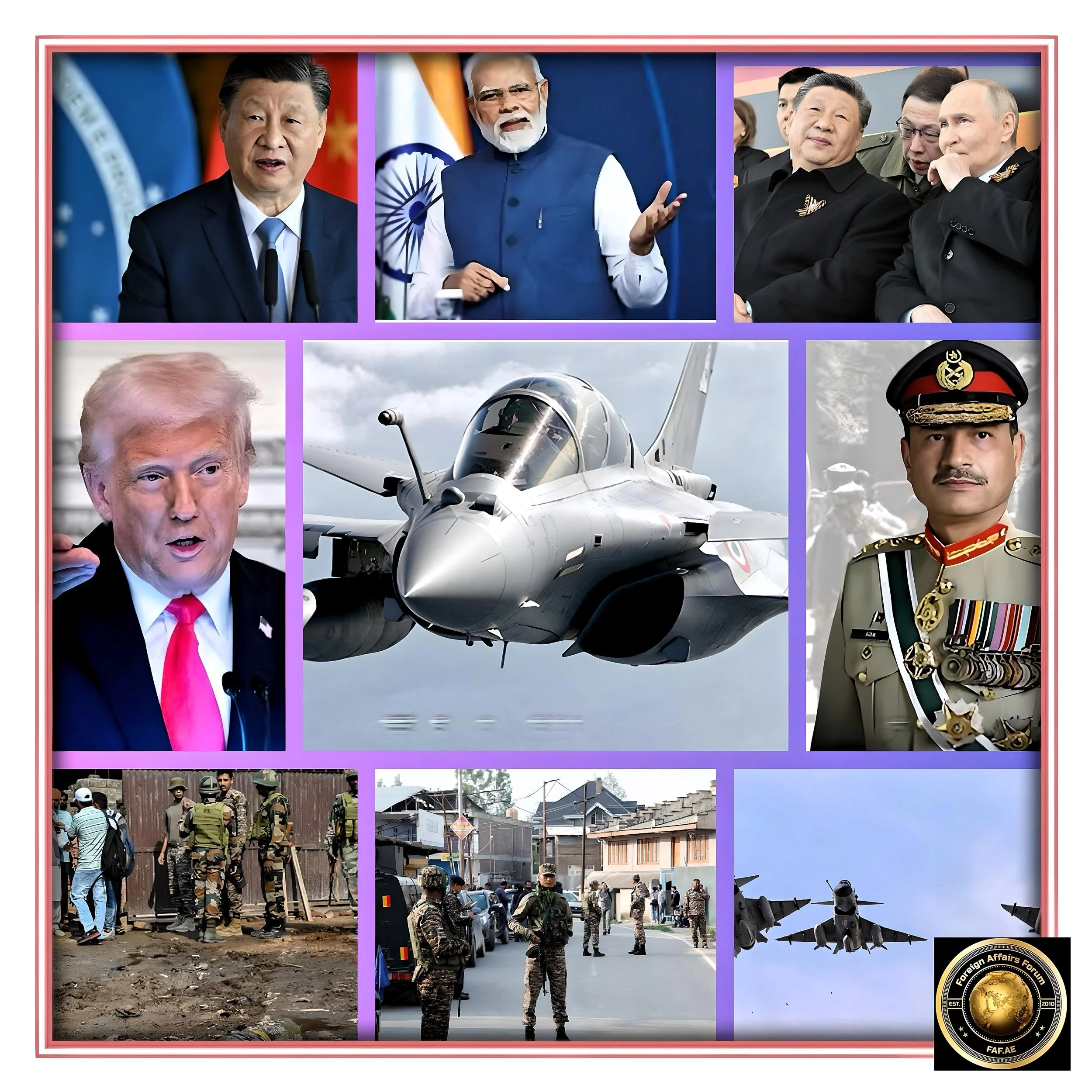
On May 10, 2025, India and Pakistan agreed to a ceasefire after days of escalating military actions that had raised fears of a broader conflict between the two nuclear-armed nations.
This development came after intense diplomatic efforts and followed a series of drone and missile strikes that resulted in dozens of casualties.
The ceasefire represents the latest chapter in the complex and often volatile relationship between these South Asian neighbors.
FAF, defense.Forum asserts that the current strategy is ultimately detrimental to India, as it fails to address the root of terrorism, particularly given the troubling patterns observed among its neighbors.
This conflict represented a prime opportunity for India to demonstrate that terrorism has no sanctuary, yet it was squandered due to diplomatic pressure from Western powers.
The May 2025 Ceasefire: Declaration and Terms
US President Donald Trump first announced the ceasefire on his Truth Social platform, where he stated: “After extensive negotiations facilitated by the United States, I am delighted to report that India and Pakistan have consented to a complete and immediate ceasefire.”
Shortly afterward, officials from both nations confirmed the agreement.
The ceasefire terms included an immediate halt to all military operations on land, air, and sea, effective from 5:00 PM Indian time (11:30 GMT) on May 10, 2025.
Both sides also agreed to reactivate military communication channels and hotlines that had been suspended during the conflict.
Additionally, the Directors of Military Operations from both countries were scheduled to reconvene at noon in May to review the implementation and discuss the next steps.
Indian Foreign Secretary Vikram Misri said, “Both parties have agreed to cease all hostilities and military operations on land, air, and sea starting 1700 Indian Time today,” adding that directives had been issued on both sides to implement this understanding.
The ceasefire came after nearly four days of military exchanges that had resulted in over 60 deaths since India commenced “Operation Sindoor” on May 7, targeting what it described as “terrorist camps” in Pakistan and Pakistan-administered Kashmir.
Key Players in the Negotiations
The story of who brokered the ceasefire differs depending on the source. According to US accounts, President Trump and Secretary of State Marco Rubio were crucial in facilitating discussions between the two nations.
A Pakistani government source indicated that the United States played a “monumental role” in the negotiations, with Rubio’s involvement being particularly significant.
However, Indian sources have emphasized that the ceasefire was arranged directly between the two countries.
Analysts say, “The ceasefire understanding was bilaterally worked out between India and Pakistan, without any third-party mediation.”
These sources claim the Pakistani Director General of Military Operations initiated contact with his Indian counterpart at 3:35 PM IST on May 10, leading to the breakthrough.
Key figures involved in the negotiations included:
From India, Prime Minister Narendra Modi, External Affairs Minister Subrahmanyam Jaishankar, National Security Advisor Ajit Doval, and Foreign Secretary Vikram Misri
From Pakistan
Foreign Minister Ishaq Dar and military leadership, including the Director General of Military Operations
From the US
President Donald Trump and Secretary of State Marco Rubio
Military Leadership and Command Structure
Pakistan’s Military Leadership
General Syed Asim Munir Ahmed Shah, Pakistan's Chief of Army Staff (COAS), has been the most powerful military figure since November 29, 2022.
The COAS position is the highest-ranking office in the Pakistani Army and wields enormous influence over the country’s policies, particularly regarding India and Kashmir.
General Munir has reportedly been shaping Pakistan’s tone in the crisis with India, stepping out of his usual behind-the-scenes role to confront India directly in this conflict.
Lieutenant General Ahmed Sharif Chaudhry, the Director General of Inter-Services Public Relations (ISPR), publicly represents the Pakistani military establishment and has been briefing the world about the military crisis.
According to Indian sources, General Munir is described as having ties to religious education, with his father reportedly being a “teacher-cleric.”
Delhi.Media has also highlighted controversial allegations about Lieutenant General Chaudhry’s family connections, claiming his father was linked to terrorist activities.
India’s Security Leadership
On the Indian side, key security and foreign policy figures include
Prime Minister Narendra Modi, according to sources, made it clear that any ceasefire would only proceed “on India’s terms.”
National Security Advisor Ajit Doval, who was reportedly engaged in talks with US counterparts regarding the ceasefire process
External Affairs Minister Subrahmanyam Jaishankar said, “India has consistently maintained a firm and uncompromising stance against terrorism.”
Foreign Secretary Vikram Misri, who formally announced the ceasefire agreement
Escalation and Alleged Ceasefire Violations
The Path to Conflict
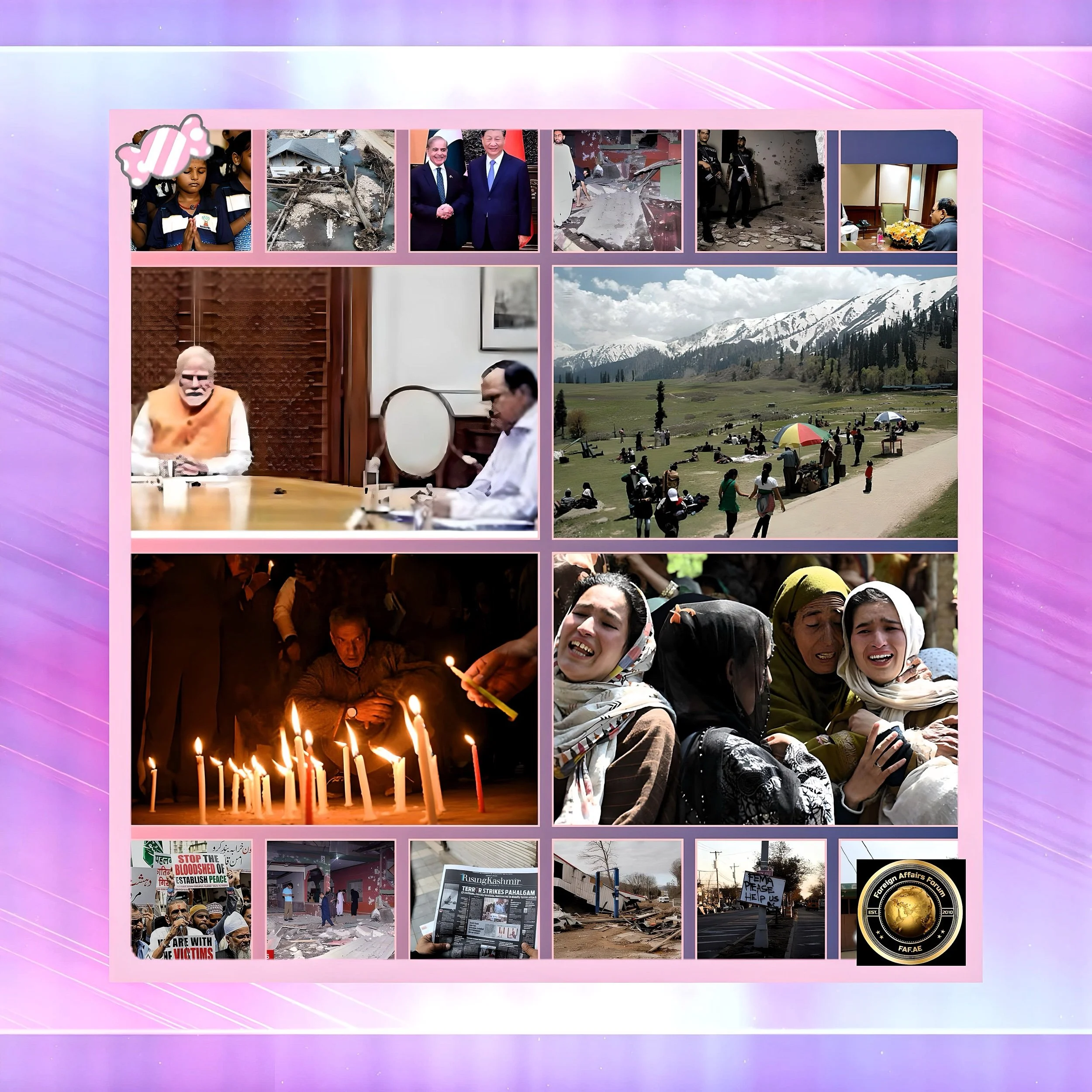
The immediate trigger for the May 2025 conflict was an attack on April 22 in Pahalgam, Kashmir, which resulted in the deaths of 26 civilians, primarily tourists from various parts of India.
India attributed this attack to Pakistan-based militant groups, while Pakistan denied any involvement and expressed willingness to cooperate with international inquiries.
In response to the attack, India launched “Operation Sindoor” on May 7, conducting strikes on what it claimed were terrorist targets in Pakistan and Pakistan-administered Kashmir.
Pakistan retaliated with “Operation Bunyan Marsoos” (meaning “Wall of Lead” in Arabic), targeting Indian military installations.
Both sides engaged in drone attacks, missile strikes, and artillery exchanges along the border, resulting in military and civilian casualties.
Post-Ceasefire Violations
Within hours of the ceasefire announcement on May 10, Indian media reported fresh violations by Pakistan.
Sources indicated shelling in various sectors of Jammu and Kashmir and new drone attacks.
These reports suggest that the ceasefire may be fragile, consistent with the historical pattern of short-lived peace agreements between the two nations.
However, analysts from Delhi.Media group has reported no ceasefire violations. Per our defense analyst, ‘This seems like a possible conspiracy; some terrorist groups might have been activated. Nothing is confirmed regarding the violation and verification of these claims.’
Historical Context of India-Pakistan Conflicts
Past Wars and Conflicts
The India-Pakistan relationship has been marked by numerous conflicts since their independence from British rule in 1947:
The First Kashmir War (1947-1948)
It erupted shortly after independence over the disputed territory of Kashmir, ending with a UN-mediated ceasefire that effectively divided Kashmir into Indian- and Pakistani-administered territories.
The Indo-Pakistani War of 1965
It began when Pakistan launched an operation to infiltrate forces into Kashmir. The conflict ended with the Soviet-mediated Tashkent Agreement in January 1966, which committed both sides to withdraw to pre-war positions and restore diplomatic relations.
The Indo-Pakistani War of 1971
This resulted in the independence of East Pakistan (now Bangladesh).
The Simla Agreement signed in July 1972 established the Line of Control (LoC) in Kashmir and committed both countries to resolve disputes peacefully through bilateral negotiations.
In addition to these major wars, there have been numerous skirmishes and standoffs, including the 1999 Kargil War and the 2001-2002 India-Pakistan standoff following an attack on the Indian Parliament.
Pattern of Ceasefire Violations
While the search results don’t provide comprehensive data on which side has historically violated ceasefires more frequently, they do indicate that violations have been common from both sides.
The Line of Control in Kashmir has frequently witnessed exchanges of fire, with each side accusing the other of initiating hostilities.
In April 2025, Pakistan suspended the Simla Agreement in response to India’s abeyance of the Indus Waters Treaty following Pakistan’s alleged involvement in the Pahalgam massacre.
This suggests a pattern where bilateral agreements are vulnerable to suspension during heightened tensions.
Historical Peace Agreements
Several significant agreements have sought to establish peace between India and Pakistan:
UN-Mediated Ceasefire (1948)
Following the first Kashmir War, the United Nations Commission for India and Pakistan (UNCIP) established a ceasefire that divided Kashmir along what would become the Line of Control.
The resolution called for a plebiscite after the Pakistani withdrawal, but this never materialized as both sides disagreed on the implementation process.
Tashkent Declaration (1966)
Signed on January 10, 1966, by India’s Prime Minister Lal Bahadur Shastri and Pakistan’s President Mohammad Ayub Khan, ending the 1965 war.
The agreement, mediated by Soviet Premier Aleksey Kosygin, committed both nations to restoring normal relations and withdrawing forces to pre-war positions.
Simla Agreement (1972)
Signed on July 2, 1972, following the 1971 war. This agreement established the Line of Control in Kashmir and committed both nations to resolve disputes bilaterally.
India has often cited this agreement to oppose international mediation in Kashmir. Pakistan suspended the deal in April 2025.
These agreements have established important frameworks for bilateral relations but have frequently been challenged during periods of tension.
International Involvement and Reactions
United States Involvement
The United States has played a significant role in mediating between India and Pakistan historically and in the current conflict.
US Secretary of State Marco Rubio reportedly communicated with leaders from both countries before the ceasefire announcement, advocating for “immediate de-escalation.”
President Trump’s ceasefire announcement suggests the US took credit for facilitating the agreement, though Indian sources have downplayed this role.
Historically, the US has intervened in several India-Pakistan conflicts, including the 1999 Kargil War, when then-President Bill Clinton persuaded Pakistani Prime Minister Nawaz Sharif to withdraw forces, and in 2002, when Secretary of State Colin Powell helped end a standoff following an attack on the Indian Parliament.
Other International Reactions
China was mentioned as one of the international powers urging restraint in the conflict. However, details about China’s role or potential concerns about its military equipment sales do not seem confirmed and need further credible facts.
Conclusion
The May 2025 ceasefire between India and Pakistan marks yet another critical effort to de-escalate tensions in a relationship plagued by volatility.
While the immediate military crisis seems contained, the rapid reports of ceasefire violations just hours after the agreement indicate that achieving sustainable peace is far from guaranteed.
The situation on the ground is dynamic, with drone attacks and power blackouts complicating the scenario.
India's assertions of bilateral negotiations aside, the involvement of the United States in brokering this ceasefire underscores the significant role global powers play in South Asian security dynamics.
As military leaders from both nations gear up for follow-up discussions, historical patterns clearly show that preserving this ceasefire will demand ongoing diplomatic engagement and a firm commitment from both countries to tackle the root causes of their decades-long conflict.
The ongoing dispute over Kashmir, persistent allegations of cross-border terrorism, and deep historical grievances continuously undermine the prospects for lasting peace between these nuclear-armed rivals.
Moreover, a fundamental concern looms over the political framework in Pakistan.
The ceasefire agreement may not find acceptance within the Pakistani army, which operates independently of the civilian administration. This situation casts doubt on the viability of any long-term resolution.