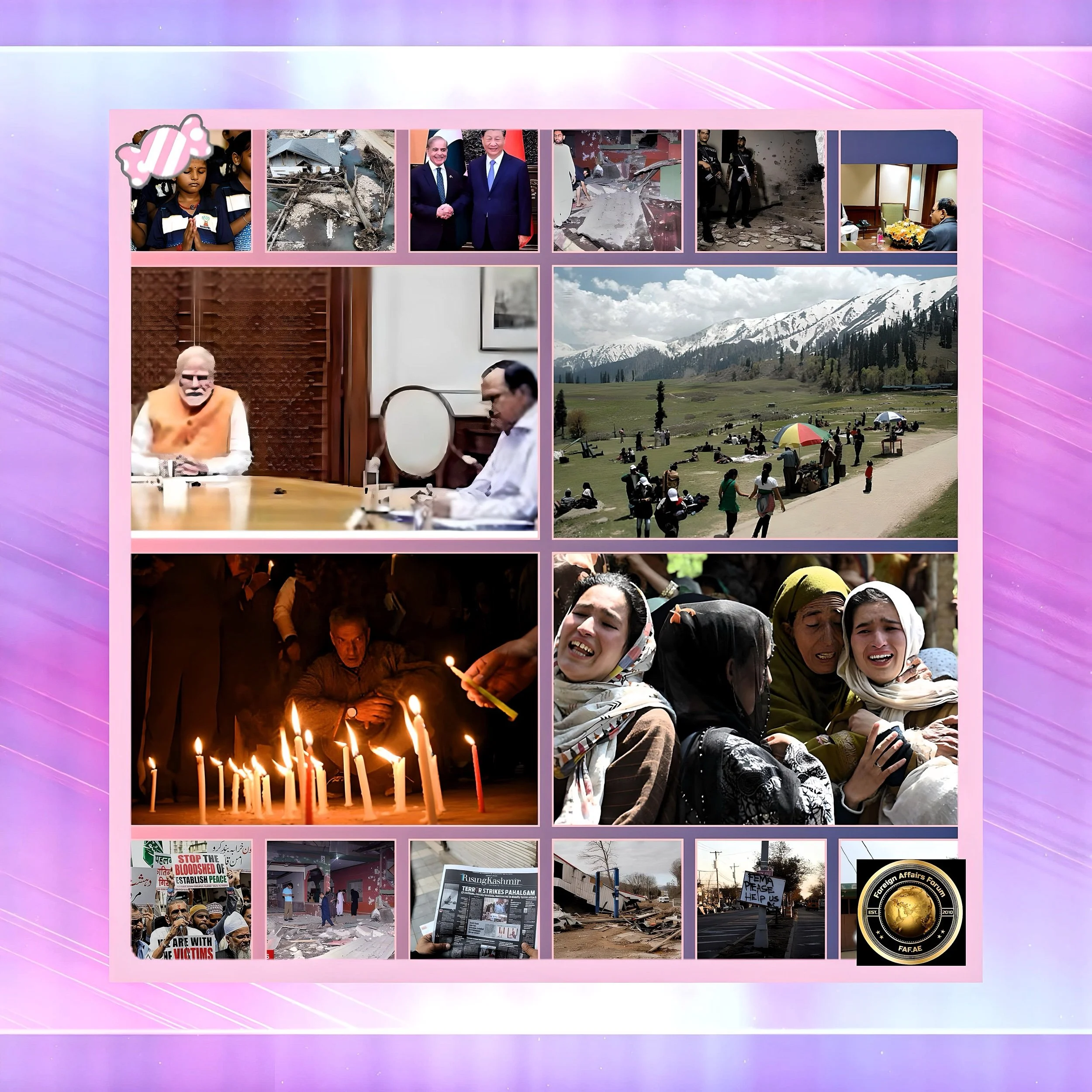
Operation Sindoor: India’s Strikes on Pakistan and Global Responses
Introduction
“Terrorism has no brains and should be eradicated by roots like a weed. “ - FAF
India has conducted military strikes on multiple targets within Pakistan and Pakistan-occupied Kashmir (PoK) in response to a deadly terror attack, triggering international concern and threats of retaliation from Pakistan.
This operation marks the first time since the 1971 war that all three branches of India’s armed forces have been deployed together against Pakistan.
India’s Military Operation
In the early hours of Wednesday, May 7, 2025, at approximately 1:44 am, the Indian armed forces launched “Operation Sindoor,” targeting what they described as terrorist infrastructure in Pakistan and Pakistan-occupied Kashmir.
The military operation was conducted in response to the April 22 terror attack in Pahalgam, Jammu, and Kashmir, which claimed 26 lives, including 25 Indians and one Nepali citizen.
According to India’s Ministry of Defense, the operation targeted nine sites connected to terror organizations, including the headquarters of Jaish-e-Mohammed in Bahawalpur and Lashkar-e-Taiba in Muridke.
The operation employed precision strike weapon systems from all three military branches – the Indian Army, Navy, and Air Force – including Kamikaze drones, also known as loitering ammunition.
Indian officials emphasized that the strikes were “focused, measured and non-escalators in nature” and that “no Pakistani military facilities have been targeted,” demonstrating what they described as “considerable restraint in the selection of targets and method of execution.”
Details of the Operation
The Indian Army released a statement saying: “A little while ago, the Indian Armed Forces launched ‘OPERATION SINDOOR,’ hitting terrorist infrastructure in Pakistan and Pakistan-occupied Jammu and Kashmir from where terrorist attacks against India have been planned and directed.”
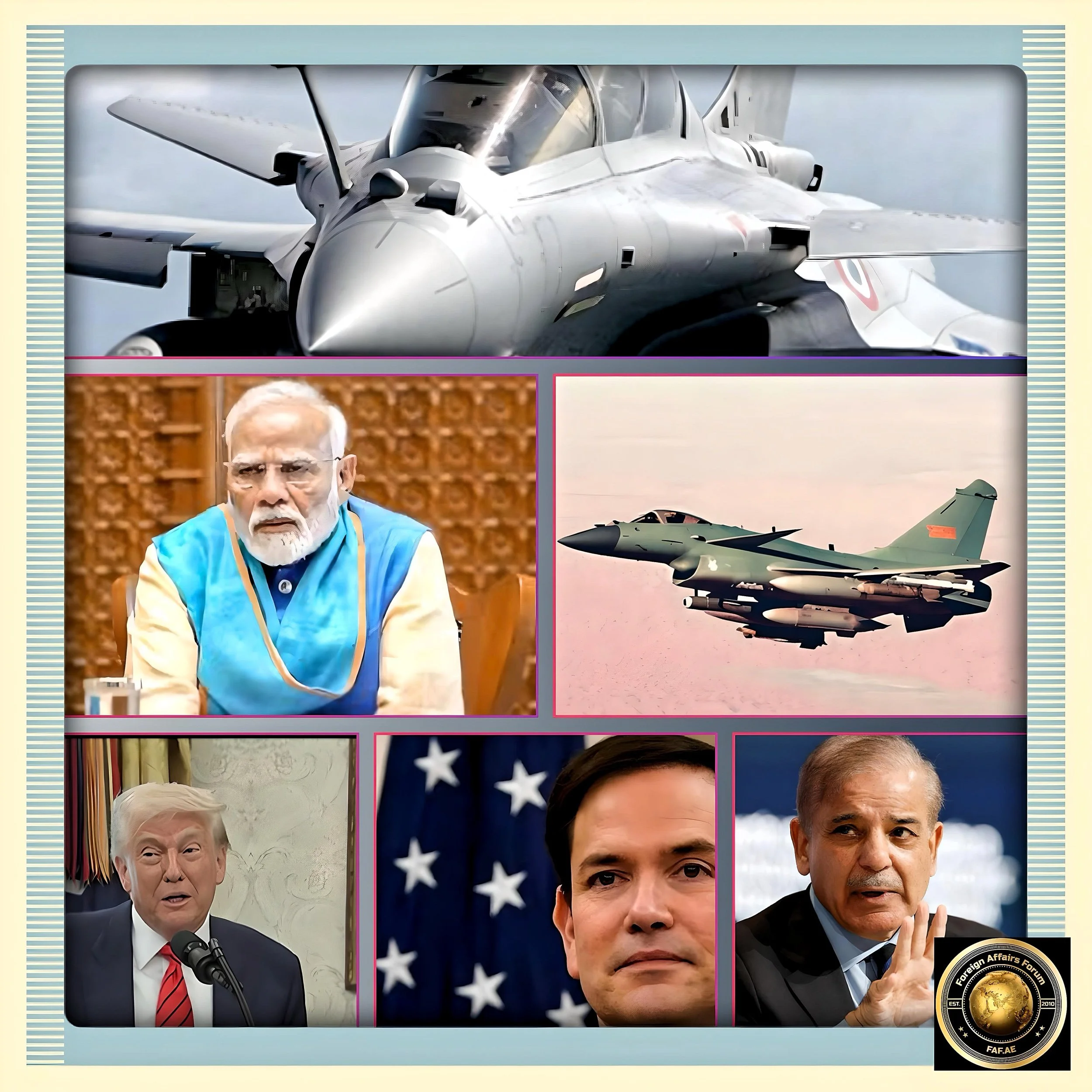
Prime Minister Narendra Modi, who had previously vowed to pursue those responsible for the Pahalgam attack “to the ends of the earth,” reportedly monitored the operation through the night.
Significantly, Indian officials noted that immediately after the operation, National Security Advisor Ajit Doval spoke with US officials to brief them on the actions taken.
The Indian Embassy in Washington confirmed that Doval spoke with the US National Security Adviser and Secretary of State Marco Rubio shortly after the strikes.
Pakistan’s Response
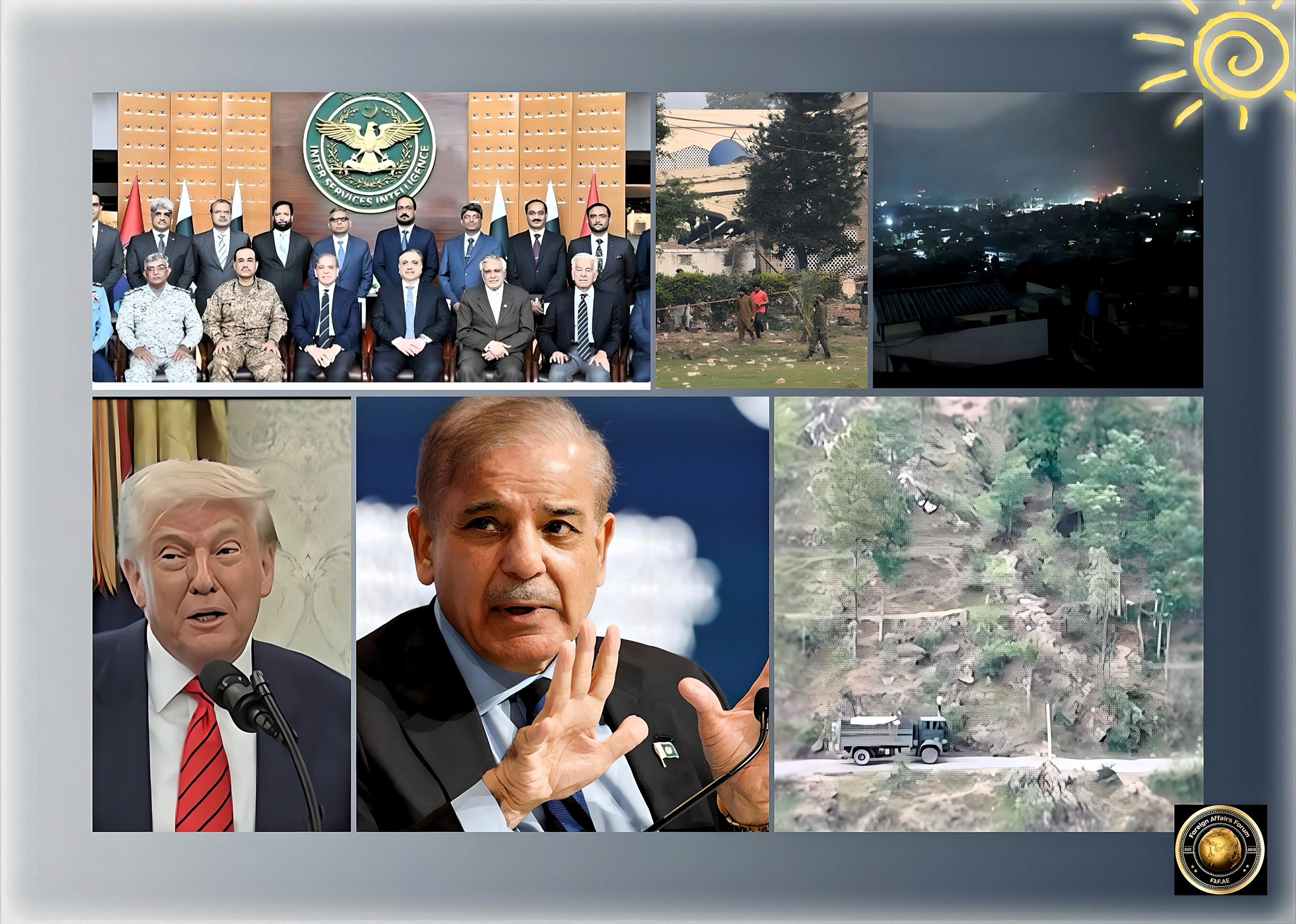
Pakistan has reacted strongly to India’s military strikes, with Prime Minister Shehbaz Sharif calling it an “act of war” and asserting that Pakistan “has every right to respond forcefully.”
Sharif stated, “The Pakistani nation and the Pakistani armed forces know how to deal with the enemy. We will never allow the enemy to succeed in their nefarious goals”.
Pakistani military spokesperson Lt Gen Ahmed Sharif Chaudhry confirmed the strikes but disputed India’s claims about targeting terrorist infrastructure.
He indicated India had struck sites in Kotli and Muzaffarabad in PoK and Bahawalpur in Punjab province.
The spokesperson stated unequivocally: “Pakistan will respond to it at a time and place of its choosing. This heinous provocation will not go unanswered”.
Pakistan’s Defense Minister Khawaja Asif told GeoTV that the strikes had impacted civilian areas rather than terrorist camps, directly contradicting India’s assertions.
According to Pakistani sources, the casualties from the strikes include several civilians, with one report mentioning seven deaths, including two children, while another source reports three killed and twelve injured.
In an immediate military response, Pakistan reportedly violated the ceasefire agreement by firing artillery in the Bhimber Gali area of Poonch-Rajouri, to which the Indian Army responded: “in a calibrated manner.”
International Reactions
United States
US President Donald Trump described the situation as “shameful” when asked about the strikes.
He remarked, “I guess people knew something was going to happen based on a little bit of the past. They’ve been fighting for a long time,” adding, “I just hope it ends very quickly.”
Secretary of State Marco Rubio said, “I am monitoring the situation between India and Pakistan closely.
I echo POTUS’s comments earlier today that this hopefully ends quickly and will continue to engage both Indian and Pakistani leadership towards a peaceful resolution”.
The U.S. State Department noted it was “closely monitoring developments” but offered no immediate assessment.
United Nations
UN Secretary-General Antonio Guterres expressed significant concern about India’s military operation, with his spokesperson Stephane Dujarric stating that “the world cannot afford a military confrontation between India and Pakistan.”
“He calls for maximum military restraint from both countries,”
Dujarric said shortly after India announced the missile strikes. The UN has consistently emphasized the need for peaceful resolution of regional conflicts.
China
China has taken a notably pro-Pakistan stance in the conflict.
Chinese Ambassador Jiang Zaidong met with Pakistan’s President Asif Ali Zardari in Islamabad and reiterated Beijing’s commitment to regional peace.
During their meeting, President Zardari expressed concern about India’s retaliatory measures and warned of their broader impact on regional stability.
Victor Gao, a prominent Chinese strategist, made China’s position clear in Chinese media: “China & Pakistan are all-weather ironclad allies.
No one should second guess this alliance between China and Pakistan.
China will always come to Pakistan’s help and assistance whenever Pakistan’s sovereignty and territorial integrity will be threatened by any country”.
Despite this strong rhetoric, the official Chinese Foreign Ministry position has maintained a more cautious tone, with spokesperson Guo Jiakun calling for calm and supporting a neutral investigation.
Russia
Before the strikes, the Kremlin had called for a de-escalation between India and Pakistan.
On May 5, Kremlin spokesman Dmitry Peskov told reporters, “We hope that the parties will be able to take measures… that will reduce tensions. We are following the tense atmosphere that has developed on the border with great concern”.
Russian President Vladimir Putin had previously condemned the Pahalgam attack as “barbaric” during a call with Prime Minister Modi and pledged full support for India’s counter-terrorism efforts.
European Union
The European Union has urged both nations to exercise military restraint and engage in dialogue.
EU spokesperson Anouar El Anouni emphasized during a press briefing in Brussels “the importance of a peaceful resolution based on dialogue and engagement, especially in the wake of this terrorist incident.”
He also stressed the necessity for restraint and cautioned against any military, political, or economic actions that could destabilize the region.
Broader Implications
The military strikes have significant implications for regional stability in South Asia.
With both nations possessing nuclear capabilities, the international community has expressed concern about potential escalation.
The conflict is particularly sensitive given the history of hostilities between the two countries, especially over the Kashmir region.
India’s strikes occurred just before planned security mock drills across the country, which were described as preparation for “effective civil defense in the event of a hostile attack.”
These drills, planned across 244 districts, were reportedly the first of their kind since 1971, the year when India and Pakistan last engaged in full-scale war.
The immediate impact of the strikes has included disruption to civilian air traffic. Reports indicate that Srinagar Airport will remain closed to civilian flights on Wednesday, and Delhi Airport will issue a passenger advisory about service impacts.
Conclusion
Operation Sindoor represents a significant escalation in the long-standing tensions between India and Pakistan.
While India maintains it conducted a focused counter-terrorism operation in response to the Pahalgam attack, Pakistan views it as an act of war requiring retaliation.
The international community, led by major powers and organizations, has uniformly called for restraint and de-escalation, recognizing the potential for broader conflict between the nuclear-armed neighbors.
As both nations position themselves for potential further actions, the coming days will be crucial in determining whether diplomacy can prevail over military confrontation.
FAF anticipated more robust support from its allies. President Trump's remark regarding the situation being a shame may have been perceived as insensitive. This reflects a familiar pattern in American diplomatic responses.
There will likely be focused military actions in Kashmir and along the borders, along with strong rhetoric from both sides.
As anticipated, neither nation is expected to engage in a full-scale conflict, as such a situation would lead to significant humanitarian and economic consequences.
Should hostilities escalate, it is probable that Pakistan-administered Kashmir could face severe challenges, while India might experience considerable setbacks in its development.
War brings economic destruction; besides humans, every nation has the right to defend itself.”