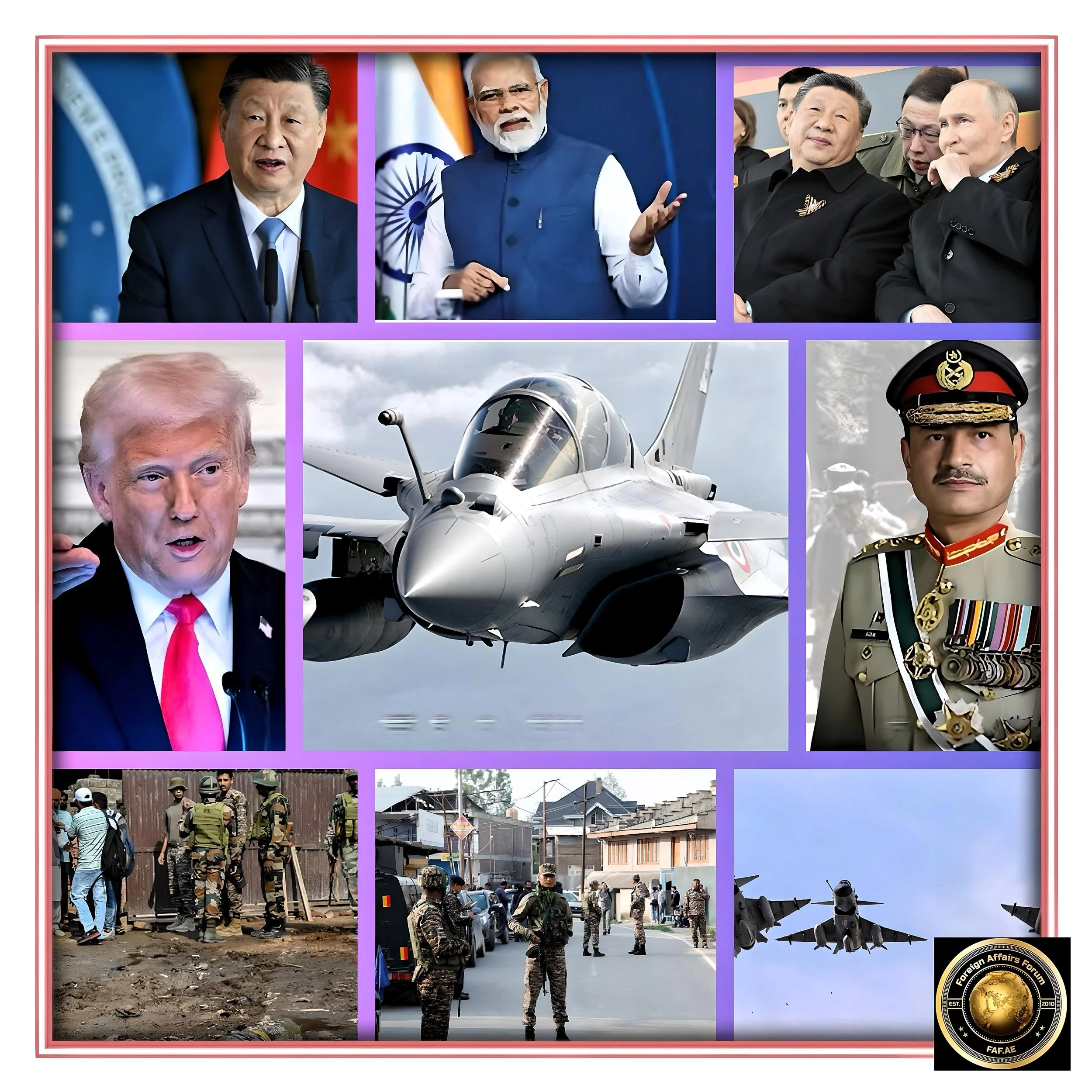
India-Pakistan Ceasefires: Historical Precedents and Strategic Implications of the 2025 Agreement to all stakeholders
Foreward
The ceasefire between India and Pakistan, announced on May 10, 2025, represents possibly the latest chapter in a long history of temporary peace agreements between the two nuclear-armed neighbors.
Coming after days of escalating military action following the Pahalgam terror attack on April 22, this US-mediated agreement raises essential questions about its sustainability and benefits for all stakeholders involved.
FAF’s Defense Forum asserts that the current situation is detrimental to India, as it fails to address the ongoing threat of terrorism, reflecting a troubling pattern among its neighbors.
This conflict presented a significant opportunity for India to demonstrate that terrorism cannot escape accountability, yet it was squandered due to diplomatic pressures from the Western bloc.
Historical Precedents of Indo-Pakistani Ceasefires
The 1949 Karachi Agreement
The first formal ceasefire between India and Pakistan was established in July 1949, following the 1947-1948 Indo-Pakistani War over Kashmir.
This agreement created the original Ceasefire Line (CFL) between Indian Jammu and Kashmir and Pakistani-controlled Azad Kashmir, with supervision by UN military observers.
It also established the United Nations Military Observer Group in India and Pakistan (UNMOGIP) to monitor violations.
The Tashkent Declaration (1966)
Following the 1965 Indo-Pakistani War, the Soviet Union mediated peace talks in Tashkent, Uzbekistan.
On January 10, 1966, Indian Prime Minister Lal Bahadur Shastri and Pakistani President Muhammad Ayub Khan signed the Tashkent Declaration, which required both militaries to withdraw to their pre-conflict positions by February 25, 1966.
This agreement faced criticism in both countries for not securing enough concessions.
The Simla Agreement (1972)
After the 1971 war that resulted in Bangladesh’s independence, India and Pakistan signed the Simla Agreement on July 2, 1972.
This pivotal treaty converted the ceasefire line into the Line of Control (LoC), establishing that both countries would settle their differences through bilateral negotiations without third-party involvement.
The agreement has been a cornerstone of India’s approach to Kashmir ever since, though Pakistan has periodically sought international intervention.
The 2003 Ceasefire Understanding
On November 23, 2003, Pakistani Prime Minister Zafarullah Jamali made a ceasefire offer that India formally accepted, establishing peace along the Line of Control.
Unlike previous agreements, this was not a formal written document but a mutual understanding between the two nations.
The period from 2003 to 2006 was remarkably peaceful, with reports indicating that “not a single bullet was fired by the jawans of India and Pakistan.”
The 2021 Renewal
In February 2021, India and Pakistan issued a joint statement recommitting to the 2003 ceasefire agreement.
This renewal brought temporary calm to the border regions but was ultimately violated, with increasing tensions culminating in Pakistan “lighting up the LoC” after the Pahalgam attack in April 2025.
The 2025 Ceasefire- Benefits and Challenges for Stakeholders
For India
The current ceasefire offers India several strategic advantages.
First, it halts further escalation with a nuclear-armed neighbor after India had already demonstrated its military capabilities through “Operation Sindoor,” which targeted terror launchpads in Pakistan.
As one analysis states, “the prevailing sentiment is that India had the upper hand” before agreeing to the ceasefire.
India benefits by avoiding being “dragged into a battlefield engineered by others” while maintaining its economic growth trajectory.
External Affairs Minister S. Jaishankar emphasized that “India has consistently maintained a firm and uncompromising stance against terrorism in all its forms and manifestations.
It will continue to do so”, suggesting that India views the ceasefire as a position of strength, not concession.
However, India faces challenges in ensuring Pakistan’s compliance with anti-terrorism commitments, as past ceasefires have not prevented infiltration attempts across the LoC.
For Pakistan
Pakistan gains immediate relief from further military strikes on its infrastructure and receives international diplomatic engagement.
The timing is notable, as “the ceasefire came a day after the International Monetary Fund (IMF) approved the release of $1 billion to Pakistan under the Extended Fund Facility”.
Pakistan’s Foreign Minister Ishaq Dar said, “We responded because our patience had reached its limit.
If they stop here, we will also consider stopping,” while warning that further Indian strikes would prompt a response.
This suggests Pakistan sees the ceasefire as necessary but conditional.
The agreement provides Pakistan an opportunity to address its precarious economic situation while avoiding further international isolation for supporting terrorist infrastructure.
For China
China’s response to the ceasefire has urged both sides to “exercise calm and restraint and return to peaceful settlement.”
As Pakistan’s self-described “ironclad ally,” China benefits from regional stability that protects its substantial investments in Pakistan through the China-Pakistan Economic Corridor.
However, some analysts suggest that conflicts between India and Pakistan serve China’s interests by portraying “India as an unsafe investment destination” and allowing China to test military technology through Pakistan “in live conflict conditions.”
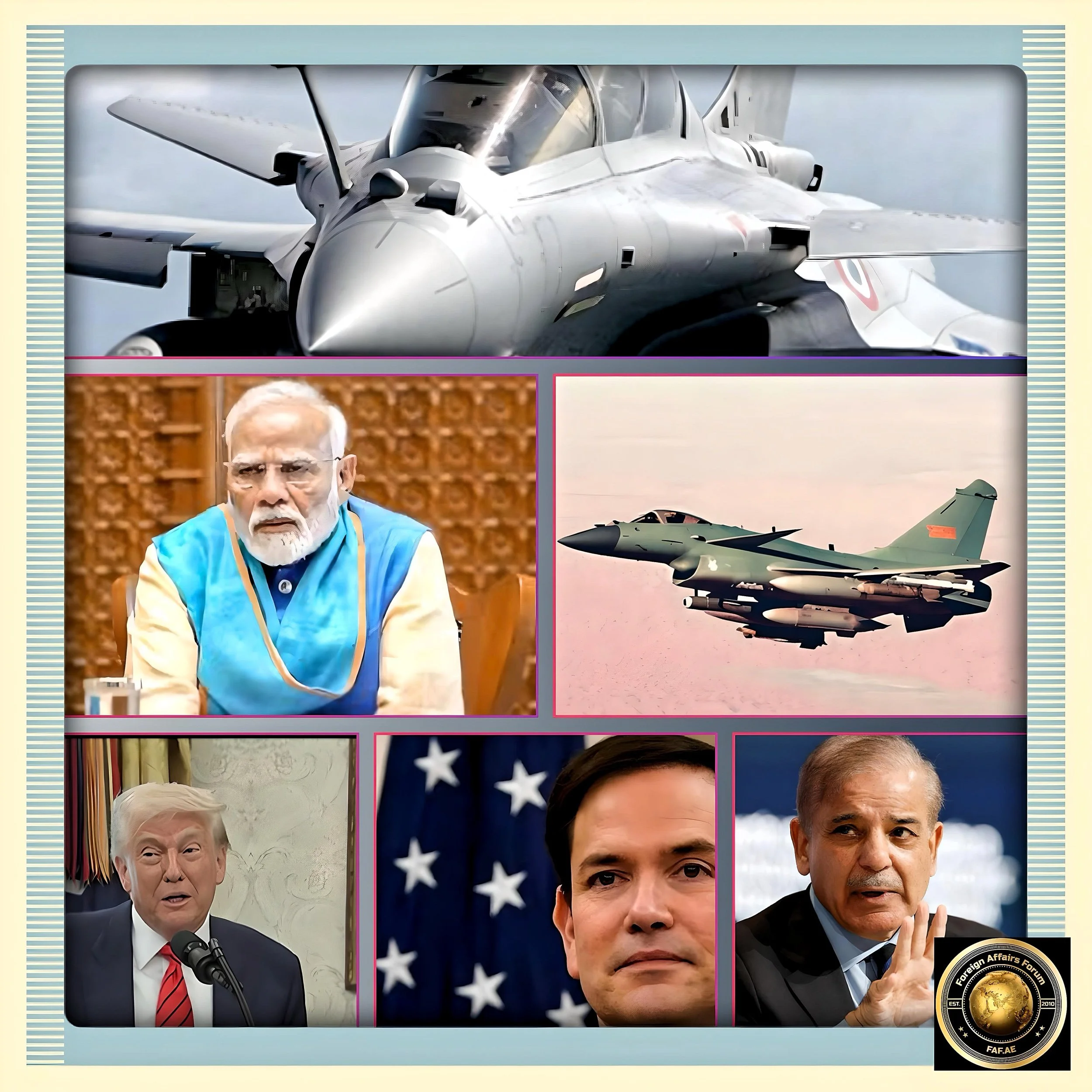
However Delhi.Forum noted that the Chinese strategy might have backfired as Pakistan’s Chinese-made drones and J12 were unsuccessful.
Moreover, the majority of Pakistan’s Chinese-made drones were shot down, which risks China's defense MOUs signed with major African continents and other nations globally.
There were also claims made from India that India possibly shot down Chinese-made JF-17 Thunders and J-10C fighter jets.
Similarly, Pakistan has made claims that J-10C fighter jets pulled down a few Indian fighter jets. A fact check needs to be done on these statements issued from either side.
The ceasefire potentially reduces China’s ability to keep India strategically distracted.
For the United States
The United States emerges as a significant diplomatic player, with US Secretary of State Marco Rubio announcing that “India and Pakistan have agreed to an immediate ceasefire and to start talks on a broad set of issues at a neutral site.”
President Donald Trump quickly claimed credit, stating on Truth Social that “common sense prevailed.”
US involvement included Vice President JD Vance and Secretary Rubio engaging senior officials from both countries, including prime ministers and national security advisors.
A Pakistani source described Rubio’s role as “monumental,” though Indian officials downplayed foreign mediation, claiming the ceasefire was established “directly” with Pakistan.
The successful mediation enhances US diplomatic prestige and prevents escalation between two nuclear powers in a strategically important region.
Conclusion
The May 2025 ceasefire between India and Pakistan is far more than a mere pause in hostilities; it embodies the intricate strategic maneuvers of various stakeholders.
Historical patterns illustrate that while such agreements often prove temporary, each has played a crucial role in shaping the dynamics of India-Pakistan relations.
This ceasefire emerged at a pivotal moment: India showcased military determination, Pakistan grappled with economic pressures, China aimed to secure regional stability for its investments, and the United States reinforced its position as a global mediator.
The critical question now is whether this ceasefire will pave the way for meaningful peace negotiations or merely be added to the long catalog of transient solutions. Currently, it serves the immediate strategic interests of all involved while leaving core issues unaddressed.
The commitment to “initiate talks on a wide range of issues at a neutral venue” injects a measure of optimism into the dialogue. However, as the Economy Forum aptly points out, “Tensions will smolder even as they step back from the brink of full-blown war.”
This conflict has undeniably tested not just hybrid warfare tactics but also the deployment of cutting-edge fighter jets, with nations like France and China investing billions in advanced military technology.