U.S. Air Dominance at Risk as China’s J-36 and J-50 Outpaces US F-47 Development Timeline
Executive Summary
China’s J-35 & 36 Stealth Fighters Could Achieve Combat Status by 2030 Pentagon Warns.
The Pentagon’s December 2025 acknowledgment of China’s active sixth-generation fighter testing represents a strategic inflection point in great-power competition.
With the Chengdu J-36 and Shenyang J-50 prototypes demonstrating functional flight capabilities since December 2024—nearly four years before the U.S. F-47 is expected to fly in 2028—China has established a tangible temporal advantage that could translate into operational air dominance by 2030.
China is not ahead of the United States in deployed air superiority across the Pacific today. Rather, Beijing is positioned to potentially neutralize America’s traditional fighter jet advantage within a five-to-seven-year window through a combination of accelerated prototyping, rapid iterative development, integrated AI systems, and a production capacity trajectory that dwarfs U.S. acquisition timelines.
This distinction matters profoundly for strategic assessment, as the threat is not present superiority but rather the elimination of a decisive advantage before the F-47 reaches operational maturity.
Introduction
The Window Is Closing: How China’s J Fighters Threatens to Erase U.S. Air Superiority
The release of the Pentagon’s 2025 China Military Power Report on December 23, 2025, contains language that will shape strategic planning across the Indo-Pacific for the remainder of this decade.
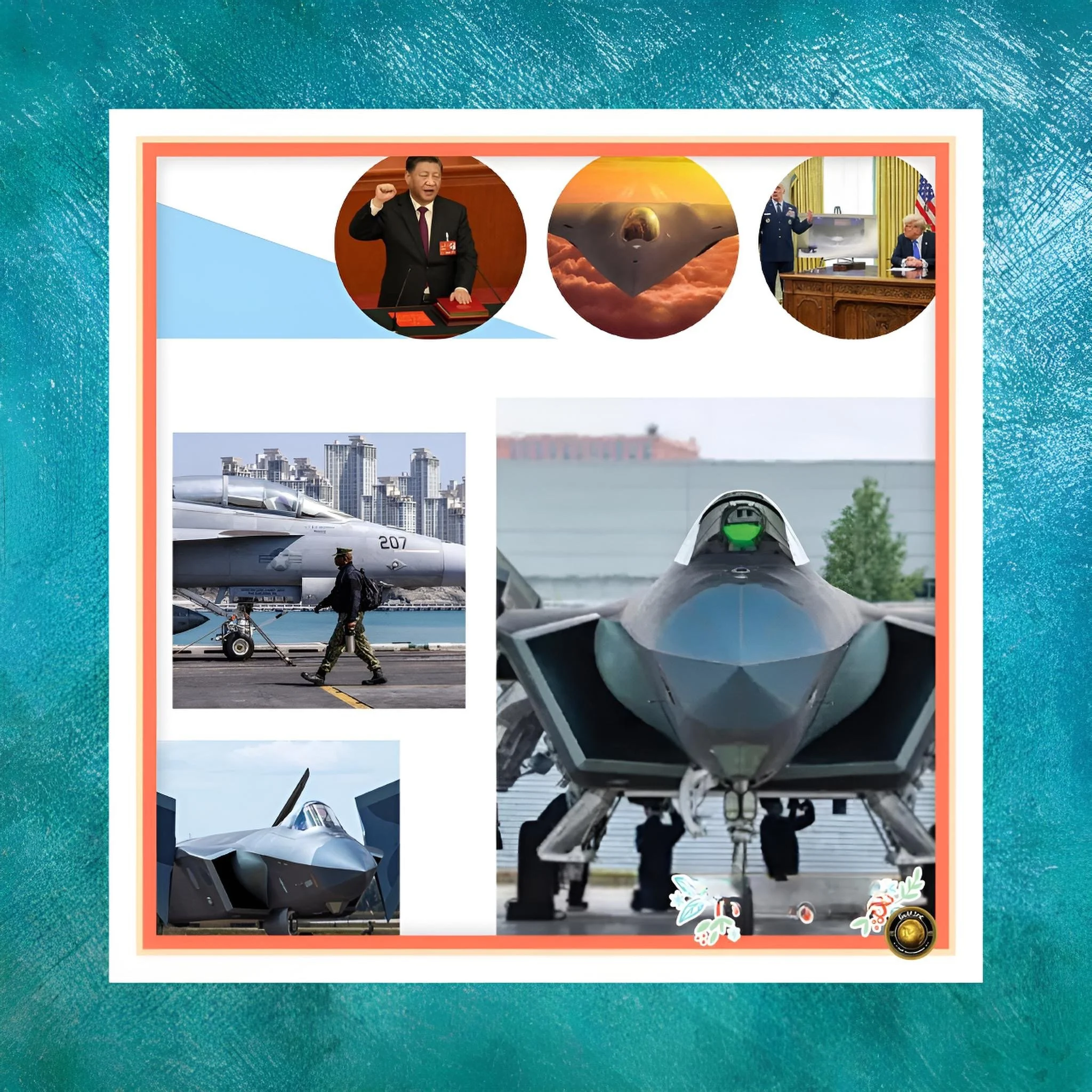
The Department of Defense formally confirmed that the People’s Liberation Army Air Force (PLAAF) has successfully flight-tested two distinct sixth-generation fighter prototypes, designated tentatively as the Chengdu J-36 and Shenyang J-50, with testing commencing in December 2024.
This acknowledgment is not merely an update to existing threat assessments; it represents an official recognition that the technological gap between American and Chinese air combat systems is narrowing at an “alarming” rate, to use the Pentagon’s own characterization.
The strategic significance extends beyond hardware specifications. The J-36’s operational debut on December 26, 2024, occurred in a geopolitical context where the United States remains locked in a protracted modernization cycle for its own sixth-generation initiative, the Next Generation Air Dominance (NGAD) program, with the Boeing F-47 not anticipated to conduct its maiden flight until 2028. This three-to-four-year gap in demonstrable flight testing creates a window of opportunity for Beijing to refine, test, and potentially field limited numbers of sixth-generation aircraft while the U.S. Air Force remains in the developmental phase.
For a geopolitical analyst accustomed to assessing relative power trajectories, this temporal differential carries profound implications for the regional balance of power, particularly regarding Taiwan contingencies and freedom of navigation operations in the South China Sea.
Historical Context and Current Status
The Hidden Threat: How a Chinese Fighter Jet Reshapes Global Power Competition
Understanding China’s acceleration toward sixth-generation fighter development requires tracing the trajectory of Chinese aerospace capabilities over the past two decades.
The PLAAF’s traditional reliance on Russian airframes and engines—reflected in the licensed production of Su-27 and Su-30 variants throughout the 1990s and 2000s—created a persistent technological dependency that constrained indigenous development. However, the 2011 unveiling of the Chengdu J-20 Mighty Dragon fifth-generation stealth fighter marked a strategic turning point.
While early assessments questioned the maturity of J-20 systems and the quality of Chinese stealth technologies, subsequent refinements and the integration of indigenous engines transformed the platform into a credible peer competitor to the F-22 Raptor.
The acceleration occurred alongside a fundamental shift in China’s aircraft engine development. The WS-10 turbofan, despite early reliability challenges, achieved operational maturity in its WS-10C variant by the early 2020s, enabling China to reduce its dependence on the Russian AL-31 engine for J-20 production.
More critically, the WS-15 “Emei” engine, in development since the early 2000s, reached full operational capability by March 2023, delivering the thrust and efficiency required for sustained supersonic cruise without afterburner dependency—a capability that eluded fifth-generation designs and remains central to sixth-generation concepts.
By 2025, Chinese academic institutions had completed ground and altitude testing of adaptive cycle engine (ACE) prototypes, technology specifically designed to overcome thrust degradation at extreme altitudes and speeds, positioning China’s propulsion systems at the technological frontier.
This engine development trajectory is not incidental to the J-36 program; it is foundational. The J-36, as unveiled in December 2024, features a trijet configuration—three main engines rather than the conventional twin setup employed by the F-35 or F-22—suggesting engineers have solved integration challenges that previously constrained multi-engine fighter designs.
The presence of three engines simultaneously increases mechanical complexity and weight but confers substantial operational advantages in terms of thrust vectoring capability, redundancy, and the power generation capacity necessary to operate advanced sensor fusion systems and directed-energy weapons—the defining characteristics of sixth-generation air combat.
Key Developments and Technical Characteristics
The J-36’s physical architecture represents a radical departure from conventional fighter design philosophy.
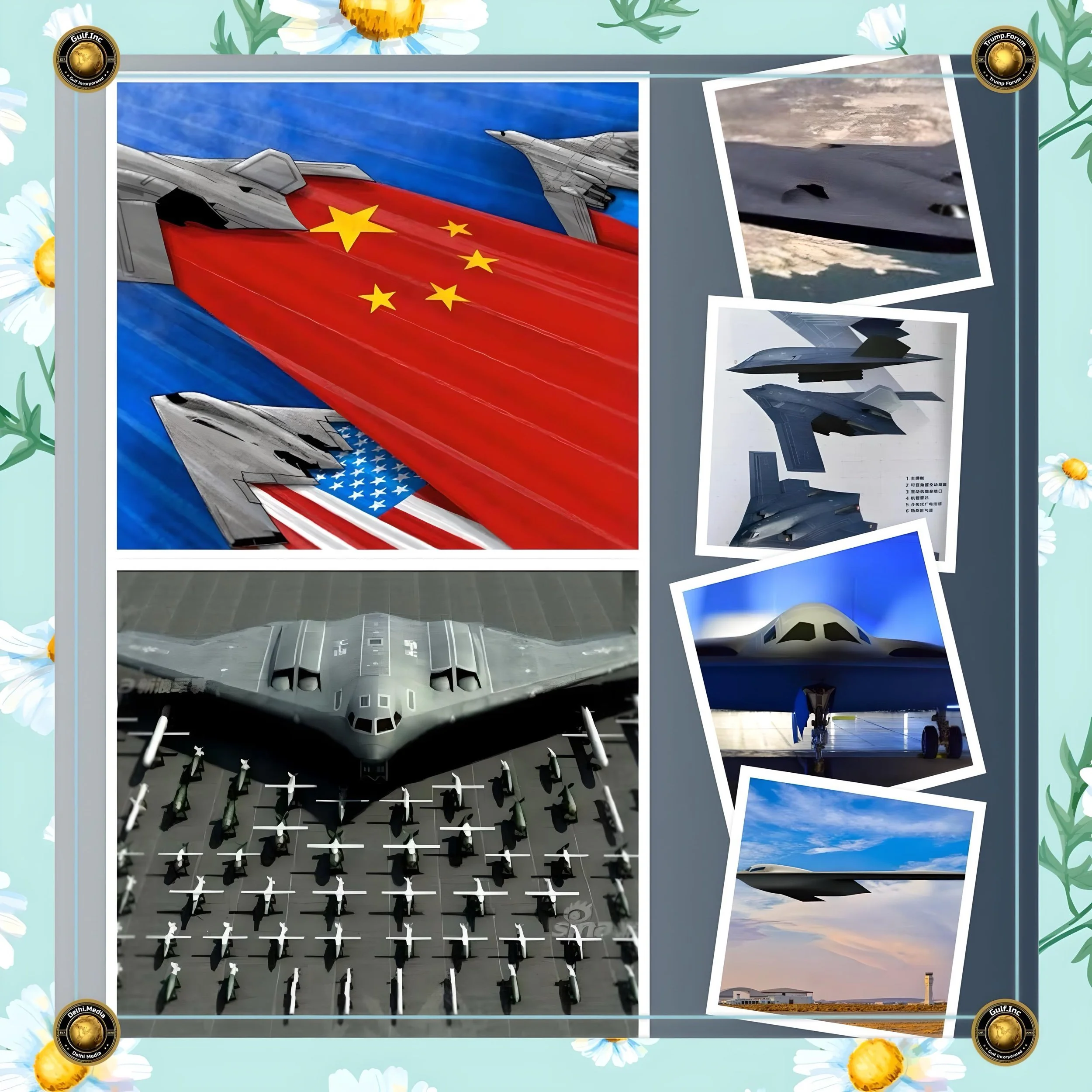
The aircraft features a tailless diamond-double-delta planform—colloquially termed a “flying wing” configuration—distinguished by the absence of vertical and horizontal stabilizers. This design choice, replicated on the smaller J-50 variant, optimizes for all-aspect stealth signatures by eliminating the perpendicular surfaces that create radar reflections when aircraft are observed from angles other than head-on.
Pentagon analysts note that this tailless configuration enables “ultra-long range” missions by reducing drag and the fuel expenditure required to sustain supersonic cruise across intercontinental distances.
The second and third prototypes of the J-36, observable in satellite imagery from August 2025 and refined versions from October 2025 onward, demonstrate visible maturation in aerodynamic and propulsion integration.
The most significant refinement involves the implementation of two-dimensional thrust-vectoring nozzles on all three engines—a capability that enhances pitch, yaw, and roll control authority at high angles of attack while reducing the aerodynamic penalties associated with conventional control surfaces.
Satellite reconnaissance also confirms the adoption of diverterless supersonic inlet (DSI) technology, which eliminates boundary-layer diverters and reduces structural complexity while maintaining optimal airflow pressure across all three engines throughout the flight envelope.
These technical progressions—thrust vectoring, DSI geometry, refined landing gear architecture—are characteristic of an aircraft transitioning from proof-of-concept to an advanced flight-test phase where design trade-offs between stealth, performance, and operational utility are being systematically evaluated.
Weaponization capabilities present a particularly stark contrast to fifth-generation designs. The J-36’s main internal weapons bay measures approximately 7.6 meters in length, supplemented by side bays for smaller ordnance, creating a total internal volume substantially greater than the F-22 Raptor’s weapons carriage capacity. This volumetric advantage enables the integration of the PL-17 beyond-visual-range air-to-air missile, a system with a reported range exceeding 400 kilometers and equipped with a multimode seeker combining active radar and passive infrared guidance.
By contrast, the F-22 cannot internally carry weapons of comparable range due to bay capacity constraints, necessitating external carriage that compromises stealth—a fundamental design limitation that translates into tactical disadvantage in the opening phase of air combat.
The integration of artificial intelligence and autonomous systems represents perhaps the most consequential difference between the J-36 and its fifth-generation predecessors.
The Pentagon specifically notes that the J-36 is designed as a command node within a networked family of systems, managing autonomous “loyal wingman” uncrewed combat aerial vehicles (UCAVs) through data-link architecture and AI-driven sensor fusion algorithms.
This represents not a modification to existing fighter doctrine but rather a wholesale reconceptualization of air warfare where the manned aircraft becomes a hub for coordinating multiple autonomous platforms, with AI systems processing sensor data at machine speeds and recommending tactical responses beyond human reaction capabilities.
For pilots accustomed to traditional dogfighting paradigms, this shift toward network-centric, AI-augmented combat introduces operational domains where human decision-making becomes a constraint rather than an advantage.
China’s Stealth Triad: J-35, J-36, J-50 Eclipse F-47 Horizon?
Shenyang Aircraft Corporation crafts both the fifth-generation J-35 multirole stealth fighter—equipped with twin WS-19 engines, Mach 1.8-2.0 velocity, 1,200-1,500 km combat radius, PL-15 missile bays, and AESA radar for carrier (J-35A on Fujian-class) and land-based supremacy—and the experimental sixth-generation J-50, featuring tailless lambda wings, thrust-vectoring WS-10C engines for Mach 2+ supercruise, DSI inlets yielding RCS below 0.01 m², and AI-orchestrated drone swarms for 2,500 km interceptions with EW primacy.
Chengdu Aircraft Corporation, meanwhile, engineers the heftier J-36 tailless heavy fighter, harnessing three thrust-vectoring engines, double-delta configuration, and vast PL-17 hypersonic bays for transcendent range and high-altitude strikes.
Divergences crystallize in roles: J-35’s versatile high-low fleet integration contrasts J-50’s agility-driven penetration and J-36’s payload-dominant mothership prowess, birthed from SAC-CAC rivalry emulating J-20 triumphs to mitigate risks across PLAAF/PLAN imperatives.
J-35 prototypes soared in 2021, with 2025 sea trials heralding low-rate production and combat readiness by 2026-2030 for over 100 units; J-50’s 2024 flights presage pre-2030 initial batches and 2035 full maturity; J-36’s 2024-2025 tests project 2030-2032 IOC amid relentless prototyping that compressed J-20 operationalization to six years versus America’s 15-20.
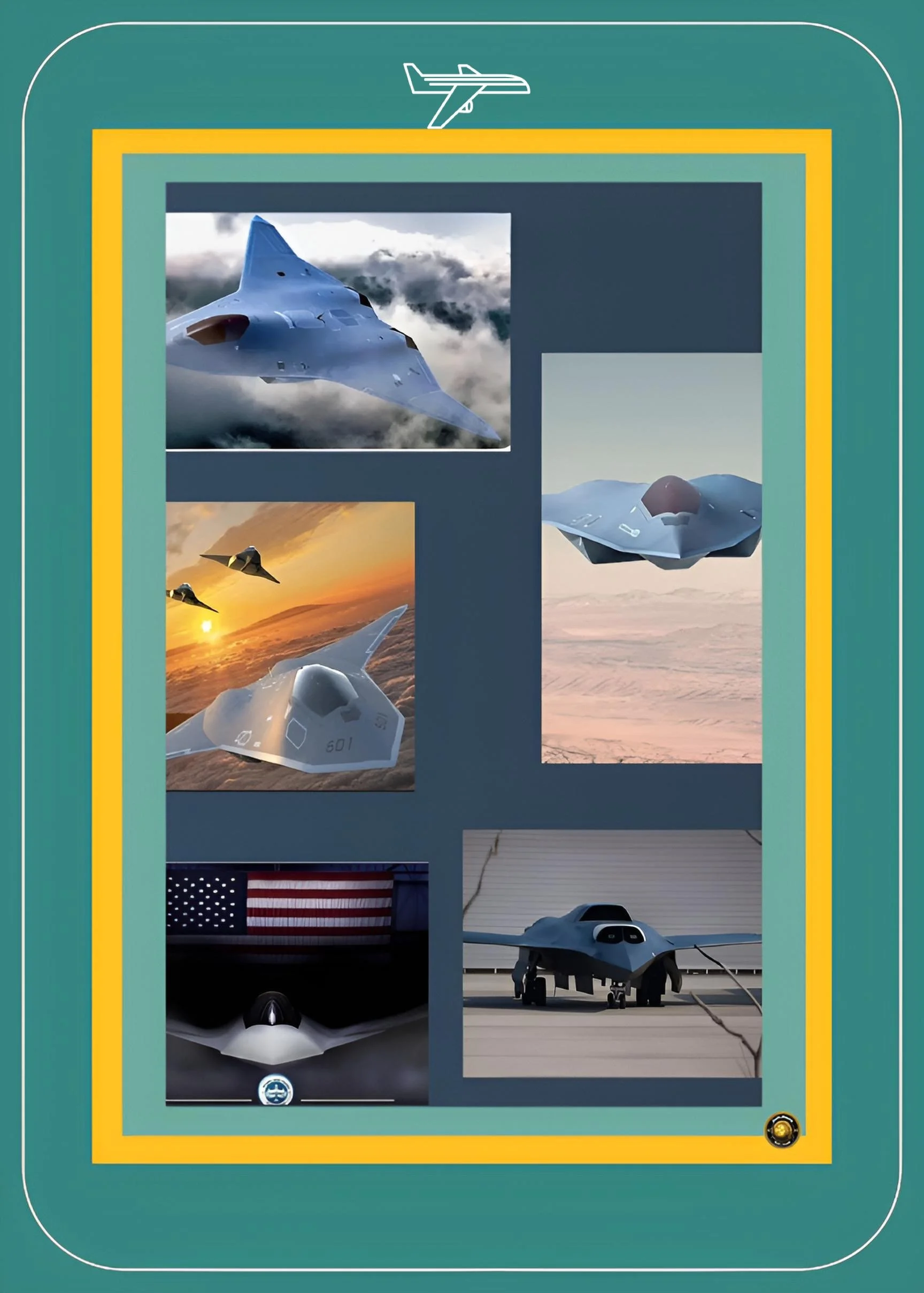
Relative to Boeing’s F-47—boasting Mach 2+, 1,600+ km radius, adaptive propulsion, laser armaments, and unmatched sensor fusion—the J-50 rivals kinematics and stealth quantum while J-36 overwhelms in volumetric ordnance, potentially outpacing US timelines through China’s voracious iteration, thereby fracturing Indo-Pacific aerial hegemony with precocious parity.
Pentagon Assessment and Strategic Implications
The Pentagon’s formal acknowledgment of J-36 flight testing comes paired with a sobering assessment of development timelines. While Beijing’s official target for sixth-generation operational capability remains 2035, the Department of Defense explicitly warns that China “could field limited numbers of these advanced fighters as early as 2030, despite an official operational capability target of 2035.”
This distinction between official announcements and Pentagon capabilities estimates has profound implications. If limited operational squadrons of J-36s become combat-ready by 2030, a temporal window emerges in which China possesses deployable sixth-generation aircraft while the United States remains in advanced testing phases for the F-47, with operational deployment not anticipated until 2029 at the earliest—and more realistically in the early 2030s after weapons integration, pilot training, and tactical doctrine refinement.
The comparative timelines are stark: the J-36 publicly flew on December 26, 2024, with multiple refined prototypes demonstrating visible progression through 2025; the F-47, by contrast, has not yet flown in any form, with the first prototype currently under assembly at Boeing facilities in St. Louis. When General David Allvin, the Air Force Chief of Staff, announced in September 2025 that manufacturing of the first F-47 had commenced, he simultaneously disclosed that experimental X-plane demonstrators have been testing technologies since 2020, accumulating hundreds of flight hours under classification.
This admission reveals that the U.S. program has invested five years of covert development yet remains three years away from the initial flight of the production prototype.
By comparison, the J-36 program achieved observable first flight within what appears to be a compressed development timeline, raising questions about Chinese engineering methodology, the extent of technology transfer from existing fifth-generation programs, or the possibility that development timelines in official records understate actual program maturity.
The Pentagon assessment also highlights an asymmetry in force-structure goals. Current U.S. acquisition plans envision approximately 185 F-47 aircraft over the coming two decades, a reduction from earlier procurement targets of 200 airframes. Chinese production capacity, by contrast, demonstrates unprecedented scale.
The PLAAF has accelerated J-20 production from 30 aircraft annually to 100 annually, with conservative estimates suggesting the fleet could surpass 800 J-20s by 2030 and potentially reach 1,500 by 2035. If comparable production rates were applied to the J-36—a conditional but not implausible scenario—China could field several hundred sixth-generation fighters within five to seven years of initial operational deployment.
The U.S. will, in parallel, be fielding a sixth-generation force measured in dozens in the early 2030s, scaling to perhaps 200-300 aircraft by 2035.
This asymmetry in production capacity, compounded by the timeline differential in deployment readiness, creates a scenario wherein China achieves numerical and technological parity or dominance in the air domains critical to Indo-Pacific conflict scenarios.
Cause-and-Effect Analysis: Why the Technological Gap Is Narrowing
Five Years to Decision: The J Fighters Challenge and America’s Aging Fighter Fleet
The narrowing technological gap cannot be attributed to any single factor but rather emerges from a constellation of structural advantages that China has systematically cultivated over the past fifteen years.
First, the transition from licensed production and reverse-engineering of foreign designs toward indigenous innovation was deliberately sequenced. The J-20, despite being unveiled in 2011, represented not an instantaneous leap but rather the culmination of two decades of technology absorption from the J-10, J-11, and J-15 programs.
Each iteration incorporated incremental refinements to stealth shaping, avionics integration, and airframe manufacturing that created the institutional knowledge and manufacturing capability necessary to design and produce the J-36. By the time the sixth-generation program commenced in 2019—as the Pentagon has documented—the aerospace industrial base possessed sufficient maturity to move from conceptual design to prototype construction in roughly three to four years.
Second, China’s adoption of agile development methodologies and rapid prototyping stands in sharp contrast to U.S. acquisition culture. The NGAD program, as conceptualized, embodies what might be termed “high-confidence development”: extensive ground testing, computer simulation, and subsystem validation occur prior to prototype construction, an approach that minimizes flight-test surprises but extends development timelines. The J-36 program, by contrast, appears to embrace a “learn-by-flying” methodology where multiple prototypes progress through successive design iterations at compressed intervals.
The jump from the initial J-36 prototype in December 2024 to refined variants with thrust-vectoring nozzles and DSI inlets by October 2025 represents approximately ten months of visible development—a pace that suggests parallel prototype construction, concurrent design refinement, and willingness to accept higher technical risk in exchange for accelerated fielding timelines.
Third, the integration of artificial intelligence into the J-36’s sensor fusion and autonomous systems architecture leverages China’s substantial investments in machine learning and neural network development over the past decade. While the F-47 is explicitly designed to incorporate AI co-pilot systems and autonomous collaborative combat aircraft, these capabilities remain in early development phases, with ground testing of loyal wingman drones beginning only in May 2025. The J-36, by contrast, has reportedly undergone integration testing of AI combat systems since early 2025, with algorithms trained to manage data fusion from multiple sensor apertures and coordinate autonomous vehicle operations.
This advantage in AI integration does not stem from raw algorithmic sophistication—the U.S. retains advantages in some machine learning domains—but rather from the parallel development timeline: China’s AI systems have been maturing alongside the airframe design, whereas U.S. systems are being retrofitted into an advanced airframe that was designed without AI integration as a primary design driver.
Fourth, the absence of bureaucratic constraint and congressional oversight in Chinese defense procurement enables rapid decision-making and resource allocation that U.S. programs cannot match. When the PLAAF discovered design challenges or performance shortfalls, resources could be reapportioned and design teams reorganized without the environmental assessments, contract competitions, and congressional notifications required in U.S. acquisition processes.
The F-47 program operates within a framework of public accountability, with detailed briefings to Congress, inspector general oversight, and requirements that the aircraft meet performance thresholds established years in advance. These oversight mechanisms serve important democratic functions but introduce temporal friction that accelerates the J-36’s time-to-deployment by an estimated one to two years.
Future Trajectory and Operational Implications
Projecting the operational implications of sixth-generation fighter deployment requires integrating technical capabilities with strategic doctrine and regional force structures. If the J-36 achieves initial operational capability by 2030, the PLAAF would deploy a fighter possessing superior range (estimated 3,000 kilometers combat radius versus the F-47’s 1,000+ nautical miles), larger internal weapons capacity, and thrust-vectoring maneuverability. More consequentially, the J-36’s design as a command node within a networked family of systems, coupled with AI-driven sensor fusion, positions it to absorb and process targeting information from an constellation of surveillance assets—satellite-based sensors, unmanned reconnaissance platforms, coastal early-warning radar networks—creating a tactical environment where individual fighter pilots operate within an informational and decision-making architecture that transcends the aircraft’s onboard sensors.
The implications for Taiwan contingencies are particularly acute. The Pentagon has assessed that China expects to achieve a “strategic decisive victory” capability against Taiwan by 2027—well before either J-36 or F-47 achieve operational status. However, the deployment of J-36s by 2030 would fundamentally alter the air campaign architecture that Chinese strategists contemplate.
Current Chinese operational planning assumes air superiority achieved through saturating strikes by ballistic and cruise missiles, followed by massed fighter operations against degraded Taiwanese defenses.
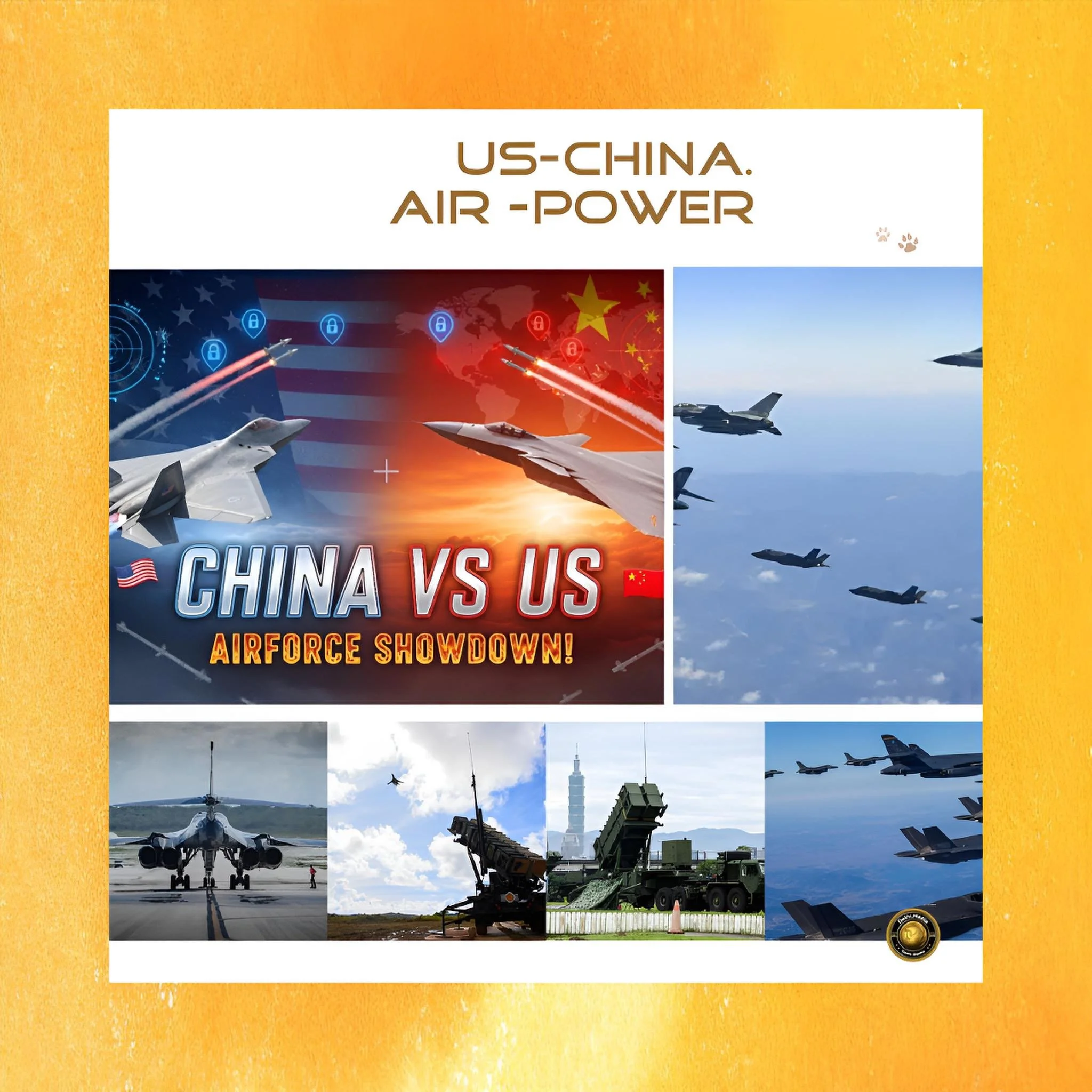
A J-36-equipped PLAAF would shift this calculus toward a more sophisticated air dominance strategy: rather than relying on attrition of Taiwan’s existing air defense systems and fifth-generation F-16V fighters, the J-36 would enable precision engagements of U.S. expeditionary air power—E-3 AWACS aircraft, KC-46 tankers, and F-22/F-35 formations—at ranges and with stealth characteristics that degrade the effectiveness of existing U.S. air defense systems currently deployed in the theater. The operational window from 2030 to 2034—before the F-47 achieves full deployment—represents a period of maximum strategic vulnerability for the United States and its regional allies. During this interval, the PLAAF would possess sixth-generation aircraft while the U.S. Air Force remains operationally dependent on the fourth-generation F-15E, fifth-generation F-22 and F-35, and experimental F-47 prototypes.
The numerical asymmetry compounds this technical gap: if China deploys several hundred J-36s by 2035 while the U.S. fields fewer than 100 F-47s operational combat aircraft, the qualitative advantage associated with superior stealth and AI integration could be overwhelmed by quantitative Chinese preponderance.
This is precisely the scenario that prompted the Pentagon to characterize the technological gap narrowing as occurring at an “alarming” rate—not because the J-36 is inherently superior to the F-47, but because the timing of deployment introduces a window wherein America’s air superiority advantages are neutralized before their replacement systems achieve operational maturity.
Conclusion
Pentagon Warning: China’s Military Modernization Making America ‘Increasingly Vulnerable
China does not today possess air superiority over the Indo-Pacific; the United States maintains demonstrated dominance through the F-22 Raptor, deployed in quantity and with proven operational experience. However, Beijing has credibly positioned itself to achieve technological parity or dominance by the early 2030s, a shift that would represent not a continuation of existing capabilities but rather a fundamental rebalancing of regional power dynamics.
The threat is not current superiority but rather the elimination of a longstanding advantage within a compressed timeframe.
The J-36’s operational deployment by 2030, occurring years before the F-47’s maturation, creates a temporal asymmetry that works decisively in China’s favor.
This is not a matter of technological inevitability or Chinese exceptionalism; rather, it reflects deliberate strategic choices by Beijing to compress development timelines through rapid prototyping, centralized decision-making, and production scaling that the United States cannot quickly replicate.
For policymakers and strategists, the implication is clear: the operational window for addressing this emerging asymmetry closes within five to seven years.
Options include accelerating the F-47 program beyond current timelines (politically and technically challenging), deploying interim sixth-generation demonstrations to the Indo-Pacific (the military’s current strategy), or accepting the temporary dominance of Chinese sixth-generation systems and planning contingencies accordingly.
The Pentagon’s acknowledgment of the J-36 program is not a recognition that the battle is lost but rather a warning that the tempo of competition has accelerated beyond the pace at which American defense acquisition traditionally operates. The coming half-decade will determine whether the U.S. can reconstitute its air superiority advantage before China’s numerical and technological advantages become irreversible.