Comprehensive Analysis of Global Fighter Aircraft Rankings: Russia, United States, China, and France
Introduction
FAF, Defense.Forum analysis examines four major military powers' operational fighter and interceptor aircraft, evaluating their combat capabilities, technological sophistication, and strategic importance.
The assessment reveals significant variations in fleet composition, generational advancement, and operational readiness across these air forces, with implications for global air power balance and regional security dynamics.
Russian Federation Fighter Aircraft Analysis
According to available data, Russia operates approximately 912 fighter jets across various classes, representing one of the world’s most diverse fighter fleets.
The Russian Air Force maintains 15 distinct operational fighter and interceptor classes, each serving specific roles within the broader air defense and power projection strategy.
Russia’s Fighter Rankings
Most to Least Dangerous
Tier 1: Fifth Generation Supremacy
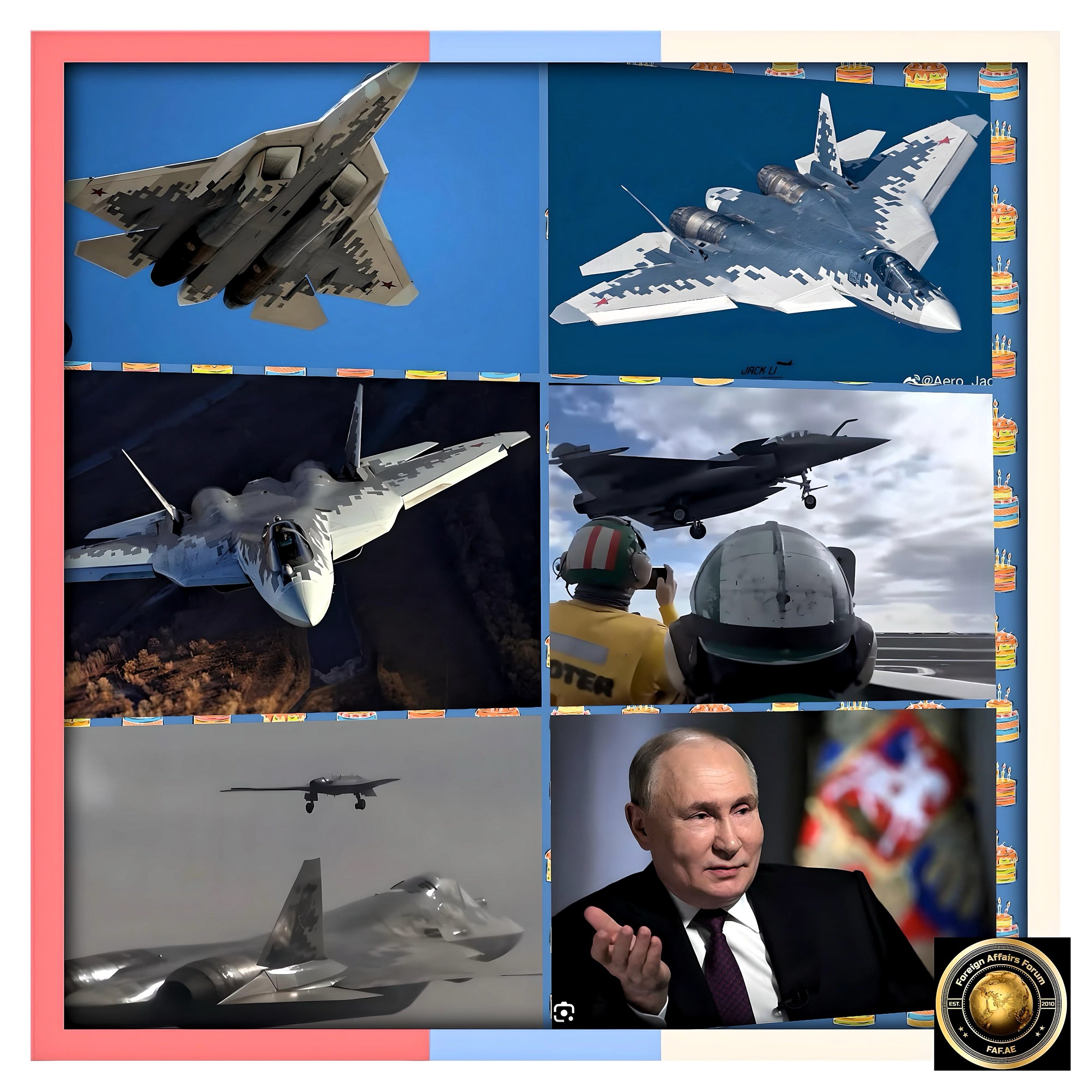
Though production remains limited, the Su-57 Felon represents Russia’s most advanced fighter aircraft. Only 10-11 aircraft are currently operational.
This fifth-generation stealth fighter incorporates advanced radar-evading capabilities, supercruise performance, and sophisticated avionics systems.
The aircraft features six AESA radars and infrared search and track systems, providing exceptional situational awareness.
Despite its technological advancement, the low production numbers significantly limit its strategic impact.
Tier 2: Advanced Fourth Generation Plus
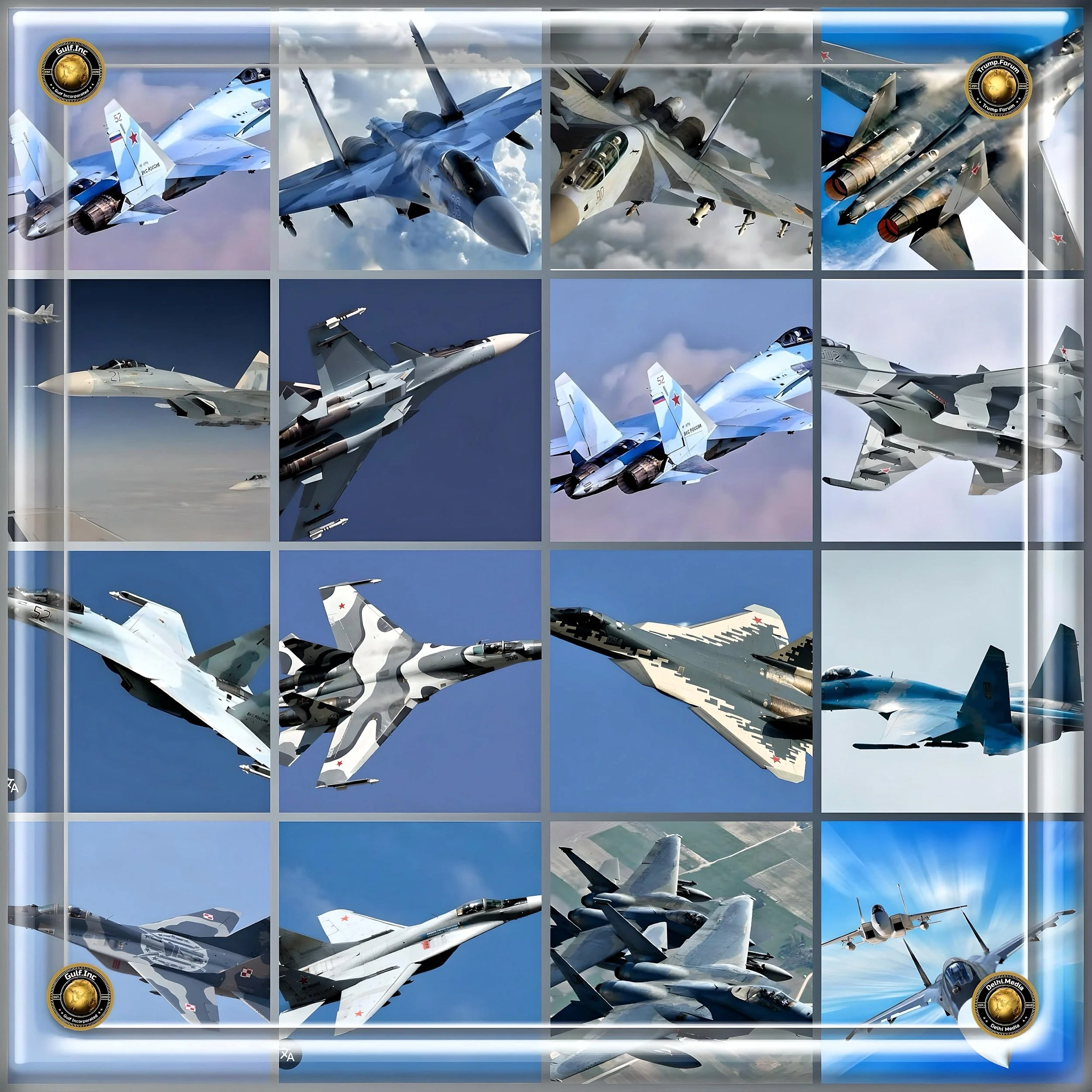
The Su-35 Flanker-E is Russia’s most capable operational fighter in significant numbers, with approximately 110 aircraft in service.
This 4++ generation aircraft represents the pinnacle of the Flanker evolution, featuring thrust-vectoring engines, advanced radar systems, and exceptional maneuverability.
The Su-30 variants, including the SM model with 110 aircraft, provide multirole capabilities and have proven effective in various operational contexts.
Tier 3: Specialized and Proven Platforms
The MiG-31 Foxhound remains a formidable interceptor despite its 1981 introduction, with 90 aircraft currently operational.
This platform’s ability to engage targets at extreme ranges and altitudes makes it particularly valuable for Russia’s vast territorial defense requirements.
The modernized variants continue to receive upgrades, enhancing their relevance in contemporary operations.
The Su-34 Fullback represents Russia’s premier strike aircraft, with 127 units in service.
This platform combines the Su-27’s airframe with dedicated ground-attack capabilities. It features side-by-side seating and advanced avionics optimized for precision strikes.
Tier 4: Legacy Multirole Fighters
The Su-27 family variants, including the original Flanker with 101 aircraft, continue serving despite their aging status.
These platforms maintain relevance through modernization programs, though their capabilities lag behind newer variants.
The MiG-29 Fulcrum variants, with 85 aircraft in the basic configuration, provide air superiority capabilities but represent older technology.
Tier 5: Specialized and Aging Platforms
Despite being relatively new, with only six aircraft in service, the MiG-35 Fulcrum-F represents limited procurement due to budget constraints.
The Su-25 attack aircraft, while effective in close air support roles, represents older technology unsuitable for contested airspace.
The Su-24 Fencer family, with 273 aircraft including various modifications, continues serving in strike roles despite being designed in the 1970s.
United States Air Force Fighter Analysis
The United States Air Force operates approximately 2,094 fourth and fifth-generation fighter aircraft, representing the world’s largest and most technologically advanced fighter fleet.
However, recent data indicates readiness challenges, with mission-capable rates falling to 67.15% in the fiscal year 2024.
US Fighter Rankings: Most to Least Dangerous
Tier 1: Fifth Generation Dominance
The F-22 Raptor is the world’s most advanced air superiority fighter, though production limitations restrict the fleet to 187 operational aircraft.
This platform combines stealth, supermaneuverability, and supercruise capabilities unmatched by any other fighter.
However, maintenance challenges have reduced mission-capable rates to just 40.19%.
The F-35A Lightning II represents the most versatile fifth-generation fighter, with extensive global adoption and production.
Its multirole capabilities, advanced sensors, and “beast mode” configuration, which allows up to 22,000 pounds of external ordnance, make it exceptionally dangerous.
Mission-capable rates remain at 51.5%, representing an improvement over previous years.
Tier 2: Advanced Fourth Generation
The F-15EX Eagle II demonstrates exceptional performance with an 83.13% mission-capable rate despite having only eight aircraft in service.
This platform represents the latest evolution of the Eagle family, incorporating modern avionics and weapon systems.
The F-15E Strike Eagle continues providing multirole capabilities, though aging airframes face increasing maintenance challenges.
While the F-16 Fighting Falcon represents older technology, it maintains relevance through modernization programs and exceptional reliability.
Tier 3: Specialized Platforms
The F-15C Eagle, initially designed for air superiority, faces significant readiness challenges with only 52.9% mission-capable rates.
While the A-10 Thunderbolt II is highly effective in close air support roles, it is limitedly useful in contested environments.
Chinese People’s Liberation Army Air Force Analysis
China operates approximately 2,989 combat aircraft across its air force branches, representing rapid modernization and indigenous development capabilities.
The PLAAF has transitioned from predominantly imported Soviet designs to domestically produced fifth-generation platforms.
Chinese Fighter Rankings: Most to Least Dangerous
Tier 1: Fifth Generation Advancement
The J-20 Mighty Dragon is China’s most advanced fighter, and over 300 aircraft are reportedly in service.
This stealth fighter provides long-range capabilities to challenge US air superiority in the Asia-Pacific region.
The platform incorporates advanced sensors and stealth technology comparable to Western fifth-generation fighters.
Tier 2: Advanced Fourth Generation
The J-16 strike fighter, with over 300 aircraft in service, provides multirole capabilities based on the Su-30 platform but with Chinese modifications.
The J-11B variants, representing Chinese-produced versions of the Su-27, maintain air superiority capabilities with 245 aircraft operational.
Tier 3: Modernized Platforms
The J-10C variant, with 240 aircraft, represents China’s domestically developed multirole fighter incorporating modern avionics and weapon systems.
The imported Su-35S aircraft, with 24 units, provides advanced capabilities but represents limited numbers.
Tier 4: Legacy Systems
The J-15 carrier-based fighters, with 59 aircraft, provide naval aviation capabilities but face limitations in range and payload compared to land-based variants.
Older platforms like the J-7 and J-8 families continue serving but represent outdated technology scheduled for retirement.
French Air and Space Force Analysis
France operates a smaller but competent fighter fleet centered on domestically produced platforms. The French Air and Space Force maintains approximately 200 fighter aircraft across two primary types.
French Fighter Rankings: Most to Least Dangerous
Tier 1: Modern Multirole Excellence
The Dassault Rafale represents France’s premier fighter aircraft, with 100 aircraft currently in service and 185 additional units on order.
This twin-engine, canard-configured fighter provides exceptional multirole capabilities, incorporating advanced avionics, weapon systems, and proven combat effectiveness.
The Rafale’s participation in various international operations demonstrates its versatility and capability across multiple mission types.
Tier 2: Proven Legacy Platform
The Mirage 2000 family, with 92 aircraft across the -5F and -D variants, continues providing valuable capabilities despite representing older technology.
The ongoing modernization program for 48 aircraft ensures continued relevance, though the platform faces increasing obsolescence compared to fifth-generation fighters.
Comparative Analysis and Strategic Implications
The analysis reveals significant disparities in fleet composition, technological advancement, and operational readiness across the four air forces examined.
The United States maintains technological superiority through fifth-generation platforms but faces readiness challenges.
Russia operates a diverse fleet with advanced capabilities but few modern aircraft.
China demonstrates rapid modernization with growing indigenous capabilities, while France maintains a smaller but competent force centered on proven platforms.
The F-22 Raptor remains unmatched in air-to-air combat capabilities, though production limitations and maintenance challenges constrain its strategic impact.
China’s J-20 represents the most significant challenge to US air superiority in the Asia-Pacific, with production numbers exceeding combined US fifth-generation fighter totals.
Russia’s Su-57 program, while technologically advanced, suffers from production delays and limited numbers that reduce its immediate strategic relevance.
Mission-capable rates emerge as a critical factor distinguishing theoretical capabilities from operational reality.
The US Air Force’s declining readiness rates, particularly for fifth-generation platforms, suggest systemic challenges in maintaining advanced aircraft.
This trend contrasts with the reliability of platforms like the F-15EX, indicating that newer technology does not necessarily guarantee improved operational availability.
Conclusion
The global fighter aircraft landscape reflects each nation’s strategic priorities, technological capabilities, and resource allocation decisions.
While fifth-generation platforms represent the cutting edge of fighter technology, their limited numbers and maintenance challenges raise questions about their practical impact on air power balance.
The proliferation of advanced fourth-generation fighters, particularly China’s rapidly expanding fleet, suggests that numerical superiority may compensate for generational disadvantages in specific scenarios.
The analysis indicates that air superiority will increasingly depend on factors beyond individual platform capabilities, including pilot training, operational doctrine, supporting systems, and maintenance infrastructure.
As nations continue developing sixth-generation fighters and advanced unmanned systems, the current rankings may shift dramatically, emphasizing the dynamic nature of military aviation and the ongoing competition for air dominance.