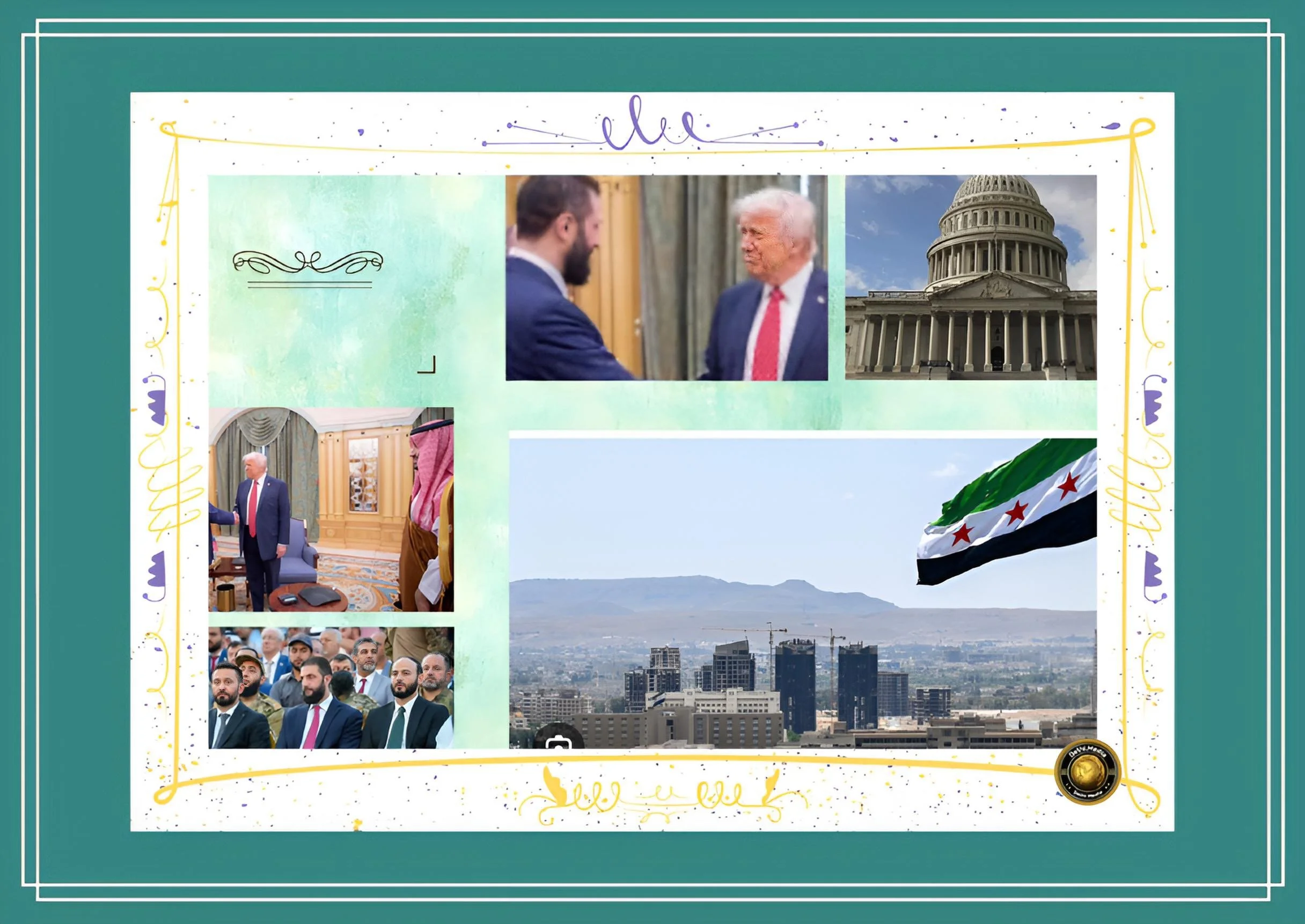
Between Sanctions and Homecoming: Syria’s Fragile Rebirth in the Shadow of Caesar’s Repeal
Executive summary
The proposed repeal of the Caesar Syria Civilian Protection Act, embedded in the latest National Defense Authorization Act (NDAA), would formally end the most far‑reaching U.S. secondary sanctions that for years deterred global banks, construction firms, and energy companies from engaging with Syria under Assad.
In their place, the NDAA language ties future U.S. policy to periodic presidential certifications that Syria’s government is actively fighting Islamic State, protecting religious and ethnic minorities, and refraining from unprovoked attacks on neighbours such as Israel, effectively transforming sanctions from a blunt permanent embargo into a conditional lever.
Over the past twelve months, the political collapse of the Assad regime and the rise of President Ahmed al‑Sharaa’s administration have been followed by an initial wave of roughly a million refugee and IDP returns, early foreign investment commitments in energy and infrastructure, and cautious re‑engagement by international financial institutions.
Yet Syria’s macro‑economy remains shattered—GDP is barely one‑sixth of its 2010 size, more than 6 million Syrians still live as refugees abroad, and the World Bank and UN estimate reconstruction costs well above 250 billion dollars, with some Syrian officials suggesting figures up to a trillion.
The core dilemma is that political liberation has not yet translated into material normality: many returnees arrive in cities still scarred, services intermittent, and institutions weak, and the risk of revanchism, warlordism, and renewed authoritarian patterns remains very real.
Introduction
Background and history
The Caesar Act, passed in 2019, was designed to raise the cost of doing business with Assad’s Syria by imposing sweeping sanctions on anyone—Syrian or foreign—who materially supported the regime’s military, energy, construction, or financial sectors.
It drew its name and political legitimacy from the defection of a Syrian military photographer, known by the pseudonym “Caesar,” whose images of torture and mass death became a symbol of the regime’s systematic brutality.
Over the following years, the Act’s broad extraterritorial reach discouraged not only Western but also Arab and Asian investors, contributing to a deep economic contraction, currency collapse, and humanitarian deterioration, even as Assad entrenched his personalist security state.
The turning point came with the regime’s downfall in December 2024, after nearly fourteen years of civil war that began with the violent suppression of peaceful protests in 2011.
In the power vacuum that followed, Ahmed al‑Sharaa and his coalition partners formed an interim government that vowed to dismantle Assad‑era cronyism, restore basic security, and reopen the country to regional and global markets.
However, the legal architecture of U.S. sanctions—especially the Caesar Act—remained in place, and Washington resorted initially to temporary waivers and suspensions that allowed limited engagement but left most large‑scale reconstruction projects in legal limbo.
Introduction to the new phase
The imminent formal repeal of the Caesar Act, now supported by both the Trump administration and key congressional leaders, seeks to align U.S. law with the political reality of a post‑Assad Syria without offering a blank cheque to Damascus.
Under the negotiated NDAA text, the White House must periodically report to Congress that Syria is cooperating against Islamic State, respecting minority rights, and avoiding unilateral military action against neighbours; failure on any of these fronts could trigger renewed pressure, whether through targeted sanctions or other tools.
For Syria, the symbolism is enormous: Damascus has long argued that sanctions punished society more than the regime and that their lifting is essential to stabilize currency, restart industry, and attract the capital required for rebuilding.
For the region, the repeal is read as an invitation—though not a guarantee—for Gulf and other investors to move from exploratory memoranda toward disbursing the “billions” in energy, infrastructure, and logistics investment that Riyadh, Doha, Abu Dhabi, and others have signalled.
The question is whether the country’s institutions, legal system, and security environment are ready for such a sudden inflow without simply recreating the extractive patterns of the past.
Key recent developments
In Washington, the most concrete development is the insertion of Caesar repeal language into the approximately 3,000‑page NDAA, a bill that historically passes with bipartisan majorities and which Republican leadership and President Trump have both indicated they support.
Parallel reporting notes that the Senate has already voted to repeal the Act as part of its version of the defense bill, framing the move as necessary to enable engagement with the new Syrian government.
In June 2025, a stand‑alone House bill (H.R. 3941) was also introduced to repeal the Caesar Act, underscoring that pressure for change had been building even before the NDAA negotiations.
Inside Syria, the first post‑Assad year has been marked by a mixture of euphoric symbolism and grinding practical challenges.
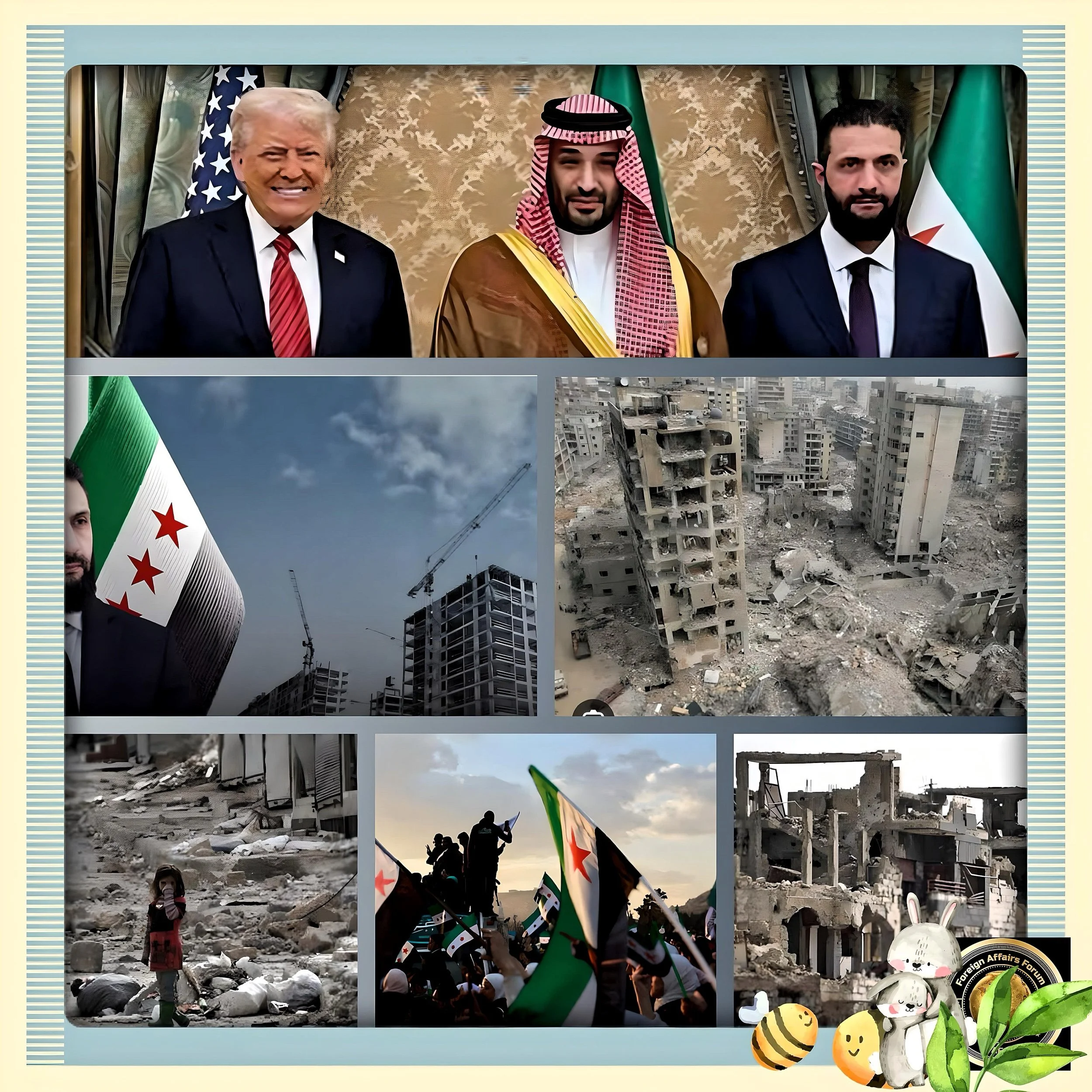
UNHCR estimates that in the nine months after Assad’s fall, around one million refugees returned from neighbouring states, alongside 1.8 million internally displaced people who went back to their areas of origin, even though many of those areas were still damaged and underserviced.
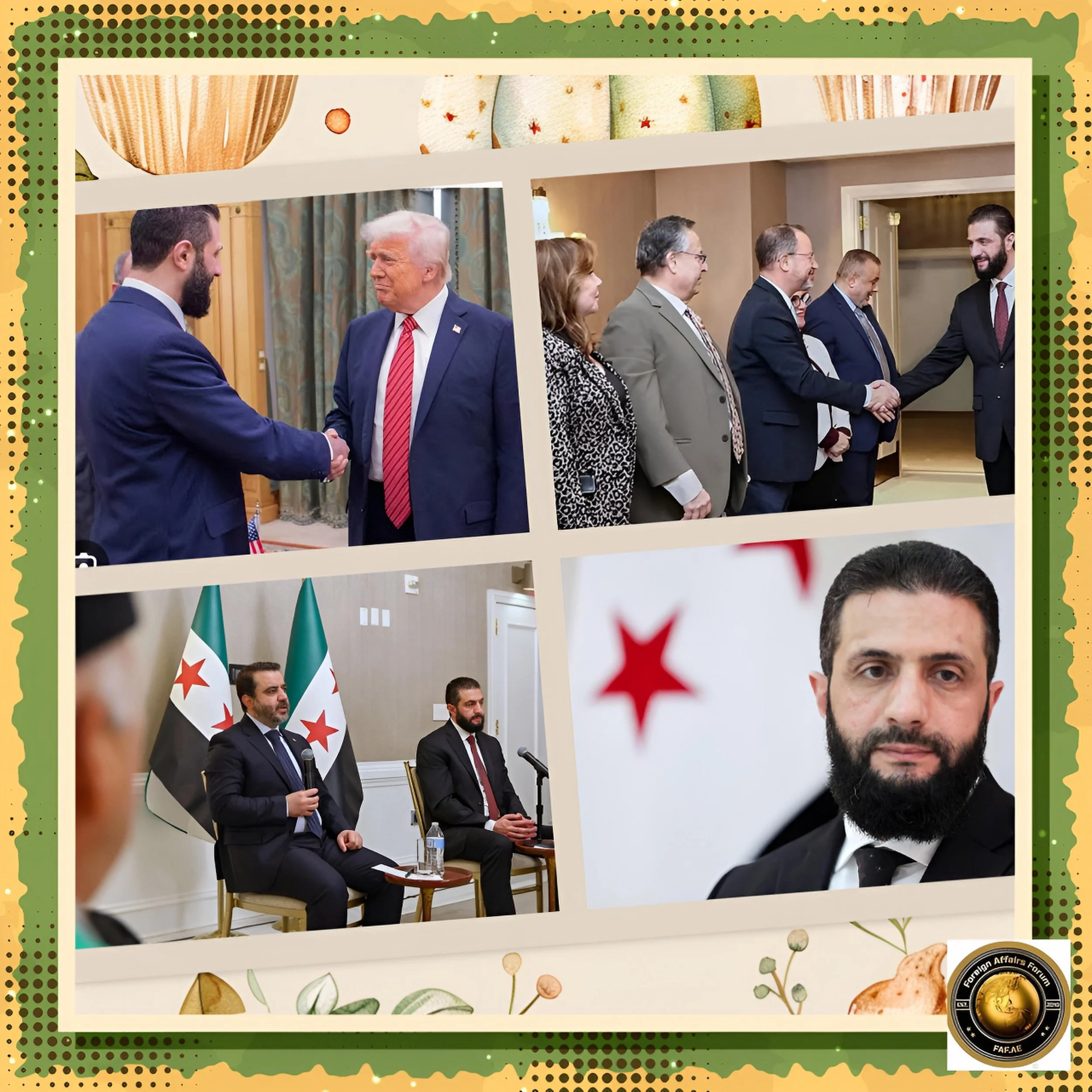
Diplomatic milestones have included President al‑Sharaa’s “historic” visit to the White House—the first by a Syrian leader in the post‑independence era—and the resumption of limited IMF and World Bank engagement, including an IMF mission to Damascus and a World Bank loan focused on restoring electricity infrastructure.
Facts on the ground: economy, returns, and reconstruction
Despite the political transformation, Syria’s economic base remains extraordinarily weak. The World Bank estimates that the Syrian economy has shrunk by roughly 83 percent since 2010, with current GDP hovering around 21 billion dollars, and forecasts only about 1 percent growth in 2025 under current conditions.
Reconstruction cost assessments vary, but even the most conservative multilateral figures exceed 250 billion dollars, while some Syrian officials and analysts posit that a full recovery of housing, infrastructure, and productive capacity may require up to 400 billion to 1 trillion dollars over several decades.
Nevertheless, the early months of 2025 have seen a notable shift in sentiment among regional investors.
Reports highlight large‑scale commitments such as a 7‑billion‑dollar energy infrastructure package led by Qatar’s UCC Holding, substantial aid pledges from international donors, and an 800‑million‑dollar port development deal with DP World, all of which were previously constrained by sanctions risk and banking‑sector compliance fears.
Analysts caution, however, that commitments on paper are highly contingent on legal clarity, risk perceptions, and the Syrian government’s ability to provide predictable regulation and security; the repeal of Caesar removes a critical obstacle but does not solve these deeper issues.
On the humanitarian front, Syria remains one of the largest displacement crises in the world, with more than 6 million refugees abroad and an estimated 7.4 million internally displaced, even as UNHCR projects that up to 1.5 million refugees and 2 million IDPs could return in 2025 under improved conditions.
Returnees often arrive in neighbourhoods where housing is heavily damaged, electricity unreliable, health and education services patchy, and job markets thin, producing an uneasy mix of hope and frustration: many return for reasons of identity, family, or exhaustion rather than because conditions are objectively “ready.”
Life in “new Syria”
Everyday life in post‑Assad Syria is defined by contrasts. In major urban centres such as Damascus, Aleppo, and Homs, residents reportedly experience a palpable reduction in arbitrary detentions and secret‑police intimidation compared with the pre‑2024 order, and new civic and political spaces—media outlets, local associations, professional syndicates—have begun to emerge.
At the same time, inflation, unemployment, and infrastructure damage continue to shape the rhythm of daily existence: long queues for fuel and cooking gas, intermittent water supply, and frequent power cuts remain commonplace, particularly in secondary cities and rural districts.
Socially, the post‑war environment is marked by trauma and fragmentation but also by a strong desire to reclaim normalcy.
UN and NGO reporting describes communities re‑opening schools in damaged buildings, neighbourhood committees organising rubble removal, and local entrepreneurs attempting to restart small factories, workshops, and farms despite credit shortages and unresolved property claims.
The return of diaspora Syrians—engineers, doctors, businesspeople—could eventually inject skills and capital, but return decisions are highly sensitive to security guarantees, property restitution, and the perceived inclusiveness of the new political order.
Statements by global and regional leaders
U.S. officials frame the Caesar repeal not as a reward, but as a recalibration.
The State Department publicly endorsed lifting the Act’s sanctions on the grounds that they were designed for a different political reality and risked undermining the success of Syria’s new administration and broader regional stability, while insisting that any economic opening must be tied to continued counter‑terrorism cooperation and respect for minorities.
President Trump signalled in a May meeting with President al‑Sharaa that he intended to lift all remaining U.S. sanctions on Syria, and his administration subsequently suspended most restrictions pending congressional action on the Caesar provisions.
At the multilateral level, the UN Secretary‑General used the first anniversary of Assad’s fall to hail “the sacrifices” of Syrians and call for a future that is “free of fear, free of arbitrary detention, and free of collective punishment,” linking international support explicitly to transitional justice, inclusive governance, and protection of returnees.
UNHCR’s High Commissioner has described the large wave of returns as a sign of “immense hope” but warned that without sustained aid and reconstruction, early enthusiasm could turn into disillusionment, both among returnees and among host countries such as Jordan, Lebanon, and Türkiye that continue to shoulder significant burdens.
Regional stakeholders emphasize opportunity and risk. Gulf officials present prospective investments as both a contribution to Syria’s recovery and a means of embedding the country in an interdependent regional economic architecture, potentially moderating future conflict incentives.
European policy papers, by contrast, stress the need for an explicit reconstruction framework and conditionality on governance and human rights, warning that a purely transactional influx of capital could reconstitute a new class of oligarchs and security intermediaries reminiscent of the Assad era.
Strategic concerns and unresolved risks
The repeal of Caesar, while economically significant, does not in itself resolve the structural drivers of Syria’s collapse.
Analysts warn that, absent a coherent reconstruction strategy, foreign capital may concentrate in “enclaves” around ports, energy corridors, and upscale urban districts, leaving large swathes of the country in a state of neglected devastation and thereby sowing the seeds of future instability.
There is also a persistent danger that elements of Assad‑era crony networks, some of which survived the regime’s fall by repositioning themselves within new political factions, could capture reconstruction contracts and financial flows unless transparency and anti‑corruption safeguards are robustly enforced.
Security fragmentation remains another core concern.
While the central government has reasserted authority over much of the country, local militias, former rebel formations, and external patrons still shape realities in several regions, and sporadic violence, smuggling, and criminality threaten to undermine public trust.
International observers also highlight the unresolved question of accountability for past atrocities: without credible mechanisms for truth‑telling, reparations, and institutional reform, there is a risk that communities that suffered under both regime and opposition abuses will see “new Syria” as merely a rebranded order rather than a fundamentally different political compact.
Steps ahead
Meaningful consolidation of Syria’s transition will require a layered approach that integrates economic, institutional, and societal tracks.
Economically, priorities include restoring reliable electricity, water, and transport networks; stabilising the currency through prudent fiscal and monetary policy; and building a regulatory environment capable of attracting investment beyond speculative or extractive sectors, as recent IMF and World Bank engagements have stressed.
For external actors, the end of Caesar should be accompanied by clear benchmarks on transparency, local labour participation, and regional equity in project siting, to ensure that reconstruction produces broad‑based benefits rather than concentrated rents.
Institutionally, the new Syrian leadership faces the task of re‑professionalising security services, integrating vetted former combatants into formal structures, and rebuilding an independent judiciary capable of adjudicating property disputes and protecting civil rights.
International support for transitional justice—whether through hybrid courts, truth‑commissions, or targeted vetting of officials—will be essential to prevent the re‑emergence of impunity as the organising principle of political life.
Socially, sustained investment in education, psychosocial support, and community‑level reconciliation initiatives is necessary to address the war’s deep psychological and communal scars and to support the reintegration of returnees into often‑strained local environments.
Conclusion
Repealing the Caesar Act does not “solve” Syria; it removes one major obstacle to reconstruction while replacing it with more nuanced, conditional engagement that reflects the complexities of a post‑conflict transition.
One year after the end of Assad’s rule, the country stands at a liminal moment in which extraordinary human resilience coexists with institutional weakness, economic ruin, and unresolved grievances.
Whether “new Syria” becomes an inclusive, civic republic or drifts back into authoritarianism and fragmentation will depend less on any single legislative act in Washington than on the interplay between domestic reform, regional investment strategies, and the international community’s willingness to match rhetoric on rights and accountability with sustained, patient, and principled engagement.