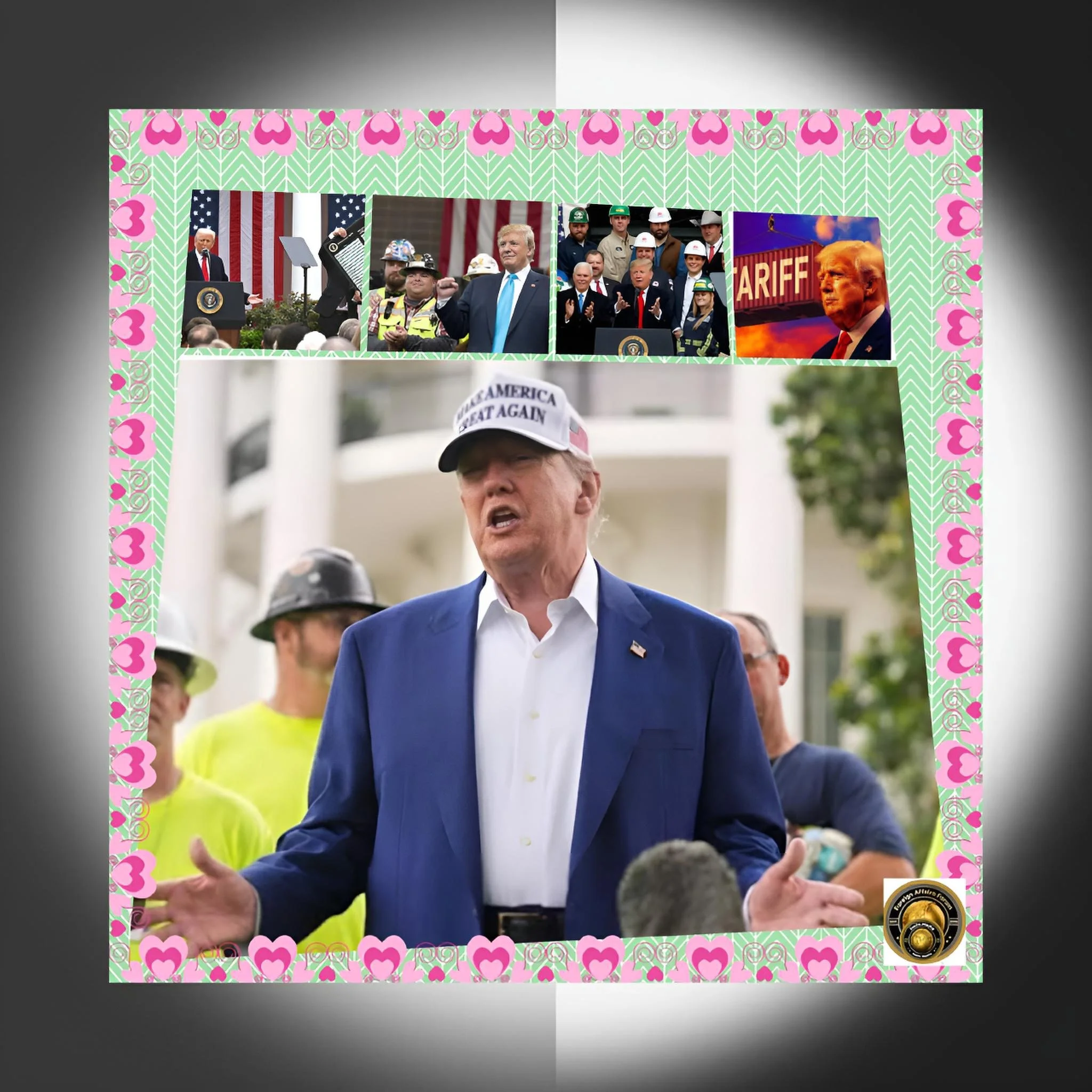
Tariff Tightrope: Trump’s High-Stakes Bet on Protectionism and Political Survival
Executive Summary
Donald Trump’s renewed tariff offensive, marketed as a strategy to “liberate” American industry and buoy the economy, has swiftly transitioned from triumphalism to damage control.
The administration’s “Liberation Day” tariffs, unveiled in April with promises of revived manufacturing and lower prices, have instead triggered visible strain across key sectors, most notably agriculture.
The hurried rollout of a $12 billion emergency bailout for farmers vividly illustrates the policy's political and economic costs, undermining the narrative that tariffs are a painless tool of national rejuvenation.
Early macroeconomic indicators do not support the administration’s optimistic claims. Manufacturing employment has declined by roughly fifty thousand jobs since January, while inflation stands at approximately 3 percent, nearly unchanged from the levels seen when Joe Biden left office.
This combination of stagnant price dynamics and weakening industrial employment stands in sharp contrast to the promised renaissance of domestic production.
At the same time, Trump’s assertion that tariff revenue could eventually replace federal income taxes is belied by basic arithmetic: about 250 billion dollars in tariff receipts pale in comparison to the 2.66 trillion dollars collected in individual income taxes, underscoring the conceptual fragility of the administration’s fiscal rhetoric.
The current moment is best understood as a live experiment in twenty-first-century protectionism.
Tariffs are being deployed not merely as a bargaining chip in trade negotiations but as a central pillar of an economic philosophy that seeks to reorder global supply chains by fiat.
The immediate impact, however, has been to impose costs on domestic producers and consumers, to trigger international retaliation, and to force the administration into compensatory spending that blunts the very incentives tariffs were supposed to create.
The path forward will hinge on whether the White House recalibrates its strategy—narrowing the scope of tariffs, coordinating more deftly with allies, and acknowledging the limits of tariff-driven revenue—or doubles down on a politically potent but economically fraught narrative of national economic siege and restoration.
Introduction
Tariffs as Ideology and Instrument
Tariffs have become the signature instrument of Trump’s economic nationalism. Where earlier presidents treated tariffs as a tool of last resort, Trump has elevated them to a symbol of sovereignty and strength, framing trade policy as a battlefield on which America must “win” or “lose.” In this framing, tariffs are simultaneously a lever to coerce foreign governments, a mechanism to reindustrialize the United States, and a source of fiscal windfall for the federal government.
The “Liberation Day” tariffs announced in April crystallized this worldview. The administration sold the package as a decisive break from the past: a bold, sweeping assertion of American interests after what Trump characterizes as decades of elite complicity in deindustrialization, offshoring, and unfair trade.
The promise was straightforward and evocative—higher tariffs would pull manufacturing back home, strengthen workers’ bargaining power, and create room for lower domestic taxes, all without materially burdening ordinary Americans.
Yet, trade policy does not operate in a vacuum. Tariffs are not imposed on abstractions but on flows of goods that are deeply embedded in complex, globalized supply chains. Firms do not instantaneously redeploy capital and labor across borders.
Households and businesses cannot immediately adjust consumption and production patterns without incurring costs. As the early results of the “Liberation Day” tariffs reveal, the friction generated by abrupt changes in trade policy has material consequences that quickly feed back into domestic politics.
Historical Background
From Postwar Liberalization to Neo-Protectionism
To understand the significance of Trump’s current tariff program, it is helpful to place it within the broader postwar trajectory of U.S. trade policy.
After the Second World War, the United States was a chief architect of a liberal international economic order, built around the General Agreement on Tariffs and Trade and later the World Trade Organization.
The intellectual and policy consensus in Washington favored steadily lower tariffs, deeper economic integration, and the use of multilateral institutions to govern trade disputes.
Despite periodic episodes of protectionism—such as the Reagan-era voluntary export restraints on Japanese automobiles or safeguard tariffs on steel—these measures were typically targeted, time-limited, and justified as temporary relief rather than structural reorientation.
The prevailing assumption among policymakers was that the gains from trade, while unevenly distributed, were sufficiently significant to justify further liberalization, and that distributional issues could be addressed domestically via fiscal and social policy rather than by closing borders.
By the late twentieth and early twenty-first centuries, however, political discontent with globalization had intensified. Deindustrialization in many regions, especially in the Midwest and parts of the South, created fertile ground for the argument that free trade had hollowed out American manufacturing.
China’s rapid rise as a manufacturing powerhouse and its accession to the WTO became focal points for grievances over job loss, wage stagnation, and perceived unfair competition.
Trump’s ascent to the presidency in 2016 tapped this well of discontent and reoriented Republican orthodoxy away from free trade and toward an unabashedly protectionist posture.
In his first term, Trump deployed tariffs against a wide array of partners, most notably China, while also targeting steel and aluminum imports on national security grounds.
These measures marked a break with the multilateral, rules-based approach of earlier periods.
The “Liberation Day” tariffs represent a second-generation escalation of this model: not an emergency deviation from liberal norms, but the deliberate institutionalization of tariffs as the default posture of U.S. trade policy.
Key Events and Policy Moves
The central pivot in the current episode was the announcement of the “Liberation Day” tariffs in April.
The administration framed the rollout as a historic reset: a sweeping set of tariff increases across key sectors, intended to reduce dependence on foreign suppliers, especially in strategic and industrial goods.
The rhetoric emphasized national rebirth, autonomy, and economic fortitude. The optics were carefully managed to convey strength and inevitability rather than experimentation.
Almost immediately, however, the friction points became visible. Farmers, particularly those reliant on export markets, found themselves squeezed by foreign retaliation and shifting global demand.
Key trading partners, facing higher barriers for their goods in the U.S. market, introduced countermeasures or signaled intentions to diversify away from American suppliers.
Commodity prices and contract negotiations began to reflect this new environment of uncertainty, with farmers facing both lower export prospects and higher input costs.
The administration’s response—announcing a 12 billion dollar bailout for farmers—was a tacit admission that the transition costs of the tariff regime were neither trivial nor politically sustainable.
Instead of allowing market signals to push resources toward supposedly newly protected domestic industrial sectors, the government intervened to cushion those bearing the brunt of foreign retaliation.
The bailout, though framed as a bridge to a fairer trade future, underscored the political vulnerability of a policy that inflicts concentrated short-term pain in pursuit of diffuse, long-term gains.
Meanwhile, the broader economic data began to diverge from the administration’s promises.
(1) Manufacturing employment, which the tariffs were supposed to bolster, declined by approximately fifty thousand jobs since January.
Far from igniting a surge in industrial hiring, the new trade barriers introduced uncertainty and higher costs that appear to have dampened investment and hiring decisions in some sectors.
(2) Inflation, held up as a metric that would improve as tariffs supposedly lowered prices via reshoring and tough bargaining with foreign suppliers, remained roughly at 3 percent, little changed from the level at the end of Biden’s tenure.
This stability suggests that whatever pricing power the administration hoped to gain through tariffs has not yet materialized in a consumer-friendly way.
(3) Trump’s claim that tariff revenues could ultimately supplant federal income taxes injected a fiscal dimension into the debate.
On its face, the idea is seductively simple: shift the tax burden from domestic income to foreign producers. In practice, however, the numbers starkly contradict the rhetoric.
With around 250 billion dollars in annual tariff revenue versus 2.66 trillion dollars in individual income tax revenue, the gap is enormous.
Even a dramatic expansion of tariffs across nearly all imported goods would struggle to generate revenue on the scale required to offset significant income tax reductions, let alone the complete replacement suggested by Trump’s more maximalist statements.
Facts and Emerging Concerns
Several empirical patterns from the early months of the “Liberation Day” tariffs raise substantive concerns about the design and trajectory of the administration’s approach.
(1) A decline in manufacturing employment contradicts the core political promise of the policy.
Suppose tariffs are introduced as an instrument to protect and expand the domestic industry. In that case, a net loss of manufacturing jobs—especially this early in the policy’s life—undermines both the economic rationale and the broader political narrative.
Firms facing higher input costs and policy uncertainty may delay or cancel expansion plans, offsetting whatever marginal protection tariffs provide on the output side.
(2) The persistence of inflation around 3 percent undercuts the claim that tariffs would act as a tool for lowering prices.
In standard economic theory, tariffs raise the cost of imported goods, and unless domestic producers can quickly and cost-effectively substitute for imported goods, consumers and downstream firms pay more.
For inflation to fall in this environment, the tariffs would need to trigger very rapid, cost‑effective reshoring or significant concessions from foreign suppliers—developments that typically occur, if at all, over longer time horizons than a few months.
(3) The bailout for farmers highlights the distributive asymmetries of tariff policy. Trade wars seldom unfold in a symmetric, frictionless manner; they involve targeted retaliation focused on politically sensitive constituencies.
Agricultural exports often top foreign partners’ lists when designing countermeasures, precisely because farmers have a strong political voice in U.S. domestic politics.
The need to allocate 12 billion dollars in emergency support thus reflects not merely economic disruption but strategic retaliation that exploits the internal vulnerabilities of the U.S. political system.
(4) The fiscal arithmetic behind the tariff-as-tax-replacement narrative is deeply problematic.
Tariffs have an inherently narrow tax base, tied to the value of imports.
By contrast, income taxes rest on a much larger base: domestic earnings. To generate comparable revenue from tariffs alone would likely require confiscatory tariff rates across virtually all imported goods, which in turn would impose massive costs on consumers, fuel inflation, provoke severe foreign retaliation, and disrupt supply chains.
In other words, the theoretical endpoint of Trump’s tariff rhetoric is economically self-defeating.
Finally, there is a concern about credibility and policy stability. Businesses make investment decisions on multi‑year horizons.
When trade policy becomes a moving target, subject to sweeping changes driven by domestic political considerations, firms face an elevated risk environment.
The rapid sequence from triumphant tariff announcement to emergency bailout and defensive economic messaging risks signaling volatility rather than strategic resolve.
Such perceived volatility can deter investment, particularly in capital-intensive sectors that are heavily integrated into global supply chains.
Cause and Effect: How Tariffs Translate into Economic Outcomes
The mechanics of tariffs as an economic instrument help explain the emerging pattern of outcomes.
Tariffs raise the cost of imported goods.
The immediate incidence of this tax falls primarily on domestic importers, who either absorb the higher cost or pass it on to firms and consumers through higher prices.
In sectors where imported inputs are crucial—such as machinery, electronics components, or specialized materials—tariffs can quickly raise production costs and compress margins for domestic manufacturers.
Higher input costs can, in turn, affect employment. If firms see profitability squeezed and demand uncertain, they may slow hiring, delay wage increases, or even shed workers.
This dynamic helps explain why, despite the notion that tariffs should protect domestic producers from foreign competition, manufacturing employment can still fall in the wake of a tariff shock.
Protection on the output side can be more than offset by economic drag on the input side and by retaliatory tariffs that erode export opportunities.
In agriculture, the causal chain runs primarily through foreign retaliation and shifting demand. When trading partners respond to U.S. tariffs with their own levies on American agricultural exports, they effectively redirect demand to alternative suppliers abroad.
Even if global demand for a given commodity remains steady, the U.S. market share can decline, depressing farm incomes.
This effect may be amplified if the retaliatory tariffs target products that are geographically or politically sensitive within the United States, magnifying domestic political pressure on the administration.
The disconnect between tariff policy and inflation outcomes reflects another facet of this cause-and-effect chain.
For tariffs to lower inflation, they would have to induce rapid, cost‑reducing changes in the structure of supply. In reality, reconfiguring supply chains, building new domestic capacity, and achieving economies of scale sufficient to offset the cost of tariffs is a multi‑year process.
In the short to medium term, tariffs tend to raise prices or at least prevent them from falling as much as they otherwise might, particularly in sectors where imports play a significant role in consumption or production.
The roughly stable 3 percent inflation rate thus aligns more closely with the canonical expectation of modest upward price pressure than with the administration’s narrative of tariff‑driven relief.
The fiscal gap between tariff and income tax revenue arises from the simple fact that imports are a subset of total economic activity.
Even if tariffs were imposed on all imports at high rates, the resulting revenue would still be bound by the size of the import bill.
Meanwhile, income taxes tap into the entire spectrum of earnings generated across the domestic economy.
Therefore, the idea that tariffs can substitute for income taxes at scale does not survive even cursory quantitative scrutiny. The result is a rhetorical overreach that, when exposed, can further erode confidence in the coherence of the overall economic strategy.
Steps Ahead: Policy Options and Strategic Choices
From this vantage point, the administration faces several strategic choices as it navigates the fallout from the “Liberation Day” tariffs.
(1) Double down on the existing trajectory, expanding tariffs, increasing pressure on trading partners, and arguing that short‑term pain is an inevitable cost of long‑term restructuring.
This path relies heavily on political messaging to maintain domestic support while betting that foreign governments will eventually concede to U.S. demands.
The risk is that prolonged uncertainty, sustained retaliatory measures, and the mounting need for domestic bailouts will erode both economic performance and political patience.
(2) Another option is recalibration
The administration could narrow the scope of tariffs, focusing on sectors with a strong national security rationale or clear evidence of unfair practices, while easing off broad‑based measures that impose high costs on downstream industries and consumers.
Coupled with more targeted industrial policy—such as tax incentives for strategic investment, infrastructure upgrades, and workforce training—this approach would attempt to secure some of the benefits of a more resilient industrial base without imposing across‑the‑board trade frictions.
(3) A more multi-lateral strategy would involve reengaging with allies and leveraging coalitions to address specific grievances, particularly those involving China’s trade practices, intellectual property issues, and state subsidies.
Rather than acting unilaterally and inviting broad retaliatory tariffs, the United States could deploy coordinated pressure through shared frameworks and institutions.
This would not necessarily mean abandoning tariffs altogether, but instead integrating them into a broader diplomatic and regulatory toolkit.
(4) Clarify and temper fiscal narrative
Finally, the administration will need to clarify and temper its fiscal narrative.
Presenting tariffs as a realistic alternative to income taxes is economically untenable and politically risky.
A more sustainable approach would treat tariff revenue as a modest supplement within a diversified tax system rather than as a transformative fiscal instrument.
Acknowledging this reality would enable more honest discussions about the trade-offs inherent in any effort to restructure the tax burden and reduce dependence on specific revenue sources.
Conclusion
A Stress Test for Modern Protectionism
The “Liberation Day” tariffs and their aftermath constitute a stress test for modern American protectionism. In theory, tariffs promise to correct perceived imbalances, reclaim domestic manufacturing, and generate revenue from foreign producers.
In practice, the early evidence shows declining manufacturing employment, persistent inflation, the need for multibillion‑dollar bailouts to shield politically salient constituencies, and an arithmetic mismatch between tariff receipts and income tax revenues.
This does not mean that all forms of protection or industrial strategy are doomed to fail. It does, however, underscore the importance of careful design, realistic expectations, and institutional coherence.
Tariffs are a blunt instrument. Used indiscriminately, they risk inflicting collateral damage on the very constituencies they are meant to assist. Combined with ambitious but numerically implausible claims about their fiscal potential, they can erode confidence in economic stewardship.
The administration now stands at a fork in the road. It can persist in a confrontational, highly centralized tariff strategy that prioritizes symbolic assertion over economic nuance, or it can pivot toward a more calibrated approach that harnesses a broader range of tools—domestic investment, allied coordination, targeted enforcement—to pursue legitimate concerns about deindustrialization and unfair trade.
The outcome will not only shape the legacy of Trump’s economic project but also influence how future policymakers think about the role of protectionism in a deeply interconnected global economy.