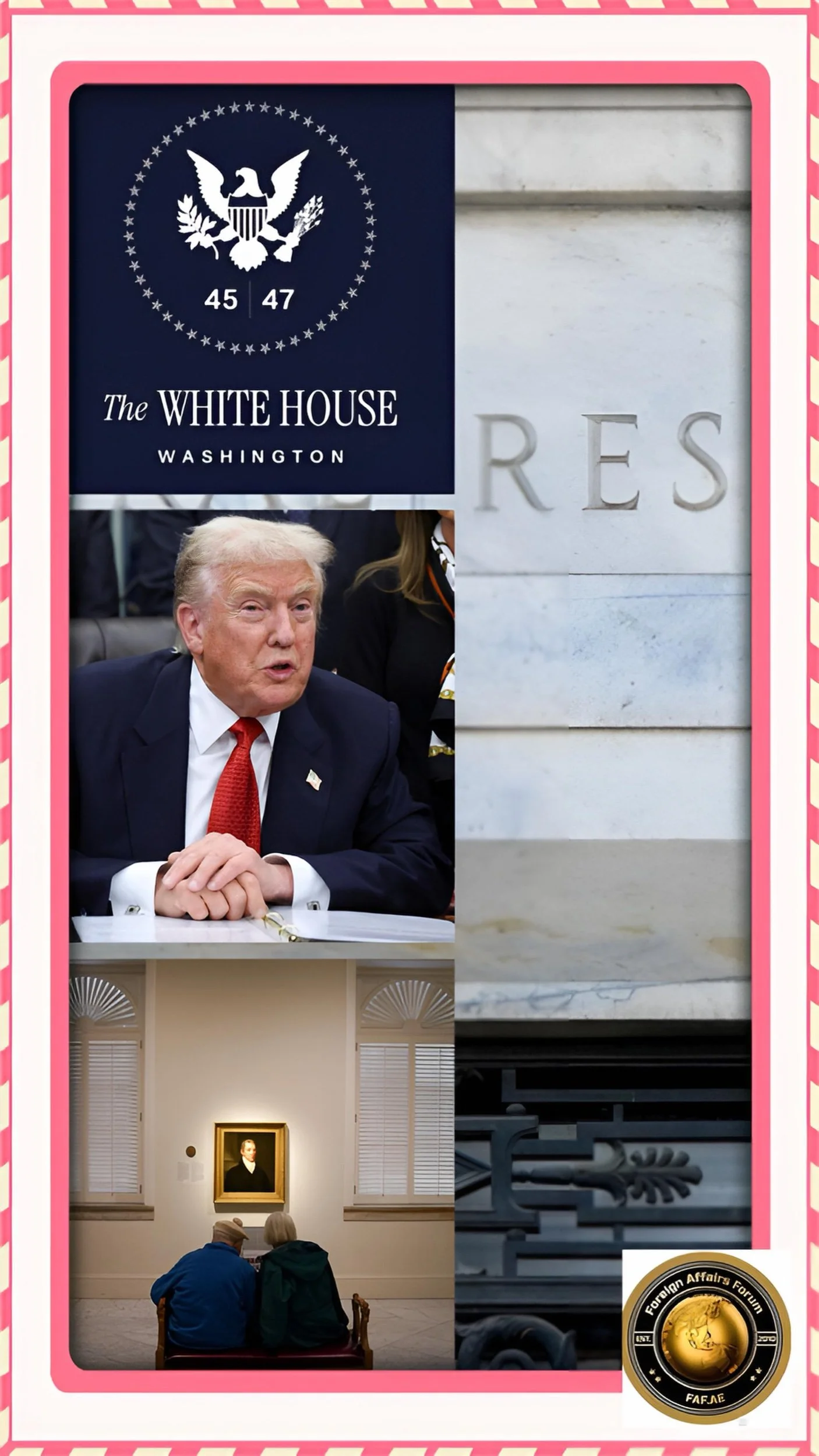
The Monroe Renaissance: Washington’s 2025 Strategic Realignment and the Rapprochement with Moscow
Executive Summary
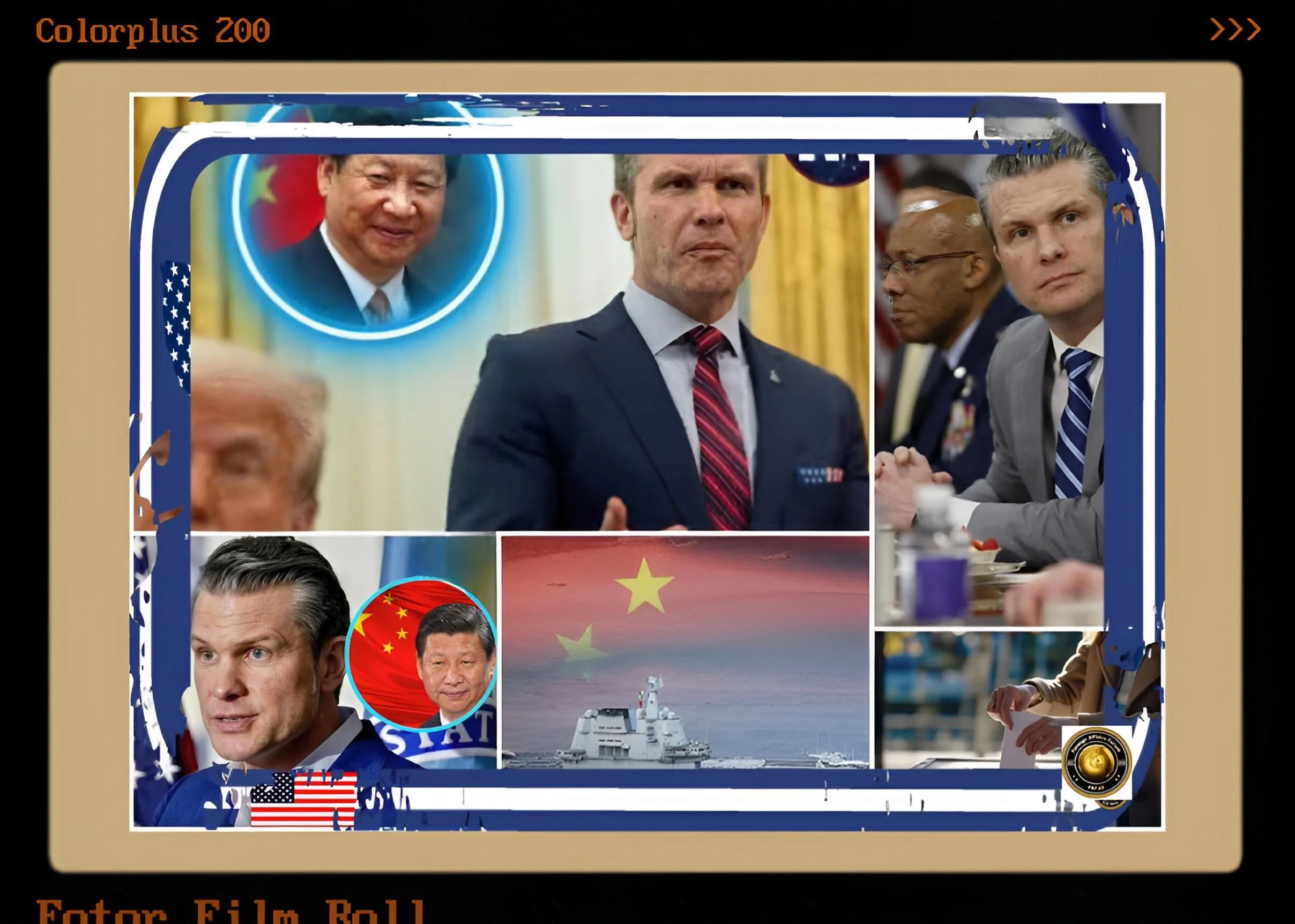
On December 4, 2025, the White House unveiled a transformative National Security Strategy (NSS) that fundamentally reorders the hierarchy of American geopolitical interests, signaling a decisive pivot away from the post-Cold War transatlantic consensus.
The document, characterized by its proponents as an exercise in “flexible realism” and by its detractors as a retreat into hemispheric isolationism, formally de-prioritizes the containment of the Russian Federation.
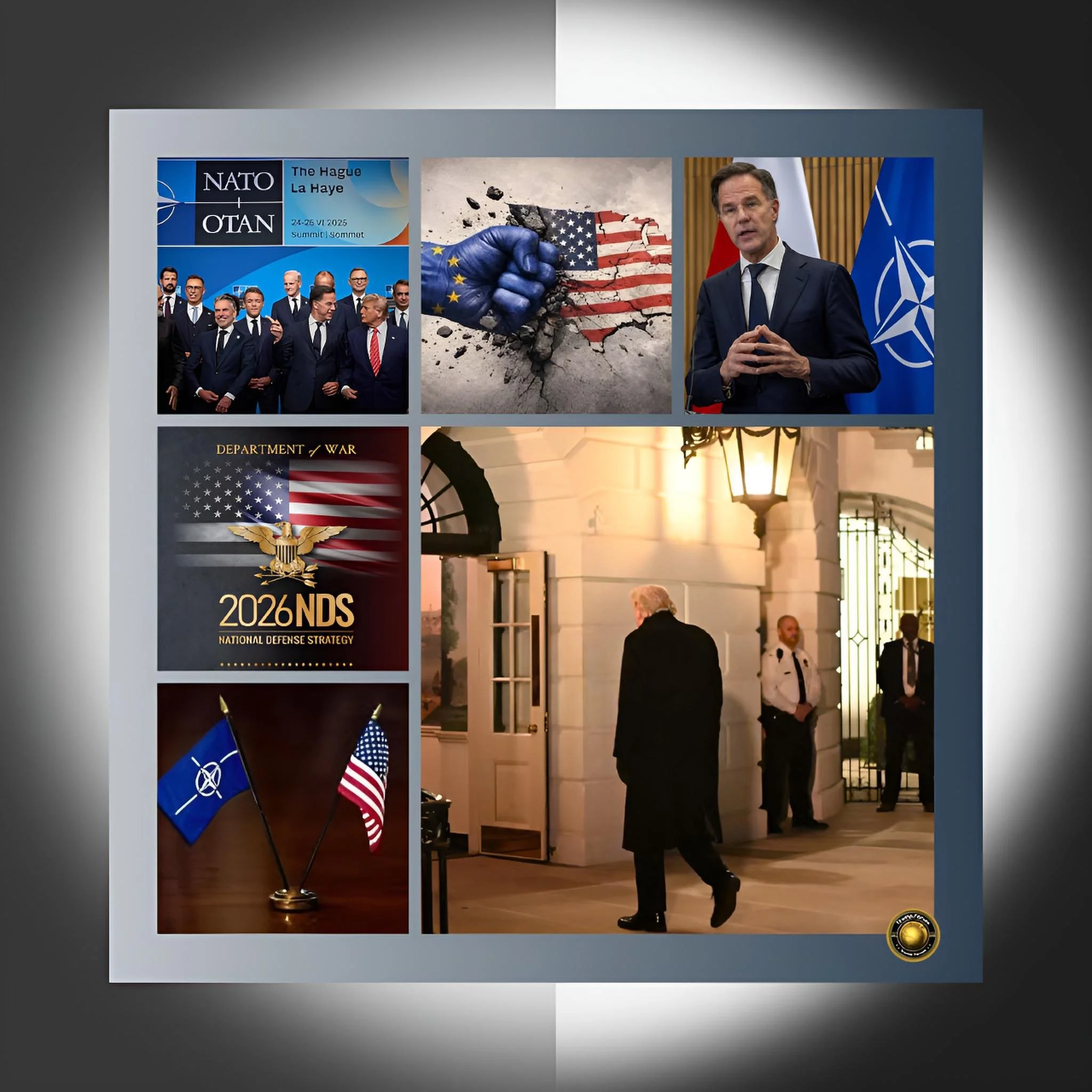
Instead, it advocates for a restoration of “strategic stability” with Moscow and explicitly rejects the expansion of the North Atlantic Treaty Organization (NATO).
In a stark departure from the 2022 strategy, the new doctrine refrains from designating Russia as an adversary or an existential threat, focusing instead on a revitalized Monroe Doctrine that asserts American primacy solely within the Western Hemisphere.
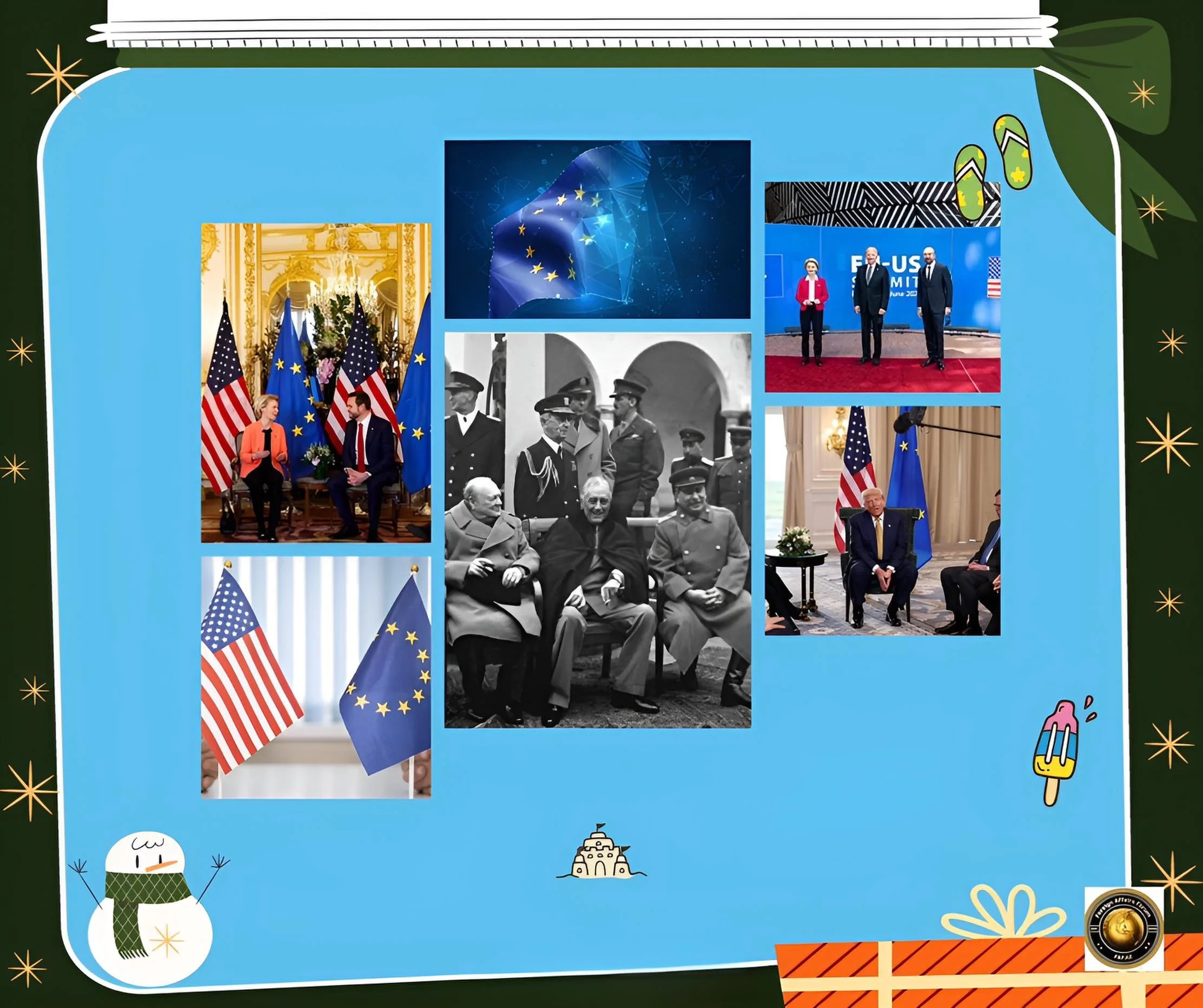
The international response has been immediate and bifurcated: the Kremlin has publicly welcomed the strategy as a constructive alignment with its own worldview, while European capitals and domestic critics view the document as an abandonment of the collective defense architecture that has underpinned Western security for nearly eight centuries.
This report analyzes the doctrinal shift, exploring the implications of Washington’s minimal response to Russian revisionism and the consequent fracturing of the Euro-Atlantic alliance.
Introduction
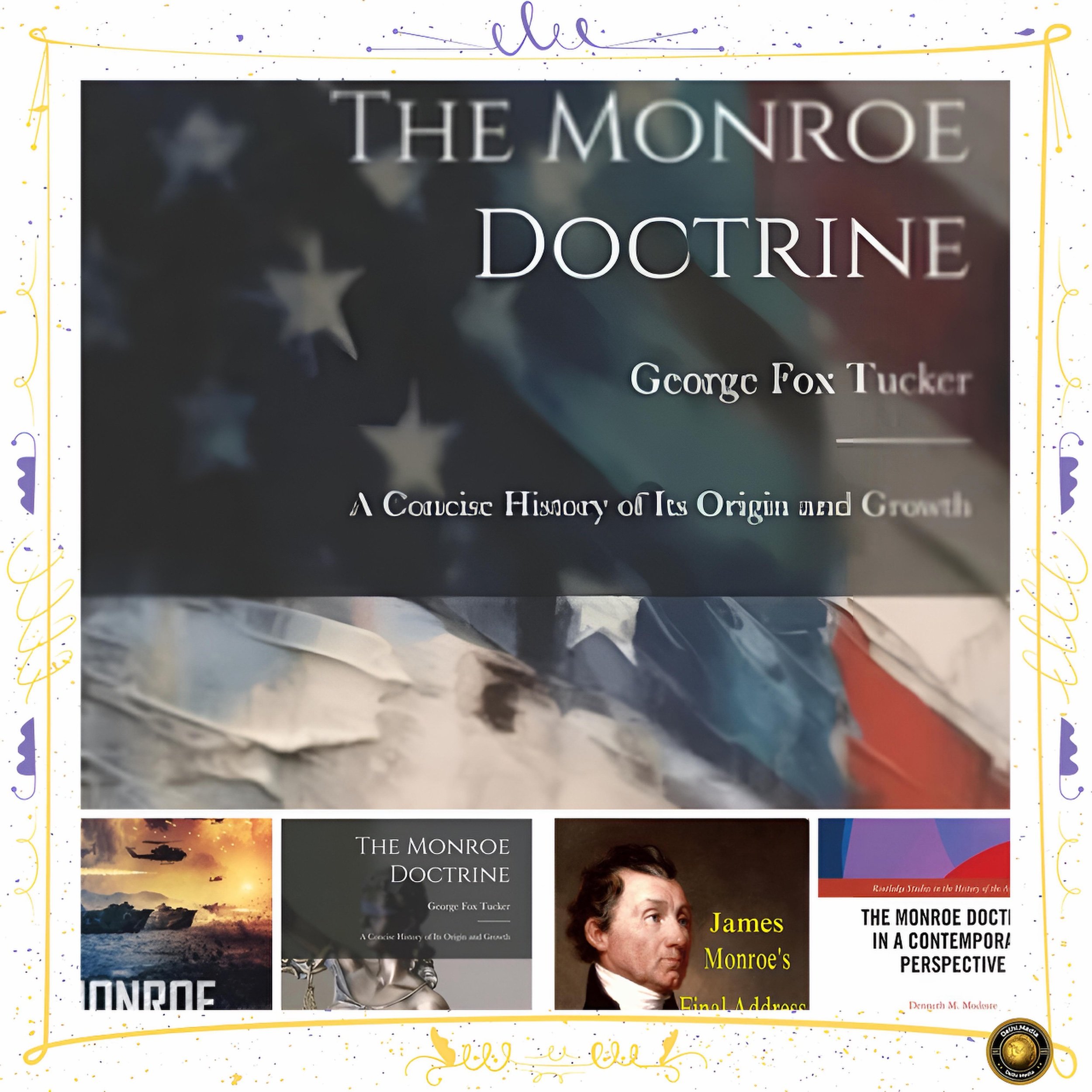
What is Monroe Doctrine
The Monroe Doctrine constitutes a seminal articulation of United States foreign policy, enunciated by President James Monroe on December 2, 1823, during his seventh annual address to Congress, with principal authorship attributed to Secretary of State John Quincy Adams.
This proclamation delineated a bifurcated geopolitical paradigm, positing the Western Hemisphere as inviolably distinct from the European sphere, thereby proscribing any further colonization or coercive interventions by Old World powers in the Americas, which had recently emancipated themselves from Spanish and Portuguese dominion.
Its immediate provenance lay in apprehensions over Russian encroachments along the Pacific Northwest and prospective European reconquests in Latin America, eschewing a joint Anglo-American declaration in favor of unilateral American assertion to safeguard nascent hemispheric autonomy.
The doctrine’s cardinal purpose resided in establishing a prophylactic barrier against extracontinental hegemony, vowing non-interference in extant European colonies or Old World quarrels while construing any subsequent meddling in independent American polities as an existential threat warranting U.S. reprisal—a precept initially bereft of enforcement capacity yet emblematic of aspirational primacy.
Over subsequent epochs, it metamorphosed through corollaries, notably Theodore Roosevelt’s 1904 elaboration, which authorized U.S. stewardship over Latin American stability to preempt European incursions, thereby furnishing doctrinal scaffolding for interventions in nations such as Mexico, Haiti, and Nicaragua.
Though its salience has waned amid 20th-century multilateralism and decolonization, vestiges persist in contemporaneous invocations against perceived extraterritorial encroachments, underscoring its perdurable imprint on American grand strategy
Trump Monroe Renaissance December 2025
The release of the 2025 National Security Strategy marks a watershed moment in the history of American foreign policy, representing perhaps the most significant doctrinal rupture since the onset of the Cold War.
For decades, successive administrations—regardless of partisan affiliation—have operated under the assumption that the security of the United States was inextricably linked to the stability and integration of Europe.
The containment of Russian influence and the expansion of democratic institutions were viewed as twin pillars of global order. The new strategy, released late Thursday by the Trump administration, dismantles this paradigm.
By consciously omitting the adversarial language that defined previous strategic documents and by calling for a swift, negotiated cessation of hostilities in Ukraine, Washington has signaled a “minimal response” posture toward Russian geopolitical maneuvering.
This shift is not merely a tactical adjustment but a philosophical reorientation that elevates “civilizational” affinity and regional hegemony over universalist democratic promotion.
As the world digests the implications of this document, the central question becomes whether this retrenchment will lead to a stable multipolar order or precipitate the unraveling of the West as a coherent geopolitical entity.
The Strategic Pivot: Hemispheric Primacy over Atlanticism
The defining feature of the 2025 NSS is its unapologetic revival of the Monroe Doctrine, the 19th-century tenet that declared the Western Hemisphere the exclusive sphere of influence for the United States.
The document posits that the primary threats to American security are not distant great power competitors in Eurasia, but rather the immediate challenges of migration, narcotics trafficking, and border integrity within the Americas.
Consequently, the strategy outlines a significant reallocation of military and diplomatic resources, shifting focus from the European theater to the Caribbean and Latin America.
This “Hemispheric First” approach necessitates a concomitant reduction in the American commitment to European security architecture.
The strategy employs remarkably abrasive language regarding the United States’ traditional allies, criticizing European Union leadership for what it terms “unrealistic expectations” regarding the Ukraine conflict and accusing the continent of succumbing to “civilizational erasure” through unchecked immigration and bureaucratic overreach.
By framing Europe’s internal dynamics as a source of weakness rather than strength, the administration justifies its decision to decouple American prestige from the outcome of European conflicts, thereby reducing the perceived necessity of a robust response to Russian aggression.
The Rapprochement with Moscow: A Departure from Containment
Perhaps the most provocative element of the new strategy is its treatment of the Russian Federation. In a stark deviation from the 2017 and 2022 iterations, the 2025 document carefully avoids labeling Russia as an “aggressor” or a “strategic competitor.”
Instead, it adopts the lexicon of détente, prioritizing the “re-establishment of strategic stability” and the management of nuclear escalation over the restoration of Ukrainian territorial integrity.
The strategy explicitly states that it is a “core interest” of the United States to end the perception and reality of NATO as an indefinitely expanding alliance, a formulation that directly addresses one of Moscow’s longest-standing grievances.
By characterizing the war in Ukraine as a localized dispute that must be resolved to “stabilize European economies,” rather than a contest of international law, the document implicitly validates the concept of spheres of influence.
This minimalist response to Russian expansionism suggests that Washington no longer views Russian hegemony in Eastern Europe as antithetical to American national interests, provided it does not encroach upon the Western Hemisphere.
The expiration of the New START treaty in early 2026 adds a layer of urgency to this stance, as the administration appears willing to trade geopolitical concessions for a renewed arms control framework, effectively prioritizing nuclear stability over conventional deterrence.
International Reaction: The Kremlin’s Endorsement and Western Anxiety
The geopolitical aftershocks of the strategy’s release were immediate and profound. In Moscow, the reaction has been one of cautious jubilation.
Kremlin spokesman Dmitry Peskov, in an interview aired on December 7, 2025, praised the document as “largely consistent” with Russia’s own vision of a multipolar world. He noted that the specific language regarding the limitation of NATO expansion and the refusal to label Russia as an immediate threat represented a “constructive” step toward normalizing relations.
Former President Dmitry Medvedev echoed these sentiments, suggesting that the strategy reflected a “radical departure” from the Russophobia of the “deep state” and opened a genuine pathway for dialogue.
Conversely, the reaction in Western capitals has been one of poorly concealed alarm. European diplomats and analysts have characterized the document as a “far-right pamphlet” that threatens to leave the continent vulnerable to coercion.
By validating the narrative that Europe is suffering from “civilizational erasure,” the US strategy aligns itself ideologically with Euro-skeptic factions, further destabilizing the European Union from within.
Domestic critics in the United States, including congressional Democrats, have decried the strategy as a betrayal of democratic values and a capitulation to authoritarianism, arguing that the “minimal response” to Russia effectively greenlights further aggression and dismantles the deterrence credibility built over seventy years.
Conclusion
The 2025 National Security Strategy represents a fundamental renegotiation of the American social contract with the world.
By replacing the logic of containment with the logic of accommodation, and by substituting the goal of global democratic leadership with the goal of hemispheric insulation, Washington has initiated a profound transformation of the international system.
The “minimal response” to Russia is not an oversight but a deliberate feature of a worldview that sees the Eurasian landmass as secondary to the stability of the Americas.
While this approach has garnered praise from adversaries who have long sought to dilute American power, it risks isolating the United States from its traditional allies and creating a power vacuum in Europe that could lead to precisely the instability the strategy claims to avoid.
As the world moves into 2026, the permanence of this realignment remains to be seen, but the initial signal is clear: the era of the United States as the omnipresent guarantor of European security has effectively drawn to a close.