The Monroe Doctrine in History and Modern Geopolitics
Executive Summary
President James Monroe, in his 1823 congressional address chiefly penned by Secretary of State John Quincy Adams, enunciated a precept foreclosing European recolonization of Latin American republics nascent from Iberian suzerainty, whilst pledging U.S. abstention from Old World quarrels and extant colonial appanages.
Devoid of contemporaneous martial sinews, the doctrine burgeoned via Theodore Roosevelt’s 1904 Corollary into a warrant for hemispheric constabulary, precipitating incursions into Nicaragua, Haiti, and the Dominican Republic; Cold War transmutations rationalized Guatemala’s 1954 ouster, Chile’s 1973 coup, and Kennedy’s 1962 Cuban quarantine.
Franklin Roosevelt’s Good Neighbor palliation via Organization of American States inception vied with interventionist precedents, instantiating U.S. expansionist realpolitik under hemispheric hegemony’s mantle.
Contemporary recrudescence confronts Sino-Russian inroads—Beijing’s 600-plus Venezuelan pacts, Moscow’s 2025 defense accords—amid Trump’s “Donroe Doctrine” portending Panama Canal and Greenland coercions, cartel terror designations, and Venezuelan menaces.
Analogous to Putin’s Near Abroad fiat and China’s nine-dash line, it hazards UN Charter erosion, Latin alienation toward multipolarity, and proxy escalations, yielding transient leverage yet imperiling primacy absent multilateral recalibration via reciprocal OAS fortification.
The Monroe Doctrine in History and Modern Geopolitics
Historical Origins and Core Principles
The Monroe Doctrine was articulated by President James Monroe in his seventh annual message to Congress on December 2, 1823, though it was drafted primarily by Secretary of State John Quincy Adams.
The doctrine emerged from U.S. concerns about European powers potentially colonizing newly independent Latin American territories and Russia’s territorial ambitions along North America’s northwest coast.
The doctrine established four fundamental tenets
(1) United States would not interfere in the affairs of European states or their existing colonies
(2) Western Hemisphere was closed to further European colonization
(3) Any attempt by a European power to colonize territory in the Americas would be viewed as an act of aggression against the United States
(3) United States would remain distinct from European affairs.
Notably, Secretary of State Adams resisted a joint U.S.-British declaration proposed by British Foreign Minister George Canning, insisting on a unilateral approach to preserve American expansionist flexibility.
This decision proved consequential, as the doctrine later became a framework for U.S. territorial and commercial expansion.
Evolution and Reinterpretation
The doctrine underwent significant transformations over the nineteenth and twentieth centuries.
Initially, the United States lacked the military capacity to enforce it.
However, as American power grew, President Theodore Roosevelt introduced the Roosevelt Corollary in 1904, which reinterpreted the doctrine as establishing the United States as a “hemispheric policeman” with the right to intervene in Latin American affairs.
This corollary enabled numerous military interventions, including actions in
(1) Santo Domingo (1904)
(2) Nicaragua (1911)
(3) Haiti (1915).
During the Cold War, the doctrine was invoked to justify interventions justified as preventing Soviet influence, including the CIA-supported overthrow of democratic governments in
(1) Guatemala (1954).
(2) Dominican Republic (1965).
(3) Chile (1973).
(4) Cuban Missile Crisis (1962).
President Kennedy used it to justify a naval quarantine around Cuba to force Soviet missile removal.
Franklin D. Roosevelt’s “Good Neighbor Policy” of the 1930s attempted to redeem the doctrine through non-interventionist language and the co-founding of the Organization of American States, though this interpretation competed with more interventionist applications.
Contemporary Geopolitical Significance
The Monroe Doctrine has experienced a notable revival in twenty-first century foreign policy discourse, particularly as U.S. policymakers confront great power competition from China and Russia in the Western Hemisphere.
The doctrine has been reimagined as a response to China’s expanding economic and political presence in Latin America, with officials warning of “imperial Chinese trade ambitions.”
China’s Growing Presence
Beijing has invested heavily in Latin American infrastructure, trade networks, and resources, positioning itself as an alternative partner to the United States.
The resurgence of Monroe Doctrine rhetoric reflects American concern about declining hemispheric influence.
Contemporary Interventionist Rhetoric
The Trump administration revived explicit Monroe Doctrine references, with Secretary of State Rex Tillerson (2018) praising it as a “success” and warning against Chinese expansion.
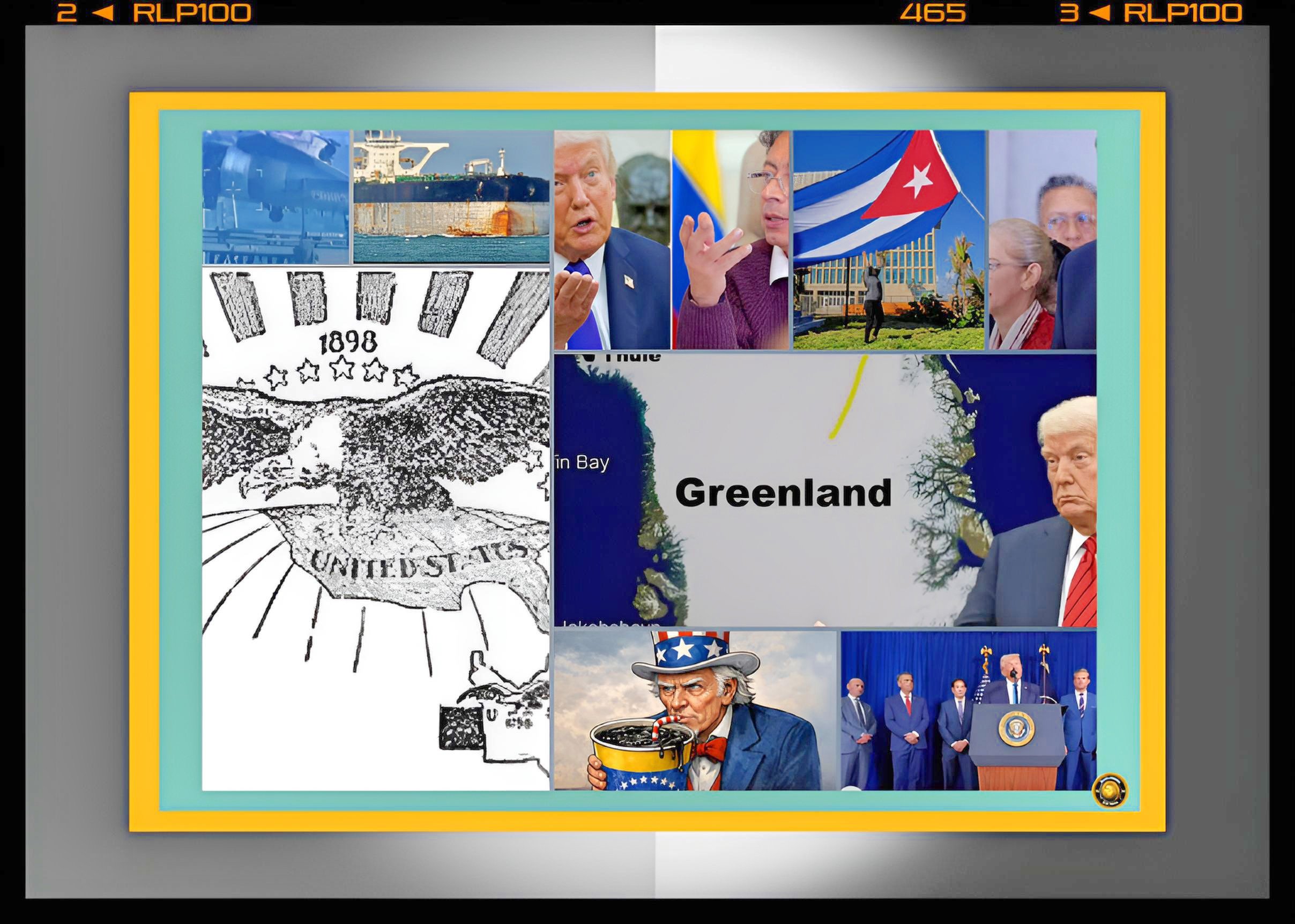
More recently, Trump’s 2025 statements regarding Greenland, the Panama Canal, and Venezuelan intervention signal a potential return to explicit hemispheric dominance claims.
Competing Regional Doctrines
Russia and China have developed parallel concepts claiming exclusive regional influence—
(1) Russia’s “Kozyrev Doctrine”.
(2) “Putin Doctrine” for former Soviet territories.
(3) China’s “nine-dash line” claims in the South China Sea and assertions over Taiwan and Hong Kong—directly mirroring nineteenth-century American sphere-of-influence thinking.
Problematic Implications for Modern Order
Contemporary invocation of the Monroe Doctrine carries significant risks. Scholars and policymakers warn that reviving explicitly interventionist Monroe Doctrine policies would undermine international norms based on sovereignty and the UN Charter.
By reasserting the concept of exclusive hemispheric spheres, the United States would validate similar claims by Russia and China, further fragmenting global order into competing regional hegemonies.
This creates a vicious cycle where U.S. reassertions of Western Hemisphere dominance provide rhetorical justification for Russian aggression in Ukraine and Chinese assertiveness in Asia.
Latin American nations historically viewed Monroe Doctrine interventions with deep suspicion, perceiving the doctrine not as protection but as a rationale for American imperialism and hegemonic control.
Contemporary invocations risk reproducing these historical tensions while the doctrine offers limited practical guidance for addressing complex modern challenges like transnational crime, migration, and climate change that require multilateral cooperation rather than unilateral dominance.
A more sustainable approach would involve strengthening multilateral hemispheric institutions consistent with international law, maintaining U.S. diplomatic and economic engagement in Latin America, and renouncing the doctrine’s hegemonic presumptions in favor of mutual respect for sovereignty.
Monroe Doctrine: Historical Foundations
President James Monroe promulgated the doctrine in his 1823 address to Congress, principally authored by Secretary of State John Quincy Adams, to forestall European recolonization of Latin American republics emergent from Spanish dominion.
Its corollaries precluded U.S. meddling in European internal affairs or extant colonies, proclaimed the Western Hemisphere impervious to novel colonization, construed such encroachments as belligerence against the United States, and demarcated American polity from Old World entanglements.
Devoid of initial enforcement sinews, the precept burgeoned into a mantle for U.S. expansionism, supplanting British maritime suasion with unilateral assertion.
Doctrinal Metamorphosis
Theodore Roosevelt’s 1904 Corollary transmuted the doctrine into a mandate for U.S. stewardship over Latin American fiscal delinquencies and disorders, precipitating interventions in Cuba, Nicaragua, Haiti, and the Dominican Republic.
Cold War invocations rationalized overthrows in Guatemala (1954), the Dominican Republic (1965), and Chile (1973) to thwart Soviet ingress, alongside Kennedy’s 1962 Cuban Missile Crisis blockade.
Franklin Roosevelt’s Good Neighbor dispensation endeavored amelioration via noninterventionism and the Organization of American States’ inception, yet interventionist precedents endured.
Contemporary Geopolitical Resonance
Revived amid Sino-Russian inroads into Latin America, the doctrine confronts Beijing’s infrastructure pacts exceeding 600 accords with Venezuela alone in 2025, alongside Moscow’s defense-energy entente ratified that year.
Trump’s “Donroe Doctrine” portends hemispheric hegemony via Panama Canal and Greenland exertions, executive orders designating cartels as terrorists, and menaces against Venezuelan and Mexican malfeasance.
Analogous to Russia’s “Putin Doctrine” in the Near Abroad and China’s South China Sea demarcations, it instantiates sphere-of-influence realpolitik.
Venezuela - U.S. conflict
Monroe Doctrine is not being formally revoked; rather, it is being explicitly revived—often termed the “Donroe Doctrine”—to rationalize current U.S. aggression toward Venezuela, including military buildups, maritime strikes on Venezuelan vessels, airspace closure declarations, and designations of the “Cartel of the Suns” as terrorists.
U.S. actions since late 2025, framed as counter-narcotics operations, encompass naval deployments near Venezuelan waters, threats of land strikes “very soon,” and demands for Maduro’s ouster, echoing hemispheric dominance claims amid Sino-Russian ties like Beijing’s 600+ pacts and Moscow’s defense accords.
This revival draws regional backlash—Colombian intelligence suspensions, Ecuadorian base rejections, UK/Dutch cooperation pauses—and scholarly warnings of normative erosion validating Putin’s and Xi’s spheric assertions, per multipolar prognostications.
Conclusion
The Monroe Doctrine’s recrudescence under Trumpian realpolitik yields short-term coercive leverage against narco-states and extracontinental rivals, yet imperils long-term U.S. primacy by validating adversarial spheric assertions, fraying UN Charter norms, and alienating Latin polities toward multipolar diversification.
Resource dispersion across Eurasia attenuates enforceability, fostering proxy escalations as evinced in Venezuelan-Russian drone symmetries and Colombian intelligence suspensions.
Sustainable hegemony demands multilateral recalibration—reciprocal pacts acknowledging competitors’ footholds while fortifying OAS-like apparatuses—over archaic unilateralism, lest hemispheric fragmentation redound to diminished American leverage in a polycentric order.