The Asymmetric Horizon: Rebuilding the Arsenal of Freedom Amidst China’s Historic Naval Expansion
Executive Summary
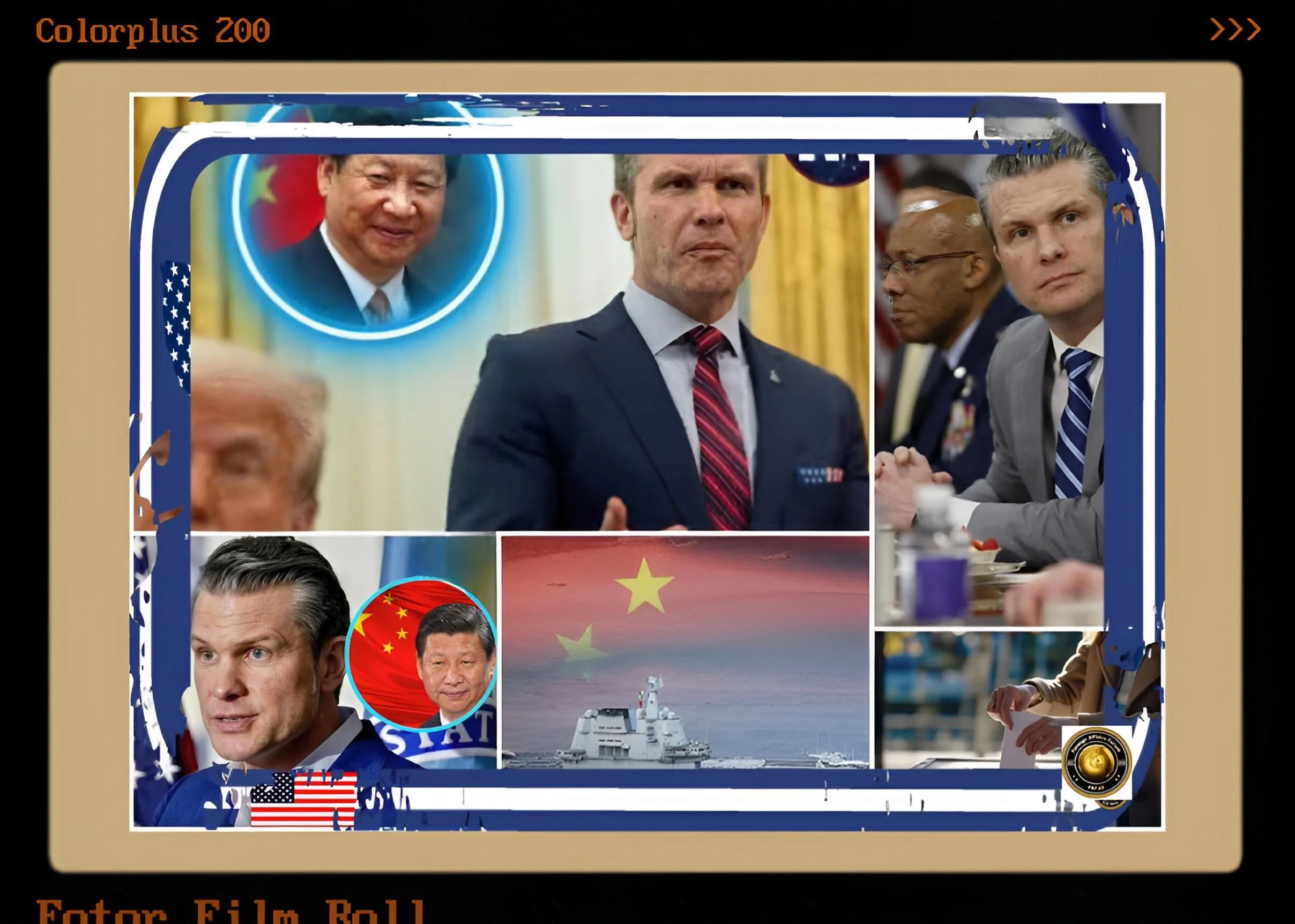
At the Reagan National Defense Forum, United States Secretary of Defense Pete Hegseth delivered a stark strategic assessment of the People’s Republic of China’s military trajectory, characterizing its naval and nuclear accumulation as “historic” in scale.
Highlighting a severe industrial disequilibrium, the Secretary noted that Beijing now possesses the world’s largest navy and a shipbuilding capacity estimated to be 230% greater than that of the United States.
In response to this widening asymmetry and deepening Sino-Russian cooperation, the Trump Administration has initiated a comprehensive overhaul of the US defense acquisition system.
This pivot aims to rapidly revitalize the domestic industrial base, securing the “arsenal of freedom” while reinforcing the Indo-Pacific security architecture alongside key Quad partners.
The Industrial Alarm: A Clarion Call from Simi Valley
The geopolitical landscape was brought into sharp focus in Simi Valley, where defense leaders convened to address the eroding margins of American military primacy.
Secretary Hegseth’s address served as a pivotal intervention in US defense policy, underscoring that the challenge posed by China is no longer a distant theoretical prospect but an immediate material reality.
The statistical evidence presented paints a picture of profound industrial inequality.
The most alarming metric disclosed was the sheer velocity of Chinese naval production, which currently yields eight warships for every two commissioned by the United States.
This capability allows Beijing to project power aggressively into the South China Sea and the broader Indian Ocean.
Beyond conventional naval tonnage, the Pentagon expressed grave concern over the rapid expansion of China’s nuclear arsenal and its increasingly synchronized military operations with the Russian Federation—a multi-front threat that complicates American strategic calculus.
To counteract this, the Administration has launched a “complete game change” in defense procurement and Foreign Military Sales.
By rejecting minor bureaucratic tinkering in favor of a systemic overhaul, the objective is to prioritize speed, scale, and industrial resilience.
This restoration of American hard power is critical for India and fellow Quad members, offering a vital counterbalance to Beijing’s militarization of critical maritime trade routes.
Strategic Symmetry: From the Caribbean to the “Deep South” of Asia
This push for industrial renewal is being matched by an assertive “America First” security doctrine that links two seemingly disparate theaters: the Caribbean Sea and Central Asia.
Both landscapes represent parallel thrusts to shift from passive containment to active geographic denial against Chinese influence.
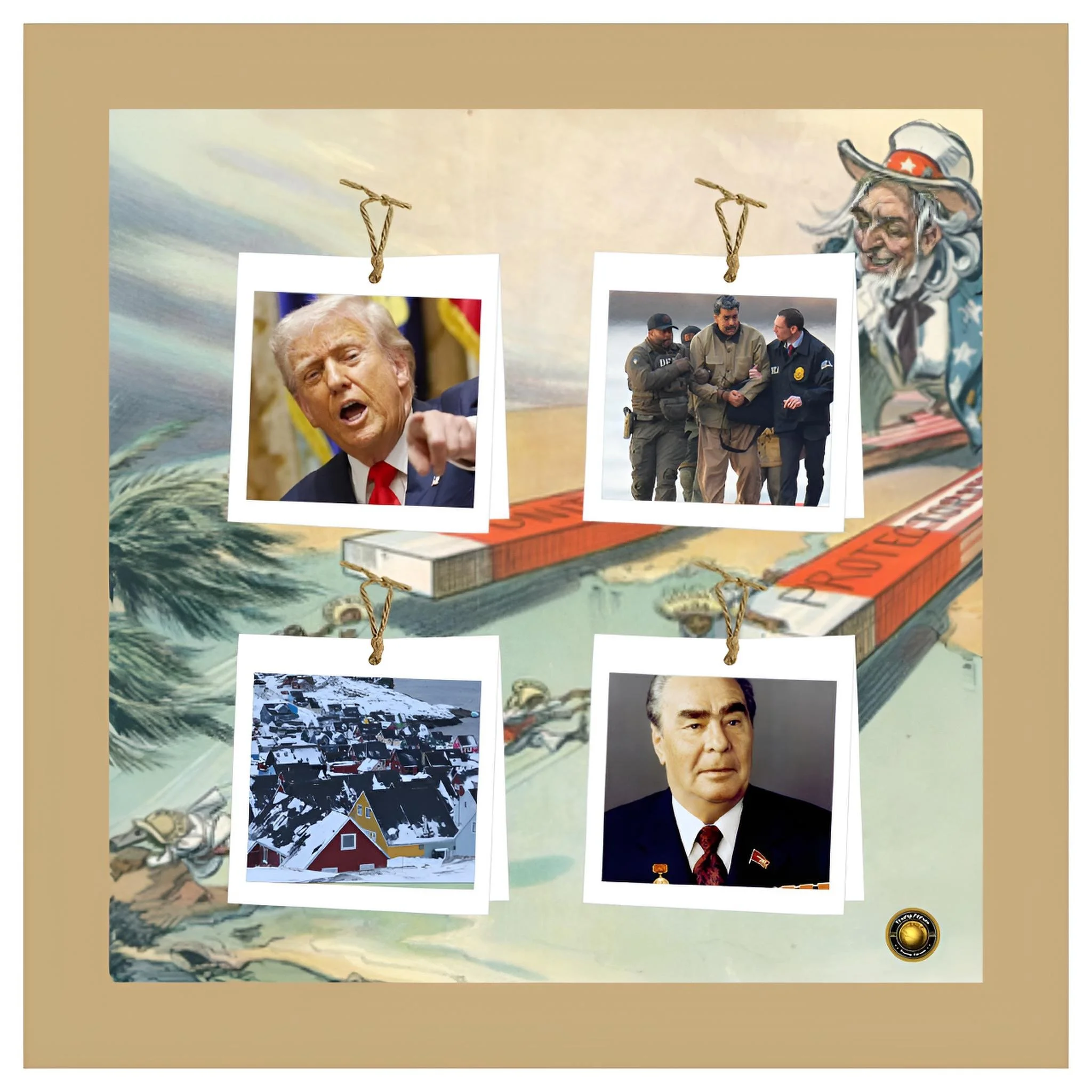
In the Western Hemisphere, a “Monroe Renaissance” is underway.
This revitalized interpretation of the 19th-century doctrine asserts resolute US primacy by sanitizing the American near-abroad. through aggressive anti-narcotics strikes and naval posturing in the Caribbean.
The goal is to dismantle logistical networks that could serve as dual-use proxies for adversarial power, effectively “fortifying” the home front.
Simultaneously, the strategic pursuit of Bagram Air Base in Afghanistan represents a projection of power into the “Deep South” of Central Asia.
Just as the Monroe Renaissance secures the domestic core, the re-acquisition of a “strategic watchtower” in Afghanistan places American airpower on the flank of China’s western border.
This creates a necessary check on Beijing’s Belt and Road ambitions. While a base in landlocked Afghanistan technically transcends the traditional bounds of the Monroe Doctrine, the two strategies are inextricably linked: a secure periphery in the Americas provides the political and security capital necessary to sustain a forward operating presence in the Asian hinterlands.
Conclusion
Secretary Hegseth’s remarks delineate a critical inflection point in global security, acknowledging that technological superiority alone can no longer compensate for a deficit in industrial capacity.
The identified shipbuilding gap and the “historic” nature of China’s buildup have necessitated a radical departure from peacetime procurement models toward a strategy of rapid recapitalization.
As the United States moves to dismantle the regulatory barriers hindering its defense industrial base and fortify its geostrategic positions from the Caribbean to the Hindu Kush, the success of this endeavor will define the future of global security.
Ultimately, the ability of the US and its allies to deter aggression will depend on their collective capacity to match the pace of Beijing’s modernization, ensuring that the balance of power remains favorable to democratic nations.