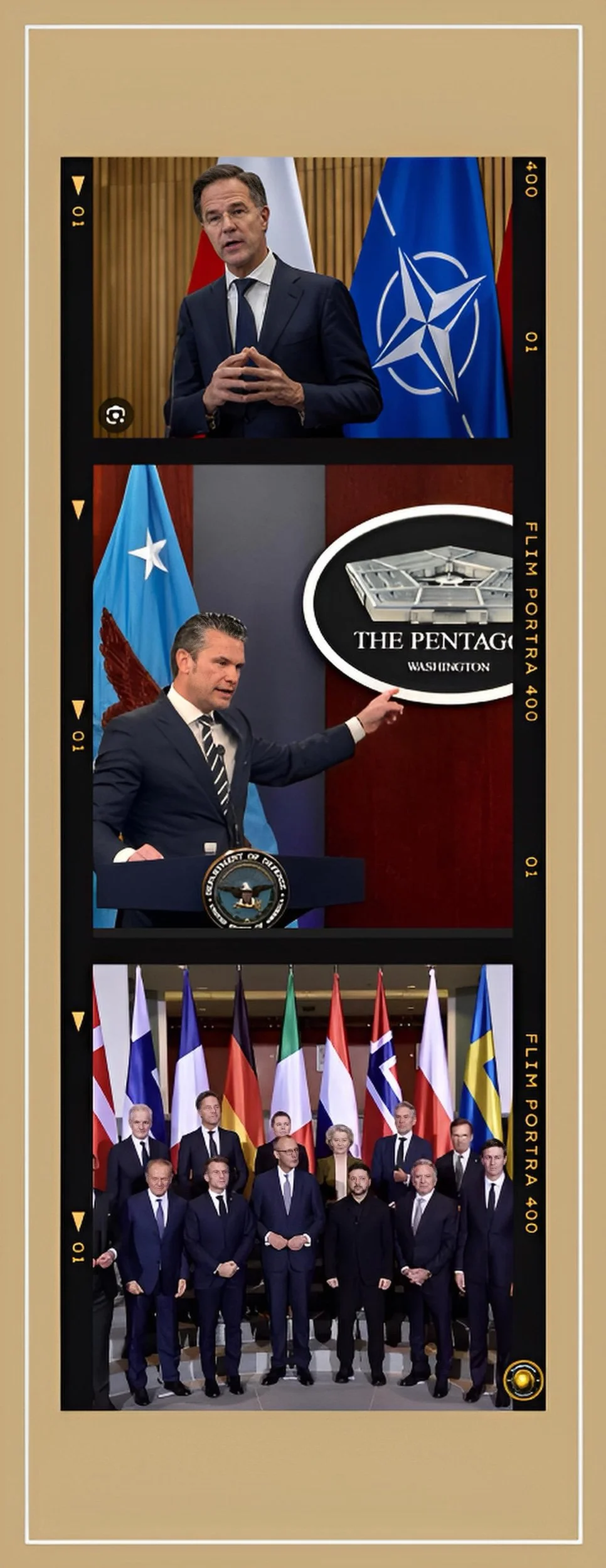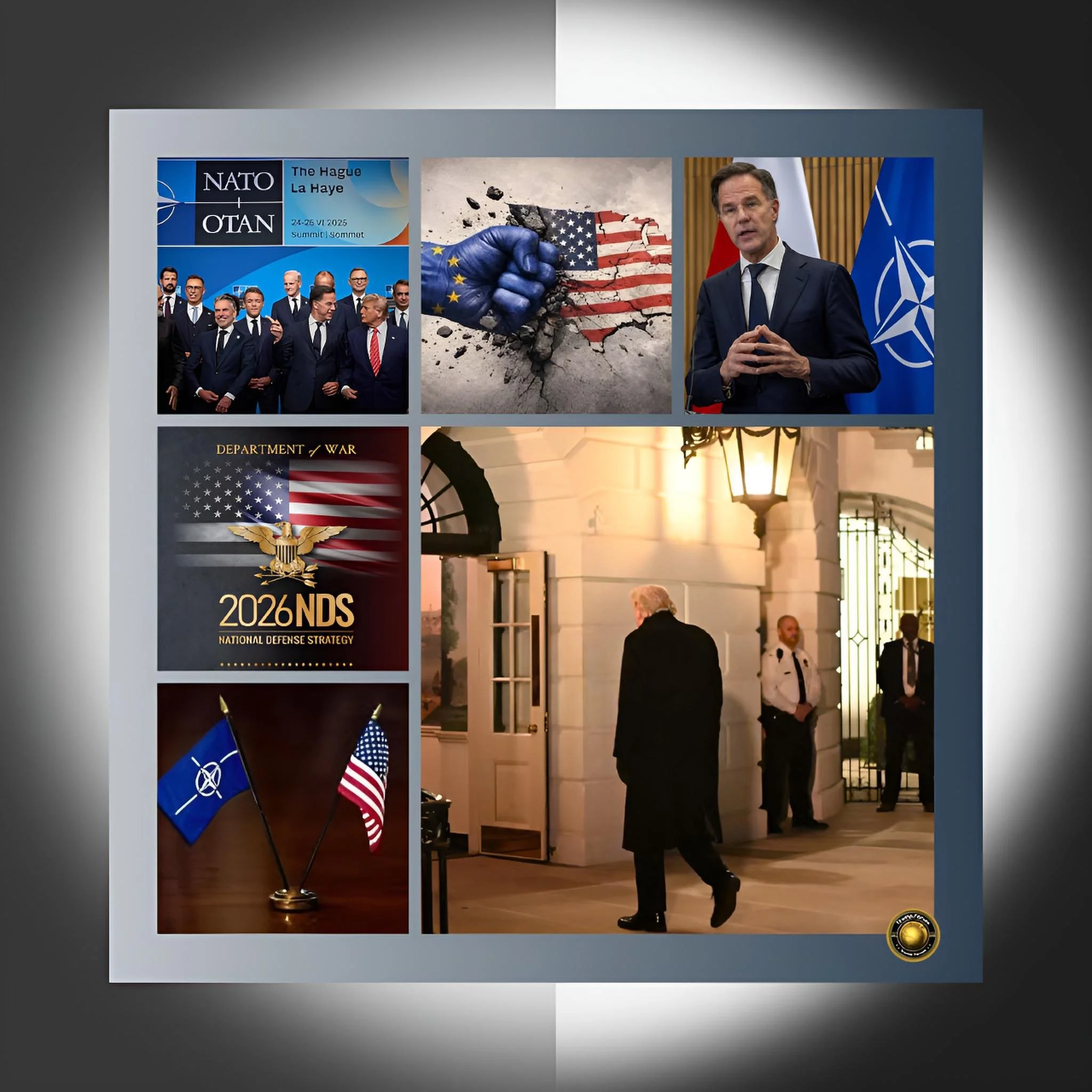
European Defense Autonomy and Transatlantic Dependency: Analyzing Mark Rutte’s Strategic Positioning in the Post-2025 NATO Framework
Executive Summary
NATO Secretary General Mark Rutte's recent assertions that Europe cannot defend itself without United States military guarantees represent a carefully calibrated diplomatic statement reflecting both geopolitical reality and institutional strategy.
FAF examines whether Rutte's pronouncements align with empirical European military capabilities, the Pentagon's 2026 Defense Strategy emphasis on allied burden-sharing, and the Trump administration's reorientation toward Western Hemisphere dominance through its Monroe Doctrine corollary.
The analysis concludes that Rutte's characterization of European vulnerability contains substantial technical accuracy regarding specific military domains while simultaneously serving his institutional interests in preserving NATO cohesion during a period of unprecedented transatlantic strain.
The evidence suggests that his position integrates three complementary motivations: legitimate strategic assessment, institutional self-preservation as the newly appointed NATO Secretary General, and alignment with a transatlantic defense-industrial complex that benefits from perpetuated European dependence.
Introduction
The geopolitical landscape of 2026 presents a historically unprecedented challenge to the North Atlantic Treaty Organization. The return to office of President Donald Trump, coupled with his explicit questioning of NATO's value and unilateral threats toward NATO member Denmark over Greenland, has destabilized assumptions that undergirded alliance cohesion for nearly seventy-five years. Simultaneously, NATO Secretary General Mark Rutte has made increasingly emphatic statements regarding European military incapacity, most notably declaring on January 26, 2026, that Europe cannot defend itself without the United States. This pronouncement warrants rigorous examination along three dimensions: factual accuracy regarding European military capabilities relative to Russian military capacity; alignment with the Pentagon's newly released 2026 National Defense Strategy; and potential institutional motivations underlying Rutte's strategic communications.
Understanding these intersecting dynamics requires synthesizing technical military analysis, policy document examination, and institutional analysis of NATO leadership positioning.
The Pentagon's 2026 Defense Strategy, released January 23, 2026, explicitly characterizes Russia as a "persistent but manageable" threat while simultaneously calling for substantial increases in allied burden-sharing.
This seemingly contradictory framing—downgrading Russian threat severity while demanding greater allied expenditure—illuminates the strategic reorientation occurring within the Trump administration's security apparatus. Furthermore, the formal introduction of the "Trump Corollary to the Monroe Doctrine" in the 2026 National Defense Strategy signals a fundamental reordering of American strategic priorities toward Western Hemisphere dominance, with European security assuming secondary importance relative to historical precedent.
The European Dependency Paradox: Contemporary Capabilities and Strategic Vulnerability
Empirical analysis of European military capabilities reveals a paradoxical profile: Europe possesses demonstrated superiority in several critical defense domains while simultaneously confronting decisive disadvantage in the conventional land warfare scenario most relevant to Russian threat dynamics.
The French Institute of International Relations (Ifri) assessment conducted in November 2025 synthesizes European and Russian military positions across four analytical domains: economic capacity, strategic-military capability, political-social resilience, and international alliance positioning.
Within the aerial domain, European NATO members maintain clear quantitative and qualitative superiority over Russian forces, reflecting decades of technological advancement and operational doctrine development under American tutelage. European naval capabilities similarly demonstrate allied advantages across surface warfare, submarine operations, and power projection capabilities.
In cyber warfare, space operations, and emerging domains of automated defense systems, European NATO participants retain competitive positioning. The Ifri assessment explicitly confirms that Europe possesses the requisite "economic means, military capabilities, and technological expertise to face Russia by 2030, provided they demonstrate the political will to do so."
Conversely, in the terrestrial domain most directly relevant to Russian strategic interest and NATO's exposed eastern flank, Russia maintains "a decisive advantage in terms of mass, firepower, mobilization capacity and tolerance for attrition."
The Russian approach to warfare, refined through four years of attritional conflict in Ukraine, demonstrates sophisticated capacity for sustaining wave-upon-wave offensive operations coupled with explicit strategic tolerance for enormous casualty figures. European military structures, by contrast, have experienced organizational decline through decades of defense budget reductions following the Cold War's conclusion.
European ground forces operate at significantly lower numerical scales than Russian comparable formations; European personnel recruitment faces acute shortages limiting force expansion; and European ammunition production, historically outsourced to American manufacturers, remains insufficient for rapid replenishment in sustained conflict scenarios.
The critical vulnerability emerges not in conditions of gradual mobilization and planned conflict but rather in the opening seventy-two hours of potential Russian aggression. Multiple military analysis frameworks indicate that while European NATO allies could theoretically mobilize sufficient conventional capacity within 5-10 years to achieve meaningful defensive positioning, the immediate operational window exposes catastrophic disadvantage.
The CSIS analysis of NATO's eastern flank emphasizes that "without massive support from the United States, maintaining European air superiority would require addressing deficits in terms of stocks, integrated air and missile defense, and capabilities to neutralize enemy air defenses." Moreover, Europe remains almost entirely dependent upon American strategic airlift capacity—the capability to rapidly transport significant military formations across continental distances.
The American inventory of C-17 Globemaster strategic transport aircraft remains the only platform capable of deploying fully-equipped heavy mechanized formations. Europe possesses no comparable capability independent of American provision.
These technical realities undergird Rutte's assertions regarding European dependence: the statement contains substantial accuracy regarding specific military domains and temporal scenarios.
European capacity to defend itself against Russian conventional military aggression exists as a theoretical proposition within five-to-ten year planning horizons but confronts immediate vulnerability in scenarios of sudden aggression. This technical vulnerability interacts with political vulnerability flowing from NATO's credibility dependence on American strategic commitment.
As Ifri analysts note, "currently, the American, French and British deterrent postures have the effect of protecting Europe from Russian nuclear intimidation and blackmail. However, should the credibility of the United States' extended deterrence be seriously undermined or fail, Europe would suffer from a strategic imbalance with Russia."
The Pentagon Strategy 2026 and Burden-Sharing Reorientation
The Pentagon's 2026 National Defense Strategy represents the first comprehensive strategy document issued under the Trump administration's second presidency.
Across its 34 pages, the strategy articulates a fundamental reordering of defense priorities that simultaneously downplays certain historical threat assessments while demanding substantially increased contributions from allied nations.
This reorientation directly influences Rutte's strategic positioning and creates institutional pressure toward the specific messaging he has recently articulated.
The strategic document characterizes Russia as constituting "a persistent but manageable threat to NATO's eastern members for the foreseeable future," a formulation that marks significant language modification from predecessors' more emphatic threat characterizations.
This framing creates strategic space for the administration to simultaneously pressure European allies toward enhanced defense expenditures while reserving the option to substantially reduce American force presence in Europe should political considerations favor such reduction.
The strategy explicitly instructs that "as American forces concentrate on defending the homeland and the Indo-Pacific, our allies and partners in other areas will assume primary responsibility for their own defense, with essential but more limited backing from American forces."
Critically, the strategy explicitly frames allies' burden-sharing not as "a favor to Americans but for their own interests." This rhetorical formulation shifts the burden-sharing conversation from alliance solidarity toward narrower national interest calculation. It thereby creates diplomatic space for the Trump administration to justify withdrawal of American security guarantees should allies prove insufficiently responsive to American demands regarding defense spending, geopolitical alignment, or other policy preferences.
The NATO 5% of GDP defense spending commitment achieved at the June 2025 NATO Summit in The Hague represents the Pentagon strategy's most significant institutional implementation. Rutte personally negotiated this commitment directly with President Trump, subsequently framing the achievement as demonstrating European responsiveness to American demands.
The 5% figure divides into 3.5% for core military spending and 1.5% for defense-related infrastructure, cyber security, and civil resilience. This commitment, if honored, would constitute a historically unprecedented sustained increase in European military expenditure, potentially delivering approximately €254 billion in additional annual defense investment by 2035.
The commitment, however, remains conditional upon allied political capacity to persuade domestic electorates to accept sustained defense budget elevation during periods of economic constraint and competing social spending demands.
The Trump Corollary to the Monroe Doctrine and Strategic Hemispheric Reorientation
The 2026 National Defense Strategy formally introduces and explicitly endorses the "Trump Corollary to the Monroe Doctrine," a doctrinal formulation initially articulated in the Trump administration's November 2025 National Security Strategy.
This corollary represents far more than rhetorical flourish; it signals fundamental strategic reorientation consistent with Trump administration statements regarding acquisition of Greenland, the Panama Canal, and the "Gulf of America" (the administration's renamed designation for the existing Gulf of Mexico).
The Trump Corollary explicitly commits the United States to "restore American military dominance in the Western Hemisphere" and to "deny non-Hemispheric competitors the ability to position forces or other threatening capabilities, or to own or control strategically vital assets, in our Hemisphere." In practical terms, this doctrine extends American security interests into Central and South America, the Caribbean basin, the Arctic regions encompassing Canada and Greenland, and the maritime approaches to North America.
The doctrinal formulation explicitly identifies China, Russia, and Iran as "extra-hemispheric competitors" whose activities or positioning the United States commits to preventing.
The hemispheric reorientation directly reduces American strategic bandwidth available for European security commitments. As American military capacity redirects toward hemispheric defense and Indo-Pacific competition with China, the logical consequence comprises reduced force presence available for European deployment.
The strategy document itself acknowledges this reorientation: "American forces will prioritize protecting the homeland and Western Hemisphere" with secondary focus on "the Indo-Pacific." European security explicitly emerges as tertiary priority in this revised strategic architecture.
This hemispheric reorientation additionally explains Rutte's successful negotiation of the Greenland Arctic security framework with Trump. Rather than opposing American interest in Arctic dominance (which the Corollary explicitly mandates), Rutte has positioned European and NATO interests as complementary to American hemispheric security objectives. By framing Arctic security as collective NATO responsibility requiring allied burden-sharing, Rutte has transformed a potential crisis into apparent cooperation.
The framework agreement negotiated at Davos in January 2026 commits NATO allies to enhanced Arctic defense investments while providing the Trump administration with a face-saving mechanism for retreating from explicit Greenland annexation threats. This represents sophisticated institutional diplomacy responsive to the new strategic priorities articulated in the 2026 Defense Strategy.
Geopolitical Scenarios and European Strategic Pathways
European security in the 2026-2035 timeframe confronts multiple possible futures, each carrying dramatically different implications for the validity of Rutte's assertions regarding European dependence.
Scenario One posits continuation of NATO cohesion coupled with successful allied implementation of the 5% defense spending commitment.
Under this scenario, European military capabilities would gradually increase across multiple domains while the United States maintains committed Article 5 guarantees backed by forward-deployed forces. European ground capabilities would improve substantially; air defense systems would proliferate; ammunition production would expand; and strategic lift gaps would narrow through multinational initiatives.
Rutte's assertions regarding European dependence would retain validity for the 2026-2030 period but would gradually diminish through 2035 as accumulated investments materialized into operational capability. NATO cohesion under this scenario would depend critically upon Trump administration satisfaction with allied defense expenditure increases and American geopolitical objectives more broadly.
Scenario Two contemplates gradual American strategic withdrawal, either through explicit presidential decision or through administrative reorientation of forces toward hemispheric and Indo-Pacific priorities. The Pentagon has already initiated modest reductions in NATO command structure personnel participation. The strategy document provides institutional authorization for more substantial reductions justified through claims that allies must "assume primary responsibility" for European defense.
Under this scenario, European military dependence on American capabilities would accelerate as American force presence declined faster than European offset capabilities materialized. Russian incentive for aggressive action would increase as American commitment credibility eroded. This scenario represents the trajectory most consistent with Trump administration rhetoric and the Pentagon strategy's framing of allied responsibilities.
Scenario Three encompasses potential NATO crisis or partial institutional dissolution. This scenario, once regarded as inconceivable, has become strategically possible following Trump's explicit threats toward NATO member Denmark regarding Greenland. Under this scenario, allied consensus would fracture; American security guarantees would be explicitly withdrawn or rendered conditional upon geopolitical alignment with Trump administration preferences; and Europe would confront Russian strategic opportunity precisely when organizational cohesion had disintegrated.
The cost of this scenario would approximate, according to institutional analysis, that of Russian nuclear employment. The European security establishment increasingly recognizes this scenario's plausibility despite its historical novelty.
Scenario Four contemplates European strategic autonomy through accelerated development of independent defense capabilities and deterrent architecture. This pathway assumes NATO's continuation but with substantially reduced American participation, potentially accelerated French and British nuclear deterrent cooperation, and European command structure development replacing American equivalents. Multiple analyses indicate this pathway remains viable within 5-10 year timeframes for limited defensive scenarios (such as defense of Baltic NATO members against Russian conventional aggression), but requires sustained political commitment to defense expenditures during economically constrained periods.
This scenario would ultimately render Rutte's assertions regarding fundamental dependence obsolete, though the transition period would exhibit the vulnerabilities he has emphasized.
Mark Rutte's Institutional Positioning and Strategic Motivations
Understanding the accuracy and implications of Rutte's statements regarding European dependence requires analysis of his institutional positioning and strategic motivations. Rutte assumed the NATO Secretary General position in October 2025 after serving as Dutch Prime Minister for twelve years.
His appointment required negotiation with all thirty-two NATO members, including overcoming resistance from Hungarian Prime Minister Viktor Orbán and Turkish President Recep Tayyip Erdoğan. This negotiation process immediately positioned Rutte as an accomplished institutional navigator capable of managing diverse alliance interests.
Rutte's subsequent diplomatic success during the January 2026 Greenland crisis substantially strengthened his institutional position. As other NATO leaders engaged in public criticism of Trump administration intentions—particularly French President Emmanuel Macron's direct characterization of Trump as a "bully"—Rutte maintained diplomatically sophisticated engagement that kept American attention focused on NATO cooperation.
Analysts have explicitly characterized Rutte as the "Trump Whisperer," referring to his apparent capacity to influence presidential decision-making through flattery, strategic alignment, and careful dialogue management.
At the June 2025 NATO Summit, Rutte referred to Trump as "daddy" in characterizing global dispute resolution, a formulation Trump subsequently quoted approvingly. This diplomatic approach contrasts sharply with the more confrontational posture adopted by other European leaders and appears substantially more effective in maintaining Trump administration engagement with NATO.
Rutte's successful defusing of the Greenland crisis through negotiation of an Arctic framework agreement provides institutional evidence supporting his claims regarding European military necessity for American alliance participation.
By positioning enhanced Arctic security as a collective NATO responsibility requiring all allies to increase defense investment and capability development, Rutte has simultaneously implemented the Pentagon's burden-sharing strategy, enhanced his own institutional credibility, and provided Trump administration with face-saving diplomatic exit from explicit annexation demands.
This represents extraordinarily sophisticated institutional diplomacy executed at the precise moment when NATO's institutional viability confronted unprecedented challenge.
However, Rutte's institutional position simultaneously creates incentive for strategic messaging that emphasizes European dependence upon the American alliance.
As NATO Secretary General dependent upon maintaining unity within an alliance increasingly fractured by divergent threat perceptions and burden-sharing disputes, Rutte benefits institutionally from messaging that reinforces alliance necessity.
If European nations believed themselves capable of meaningful independent defense, pressure would increase for independent European security architecture, potentially diminishing NATO's institutional role and Rutte's authority as its principal officer.
Conversely, by emphasizing European military inadequacy, Rutte reinforces the proposition that NATO—and American participation within it—remains indispensable for European security.
The Defense Industrial Nexus and European Burden-Sharing
The European defense spending commitment, if realized, would constitute a historically unprecedented injection of capital into defense sectors.
The €254 billion incremental annual defense investment between current 2024 levels and the 3.5% 2035 target would generate extraordinary opportunities for defense contractors, both American and European. Rutte has explicitly called for European defense firms to "produce more at lower prices" while simultaneously emphasizing the necessity of reviving European defense industrial capacity.
American defense contractors have already benefited substantially from European rearmament. In 2024 alone, NATO allies purchased approximately $21 billion in defense equipment from American firms, according to NATO institutional analysis.
This market dynamic creates structural alignment between Rutte's institutional interests, American defense industrial interests, and European defense expenditure commitments. By emphasizing European dependence upon American military technology and guarantees, Rutte simultaneously reinforces the case for European procurement of American defense systems.
The transatlantic defense industrial relationship accordingly represents neither purely European dependence nor American exploitation but rather mutual structural interdependence through defense procurement relationships and military-to-military cooperation.
The European defense industrial base remains substantially "hollowed out," in Rutte's explicit characterization, relative to Cold War-era production capacity.
European allies have increasingly turned to non-NATO sources, particularly South Korea, for defense equipment when European firms could not meet production demand. Private capital increasingly finances European defense capacity expansion, according to recent institutional analysis.
Deutsche Bank executives have explicitly identified defense sector financing as a growth opportunity attracting institutional investment. This defense-industrial renaissance, while genuinely necessary for European capability development, simultaneously creates structural incentives for perpetuated alliance integration with the United States through defense procurement linkages and military-to-military cooperation.
Conclusion
Accuracy, Institutional Interest, and Strategic Futures
Mark Rutte's assertions that Europe cannot defend itself without the United States contain substantial technical accuracy regarding specific temporal and military domain parameters, particularly regarding the opening seventy-two hours of potential Russian conventional military aggression.
European capabilities in air, naval, cyber, and space domains demonstrate competitive positioning relative to Russian equivalents; however, European ground warfare capacity, strategic lift capability, precision strike capacity, and nuclear deterrent credibility remain substantially dependent upon American provision and guarantees.
The accuracy of these assertions coexists, however, with institutional incentive for Rutte to emphasize European dependence given his role as NATO Secretary General. His diplomatic success in managing the Trump administration's Greenland ambitions through commitment to enhanced Arctic security investment has simultaneously implemented the Pentagon's 2026 Strategy burden-sharing requirements while strengthening his own institutional credibility.
The positioning of enhanced European defense expenditure as collective NATO responsibility requiring sustained American engagement reinforces alliance necessity and his own institutional authority.
The Pentagon's 2026 Defense Strategy legitimately emphasizes allied burden-sharing in response to historical patterns of European reliance upon American security provision.
However, the strategy's characterization of Russia as "manageable" threat while demanding increased allied expenditure creates ambiguity regarding American commitment to European defense during periods of Trump administration strategic distraction with hemispheric or Indo-Pacific concerns.
The Trump Corollary to the Monroe Doctrine explicitly signals hemispheric strategic reorientation that potentially reduces American bandwidth for European security commitments.
European security futures across 2026-2035 remain contingent upon American strategic commitment, NATO alliance cohesion, European political capacity to sustain defense expenditures during periods of economic constraint, and Russian strategic decision-making regarding Ukraine and European aggression.
Rutte's characterization of European dependence represents neither cynical institutional manipulation nor objective technical assessment alone, but rather sophisticated institutional navigation of genuinely complex strategic circumstances in which technical military realities, institutional incentives, and geopolitical uncertainties generate multiple possible futures.
The challenge confronting European leadership comprises developing independent capability while sustaining alliance structures that remain, for the immediate 2026-2035 period, strategically necessary.