IndiGo Flight Cancellations in India: Comprehensive Analytical Report
Executive Summary
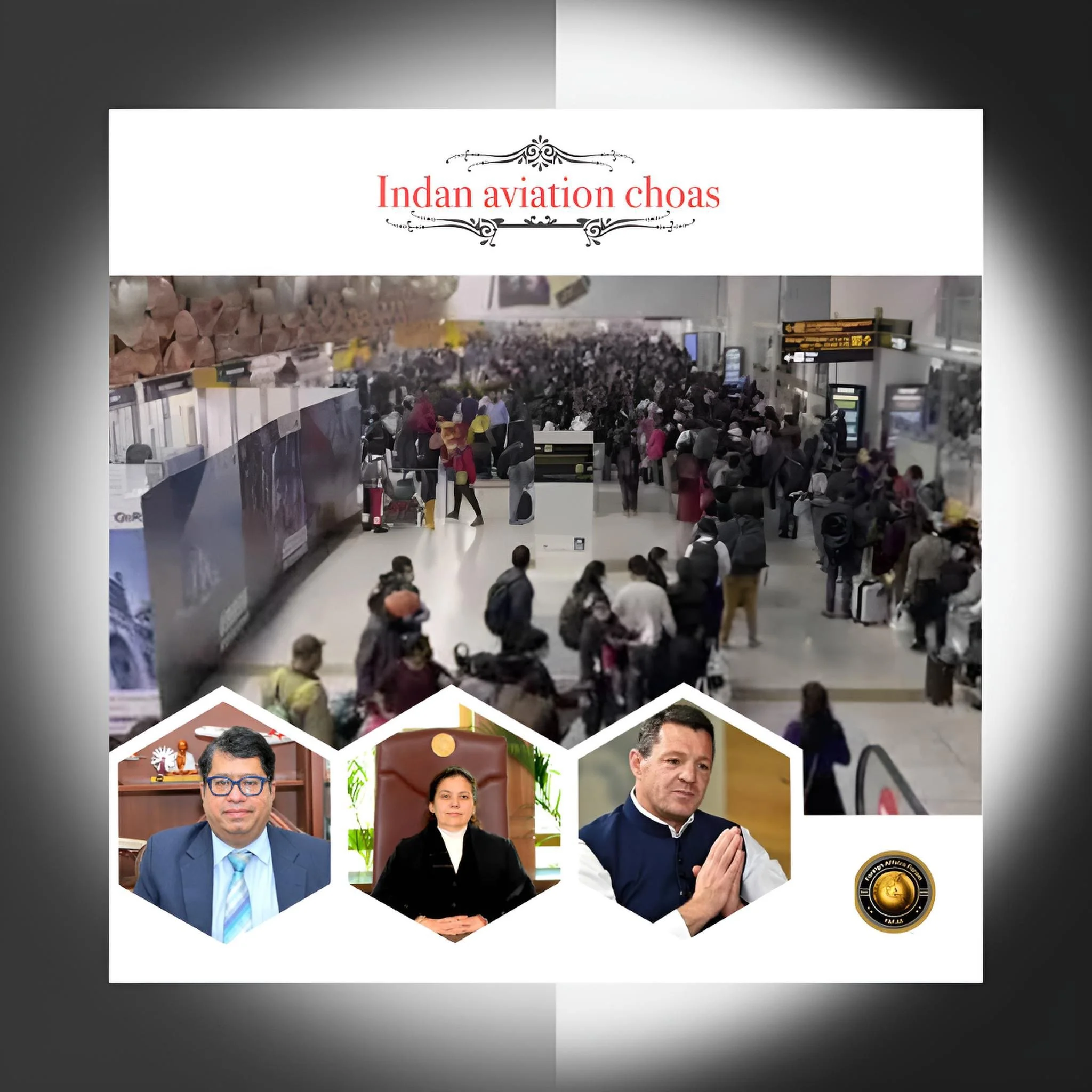
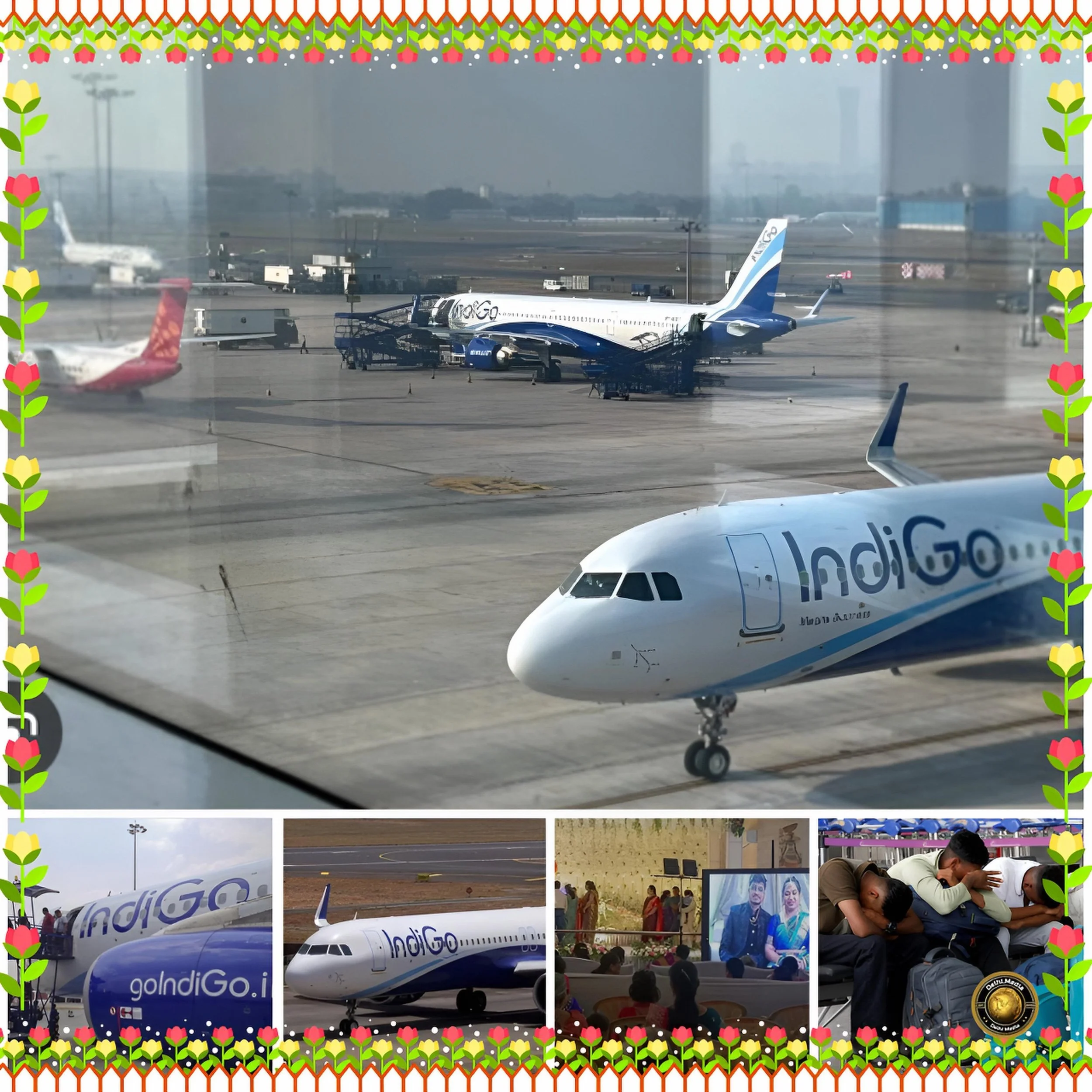
India’s largest airline, IndiGo (InterGlobe Aviation Limited), has faced an unprecedented operational crisis beginning December 2, 2025, characterized by the systematic cancellation of over 1,600 domestic and international flights across five days and a collapse in on-time performance to critically low levels.
This disruption represents the most severe operational breakdown in the airline’s recent history and has had a measurable impact on the company’s equity valuation in Indian financial markets.
The crisis originated primarily from the implementation of the second phase of revised Flight Duty Time Limitation (FDTL) regulatory norms on November 1, 2025, which fundamentally restructured pilot and crew scheduling requirements, compounded by ancillary technical and operational challenges.
Chronology and Factual Details of the Crisis
Initial Disruptions and Escalation
The IndiGo operational crisis commenced on December 2, 2025 (Tuesday), when the airline canceled more than 100 flights whilst simultaneously reporting widespread delays across major Indian aviation hubs, including Delhi, Mumbai, Hyderabad, and Bengaluru.
This initial disruption was sufficiently severe that the airline’s on-time performance plummeted to 35 percent—an extraordinary deterioration from the customary 60+ percent baseline achieved by competitive carriers.
December 3, 2025 (Wednesday)
The operational situation intensified substantially. According to government data and DGCA reporting, the airline witnessed further deterioration of its operational metrics.
The on-time performance collapsed further to 19.7 percent on December 4, representing a catastrophic operational failure for an airline that has historically positioned itself as a market leader in punctuality and reliability.
December 4, 2025 (Thursday)
The crisis reached its zenith. IndiGo canceled over 550 flights across the Indian aviation network, with the geographic distribution of cancellations revealing the systematic nature of the following disruptions
(1) Delhi airport accounted for 172 cancellations
(2)! Mumbai recorded 118 cancellations
(3) Bengaluru witnessed 100 cancellations
(4) Hyderabad experienced 75 cancellations
(5) Kolkata reported 35 cancellations
(6) Chennai documented 26 cancellations
(7) Goa recorded 11 cancellations.
By December 5, 2025 (Friday)
Additional cancellations persisted, with reports indicating that approximately 400 flights were canceled that day.
In aggregate, the five-day operational disruption exceeded 1,600 individual flight cancellations, an extraordinary figure for an airline that routinely operates approximately 2,300 flights daily.
November Disruption Context
The December crisis must be contextualized within the broader operational deterioration that commenced in November 2025.
During that month alone, IndiGo canceled 1,232 flights—approximately 40 flights per operational day, substantially exceeding the airline’s historical cancellation rates.
The composition of November cancellations revealed the underlying causal mechanisms
(1) 755 cancellations arose directly from staff shortages and crew constraints.
(2) 258 resulted from airport restrictions and airspace limitations.
(3) 92 were attributable to Air Traffic Control (ATC) system failures.
(4) 127 were classified as miscellaneous operational factors.
Root Causation Analysis
Flight Duty Time Limitation Regulatory Reform (Primary Causal Factor)
The predominant causal mechanism precipitating the operational crisis originates from the implementation of the second phase of India’s revised Flight Duty Time Limitation (FDTL) regulations on November 1, 2025.
These regulatory amendments, promulgated by the Directorate General of Civil Aviation (DGCA), fundamentally restructured the operational parameters governing pilot and flight crew scheduling throughout India’s aviation sector.
The Regulatory Transformation:
The FDTL revisions represented a comprehensive recalibration of pilot fatigue management, aligned with international standards promulgated by the International Civil Aviation Organization (ICAO) and European Aviation Safety Agency (EASA).
The specific regulatory modifications implemented included
Weekly Rest Period Expansion
The mandatory weekly rest entitlement for pilots increased from 36 hours to 48 consecutive hours, rendering it substantially more difficult for airlines to maintain continuous night-oriented operational rosters.
Night Duty Window Redefinition
The regulatory definition of night duty was extended from the previous window of 00:00–05:00 hours to the expanded window of 00:00–06:00 hours, thereby encompassing the complete “Window of Circadian Low” (WOCL)—the period of maximum circadian depression and attendant pilot fatigue risk.
Night Landing Restrictions
Particularly consequential for IndiGo’s operational model, the maximum number of night landings permitted per pilot was reduced from 6 per roster period to 2.
This reduction directly constrained the airline’s capacity to operate high-frequency nocturnal routes, which constitute a significant component of IndiGo’s competitive positioning.
Cumulative Duty Hour Limitations
The maximum cumulative duty hours permissible within fourteen days was reduced from 100 hours to 95 hours, thereby extending the temporal span required to accumulate equivalent flying hours.
Rest Period Requirements
The mandatory rest period following night duty operations was increased from a minimum of 10 hours to 12 hours, or to a period equivalent to the prior duty time, whichever is more restrictive.
IndiGo’s Inadequate FDTL Regulatory Preparedness
The fundamental concern surrounding IndiGo’s apparent indifference toward rigorous implementation of Flight Duty Time Limitations necessitates examination through organizational pathology and strategic dysfunction frameworks.
The airline’s operational collapse represents not merely an isolated logistical failure but rather a manifestation of systemic organizational dysfunction in which financial imperatives superseded regulatory compliance and operational risk management.
Phase Two FDTL regulations
Indigo despite possessing nearly two years of advance notification regarding the November 1, 2025, implementation of Phase Two FDTL regulations, IndiGo management deliberately maintained what scholars term a “lean manning strategy”—operationalizing hierarchical organizational structures wherein budgetary optimization and short-term profitability maximization were institutionalized as corporate priorities surpassing long-term operational resilience and regulatory foresight.
The Federation of India Pilots and the Airline Pilots’ Association documented that IndiGo simultaneously implemented multiple cost-containment mechanisms, including outright hiring freezes, pilot compensation freezes characterized as “cartel-like behaviour,” and deliberate non-poaching agreements with competing carriers—all undertaken despite explicit regulatory foreshadowing of heightened crew requirements.
The DGCA’s formal determination that IndiGo’s operational failures resulted from “misjudgement and planning gaps” represents an institutional indictment of management competence; such terminology, whilst diplomatically circumspect, fundamentally conveys regulatory recognition that IndiGo possessed both the informational prerequisites and temporal capacity to implement proactive mitigation strategies yet systematically declined to do so.
This organizational behavior reflects what organizational theorists recognize as follows.
Agency cost manifestation
(1) Separated management and ownership structures.
(2) Combined with performance incentive misalignment
(3) Precipitate systematic subordination of enterprise-wide risk management to near-term financial metrics.
(4) Above all, ultimately engendering catastrophic operational failure when environmental constraints render continued cost-minimization strategies operationally untenable.
The epistemological foundations underlying IndiGo’s apparent regulatory negligence merit examination through strategic management and organizational culture theoretical frameworks, which elucidate how dominant market positioning and historical operational success frequently generate institutional complacency and what organizational scholars denominate “cognitive capture”—the psychological phenomenon wherein accumulated organizational success generates overconfidence regarding management’s predictive acuity and strategic decision-making quality.
IndiGo’s market dominance (commanding approximately 60 percent of India’s domestic aviation capacity) coincided with a corporate culture institutionally predisposed toward operational risk-taking, wherein management demonstrated recurrent presumptiveness regarding its capacity to operate at industry margins substantially below competitors’ whilst maintaining service quality parity.
Evidence suggests that rather than implementing timely crew augmentation, IndiGo management consciously deferred compliance preparation, potentially instrumentalizing the resulting operational crisis as leverage to pressure regulators toward FDTL norm relaxation—a theory substantiated by the Airline Pilots’ Association’s explicit allegation that IndiGo engaged in “arm-twisting the regulator” and permitted operational deterioration to worsen “in a way that increased pressure on the government for an extension or relaxation of rules.”
The airline’s internal communications, as reported by organizational insiders, reveal that senior management maintained awareness of impending crew constraints yet responded primarily through blame-displacement rather than proactive mitigation, characterizing the December crisis as arising from “multitude of unforeseen operational challenges” rather than organizational culpability—a rhetorical posture that scholarly analysis recognizes as characteristic of organizational dysfunction wherein responsibility attribution becomes institutionally distorted through defensive rationalization mechanisms.
Consequently, IndiGo’s apparent cavalier disregard for FDTL regulatory implementation represents not isolated managerial oversight but rather symptomatic manifestation of organizational pathology wherein market dominance, historical success, and misaligned incentive structures collectively generated systematic institutional blindness regarding operational constraints that became catastrophically salient only upon regulatory implementation.
Secondary Contributing Factors
Beyond the primary FDTL causation, several ancillary factors compounded operational difficulties:
Technical Glitches
IndiGo reported minor technology system failures contributing to operational disruptions. Additionally, ground-level software systems at major airports, particularly Delhi’s Terminal 1, experienced functionality degradation, further constraining coordination capacity.
Winter Schedule Transition
The November-to-December seasonal transition necessitated winter timetable implementations, introducing complex roster adjustments precisely during the period when the FDTL regulatory changes were simultaneously being absorbed operationally.
Airport Infrastructure Congestion
Elevated passenger volumes during the post-festive travel season, combined with software glitches affecting airport operations at major hubs, created capacity bottlenecks that exacerbated flight delays and necessitated additional cancellations.
Airspace and ATC Limitations
Challenges in the Air Traffic Control system across multiple airports contributed additional operational friction, though these factors proved secondary to crew-related causes.
Regulatory Response and Recovery Timeline
DGCA Investigation and Directives
The Directorate General of Civil Aviation launched a formal investigation into operational disruptions on December 3, 2025, demanding that IndiGo provide comprehensive documentation explaining the sequence of events leading to the cancellations and delays, along with detailed mitigation plans.
On December 4, following an in-person management briefing, the DGCA issued specific directives.
Operational Reduction and Restructuring
IndiGo was directed to reduce flight operations commencing December 8, 2025, as a deliberate strategic measure to minimize disruptions whilst enabling crew and aircraft realignment.
Crew Recruitment Timeline
IndiGo was mandated to submit a detailed roadmap encompassing projected crew recruitment schedules aligned with aircraft deliveries, comprehensive crew training plans, roster restructuring methodologies, safety risk assessments, and specific mitigation measures.
Passenger Support Infrastructure
The DGCA identified that IndiGo’s passenger-handling workforce at major airport terminals proved inadequate to manage disruption-related crowding.
Consequently, the airline was instructed to urgently augment ground personnel and strengthen passenger support services at all affected terminals.
Regulatory Relief Measures
On December 5, 2025, the DGCA issued partial regulatory relief, permitting certain operational variations to FDTL provisions.
The regulator authorized IndiGo to continue operating with up to six night landings (rather than the mandated two) until February 10, 2026, providing the airline temporary operational flexibility whilst it pursued longer-term crew augmentation initiatives.
Airline Recovery Commitments
IndiGo formally committed to the DGCA that fully stable and normalized flight operations would be restored by February 10, 2026—approximately 9 weeks after the crisis began.
The airline indicated that disruptions would likely persist for an additional 2–3 days from the DGCA briefing date (December 4), meaning significant cancellations were anticipated through approximately December 6–7, 2025, before the systematic reduction phase commencing December 8 began yielding operational improvements.
Market Capitalization and Equity Price Impact
Stock Price Performance During Crisis Period
The equity market response to IndiGo’s operational crisis was immediate and substantial.
Shares of InterGlobe Aviation Limited, the listed parent company of IndiGo airline, experienced pronounced depreciation commencing December 3, 2025, and accelerating through the week.
Weekly Performance
December 3–4, 2025
IndiGo shares declined 3.4 percent on December 4 alone, reflecting market repricing of earnings prospects.
December 3–5, 2025 (Five Trading Days)
Cumulative share price depreciation reached 7–8 percent across the five-day trading window, translating to approximately 5 percent further deterioration beyond the initial decline.
December 5, 2025 (Friday)
Shares declined an additional 1.4 percent, reflecting persistent market concerns about operational resolution timelines.
As of December 5, 2025, InterGlobe Aviation shares closed at approximately Rs 5,367–5,400 (Indian Rupees), representing depreciation from the pre-crisis valuation in the Rs 5,800–5,900 range.
Broader Market Context
The equity market decline must be contextualized within broader market movements.
The BSE Sensex (Bombay Stock Exchange’s primary equity index) demonstrated minimal movement during the same period, declining only 0.1 percent.
Consequently, the IndiGo share price decline significantly exceeded the market-wide depreciation, indicating that the market attributed the equity decline to company-specific operational factors rather than macroeconomic headwinds.
52-Week Performance Context
Before the December 2025 crisis, IndiGo shares had appreciated significantly.
The stock stood at approximately Rs 6,225 in August 2025 (52-week high) and had corrected roughly 13 percent from that peak before the operational crisis.
The December crisis-induced declines represent an acceleration of this correction trajectory.
However, the stock remains substantially elevated relative to longer-term historical baselines (up approximately 26 percent over one year, 190 percent over three years, and 220 percent over five years).
Financial Market Implications and Outlook
Analyst Predictions and Target Price Adjustments
Global financial institutions have responded to the operational crisis with differentiated equity recommendations and target price revisions.
Citigroup Research
Citigroup has maintained a “Buy” equity rating on InterGlobe Aviation with a target price of Rs 6,500, implying approximately 20 percent upside from current levels (assuming Rs 5,400 basis).
The brokerage interprets the operational disruptions as transitory and expects normalization within approximately one month (by early January 2026).
Citigroup acknowledges near-term disruption risks but maintains confidence in the long-term operational recovery trajectory and the fundamental quality of IndiGo’s business model.
Morgan Stanley Research:
Morgan Stanley retained its “Overweight” equity rating whilst reducing its target price to Rs 6,540 from Rs 6,698 previously.
The brokerage emphasized rising cost pressures throughout India’s aviation sector, driven by tight capacity and multiple operational challenges.
Notably, Morgan Stanley reduced its earnings per share (EPS) estimates for fiscal years 2027 and 2028 by approximately 20% each, citing a materially softer profitability outlook.
However, the firm expects that fare increases across the industry will partially offset the elevated cost structure, limiting the downside to earnings.
Anand Rathi Research:
Anand Rathi initiated coverage on IndiGo in October 2025 with a “Buy” rating and a target price of Rs 7,000, implying approximately 30 percent upside from crisis-period valuation levels.
The firm characterizes any near-term correction as a buying opportunity for long-term investors, noting the fundamental robustness of IndiGo’s market position (60 percent domestic market share), limited competitive alternatives in India’s aviation market, and robust structural demand for air travel.
Fundamental Analysis Framework research ( FAF.ae)
Fundamental Analysis Framework (FAF) research, an investment arm of Foreign Affais Forum, predicated upon discernible technical patterns, resilient financial fundamentals, and commanding market dominance, substantiates a robust trajectory wherein InterGlobe Aviation’s equity valuation is poised to rebound decisively beyond the ₹7,000 threshold by mid-2026.
Investors may anticipate a Diwali windfall approximating ₹9,000–₹10,000 per share contingent upon the Nifty 50 index attaining the 30,000 milestone, with global analysts speculating upon prospective stock subdivision to enhance liquidity and accessibility.
Downside Risk Assessment
Global brokerages have identified specific downside risk scenarios that could precipitate further equity declines:
Sustained Operational Disruptions
If mass flight cancellations persist beyond the projected February 10, 2026, stabilization date, analysts project potential additional equity depreciation of approximately 16 percent from crisis-period lows.
Grounded Aircraft and Engine Issues
Protracted technical difficulties affecting the Airbus A320 fleet (IndiGo’s core aircraft type) could substantially extend operational recovery timelines.
Competitive Intensification
Rapid expansion by Air India (including its Vistara subsidiary), leveraging IndiGo’s operational difficulties, could permanently erode market share and pricing power.
Macroeconomic Demand Weakness
Softer consumer sentiment amid India’s economic pressures could reduce travel demand precisely when IndiGo is most vulnerable operationally.
Currency Headwinds
Depreciation of the Indian Rupee relative to the United States Dollar increases the cost basis for aircraft acquisitions, spare parts, and fuel procurement—all substantial expense categories for IndiGo.
Regulatory Escalation
Further regulatory interventions or enforcement actions by the DGCA could impose additional operational constraints beyond the current FDTL regime.
Comparative Industry Performance
The operational crisis has accentuated IndiGo’s performance deterioration relative to competing carriers.
During the December 2–4 period, when IndiGo’s on-time performance collapsed to 19.7–35 percent, competing carriers achieved substantially superior metrics:
Air India recorded 67.2 percent on-time performance, Air India Express achieved 79.5 percent, and SpiceJet achieved 82.5 percent.
This comparative deterioration has likely enabled competitors to capture marginal market share from passengers seeking operational reliability.
Conclusion
The IndiGo flight cancellation crisis of December 2025 represents a significant operational failure, fundamentally precipitated by inadequate preparation for the regulatory FDTL implementation, compounded by secondary technical and infrastructure challenges.
The airline canceled over 1,600 flights across five days, drew regulatory scrutiny, and precipitated measurable depreciation in equity markets.
However, the equity market response, whilst material (7–8 percent over five trading days), remains substantially more modest than might be anticipated for a company with an acknowledged operational crisis.
This comparative restraint reflects market confidence that IndiGo possesses the financial capacity and operational competence to remediate disruptions within the projected nine-week recovery timeline (through February 10, 2026).
Global brokerages maintain positive equity recommendations despite near-term operational challenges, viewing the December correction as an investment opportunity rather than a signal of fundamental deterioration in the company’s long-term competitive positioning.
The equity price impact is likely to persist at elevated depreciation levels through December 2025 and into January 2026, with recovery commencing upon visible evidence of normalization in operational metrics.
Should the airline successfully achieve the projected February 10 recovery timeline, equity valuations would likely recover toward pre-crisis levels and potentially exceed them as market participants recognize improved operational efficiency post-stabilization.
Conversely, any extension of the recovery timeline or indication of permanent fleet/crew capacity reductions would precipitate additional equity depreciation and downward target price revisions from global analysts.