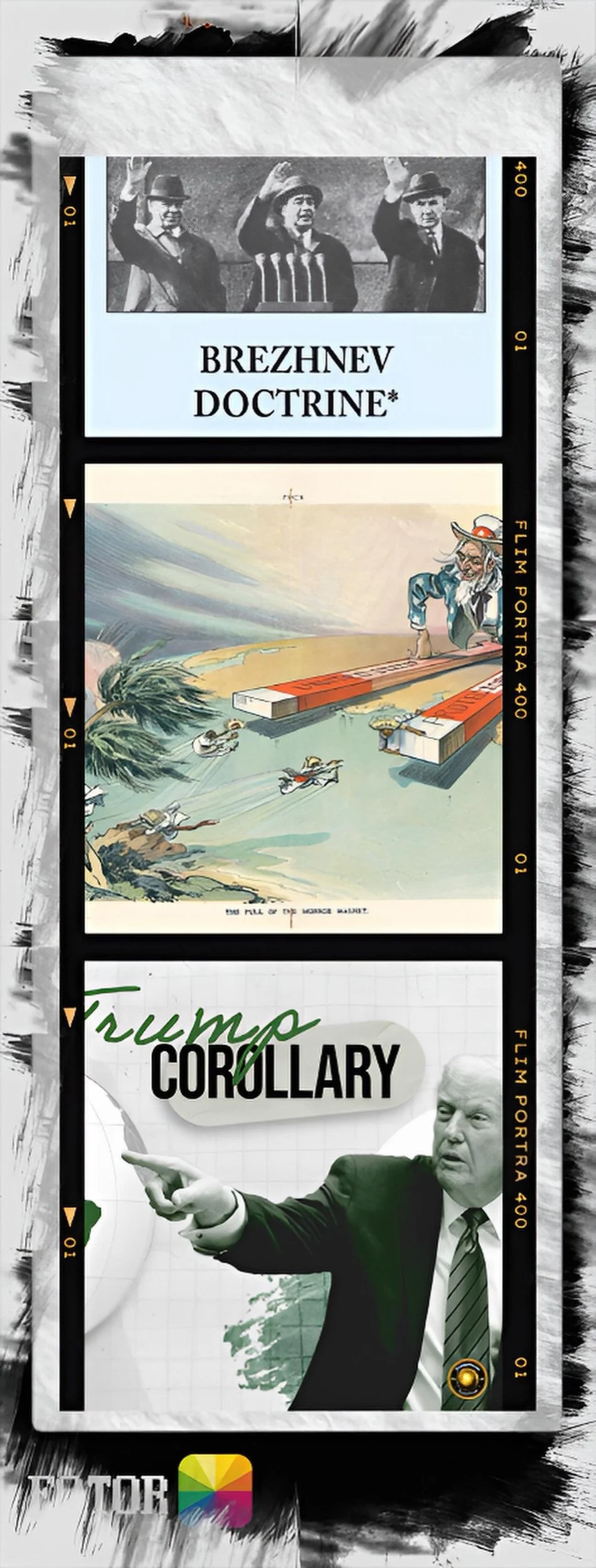
Brezhnev Doctrine and Trump Corollary: From Theory to Maduro's Capture and Hemispheric Annexation
EXECUTIVE SUMMARY
Spheres of Limited Sovereignty Moving from Doctrine to Direct Military Action
In 1968, the Soviet leader Leonid Brezhnev invaded Czechoslovakia and articulated a doctrine asserting that the sovereignty of socialist states was subordinate to Soviet-defined bloc interests.
For nearly six decades, this doctrine remained largely historical commentary.
In January 2026, however, the Trump administration had moved the Trump Corollary to the Monroe Doctrine from rhetorical assertion into direct military action and explicit territorial claims.
On January 3, 2026, the United States conducted a military raid on Venezuela, capturing President Nicolás Maduro and his wife through a special forces operation utilizing an experimental "discombobulator" weapon. The captured individuals now face criminal charges in New York.
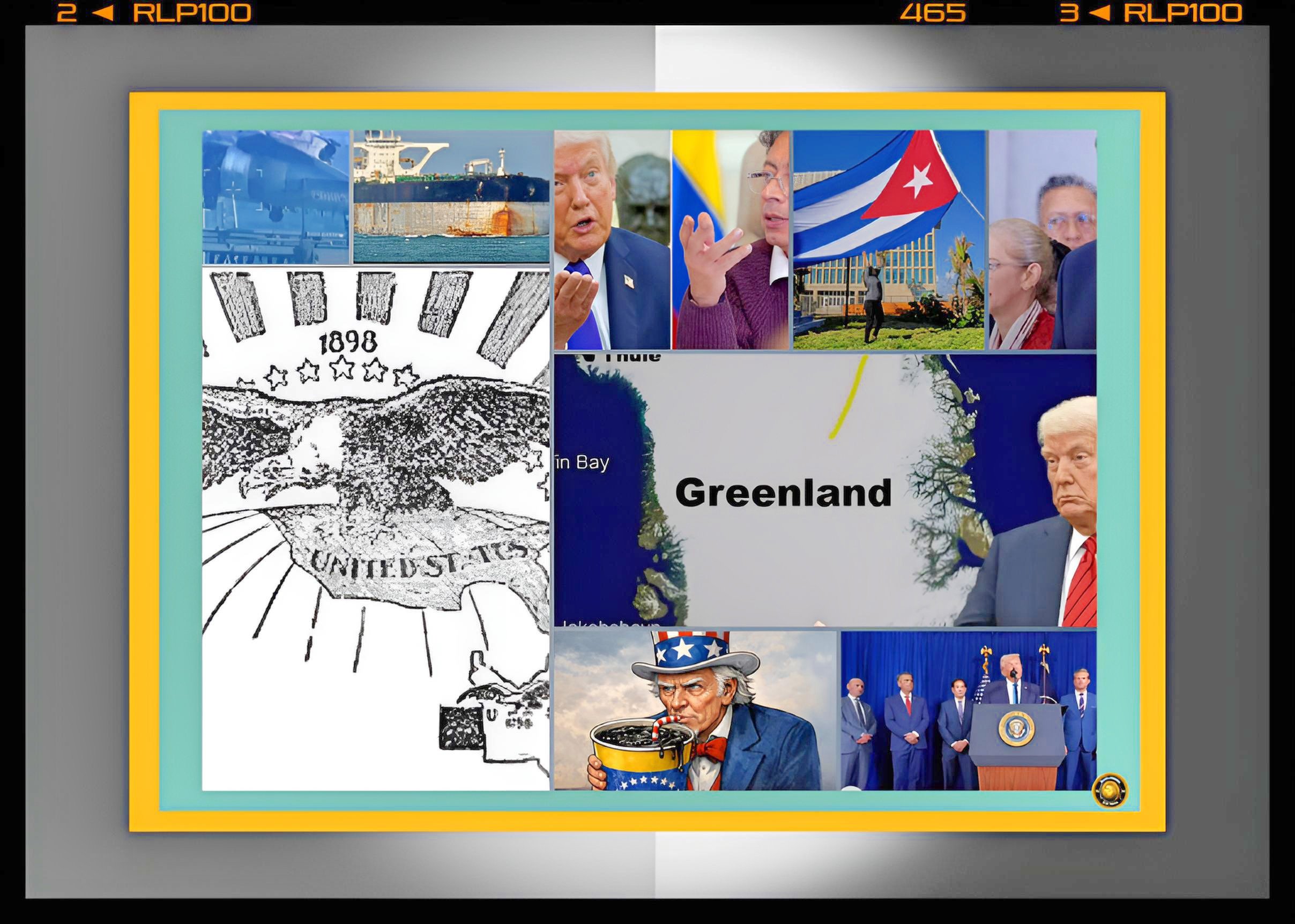
Simultaneously, the Trump administration has made explicit statements suggesting the annexation of Cuba, Colombia, Mexico, and Greenland—claiming these territories as vital to American hemispheric security and continental integrity.
On January 24, 2026, Trump threatened to impose 100 percent tariffs on Canadian goods if Canada pursued a free trade agreement with China, weaponizing economic coercion to enforce hemispheric compliance with American strategic directives.
These escalations transform the Trump Corollary from a policy document into a comprehensive program of military intervention, territorial acquisition, and economic coercion designed to achieve total American hegemony over the Western Hemisphere.
The structural parallels with the Brezhnev Doctrine are no longer merely theoretical: both doctrines have moved from articulation to enforcement through military force, both deny genuine sovereignty to neighboring states, both employ ideological justifications to mask territorial and strategic ambitions, and both demonstrate that great powers, when reasserting dominance, will employ escalating instruments of coercion against states and peoples within their claimed spheres.
FAF examines how the Trump Corollary has evolved from doctrine to direct military action, analyzes the strategic implications of explicit annexation rhetoric, and assesses the consequences for the international legal order.
INTRODUCTION: DOCTRINES TRANSFORMING INTO MILITARY OPERATIONS
The distinction between doctrinal assertion and operational implementation is fundamental to understanding international affairs. Many great powers articulate doctrines claiming spheres of influence, but few move systematically from articulation to enforcement through military force. The Soviet Union under Brezhnev crossed this threshold by invading Czechoslovakia in 1968.
The Trump administration has now crossed a similar threshold with extraordinary rapidity and scope. What distinguishes the current moment is not merely the articulation of hegemonic claims—which has persisted throughout American history—but rather the conjunction of military operations, explicit annexation rhetoric, economic coercion, and the apparent willingness to override established international legal norms in pursuit of hemispheric dominance.
The Maduro capture represents a qualitative escalation beyond the Trump Corollary as articulated in the January 23, 2026, National Defense Strategy. That strategy outlined principles of hemispheric dominance and denial of Chinese presence.
The January 3 raid translated those principles into direct military action inside a sovereign state, resulting in the capture and removal of a sitting head of government. This is not an intervention justified by counterterrorism or humanitarian concerns. This is regime change through military force, justified under the doctrine of hemispheric security.
The subsequent rhetoric regarding the annexation of Cuba, Colombia, Mexico, and Greenland represents a further escalation. Where the Brezhnev Doctrine asserted limited sovereignty, the Trump administration is asserting outright territorial claims.
Where the Brezhnev Doctrine justified intervention to prevent ideological deviation, the Trump administration justifies intervention and territorial acquisition to prevent Chinese penetration and to consolidate American control over strategic geography and resources. The 100 % tariff threat against Canada represents the integration of economic warfare into the enforcement mechanism, weaponizing trade policy to coerce alignment with American directives.
Understanding these developments requires examining how doctrines of regional hegemony translate from rhetorical assertion into military operations, how great powers escalate from justified intervention to territorial annexation, and how the international system responds when a significant power explicitly rejects the post-1945 prohibition on territorial conquest.
HISTORY: THE EVOLUTION OF HEMISPHERIC DOCTRINES AND BREZHNEV'S MODEL
The Trump Corollary to the Monroe Doctrine did not emerge from a vacuum. It represents a reactivation of long-dormant American hemispheric traditions, adapted to contemporary challenges and great-power competition with China.
The original Monroe Doctrine, announced by President James Monroe in 1823, asserted that the Western Hemisphere was within the American sphere of influence and that European powers should not attempt further colonization or intervention in the Americas. Throughout the nineteenth and twentieth centuries, the United States invoked the Monroe Doctrine to justify military interventions, occupations, and regime changes throughout Latin America and the Caribbean. The doctrine became synonymous with American assertion of hemispheric dominance.
During the Cold War, the Monroe Doctrine competed with the containment doctrine as a justification for American interventionism. The United States justified interventions in Guatemala (1954), Cuba (Bay of Pigs, 1961), the Dominican Republic (1965), Nicaragua (1980s), and Grenada (1983) through reference to both containment and hemispheric security. The doctrine provided a legitimating framework for American military and political intervention throughout the hemisphere.
The post-Cold War period saw the Monroe Doctrine fade into the background as American attention focused on the Middle East, South Asia, and Europe. The doctrine was invoked occasionally but lacked the operational urgency and resources it had commanded during earlier periods.
China's rising influence in Latin America, the emergence of anti-American regimes in Venezuela and Nicaragua, and what American strategists perceived as the erosion of American hemispheric dominance led to the perception that the Monroe Doctrine required reinvigoration.
The Trump Corollary, as articulated in the 2026 National Defense Strategy, explicitly resurrects Monroe Doctrine logic while adapting it to contemporary circumstances. The Brezhnev Doctrine provided a model: an explicit codification of regional hegemony, justified through reference to bloc interests and ideological correctness, and enforced through military force and the threat of invasion.
The Brezhnev Doctrine, articulated in November 1968, asserted that when "hostile forces" threatened to move a socialist state away from correct ideological orientation, the Soviet Union and its allies possessed the right and responsibility to intervene militarily.
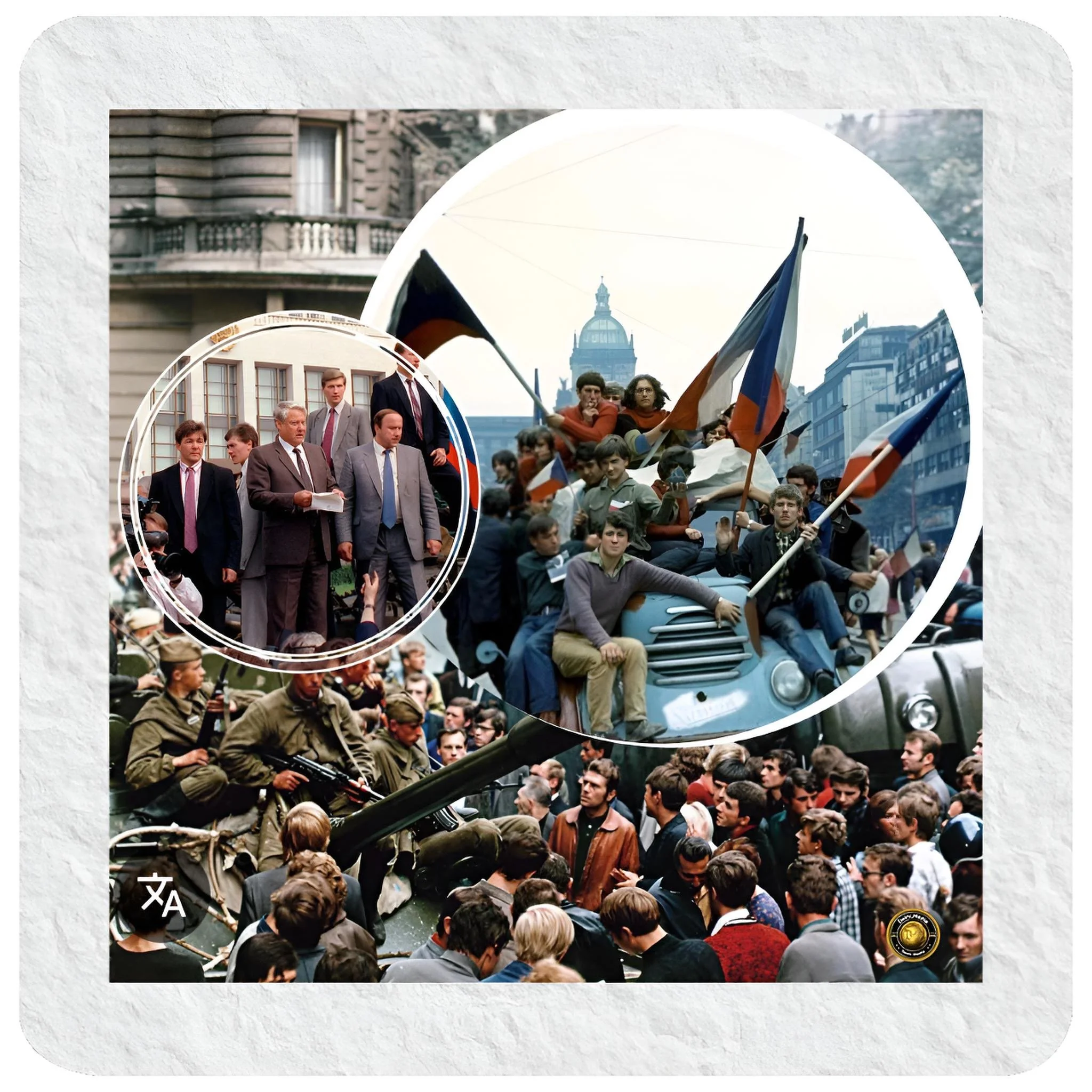
This was framed not as imperialism but as socialist internationalism—the duty of the world's first socialist state to protect the achievements of socialism globally. The doctrine emerged from the Soviet invasion of Czechoslovakia on August 20-21, 1968, when Soviet forces and allied Warsaw Pact troops invaded to suppress the Prague Spring and prevent Czechoslovakia from liberalizing its political and economic systems.
The Brezhnev Doctrine remained operative throughout the remaining Cold War, though it faced challenges and contradictions. Gorbachev's later decision not to invoke it against the upheavals of 1989 permitted Eastern European liberation from Soviet control. Yet the logic underlying Brezhnev's assertion—that great powers possess special rights and responsibilities within their spheres of influence, and that military force is a legitimate instrument for maintaining that control—persisted in Russian strategic culture and would eventually re-emerge in Russia's behavior toward Ukraine and post-Soviet states.
The Trump Corollary represents an American embrace of similar logic, adapted to American strategic circumstances and contemporary challenges. Rather than ideological conformity, the Trump Corollary emphasizes denial of alternative power penetration (specifically Chinese) and American strategic dominance.
Rather than invoking socialist internationalism, the Trump Corollary emphasizes hemispheric security and American prerogatives. But the underlying structure remains identical: the assertion of regional hegemony, the justification for military intervention, and the denial of genuine sovereignty to neighboring states.
THE BREZHNEV DOCTRINE REVISITED: LIMITED SOVEREIGNTY AND MILITARY ENFORCEMENT
The Brezhnev Doctrine emerged explicitly from the Soviet leadership's conviction that Czechoslovakia represented a strategic threat to the entire bloc. The Prague Spring, under Alexander Dubček's leadership, had liberalized the political and media environment. Czechoslovaks, given the opportunity for public discourse, had begun debating their country's future, questioning Soviet dominance, and expressing a desire for greater independence and democracy. The Soviet leadership interpreted this not as an internal Czechoslovak matter but as a strategic threat to the entire Eastern European sphere.
The doctrine Brezhnev articulated asserted several core principles, first, that the sovereignty of socialist states was conditional and limited by the interests of the socialist commonwealth as a whole. Second, that "hostile forces" (defined as reform movements, democratic aspirations, or moves toward Western alignment) could justify military intervention. Third, that the Soviet Union and its allies possessed both the right and the responsibility to intervene militarily to prevent states from deviating from the correct socialist orientation, fourth, that claims of bloc necessity could override international law's prohibitions on intervention.
The Brezhnev Doctrine remained the official Soviet position throughout the Cold War. It justified the invasion of Afghanistan in 1979, though that operation proved catastrophic and contributed significantly to Soviet overextension and decline. It constrained Eastern European states throughout the 1970s and 1980s, suppressing reform movements and preventing political liberalization. It was invoked as justification for Soviet military presence in those countries and for Soviet suppression of internal dissent and democratic aspirations.
The doctrine's reach extended beyond Eastern Europe. The Soviet Union invoked similar logic to justify interventions in Angola, Ethiopia, and other regions where Soviet leaders perceived socialist achievements to be under threat from "imperialism" or "reactionary forces." The logic of the doctrine—that a great power possesses the right to intervene militarily to prevent ideological deviation or maintain bloc control—became a foundational principle of Soviet foreign policy.
THE TRUMP COROLLARY: FROM ARTICULATION TO MILITARY ACTION
The Trump Corollary to the Monroe Doctrine emerged initially as a policy framework within the January 23, 2026, National Defense Strategy. The strategy articulated several commitments: that the United States would ensure military dominance in the Western Hemisphere; that the United States would deny non-regional powers (specifically China) military presence or strategic positioning in the Americas; that the United States would conduct military operations against non-state actors (drug trafficking organizations) anywhere in the hemisphere; and that the United States would ensure hemispheric states aligned with American security priorities or faced consequences.
The strategy outlined commitments regarding control of the Panama Canal, acquisition or control of Greenland, prevention of Chinese presence in the Caribbean, and military operations throughout the hemisphere. These were presented as policy objectives within a strategic framework.
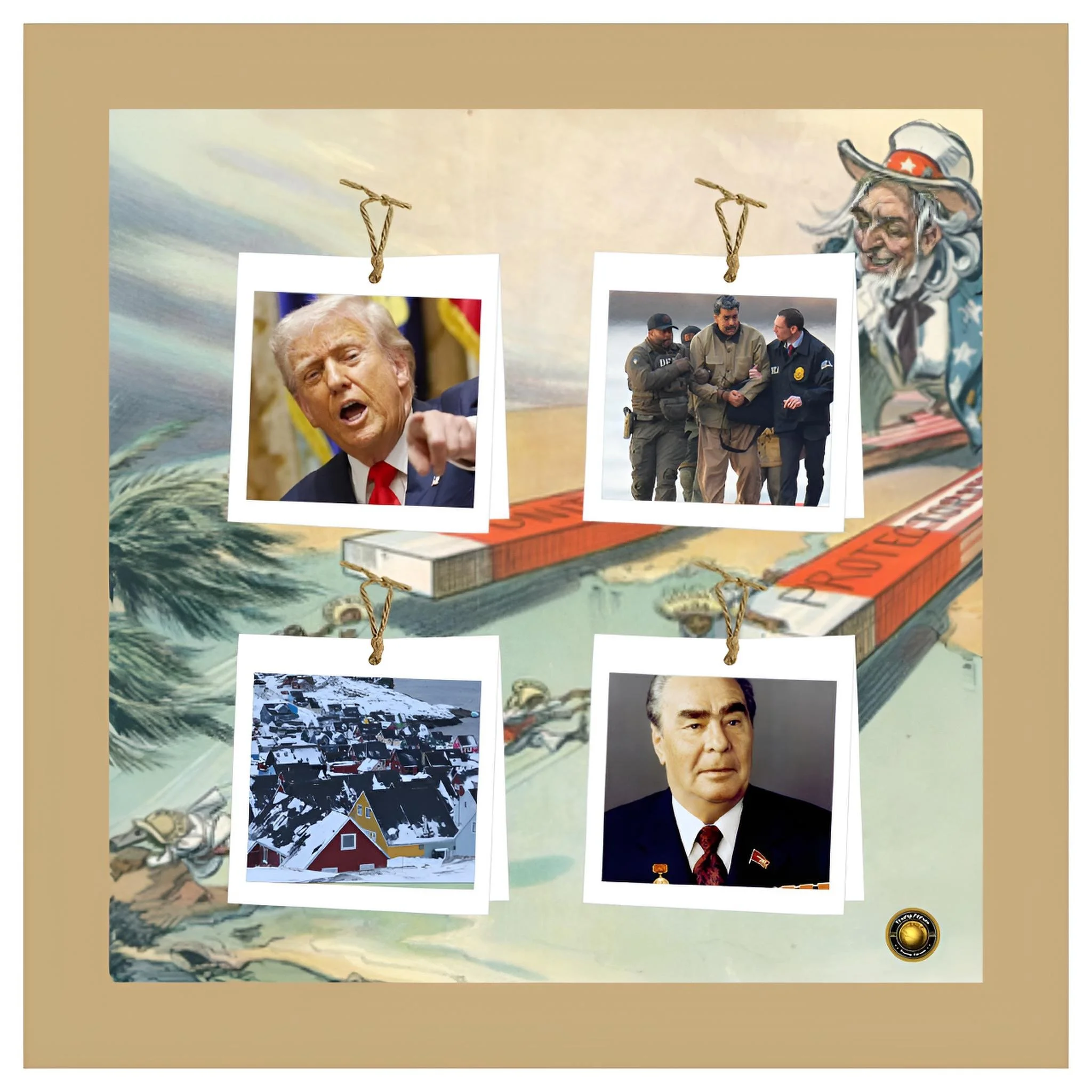
On January 3, 2026, the Trump administration moved from strategic articulation to direct military action. The United States conducted a special forces raid into Venezuela, capturing President Nicolás Maduro and his wife. American Delta Force operators executed the raid utilizing an experimental weapon system referred to as a "discombobulator," described in media accounts as capable of disorienting targets and preventing coordinated resistance. The raid succeeded in extracting Maduro and his wife from Venezuela to the United States.
Maduro and his wife now face criminal charges in New York federal court. The charges reportedly include corruption, drug trafficking, and crimes against humanity. The American government has announced that it is now "in charge" of Venezuela and will administer Venezuelan territory and governance until a suitable regime replacement can be established.
This operation represents a categorical escalation beyond the Trump Corollary as articulated in strategic documents. It is not a military operation against a non-state actor (Maduro is a head of state), it is not justified by counterterrorism or humanitarian intervention, and it directly violates the international legal principle that great powers may not invade sovereign states and remove their leaders. The operation is justified entirely through the assertion of hemispheric dominance and the American right to determine Venezuela's governance.
ANNEXATION RHETORIC AND EXPLICIT TERRITORIAL CLAIMS
The Trump administration has made explicit rhetorical references to the possible annexation of Cuba, Colombia, Mexico, and Greenland. These references range from statements described as humorous or speculative to more serious policy articulations. However, the cumulative pattern of rhetoric, combined with the demonstrated willingness to conduct military operations and the explicit commitments in the National Defense Strategy, suggests these are not merely rhetorical flourishes but expressions of actual strategic ambitions.
The Greenland acquisition has been articulated as a strategic necessity to secure Arctic resources, control sea lanes, and prevent Chinese presence in the Arctic.
Cuba's annexation has been articulated as necessary to prevent Chinese military basing and to ensure American control of the Caribbean. Colombia and Mexico's annexation rhetoric reflects the American desire for greater control over the source regions of drug trafficking organizations and over border security.
The legal and historical precedent for these claims is problematic. Greenland is an autonomous territory within the Kingdom of Denmark. The United States has no legal claim to it. Cuba is an independent sovereign state. Colombia and Mexico are independent sovereign states with their own governments and territories. International law, enshrined in the United Nations Charter and the principle of territorial integrity, explicitly prohibits the acquisition of territory by force.
Yet the Trump administration's rhetoric suggests that these legal and international norms are secondary considerations to American strategic interests. This represents a return to nineteenth-century great-power logic, when powerful states could attempt territorial acquisition through force and diplomatic pressure. It represents an explicit rejection of the post-1945 international legal order that prohibits territorial conquest.
The rhetorical linkage between strategic acquisition and hemispheric security suggests that the Trump administration views annexation not as aberrant but as a natural expression of the right to maintain hemispheric dominance. If China is attempting to establish a presence in Cuba, and if American security requires preventing that, then American control of Cuba becomes, from this perspective, a necessary response. If drug trafficking organizations operate from Colombia and Mexico, and if American security requires preventing that, then American control of those territories becomes essential.
This logic directly parallels Brezhnev's justification for invading Czechoslovakia: if reform movements threaten the socialist bloc, then military invasion becomes necessary. The form differs—Brezhnev invoked ideological necessity, while Trump invokes strategic security—but the underlying logic remains identical: when great powers perceive regional threats, military action and territorial control become justified.
ECONOMIC COERCION: THE CANADIAN TARIFF THREAT
On January 24, 2026, President Trump threatened to impose 100 percent tariffs on Canadian goods if Canada pursued a free trade agreement with China. This threat represents the integration of economic warfare into the enforcement mechanism of the Trump Corollary.
The threat is significant because Canada is a close American ally, a NATO member, and the United States' largest trading partner. The threat suggests that no hemispheric state, regardless of alliance relationship, can make strategic decisions independently if those decisions contradict American preferences. The threat weaponizes trade policy—a primary instrument of economic statecraft—to enforce hemispheric alignment.
The 100 % tariff level is extraordinary, representing a punitive rate designed not merely to discourage the trade agreement but to inflict severe economic damage on Canada should it proceed. Such tariffs would disrupt North American trade integration, harm both American and Canadian consumers and businesses, and destabilize the continental economy.
The threat demonstrates that the Trump Corollary enforcement mechanisms extend beyond military action to include economic coercion. Hemispheric states face a choice: align with American directives on trade, security, and alignment, or face a military threat (as Venezuela has experienced), an annexation threat (as Mexico, Colombia, Cuba, and Greenland face), or economic punishment through tariffs (as Canada faces).
This represents an extraordinarily comprehensive assertion of hegemonic control: military force, territorial claims, and economic coercion, all deployed in service of hemispheric dominance.
KEY DEVELOPMENTS AND OPERATIONAL ESCALATION
The January 2026 developments represent a rapid escalation from doctrinal assertion to operational implementation. The pattern of escalation suggests an administration determined to translate strategic doctrine into military and political reality with minimal delay.
The Maduro raid demonstrates the willingness to conduct unilateral military operations inside sovereign states against sitting heads of government. The raid's success—it achieved its objective of capturing Maduro and his wife with limited combat—likely reinforces the administration's confidence in its ability to conduct similar operations.
The annexation rhetoric suggests expanding ambitions beyond Venezuela. If the administration believes it can remove Maduro and administer Venezuela, why would it not think it can acquire Greenland or control Cuba? The rhetoric tests international and domestic response. Depending on the response, the rhetoric may harden into concrete policy proposals and military threats.
The Canadian tariff threat demonstrates the weaponization of economic policy to enforce hemispheric alignment. It suggests that the administration views trade policy not as a tool for mutual benefit but as a coercive instrument to enforce compliance with American strategic directives.
CAUSE-AND-EFFECT: HOW ESCALATING COERCION SHAPES REGIONAL BEHAVIOR
The military raid on Venezuela and the subsequent actions trigger cascading effects throughout the hemisphere and internationally.
For hemispheric states, the message is clear: the United States is now willing to conduct military operations against sitting governments, to make explicit territorial claims, and to weaponize economic policy to enforce compliance. This creates powerful incentives for hemispheric states to seek alternative security guarantees and to reduce dependence on the United States.
Brazil, Mexico, Colombia, and other major hemispheric powers must now calibrate their policies in response to American military power and economic leverage. The optimal strategy for these states is likely to maintain outward appearance of compliance while seeking private accommodations with alternative powers and developing independent capabilities.
For China, the Trump Corollary and its implementation present both challenges and opportunities. The challenges are obvious: the United States is explicitly committing to preventing Chinese presence in the Americas. The opportunities are that hemispheric states threatened by American military action and annexation rhetoric may be more willing to accept Chinese economic and military support as a counterbalance to American coercion.
For Russia, the implementation of the Trump Corollary provides validation of its own doctrine of regional hegemony in the post-Soviet space. If the United States can invade Venezuela and threaten annexation of neighboring states based on hemispheric dominance claims, Russia can justify similar actions in Ukraine and other post-Soviet territories based on Russian dominance claims.
For the international legal order, the Trump Corollary's implementation represents a fundamental challenge. If a permanent member of the UN Security Council can conduct military operations against sitting governments, make territorial claims against neighboring states, and weaponize economic policy without facing significant international consequences, the post-1945 prohibition on territorial conquest and unilateral military intervention collapses.
STRUCTURAL PARALLELS: BREZHNEV AND TRUMP DOCTRINE CONVERGENCE
The parallels between the Brezhnev Doctrine and the Trump Corollary have become increasingly evident as the Trump Corollary moves from rhetoric to operational reality.
Both doctrines assert limited sovereignty for neighboring states. The Brezhnev Doctrine asserted that the sovereignty of communist states was subordinate to Soviet bloc interests. The Trump Corollary holds that the sovereignty of hemispheric states is subordinate to American security interests and strategic dominance. In both cases, neighboring states cannot make truly independent decisions about alignment, ideology, or governance.
Both doctrines justify military intervention as a legitimate instrument for maintaining regional order. The Brezhnev Doctrine justified the invasion of Czechoslovakia to preserve bloc unity. The Trump Corollary justifies invading Venezuela to prevent Chinese penetration and to ensure hemispheric dominance. Both doctrines position military force as a standard tool of regional governance.
Both doctrines deny the possibility of genuine neutrality or non-alignment for neighbors. Under Brezhnev, a communist state could not remain neutral regarding Soviet interests. Under Trump, a hemispheric state cannot remain neutral regarding Chinese presence. Both doctrines demand active alignment and compliance.
Both doctrines employ grandiose justifications to mask strategic and territorial ambitions. Brezhnev invoked socialist internationalism. Trump invokes hemispheric security and strategic necessity. In both cases, the language of principle obscures the reality of power assertion.
Both doctrines, when operationalized, trigger international concern and create incentives for regional states to seek alternative security guarantees and to develop independent capabilities.
CURRENT CONCERNS AND STRATEGIC RISKS
The current trajectory of the Trump Corollary presents multiple strategic risks.
The most immediate risk is military escalation with China. If the United States commits military resources to preventing Chinese presence in the Americas, and if China commits resources to establishing a presence despite American opposition, military confrontation becomes increasingly likely. The January 3 raid on Venezuela suggests an administration willing to conduct military operations to enforce its directives. Chinese response to explicit exclusion from the Americas is uncertain but could involve military support for states the United States threatens or military demonstrations of power in contested zones.
The second risk is regional instability and humanitarian consequences. Military raids against sitting governments, territorial annexation rhetoric, and economic coercion create instability and suffering for hemisphere populations. Venezuela has already experienced a humanitarian crisis; American military intervention could exacerbate that crisis. Mexican and Colombian citizens threatened with annexation face uncertainty about their futures and potential conflict.
The third risk is the collapse of the international legal order. If the Trump administration successfully conducts military operations against sitting governments and makes territorial claims without significant international consequences, other great powers will follow similar logic. Russia will have a more substantial justification for its actions in Ukraine. China may feel justified in taking military action against Taiwan or its neighbors. The post-1945 prohibition on territorial conquest collapses.
The fourth risk is hemispheric realignment. States threatened by American military action and annexation rhetoric will seek alternative security partnerships. Brazil, Mexico, and other powers may move closer to China and Russia. American military dominance does not automatically translate into political influence if the policies it enables provoke resistance and resentment.
FUTURE STEPS AND ESCALATION TRAJECTORIES
The trajectory of the Trump Corollary suggests several potential future developments.
The most likely near-term development is expanded military operations throughout the hemisphere, justified by references to drug trafficking, Chinese presence, or American security interests. These operations will further consolidate American military dominance and demonstrate the administration's willingness to conduct unilateral military action.
More speculative but possible developments include actual military operations against Cuba, Colombia, or Mexico, justified by claims regarding Chinese presence or strategic necessity. The Maduro raid demonstrates the technical feasibility of such operations. The question is political willingness and international tolerance.
The annexation rhetoric could harden into actual policy proposals and military threats. Greenland acquisition might be pursued through diplomatic and economic pressure on Denmark. Cuba control might be pursued through military action or economic strangulation. Mexico and Colombia might face military threats to enforce compliance with American security directives.
Economic coercion through tariffs will likely expand, affecting not merely Canada but also hemispheric states that resist American directives. This weaponization of trade policy could fragment the continental economic integration that has developed over the past three decades.
The long-term trajectory depends on whether the Trump administration faces significant international or domestic constraints. If the international community accepts the Maduro raid, the annexation rhetoric, and the tariff threats without significant consequences, the administration will likely interpret this as validation and continue escalating. If, conversely, the international community responds with sanctions, diplomatic isolation, or support for hemisphere states threatened by American coercion, the administration will face constraints on further escalation.
CONCLUSION: THE GLOBALIZATION OF HEGEMONIC DOCTRINE
Spheres of Limited Sovereignty: The Brezhnev Doctrine and Trump Corollary as Mirror Images of Regional Hegemony
The Trump Corollary, as it has evolved from a doctrinal assertion to military action in January 2026, asserts that the United States intends to maintain hegemonic control over the Western Hemisphere through military force, territorial claims, and economic coercion. The doctrine is not an abstract principle but a program of action.
The parallels with the Brezhnev Doctrine are unmistakable and increasingly concrete. Both doctrines assert regional hegemony, justify military intervention, and deny neighboring states genuine sovereignty. Both doctrines employ grandiose language to explain what are fundamentally expressions of power. Both doctrines, when operationalized, trigger cascading effects throughout their regions and internationally.
What distinguishes the current moment is the rapidity and comprehensiveness with which the Trump Corollary has moved from articulation to implementation. The Brezhnev Doctrine took months to move from invasion to doctrinal articulation. The Trump Corollary moved from articulation on January 23 to military operations on January 3—demonstrating extraordinary compression of the doctrine-to-action timeline.
The question facing the international system in 2026 is whether this pattern will be permitted to continue unchecked. The Brezhnev Doctrine, which permitted military interventions in its sphere without significant international consequences, contributed to Soviet overreach, rigidity, and eventual collapse. The Trump Corollary, if permitted to operate without significant constraints, could trigger equivalent overreach and generate similar consequences for American power and influence.
The choice facing the international community is whether to accept great-power doctrines of regional hegemony enforced through military force and territorial claims, or to enforce the post-1945 international legal order that prohibits such claims. That choice will shape not merely the Americas but the entire structure of international relations in the coming decades.