The United States in World War II: From Isolationism to Global Victory (1937–1945)
Introduction
The United States’ role in World War II represents a dramatic transformation from reluctant neutrality to full military engagement and ultimate victory.
Contrary to popular perception that America only became involved after the Pearl Harbor attack, the United States gradually increased its support for Allied nations years before formal entry into the conflict.
The war fundamentally reshaped American foreign policy, established the nation as a global superpower, and set the stage for the Cold War.
US Foreign Policy Before Pearl Harbor: The Isolation-to-Intervention Spectrum
The Isolationist Tradition and Neutrality Acts (1930s)
Following bitter experiences in World War I—a conflict many Americans felt had been unnecessarily entered—strong isolationist sentiment dominated American foreign policy during the 1930s.
The public and Congress, traumatized by the costs of the First World War and impoverished by the Great Depression, sought to prevent future American entanglement in foreign conflicts.
This sentiment produced a series of legislative constraints on the executive branch.
Between August 31, 1935, and November 4, 1939, Congress enacted successive Neutrality Acts designed to prevent American involvement in foreign wars.
The Neutrality Act of 1935 prohibited exporting arms and ammunition to any belligerent nation.
The Neutrality Act of 1937 went further, prohibiting Americans from traveling on belligerent nations’ ships and barring American-owned vessels from carrying war materials to conflict zones.
However, President Franklin D. Roosevelt and his foreign policy advisors recognized that strict neutrality would perpetuate the spread of aggression.
Roosevelt personally opposed the isolationist consensus and publicly condemned the following.
(1) Japan’s invasion of Manchuria (1931)
(2) Italy’s invasion of Ethiopia (1935)
(3) Nazi Germany’s territorial seizures.
In an October 1937 speech in Chicago, Roosevelt called for the “quarantine” of aggressive nations, explicitly criticizing Japan, Italy, and Germany.
However, Congress—despite Democratic control of both houses—contained strong isolationist voices who opposed any intervention.
The “Cash and Carry” Framework (1939–1940)
As the international crisis deepened following Germany’s invasion of Poland on September 1, 1939, Roosevelt pivoted strategically.
Rather than repealing the Neutrality Acts entirely—which Congress would never have approved—he worked with Congress to introduce the cash-and-carry provision in the revised Neutrality Act of 1939.
This framework permitted belligerent nations, particularly Britain and France, to purchase non-military supplies and transport them on their own ships.
Cash-and-carry theoretically allowed neutral commerce with all warring parties, but in practice, it heavily favored Britain and France.
These nations possessed superior naval forces and could safely transit supplies across the Atlantic, whereas Germany faced naval inferiority and British blockade, making German procurement of American supplies virtually impossible.
This arrangement circumvented isolationist objections while effectively supporting the Allies.
Roosevelt’s Strategic Evolution: 1940–1941
The situation shifted dramatically following France’s defeat in June 1940.
With Britain standing alone against Nazi Germany, Roosevelt faced a critical decision: allow Britain’s likely collapse, or find innovative mechanisms to provide American support without formally entering the war.
Churchill’s dramatic appeal to Roosevelt in December 1940—warning that Britain could no longer afford cash-and-carry purchases despite their urgency—pushed the president toward unprecedented action.
Roosevelt responded with an ingenious proposal he presented to the American public at a press conference on December 17, 1940.
He proposed lending military supplies to Britain as one would lend a garden hose to a neighbor fighting a fire; the hose would be returned “intact” or replaced if damaged.
This rhetorical framing made interventionism politically palatable to isolationists who opposed outright military aid.
Congress passed the Lend-Lease Act on March 11, 1941, formally titled “An Act to Promote the Defense of the United States” (Public Law 77–11).
The legislation granted Roosevelt vast authority to provide military supplies to any nation whose defense the president deemed “vital to the defense of the United States”.
Lend-Lease Implementation and Scope
The scale of Lend-Lease was staggering. Enacted nine months before American entry into the war, it supplied the Allies with critical war materiel between 1941 and 1945.
Total Lend-Lease aid totaled $50.1 billion, distributed as follows
(1) $31.4 billion to the United Kingdom
(2) $11.3 billion to the Soviet Union
(3) $3.2 billion to France
(4)! $1.6 billion to China, and $2.6 billion to other Allied nations.
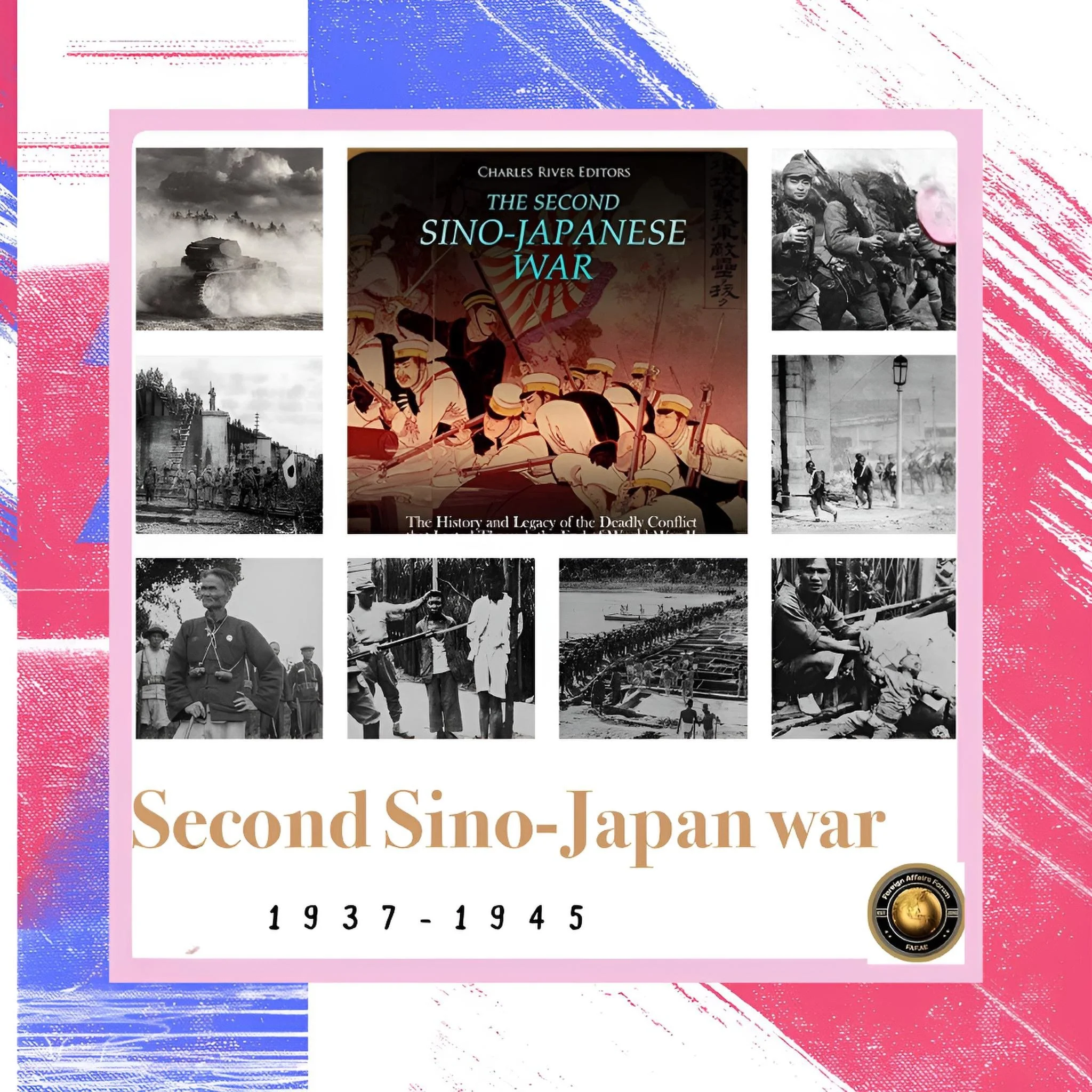
The act was extended in April 1941 to China, which faced Japanese aggression in the Second Sino-Japanese War.
Following Germany’s invasion of the Soviet Union on June 22, 1941 (Operation Barbarossa), Roosevelt extended Lend-Lease to the Soviet Union on October 1, 1941, despite American anti-communist sentiment.
By late October 1941, Roosevelt had authorized $1 billion in Lend-Lease aid to Britain alone.
Undeclared Naval War (1941)
Even before formal entry into the war, American military forces engaged in combat operations against the Axis.
In July 1941, President Roosevelt approved plans for the United States Navy to escort convoys of American and British merchant vessels, initially between American ports and Iceland.
This meant that American destroyers would not merely trail hostile ships but actively engage them with weapons.
The first hostile engagement occurred on April 10, 1941, when the USS Niblick (DD-424), engaged in reconnaissance near Iceland, encountered German vessels.
More significantly, on September 4, 1941, the destroyer USS Greer exchanged depth charges with a German U-boat near Iceland, constituting an undeclared naval engagement.
On October 31, 1941, the USS Reuben James was sunk by a German U-boat, killing 115 American sailors.
These incidents demonstrated that the United States was already engaged in de facto naval warfare with Germany months before Pearl Harbor.
The Atlantic Charter (August 1941)
Roosevelt’s evolving commitment to the Allied cause reached symbolic prominence through the Atlantic Charter, issued on August 14, 1941.
President Roosevelt and British Prime Minister Winston Churchill met aboard warships in Placentia Bay, Newfoundland, and jointly issued a declaration of principles representing shared American-British war aims.
The eight-point charter established principles for the post-war world: respect for national self-determination, freedom from fear and want, freedom of the seas, and renunciation of territorial conquest.
Notably, these principles implicitly challenged both Axis aggression and British imperialism—particularly the requirement that territorial changes accord with “the freely expressed wishes of the peoples concerned,” which threatened the British Empire.
Despite its symbolic significance and its role in laying the foundation for what would become the United Nations, the Atlantic Charter was issued as a statement of policy, not a formal legal document, and maintained the fiction of American neutrality.
The Central Question: Why Didn’t America Intervene Earlier?
The answer lies in the power of isolationist sentiment among the American public and Congress.
As late as June 1941, only 35% of Americans believed their government should risk war to help Britain, despite increasing Nazi aggression.
Isolationists claimed that American entry into World War I had been driven by munitions manufacturers seeking profit, and they were determined to prevent the repetition of that “mistake”.
Roosevelt circumvented this opposition through constitutional creativity and rhetorical ingenuity.
Rather than asking Congress for a declaration of war, he obtained authority to provide military supplies and engaged the Navy in undeclared warfare.
This approach allowed Roosevelt to move American policy from isolationism toward active, if undeclared, intervention without triggering an isolationist backlash that would have deadlocked Congress.
The critical point: The United States was not indifferent to the wars in Europe and Asia.
Instead, Roosevelt believed America’s national interest was bound up in Allied victory and worked methodically to provide support within the constraints imposed by isolationist sentiment.
Pearl Harbor did not create American hostility toward the Axis; instead, it removed the political barriers that had prevented its explicit expression.
The Pearl Harbor Attack and Formal Entry (December 1941)
On December 7, 1941, at 7:55 AM Hawaiian time, Japan launched a surprise attack on the United States naval base at Pearl Harbor on Oahu Island.
In less than two hours, an initial wave of 183 Japanese naval aircraft attacked ninety-four ships of the United States Navy.
The assault killed or wounded approximately 3,500 American military personnel and civilians, devastated the Pacific Fleet, and shocked the American public.
Japan’s attack was strategically intended to eliminate American naval power in the Pacific and demoralize the American public, reducing American ability to support Britain or contest Japanese expansion in Southeast Asia.
Instead, the attack unified American public opinion and eliminated the isolationist constraint on presidential foreign policy.
Formal Declarations of War
On December 8, 1941, at 12:30 PM ET, President Franklin D. Roosevelt addressed a joint session of Congress and, via radio, the nation.
In his now-iconic “Day of Infamy” speech, Roosevelt declared that December 7, 1941, was “a date which will live in infamy” and requested a declaration of war against Japan.
Congress responded with overwhelming support: the Senate voted unanimously for war, while in the House, only pacifist Representative Jeanette Rankin from Montana dissented.
However, Japan was not America’s only enemy. On December 11, 1941, Germany and Italy declared war on the United States.
Rather than forcing Roosevelt to ask Congress for a declaration against Germany, Hitler obliged by initiating war declarations, understanding that the Tripartite Pact (signed September 1940) obligated mutual support if any signatory was attacked.
This German initiative simplified American entry into the European theater, eliminating political complications that might have arisen from a separate debate over whether to fight Nazi Germany.
Key Events and Turning Points in the US War Effort
The Pacific Theater (1941–1945)
Battle of the Coral Sea (May 4–8, 1942)
The first significant American naval action occurred in the Battle of the Coral Sea, fought from May 4 to May 8, 1942.
This engagement was historic as the first naval battle in which opposing fleets never sighted each other, with both fleets attacking entirely with carrier-based aircraft.
It was also the first carrier-versus-carrier battle in military history.
The battle prevented a Japanese amphibious invasion of Port Moresby, Papua New Guinea, and marked the first time American naval forces checked a major Japanese offensive.
While both sides suffered significant carrier losses—the Americans lost the USS Lexington, and the Japanese had Shōkaku damaged and Zuikaku’s air wing devastated—the strategic result favored the United States, as the Japanese invasion was repulsed.
Battle of Midway (June 4–7, 1942)
One month later, the Battle of Midway (June 4–7, 1942) became the turning point in the Pacific War.
American carrier aircraft inflicted devastating losses on the Japanese Navy, destroying four Japanese aircraft carriers while losing one (USS Yorktown).
Admiral Isoroku Yamamoto, architect of the Pearl Harbor attack, had assumed American naval power was permanently crippled. Midway proved catastrophically wrong.
The battle marked the first major American victory against Japan and shifted strategic initiative from Japan to the United States. Japanese naval superiority never recovered from the loss of trained carrier pilots and modern warships.
Guadalcanal Campaign (August 1942–February 1943)
Following Midway, American forces shifted from defensive to offensive operations. The invasion of Guadalcanal in the Solomon Islands (August 7, 1942) represented the first major American ground offensive against Japan in the Pacific.
The campaign lasted six months of intense combat involving seven major naval battles, three major land battles, and almost continuous air combat.
American and Japanese forces fought desperately for control of Henderson Field, an airstrip named after a pilot killed at Midway.
The struggle was brutal and exhausting, with American forces ultimately prevailing in February 1943, establishing the first foothold in the “island-hopping” campaign.
Island-Hopping Campaign (1943–1945)
Rather than attacking every Japanese-held island, American strategy under General Douglas MacArthur and Admiral Chester Nimitz employed an “island-hopping” strategy.
This approach involved capturing strategically positioned islands to establish military bases and move progressively closer to Japan, bypassing heavily defended positions that could be contained.
Strategy included major engagements
Iwo Jima (February–March 1945)
American forces landed on February 19, 1945, capturing two airfields critical for operations against Japan.
The battle lasted 36 days of fierce fighting in which over 6,000 Marines were killed. Japanese forces fought nearly to the last man, fighting from heavily fortified underground positions.
Okinawa (April–June 1945)
The Battle of Okinawa began on April 1, 1945, and lasted 82 days until June 22, 1945. It represented the largest amphibious assault in the Pacific landscape.
The battle resulted in catastrophic casualties on both sides: American forces suffered approximately 12,500 killed and wounded, while Japanese defenders and Okinawan civilians suffered over 100,000 casualties.
The lessons learned from Okinawa profoundly influenced American planning for an anticipated invasion of the Japanese home islands—a prospect that raised estimates of American casualties to catastrophic levels.
Doolittle Raid (April 18, 1942)
While not a major military engagement, the Doolittle Raid on April 18, 1942, possessed enormous psychological significance.
Colonel Jimmy Doolittle led sixteen B-25 bombers launched from the USS Hornet in a daring raid against Japanese homeland targets, including Tokyo.
The raid inflicted minimal physical damage but shattered the Japanese public’s belief in invulnerability.
For Americans, the raid boosted morale at a time when the war was going poorly.
For the Japanese, Adm. Isoroku Yamamoto regarded the raid as a personal defeat and became convinced that Japan must extend its defensive perimeter to prevent further attacks on the home islands, contributing to decisions that led to disastrous naval losses at Midway.
The European landscape (1942–1945)
North African Campaign (November 1942–May 1943)
The first major American ground operation against the Axis in Europe began with Operation Torch, the invasion of French North Africa in November 1942.
American and British forces under General Dwight D. Eisenhower conducted an amphibious invasion of Morocco and Algeria, fighting against German and Italian forces as well as Vichy French colonial forces.
The campaign lasted until May 1943, with the Axis surrendering in North Africa on May 12, 1943.
North Africa provided a proving ground for American officers, soldiers, and logistics and established a foundation for operations against southern Europe.
Sicily and Italian Campaign (July 1943–May 1945)
From North Africa, the Allies launched Operation Husky, the invasion of Sicily in July 1943.
American forces under General George S. Patton and British forces under General Bernard Montgomery seized the island by August 1943.
The success in Sicily proved crucial for subsequent operations in Italy.
The Italian invasion began in September 1943 as American and British forces crossed the Strait of Messina into mainland Italy.
The campaign proved lengthy and difficult, as German forces under Field Marshal Albert Kesselring conducted a fighting retreat up the Italian peninsula.
Despite American numerical superiority and air dominance, the rugged Italian terrain favored the defense.
Italian surrender followed Mussolini’s overthrow, but German occupation of most of Italy prolonged the campaign.
Strategic Bombing Campaign (1942–1945)
A crucial dimension of American strategy involved strategic bombing of German-controlled territories.
The Combined Bomber Offensive (CBO) represented a coordinated American-British bombing campaign designed to destroy German industrial capacity, military installations, and civilian morale.
American bombers, particularly the B-17 “Flying Fortress”, conducted daylight precision bombing raids against German targets, while British bombers conducted nighttime area bombing.
The campaign aimed to “undermine the morale of the German people to a point where their capacity for armed resistance is fatally weakened”.
The cost was extraordinary: more than 18,000 American and 22,000 British planes were lost or damaged beyond repair, representing catastrophic aircrew casualties.
However, concentrated attacks on German aircraft plants, transportation centers, and oil facilities severely degraded German war production and ultimately helped achieve air superiority necessary for ground operations.
D-Day and the Normandy Invasion (June 6, 1944)
The definitive turning point in the European landscape came with Operation Overlord, the Battle of Normandy, launched on June 6, 1944 (D-Day).
This was the largest seaborne invasion in history, involving nearly 5,000 landing and assault craft, 289 escort vessels, and 277 minesweepers.
An initial 1,200-plane airborne assault preceded the amphibious assault, with nearly 160,000 troops crossing the English Channel on D-Day itself.
General Dwight D. Eisenhower commanded Supreme Headquarters, Allied Expeditionary Force (SHAEF), coordinating American, British, Canadian, and French forces in the assault.
The opening bombardment and specialized armored vehicles (except at Omaha Beach, where losses were heavy) provided crucial support as troops disembarked onto the beaches under fierce German fire.
German high command indecision—partially because Hitler believed the Normandy landings were a feint preceding a larger invasion elsewhere—prevented effective German reinforcement.
Within weeks, more than two million Allied troops were in France, and by August 30, 1944, German forces had retreated east across the Seine, marking the close of Operation Overlord.
The success of D-Day ensured that Western Allied forces would be firmly established on the European continent, fundamentally shifting the strategic balance and guaranteeing that the Soviets would not exclusively determine post-war European arrangements.
Battle of the Bulge (December 1944–January 1945)
Despite Allied advances, German forces launched a desperate counteroffensive in December 1944 in the Ardennes Forest region—the Battle of the Bulge (December 16, 1944–January 1945).
This proved to be the largest and costliest battle fought by the United States in the European theater, with over 19,000 American soldiers killed, exceeding total American casualties from Tarawa, Iwo Jima, and Okinawa combined.
However, despite initial German gains that created a “bulge” in Allied lines, American forces—particularly the Third Army under General George S. Patton—counterattacked and destroyed the German offensive.
The battle consumed remaining German resources and accelerated the collapse of German resistance in the west.
The Rhine Crossing and German Surrender (March–May 1945)
Following the Battle of the Bulge, American and British forces advanced toward Germany.
March 1945
Allied forces crossed the Rhine River, Germany’s natural defensive barrier. American and Soviet forces then converged on Nazi Germany from opposite directions.
April 30, 1945
Adolf Hitler committed suicide as Soviet forces closed in on Berlin.
German high command surrendered unconditionally: in the west on May 7, 1945, and in the east on May 9, 1945.
May 8, 1945
Victory in Europe Day (V-E Day) was proclaimed on May 8, 1945, amid celebrations in Washington, London, Moscow, and Paris.
Pacific War Conclusion and Atomic Weapons
With Germany defeated, American resources could be concentrated against Japan. However, Japanese forces showed no sign of surrender despite devastating defeats.
American planners estimated that a conventional invasion of the Japanese home islands would result in 132,500 to 220,000 American casualties, with deaths ranging from 27,500 to 50,000.
Atomic Bombing of Hiroshima and Nagasaki (August 1945)
To avoid these catastrophic casualties, the United States deployed a revolutionary weapon: the atomic bomb, product of the secret Manhattan Project.
August 6, 1945
8:15 AM Hiroshima time, an American B-29 bomber named Enola Gay dropped “Little Boy,” an atomic bomb containing approximately 64 kilograms of uranium-235 over Hiroshima.
The bomb detonated at an altitude of approximately 1,900 feet, instantly killing approximately 80,000 people through blast and thermal radiation.
Thousands died later from radiation poisoning and injuries, with total deaths eventually reaching 150,000 to 246,000—most of them civilians.
Three days later, on August 9, 1945, a second bomb, “Fat Man,” a plutonium-based device with a yield 40 percent greater than “Little Boy”, was dropped on Nagasaki.
This bomb killed approximately 40,000 people initially, with 60,000 more injured, and by January 1946, deaths had approached 70,000.
These remain the only use of nuclear weapons in armed conflict.
August 9, 1945
Simultaneously, the Soviet Union declared war on Japan on August 9, 1945, and invaded Manchuria and Korea, ending Japan’s conquest of these territories.
Combined with the atomic bombings’ demonstration of American capability to destroy Japanese cities at will, these catastrophic developments convinced Japan’s leadership that continued resistance was futile.
Japanese Surrender (August 15–September 2, 1945)
August 14, 1945
Japanese government accepted unconditional surrender terms. President Harry S. Truman announced Japan’s acceptance on August 14 (August 15 in Japan due to time zone differences).
Emperor Hirohito announced Japan’s surrender to the Japanese people over radio on August 15, 1945, citing the “devastating power” of “a new and most cruel bomb”.
The formal surrender ceremony occurred on September 2, 1945, aboard the USS Missouri in Tokyo Bay.
Japanese officials signed the Instrument of Surrender in the presence of American, British, Chinese, and Soviet representatives.
General Douglas MacArthur, Supreme Commander of the Allied Powers, accepted the surrender and declared September 2 the official V-J Day (Victory over Japan Day).
World War II was finally over.
Geopolitical Consequences and Strategic Impact
For the United States: Emergence as Superpower
American entry into World War II and subsequent total victory transformed the United States from a major power into a global superpower occupying an unparalleled strategic position.
The war demonstrated American industrial capacity at an unprecedented scale: between 1941 and 1945, American factories produced over
(1) 125,000 aircraft (costing $45 billion alone)
(2) 80,000 tanks, 41 billion rounds of ammunition
(3) 75,000 vessels, and vast quantities of other military equipment.
American aircraft production alone employed two million workers across a nationwide industrial complex.
The overall war production budget totaled approximately $183 billion, transforming the American economy while maintaining civilian consumption levels.
This industrial transformation provided a model for post-war American military-industrial development.
American human losses
Total American casualties were approximately
(1) 407,300 killed and wounded: approximately 293,121 battle deaths (234,874 Army, 38,257 Navy/Coast Guard, 19,990 Marines).
Of these, 185,179 died in the European theater and 107,903 in the Pacific landscape.
While enormous, American casualties paled in comparison to
Soviet human losses
Soviet losses (approximately 24–27 million killed)
Chinese human losses
Chinese losses (15–20 million killed).
The analysis reflected both American industrial superiority and the peripheral nature of American combat compared to ground-based European and Asian landscapes.
Reshaping Global Order: Conferences and Institutions
American leaders recognized that military victory alone was insufficient; post-war arrangements had to prevent future global conflict.
Three major conferences shaped the post-war order
The Tehran Conference (November 1943)
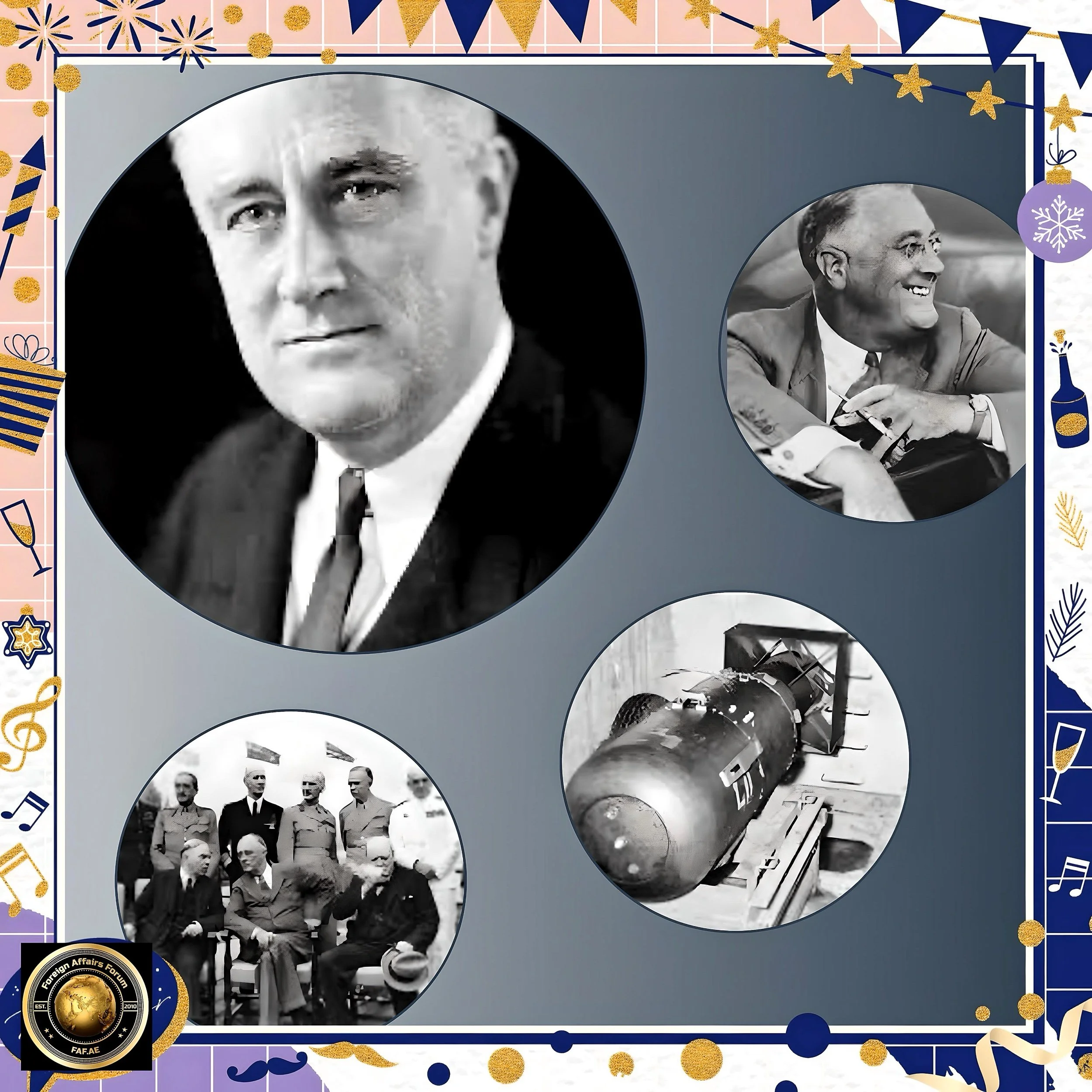
The first meeting of the “Big Three”—Roosevelt, Stalin, and Churchill—discussed post-war European organization and coordination against Japan.
Tensions emerged, particularly when Stalin proposed executing 50,000 to 100,000 German officers as deterrent against future German militarism.
The Yalta Conference (February 1945)
Held at Crimea while the war in Europe was concluding, this conference saw Roosevelt—desperate for Soviet entry into the Pacific War against Japan—make significant concessions to Stalin regarding Soviet territorial expansion and Eastern European influence.
These concessions would later become controversial as Soviet dominance of Eastern Europe became apparent.
The Potsdam Conference (July 1945)
Held after Germany’s surrender, with President Harry S. Truman (following Roosevelt’s death in April) replacing the deceased president, this conference addressed German occupation, reparations, and Japanese surrender terms.
Tensions between the West and Soviet Union became increasingly apparent, foreshadowing the emerging Cold War.[johndclare]
These conferences established frameworks that eventually produced the United Nations, with the United States taking the leading role in establishing this international organization as a mechanism to prevent future global war.
For International Order: End of Isolationism and American Global Engagement
Before 1941, the United States had pursued policies of limited international engagement, constrained by isolationist sentiment. Pearl Harbor shattered isolationism as a viable foreign policy framework.
The war demonstrated conclusively that American security was inseparable from global stability; threats to international order ultimately threatened American security.[historyextra]
Post-war American foreign policy reflected this transformation.
Rather than retreating to isolationism following victory—as had occurred after World War I—the United States committed to sustained global engagement through NATO (formed 1949), forward-deployed military bases worldwide, alliance systems, and international institutions.
For Japan and Germany: Occupied Territories and Long-Term Consequences
Japan and Germany faced total military defeat and occupation. American forces occupied Japan from 1945 to 1952, implementing comprehensive political, economic, and social reconstruction.
General Douglas MacArthur served as Supreme Commander of the Allied Powers, directing occupation policy.
Japan’s militarism was dismantled, the Imperial system was preserved (though the Emperor renounced divinity), and a democratic constitution was imposed.
Germany faced partition into four occupation zones (American, British, Soviet, and French), with each occupier determining policy in its zone.
This arrangement proved unstable, ultimately resulting in partition of Germany into West Germany (aligned with the West) and East Germany (Soviet-controlled).
The division of Germany became emblematic of the emerging Cold War.
For the World: The Nuclear Age and Geopolitical Uncertainty
The atomic bombings of Hiroshima and Nagasaki introduced nuclear weapons into the world, fundamentally altering strategic calculations.
The United States possessed a temporary nuclear monopoly (until the Soviet Union developed its own atomic bomb in 1949), creating unprecedented strategic imbalance.
The knowledge that atomic weapons could destroy entire cities with single attacks transformed military strategy and deterrence concepts.
The development of nuclear weapons also accelerated Soviet efforts to develop competing weapons and contributed to the militarization that characterized Cold War competition.
The atomic age, ushered in by American weapons development in 1945, fundamentally shaped international relations for the remainder of the twentieth century and beyond.
Conclusion
The United States entered World War II not from indifference to global events, but from democratic constraint.
Roosevelt and other American leaders recognized that Nazi Germany and Imperial Japan represented existential threats to American interests, but isolationist sentiment prevented formal entry until Japan attacked Pearl Harbor.
However, American commitment to Allied victory predated formal entry by years: Lend-Lease in March 1941, undeclared naval warfare by summer 1941, and the Atlantic Charter in August 1941 all demonstrated American determination to support Allied victory.
Once formally entered, the United States mobilized its vast industrial capacity to produce unprecedented quantities of war materiel, deployed forces across two continents and multiple oceans, and ultimately defeated both Nazi Germany and Imperial Japan through a combination of military superiority and, in the Pacific, development and deployment of atomic weapons.
The war established the United States as a global superpower, ended American isolationism permanently, and positioned the nation for the subsequent Cold War competition with the Soviet Union that would dominate the second half of the twentieth century.