Diplomatic Stalemate: Ukraine Peace Talks Collapse as Geopolitical Tensions Intensify
Introduction
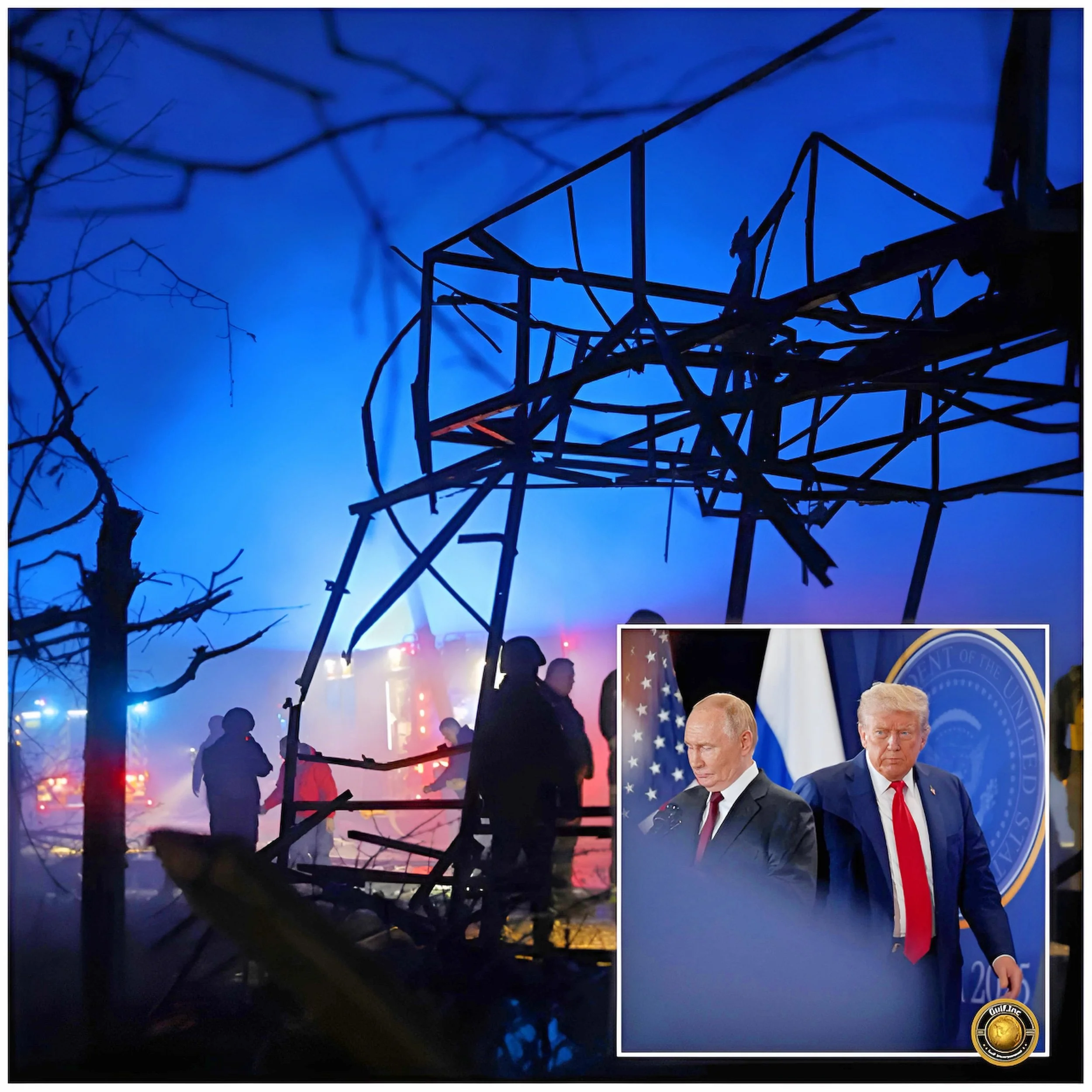
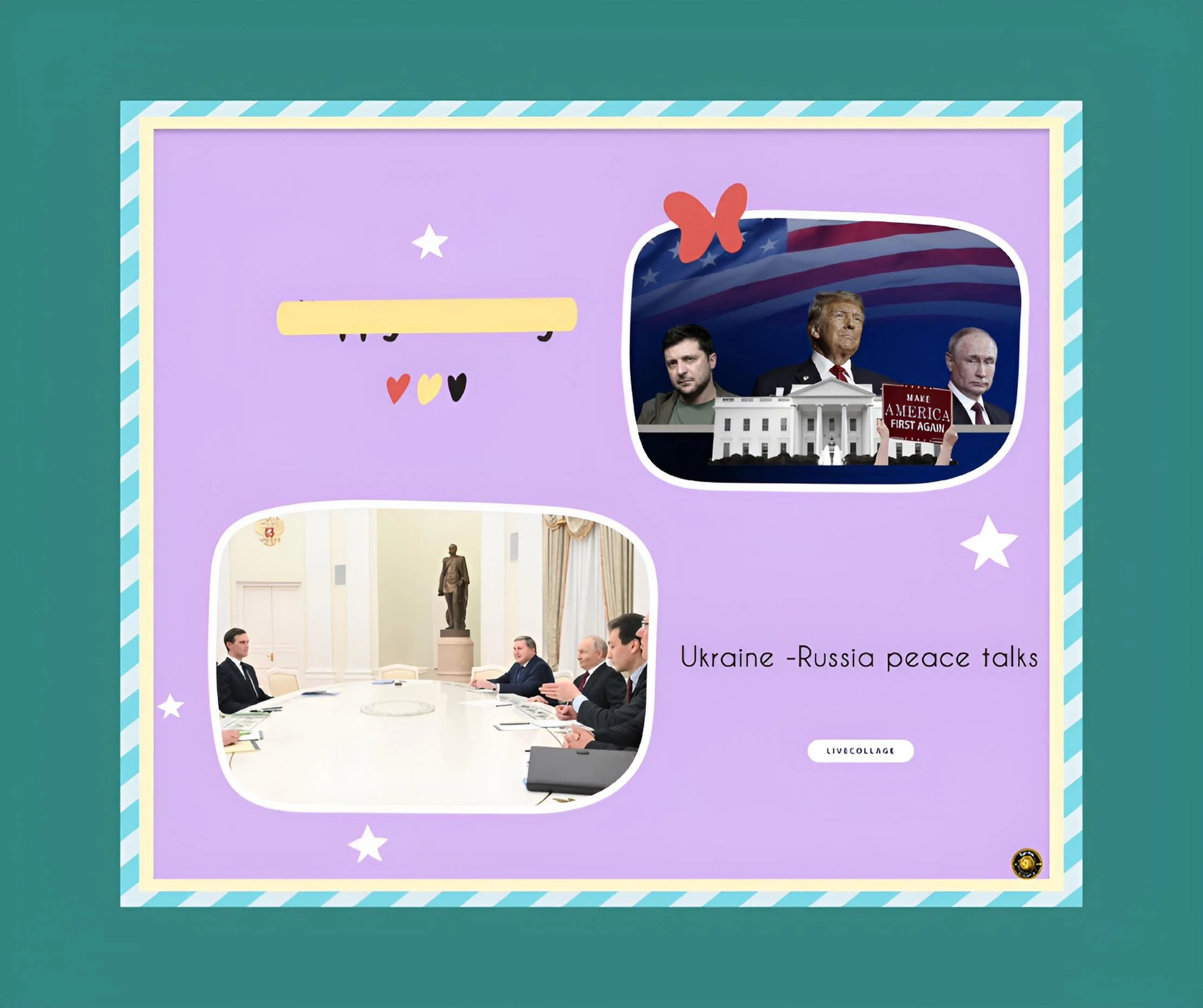
The December 2 Moscow talks between U.S. envoys and Russian President Vladimir Putin have concluded without a breakthrough, leaving the Ukraine conflict at a critical juncture.
Despite five hours of negotiations, fundamental disagreements over territorial arrangements and security guarantees persist, marking a substantial setback to the Trump administration’s diplomatic efforts to end the nearly three-year war.
The Moscow Talks: Failed Compromise
U.S. Special Envoy Steve Witkoff and Trump’s son-in-law, Jared Kushner, presented an updated peace framework during their Kremlin meeting, building on weeks of intense diplomatic negotiations in Geneva and Florida.
Yuri Ushakov, Putin’s foreign policy advisor, characterized the talks as “constructive, very useful, and informative,” yet acknowledged the critical reality: “So far, no compromise version of a peace settlement has been found.”
The American delegation introduced four additional documents beyond the original 28-point plan that had circulated since mid-November.
Moscow’s response proved predictable within established diplomatic patterns: while Kremlin spokesman Dmitry Peskov stated that Putin “accepted some” U.S. proposals and rejected others, no substantive concessions on territorial disputes emerged.
The refusal to budge on territorial matters—particularly Ukraine’s status in the contested Donbas region—underscored that Russia maintained its maximalist demands, offering no meaningful compromise.
The Territorial Stalemate: Core Incompatibility
The territorial question remains the fundamental obstacle to any agreement.
The Trump administration’s 28-point framework envisions territorial concessions that would be devastating to Ukraine’s long-term viability.
Under this plan, Ukraine would effectively cede the entirety of Crimea, Luhansk, and Donetsk oblasts to Russia, including approximately 25 percent of Donetsk still under Ukrainian control.
Additionally, Kherson and Zaporizhzhia would be frozen along current lines of contact, granting Russia approximately 1,800 additional square miles.
The proposal includes a demilitarized buffer zone in currently Ukrainian-held parts of Donetsk—territory Ukraine would need to withdraw from—that would be internationally recognized as Russian territory, with a Russian prohibition on entering this specific zone.
This arrangement represents an unprecedented U.S. concession to Russia, formalizing Russian territorial gains, including areas Russia has not yet militarily conquered.
Ukraine categorically rejects these territorial provisions. President Zelenskyy’s chief negotiator, Andriy Yermak, who resigned amid corruption scandals on November 28, made clear that Ukraine would not voluntarily cede territory.
The sticking point involves a contested 30-50 kilometer zone in the 20 percent of Donetsk still under Ukrainian control—precisely the territory over which Ukrainian and Russian forces are currently fighting.
European Counter-Proposal and Strategic Divergence
Recognizing the Trump plan’s fundamental unsuitability, Britain, France, and Germany crafted a comprehensive counter-proposal that addresses Ukrainian and European concerns.
The European counter-proposal emphasizes Ukraine’s sovereignty reaffirmation, comprehensive non-aggression pacts, security guarantees backed by joint mechanisms, EU regulations adoption, and crucially, provisions ensuring Russia compensates Ukraine for war damages using frozen Russian assets.
Notably, the European proposal includes security architecture involving “a joint Security Taskforce…involving the U.S., Ukraine, Russia, and European nations” rather than unilateral U.S. guarantees.
This reflects the European determination to participate in any peace settlement structure in response to their earlier exclusion from negotiations.
European officials have been emphatic about their necessary role. EU High Representative Kaja Kallas has expressed skepticism about peace efforts that “lack obligations for Russia and focus excessively on Ukrainian concessions.”
French President Emmanuel Macron and German Chancellor Friedrich Merz insisted that no settlement could be finalized “without Ukrainians and Europeans.”
Internal Ukrainian Political Crisis
An expanding corruption scandal has severely weakened Ukraine’s negotiating position. Andriy Yermak, the powerful chief of staff who led peace negotiations for Zelenskyy, resigned on November 28 after anti-corruption investigators searched his residence.
The 15-month investigation, dubbed Operation Midas, revealed a $100 million embezzlement scheme involving senior government officials, with Yermak’s team allegedly funneling approximately $1.2 million and 100,000 euros to Deputy Prime Minister Oleksiy Chernyshov for the construction of a luxury villa.
Two cabinet ministers have already been dismissed as investigations expanded, destabilizing Zelenskyy’s government at a critical diplomatic moment.
Yermak’s departure removes Ukraine’s most influential voice in foreign policy precisely when diplomatic cohesion is essential.
While some observers believe his removal could eventually strengthen Ukrainian governance by reducing concentrated executive power, the immediate consequence is leadership instability during high-stakes negotiations.
Military Trajectory and Battlefield Reality
Russia continues to make slow but steady territorial advances across the eastern front. Putin convened military leaders on December 1, claiming “full capture” of Pokrovsk (Krasnoarmeysk) in Donetsk, though Ukrainian sources contest complete Russian control of the city.
Russian forces continue infiltration tactics, establishing rear-area positions before launching coordinated attacks—a campaign design that employs battlefield air interdiction to degrade Ukrainian logistics.
However, the Institute for the Study of War assessment reveals that Russian advances, while persistent, remain at “a footpace” across all sectors where Putin claimed significant progress.
Russian forces pursue three subordinate main efforts: capturing Luhansk and pushing westward into Kharkiv, encircling northern Donetsk, and capturing all of Donetsk while potentially advancing into Dnipropetrovsk.
These objectives remain partially unrealized despite Russia’s continued offensives, suggesting that neither side has achieved the breakthrough needed to alter the battlefield balance fundamentally.
Security Guarantees: The Unresolved Question
Trump’s proposed security framework incorporates an Article 5-style guarantee modeled on NATO’s collective defense provision, committing the U.S. and European allies to treat significant attacks on Ukraine as threats to the “transatlantic community.”
This represents Trump’s first offering of binding security commitments to Ukraine, suggesting meaningful U.S. involvement in Ukraine’s post-conflict security architecture.
The proposal includes ten-year security guarantees renewable by mutual consent, with a joint commission supervised by European partners and U.S. involvement to monitor compliance.
However, Russia reportedly rejected numerous elements of this security framework, as U.S. officials had warned might occur.
The security guarantee’s actual credibility depends on robust international enforcement mechanisms and a unified NATO-EU commitment—precisely the coordination that the Trump administration’s bilateral focus on Moscow has undermined.
European Strategic Response and NATO Positioning
NATO has intensified its forward presence and preparations for collective defense. NATO Secretary General Mark Rutte responded definitively to Putin’s threats of war with Europe: “Putin believes he can outlast us, but we are not going anywhere.”
A senior NATO official dismissed Putin’s war readiness claims as “bluffing,” asserting that while Russia possesses military capability, it lacks the capacity to win against NATO’s united defense.
German intelligence assessments carry more alarming implications, warning that Russia is “creating the option” to attack NATO by 2029, based on current military preparations and doctrine evolution.
Russian hybrid attacks—including suspected drone incursions across Baltic and Eastern European airspace, cyber operations, and sabotage attempts—indicate escalating pressure on European security.
Simultaneously, Europe is constructing alternative financing mechanisms to support Ukraine.
The European Commission has proposed solutions addressing Ukraine’s 2026-2027 budgetary and defense needs, signaling European commitment despite U.S. diplomatic uncertainty.
NATO members have collectively committed over €50 billion in security assistance to Ukraine in 2024, with European allies providing approximately 60 percent of this support.
The Diplomatic Trajectory: Uncertain Next Steps
Trump administration officials remain engaged despite the Moscow setback.
On December 3, the president characterized the Witkoff-Kushner meeting as “very good,” claiming that their impression was that Putin desired an end to the war, though the specifics of Putin’s openness to compromise remain unclear.
Witkoff and Umerov met in Florida on December 1 and agreed to continue discussions, with Umerov traveling to Miami on December 3 for additional negotiations with U.S. envoys.
Secretary of State Marco Rubio, notably absent from the Moscow talks, has characterized the negotiations’ focus on territorial specifics: approximately 30-50 kilometers of disputed territory and 20 percent of Donetsk remain central points of contention.
This formulation suggests a potential shift toward more limited territorial compromises than the original 28-point framework, though Russia’s maximalist negotiating posture offers little reason for optimism.
The Frozen Conflict Template: Dangerous Precedent
Moscow’s historical “frozen conflict” arrangements—notably Transnistria, Abkhazia, and South Ossetia—provide concerning templates for Ukraine’s potential fate.
These territories remain economically isolated, demographically declining, and subject to permanent Russian military presence despite ostensibly independent status.
Such arrangements offer Putin consolidation of territorial gains while maintaining leverage for future escalation, fundamentally incompatible with genuine Ukrainian sovereignty or European stability.
The frozen conflict model paradoxically benefits the initiating power while imposing indefinite costs on the contested territory.
Russia derives strategic advantage from maintaining unresolved territorial disputes, preserved military presence, and periodic crisis opportunities.
Ukraine would face permanent territorial truncation, economic devastation of contested regions, military limitations, and psychological trauma of unresolved war without genuine peace.
Strategic Implications and Regional Stability
The Moscow talks’ collapse exposes fundamental incompatibilities between the Trump administration's objectives and the Russian maximalist demands.
The U.S. has framed negotiations as seeking a compromise beneficial to both sides, yet Russia interprets the diplomatic process as an opportunity to secure additional concessions incrementally, without reciprocal concessions.
Putin’s negotiating approach mirrors established Kremlin patterns: maintaining maximalist demands while allowing diplomatic processes to continue indefinitely, extracting marginal concessions while preserving core objectives.
European strategic positioning has increasingly bifurcated from American diplomatic frameworks.
While Trump pursues bilateral U.S.-Russia talks designed to reach expedited settlements, Europe emphasizes multilateral mechanisms ensuring Ukraine’s participation, security guarantees backed by collective institutions, and Russian accountability for war damages.
This divergence creates dangerous coordination gaps precisely when unified Western strategy would strengthen negotiating leverage against Russia.
The intersection of Ukraine’s internal governance crisis, battlefield stagnation at high casualty costs, and diplomatic deadlock suggests extended conflict as the most probable near-term trajectory.
Russian forces will likely continue incremental territorial advances throughout winter 2025-2026, consuming Ukrainian military resources and civilian populations while awaiting Western negotiating flexibility.
Ukraine will simultaneously attempt governance consolidation following Yermak’s departure, military optimization within resource constraints, and diplomatic positioning to maximize future negotiating leverage.
Conclusion
The Critical Juncture
The December 2 Moscow talks represent not a breakthrough toward resolution but rather confirmation that fundamental territorial and security disputes remain unresolved.
Ukraine has rejected territorial concessions, Europe has insisted on negotiating participation, Russia has maintained maximalist demands, and the Trump administration faces the unpalatable reality that bridging these positions requires concessions no party currently accepts.
The next phase will determine whether diplomatic efforts persist despite diminishing returns or whether the conflict settles into attritional patterns punctuated by episodic negotiation attempts.
Ukraine’s Brussels briefing to European counterparts on December 3 will signal whether Kyiv maintains negotiating flexibility or hardens positions following Yermak’s departure and recognition of the Moscow talks’ futility.
European strategic responses—including potential enhancement of military support, sanctions enforcement, and asset seizure mechanisms—will indicate whether the continent constructs independent deterrence architectures alongside American initiatives or remains dependent on uncertain U.S. commitment to sustained engagement.
The absence of breakthrough compromise, combined with persistent Russian maximalism and European strategic consolidation, suggests that genuine resolution remains distant.
The international community confronts a choice between accepting frozen conflict as a quasi-resolution accepting indefinite military stalemate, or investing substantially increased resources in Ukrainian military capability sufficient to alter the battlefield balance and strengthen future negotiating positions.
Current diplomatic trajectories point toward prolonged conflict with periodic negotiation windows rather than imminent settlement.