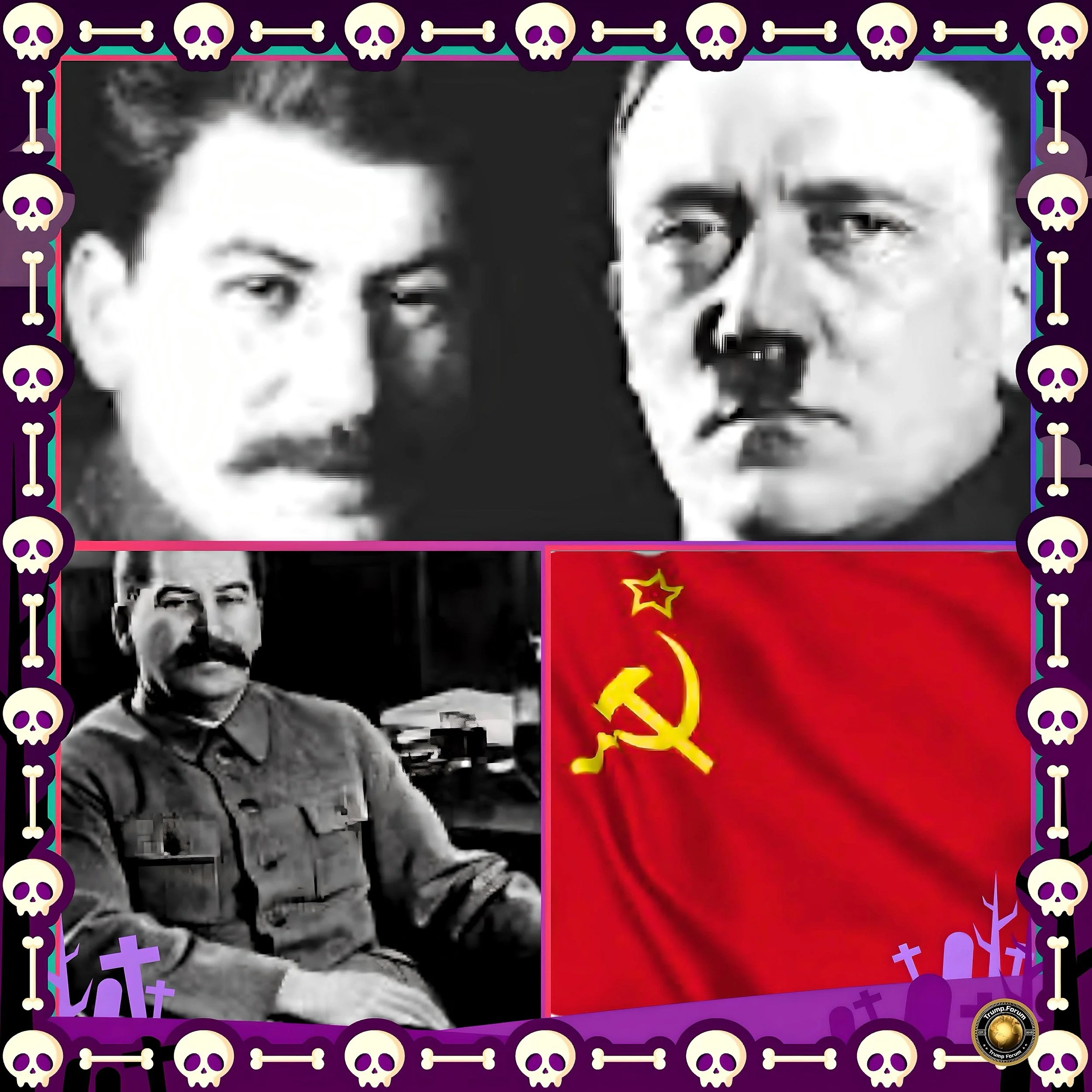
The Autobiography of Joseph Stalin and His Role in World War II
Introduction
At first glance, the idea of an autobiography penned by the enigmatic Soviet leader Joseph Stalin seems like a compelling historical document providing unprecedented insight into one of history’s most controversial figures.
However, it’s important to clarify that Stalin never actually wrote a formal autobiography during his lifetime.
Instead, a notable work of historical fiction, “The Autobiography of Joseph Stalin,” by author Richard Lourie, was published in 1999. It attempts to recreate Stalin’s internal monologue and psychological landscape.
The Fictional “Autobiography” and Stalin’s Actual Life
Richard Lourie’s novel presents a fictionalized first-person narrative from Stalin’s perspective, exploring the dictator’s psychology and motivations.
The book centers on Stalin’s paranoia regarding Leon Trotsky’s biographical work about him, which Stalin feared might reveal secrets capable of undermining his power.
This literary approach provides readers with an imagined journey into “the very heart of evil,” as the publisher describes it, without being an authentic historical document.
Joseph Stalin was born Ioseb Besarionis dze Jughashvili (or Iosif Dzhugashvili) on December 18, 1878, in Gori, Georgia, then part of the Russian Empire.
He began using the name “Stalin” (derived from the Russian word for “steel”) in 1912 while working as an editor for the Bolshevik newspaper Pravda.
Before his revolutionary career, Stalin studied at the Tiflis Theological Seminary, where his mother had hoped he would become a priest. Instead, he embraced Marxist revolutionary ideals.
Stalin’s early revolutionary activities involved organizing protests, which led to multiple arrests and exiles to Siberia between 1902 and 1917, from which he repeatedly escaped.
His relationship with Lenin grew stronger over time, and Lenin appointed him to the Bolshevik Central Committee.
After Lenin died in 1924, Stalin outmaneuvered rivals, including Leon Trotsky, to consolidate power and eventually become the unchallenged leader of the Soviet Union.
Stalin’s Political Rise and Early Leadership
Stalin’s rise to power wasn’t immediate. After attending several party congresses where he impressed Lenin, he was appointed to the Bolshevik Central Committee in 1912.
His article “Marxism and the National Question,” published in 1913, established him as a theoretical contributor to Bolshevik thinking.
Following the October Revolution of 1917, Stalin played an important role, though less prominent than Trotsky’s.
During the Russian Civil War (1918-1920), Stalin served as a politico-military leader while simultaneously holding government positions as Commissar for Nationalities (1917-1923) and Commissar for State Control (1919-1923).
However, it was his position as General Secretary of the Communist Party’s Central Committee, beginning in 1922, that provided the foundation for his eventual dictatorship.
Stalin’s Role in World War II
Stalin’s leadership during World War II was complex and contradictory. It was marked by catastrophic failures and remarkable achievements that ultimately contributed to the Allied victory.
Initial Failures and German Invasion
When Germany launched Operation Barbarossa on June 22, 1941, Stalin was caught off guard despite numerous intelligence warnings about Hitler’s intentions.
This failure of preparation exposed Soviet defenses to the devastating German blitzkrieg tactics.
In the initial hours after the attack, Stalin reportedly hesitated, wanting to ensure the attack was sanctioned by Hitler rather than initiated by a rogue general.
Some accounts, including those by Nikita Khrushchev and Anastas Mikoyan, claim that Stalin retreated to his dacha in despair for several days, though some documentary evidence contradicts this narrative.
Regardless, the German invasion’s early phase was disastrous for the Soviet Union.
Within the first three weeks, Soviet forces suffered 750,000 casualties and lost 10,000 tanks and 4,000 aircraft.
Stalin Takes Command
In response to the crisis, Stalin quickly appointed himself Marshal of the Soviet Union and Supreme Commander in Chief of the Soviet Armed Forces while serving as Premier and General Secretary of the Communist Party.
He formed the State Defense Committee to coordinate military operations, serving as chairman and taking personal control of the war effort.
Stalin’s early military decisions were problematic.
He executed most of the Red Army’s generals before the German invasion because he saw them as threats to his rule, severely weakening Soviet military leadership just as they faced their greatest challenge.
During the war, he issued harsh orders like Order No. 270, which designated soldiers who surrendered as traitors (affecting even his son Yakov, who died in German captivity), and Order No. 227, which created “penal battalions” used as cannon fodder for soldiers who retreated without authorization.
Turning Point and Victory
Despite these controversial tactics, Stalin’s leadership evolved.
When the Germans threatened Moscow in the winter of 1941, he remained in the capital, helping organize a substantial counteroffensive.
Subsequent victories at the Battle of Stalingrad (winter 1942-43) and Battle of Kursk (summer 1943), under Stalin’s supreme direction, turned the tide against the Germans.
As the war progressed, Stalin learned to delegate military decisions more effectively.
His correct calculation that Hitler would focus on capturing Moscow allowed him to concentrate Soviet forces on the city’s defense, including divisions transferred from eastern sectors after he determined that Japan would not attack there.
By December 1941, German troops had advanced within 25 kilometers of the Kremlin. Still, on December 5, the Soviets launched a counteroffensive that pushed German forces back approximately 80 kilometers, marking the first significant defeat of the Wehrmacht in the war.
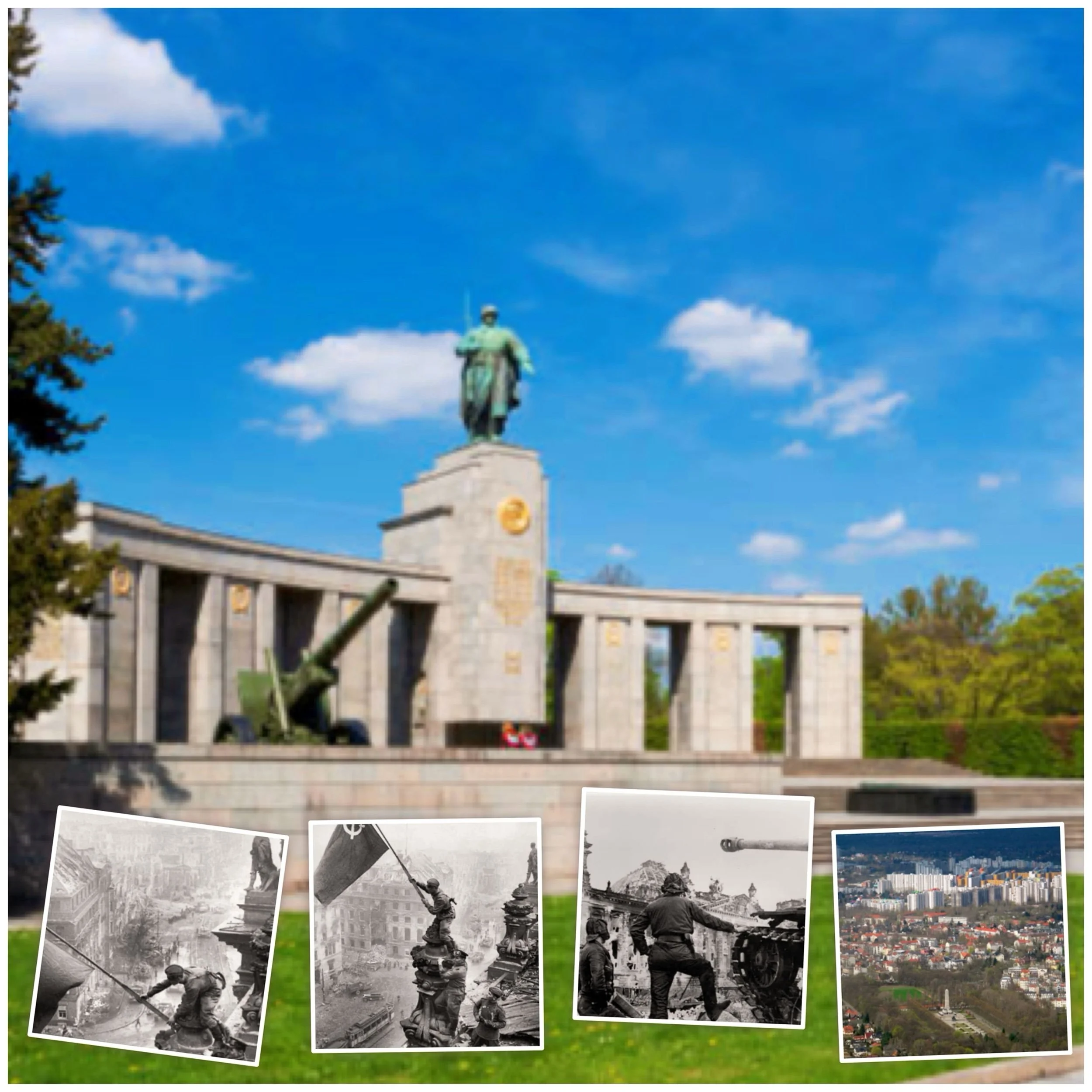
By 1945, the Soviet Army, under Stalin’s direction, had pushed to Berlin, forcing German capitulation in May of that year.
The Soviet victory came at an enormous cost in human lives but established the USSR as a global superpower.
Stalin, Churchill, and Roosevelt: Leadership Dynamics
Throughout the war years, Stalin, British Prime Minister Winston Churchill, and Both cooperation and strategic tension characterized U.S. President Franklin D. Roosevelt's relationship.
The “Big Three” Conferences
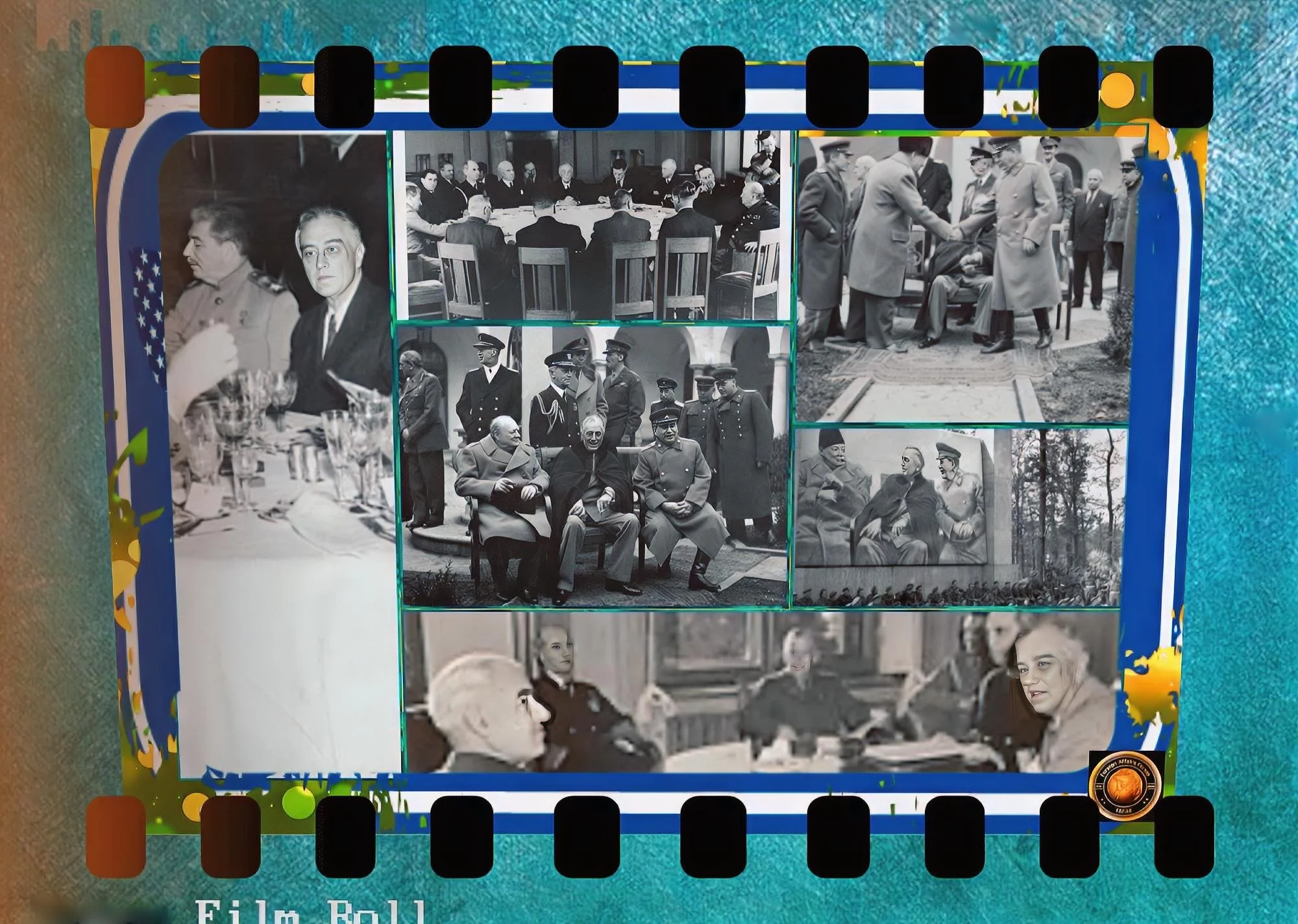
Stalin participated in critical high-level Allied meetings with Churchill and Roosevelt, including the “Big Three” conferences at Tehran (1943), Yalta (1945), and Potsdam (1945).
These meetings shaped the course of the war and the post-war international order.
At the Tehran Conference, the three leaders discussed the two-front war against Germany and the future of Europe.
Stalin’s Negotiation Prowess
By many accounts, Stalin proved himself a formidable negotiator in these settings.
Anthony Eden, then British Foreign Secretary, acclaimed Stalin’s “superior skill” in negotiations.
Some historians and contemporaries, including Eden himself, believed that Stalin “outwitted” Churchill and Roosevelt during these conferences.
According to one assessment, the British and Americans approached the Yalta Conference without a negotiating strategy sufficient to combat “a Bear who would certainly know his own mind”.
Stalin’s intentions had been clear since before the war: to recover or control the territories of the old Russian Empire.
By early 1945, with Germany’s defeat inevitable, Stalin was poised to capitalize on the Soviet Union’s military contributions to reshape the European political landscape.
Strategic Priorities
Stalin’s priorities at these conferences included protecting the expanded Soviet state’s frontiers and securing recognition as a superpower.
He was deeply suspicious of his allies’ territorial, political, and commercial ambitions-suspicions that were reinforced by intelligence from Soviet spies in both American and British official circles.
The Soviet Union desperately needed to replenish its human and material resources after the war, making the organization of defeated Germany critical as a source of reparations.
Post-War Terms and Soviet Expansion
While no single leader can be said to have “dictated” the terms of the post-war settlement, Stalin succeeded in achieving many of his objectives during the final conferences of the war.
Division of Germany and Europe
At the Potsdam Conference in July-August 1945, Stalin pressed for substantial reparations from Germany without regard for ensuring Germans’ minimum supply for survival-a stance that worried Truman and Churchill.
He also advocated for “war booty,” which would permit the Soviet Union to directly seize property from conquered nations.
Germany was ultimately divided into four zones controlled by the Soviet Union, United States, Britain, and France, with Berlin-located in the Soviet zone-similarly partitioned.
Despite Stalin’s promises to refrain from “Sovietization” of Eastern Europe, the Soviet Union established Soviet-aligned states throughout the region.
This expansion of influence fulfilled Stalin’s long-held territorial ambitions while creating a buffer zone between the USSR and Western Europe.
The Beginning of the Cold War
The post-war settlement positioned the Soviet Union and United States as the world’s two superpowers, initiating what would become known as the Cold War.
Stalin’s insistence on Soviet dominance in Eastern Europe, coupled with Western concerns about communist expansion, created tensions that would define international relations for decades.
Conclusion
The story of Joseph Stalin’s role in World War II reveals a complex and contradictory figure whose leadership contributed significantly to the Allied victory while simultaneously establishing the foundation for Soviet power in the post-war era.
While no authentic autobiography from Stalin exists, his actions speak volumes about his priorities and worldview.
Stalin cannot accurately be described as the “undisputed king” among the Allied leaders, as the relationship between Stalin, Churchill, and Roosevelt was characterized by mutual dependence and strategic negotiation rather than clear hierarchy.
However, Stalin did succeed in outmaneuvering his Western counterparts on several key issues, particularly regarding Soviet control in Eastern Europe.
The terms of the post-war settlement were not dictated by any single leader but emerged from hard-fought negotiations in which Stalin proved remarkably effective at advancing Soviet interests.
His combination of military leadership during the war and diplomatic skill afterward transformed the Soviet Union into a global superpower while ensuring his place as one of history’s most consequential and controversial figures.
Courtesy : War.Events