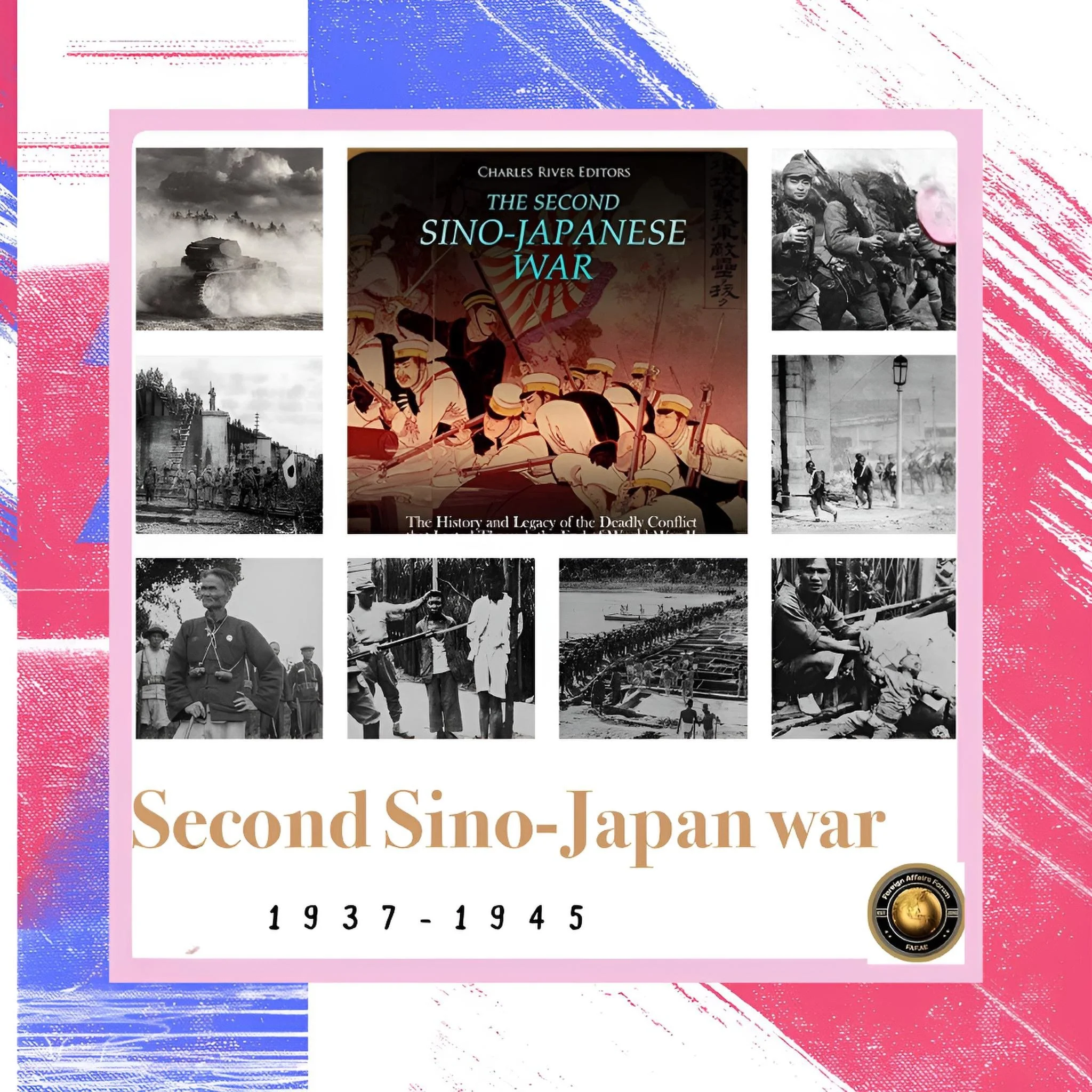
The Second Sino-Japanese War (1937–1945): Causes, Key Events, and Global Repercussions
Introduction
The Second Sino-Japanese War, spanning from 1937 to 1945, represented a watershed moment in twentieth-century Asian history and the prelude to Japan’s broader involvement in World War II.
The conflict emerged not as a sudden eruption but as the culmination of years of Japanese expansionism, the progressive dismantling of the post-First Sino-Japanese War order, and mounting tensions between China’s National government and Japan’s military establishment.
The war’s scale, brutality, and geopolitical consequences fundamentally reshaped East Asia and accelerated the decline of Western colonialism in the region.
Origins and Underlying Causes
Violations of the Treaty of Shimonoseki and the Meiji Expansion
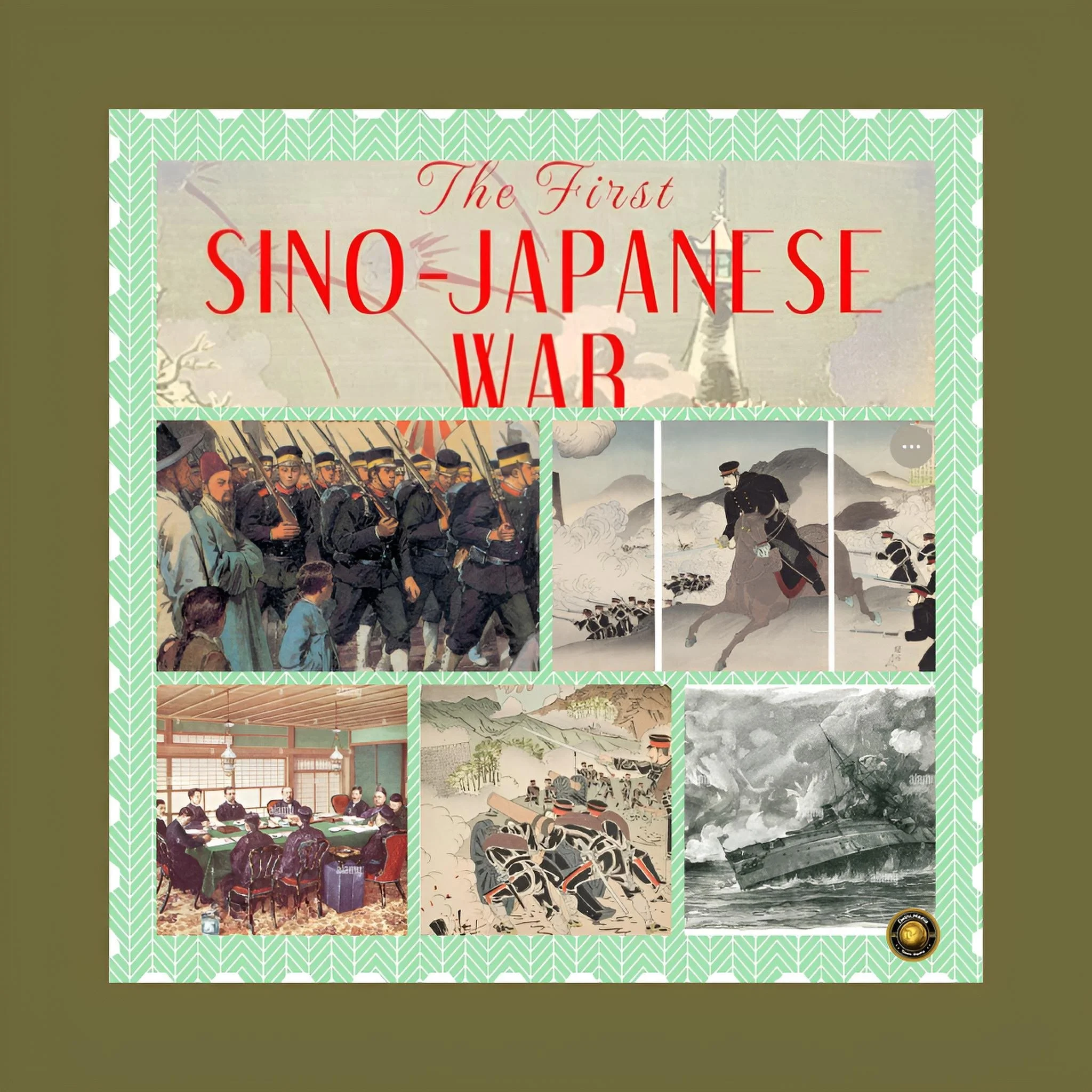
Following Japan’s triumph in the First Sino-Japanese War (1894–1895), the Treaty of Shimonoseki granted Japan control of the Liaodong Peninsula, Taiwan, and the Pescadores Islands.
However, the Triple Intervention by Russia, France, and Germany compelled Japan to relinquish the Liaodong Peninsula in exchange for an additional indemnity.
This humiliation proved formative, generating profound resentment in Japanese society and military circles.
The Japanese response to this diplomatic rebuff took the form of sustained expansion in East Asia.
Japan’s militarization accelerated throughout the early twentieth century, driven by ideological imperatives aimed at creating a “Greater East Asia Co-Prosperity Sphere” under Japanese dominion.
Strategic and economic imperatives reinforced this expansionist vision. Japan lacked critical natural resources—particularly oil and rubber—that were essential for modern industrialization and military operations.
Access to these materials required territorial expansion or securing spheres of influence.
Twenty-One Demands and Progressive Encroachment
Japan’s territorial appetite became explicit in its Twenty-One Demands delivered to China in January 1915.
These demands sought to extend Japanese control over Manchuria, Inner Mongolia, and Shandong Province, as well as over the critical financial and administrative functions of the Chinese state.
Although the most extreme provisions (Group 5) were eliminated following international opposition, the revised “Thirteen Demands” still significantly expanded Japanese influence in China and demonstrated Japan’s contempt for Chinese sovereignty.
The Kwantung Army and the Mukden Incident (1931)
The immediate precursor to full-scale war came with Japan’s invasion of Manchuria on September 18, 1931.
The Mukden Incident—a false flag operation staged by elements of the Kwantung Army, the Japanese force garrisoning Korean and Manchurian territories—provided the pretext for invasion.
Junior military officers circumvented the civilian Japanese government, acting independently and subsequently forcing Tokyo to accept the fait accompli of territorial conquest.
Japan established the puppet state of Manchukuo in February 1932, consolidating control over Manchuria and providing an essential base for operations against northern China.
When the League of Nations condemned the invasion, Western powers merely adopted a policy of non-recognition while imposing no economic sanctions, effectively tolerating Japanese aggression.
This Western passivity emboldened the Kwantung Army and ultra-nationalist elements within the Imperial Japanese Army (IJA).
Japanese Expansion into North China (1932–1937)
Between 1932 and 1937, Japan orchestrated a series of military operations to consolidate control over North China.
The Shanghai Incident of 1932 demonstrated that Japanese forces could operate independently of civilian government authority.
In 1934–1935, General Umezu, commander of the Japan-China Garrison Army, mounted provocations in Beijing and Tianjin, ultimately forcing the Chinese Nationalist government to accept the “He-Umezu Agreement” in 1935, which granted Japan effective control of strategic strongholds near Beijing and Tianjin.
China’s civil war between the Nationalist Kuomintang (KMT) under Chiang Kai-shek and the Communist Party provided Japan with opportunities to advance without facing unified Chinese resistance.
Furthermore, China’s economy had been severely weakened by the massive indemnity payments following the First Sino-Japanese War, hindering rearmament efforts.
Militarism and Ideological Pressure
By the 1930s, ultra-nationalist militarists increasingly controlled Japanese policy-making, displacing civilian politicians.
The ideology of Bushidō combined with concepts of Japanese racial and cultural superiority to create a doctrine justifying continental conquest and racial hierarchy.
Economic depression in the 1930s initially weakened Japan’s economy. Still, it was reversed through massive government deficits that funded military expansion and heavy industry, creating a self-reinforcing pressure for external expansion to absorb military production and secure resources.
The Tonghak/Donghak Uprising and Immediate Triggers
The war’s formal outbreak occurred not through deliberate conquest but through a manufactured incident on July 7, 1937.
The Marco Polo (Lugou) Bridge Incident near Beijing initiated full-scale hostilities, though the underlying grievances and Japanese ambitions had accumulated for decades.
Key Events and Major Battles
The Full-Scale Invasion (July 1937)
On the night of July 7, 1937, Chinese and Japanese troops clashed near the Marco Polo Bridge, approximately 16 kilometers from Beijing. Initial skirmishing rapidly escalated into full-scale warfare.
Unlike Japan, which had mobilized for expansion, China was unprepared for total war—it possessed limited military-industrial capacity, no mechanized divisions, and few armored forces.
Japanese forces launched coordinated operations across multiple theaters.
The Beijing-Tianjin Campaign (July 25–31, 1937) resulted in rapid Chinese defeats.
The Chinese 29th Army, after 24 days of combat, was forced to withdraw.
Japanese forces captured Beijing on July 29, 1937, and the Taku Forts at Tianjin on July 30, establishing Japanese dominance over North China.
The Battle of Shanghai (August–November 1937)
One of the war’s most significant early engagements was the Battle of Shanghai, which lasted from August 13 to November 12, 1937.
This urban battle eventually involved approximately 1 million troops and became the most significant urban engagement in military history to that point.
On August 13, 1937, the Chinese 88th Division attacked Japanese positions in downtown Shanghai in an attempt to dislodge the Japanese Naval Landing Force and prevent them from consolidating their position.
The battle unfolded in three distinct stages.
Phase -I
In the first phase (August 13–22), the Chinese sought to encircle and destroy the Japanese garrison through aggressive urban warfare.
Chinese troops attacked with hand grenades and machine-gun fire in brutal house-to-house combat, initially pushing the Japanese back to the Hueishan docks along the Huangpu River.
Phase -II
The second phase (August 23–October 26) witnessed Japanese amphibious reinforcements landing on the Jiangsu coast, shifting the tactical balance.
The Japanese outflanked Chinese positions, particularly following their successful assault across the Wusong Creek on October 5, 1937, where Chinese artillery batteries delivered devastating counterfire.
On October 14, additional Chinese reinforcements from the Guangxi Army arrived to conduct a final counteroffensive on October 21, attempting to consolidate positions around Dachang.
Despite fierce Chinese resistance and devastating casualties on both sides—Chinese forces suffered approximately 90 officers and 1,000 men in one failed tank-infantry counterattack alone—the tactical situation deteriorated for China.
Phase -III
On November 5, 1937, Japanese forces executed an amphibious landing at the Jinshan railway, outflanking Shanghai from the south and threatening the rear of Chinese defensive positions.
Recognizing the threat of strategic encirclement, Chinese forces withdrew on November 12, 1937, ending the battle.
The Chinese resistance in Shanghai demonstrated to the world—and particularly to Japan—that the Chinese military could mount significant, coordinated resistance when properly mobilized.
However, the result still constituted a Japanese victory that would have cascading consequences.
The Nanjing Campaign and Massacre (December 1937)
Following Shanghai’s fall, Japanese forces advanced southward toward Nanjing, the capital of the Nationalist Chinese government.
General Tang Shengzhi commanded approximately 500,000 Chinese defenders, but he lacked a unified command structure, experienced leadership, and adequate supplies.
After intense fighting and heavy artillery bombardment, the Nationalist government declared Nanjing an open city and withdrew its administration westward to escape capture.
On December 12, 1937, Nationalist forces retreated in chaos.
Chinese soldiers stripped civilians of clothing to blend in and escape, while supervisory units shot fleeing soldiers.
The city fell to Japanese forces on December 13, 1937, initiating one of history’s worst atrocities.
The Nanjing Massacre began immediately following the city’s capture and persisted for several weeks, with the first three weeks proving the most intense.
Japanese troops systematically murdered civilians, including children, women, and the elderly.
Japanese units summarily executed thousands of captured Chinese soldiers in violation of the laws of war, as well as male civilians falsely accused of being soldiers.
Widespread rape occurred, with victims ranging from infants to the elderly; one-third of the city was destroyed by arson.
Atrocities included systematic mass executions
Yangtze River Massacre
(1) December 15–17, Japanese troops from the Yamada Detachment, including the 65th Infantry Regiment, led approximately 17,000 to 20,000 Chinese prisoners to the banks of the Yangtze River near Mufushan and machine-gunned them to death, disposing of corpses by burning or flushing them downstream.
The Straw String George Massacare
(2) The Straw String Gorge Massacre was a specific incident within the broader Nanjing Massacre on December 18, 1937, along the Yangtze River banks near Nanjing.
Japanese troops bound thousands of Chinese prisoners of war with straw strings, machine-gunned them, bayoneted survivors, and dumped bodies into the river, killing 17,000 to 20,000 people in this single event.
Nanjing Massacre
(3) Rape of Nanjing, which occurred from December 1937 to January 1938, when Imperial Japanese Army troops captured Nanjing, China.
Estimates of total casualties in the Nanjing Massacre vary from 200,000 to 1,430,000, with 300,000 representing the figure most widely accepted by international sources.
The massacre represented “the single worst atrocity” of the early Pacific War and foreshadowed Japanese brutality in subsequent years.
This massacre formed part of the systematic atrocities during the Nanjing Massacre, which included multiple similar executions but spanned the entire city over weeks.
Historians document it as one targeted killing site amid widespread violence.
Canadian journalist James Creelman reported that Japanese soldiers “massacred practically the entire population in cold blood,” with one soldier’s diary recording indiscriminate killing of civilians throughout the city.
The Battle of Wuhan (August–November 1938)
By 1938, Japanese forces controlled much of North China and the coastal regions.
The Japanese next targeted Wuhan, which then served as China’s de facto capital after the government relocated from Nanjing.
The Battle of Wuhan (August 13–November 12, 1938) became the single largest, longest, and bloodiest battle of the entire Second Sino-Japanese War.
Engagements spanned vast areas of Anhui, Henan, Jiangxi, Zhejiang, and Hubei provinces over four and a half months.
Over one million National Revolutionary Army troops from the Fifth and Ninth War Zones, under the direct command of Chiang Kai-shek, defended Wuhan against the Japanese Central China Area Army led by Shunroku Hata.
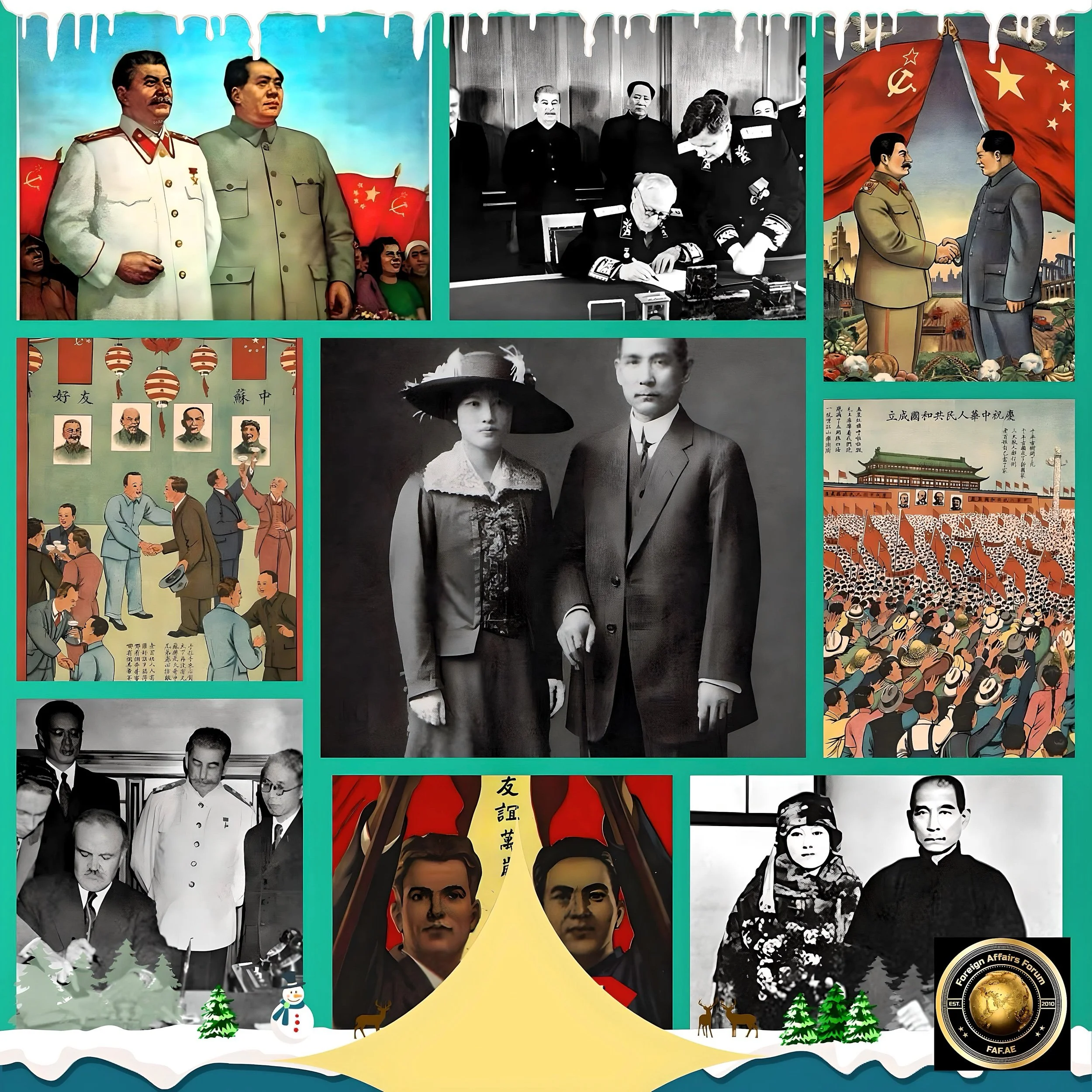
Chinese forces received support from the Soviet Volunteer Group, a contingent of Soviet Air Force pilots.
The fighting proved exceptionally brutal.
The Chinese 2nd Army Group, reinforced with the 32nd Group Army, initially halted Japanese assaults near Ruichang but eventually succumbed to Japanese reinforcements when the 9th Division entered combat.
Chinese forces conducted coordinated flank attacks—for instance, in the Wanjialing region in late September, where the 4th, 66th, and 74th Armies under Xue Yue attempted to encircle the Japanese 106th Division.
However, Japanese reinforcements and the deployment of poison gas ultimately proved decisive.
The struggle at Tianjiazhen lasted over a month, becoming “one of the bloodiest of the entire Wuhan campaign,” before Japanese forces captured it on September 29, 1938, utilizing poison gas as their decisive tool.
Chinese casualties were enormous, including “70 percent of Chiang Kai-shek’s young officers”.
Despite massive Chinese efforts and Soviet support, Wuhan fell by November 12, 1938. Subsequent Japanese victories at Yingkou on March 5, 1939, and the capture of southern Manchurian territories further consolidated Japanese dominance.
The Treaty Violations and Violations of Precedent
Russia’s Seizure of Liaodong (1898)
Rather than leading to stable peace, the Triple Intervention that forced Japan to relinquish Liaodong in 1895 created a strategic vacuum that Russia exploited.
In 1898, Russia obtained a 25-year lease on the exact territory Japan had been forced to abandon, including the ice-free port of Port Arthur.
This Russian encroachment violated the spirit of the treaty settlement, as neither the Treaty of Shimonoseki nor any subsequent agreement had authorized Russian control of these territories.
Japan’s Territorial Aggrandizement Through Unilateral Action
Japan, humiliated by the Triple Intervention yet witnessing Russian acquisition of territories it had conquered, pursued territorial expansion through military fait accompli rather than treaty negotiations.
The Mukden Incident and subsequent seizure of Manchuria in 1931, though internationally condemned and leading to Japan’s 1933 withdrawal from the League of Nations, proceeded without formal treaty authorization.
Japan’s motives combined strategic calculation—Manchuria provided resources, defense in depth against Soviet expansion, and a base for further continental operations—with ideological imperatives driving expansion.
The He-Umezu Agreement (1935) as an Instrument of Coercive Diplomacy
Rather than negotiating treaties, Japan increasingly imposed agreements through military pressure.
The 1935 He-Umezu Agreement, forced upon Chinese Nationalist General He Yingqin by Kwantung Army Commander Umezu, represented coercive diplomacy through which Japan seized strategic strongholds near Beijing and Tianjin without formal war.
This pattern established precedent for the 1937 full-scale invasion, which, like it, lacked a treaty basis.
The Stalemate and Turning Point (1938 Onward)
Strategic Stalemate and Japanese Overextension
Despite initial Japanese military successes and territorial gains by late 1938, the conflict entered a protracted stalemate.
While Japan controlled major Chinese cities, coastal regions, and the rich Yangtze River valley, Chinese forces successfully preserved armies in the interior and continued organized resistance.
Japan’s military strategy had assumed rapid victory—the “Three Months” doctrine anticipated defeating China within three months by occupying major cities.
This strategy proved catastrophically wrong. Japanese forces, despite superior training and equipment, lacked the workforce reserves to simultaneously garrison conquered territories, suppress guerrilla resistance, and conduct new offensive operations.
Guerrilla fighting persisted throughout occupied areas, while Chinese forces under Chiang Kai-shek retreated into the interior and established a new capital at Chongqing in southwest Sichuan Province.
Chongqing and China’s Continued Resistance
After the fall of Wuhan in October 1938, the Chinese Nationalist government relocated to Chongqing, a strategically located city along the Yangtze River in the southwestern interior.
The city possessed natural defensive advantages: situated on a rocky peninsula formed by the confluence of the Jialing and Yangtze rivers, flanked by sheer cliffs, and accessible via the river system to the coast, Chongqing provided both defensive depth and logistical flexibility.
Formally designated China’s wartime capital on September 6, 1940, it became the pivot for China’s continued military, political, and economic resistance.
The Japanese established a naval blockade that cut off most of China’s eastern coast from foreign contact.
However, the geographic remoteness of Chongqing, combined with rugged terrain, made direct assault impractical.
Instead, the Japanese conducted massive bombing campaigns from 1938 to 1943, attempting to break Chinese morale.
Despite suffering continuous bombardment, Chongqing’s population demonstrated remarkable resilience, earning the city the epithet “City of Heroes”.
Many factories and universities were relocated to Chongqing, transforming it from an inland port into an industrialized production center.
Isolation and Foreign Supply Routes
China’s access to foreign military assistance became critical for continued resistance.
The Japanese naval blockade initially prevented maritime imports, forcing reliance on overland supply routes.
The Burma Road, opened in 1938, provided one critical corridor, but Britain—facing diplomatic pressure from Japan—closed it for three months in 1940.
The British closure represented effective capitulation to Japanese demands and demonstrated Western appeasement of Japanese expansion.
By June 1941, Japan pressured French colonial authorities in Vietnam to close the rail link to Hanoi, eliminating another supply route.
When Japan invaded Burma in 1942, the Burma Road closed completely.
At that juncture, China’s sole access to foreign military supplies came through the “Hump” airlift—American aircraft flying supplies from Indian airfields over the Himalayas into China.
Though critical to Chinese survival, the airlift capacity provided only a fraction of China’s military requirements, severely constraining Chinese offensive capabilities.
Chinese forces also received support from the Soviet Volunteer Group, Soviet pilots, and air force personnel, who provided critical assistance from 1937 to 1941.
Soviet military supplies, aircraft, and advisors helped challenge Japanese air superiority and slow Japanese advances, particularly during the crucial Wuhan campaign.
Before American entry into World War II, approximately 48.6 percent of Nationalist China’s external credit came from Soviet sources, supplemented by military advisors and pilots, with 5,000 Soviet personnel at their 1939 peak.
Breakdown of the United Front and the Communist Rise
The Second United Front, formed between the Nationalist KMT and Communist Party (CCP) after Japan’s 1937 invasion, nominally unified Chinese resistance.
However, deep mistrust persisted, cooperation remained limited, and the CCP’s Red Army, reorganized as the “Eighth Route Army” and “New Fourth Army,” operated effectively independently of Nationalist command.
By late 1938, the united front deteriorated. The CCP conducted fewer large-scale battles against the Japanese but prioritized political mobilization, territorial expansion, and rural base-building through land reform and mass organizations.
The Communists’ strategy focused on survival and political positioning rather than confrontation with Japanese forces.
This divergence in strategy would have profound consequences. While the Nationalists bore the heaviest casualties and resource burdens of resisting Japan, the Communists expanded their territorial base and political legitimacy, positioning themselves for post-war dominance.
Geopolitical Repercussions
For Japan: Resource Drain and Strategic Overextension
The Second Sino-Japanese War imposed catastrophic costs on Japan.
Despite military successes, Japan could not deliver the decisive knockout blow against Chinese resistance.
The ongoing conflict became a net drain on Japanese resources, continuously hemorrhaging military personnel, industrial production, and financial resources.
Even before American entry into World War II, the war in China forced Japan to ration essential civilian commodities.
Rice, fuel, and other vital goods were rationed within Japan itself by the early 1940s, while resources that could have supported future Pacific operations were diverted to the Chinese theater.
Japanese merchant shipping declined precipitously as vessels were sunk or diverted to military supply operations.
This resource crisis contributed directly to Japan’s decision to expand southward into Southeast Asia and ultimately to attack Pearl Harbor on December 7, 1941.
The freezing of Japanese assets in July 1941 and the oil embargo announced in August 1941 represented American responses to Japan’s invasion of Manchuria, expansion in North China, and occupation of French Indochina.
These sanctions effectively cut Japan off from 90 percent of its oil imports, restricting Japanese economic activity and creating severe resource shortages for military operations.
Japan faced an existential choice: either withdraw from China and Southeast Asia to negotiate sanction relief, or wage direct war against the United States.
Japan chose the latter path, attacking Pearl Harbor and initiating American entry into World War II.
For China: Massive Casualties and National Transformation
China absorbed devastating casualties: estimates of Chinese civilian and military deaths reach approximately 15–20 million persons when accounting for deaths from 1937 through 1945.
This represented approximately one-half of all Pacific War casualties and demonstrated the war’s unprecedented scale of destruction.
Despite military defeats and territorial losses, the war paradoxically strengthened China’s international position.
The United States increasingly recognized China as a strategic ally against Japan.
American support increased dramatically after 1937, initially through credits and subsequently through the Lend-Lease program after America entered World War II.
In 1943, the United States abolished exclusionary immigration laws and, with Britain, ended extraterritoriality in China, recognizing Chinese sovereignty over Taiwan and Manchuria upon Japan’s defeat.
These actions elevated China’s status as a significant Allied power and contributed to its acquisition of permanent seat status on the United Nations Security Council.
The war devastated Chinese institutions and economy, yet simultaneously demonstrated Chinese nationalism and capacity for sustained resistance.
The Nationalist government’s survival at Chongqing, despite overwhelming Japanese military superiority, boosted Chinese morale and earned international sympathy.
However, the war’s resource demands and military defeats undermined the Nationalist government's legitimacy, ultimately contributing to the Communist victory in the subsequent Chinese Civil War. (1946-1949)
For the International Community and Global War
The Second Sino-Japanese War fundamentally transformed international politics and contributed to the outbreak of global conflict.
Japanese conquests in China and subsequent expansion into Southeast Asia directly precipitated American economic sanctions and ultimately American entry into World War II.
Without the stalemate in China draining Japanese resources, Japan might have pursued a more cautious expansion strategy that avoided confrontation with Western powers.
Japanese occupation of China also hastened the end of European colonialism in Asia.
The Japanese military demonstrated that European forces could be defeated, undermining the myth of European invincibility.
Simultaneously, Japan’s brutal occupation policies—including the Nanjing Massacre and other atrocities—delegitimized imperial rule as a whole, contributing to post-war decolonization movements across Asia.
The war’s atrocities, particularly the Nanjing Massacre, established precedent for subsequent Japanese war crimes in the Pacific and Southeast Asia, contributing to the brutality characterizing the entire Pacific War.
The massacre’s systematic nature and scale—representing the systematic killing of tens of thousands of prisoners of war and civilians—violated all accepted norms of warfare and presaged the later Nanjing tribunals and international law developments regarding war crimes and crimes against humanity.
For Regional Order: End of the Sinocentric System and Rise of Japanese Militarism
The Second Sino-Japanese War concluded the transformation begun by the First Sino-Japanese War: the definitive end of the traditional Sino-centric East Asian order.
Japan’s repeated military triumphs demonstrated Chinese weakness and Japanese strength, inverting centuries of regional hierarchy.
Chinese cultural and political dominance, which had persisted for millennia, gave way to Japanese military hegemony.
However, this Japanese-dominated order proved unsustainable.
Japan’s brutality, expansionism, and racial ideology generated sustained resistance from Chinese populations and ultimately provoked American military intervention.
The eventual Allied victory in the Pacific War restored China to great power status while reducing Japan to occupied territory, fundamentally reconfiguring the post-1945 East Asian order.
Conclusion
Long-Term Legacy and Unresolved Issues
The legacy of the Second Sino-Japanese War extends into the present era.
The war’s atrocities remain deeply embedded in Chinese historical memory and consciousness, influencing contemporary Sino-Japanese relations and regional stability.
The Nanjing Massacre Memorial Hall, reconstructed in the 1990s, stands as testimony to these crimes and continues to shape nationalist sentiment in China.
The war resolved one central geopolitical question—Chinese independence and territorial integrity—while leaving others unresolved.
The post-war Treaty of Peace between Japan and the Republic of China (signed in 1952) formally terminated the war.
It recognized that all treaties concluded before December 9, 1941, had become null and void.
Japan renounced all right, title, and claim to Taiwan, the Pescadores, and the Spratly and Paracel Islands, with these territories reverting to China by the provisions of the Cairo Conference of 1943.
However, subsequent developments—notably the Chinese Civil War and the establishment of competing Chinese governments on the mainland and Taiwan—transformed territorial questions into ongoing geopolitical disputes persisting to the present day.