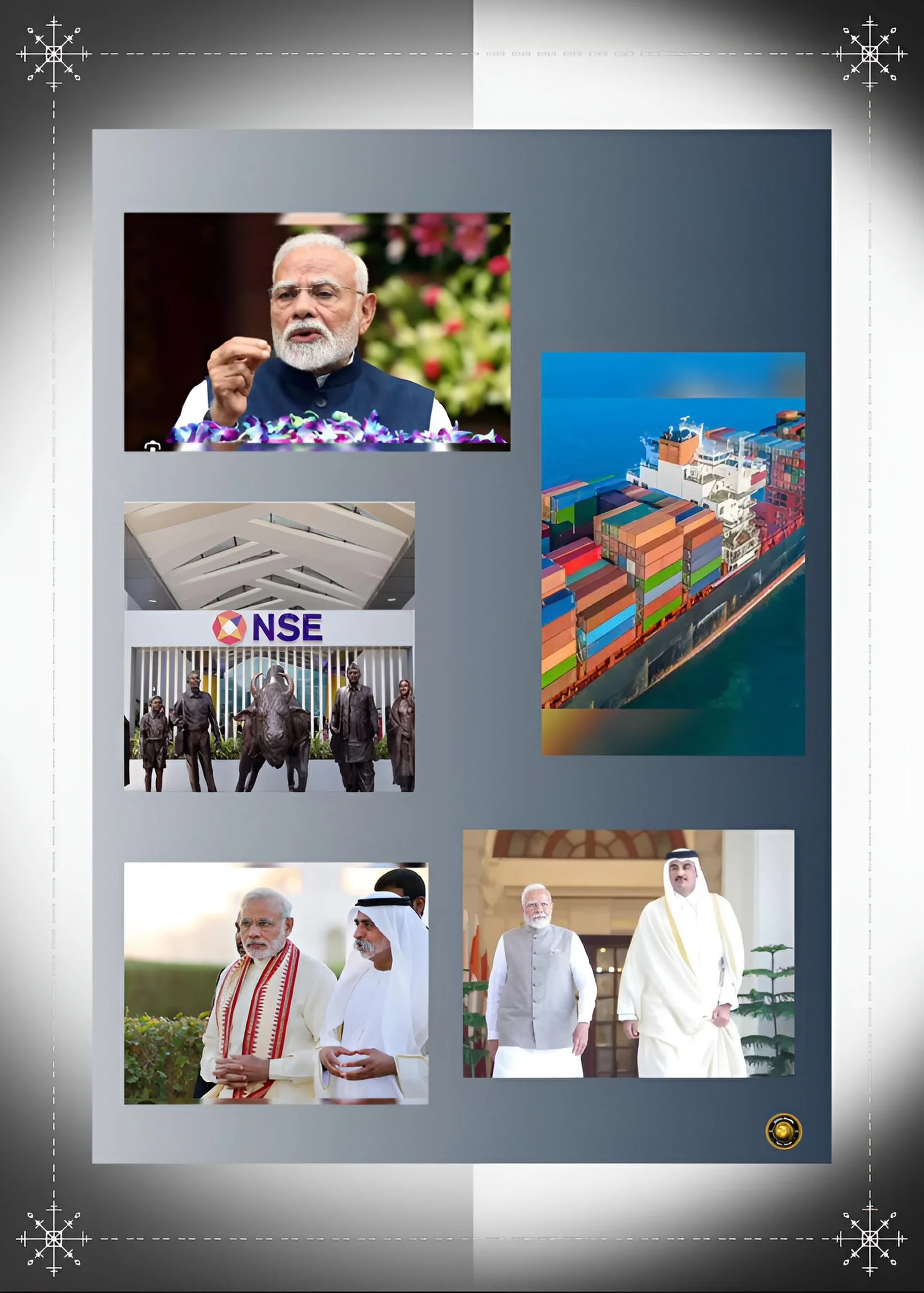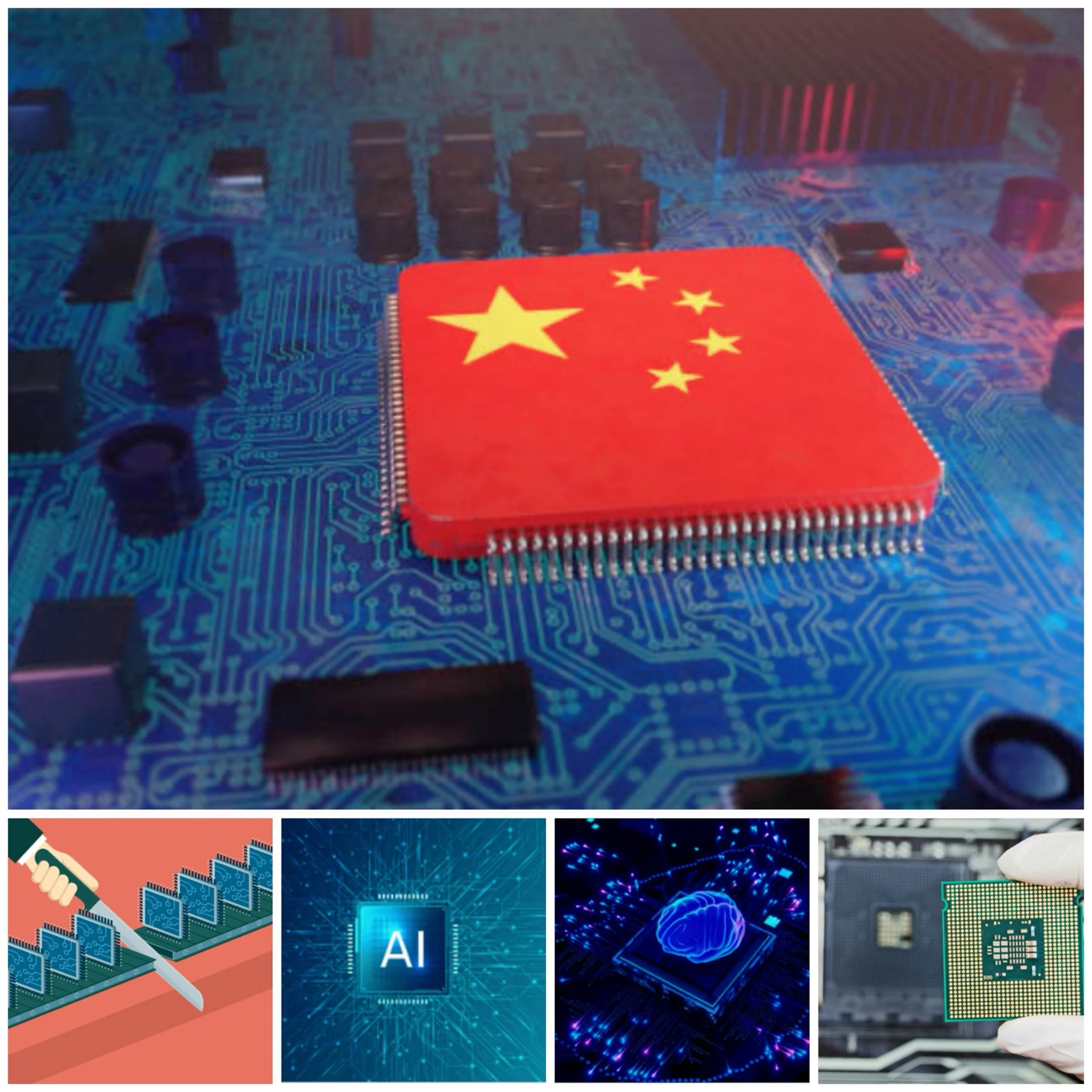
Mission Impossible? India’s Semiconductor Push Faces Daunting Math Against 25-Year China Advantage - Part III
Executive Summary
Pax Silica exclusion = US telling India: ‘Strong enough to check China, but not trusted with AI chips.’ New Delhi should respond by building its own tech ecosystem. It’s the only leverage left
India stands at a critical juncture in its export ambitions. The Federation of Indian Export Organisations has projected that India’s combined goods and services exports will reach $1 trillion in FY25-26, a 21 percent year-on-year increase from $825 billion in FY25.
This milestone comes as China has achieved an unprecedented accomplishment: a $1.08 trillion trade surplus in the first eleven months of 2025, becoming the first nation in recorded history to breach this barrier despite facing intense Trump administration tariffs averaging 47.5 percent on Chinese goods.
While both countries are pursuing the trillion-dollar threshold, their trajectories reveal starkly different strategic priorities and vulnerabilities.
India’s path is encumbered by immediate geopolitical pressures, including 50 percent reciprocal tariffs imposed by Washington, exclusion from the Pax Silica semiconductor alliance, and mounting pressure to abandon Russian oil imports.
China’s success derives from deliberate supply chain diversification away from the United States, accelerated high-tech manufacturing capabilities, and systematic reduction of import dependencies.
This analysis examines the structural lessons India must internalize to achieve a sustainable trillion-dollar export performance while simultaneously navigating the complex architecture of US-India trade negotiations, BRICS alignment, and the imperative to develop indigenous semiconductor and critical minerals capabilities.
The stakes are transformative: either India recalibrates its manufacturing paradigm and trade relationships to mirror China’s strategic isolation resilience, or it remains perpetually vulnerable to tariff shocks and technological exclusion from Western alliances.
Introduction: The Convergence of Two Export Ambitions
The Unspoken Bargain: Why the US Needs India More Than Current Policy Reflects
The year 2025 marks a watershed moment in global trade dynamics. China has accomplished what most economists deemed structurally impossible: maintaining robust export growth and achieving a historically unprecedented trade surplus while absorbing the full force of American protectionist measures.
Simultaneously, India is positioned to join China as a trillion-dollar export economy, albeit through a fundamentally different mechanism—one driven by services-sector dynamism, manufacturing diversification, and a multinational supply chain reorientation away from China itself.
The coincidence of these two developments is neither incidental nor benign. It represents a profound reordering of global economic geography, in which geopolitical tensions are forcing multinational corporations to simultaneously reduce China's exposure while enhancing India's manufacturing footprint, without extending equivalent technological access or strategic alliance membership to New Delhi.
China’s achievement emerged not from accelerating demand or favorable external conditions—the opposite occurred. Instead, it reflects four years of systematic state-led investment in high-tech manufacturing, forced technology transfer from foreign firms, and ruthless diversification of export markets away from the United States toward the European Union, Southeast Asia, Latin America, and Africa.
India’s export trajectory, conversely, remains heavily anchored to the American market despite recent tariff shock, with 18 percent of total exports destined for the United States.
The structural vulnerability this creates is acute: when Washington imposes 50 percent tariffs, as it did in August 2025, India loses access to approximately 70 percent of its export value. China faced similar pressures but had already systematized alternatives. India has not.
The additional layer of complexity emerges from India’s geopolitical positioning. Washington’s exclusion of India from Pax Silica—the US-led alliance designed to secure semiconductor and critical minerals supply chains in the AI age—signals that American policymakers view India as insufficiently aligned, technologically immature, and strategically unreliable.
This is not rhetorical; it reflects a hard assessment. India has a 50-100% import dependency on China for critical minerals required for advanced manufacturing, semiconductor fabrication, and the renewable energy transition. It lacks the advanced chip fabrication capabilities that define membership in the technological inner sanctum.
Most critically, India’s practiced foreign policy doctrine of “strategic autonomy”—exemplified by continued Russian oil imports despite US sanctions, active membership in China-influenced forums like BRICS, and defense cooperation with Moscow—is fundamentally incompatible with the alliance loyalty requirements of Pax Silica.
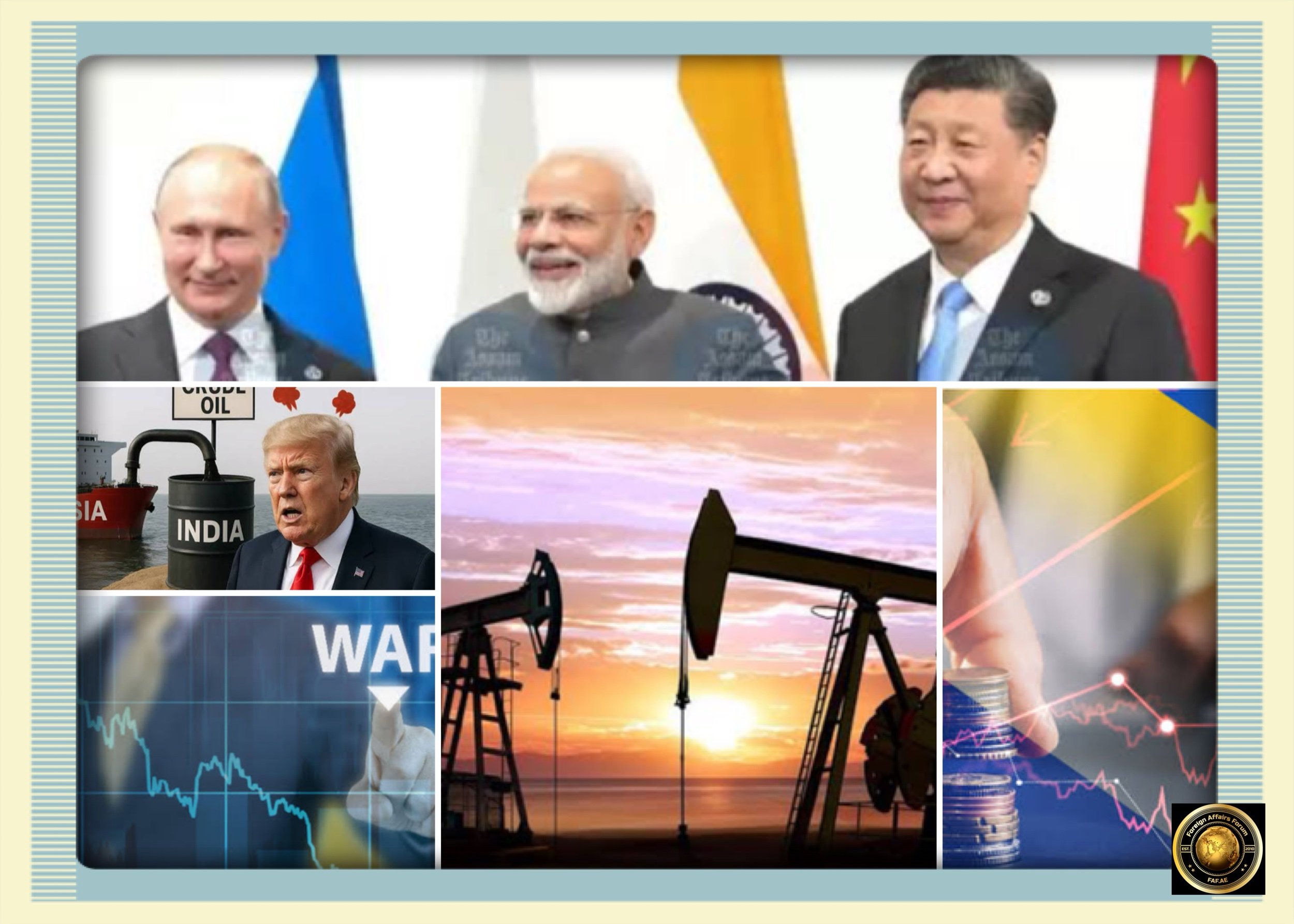
The pressure on India to abandon Russian oil imports remains acute. Washington has weaponized tariffs specifically on this issue, imposing an additional 25 percent duty on top of baseline reciprocal tariffs.
India’s pragmatic response—gradually shifting from Russian suppliers (1.76 million barrels per day, or 35-40 percent of imports) toward Saudi domestic crude—reveals the limits of India’s defiance.
By October 2025, Reliance Industries, India’s largest oil importer, had reduced Russian orders by 13 percent while increasing Saudi imports to 87 percent and Iraqi imports to 31 percent.
This is not strategic autonomy; it is capitulation under economic siege.
Historical Context and Current Export Architecture
India’s export economy has evolved through distinct phases of policy emphasis. The pre-2014 era was characterized by defensive protectionism in the agricultural sector and nascent competitiveness in the pharmaceutical, textile, and IT services sectors.
The “Make in India” initiative, launched in September 2014, represented an inflection point: deliberate state investment in manufacturing capabilities to shift India’s identity from service economy to production powerhouse. Yet the initiative’s stated ambition—to increase manufacturing’s share of GDP to 25 percent by 2025—has remained elusive. Manufacturing’s contribution to GDP actually contracted from 16.7 percent in FY2013-14 to 15.9 percent in FY2023-24, a structural signal that policy incentives alone cannot override decades of infrastructure disadvantage.
The Production Linked Incentive schemes, introduced in 2020 and substantially expanded thereafter, marked a recalibration of this approach. Rather than subsidizing entire sectors indiscriminately, PLI schemes offer calibrated financial incentives (typically 4-6 percent of net sales) to companies meeting manufacturing and export targets in specified high-priority sectors: electronics, pharmaceuticals, chemicals, textiles, and automotive components.
The results have been tangible. PLI schemes have attracted $19.2 billion in cumulative investments, generated $63.6 billion in exports, and created over 850,000 direct and indirect jobs as of mid-2024. Samsung’s India operations now export 42 percent of revenue, primarily smartphones and components; Foxconn has committed $1.48 billion in fresh investment; Apple’s suppliers are systematically expanding their Indian footprint.
Merchandise exports stood at $437 billion in FY2024-25, representing a 12 percent increase from FY2023-24. Services exports, the true crown jewel of India’s export economy, reached $387 billion in FY2024-25, driven by information technology, business process outsourcing, and financial services.
These two components—merchandise ($437B) plus services ($387B)—yielded India’s FY25 total of approximately $825 billion.
The FIEO’s projection for FY26 targets merchandise exports of $525-535 billion (a 12 percent increase) and services exports of $465-475 billion (a 20 percent increase), summing to approximately $1 trillion, assuming nominal exchange rate stability and no significant tariff escalation beyond current levels.
This projection is not merely optimistic; it is contingent. The baseline assumption embedded in FIEO’s calculation presumes that the $1.6 billion in monthly additional tariff revenue Washington collects from the 50 percent duty will not trigger secondary sanctions on Indian refineries purchasing Russian oil, and that the Framework Trade Deal negotiations underway since December 2025 will yield meaningful tariff reduction before any new negotiation deadline.
These are material assumptions, not certainties.
China’s Strategic Playbook: High-Tech Exports and Supply Chain Diversification
China’s achievement of a $1.08 trillion trade surplus in the first eleven months of 2025 contradicts every structural assumption Western policymakers held about the efficacy of tariffs. The conventional logic proceeds as follows: impose tariffs on a country’s exports, reduce its competitiveness in foreign markets, and shrink its trade surplus. China defied this logic through a combination of structural and tactical measures that India has begun to emulate but has not yet systematized.
The structural driver is high-tech export growth. Chinese high-tech exports surged 3.4 percent to $825.2 billion in 2024, with particularly explosive growth in semiconductors. Memory chip exports leaped 23.6 percent to $68.8 billion; processors and integrated circuits jumped 14.4 percent to $57.1 billion.
These are not legacy consumer electronics; they are the critical inputs for artificial intelligence, cloud computing, renewable energy systems, and next-generation telecommunications infrastructure.
As global demand for AI accelerated in 2024-25, demand for the chips that enable it remained inelastic to tariff levels; customers required access to Chinese production capacity regardless of the price premium imposed by tariffs.
The tactical driver is supply chain reorientation
As US tariffs escalated through 2025—reaching an average of 47.5 percent by November—China systematically redirected exports away from the United States toward markets with no tariff barriers.
European Union exports surged 15 percent; Southeast Asian shipments grew 8 percent; Latin American and African imports from China accelerated. This geographic arbitrage is not improvised; it reflects deliberate state policy.
China’s “Made in China 2025” industrial policy, launched in 2015 and continuously refined, explicitly targeted the creation of “reverse dependencies” in which global supply chains became dependent on Chinese production capacity rather than vice versa.
The strategy centered on three pillars: forced technology transfer from foreign firms operating in China (through joint venture requirements and IP acquisition), systematic reduction of China’s own import dependencies (particularly for advanced materials and components), and aggressive export promotion in developing economies where US diplomatic influence is weaker.
The result is that by 2025, China will have achieved what neither the United States nor the European Union has: dominance in critical technologies—electric vehicles, battery systems, solar panels, high-end semiconductors, telecommunications infrastructure—while simultaneously reducing import dependence for most inputs.
Chinese high-tech exports now account for nearly 24 percent of global high-tech trade, up from 18 percent a decade earlier. Most remarkably, this expansion occurred despite the United States explicitly sanctioning dozens of Chinese companies, restricting access to critical technologies, and imposing tariffs on Chinese goods that reached 145 percent at peak before moderating to 47.5 percent.
China achieved this through an uncompromising focus on market segments where tariffs matter least: products with inelastic demand curves, irreplaceable production capacity, or both. AI chips fall into this category. Electric vehicle components fall into this category. Battery materials fall into this category.
As multinational corporations faced forced choices between accepting tariff costs and relocating production, many chose to absorb the tariffs rather than sacrifice supply reliability from the only feasible source.
India’s Current Export Landscape and Sectoral Vulnerabilities
India’s export profile is substantially different from China’s, reflecting historical comparative advantage and policy priorities.
India’s largest export categories are petroleum products ($70 billion projected for FY26), electrical and electronics ($60 billion), agriculture ($55 billion), machinery ($40 billion), and chemicals ($40 billion).
Services exports are concentrated in information technology and business process outsourcing, estimated at $465-475 billion for FY26. The structural advantage in services is significant. India possesses unmatched talent density in software engineering, data analytics, and business process transformation.
This capability generates high-margin exports with minimal import content and zero exposure to tariff escalation (services are not typically subject to reciprocal tariffs). However, the services advantage masks a critical vulnerability in goods exports: heavy concentration in commodity-like categories.
Petroleum products, while valuable, are price-takers in global markets; India cannot sustain export growth through volume expansion alone if prices decline. Agricultural products face similar constraints.
Textiles and apparel, historically India’s labor-intensive advantage, are precisely the sectors most vulnerable to tariff protection and trade diversion. When the US imposed 50 percent tariffs in August 2025, textiles, gems and jewelry, and shrimp—sectors employing millions of workers in rural India—bore the brunt of reduced demand.
The electronics category represents India’s growth vector. Samsung’s Indian export volume has surged to 42% of its revenue. Foxconn’s planned expansion will add manufacturing capacity for Apple-designated component production.
These are not metaphorical successes; they represent genuine supply chain reorientation. However, the critical distinction is that these companies are manufacturing in India primarily because they are relocating away from China, not because India offers superior capabilities. India’s role is as a “China-plus-one” hedge: multinational corporations are diversifying suppliers to reduce geopolitical risk, not consolidating production where Indian technology or cost base is definitively superior. This distinction has profound implications for sustainability.
As tariff tensions with China eventually settle through negotiation (historical precedent suggests tariff wars resolve within 24-36 months), the incentive to maintain elevated Indian production may diminish.
Critical minerals represent another vulnerability layer
India’s rare earth element imports are 81 percent sourced from China by value and 90 percent by volume.
As global demand for rare earth elements increases by 250 percent by 2030 (according to International Energy Agency projections), India’s import dependency becomes a binding constraint on export-oriented manufacturing.
Indigenous rare earth production capacity is nascent: the Indian Rare Earths Limited has commissioned a Permanent Magnet Plant in Visakhapatnam with an annual capacity of only 3,000 kilograms—sufficient for laboratory research, not industrial-scale manufacturing. Kazakhstan possesses REE reserves and established extraction capabilities; India’s India-Central Asia Rare Earths Forum is exploring partnership avenues. However, these initiatives are in an exploratory phase, not operational capacity.
Semiconductors present a comparable gap
India’s stated ambition is to capture 10 percent of global semiconductor consumption ($110 billion market) by 2030.
The current reality is that India has only one mega fabrication plant under construction (the Tata Electronics-PSMC partnership in Dholera, Gujarat), compared with China’s 44 existing and planned fab facilities and the United States’ 15.
India’s semiconductor strategy is design-heavy: 72 companies now have access to industrial-grade Electronic Design Automation tools through the C-DAC national grid; 23 chip design projects have received approval under the Design Linked Incentive scheme.
Companies like Vervesemi Microelectronics and MosChip are developing application-specific integrated circuits for electric vehicles and smart energy meters. This is progress within India’s narrower bandwidth.
However, advanced chip fabrication requires process technologies at 7-nanometer nodes or smaller—a capability that only Taiwan, South Korea, and a limited number of facilities in the United States currently possess. India’s planned facilities are targeting the 28-nanometer to 7-nanometer range by 2026-27, representing a 2-3 year lag behind the global leading edge. This gap is not trivial; it determines whether India can participate in high-margin advanced semiconductor markets or remains confined to legacy and mid-range segments.
Key Developments: The Pax Silica Exclusion and Its Strategic Implications
On December 11, 2025, the United States formally launched Pax Silica, a nine-nation alliance designed to create a secure, allied semiconductor and critical minerals supply chain isolated from Chinese dependency.
The founding members are Japan, South Korea, Taiwan, Singapore, the Netherlands, and several allied partners. India was conspicuously excluded. The rationale, articulated by US Undersecretary Jacob Helberg, centered on three factors: India’s depth of technological capability in advanced semiconductors and critical minerals, India’s strategic alignment ambiguity, and India’s existing dependence on Chinese inputs that would introduce supply chain risk if India were incorporated.
The exclusion is devastating, not because of any immediate economic consequence—Pax Silica’s mechanisms and benefits remain largely undefined—but because of what it signifies.
The United States has deliberately chosen to create a technological inner circle of allies that excludes India, despite India’s status as a major economy, a democracy aligned with US strategic interests in the Indo-Pacific, and an active participant in the Quad security dialogue.
This signals that technological access and strategic partnership are not fungible. India’s geographic position, military cooperation with the US, and shared democratic institutions do not automatically confer membership in elite technology alliances. Membership requires demonstrable technological parity and unambiguous strategic loyalty.
The exclusion reflects hard-edged strategic calculation. Pax Silica is designed to enable member states to reduce their reliance on non-member supply chains. India, as constructed in 2025, would introduce dependency rather than reduce it. Indian rare earth imports are 81 percent from China.
Indian semiconductor fabrication capacity is negligible. Indian advanced battery manufacturing is nascent. Incorporating India into an alliance premised on supply chain security and autonomous capability would dilute rather than strengthen the collective position. From Washington’s perspective, India remains a “potential” partner, not a current contributor of capabilities.
The more profound strategic concern, articulated in closed policy discussions within the Trump administration, reflects the experience with China. The United States invested heavily in China’s technological development across the 1990s and 2000s, facilitated China’s integration into global supply chains, and granted China market access and intellectual property protections. The result, from Washington’s vantage point, was that technological transfer enabled China to eventually compete with the United States across every advanced technology domain. The fear, now operative in US policy toward India, is that premature technological elevation of India could repeat this trajectory. India must be sustained as a counterweight to China in the Indo-Pacific, but not so technologically advanced as to become an independent competitor to the United States.
The “Goldilocks” strategy—India strong enough to balance China, but not strong enough to rival the US—is the operative framework.
Geopolitical Pressures and the Tariff-Russian Oil Nexus
The 50 percent tariff imposed on India in August 2025 was explicitly bifurcated: a 25 percent reciprocal tariff applied across the board; an additional 25 percent penalty tariff was imposed expressly on products from India’s energy sector, justified by India’s continued imports of Russian oil. This is a mechanism of extraordinary specificity. Washington was not primarily concerned with trade deficits in the abstract; it was attempting to leverage tariff pain to force policy changes in a domain—Russia's energy purchases—entirely outside the traditional scope of trade negotiations.
India’s response revealed the bind. Politically, New Delhi cannot simply capitulate to US pressure on Russian energy; domestic constituencies, particularly in the defense establishment and among policy elites skeptical of Western alignment, would view this as strategic subordination.
Economically, however, the tariff cost was acute: reduced exports meant lost industrial employment, compressed profit margins for export-oriented manufacturers, and currency pressure on the rupee.
Indian oil companies began modulating purchases immediately. Reliance Industries reduced orders from sanctioned Russian suppliers by 13 percent in October 2025; state-controlled refineries announced plans to cease Russian imports entirely.
Simultaneously, US crude oil imports surged to 10.7 percent of total Indian purchases by October 2025, up from 3 percent in 2024. This mathematical progression—more US oil, less Russian oil—was explicitly engineered through tariff pressure.
The negotiations for a framework trade deal, ongoing since December 2025, center on India’s demand for tariff reduction. India has presented a final proposal requesting that the total 50 percent tariff be reduced to 15 percent and that the additional 25 percent penalty on Russian oil purchases be eliminated.
The United States has not accepted these terms as of late December. Commerce Secretary Rajesh Agrawal noted that India is “very close” to a framework agreement but declined to specify a timeline or probability of success.
The negotiation dynamics reveal an asymmetry: India urgently needs tariff relief to avert secondary sanctions and continued export contraction. The United States needs India’s alignment with Russia to demonstrate coherence in its broader strategy of containing Russian war financing through sanctions and diplomatic isolation. The gap between these needs determines the trajectory of the negotiation.
Parallel to tariff negotiations, India is pursuing free trade agreements with multiple jurisdictions to reduce dependence on the US market. The India-EFTA Trade and Economic Partnership Agreement entered into force on October 1, 2025, following sixteen years of intermittent negotiation.
EFTA has committed $100 billion in investment to India over fifteen years and eliminated tariffs (previously as high as 54 percent) on 95 percent of Indian chemical exports. This is substantial but insufficient to offset US tariff damage.
The India-UK Comprehensive Economic and Trade Agreement, finalized in May 2025, aims to double bilateral trade to $100 billion by 2030, from $56 billion currently.
The India-Brazil expansion of the MERCOSUR Preferential Trade Agreement aims to increase bilateral trade to $20 billion by 2030 from the current $12.2 billion baseline.
India has also formalized terms for a Free Trade Agreement negotiation with the Eurasian Economic Union, signed in Moscow on August 20, 2025, and bilateral trade reached $69 billion in 2024.
These agreements are strategically rational and operationally valuable, but they are insufficient to replace the US market.
The US remains India’s single-largest export destination by value, accounting for 18 percent of total exports. Substituting for this market share through FTA expansion across 10 countries is structurally more difficult than focusing on bilateral tariff resolution with Washington.
Cause-and-Effect Analysis: Why China Succeeded and What India Must Change
The differential between China’s continued trade surplus expansion despite average tariffs of 47.5 percent and India’s export vulnerability to 50 percent tariffs is explicable by five structural factors, each with policy implications for India.
China has $1T surplus with tariffs. India is pursuing the same target while facing 50% duties. The difference? China spent 25 years building irreplaceable tech. India has 5 years. The clock is ticking.
First, high-tech export concentration
China’s high-tech exports grew to $825 billion, accounting for 24 percent of total Chinese exports. These are products with inelastic demand curves and limited substitutability. Global data centers require Chinese semiconductor components; electric vehicle manufacturers require Chinese battery materials; renewable energy installations require Chinese solar panels. Tariffs raise prices but typically do not trigger demand destruction because customers have no practical alternatives. India’s merchandise exports, conversely, are heavily weighted toward petroleum products, textiles, and agricultural commodities—categories where demand is elastic, and substitution is straightforward. When US apparel buyers face tariffs on Indian textiles, they shift sourcing to Vietnam, Pakistan, or Bangladesh. When global energy buyers face tariffs on Indian petroleum products, they increase purchases from Saudi Arabia or Iraq. This is not because Indian products are inferior; it is because they are commoditized.
Until India substantially shifts export composition toward high-tech, irreplaceable categories, tariff vulnerability will persist.
Second, geographic diversification of export markets.
By 2025, only 14 percent of Chinese exports were destined for the United States, down from 19 percent in 2020. As US tariffs escalated, Chinese companies redirected shipments toward the European Union, Southeast Asia, Latin America, and Africa. These markets expanded to absorb surplus capacity. India’s export base remains concentrated: 18 percent of total exports are US-destined, 8 percent go to the EU, and 5 percent to the UAE. This concentration reflects both path dependency (established supply relationships) and structural asymmetry (Indian pharmaceutical and IT services are particularly valued in the United States). Geographic diversification requires multi-year investment in market development, regulatory compliance in new jurisdictions, and cultivation of customer relationships.
India is pursuing this through FTA expansion, but the process is necessarily gradual.
Third, reduction of import dependence
China’s import composition has shifted dramatically away from advanced technology inputs. Through forced technology transfer, state investment in R&D, and acquisition of foreign firms, China has reduced reliance on US and European semiconductors, advanced materials, and precision machinery. Chinese semiconductor demand remains high (China accounts for 60 percent of global semiconductor consumption), but domestic production has increased to 13 percent of consumption from 8 percent a decade prior. This is not self-sufficiency, but it is a substantial reduction in import volume. India has undertaken preliminary steps—the India Semiconductor Mission, Design-Linked Incentive schemes, and indigenous rare-earth magnet plants—but the scale of import substitution remains negligible. India’s semiconductor fabrication capacity is a rounding error compared to total consumption. Rare-earth element production capacity is at the laboratory scale.
This is the critical constraint on India’s geopolitical resilience: as long as India depends on external sources for critical inputs, it will remain vulnerable to supply disruption and sanctions pressure.
Fourth, state capacity for coordinated industrial policy
China’s achievement of the $1 trillion trade surplus was not accidental; it reflects twenty-five years of deliberate state investment in specific sectors, workforce development, infrastructure, and technology acquisition. The Chinese state mobilized state-owned enterprises, directed capital through state-controlled banks, and provided subsidies and tax preferences to firms meeting strategic objectives. This apparatus operates with speed and coordination that democratic states, constrained by legislative processes and judicial oversight, find difficult to replicate. India has implemented similar policies on a smaller scale—PLI schemes, Make in India, sectoral task forces—but the coordination and commitment level are qualitatively different. China’s state apparatus can redirect billions in capital to a sector within months if strategic priorities shift. India requires legislative approval, budgetary debate, and regulatory coordination across multiple ministries.
This is a structural constraint on India’s ability to pivot toward new export baskets or import substitution rapidly.
Fifth, strategic patience and tolerance for near-term pain
China absorbed years of US tariffs, patent disputes, technology restrictions, and market access denials before achieving current levels of trade surplus. During this period, Chinese GDP growth moderated, unemployment increased in legacy sectors, and many firms faced margin compression. Yet the state maintained a long-term focus on building advanced manufacturing capacity and technological independence. India faces political pressure to deliver immediate export growth and employment; electoral cycles constrain tolerance for structural adjustment that may involve near-term job losses in low-productivity sectors.
This democratic vulnerability is both India’s strength (domestic constituencies can constrain aggressive industrial policy) and weakness (long-term structural change is politically difficult).
Future Steps: India’s Strategic Imperatives for Achieving Sustainable $1 Trillion Exports
The FIEO’s $1 trillion projection for FY26 is achievable under baseline assumptions but structurally unsustainable without policy recalibration across four dimensions.
First, accelerated semiconductor self-sufficiency
India must move beyond a design-centric strategy toward manufacturing scale. The Tata-PSMC partnership in Dholera is critical; its success or failure will determine whether India can participate in globally relevant chip fabrication. However, one fab facility is insufficient. India requires five to seven major fabrication plants across different process nodes to achieve meaningful semiconductor self-reliance and position itself as a credible Pax Silica alternative (should US attitudes shift). This requires capital commitments of $15-20 billion over five years, in addition to the current planned investment. Simultaneously, India must establish advanced packaging and testing infrastructure, which currently requires imports.
The Design Linked Incentive scheme is effectively orienting India toward high-value design work, but without domestic fabrication, design value capture will remain limited.
Second, critical minerals supply chain diversification and indigenous production
India’s 81 percent import dependency on China for rare earth elements is strategically unacceptable. The strategy of relying on Kazakhstan, recycling, and domestic production must be simultaneously pursued, not sequentially. This requires the establishment of industrial-scale REE extraction and processing facilities—capital-intensive operations that require environmental management expertise and long-term cost competitiveness against Chinese production. The Khanij Bidesh India Ltd (KABIL) mechanism for acquiring mineral assets abroad should be expanded. The India-Central Asia Rare Earths Forum partnership with Kazakhstan should be accelerated from the exploratory to the operational phase. Simultaneously, India should pursue the recycling of electronic waste, which contains recoverable REEs.
This requires building infrastructure and developing reverse-logistics supply chains—unglamorous work, but necessary for supply chain security.
Third, high-tech export capability development in selective segments
Rather than competing across all manufacturing categories, India should identify segments where it can develop genuine technological leadership or irreplaceable production capacity. Electric vehicle components, precision manufacturing for aerospace, advanced pharmaceuticals and biologics, and specialized chemicals represent plausible vectors. These require sustained R&D investment, workforce development, and technology partnerships.
The PLI scheme should be refined to prioritize innovation intensity and technological progressivity rather than pure export volume. This is a generational project, not a five-year initiative.
Fourth, strategic recalibration of the US relationship
The Framework Trade Deal negotiations represent the immediate priority. India should pursue a resolution that moderates reciprocal tariffs while accepting that some penalty on Russian energy imports may be a structural feature of US-India relations for the near term. However, this should be explicitly linked to broader technology partnership discussions. India should clearly articulate to Washington that exclusion from Pax Silica and the denial of access to advanced technology create strategic incentives for India to deepen BRICS relationships and maintain Russian alignment. Conversely, technology partnerships, support for the manufacturing sector, and inclusion in strategic alliances would generate reciprocal US alignment with India.
This is not a threat; it is clarity about incentive structures. Washington must decide whether it prefers India as an occasional ally or a strategic partner. That choice has a cost.
Conclusion: The Paradox of India’s Export Trajectory
India’s $1 Trillion Export Dream Faces Crystallizing Reality: Can Delhi Execute China’s Playbook Without Beijing’s Statecraft
India’s projected achievement of $1 trillion in combined goods and services exports in FY26 represents genuine economic progress and institutional accomplishment. Over two decades, India has transformed from a relatively closed, inward-focused economy toward a globally integrated trading nation. The emergence of world-class capabilities in software, business process outsourcing, pharmaceutical manufacturing, and, increasingly, electronics production reflects profound shifts in human capital, institutional capacity, and global market integration.
Yet the $1 trillion milestone, if achieved, will mark not a destination but a transition point toward more consequential challenges. China achieved its $1 trillion trade surplus while simultaneously reducing technological and resource import dependence, expanding production capacity in irreplaceable categories, and diversifying export markets to cushion tariff shocks. India is achieving $1 trillion exports while deepening critical dependence on Chinese semiconductors and rare earths, remaining concentrated in commodity-like export categories, and maintaining asymmetric reliance on the US market. This is export growth without strategic autonomy.
The path forward requires India to absorb core lessons from China’s experience: that export dominance in the long run is built not on labor-cost arbitrage or trade-negotiation skill, but on technological capability that creates customer dependency. That import substitution in critical domains—semiconductors, rare earths, advanced materials—is not merely economic optimization but geopolitical necessity. That geographic diversification of markets requires deliberate, sustained investment in market development, not optimization of existing relationships. That democratic polities can execute long-term industrial strategy if leadership prioritizes it as a core mission, accepting near-term distributional costs. And that strategic autonomy is purchased through economic resilience, not through diplomatic finesse.
India’s narrative over the next three to five years will be determined by whether it treats the $1 trillion milestone as a destination or a beginning. The structural constraints—geopolitical pressure, technological gaps, capital requirements for rapid manufacturing scaling—are real. But so too are the opportunities created by the global supply chain reorientation away from China, the technological maturation of India’s services sector, and international recognition of India as a critical economic actor—the window for India to establish itself as a credible alternative production hub is open but not infinite. China’s success should be less an object of envy and more an instruction manual for the structural patience and technological commitment required to achieve genuine export dynamism in the era of technological bifurcation and strategic competition.