Sovereignty Under Siege: How Religious Freedom Rhetoric Justifies American Military Intervention in Nigeria’s Internal Affairs
Executive Summary
America’s Religious Freedom Offensive: Inside Trump’s Weaponization of Faith as Justification for Nigerian Military Strikes
On December 25, 2025, the United States conducted airstrikes against Islamic State (ISIS) militants in Sokoto State, northwestern Nigeria, marking a pivotal escalation in Washington’s militarization of religious freedom advocacy. Authorized by President Donald Trump, the operation eliminated multiple ISIS terrorists in two camps and came at Nigeria’s official request, yet represents the culmination of months of contentious diplomacy, threats, and aid conditionality rooted in contested claims of Christian persecution.
This intervention signals a fundamental recalibration of US foreign policy toward Africa, prioritizing religious rhetoric over diplomatic nuance while introducing operational military presence into West Africa’s volatile jihadist theater. The strikes underscore deepening geopolitical anxieties, evangelical influence on policy, and Nigeria’s precarious balancing act between sovereignty and strategic partnership with Washington.
Introduction
The December 2025 US military strikes against ISIS in Nigeria represent far more than a counterterrorism operation. They encapsulate a broader realignment of American foreign policy under the Trump administration, wherein religious freedom advocacy has become instrumentalized as justification for military intervention, aid weaponization, and sovereignty-constraining diplomatic pressure. Nigeria, Africa’s most populous nation and a critical player in continental stability, West African economic governance, and global energy markets, has become unexpectedly entangled in a controversy that pits American evangelical concerns against Nigerian assertions of plural religious coexistence and governance complexity.
The strikes emerged after months of escalating tensions, threatening rhetoric, and formal diplomatic realignments, all ostensibly centered on allegations of Christian persecution yet embedded within broader US-China competition for African influence, minerals, and strategic positioning.
History and Context
US-Nigeria relations have historically rested on pragmatic partnerships spanning energy security, counterterrorism cooperation, and support for democratic governance. The United States maintained military attaché offices, conducted joint operations against Boko Haram since 2011, and invested heavily in institutional capacity-building across Nigerian security services. For decades, religious violence—rooted in Nigeria’s ethno-religious fault lines between a Muslim-majority north and Christian-concentrated south, exacerbated by Boko Haram’s insurgency since 2002 and Fulani herder-farmer conflicts driven by climate migration—remained acknowledged but contextualized within a multifaceted security narrative encompassing both communities.
The Biden administration sustained this framework, maintaining approximately $550 million in annual aid commitments while simultaneously pressuring the Nigerian government to address documented human rights abuses by security forces against civilians.
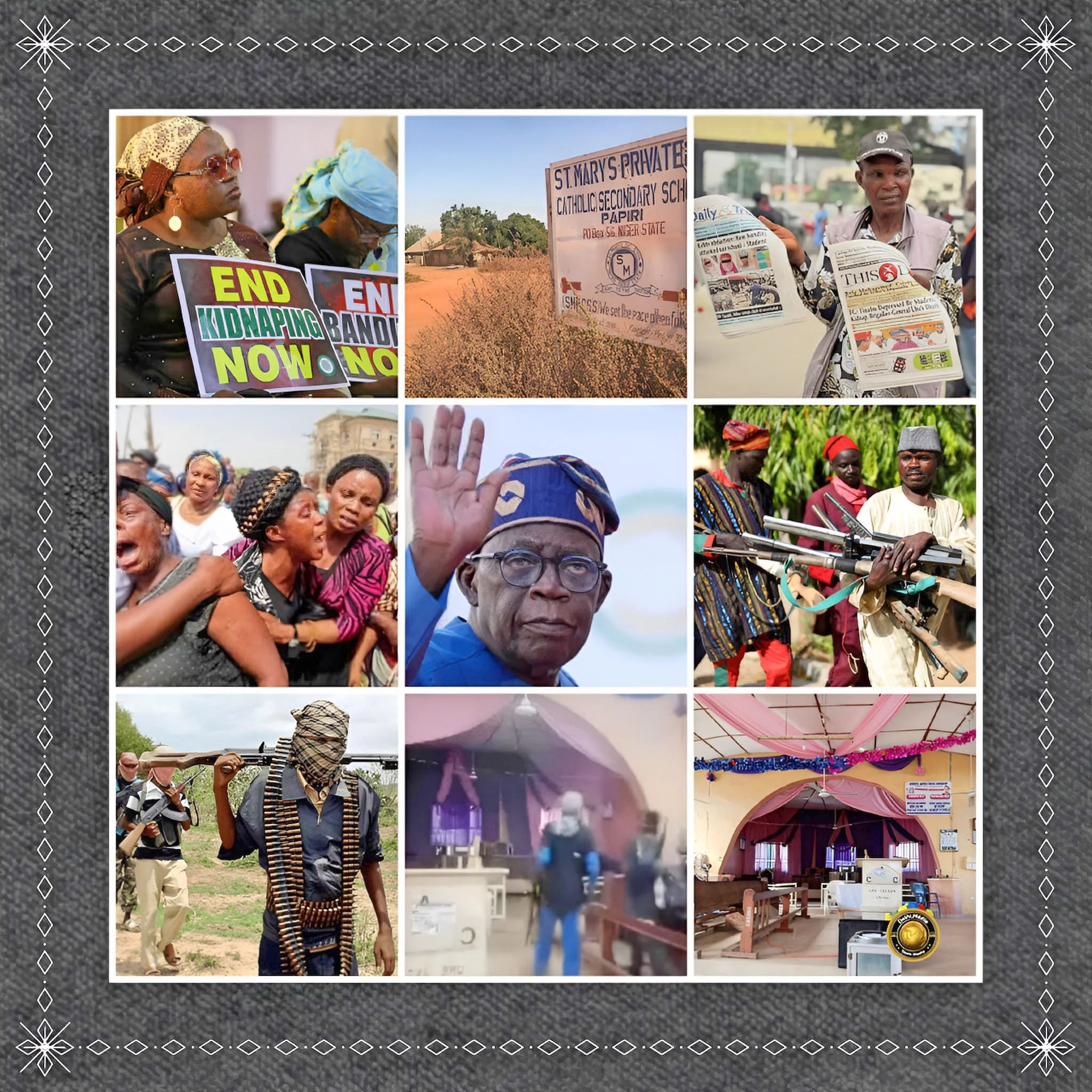
The Trump administration’s pivot began subtly in mid-2025 when evangelical organizations and right-wing media intensified narratives of “Christian genocide” in Nigeria, citing incidents such as the October 14, 2025, attack in Plateau State that killed thirteen Christians.
This rhetorical escalation found receptive audiences within the Trump inner circle, particularly among figures sympathetic to Christian nationalist frameworks prevalent in American conservative politics. By late October 2025, Trump publicly designated Nigeria a “Country of Particular Concern” (CPC) under the International Religious Freedom Act, citing systematic violations of religious freedom. This designation, conceived initially as a normative human rights tool, became weaponized as a justification for immediate threats of military intervention, aid suspension, and visa restrictions.
Key development and timeline
July 2025
Visa tensions emerged when the US embassy unilaterally reduced the validity of visas for Nigerian citizens to 3 months, citing alleged reciprocity imbalances. This represented the first formal indication of deteriorating relations beyond routine diplomatic friction.
October 31, 2025
Trump announced Nigeria’s redesignation as a CPC, accusing the government of tolerating or perpetuating systematic religious freedom violations. The designation conflated complex insurgent violence, communal conflicts, and state capacity limitations into a singular narrative of Christian persecution.
November 1, 2025
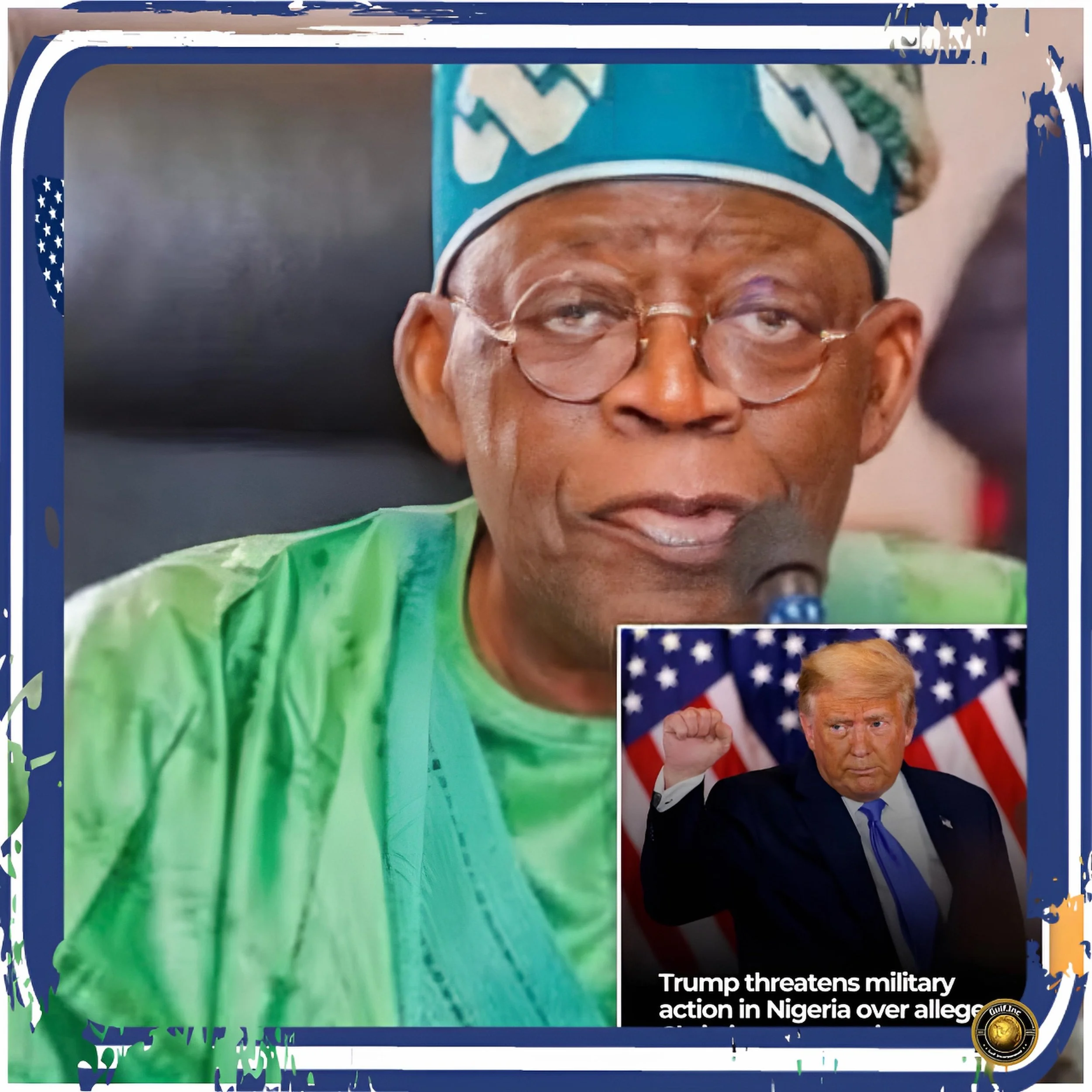
Trump threatened direct military intervention, instructing the Pentagon to prepare operation plans for strikes against militant compounds in northern Nigeria, framing potential action as necessary to halt the alleged “slaughter of Christians.”
October-November 2025
The State Department announced visa restrictions targeting individuals accused of undermining religious freedom, while simultaneously warning of the suspension of approximately $346 million in planned aid.
December 21, 2025
Nigerian Foreign Minister Yusuf Tuggar claimed the diplomatic dispute had been “resolved through firm and respectful engagement,” with both nations moving toward a strengthened partnership. The Federal Government announced a $5.1 billion bilateral health cooperation agreement as evidence of reconciliation.
December 25, 2025
US Africa Command (AFRICOM), operating under Trump’s direct authority and with Nigerian government coordination, executed airstrikes targeting ISIS camps in Sokoto State. AFRICOM reported multiple militants killed but withheld specific casualty figures, citing operational security. Defense Secretary Pete Hegseth signaled “more to come” in cryptic language, suggesting continued operations.
Factual assessment and latest concerns
The December 25 strikes represent the first formal US military kinetic operations within Nigeria’s territory, distinct from previous advisory roles or intelligence-sharing arrangements. AFRICOM’s official statement confirms the strikes were “at the request of Nigerian authorities,” a distinction critical to understanding legitimacy under international humanitarian law.
Nigerian Foreign Ministry statements acknowledged the “precise strikes on terrorist targets” while emphasizing the government’s commitment to protecting “all citizens irrespective of religious beliefs,” signaling both acceptance and diplomatic caution regarding American framing.
Yet several factual complications warrant examination.
First, ISIS-West Africa (ISWAP), the primary jihadist threat in northwestern Nigeria, competes with Boko Haram for militant dominance; both groups have attacked Christian and Muslim civilian populations indiscriminately, often targeting economic infrastructure and state facilities rather than explicitly sectarian targets.
The Plateau State October attack, while devastating, represented one incident within a broader pattern of communal violence driven by resource competition, climate pressures, and weak state capacity rather than orchestrated religious persecution.
Second, US casualty claims and operational effectiveness remain unverified; AFRICOM provided no battle damage assessment, bomb damage imagery, or independent confirmation of militant fatalities.
Third, and most contentiously, evangelical organizations and certain US officials have selectively amplified Christian victimization while minimizing Muslim casualties from similar violence, introducing asymmetrical framing that contradicts ground realities documented by human rights organizations.
The diplomatic context complicates interpretation further. Nigeria’s December 21 claim that tensions had been “resolved” preceded the Christmas strikes by only four days, raising questions about whether the strikes represented punishment for insufficient governmental response or a predetermined operation whose announcement was diplomatically timed.
Defense Secretary Hegseth’s suggestion of “more to come” and Trump’s framing of the operation as the fulfillment of prior threats imply a coercive logic in which military action pressures Nigerian policy alignment rather than responding to specific tactical opportunities. Nigeria’s announcement of the $5.1 billion health partnership appears calibrated to reduce American domestic pressure while signaling compliance with unstated expectations.
Cause and effect analysis
The strikes did not emerge from vacuum operational requirements; instead, they reflect cascading causal chains spanning geopolitical, ideological, and economic dimensions.
The foundational cause stems from the Trump administration’s utilization of religious freedom rhetoric as an instrumental cover for broader strategic repositioning toward Africa.
Evangelical constituencies comprise a core Trump political coalition, wielding disproportionate influence over Middle East and, increasingly, African policy.
Their amplification of Christian persecution narratives—whether substantively accurate or selectively emphasized—provided domestic political legitimacy for military interventions that strategic analysts might justify differently: China containment, diversification of mineral access, and a demonstration of renewed American commitment to African partnerships following perceived Biden-era neglect.
Within Nigeria specifically, the government’s documented struggles against Boko Haram and ISWAP, combined with credible reports of security force abuses against civilians of all faiths, created vulnerability to external pressure. Rather than addressing these capacity gaps through targeted assistance, capacity-building, or joint force-development initiatives, the Trump administration weaponized them as justification for direct military action coupled with aid conditionality.
This approach inadvertently incentivized the Nigerian government to accept American strikes as political cover for its own counterterrorism operations, allowing Abuja to claim foreign partnership while potentially expanding security operations beyond what domestic political constraints might otherwise permit.
The visa restrictions and CPC designation catalyzed further causation. By targeting individual Nigerians involved in alleged religious violence while simultaneously threatening federal aid suspension, Washington introduced layered coercion operating across personal, institutional, and state levels.
The psychological effect
Nigerian decision-makers perceived escalating stakes, leading them to view diplomatic accommodation as cheaper than resistance. Yet this coercion simultaneously damaged the bilateral relationship’s foundational trust.
Nigerian officials, particularly those in foreign affairs and defense communities, experienced the American approach as fundamentally disrespecting Nigerian sovereignty, patronizing toward Nigerian governance capacity, and dismissive of Nigeria’s plural religious character.
The economic dimension operates in parallel. FDI into Nigeria, which reached $6 billion in the first half of 2024, faces uncertainty given America’s demonstrated willingness to weaponize aid and impose sectoral sanctions.
The naira has historically experienced pressure from external shocks; the withdrawal of American aid and uncertainty over capital controls compound devaluation risks.
Conversely, these pressures subtly incentivize Nigeria’s strategic reorientation toward China, which maintains substantial mineral investments, infrastructure projects (notably in rare earth processing and energy), and explicitly non-ideological engagement frameworks.
Trump’s implicit threat—align with American religious freedom priorities or face economic consequences—paradoxically accelerates the diversification of Nigeria’s partnerships away from Washington.
Finally, the operational cause-and-effect chain merits attention. The December strikes, while targeting genuine ISIS militants, establish a precedent for unilateral American military operations within Nigerian airspace.
Each strike, even if tactically precise and diplomatically coordinated, normalizes American military presence in West Africa. Future operations—whether against ISIS, other jihadist franchises, or even politically inconvenient actors—become credible within this normalized framework.
Nigeria’s government, having acquiesced to December’s operation, faces constraints in opposing future interventions without appearing to harbor terrorists or persecute Christians, thus surrendering meaningful veto power over American military activity.
Future Steps and Strategic Implications
Several trajectories appear probable.
First, continued US military operations in Sokoto State and adjacent regions will likely proceed under the rubric of ISIS degradation, each potentially expanding in scope, frequency, or geographic range. AFRICOM’s statement about “increase[d] counterterrorism cooperation efforts” and Hegseth’s hint of “more to come” signal intention toward sustained operational presence.
The December 25 operation thus functions simultaneously as a precedent-setter and a message to both Nigerian and broader African audiences regarding American willingness to conduct unilateral kinetic action within sovereign territories.
Second, the diplomatic normalization announced on December 21 will likely prove fragile. While the $5.1 billion health partnership represents genuine cooperation, it cannot insulate the bilateral relationship from underlying tensions rooted in sovereignty asymmetries and ideological divergence. Future incidents—whether additional Christian casualties from insurgent violence or accusations of insufficient Nigerian governmental response to American demands—will resurrect tensions and threaten renewed aid conditionality. The structural instability of the relationship suggests cyclical crises rather than permanent reconciliation.
Third, Nigeria’s strategic reorientation will accelerate. Chinese engagement in mining, infrastructure, and non-interference frameworks offers attractive alternatives to American conditionality.
The December strikes, even if welcomed operationally, underscore the costs of exclusive American partnerships for Nigerian elites. Expect Nigeria to diversify its military partnerships (potentially expanding defense acquisition from Russia, France, or China), deepen economic integration with BRICS frameworks, and pursue yuan-denominated financing to reduce dollar dependence.
The American intervention, intended to reassert influence, may catalyze the opposite effect.
Fourth, the strikes establish a troubling precedent for religious freedom as justifiable casus belli. Other African nations with significant Christian or Muslim populations facing violence from insurgents may anticipate similar American interventions, potentially internationalizing what remain fundamentally domestic security challenges.
This framework risks weaponizing human rights discourse, transforming advocacy for religious freedom from a normative appeal for non-discrimination into a political instrument justifying military intervention.
Finally, the fragility of Nigerian-American counterterrorism cooperation will become more apparent. ISIS in northwestern Nigeria, while genuine, constitutes a more minor operational threat than Boko Haram in the northeast and banditry in the north-central belt. American obsession with ISIS—driven partially by post-Iraq/Afghanistan trauma and political salience—may misdirect resources away from the security challenges most threatening to Nigerian civilians.
Short-term American operational satisfaction with December’s strikes may not translate into systematic degradation of the jihadist infrastructure underlying West African instability.
Trump’s Christmas Calculus: Faith, Fury, and Foreign Policy drama
President Donald Trump’s authorization of US airstrikes against ISIS camps in Nigeria’s Sokoto State on December 25, 2025, transcended tactical counterterrorism, revealing a meticulously orchestrated fusion of domestic political theater, evangelical appeasement, and assertive signaling amid geopolitical flux.
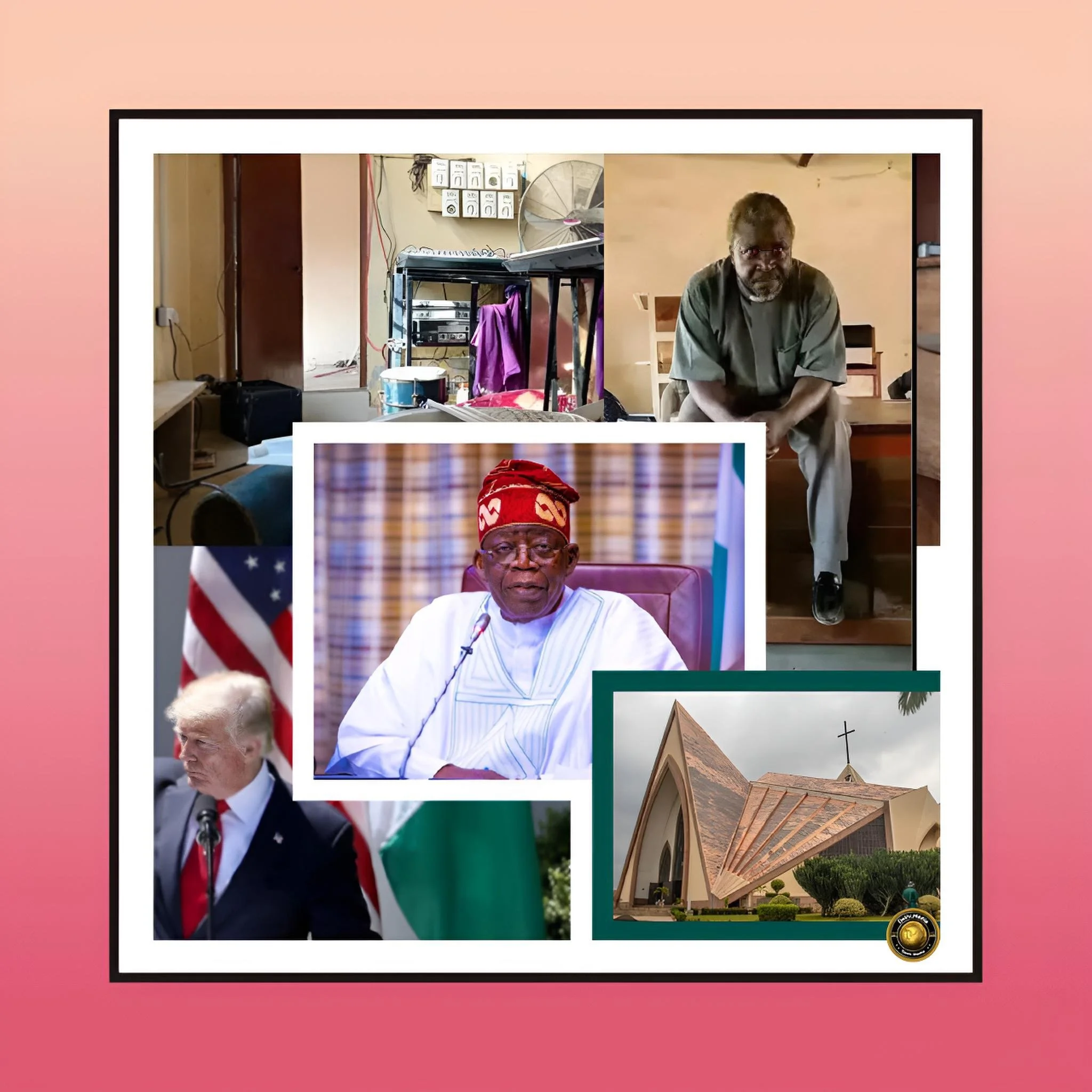
The timing—Christmas night—epitomized symbolic potency: Trump framed the “powerful and deadly” operation on Truth Social as retribution against “ISIS Terrorist Scum” for “viciously killing, primarily, innocent Christians at levels not seen for many years, and even centuries,” directly fulfilling prior threats issued since November when he designated Nigeria a “Country of Particular Concern” for religious freedom violations.
This rhetoric, amplified after Fox News segments on Christian persecution, catered to Trump’s evangelical base—a pivotal 2024 reelection constituency demanding muscular defense of global Christianity—while burnishing his “America First” image as decisive against “Radical Islamic Terrorism,” contrasting Biden-era perceived inaction.
Beneath the religious veneer lurked strategic imperatives.
The strikes, coordinated with Nigerian authorities yet announced unilaterally, reasserted US primacy in Africa post-Afghanistan withdrawal, countering China’s mineral grabs and Wagner/BRICS encroachments in Nigeria’s resource-rich north.
By weaponizing aid threats ($346M suspension) and visa curbs, Trump coerced Abuja into compliance just days after diplomatic “resolution,” normalizing AFRICOM kinetic ops as precedent for broader Sahel interventions. Intelligence on fixed ISIS camps provided operational cover. Still, the Christmas execution maximized narrative leverage: “May God bless our military, and MERRY CHRISTMAS to everyone, including the deceased terrorists,” Trump proclaimed, collapsing complex herder-farmer-insurgent violence into binary moral clarity.
Critics discern coercion over partnership—strikes punished Nigeria’s “failure” despite its denials of sectarian genocide—risking sovereignty erosion and civilian backlash.
Yet for Trump, success metrics align: base energized, adversaries deterred, rivals like Beijing on notice. This “hell to pay” spectacle signals 2026 precedents in which faith-fueled force reshapes US Africa doctrine.
Conclusion
Pentagon Boots Hit African Ground: Trump Unleashes Combat Ops in Nigeria, Signals Broader Africa Military Pivot
The December 25, 2025, US strikes against ISIS in Nigeria mark a watershed moment in American foreign policy toward Africa, crystallizing the Trump administration’s willingness to militarize religious freedom discourse and instrumentalize humanitarian concerns for geopolitical positioning. While the strikes themselves targeted genuine security threats operating with nominal Nigerian government coordination, they represent the culmination of months of coercive diplomacy, threats, aid weaponization, and sovereignty infringement justified through contested religious persecution narratives.
The operation simultaneously strengthens America’s counterterrorism partnership with Nigeria and undermines the foundational trust necessary for sustainable strategic cooperation.
The strikes reveal deeper fissures in American Africa policy: the tension between humanitarian intervention and respect for sovereignty, between ideological clarity and pragmatic complexity, between coalition-building and coercive pressure.
Nigeria’s complex ethno-religious landscape, multi-layered security challenges, and plural democratic culture resist the binary framing that Trump’s approach imposes. Christians and Muslims alike suffer from jihadist violence and state incapacity; American selective concern for one community paradoxically diminishes universal protection for all.
Looking forward, the December strikes establish both military precedent and diplomatic warning. Future American kinetic operations in West Africa will appear credible, potentially reshaping regional security dynamics and great power competition for African partnership. Simultaneously, the coercive framework underpinning the strikes incentivizes Nigeria’s strategic diversification away from exclusive American partnerships toward multipolar engagement with China, Russia, and Arab Gulf states.
The American intervention, meant to reinforce bilateral alignment, may instead accelerate the gradual diffusion of American influence across the continent—a paradoxical outcome reflecting the fundamental tension between short-term military operational success and long-term strategic partnership sustainability.
Local and Analytical Disputes
In November 2025, Nigeria experienced four major abduction cases that were not linked to terrorist activities. Victims came from various communities, not exclusively Christians as Trump claimed.
On December 25th, villagers in affected areas reported no history of ISIS influence, instead describing the violence as banditry rather than ideological terrorism, which adds confusion about U.S. intervention given Trump’s emphasis on protecting Christians.
Nonetheless, official reports indicate jihadist expansion into 500 villages, highlighting gaps in intelligence between local communities and authorities in Abuja and Washington.
Nigeria’s foreign minister's statement
Trump's Nigeria ISIS claims
President Donald Trump announced US military strikes against ISIS in Nigeria, citing attacks on"primarily innocent Christians.
“Nigerian Foreign Minister Yusuf Tuggar, however, stated the strikes were a coordinated effort against terrorism impacting all Nigerians, regardless of faith, in a regional conflict. Analysts also confirmed that ISIS violence affects both Christian and Muslim communities.