Pentagon Warns China Weaponizing Pakistan While Talking Peace With India
Executive Summary
China’s Hidden Hand: How Beijing Uses Peace Talks to Encircle India
The United States Department of Defense has issued a comprehensive warning regarding China’s carefully orchestrated dual-track strategy in South Asia, as detailed in its 2025 Annual Report to Congress on Military and Security Developments involving the People’s Republic of China.
This assessment reveals a geopolitical maneuver of significant sophistication: while Beijing has engineered a tactical de-escalation along the Line of Actual Control with India through an October 2024 disengagement agreement, it simultaneously pursues an aggressive military expansion program centered on Pakistan, serving as a counterweight to growing India-US strategic convergence.
The Pentagon’s analysis underscores that beneath the veneer of border stabilization lies an undiminished commitment to strategic competition, with China maintaining its designation of India’s Arunachal Pradesh as a “core interest” beyond negotiation and actively pursuing overseas military infrastructure across more than twenty nations to achieve power projection capabilities that challenge American regional dominance.
Introduction
Defense Spending Alert: Pentagon Report Signals India Must Accelerate Military Modernization to Compete
The strategic architecture of South Asia stands at an inflection point. For the better part of the past half-decade, India and China have engaged in a grinding confrontation along their contested frontier, marked by intermittent violence, massive military buildups, and mutual recriminations.
The October 2024 disengagement agreement represented a watershed moment—or so it appeared. The unexpected accord, announced just days before Prime Minister Narendra Modi and President Xi Jinping met at the BRICS Summit in Russia, seemed to signal a potential thaw in bilateral relations that had been glacial since the 2020 border clashes that killed at least twenty Indian soldiers.
Pentagon’s latest assessment suggests this narrative of reconciliation fundamentally misunderstands Beijing’s actual strategic calculus. The American defense establishment has concluded that China’s embrace of border calm is neither sincere nor open-ended, but rather a calculated instrumentality—a mechanism to insulate New Delhi from closer alignment with Washington.
At the same time, Beijing accelerates a parallel military partnership with Pakistan that directly undermines India’s strategic position. This paradoxical combination of de-escalation rhetoric and military encirclement represents perhaps the most sophisticated expression of competitive statecraft in contemporary geopolitics.
The October 2024 Disengagement: Tactical De-Escalation Masking Strategic Continuity
The disengagement agreement reached in October 2024 marked the culmination of 21 rounds of corps-level military negotiations conducted over the preceding 4 years. The accord specifically addressed remaining standoff points along the Line of Actual Control in the Depsang and Demchok sectors of eastern Ladakh, establishing structured patrolling arrangements and modalities for troop withdrawal to prevent future confrontations.
The agreement incorporated continuous monitoring mechanisms and established frameworks for resolving disagreements through multiple diplomatic channels, ranging from local military commanders to senior-level political engagement. By most conventional measures, the accord represented a significant achievement in crisis management between two nuclear-armed powers that had stood on the precipice of military escalation.
However, the Pentagon’s interpretation of Chinese motivations reveals a starkly different reading of Beijing’s intentions.
According to the American defense assessment, China’s primary strategic objective behind this de-escalation is not the resolution of the underlying territorial dispute—which remains explicitly unresolved under the agreement’s terms—but rather the stabilization of bilateral relations to prevent India from deepening its strategic alignment with the United States. The timing itself is revealing: the accord’s announcement preceded Xi Jinping’s meeting with Modi at the BRICS Summit by merely two days, suggesting a choreographed approach designed to establish a permissive diplomatic atmosphere.
The Pentagon further notes that, despite this easing of border tensions, India remains fundamentally skeptical of Chinese motives, with continued mutual distrust and structural irritants “almost certainly limiting” the prospects for genuine normalization of the bilateral relationship.
This assessment reflects a sophisticated understanding of China’s long-term strategic competition with the United States in the Indo-Pacific. As India has emerged as a pivotal actor in America’s regional strategy—particularly through deepening defense cooperation, technology transfer agreements, and participation in the QUAD framework alongside Japan and Australia—Beijing has faced a strategic dilemma.
Overt military confrontation with India plays directly into the narrative of Chinese assertiveness that Washington has weaponized to mobilize regional coalition-building against Beijing. A border war would accelerate India’s integration into anti-China security architectures, the opposite of what Beijing desires.
Conversely, demonstrating a willingness to stabilize borders and resume limited people-to-people engagements (including the resumption of pilgrimages to Mount Kailash and the restoration of direct flight connectivity) creates diplomatic space that complicates India’s strategic calculus and introduces ambiguity into New Delhi’s reading of Chinese intentions.
This is competition through the management of ambiguity—a recognition that strategic advantage accrues not only from military superiority but from the maintenance of strategic doubt about adversarial intentions.
The Pentagon’s assessment thus positions the LAC disengagement as part of what Beijing views as a broader competitive strategy: not abandoning its claims or moderating its ambitions, but instead shifting the tactical battleground away from open confrontation toward competition for regional influence and the prevention of Indian-American strategic fusion.
China’s Military Encirclement of South Asia: The Pakistan Nexus
Whilst Beijing extends an olive branch on the LAC, it pursues an aggressive military partnership with Pakistan that constitutes a direct challenge to India’s regional position.
The Pentagon report documents a systematic and accelerating transfer of advanced military capabilities to Islamabad that fundamentally alters the regional military balance.
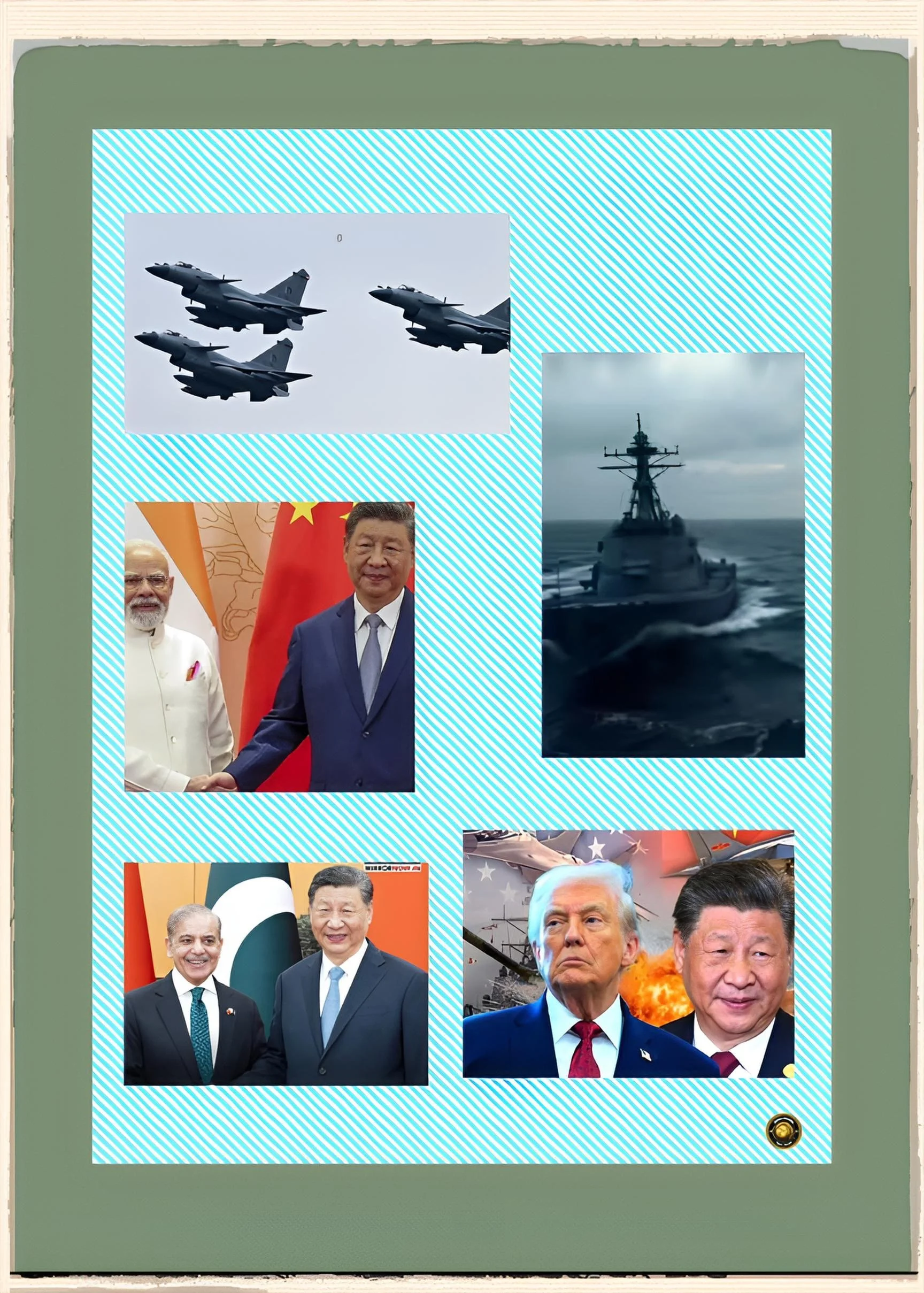
As of May 2025, China has delivered twenty of the thirty-six J-10C multirole fighter jets ordered by Pakistan since 2020. The significance of this export cannot be overstated: Pakistan represents China’s only export customer for this fourth-generation platform, making Islamabad the exclusive recipient of this advanced capability.
The J-10C brings substantial technological advantages over the aging American F-16s that form the backbone of Pakistan’s air force.
More importantly, Pakistan has integrated these aircraft into a coherent operational architecture anchored by China’s advanced PL-15 air-to-air missiles, which independent analysis suggests outrange the latest American AMRAAM variants.
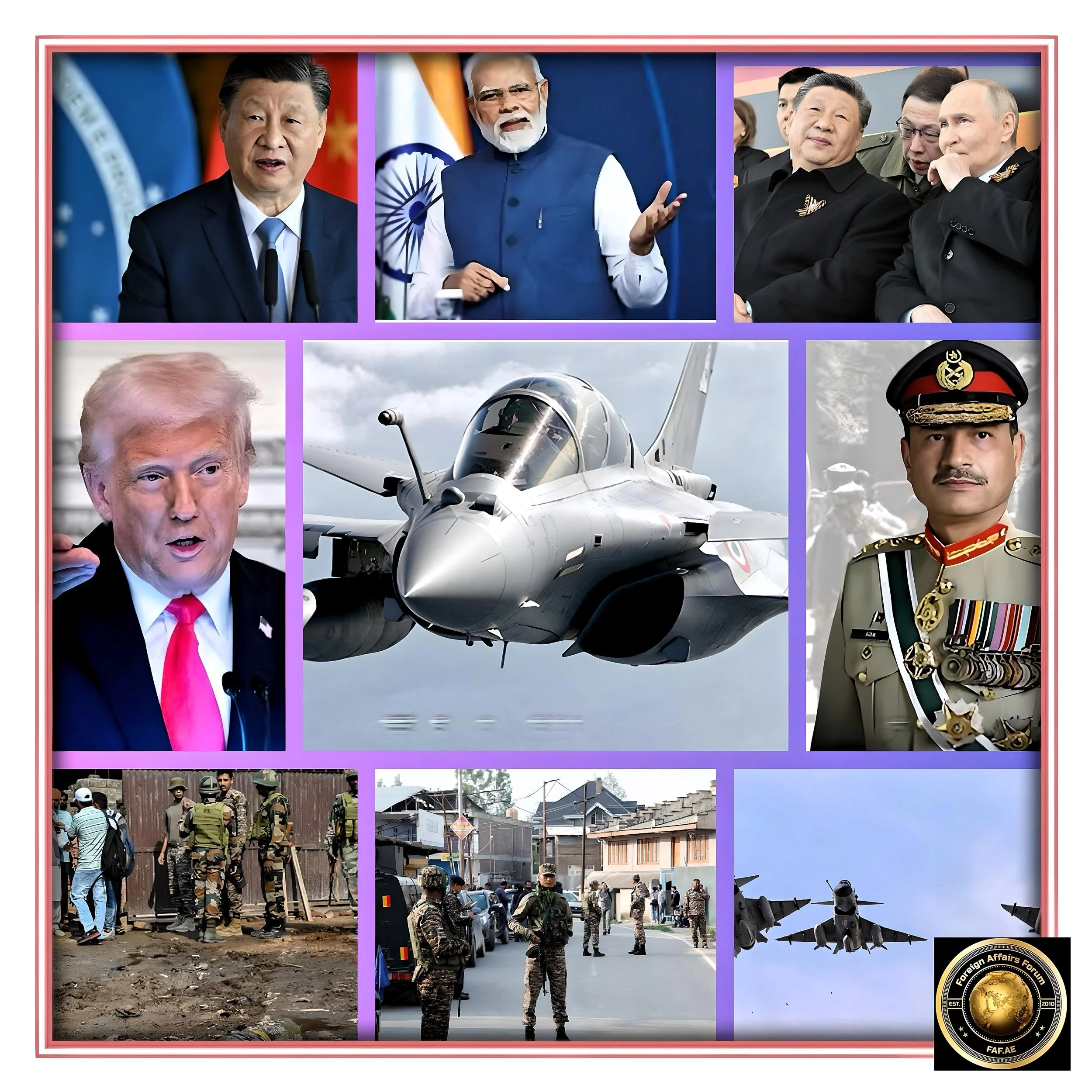
The May 2025 India-Pakistan clashes provided the first real-world validation of this integrated Chinese military architecture, with debris recovered on Indian territory providing evidence of PL-15 deployment and Pakistan’s air force explicitly crediting Chinese systems with critical roles in the conflict.
Beyond fighter aircraft, China has supplied Pakistan with four naval frigates over the past decade and continues co-production of the indigenous JF-17 light combat aircraft, a platform developed jointly by Chengdu Aircraft Corporation and Pakistan Aeronautical Complex. The supply pipeline also includes strike-capable Caihong and Wing Loong uncrewed aerial vehicles, positioning Pakistan with an unprecedented diversified portfolio of Chinese military hardware in the regional context.
December 2024 joint counterterrorism drills between Chinese and Pakistani military forces underscore the operational integration and combat readiness underpinning this relationship. The cumulative effect transforms Pakistan from a declining military power dependent on American forbearance into a platform for China's extended military reach in South Asia. Yet the weaponry transfer represents only one dimension of strategic encirclement. Most concerning for New Delhi is the Pentagon’s identification of Pakistan as a potential location for permanent Chinese military facilities.
The report explicitly lists Pakistan among more than twenty countries where Beijing is “actively considering and planning for additional military facilities to support naval and air projection with associated ground security forces.” Intelligence reporting and investigative journalism have specifically identified Gwadar Port in Balochistan as a likely site for such facilities. With Gwadar positioned at the northern apex of the Arabian Sea and controlling access to critical oil shipping lanes, a Chinese military presence would represent a dramatic extension of Beijing’s military reach into the Indian Ocean region and the Middle East—a development with profound implications for India’s maritime security and regional leverage.
The Pakistan nexus thus reveals China’s willingness to arm a regional adversary of India with technologically advanced systems precisely as it signals diplomatic restraint along the LAC.
This is a textbook application of the divide-and-conquer methodology: prevent India from fully aligning with Washington by promising border stability, whilst simultaneously constraining India’s strategic options through the militarization of its western frontier.
The Arunachal Pradesh Proclamation: Escalation Wrapped in Strategic Doctrine
Amid the diplomatic theater of LAC disengagement and BRICS summit meetings, the Pentagon report contains a revelation that fundamentally contradicts any narrative of Chinese strategic moderation. Beijing has formally elevated India’s northeastern state of Arunachal Pradesh to the status of a “core interest”—a designation previously reserved for Taiwan, the South China Sea, and the Senkaku Islands.
This is not merely a rhetorical escalation; the Pentagon explicitly links this territorial claim to Xi Jinping’s broader doctrine of “the great rejuvenation of the Chinese nation,” a strategic vision that frames 2049 as the deadline for achieving comprehensive restoration of Chinese national power.
The significance of this designation cannot be understated. In Chinese Communist Party doctrine, “core interests” occupy the highest tier of national priority and are explicitly framed as non-negotiable, not subject to compromise, and central to the legitimacy of the ruling regime. By placing Arunachal Pradesh in this category, Beijing signals that this territory is embedded in its most fundamental strategic ambitions—not a negotiable bargaining chip but a claimed patrimony integral to China’s national identity and rejuvenation narrative.
The Tawang sector in particular, which China designates as “South Tibet,” has become increasingly fortified and contested, with Indian military sources describing it as “heavily guarded” with “a very high density” of troops and advanced weapon systems.
This escalation serves multiple strategic purposes.
First, it anchors China’s territorial claims within a comprehensive civilizational narrative that resonates with Chinese domestic constituencies and positions territorial expansion as an inevitable historical destiny rather than an optional foreign policy choice.
Second, it signals to India that the October 2024 disengagement is ephemeral—that Beijing has not abandoned its maximal territorial ambitions but merely shifted tactical approach.
Third, it introduces permanent strategic asymmetry into the relationship: India must maintain constant military readiness in Arunachal Pradesh precisely because Beijing has declared it a core interest, whilst simultaneously accepting offers of friendship and border stability that Beijing offers as a tactical expedient rather than a strategic concession.
The Pentagon’s assessment notes that China’s Western Theatre Command—the military entity responsible for India-related contingencies—has sustained intensive high-altitude, low-oxygen exercises throughout 2024 despite the disengagement talks, maintaining operational preparation for mountain warfare scenarios.
This is the martial equivalent of speaking softly whilst keeping powder dry: diplomatic niceties accompany undiminished military readiness and doctrinal preparations for contested scenarios along the frontier.
The Global Military Architecture: From Djibouti to Gwadar
The South Asian dimension of China’s strategic competition represents merely one theater in a comprehensive global military expansion.
The Pentagon report documents that Beijing operates permanent overseas military facilities in Djibouti (established in 2017) and Cambodia (with operational presence at Ream Naval Base confirmed through 2025), and actively pursues basing arrangements or access agreements in more than twenty additional nations spanning Africa, the Middle East, Southeast Asia, and the Pacific.
This global logistics network serves a dual purpose: it sustains extended military operations beyond China’s immediate periphery, and it projects an alternative vision of regional order in which China, rather than the United States, provides the security infrastructure underpinning regional stability.
The prospect of Chinese military facilities in Pakistan and Bangladesh represents the strategic materialization of this global network within India’s immediate neighborhood. A permanent Chinese military presence in Gwadar would provide Beijing with sustained access to the Arabian Sea and the northern Indian Ocean, capabilities currently constrained by distance and logistical vulnerability.
The PLA Navy’s ongoing pursuit of six additional aircraft carriers by 2035 (which would bring China’s total carrier fleet to nine, exceeding current American deployments in certain regions), combined with the expansion of overseas basing infrastructure, suggests Beijing is constructing the material foundation for a genuinely global military posture, fundamentally altering the balance of power in maritime Asia.
For India, the implication is clear: as China pursues military facilities in Pakistan and Bangladesh, New Delhi faces the prospect of strategic encirclement not through direct military confrontation but through the methodical construction of regional military infrastructure designed to constrain Indian freedom of action and undermine the centrality of India’s position in the Indo-Pacific strategic architecture.
Strategic Implications: The India-US Convergence Under Pressure
The Pentagon’s assessment indirectly illuminates the driving logic behind China’s dual-track strategy by highlighting what Beijing seeks to prevent: the deepening of the India-US strategic partnership.
The October 2025 ten-year defense partnership agreement between Washington and New Delhi represents precisely the kind of strategic fusion that Beijing’s LAC disengagement is designed to forestall.
This partnership expands defense cooperation into cyber and maritime security domains, establishes frameworks for technology transfer and joint capability development, and reinforces India’s integration into the QUAD mechanism alongside Japan and Australia.
From Beijing’s perspective, a fully aligned India-US partnership would constitute an unacceptable encirclement. An India armed with advanced American military technology, integrated into allied command networks, and operationally coordinated with the world’s most technologically advanced military would substantially complicate China’s strategic calculations regarding Taiwan, the South China Sea, and any scenarios involving extended power projection into the Indian Ocean.
An India, conversely, that remains strategically ambiguous—neither fully aligned with Washington nor integrated into Beijing’s regional order—preserves Beijing’s capacity for regional influence and prevents the coalescence of a unified anti-China coalition.
The Pentagon’s warning thus serves to illuminate the stakes of strategic choice before India. The LAC disengagement, framed as a harbinger of improved bilateral relations, is better understood as an attempt to preserve Indian strategic autonomy and prevent New Delhi’s full integration into anti-China security architectures.
Beijing’s calculation appears to be that a modest amount of border stability and diplomatic engagement will prove more effective at constraining India’s security ties with Washington than would continued military confrontation, which accelerates precisely the strategic alignment Beijing wishes to prevent.
The May 2025 Military Precedent: Validation of Chinese Capabilities
The assessment gains crucial credibility when contextualized against the May 2025 India-Pakistan military clash, which represented the first high-intensity, networked combat engagement between Chinese and Western military platforms.
Pakistan’s deployment of J-10C fighters armed with PL-15 missiles against Indian air force platforms resulted in contested claims of eight aircraft shot down and provided the first real-world validation of integrated Chinese military architecture operating in a contested environment.
Independent analysis by the Royal United Services Institute and other defense analysts suggests that the Chinese PL-15 missile demonstrated capabilities superior to comparable Western systems, while acknowledging some limitations in Chinese air defense integration.
For China, the May 2025 conflict served as a strategic validation—proof-of-concept that its military exports can compete effectively against Western platforms and be integrated into cohesive operational architectures that produce battlefield outcomes.
As observers noted, this was China’s “DeepSeek moment” in military affairs—a demonstration to global audiences and potential customers that Chinese defense capabilities have matured into genuinely competitive systems. For India, the implications are sobering: Pakistan’s possession of integrated Chinese military systems and their demonstrated effectiveness against Indian platforms underscore the vulnerability created by Pakistan’s military modernization and suggest that the military balance in South Asia has shifted unfavorably.
Future Pathways and Strategic Imperatives
The Pentagon assessment projects forward several trajectories of concern for Indian security planners.
First, China’s Western Theatre Command will likely expand Combined Arms Division structures and increase deployments of advanced aircraft brigades (particularly the J-20 fighter) to forward positions in Tibet and Xinjiang, sustaining combat readiness despite the LAC disengagement.
Second, the PLA’s ongoing military modernization across all domains—with particular emphasis on hypersonic missiles, advanced air defense systems, and extended-range naval capabilities—will continue eroding the military balance between India and China despite India’s own defense modernization efforts.
Third, the prospect of permanent Chinese military facilities in Pakistan and Bangladesh represents not merely a bilateral issue between Beijing and these nations but a strategic reorientation of regional power structures. Bangladesh, increasingly drawn into China’s economic orbit through massive infrastructure investments and defense partnerships, may become another node in this military network.
A Chinese military presence in Bangladesh would position Beijing with extraordinary strategic leverage over India’s northeastern approaches and the Bay of Bengal, fundamentally altering the regional security environment.
For India, the strategic imperatives flowing from this assessment are multifaceted.
The nation must maintain sustained military readiness and deterrence capability along the LAC despite diplomatic engagement, recognizing that Beijing’s offers of border stability do not signify strategic moderation but tactical repositioning. India must simultaneously accelerate defense modernization through both indigenous capability development and strategic partnerships with the United States, Japan, and Australia, moving from hedging strategies toward more explicit alliance commitments.
The nation must also pursue economic and diplomatic statecraft designed to strengthen ties with Southeast Asian countries, the Pacific island states, and regional maritime actors threatened by Chinese expansion—building a coalition of resistance to Chinese hegemony that extends beyond formal military alliances.
India’s response, according to strategic analysts, should balance “multi-domain deterrence and operational readiness” with calibrated diplomatic engagement that leverages economic statecraft and strategic infrastructure development to counter Pakistan’s appeal for quick transactional deals with Beijing.
This requires moving beyond reactive posturing toward proactive construction of alternative regional connectivity and economic frameworks that offer Indian neighbors the benefits of integration without dependency on Beijing’s infrastructure investments or military patronage.
Conclusion
Reassessing Chinese Strategy in South Asia: De-Escalation as Strategic Instrument, Not Concession
The Pentagon’s 2025 report on China’s military capabilities delivers an assessment that appears paradoxical at first glance: China simultaneously eases tensions with India whilst preparing for sustained strategic competition with New Delhi and arming India’s primary regional adversary. Yet this apparent contradiction dissolves when understood as a manifestation of sophisticated strategic thinking.
Beijing’s dual-track approach in South Asia represents a calculated effort to prevent India from fully integrating into American-led security architectures while preserving China’s long-term territorial and strategic ambitions. The October 2024 disengagement serves as an instrument of strategic distraction—a gift of border stability designed to extract reciprocal Indian restraint in deepening security partnerships with Washington.
Yet the Pentagon’s elevation of Arunachal Pradesh to “core interest” status and documentation of sustained Chinese military preparations along the LAC signal that this tactical de-escalation masks undiminished strategic ambition.
China remains committed to redrawing Asia’s strategic map in conformity with its vision of regional order centered on Beijing’s dominance. The parallel militarization of Pakistan through advanced weapons transfers and the exploration of permanent military facilities serves as the enforcement mechanism for this vision—a constraint on Indian strategic options and a demonstration to regional actors that alignment with China offers security benefits that alignment with distant American partners cannot match.
For India, the strategic moment demands clear-eyed recognition that the peace offerings of 2024 represent neither genuine reconciliation nor strategic moderation but sophisticated competition conducted through the management of ambiguity.
The nation must respond with a strategic approach that combines operational readiness with diplomatic confidence, leveraging growing convergence with the United States and the QUAD, whilst building independent defense capabilities to reduce reliance on external partners.
Only through such a multifaceted strategic response can India navigate the treacherous waters of simultaneous engagement and competition with Beijing, whilst preventing its strategic encirclement through the cumulative effects of China’s military partnerships in Pakistan, Bangladesh, and beyond.