Betrayal of Arab Leadership: Trump Enables Israeli Colonization While Claiming Opposition
Executive Summary
Ceasefire in Collapse: Israel’s Systematic Violations, West Bank Annexation Expansion, and the Unraveling of Trump’s Gaza Peace Plan
The ceasefire that commenced on October 10, 2025, between Israel and Hamas has mainly become performative, with the fragile agreement deteriorating under the weight of systematic violations by both parties and fundamental strategic incompatibilities that render the Trump administration’s phase two—designed to achieve Hamas disarmament and Israeli withdrawal—virtually impossible. While Palestinian authorities document 875 ceasefire violations by Israeli forces resulting in over 400 deaths since October, the Israeli military simultaneously chronicles 64 violations by Hamas-aligned groups, with the core dispute now centering on the return of a single deceased hostage whose body appears to be leveraged as political leverage.
More significantly, the Israeli government has undertaken an aggressive simultaneous campaign of West Bank settlement expansion and legalization of 19 unauthorized outposts, contradicting Trump’s explicit public statements rejecting annexation and revealing a troubling contradiction between the Trump administration’s diplomatic messaging and its apparent tacit coordination with Israeli settlement policy.
Defense Minister Israel Katz’s December 23 declaration that Israel would never leave Gaza and would establish settlements there, followed by a forced walkback, crystallizes the profound gap between stated ceasefire obligations and actual Israeli strategic intentions. With the Netanyahu-Trump meeting scheduled for December 29, the ceasefire faces a critical juncture. Either the fundamental grievances propelling both sides toward renewed conflict will be addressed, or the agreement will remain a hollow performance masking an essentially unchanged occupation and military reality.
Introduction
The Phantom Ceasefire: Why Trump’s Gaza Peace Plan Is Already Dead
For over two years, Israel waged what international observers characterized as a devastating military campaign against Gaza, resulting in more than 70,000 Palestinian deaths and the destruction of approximately ninety percent of the territory’s infrastructure. The October 10, 2025, ceasefire, brokered under the Trump administration’s twenty-point peace framework, was intended to establish a pathway toward Hamas disarmament, Israeli military withdrawal, and the establishment of technocratic Palestinian governance.
Fewer than three months into this agreement, the ceasefire has become characterized by ritualistic violence, diplomatic theater, and a fundamental absence of movement toward the comprehensive resolution the international community was promised.
The ceasefire’s architecture, comprising three phases, was designed to progress sequentially
Phase One would involve hostage and detainee exchanges alongside Israeli tactical repositioning behind a demarcated “Yellow Line”
Phase Two would mandate Hamas disarmament, international peacekeeping force deployment, and further Israeli withdrawal;
Phase Three would establish permanent governance structures and reconstruction.
Yet as December 2025 concludes, Phase One remains formally incomplete while Phase Two has become mired in conditions that all parties acknowledge render progress impossible.
This stagnation does not reflect mere negotiating difficulties but rather reveals structural incompatibilities between stated agreements and the actual strategic objectives of the principal actors.
The Violation Paradox: Competing Counts and Systemic Breaches
The fundamental disagreement over ceasefire violations illuminates the profound gap between the conflict’s parties. Palestinian authorities, through Gaza’s Government Media Office, have documented 875 separate Israeli violations of the ceasefire as of late December, encompassing 142 distinct shooting incidents targeting civilians, 21 ground incursions across the demarcation line, 228 air and artillery strikes, and more than 100 residential demolitions.
These violations have resulted in 406 Palestinian deaths and 1,118 wounded individuals, with an additional 653 bodies recovered from collapsed structures.
The United Nations, through its Office of the High Commissioner for Human Rights, independently documented over 350 attacks since the ceasefire commenced, providing external validation for the Palestinian accounting.
Conversely, the Israeli Defense Forces maintain a record of 64 Palestinian ceasefire violations as of mid-December, concentrating primarily on incidents involving Hamas members emerging from underground tunnel networks to ambush Israeli troops or fire upon soldiers positioned in Rafah and northern Gaza sectors.
The disparity in these figures—a roughly fourteen-fold difference—reflects competing interpretations of ceasefire parameters. Israeli officials contend that Palestinian militants crossing the demarcation line with hostile intent constitute categorical violations. In contrast, Palestinian authorities characterize Israeli air strikes, artillery bombardments, and residential demolitions as the systematic violations of the agreement’s humanitarian and military components.
This accounting dispute obscures a more consequential pattern of violations: the systematic breaches by Israel of ceasefire provisions explicitly delineated in the agreement. The ceasefire mandated that the Rafah crossing with Egypt remain open without restrictions to facilitate the passage of wounded individuals and humanitarian cargo; as of late December, Israel maintained the crossing closed, trapping an estimated 10,000 critically injured Palestinians unable to access medical care outside the enclave.
The agreement stipulated that 600 humanitarian aid trucks enter Gaza daily; actual figures have averaged approximately 150, a seventy-five percent shortfall. The agreement explicitly prohibited the entry of essential medical supplies, frozen protein sources, and heavy machinery required for rubble clearance; violations were documented across multiple humanitarian monitoring bodies.
These are not incidental violations but rather constitute systematic starvation protocols that violate the agreement’s humanitarian framework. The Israeli Ministry of Health, according to Palestinian medical authorities, reported that over 1,200 Palestinian patients have died from the inability to access necessary medications, with chronic illness patients facing imminent mortality due to medicine shortages. The destruction of Gaza’s agricultural infrastructure—with more than eighty-six percent of the territory’s arable land damaged or rendered unusable—continues unchecked, extending an economic siege disguised as military operations.
West Bank Expansion: Simultaneous Colonization While Negotiating Peace
Parallel to negotiations ostensibly designed to end the Gaza conflict, the Israeli government has executed the most aggressive West Bank settlement expansion program in recent years. On December 13, 2025, the Israeli security cabinet approved the legalization of 19 unauthorized outposts, including the reestablishment of Ganim and Kadim settlements that were dismantled in 2005, alongside the approval of 764 new housing units across existing settlements.
Finance Minister Bezalel Smotrich, whose coalition support proves essential for Netanyahu’s government, has earmarked $843 million over five years for settlement expansion infrastructure, explicitly framing the investment as “de facto annexation.”
The strategic implications of this settlement expansion extend beyond mere demographic engineering. The E1 corridor—a strategic route between settlements that would effectively sever territorial contiguity between Palestinian population centers—has been a particular focus, with approval for the expansion of the Atarot settlement advancing in December 2025.
The Nahala movement, which organizes settlement establishment, has lauded the cabinet decision as “an impressive achievement” that could facilitate future Israeli settlements in Gaza itself. This statement reveals the settlement movement’s strategic logic: the West Bank colonization serves as a template for the potential recolonization of Gaza.
Most critically, Israeli media outlets reported that the settlement legalization decision was “coordinated with the US in advance,” according to Israeli reporting from December 12, 2025. This revelation creates a profound contradiction with Trump’s repeated public statements rejecting annexation and settlement expansion.
The Trump Contradiction: Public Opposition, Private Coordination
Throughout 2025, President Trump has issued increasingly emphatic public statements rejecting Israeli annexation of the West Bank. In September 2025, Trump declared to journalists at the Oval Office, “I will not permit Israel to annex the West Bank. Absolutely not, it will not occur.” In his Time magazine interview released in October, Trump reiterated, “It won’t occur because I promised Arab nations it wouldn’t,” further warning that “Israel would lose all support from the United States if that happened.” In December, Trump emphasized this position again, stating, “The West Bank is not going to be annexed by Israel. The policy of the Trump administration is that Israel will not annex the West Bank.”
These statements carried significant weight, as Trump conditioned Arab state participation in the Gaza peace framework on explicit guarantees against West Bank annexation.
Regional leaders, according to diplomatic accounts, established West Bank non-annexation as a “red line,” with Saudi Foreign Minister Faisal Farhan emphasizing that Arab states understood “the dangers associated with any form of annexation in the West Bank” for both Gaza peace prospects and the broader Abraham Accords framework. The UAE specifically declared annexation a “red line” that would halt regional integration efforts.
Yet simultaneously, Israeli media reports indicate that the December 13 settlement legalization and $843 million five-year expansion budget were “coordinated with the US in advance.”
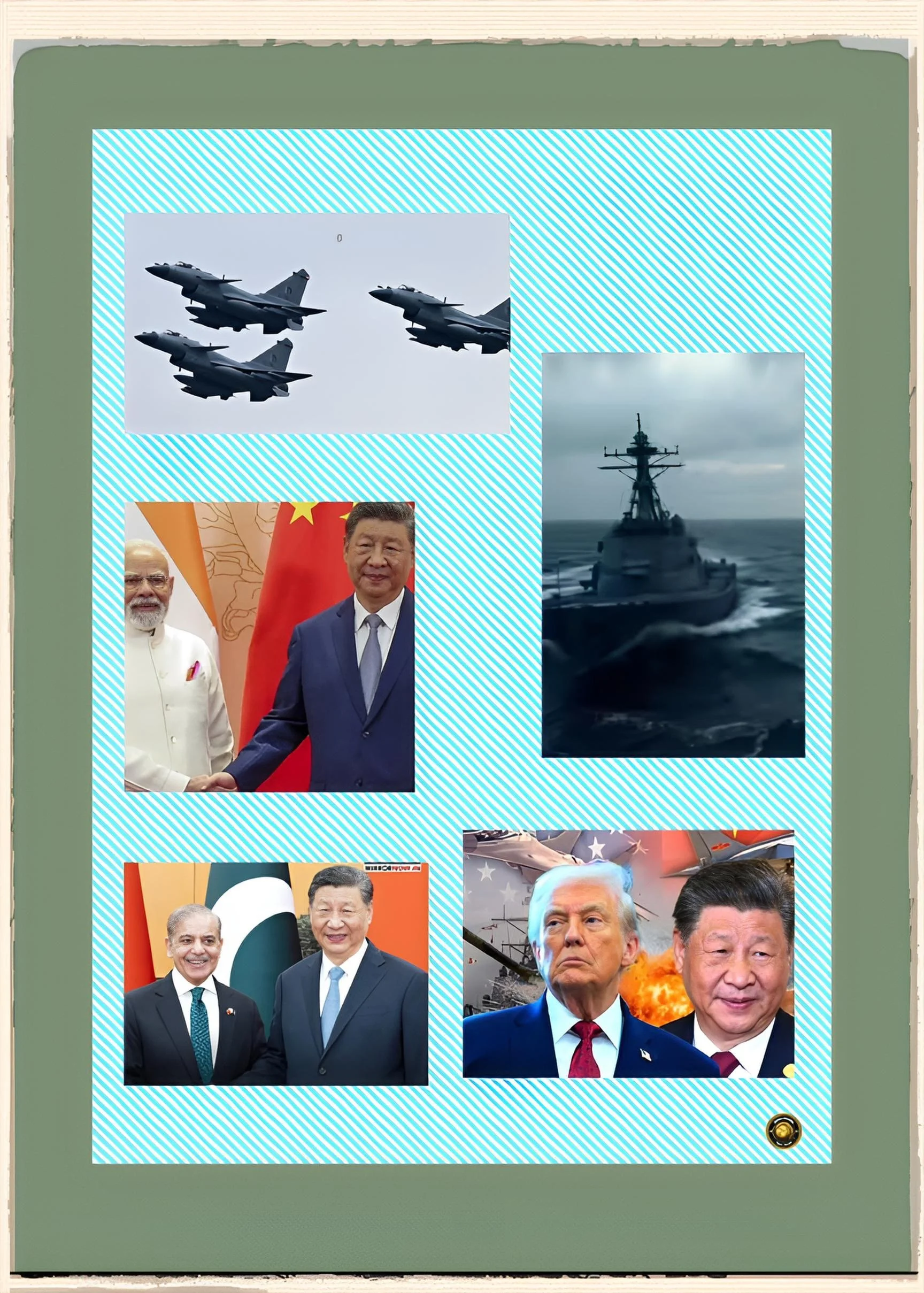
Trump Said No Annexation—Then Secretly Coordinated With Israel’s Settlement Expansion
The logical interpretation is that the Trump administration permitted, or tacitly accepted, the settlement expansion while maintaining public rhetorical opposition. This diplomatic arrangement allows Trump to preserve regional relationships while enabling Israeli colonial expansion. This represents either a significant intelligence failure in the Trump administration’s oversight of Israeli government actions or a deliberate coordination that contradicts public statements. Neither interpretation enhances American credibility with regional partners, allegedly essential to the peace process.
Phase Two as Mirage: The Hamas Disarmament Impasse
The centerpiece of Trump’s phase two—Hamas disarmament—has crystallized as the ceasefire’s structurally impossible condition.
The Trump framework explicitly requires that Hamas surrender its weapons to an international stabilization force, thereby terminating the organization’s military capacity and its control of Gaza’s security architecture. Hamas leadership has consistently and unambiguously rejected this requirement, with political bureau member Khaled Meshaal stating that disarmament would constitute “removing the soul” of the organization. Hamas has proposed alternatives: either a seven-to-ten-year freeze on weapons deployment. At the same time, the organization maintains possession, or weapons transfer exclusively to a future Palestinian state government with territorial sovereignty and international recognition.
From Hamas’s perspective, the disarmament requirement represents an existential threat. The organization emerged from decades of Israeli occupation as a resistance movement; accepting disarmament under international auspices would transform it from a militant organization to a political movement dependent on the goodwill of global powers and Israeli security decision-making. The organization has communicated to mediators that disarmament is acceptable only through negotiations yielding a Palestinian state with East Jerusalem as its capital and permanent borders. Given that both the Trump administration and Israel explicitly oppose Palestinian statehood—a position articulated repeatedly by Netanyahu and never disavowed by Trump—Hamas’s disarmament remains a categorical impossibility under current political parameters.
Senior Hamas official Bassem Naim stated the organization’s willingness to engage in “comprehensive dialogue” to “freeze” weapons deployment or to avoid escalation, framing the position as a form of flexibility. However, the carefully chosen language reveals the organizational constraints: Hamas will discuss weapons freeze arrangements, not disarmament. Israeli intelligence, conversely, has assessed that Hamas is deliberately stonewalling hostage returns—particularly the body of the final deceased hostage, Ran Gvili—to prevent Phase One from concluding and thereby delay Phase Two’s commencement.
The Hostage Leverage: Ran Gvili and the Tactical Stalling
Master Sergeant Ran Gvili, a 24-year-old member of Israel’s elite counter-terrorism police unit (Yasam), was killed defending Kibbutz Alumim on October 7, 2023, during the initial Hamas assault. His body remains in Hamas custody as of late December 2025—the sole remaining deceased hostage not yet returned.
The ceasefire agreement mandated that Hamas return all hostages, living and deceased, within seventy-two hours of October 10; Hamas released all twenty living hostages but has withheld Gvili’s remains for over two months since the ceasefire commenced.
Israel has conditioned Phase Two advancement explicitly on Gvili’s return, with Netanyahu and government officials repeatedly stating that progression cannot occur until this final hostage reaches Israeli custody.
The Final Hostage: How Ran Gvili’s Remains Became Leverage in Peace Negotiations
Hamas has conveyed through various communications that specialized recovery equipment is required to locate Gvili’s body in Gaza’s rubble, a claim that Israeli officials characterize as deceptive. The Israeli government, according to intelligence reports, has informed mediators that Hamas knows precisely where Gvili is buried and is deliberately withholding his remains.
The strategic implications are clear: Hamas benefits from indefinitely prolonging Phase One by maintaining the hostage situation, thereby preventing activation of Phase Two’s disarmament requirements. For Hamas, as long as a deceased hostage remains unaccounted for, the organization avoids the existential pressure of Phase Two’s demilitarization provisions.
Conversely, Israel cannot accept Phase Two advancement. At the same time, a deceased hostage remains in Hamas custody, as such a decision would be politically catastrophic for Netanyahu’s government, particularly given the hostage families’ consistent messaging that the war cannot conclude until all hostages—including deceased ones—return home. This creates a deliberate mutual paralysis that benefits neither side but prevents escalation.
Defense Minister Katz and the Slip of Strategic Intent
On December 23, 2025, Israeli Defense Minister Israel Katz attended a celebration of new West Bank settlement projects and expressed views that shattered diplomatic euphemism. “We are entrenched in Gaza, and we will never depart from all of Gaza,” Katz stated before an audience of government officials and military leaders. “Such a scenario will not occur.” He further indicated that Israel would ultimately establish Jewish settlements in Gaza.
These remarks represent not aberrant statements but rather an articulation of the strategic position held by significant portions of Israel’s ruling coalition, particularly the far-right Smotrich and the Nahala settlement movement. Yet they directly contradict Trump’s ceasefire framework, which explicitly states “Israel will not occupy or annex Gaza” and that “the Israel Defense Forces (IDF) will withdraw based on standards, milestones, and timeframes linked to demilitarization.”
Within hours, Katz’s office released a clarification stating that his comments were made in a “security context” and reiterating that Israel “has no intention to establish settlements in the Gaza Strip.” However, the attempted walkback failed to contain the damage. A US official, speaking anonymously to press outlets, stated bluntly: “The more Israel provokes, the less the Arab countries will want to work with them.” The statement captures the fundamental problem: Israeli officials continue articulating positions that contradict both Trump’s framework and the conditions Arab states have established for their participation in regional peace initiatives.
The Netanyahu-Trump Meeting: December 29 and Uncertain Outcomes
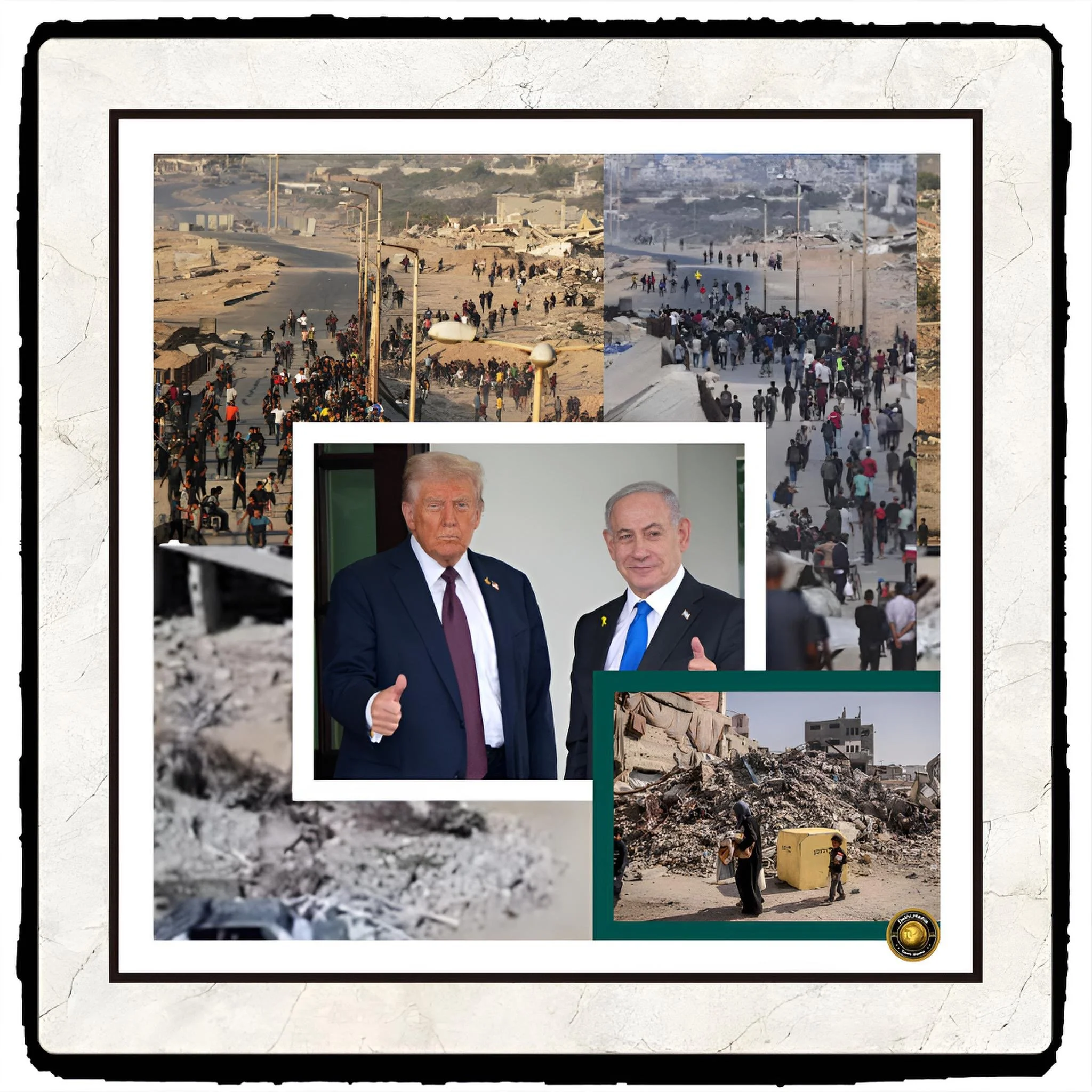
Netanyahu is scheduled to meet Trump at his Mar-a-Lago estate in Florida on December 29, 2025, ostensibly to discuss the advancement and the mechanics of deploying the international stabilization force. The meeting carries disproportionate significance given that fundamental obstacles remain unresolved: Hamas disarmament remains categorically impossible under current conditions; the hostage situation shows no resolution pathway; Israeli settlement expansion accelerates despite Trump’s public opposition; and Defense Minister Katz has articulated permanent Israeli occupation of Gaza as government policy.
The Netanyahu administration will likely press Trump to accept a modified phase two framework that postpones Hamas disarmament, reduces the proposed international stabilization force to a symbolic deployment, and accepts indefinite Israeli military presence in Gaza under the guise of security requirements.
Conversely, Trump may attempt to restore diplomatic momentum by conditioning continued US aid on Hamas disarmament progress and demanding that Israel provide explicit withdrawal timelines—demands that Netanyahu’s government has consistently rejected.
The December 29 meeting will likely produce rhetorical commitments to phase two advancement while fundamental conditions rendering such advancement impossible remain unaddressed. Such an outcome would extend the ceasefire’s phantom status, allowing all parties to maintain the fiction of peace while continuing military operations and colonial expansion at reduced intensity.
Implications: The Structural Impossibility of Phase Two
The Gaza ceasefire’s decay reflects not tactical or diplomatic failures but rather structural incompatibilities between the stated objectives of the peace plan and the actual strategic positions of the principal actors. Israel’s government, particularly its right-wing coalition partners, envisions indefinite control of Gaza with ultimate potential for settlement recolonization; Hamas, conversely, cannot accept disarmament without territorial sovereignty and permanent borders. The Trump administration has publicly opposed West Bank annexation while tacitly enabling settlement expansion, creating contradictions that undermine regional partner confidence in American commitments.
Under these conditions, phase two cannot be achieved through negotiation. It could theoretically be imposed through force—the mechanism Netanyahu has referenced repeatedly when suggesting that Hamas disarmament will occur “the hard way” if not achieved through agreement. However, such renewed military operations would terminate the ceasefire entirely, recreating the conflict conditions that produced the current humanitarian catastrophe. The Palestinian territories would devolve into a state of perpetual low-intensity conflict punctuated by periodic escalations, while Israeli security concerns would remain permanently unresolved through military means alone.
The December 2025 developments confirm a pattern evident since the ceasefire’s inception: both sides are using the agreement as a mechanism to pursue military advantages without the escalatory costs of full-scale conflict. Israel reduces Palestinian rocket attacks while maintaining occupation and settlement expansion; Hamas preserves its organizational infrastructure while avoiding the asymmetrical casualties of large-scale war. The ceasefire has become a tool for managing rather than resolving the underlying conflict.
Conclusion
Palestinian Statehood Remains Impossible Under Current Framework—Here’s Why
The Gaza ceasefire stands as a case study in the limitations of diplomatic frameworks when fundamental strategic objectives remain incompatible.
Hamas cannot disarm without threatening its organizational survival; Israel cannot accept Palestinian sovereignty without contradicting its territorial maximalist objectives; the Trump administration cannot simultaneously guarantee West Bank non-annexation while enabling settlement expansion without destroying regional credibility. These are not differences amenable to negotiation but rather reflect structural positions rooted in the parties’ core interests.
The immediate consequence is that phase two—the conflict’s intended resolution pathway—remains a fictional construct discussed in diplomatic salons while the territorial reality of occupation, colonial expansion, and military domination continues unchanged.
The second-order consequence is erosion of American credibility in the region, as Trump’s public statements regarding annexation opposition fail to align with tacit coordination enabling settlement expansion.
The third-order consequence is perpetual Palestinian suffering, as humanitarian violations continue unabated within the ceasefire’s framework while blockades on aid and medical supplies maintain a state of managed humanitarian catastrophe.
Netanyahu’s December 29 meeting with Trump will likely produce formulaic statements regarding phase two’s imminent commencement and optimistic projections regarding international stabilization force deployment.
These statements will carry no weight among the conflict’s actual decision-makers, who understand that the structural conditions rendering phase two impossible remain unchanged.
The ceasefire will thus continue—neither genuine peace nor resumed warfare, but rather an extended state of military occupation dressed in diplomatic language, with the international community witnessing its legitimacy yet powerless to alter its tragic trajectory.