The Credibility Cascade Accelerating: Are the US, Israel, China, and Russia Following the Soviet Collapse Trajectory? -Part VIII
Executive Summary
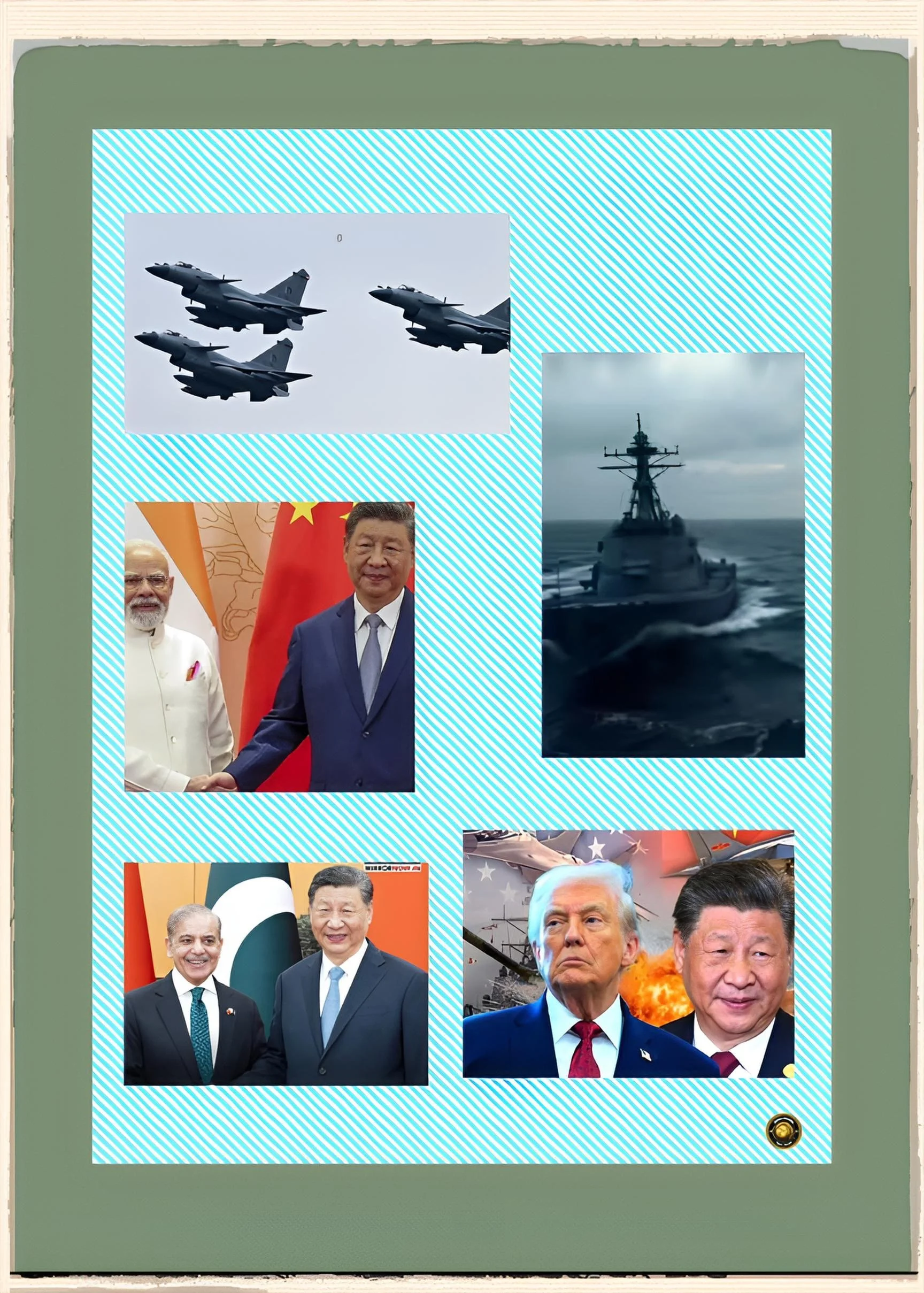
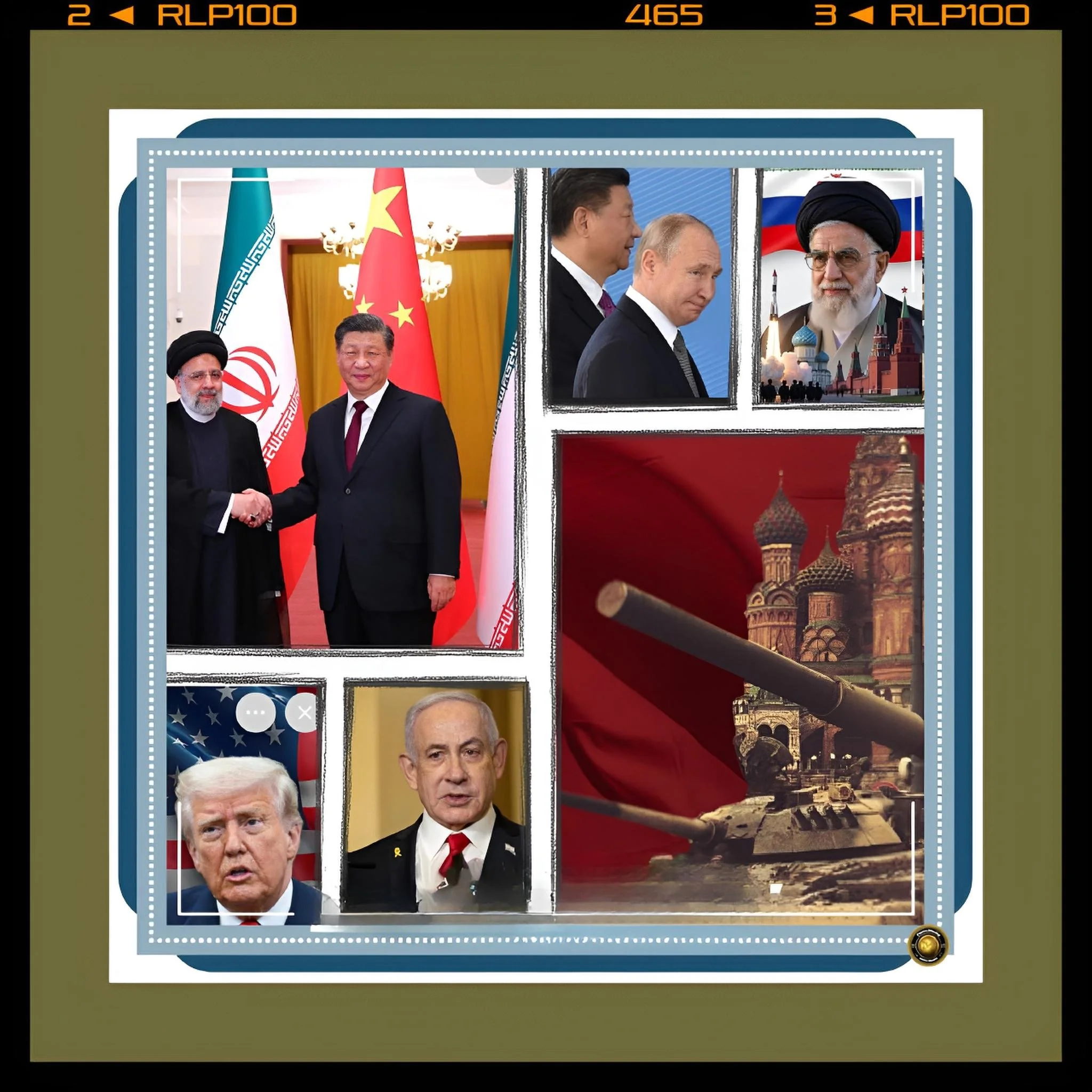
Four major powers—the United States, Israel, China, and Russia—currently exhibit patterns of credibility erosion, public confidence decline, and structural economic vulnerabilities that replicate the mechanisms that preceded the Soviet Union’s institutional collapse between 1989 and 1991.
The US faces eroding military trust (45 percent in 2023 versus 70 percent in 2018), allied doubts about reliability (77 percent of Japanese questioning US commitment to their defence), and a military overcommitment across sixty-plus countries it cannot credibly defend. Israel confronts an international credibility collapse (net favorability reversed from positive to negative across most developing economies), combined with unsustainable military spending (8.8 percent of GDP), driving budget deficits toward 16 percent of GDP.
China experiences a profound domestic confidence crisis (citizens are the least confident in their futures in three decades), economic stagnation masked by export dependence, youth unemployment at 20.4 percent, and public debt approaching 125 percent of GDP, with fiscal deficits exceeding 12 percent annually.
Russia maintains war-driven growth that is arithmetically unsustainable, facing simultaneous demographic collapse through military mobilisation, economic isolation through sanctions, and mounting evidence that the war economy cannot be sustained beyond finite timelines.
The critical distinction from the Soviet precedent is timing and simultaneity: the Soviet Union experienced decline over multiple decades, creating extended opportunities for adjustment; the contemporary four-power system faces compressed timelines in which multiple crises are converging, threatening cascading credibility collapses that could reshape the global order within years rather than decades.
This analysis examines whether these parallels constitute genuine warning signals of systemic fragility or merely superficial resemblances to historical patterns.
Introduction
The Soviet Union’s collapse proceeded not from external military defeat but from cascading credibility failures that compressed institutional disintegration into four months between August and December 1991. The Eastern Bloc’s peaceful transition away from communism (accomplished without Soviet military suppression) signalled that Moscow would not enforce hegemony through force. The failed August 1991 coup demonstrated that even the Kremlin’s closest officials could not command the military's obedience. Elite defection cascaded as regional leaders calculated that independence from Moscow offered superior prospects to remaining within a collapsing system. Within months, the multinational federation had dissolved entirely.
The contemporary global system operates under fundamentally different structural conditions from the late Soviet Union: the US retains military overmatch despite declining relative power, China possesses economic integration into global supply chains that the USSR never achieved, Israel commands direct support from the dominant power, and Russia operates at a smaller scale with less comprehensive global reach. Yet the mechanisms through which credibility erodes—public opinion gaps, allied doubt, demonstration effects, elite calculation shifts—remain operative regardless of scale or circumstance.
The critical question is whether the four major powers now exhibiting credibility erosion are merely experiencing normal fluctuations in power and influence, or whether they are replicating the cascading mechanisms that historically precede rapid institutional transitions.
The evidence suggests sufficient convergence in vulnerability patterns to warrant serious analytical attention, though divergent outcomes remain possible based on political choices made in the next two to three years. The window for reversing current trajectories is narrowing rapidly.
The United States: Declining Dominance and the Credibility Trap Tightening
The United States confronts a paradoxical credibility challenge: it remains the global dominant power with unmatched military capabilities, yet its credibility—defined as the degree to which allies and adversaries believe the US will execute its commitments despite costs—is eroding measurably and across multiple domains simultaneously.[britannica]
The foundation of the decline in American credibility concerns the public trust deficit in military institutions.
Military trust has plummeted to 45 percent from 70 percent in 2018—a 36 percent decline in six years. This represents not merely abstract polling deterioration but a material loss of the domestic political foundation necessary for credible military commitments. Leaders cannot execute military operations without public support; if the American public does not trust the military to conduct operations competently, leadership lacks the political capacity to mobilise public support for military action abroad.
The decline stems from visible military failures and institutional scandals: sexual harassment, leadership misconduct, resource misuse, and most significantly, the chaotic Afghanistan withdrawal. Each failure confirms to the public that military institutions lack competence to execute strategic objectives, thereby undermining public willingness to support additional military commitments.
The allied credibility crisis has accelerated dramatically. Japanese public opinion surveys revealing that 77 percent of Japanese citizens doubt the US will defend Japan in a military crisis constitute an unprecedented warning signal. Japan is the most strategically crucial American ally in the Indo-Pacific, has consistently aligned with US strategy despite its geographical proximity to China, and has traditionally provided implicit support for US alliance systems. If three-quarters of the Japanese public doubts American commitment, this reflects not merely Japanese public opinion but rather Japanese public assessment shaped by multiple signals: the Afghanistan withdrawal, initial US hesitation on Taiwan, Trump administration threats to withdraw from NATO, and contemporary concerns about American domestic political dysfunction.
The Taiwan credibility gap represents the systemic crisis point. The US maintains an implicit commitment to Taiwan’s defence whilst declining to state that commitment explicitly—a strategy of “strategic ambiguity” designed to deter both Chinese military action and Taiwanese independence. However, the ambiguity creates a credibility vacuum that adversaries are exploiting. Leaked Pentagon assessments reveal that the US would likely lose a high-end conflict with China over Taiwan under current military conditions.
Simultaneously, American public opinion polling shows majority support for Taiwan’s importance but substantially lower support for military action to defend Taiwan. This gap between policy commitment (implicit defence of Taiwan) and public support (uncertain about military action) creates a credibility vulnerability. If Beijing assesses that the US lacks both military capability and public support for Taiwan's defence, deterrence collapses.
The structural economic foundation amplifying American credibility vulnerability concerns relative to financial decline. Chinese purchasing power parity GDP now approximates 115 percent of US GDP, with Chinese foreign reserves 28 times larger than US reserves. The US military budget remains larger in absolute terms, but the declining economic base supporting military spending raises long-term concerns.
The Soviet Union faced this precise dynamic in the 1980s: the USSR spent 17-50 percent of GDP on defence (depending on accounting methodology) whilst the American economy grew faster, gradually tilting the military-economic balance against the Soviet Union.
The US is not yet approaching Soviet-era defence spending percentages (currently 3.5 percent of GDP), but the trajectory toward higher spending to maintain capability ratios remains clear.
The allied credibility problem has been amplified by the Trump administration’s approach to alliance management. Broad tariffs against allied countries, threats to withdraw from NATO, and demands for increased defence spending can be strategically justified. Still, they simultaneously undermine the implicit bargain upon which alliances rest: the dominant power provides security guarantees in exchange for aligned foreign policy and acceptable trade arrangements.
When the dominant power imposes trade penalties on allies while simultaneously questioning whether it will maintain security guarantees, the alliance bargain deteriorates. Allied leaders face increasing domestic pressure to reduce dependence on American security guarantees and pursue independent defence capabilities or accommodation with rising competitors.
Israel: International Legitimacy Collapse and Unsustainable Military Commitment
Israel faces a qualitatively different credibility crisis from the US: not the erosion of extended deterrence commitments but the catastrophic collapse of international legitimacy combined with unsustainable military spending driving economic deterioration.
The international credibility collapse is severe and rapid.
Israel received near-universal sympathy following the October 2024 attacks, positioning the country to leverage global support for targeted military operations and diplomatic initiatives with Arab partners. Instead, Israel selected what international observers characterise as an indiscriminate bombardment and siege strategy, declining ceasefire proposals from multiple UN Security Council members, prioritising military operations over political settlement. The consequence was swift: Israel’s net favourability reversed from positive to negative in Brazil, Mexico, South Africa, and China within months. In countries already holding negative views (Japan, South Korea, the United Kingdom), perceptions deteriorated further.
By late 2024, the US remained the only major developed economy with public sentiment toward Israel remaining solidly positive, though even American support was eroding.
The American credibility problem, amplified by Israel's support, is substantial. Senator Chris Van Hollen articulated the mechanism explicitly: the US’s steadfast support for Israel amid allegations of possible war crimes creates the perception that the US selectively applies international law based on geopolitical alignment rather than consistent principle.
This hypocrisy—supporting Ukraine’s defence against Russian violations whilst tolerating Israeli violations in Gaza—has invited widespread criticism in the Global South and undermines American claims to defend the international rules-based order. The credibility cascade operates through allied observation: if the US applies double standards, which of its other commitments are credible?
The economic unsustainability of Israel’s military commitment has emerged as an acute constraint. Military spending reached 8.8 percent of GDP in 2024, up substantially from pre-war levels. The government budget deficit could reach 16 percent of GDP annually if current defence spending continues through the 2030s. Israel has mobilised 360,000 reservists and suspended work permits for 140,000 Palestinian workers, creating labour shortages that impede civilian economic activity. Public infrastructure and social welfare projects have been delayed and cut. Debt is projected to reach 80 percent of GDP even if the conflict ends by 2026.
These figures begin to approximate Soviet-era burdens: defence spending consuming a substantial percentage of GDP whilst civilian sectors deteriorate, budget deficits mounting, and productive investment constrained by military requirements. The Soviet Union attempted to sustain this burden through price controls, subsidy manipulation, and monetary expansion—mechanisms that deferred the crisis whilst making ultimate adjustment more severe. Israel confronts comparable dilemmas: sustain high military spending at economic cost, reduce defence commitments and face security risks, or defer the reckoning through deficit financing and reserve depletion.
Allied dimension amplifies Israel’s credibility problem. Canada ceased arms shipments, citing human rights concerns. The UK faces growing pressure to follow suit. The US Congress confronts vocal calls to condition military aid on humanitarian compliance. Democratic allies, historically Israel’s strongest supporters, are distancing themselves.
This pattern of allied defection replicates demonstration effects. Once one ally distances itself (Canada), other allies face domestic pressure to follow suit (the UK considering similar action), creating a cascade that undermines the regime’s international support network.
China: The Domestic Confidence Crisis and Economic Compression
China faces credibility erosion fundamentally different from that of the US or Israel: not external credibility as a global actor, but internal credibility among its own citizens regarding the regime’s competence and the viability of its economic model. This domestic credibility crisis threatens to undermine China’s international positioning and global competitiveness.
The domestic confidence crisis has reached a severity unprecedented in the reform era. CSIS analysis states explicitly that China’s leaders have created “a crisis of confidence among Chinese citizens, who have become far less certain about their individual and collective futures than at any time in the last three decades.”
This confidence collapse reflects visible economic deterioration combined with the perception that regime policies are not addressing the underlying problems. Xi Jinping may exude self-confidence, but he has not persuaded his populace to share that confidence.
The economic crisis sustaining this confidence collapse is multifaceted.
China’s property sector crisis has lasted more than five years with no resolution in sight. This crisis has sapped strength from one of the economy’s strongest pillars. Deflation (falling prices) has persisted, indicating that demand is insufficient to support production at historical prices. Unemployment, particularly youth unemployment, has reached crisis levels: 20.4 percent among those aged 16-24, with 11.6 million new college graduates entering a depressed job market each month.
The structural weakness underlying these figures is that fundamental conditions for reducing youth unemployment are not improving. The “reservation wage” gap—the difference between what young graduates expect to earn and what employers are willing to pay—remains wide and widening. Young people emerging from the COVID-19 pandemic's draconian lockdowns (China’s zero-COVID policy lasted more than 1 year longer than in other countries) have become systematically risk-averse, preferring secure government and state-owned enterprise employment over private-sector positions. The COVID-19 lockdowns destroyed the entrepreneurial attitudes that had characterised earlier generations, replacing them with a preference for stable, secure employment. This psychological shift has profound economic implications: the dynamic private sector that had driven Chinese growth now faces reduced incentive to innovate and expand.
The public debt situation reveals long-term structural fragility. IMF estimates place Chinese public sector debt at approximately 125 percent of GDP when including off-balance-sheet liabilities and local government investment vehicles. The fiscal deficit may exceed 12 percent of GDP. These figures rival Soviet-era debt burdens, with the critical difference that China’s debt is denominated in renminbi (the currency the Chinese central bank controls). In contrast, Soviet debt was partly denominated in foreign currency. However, controlling one’s own currency creates different problems: monetary expansion to manage debt leads to currency depreciation and inflation (though currently China faces deflation, which complicates monetary policy).
China’s growth model has become demonstrably unsustainable. Growth is increasingly dependent on exports to overcome the domestic downturn: net exports have contributed over one percentage point to annual growth on average, with substantially higher contributions in 2024 and early 2025.
Manufacturing investment, property investment, and infrastructure investment are all declining simultaneously—unprecedented in post-reform Chinese history.
The government faces a choice between fiscal expansion to support domestic consumption (which Xi Jinping’s ideological preferences oppose) or continued reliance on exports (which creates global trade tensions and risks retaliation).
Global trade tensions arising from China’s export dependence are escalating. China’s manufacturing trade surplus is now the largest relative to trading partners’ GDP that any country has ever run.
This surplus creates strategic vulnerability through two mechanisms: first, it generates political pressure on trading partners to restrict Chinese imports; second, it creates global supply chain dependencies that China could weaponise, raising partner concerns about vulnerability.
Europe is particularly concerned, with Germany alarmed about deindustrialisation risks from Chinese export competition. The emerging world worries about premature deindustrialisation as Chinese manufacturing floods global markets.
The political rigidity compound economic problems. Xi Jinping’s regime has responded to domestic challenges not through structural economic reform but through intensified political control.
Anti-corruption purges have accelerated. Information control has tightened. Concerns about political disloyalty have driven repression. This political rigidity prevents the regime from implementing structural reforms that economic analysis suggests are necessary: fiscal expansion supporting household consumption, currency appreciation, reduced reliance on exports. Instead, the regime opts for more control, which temporarily manages symptoms whilst worsening underlying problems.
Russia: The War Economy and Demographic Time Bomb
Russia faces the most acute replication of the Soviet collapse trajectory: unsustainable military spending, economic stagnation masked by war-related demand, accelerating demographic decline, and international isolation. The parallels to the Soviet 1980s are sufficient to justify serious consideration of whether Russia’s trajectory follows Soviet precedent toward institutional collapse.
The Russian economy presents a deceptively strong surface through official statistics: GDP growth of 3-4.1 percent in 2024 suggests resilience despite Western sanctions. However, this growth consists almost entirely of military and war-related spending, with no underlying productivity improvements or structural reforms. The broader civilian economy is stagnant and increasingly fragile.
The structural vulnerabilities are acute. Sanctions have severely restricted Russia’s access to foreign capital, technology, and markets. Export revenues have declined substantially: oil prices average $15 per barrel below peer grades, costing Russia approximately $75 million daily in lost revenues. Foreign investment has collapsed entirely.
The central bank faces constraints on monetary policy because currency depreciation would increase inflation whilst capital controls prevent capital flows.
The fiscal sustainability analysis reveals mounting crisis. The government finances war spending through tax hikes, domestic borrowing, and depletion of national savings. The National Wealth Fund reserves are declining as the government draws down accumulated savings to finance war costs.
This strategy, like Soviet price controls and subsidies, can be sustained only temporarily. Once reserves are exhausted, the government faces choices between fiscal austerity (politically difficult), monetary expansion (producing inflation), or explicit default. The timeline for resource exhaustion appears to be roughly three to five years at current spending rates.
The demographic collapse compounds Russian vulnerability with urgency that the Soviet Union did not face at comparable economic stages. Mobilisation for the Ukraine war has sent approximately 300,000 men to front lines, with casualty figures mounting continuously.
This mobilisation, combined with war-induced emigration (significant numbers fleeing conscription and economic deterioration), is accelerating Russia’s labour force decline. Russia’s population was already stagnant before the war; military losses and emigration are converting stagnation into active contraction.
The essential services deterioration mirrors Soviet decline.
Russian government spending on education, healthcare, and social security is eroding as defence spending expands. Essential public services are deteriorating visibly.
Inflation remains elevated. Investment in productive sectors is starved of capital. Firms lack access to foreign technology, constraining productivity improvements. Competitive pressures are reduced in the sanctions-isolated economy, eliminating the efficiency incentives that market competition provides.
The critical distinction between Russia and the Soviet precedent concerns economic scale and vulnerability timeline.
Russia’s economy is approximately one-tenth the size of the US economy, making it strategically vulnerable to even modest pressure. The Soviet Union, operating at larger scale, could persist for decades in decline before collapse became inevitable.
Russia, facing compressed timeline due to economic scale, resource depletion, and demographic losses, may face decision points regarding war continuation far sooner. The Afghan experience offers precedent: the Soviet Union fought in Afghanistan for a decade before concluding the war was unwinnable, exhausting resources and accelerating institutional collapse. Russia faces similar pressures but with fewer resources to sustain such a prolonged commitment.
Comparative Mechanisms: The Cascading Credibility Crisis
The critical mechanism linking all four powers to the Soviet precedent concerns credibility signalling, demonstration effects, and elite calculation shifts. When credibility erodes in one domain, the erosion cascades into other domains as elites throughout affected systems recalculate their interests based on observed changes.
The US case demonstrates the cascading mechanism most clearly. The Afghanistan withdrawal (one domain, one commitment) cascaded into doubts about US reliability globally. Japanese assessment that the US might not defend Japan represents a downstream effect of Afghanistan signal.
Polish and Baltic concerns about NATO represent downstream effects. Each ally, observing American failure in Afghanistan combined with public trust decline, recalculates whether American security guarantees are reliable or whether alternative arrangements (independent nuclear deterrence, accommodation with rising powers, hedging toward China) offer better prospects.
The Israel case demonstrates how credibility collapse in one domain (international legitimacy in Gaza) cascades into multiple domains (allied arms sales, American public opinion, international law perceptions).
Canada’s arms embargo signals that supporting Israel has become politically costly. Other allies face pressure to follow. The cascade effect operates through visibility: once one ally distances, others find the cost of similar choices reduced.
The China case demonstrates how domestic confidence crisis in one domain (property crisis, youth unemployment) cascades into broader doubts about regime competence and economic viability.
Elites observing mounting evidence of structural problems recalculate their own interests: should they remain invested in the regime’s current trajectory or pursue alternative arrangements?
Younger generations, becoming systematically risk-averse, are reducing investment in entrepreneurship and private enterprise, instead preferring secure government employment. This behaviour shift, aggregated across millions of individuals, reduces the dynamism that had powered Chinese growth.
The Russia case demonstrates how unsustainable military commitment in one domain cascades into broader concerns about regime viability.
Economic strain visible through inflation, labour shortages, and service deterioration feeds into elite uncertainty. Regional leaders and military officers question whether the war is winnable, whether the regime’s strategy is sustainable, whether remaining invested in the Putin system offers superior prospects to alternative arrangements. Once elite uncertainty exceeds thresholds, defection calculations accelerate.
Cause-and-Effect Analysis: Converging Crises and Temporal Compression
The causes of credibility erosion in each case are distinct and rooted in different strategic choices and conditions. However, the effects—cascading doubts about reliability, allied defection or distancing, elite uncertainty about institutional viability—follow mechanically from credibility erosion.
For the US, credibility erosion stems from military failure (Afghanistan) combined with public trust decline and allied perception that American political dysfunction prevents coherent strategy. The effect is allied hedging toward alternative arrangements and reduced confidence in American security guarantees.
For Israel, credibility erosion stems from the gap between initial international legitimacy (October 2024) and chosen military strategy (indiscriminate bombardment). The effect is swift international isolation and allied distancing.
For China, credibility erosion stems from visible economic deterioration combined with regime refusal to implement structural reforms. The effect is citizen confidence decline and behavioural shifts away from risk-taking and entrepreneurship.
For Russia, credibility erosion stems from unsustainable war economy and mounting demographic losses. The effect is elite uncertainty about war viability and regime sustainability.
The critical distinction from the Soviet precedent is temporal compression. The Soviet Union experienced decline across multiple decades—the 1960s stagnation became visible in the 1970s, ideological crisis emerged in the 1980s, and institutional collapse occurred in 1989-1991.
Decision-makers at each stage had years to adjust. Contemporary powers face compressed timelines wherein multiple crises are converging simultaneously.
The US faces Taiwan decision point within 2-5 years; Israel faces economic sustainability decision within 3-5 years; China faces growth model crisis within 5-10 years; Russia faces resource exhaustion within 3-5 years.
The convergence of these decision points creates multiplier effects: failure in one domain cascades into crises in other domains precisely when leadership capacity to manage crises is stretched thin.
Future Steps
Trajectories Toward Reversal or Acceleration
Each power retains political capacity to arrest credibility erosion and reverse current trajectories, though each faces constraints limiting available options. The critical question is whether leadership possesses the strategic clarity and political will to implement necessary changes before cascades become self-reinforcing.
The US could arrest credibility erosion by: (1) establishing unambiguous commitments (explicitly committing to Taiwan defence), (2) demonstrating military capability sufficient for execution, (3) building public consensus (engaging Americans on why Taiwan matters), (4) managing alliances transparently, and (5) avoiding overcommitment to problems it cannot solve. The constraint is that clarity may provoke short-term Chinese reaction, though it establishes predictability necessary for long-term deterrence.
Israel could arrest credibility erosion by: (1) ending large-scale military operations and transitioning to political settlement, (2) demonstrating humanitarian compliance, (3) engaging Arab partners in reconstruction, and (4) prioritising political settlement. The constraint is domestic political pressure from hardliners opposed to any settlement.
China could arrest credibility erosion by: (1) implementing fiscal expansion supporting household consumption rather than factory investment, (2) demonstrating commitment to structural reform, (3) rebuilding elite and citizen confidence through transparent communication, and (4) managing export dependence through domestic demand stimulation. The constraint is Xi Jinping’s ideological preference for state-directed investment over market-driven consumption.
Russia could arrest credibility erosion by: (1) ending military operations through negotiated settlement, (2) investing resources in civilian sectors, (3) reconstructing international relationships, and (4) addressing demographic decline through immigration. The constraint is Putin regime’s ideological commitment to confrontation with the West, making negotiated exit politically difficult.
Conclusion
The Credibility Crisis as Systemic Warning Signal
The United States, Israel, China, and Russia are exhibiting credibility erosion patterns that replicate the mechanisms evident in the Soviet Union’s collapse. Public trust in institutions is declining, international legitimacy is collapsing, military commitments are becoming economically unsustainable, and international isolation is increasing. Each power exhibits the critical vulnerabilities that preceded Soviet dissolution.
The critical distinction from the Soviet case concerns simultaneity and temporal compression.
The Soviet Union experienced decline across decades, creating extended opportunities for adjustment. Contemporary powers face compressed timelines wherein multiple crises are converging simultaneously within 3-10 year windows. The convergence creates multiplier effects: failure in one domain cascades into crises in others precisely when leadership capacity is stretched.
The evidence does not suggest that all four powers are approaching Soviet-style institutional collapse within the immediate timeframe.
(1) The US retains dominance despite declining relative power. Israel commands US support despite international isolation.
(2) China possesses economic integration and financial resources the USSR never achieved.
(3) Russia, despite war economy unsustainability, benefits from reduced global dependency compared to the USSR.
However, the evidence strongly suggests that all four powers are on trajectories toward credibility cascade if current strategic choices continue unchanged. The Soviet Union’s collapse was not inevitable but resulted from cascading failures that each decision-maker exacerbated through choices emphasising short-term tactical advantage over long-term strategic sustainability.
Contemporary powers face similar choice points, with the critical difference that decision timelines are compressed. The window for reversing current trajectories is narrowing.
Within the next 3-5 years, each power will face critical decision points that will determine whether credibility erosion accelerates into cascading institutional crises or reverses toward renewed confidence. The stakes extend beyond individual powers to encompass global systemic stability.