Assessing Trump's Influence on India's Strategic Position vis-à-vis China: An In-depth Examination of Evolving Geopolitical Dynamics
Introduction
The evolving relationship between India and China represents one of the most significant diplomatic developments of 2025. Former U.S. President Donald Trump’s return to power created unprecedented pressures that appear to be driving New Delhi closer to Beijing.
What was once unthinkable—a rapprochement between the world’s two most populous nations following years of military standoffs—is now taking shape as both countries reassess their strategic priorities amid mounting uncertainties about American reliability.
The New Strategic Reality
Trump’s Impact on India-U.S. Relations
The Trump administration’s policies have created significant friction in what was previously considered one of America’s most reliable partnerships in the Indo-Pacific.
The relationship has deteriorated across multiple dimensions, creating what analysts describe as “bilateral malaise” that extends far beyond traditional trade disputes.
The most immediate manifestation of this tension came through Trump’s engagement with Pakistan’s military leadership, particularly his lunch meeting with Field Marshal Asim Munir at the White House.
This engagement prompted a rare private diplomatic protest from India, which communicated its concerns about “cross-border terrorism” as a “red line”.
For India, which holds Pakistan’s military establishment responsible for supporting cross-border terrorism, Trump’s decision to elevate military-to-military ties with Islamabad sends troubling signals about American priorities in South Asia.
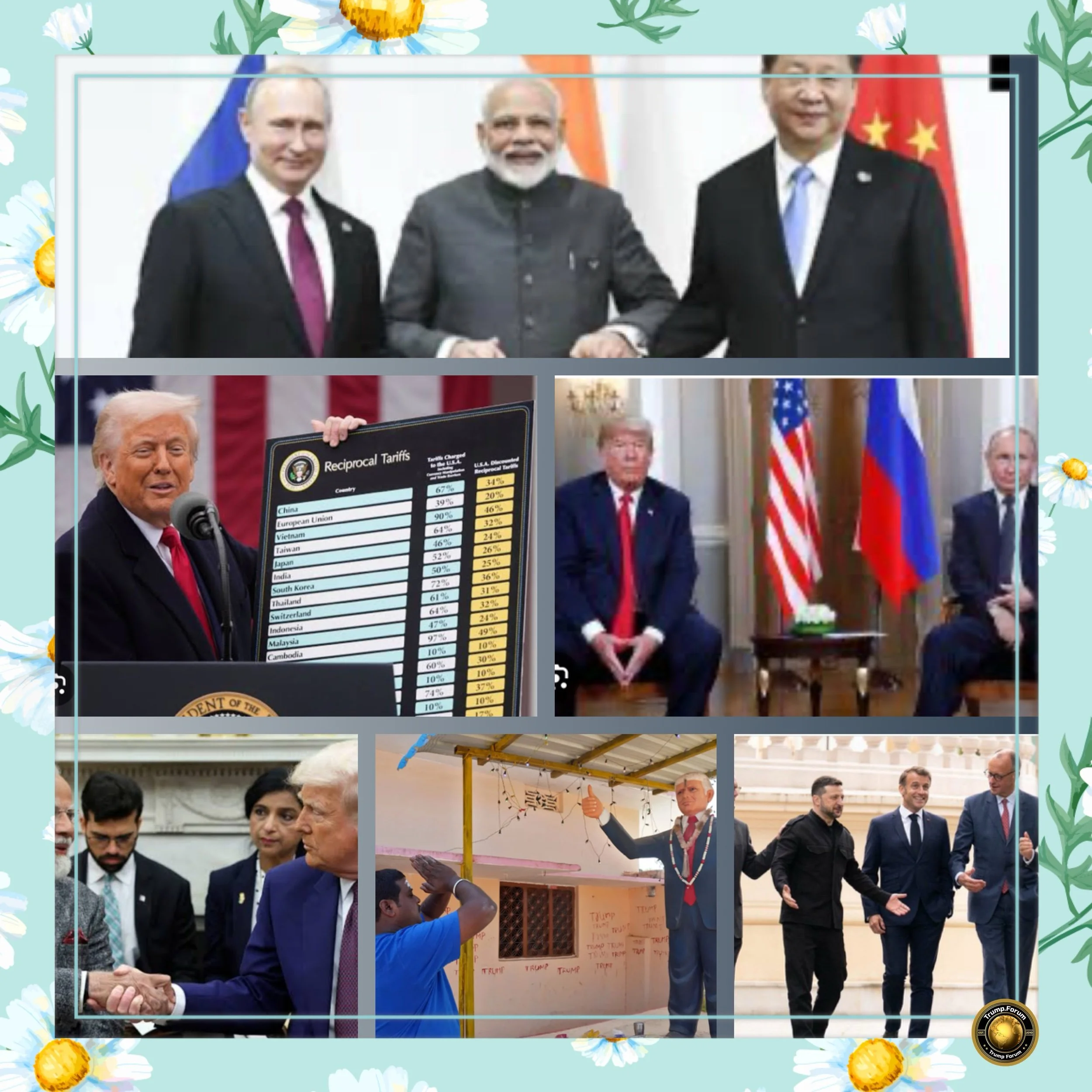
Trade relations have become another major irritant. Trump’s tariff threats have created uncertainty in Indian business circles. The administration imposed a 26% tariff on Indian goods in April 2025, which was later suspended for 90 days.
The ongoing trade negotiations have revealed Trump’s transactional approach to alliances, with his administration linking trade benefits to broader geopolitical compliance.
U.S. Trade Representative Jamieson Greer acknowledged that “more negotiations” would be needed with India, highlighting the complexity of reducing India’s historically protectionist policies.
Once seen as a cornerstone of Indo-Pacific security cooperation, the Quad partnership faces new challenges under Trump’s leadership.
While Trump’s administration has shown interest in strengthening the Quad, New Delhi is concerned about the militarization of the partnership and its potential to provoke Chinese retaliation along the India-China border.
India’s traditional aversion to military alliances, combined with fears that a more security-oriented Quad could trigger renewed Chinese aggression, has created strategic dilemmas for policymakers in New Delhi.
Operation Sindoor and Chinese Support for Pakistan
The May 2025 India-Pakistan conflict, codenamed Operation Sindoor by India, provided stark evidence of the changing strategic alignments in South Asia.
The four-day military confrontation revealed the extent to which China has integrated its strategic support for Pakistan, moving beyond traditional diplomatic backing to provide real-time intelligence and military assistance.
Lieutenant General Rahul R Singh, India’s Deputy Chief of Army Staff, revealed that China provided Pakistan with live satellite intelligence during the conflict, enabling Pakistani commanders to track Indian military deployments in real-time.
This support represented a qualitative escalation in China-Pakistan cooperation, with Beijing using the conflict as what Indian officials described as a “live lab” to test Chinese weapons systems against Western military equipment deployed by India.
The intelligence sharing was remarkably sophisticated.
During Director General of Military Operations (DGMO) level talks between India and Pakistan, Pakistani officials demonstrated detailed knowledge of Indian deployments, referencing specific military assets and their readiness status based on Chinese satellite feeds.
This level of intelligence integration suggests a depth of China-Pakistan military cooperation that goes far beyond traditional arms sales.
China’s role extended beyond intelligence support.
Turkish participation through drone supplies, combined with Chinese weapons systems and electronic warfare capabilities, created what Indian military officials described as a “one-front reinforced” challenge.
The conflict demonstrated that India could no longer view Pakistan and China as separate strategic challenges but must prepare for coordinated pressure from both adversaries.
The aftermath of Operation Sindoor has influenced Indian strategic thinking in multiple ways.
Defense Minister Rajnath Singh’s acknowledgment that the operation was “paused” rather than concluded suggests recognition that future conflicts may require different approaches.
The revelation that 81% of Pakistan’s military hardware is of Chinese origin underscores the depth of the challenge India faces in managing this integrated threat.
India’s Strategic Recalibration
Under these pressures, India has begun what officials and analysts describe as a strategic recalibration toward China.
This shift represents a pragmatic assessment of India’s strategic environment rather than an ideological realignment, but its implications are nonetheless significant for global power balances.
The most visible manifestation of this recalibration came through External Affairs Minister S. Jaishankar’s July 2025 visit to China, his first in five years.
The visit included meetings with Chinese President Xi Jinping, Foreign Minister Wang Yi, and other senior officials, marking a significant departure from the diplomatic freeze that had characterized India-China relations since the 2020 Galwan clash.
During these meetings, both sides acknowledged “good progress in the past nine months towards the normalisation of bilateral relations”.
This progress includes several concrete measures: the resumption of tourist visas for Chinese citizens after a five-year gap, the restart of direct flights between the two countries in January 2025, and the reopening of the Kailash Mansarovar pilgrimage route after six years.
The border management arrangements have also seen improvement. The October 2024 disengagement agreement at Depsang and Demchok, the last remaining friction points from the 2020 standoff, created space for broader diplomatic engagement.
While tens of thousands of troops remain deployed along the Line of Actual Control (LAC), the immediate crisis atmosphere has dissipated, allowing for ministerial-level engagement.
Economic considerations have played a crucial role in this recalibration. India’s trade deficit with China reached $85 billion in 2024, reflecting deep economic interdependencies that cannot be easily unwound.
Niti Aayog’s proposal to allow Chinese companies to acquire up to 24% of stakes in Indian entities without prior approval signals a pragmatic approach to economic engagement, even while maintaining security restrictions in sensitive sectors.
The RIC Revival: Multilateral Hedging
Russia’s Role as Facilitator
Russia has emerged as a key facilitator in the India-China rapprochement, actively promoting the revival of the Russia-India-China (RIC) trilateral format that has been dormant since 2020.
Russian Deputy Foreign Minister Andrei Rudenko explicitly stated Moscow’s interest in reactivating the format, describing the three countries as “important partners” and “founders of BRICS”.
The Russian initiative reflects Moscow’s strategic pressures following Western sanctions over Ukraine. By creating alternative multilateral frameworks, Russia seeks to demonstrate that it is not isolated internationally and can still play a significant role in global affairs.
The RIC format serves Russian interests by providing a non-Western platform for discussing global governance issues and potentially coordinating responses to Western pressure.
For Russia, the timing of the RIC revival is strategic.
The country faces unprecedented Western sanctions and needs reliable partners for both economic and diplomatic support.
China has already become Russia’s largest trading partner, but India’s participation would provide additional economic opportunities and diplomatic legitimacy.
The proposed revival comes as Russia seeks to diversify its international relationships beyond its growing dependence on China.
Chinese Foreign Ministry spokesperson Lin Jian endorsed the Russian proposal, stating that “China-Russia-India cooperation serves the respective interests of the three countries and helps uphold peace, security, stability and progress in the region and the world”.
This support reflects Beijing’s interest in creating multilateral frameworks that can challenge Western-dominated institutions while providing platforms for managing potential conflicts with India.
Strategic Autonomy and Multipolarity
The RIC revival aligns with India’s broader foreign policy doctrine of strategic autonomy, which has evolved significantly since its origins in the non-aligned movement.
Contemporary strategic autonomy represents India’s effort to maintain independent decision-making capacity while simultaneously engaging with multiple power centers.
The concept has adapted to current geopolitical realities.
Where earlier iterations focused on maintaining equidistance between superpowers, the current strategic autonomy emphasizes India’s ability to partner with different countries on specific issues without being locked into exclusive alignments.
This approach allows India to participate in the Quad with the United States while engaging in BRICS, SCO, and potentially RIC with China and Russia.
India’s strategic autonomy doctrine recognizes the limitations of exclusive alignments in a multipolar world.
The country’s geographic position, economic size, and security challenges require engagement with multiple partners.
Complete alignment with any single power center would limit India’s ability to pursue its diverse interests across different regions and issue areas.
The doctrine also reflects lessons from India’s historical experience with great power competition.
The Cold War period demonstrated the benefits and limitations of non-alignment, while the post-Cold War unipolar moment showed the risks of over-dependence on any single partner.
Current strategic autonomy represents an attempt to navigate multipolar complexity while preserving maximum flexibility.
However, the practical implementation of strategic autonomy faces significant challenges. The increasing polarization of international relations makes it more difficult to maintain relationships with competing power centers.
Trump’s transactional approach to alliances creates pressure for explicit choices, while China’s growing assertiveness limits the space for neutral positions on key issues.
The BRICS and SCO Frameworks
India’s engagement with China also occurs through established multilateral frameworks, particularly BRICS and the Shanghai Cooperation Organisation (SCO), which provide structured venues for interaction while limiting the risks of bilateral exposure.
The July 2025 BRICS summit in Brazil provided an essential venue for India-China engagement, even though both Prime Minister Modi and President Xi were represented by senior officials rather than attending personally.
The summit’s theme, “Strengthening Global South Cooperation for a More Inclusive and Sustainable Governance,” aligned with both countries’ interests in promoting alternative global governance structures.
India’s approach to BRICS reflects its broader strategic autonomy doctrine. While supporting the organization’s economic initiatives and expansion to include new members like Indonesia, India has maintained reservations about explicitly anti-Western positions.
The country supports alternative payment mechanisms and South-South cooperation while avoiding rhetoric that could be interpreted as directly challenging Western institutions.
SCO framework has provided another venue for India-China engagement.
India’s participation in the SCO creates opportunities for dialogue with both China and Russia, but the organization’s Central Asian focus sometimes conflicts with Indian priorities.
The September 2025 SCO summit in China, which Modi is expected to attend, will provide another test of India’s ability to engage constructively within China-led multilateral frameworks.
Modi’s planned attendance at the SCO summit represents a significant diplomatic gesture. His first visit to China since 2019 would signal a genuine commitment to improving bilateral relations, while also demonstrating India’s willingness to engage with China-led institutions.
The summit will likely include bilateral meetings between Modi and Xi, providing opportunities to address specific issues while maintaining the multilateral framework.
Conclusion
Economic Dimensions and Trade Relations
Growing Economic Interdependence
Despite political tensions, economic ties between India and China have continued to grow, creating structural incentives for improved relations.
China remains India’s largest trading partner, with bilateral trade reaching $125 billion annually. This economic relationship creates constituencies in both countries that benefit from improved political relations.
India’s dependence on Chinese imports spans multiple critical sectors.
Electronics, pharmaceutical ingredients, telecommunications equipment, and rare earth minerals all flow from China to India in substantial quantities.
The $85 billion trade deficit reflects India’s reliance on Chinese manufactured goods and raw materials, particularly in technology-intensive sectors.
The pharmaceutical sector provides a clear example of this interdependence. Indian pharmaceutical companies rely heavily on Chinese active pharmaceutical ingredients (APIs) for drug manufacturing.
During the COVID-19 pandemic, Chinese supply chain disruptions created significant challenges for Indian pharmaceutical production, highlighting the risks of over-dependence while also demonstrating the difficulty of rapidly diversifying supply chains.
Similarly, India’s electronics manufacturing sector, despite government initiatives to promote domestic production, continues to rely on Chinese components and manufacturing equipment. The Production-Linked Incentive (PLI