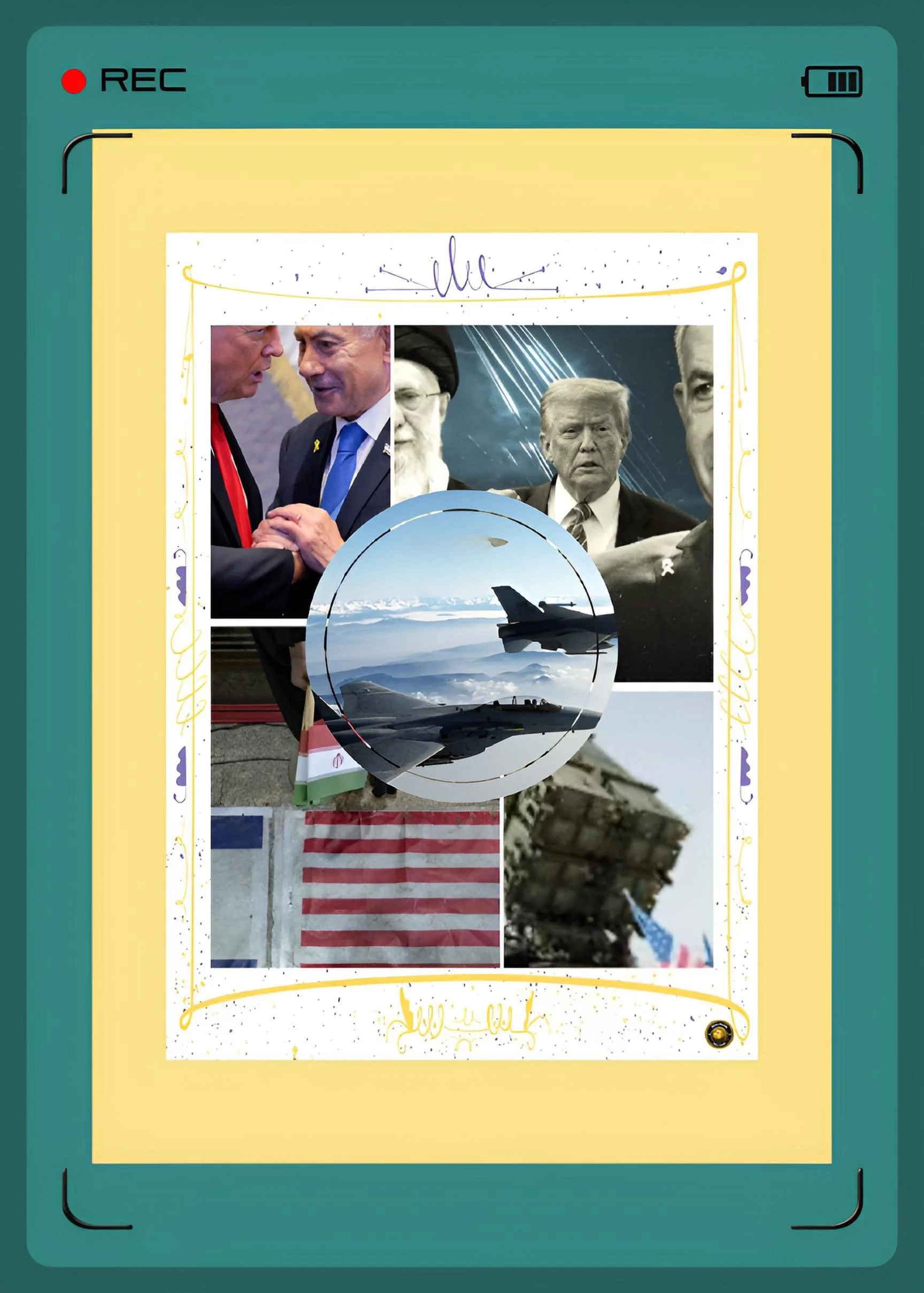
Countdown to Tehran: How Israel and Trump Turned Iran’s Missiles into a Road to Regime Change
Executive summary
Regime Change by Stealth: The Hidden Logic Behind Israel’s Planned Strikes on Iran
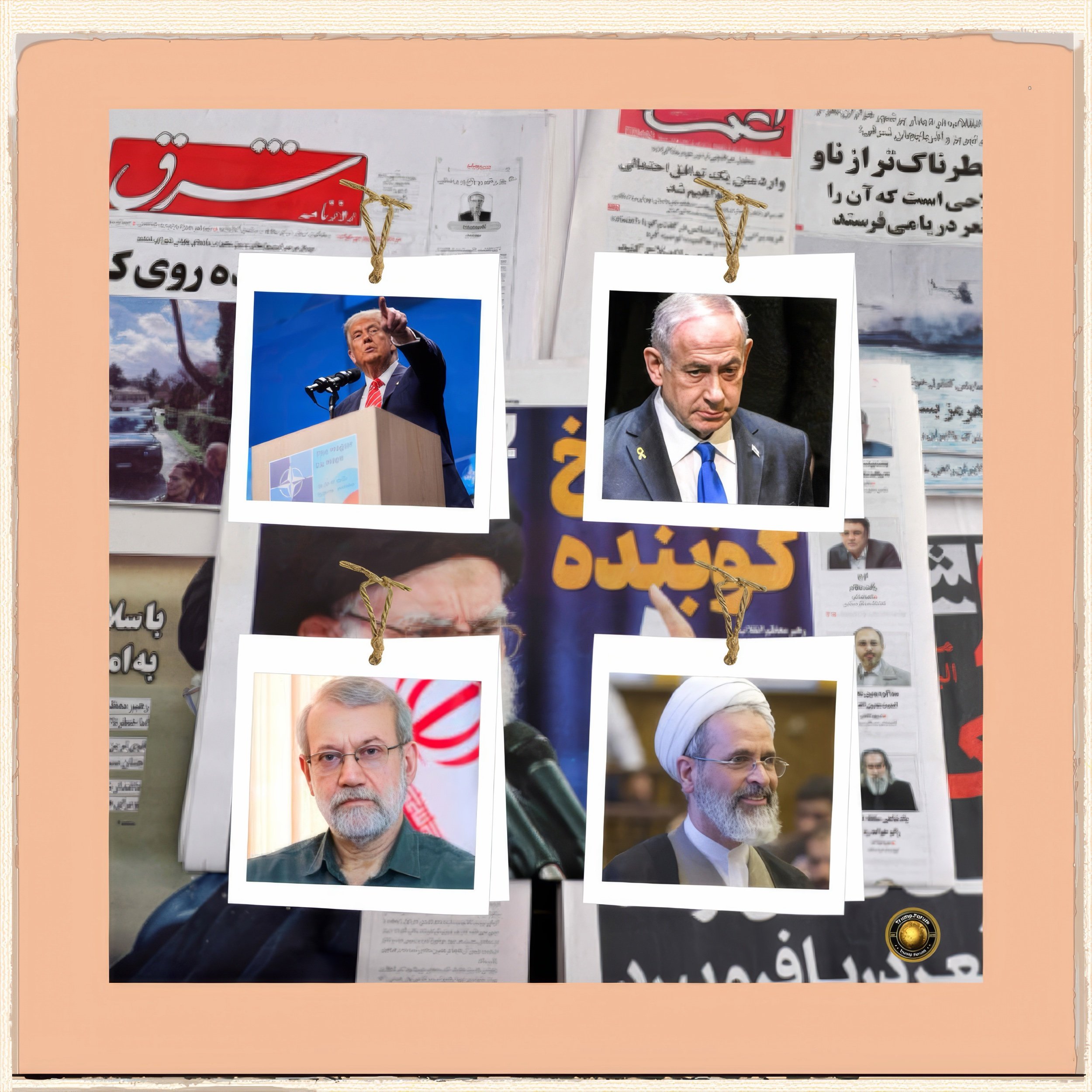
The emerging picture around Israel’s renewed preparations for large‑scale strikes on Iran reveals less a single, hidden “conspiracy” than a long‑running, mutually reinforcing alignment between Benjamin Netanyahu’s government and Donald Trump’s administrations in reframing Iran’s threat, eroding diplomatic constraints, and normalizing coercive options up to and including de‑facto regime‑change pressure. Over the past decade, Israel has consistently argued that Iran’s nuclear and missile programs constitute an existential danger and that only maximal pressure—sanctions, sabotage, and credible military threats—can curb Tehran’s ambitions. Trump’s withdrawal from the Joint Comprehensive Plan of Action (JCPOA) in 2018, heavily encouraged by Netanyahu, dismantled the core framework constraining Iran’s nuclear program and shifted the centre of gravity from arms‑control to confrontation.
The pivotal shift since then is not simply the collapse of the JCPOA, but the way the nuclear file and the ballistic‑missile dossier have been interwoven to justify a far more expansive campaign against Iran’s military infrastructure and, increasingly, its governing apparatus. In the wake of the June 2025 Twelve‑Day War between Israel and Iran, and amid reports that Israel is preparing new strikes while briefing Trump on operational options, prominent Israeli voices have begun to speak openly of regime change as a desirable outcome rather than a taboo term. Parallel to this, Israeli intelligence has publicized claims that Iran is rebuilding missile production and air‑defence facilities, using this as a rationale for further pre‑emptive action.
What is coming to light is a pattern: Israeli political leadership, supported by aligned advocacy networks in Washington, systematically worked to box the United States into a logic in which any sustainable equilibrium with Iran becomes impossible and in which “temporary” strikes and sanctions drift toward open‑ended confrontation. Trump, whose instincts oscillated between “deal‑making” and demonstrative force, ultimately moved closer to Israel’s preferences, first by quitting the JCPOA and later by entertaining options for joint or U.S.‑backed strikes when Israel appeared ready to act alone. Yet none of this equates to a neatly orchestrated secret plot; it is better understood as a convergence of strategic narratives and political incentives that elevated Iran’s ballistic missile programme—and, by extension, its broader regional posture—into a pretext for escalating coercion that increasingly targets the stability of the regime itself.
The risk now is that as Israel contemplates new operations against Iranian missile and command systems—possibly timed to domestic political needs and anniversaries of previous conflicts—the threshold between “deterrence,” “degradation,” and “regime change” erodes. The more the ballistic‑missile programme is presented as an intolerable, fast‑closing window of threat, the easier it becomes to argue that only systemic political change in Tehran can truly resolve the problem. That logic, once embedded in Israeli‑U.S. decision‑making, points toward a prolonged, destabilizing confrontation with high potential for regional escalation and miscalculation.
Introduction
From nuclear deal to open confrontation
The story of alleged Israel–Trump collusion on Iran cannot be disentangled from the rise and fall of the JCPOA, the 2015 nuclear agreement that placed strict verifiable limits on Iran’s nuclear activities in exchange for sanctions relief. From its inception, Netanyahu framed the deal not as a flawed but useful constraint, but as a historic error that “paved Iran’s path to an arsenal of nuclear bombs,” lobbying relentlessly in Washington to undermine it. Public accounts and later analyses make clear that Israeli policy networks—governmental and non‑governmental—saw the Trump presidency as an opportunity to kill the agreement and expand pressure on Iran beyond the nuclear file, including missiles and regional proxies. Netanyahu himself later boasted that his government had “convinced” Trump to pull the United States out of the JCPOA, regarding the 2018 withdrawal as a strategic victory that would be difficult for subsequent U.S. administrations to reverse.
Trump’s own motivations combined ideological hostility to the Obama‑era accord, domestic political incentives, and the influence of hawkish advisers and regional allies. In 2018 he announced the U.S. exit from what he called a “rotten” deal, reimposing sweeping sanctions under a “maximum pressure” campaign. The International Atomic Energy Agency had repeatedly certified Iranian compliance with the JCPOA’s nuclear provisions, but the administration rejected this as irrelevant, stressing the agreement’s sunset clauses, its failure to address ballistic missiles, and Iran’s regional conduct. The effect was to remove binding constraints from Iran’s nuclear programme while stripping the United States of the diplomatic leverage the deal had created. For Israel, however, this opened space to argue that without a credible U.S. military option, Tehran would exploit the vacuum to accelerate both its nuclear and missile capabilities.
Over time, attention migrated from uranium enrichment levels to Iran’s advances in missile accuracy, range, and survivability, as well as to the integration of its missile forces with proxy groups in Lebanon, Syria, Iraq, and Yemen. This shift reflected genuine security concerns: Iran’s missile arsenal has become the backbone of its deterrent posture. But it also served a political purpose. As long as the nuclear programme was under some form of inspection and partial constraint, it was harder to claim that time was running out. By foregrounding missiles—largely excluded from the JCPOA—Israeli officials and supportive U.S. actors could argue that an entirely new, more coercive framework was required, one anchored not in negotiated restraints but in the persistent threat of force.
Key developments: From diplomatic breakdown to wartime regime‑change rhetoric
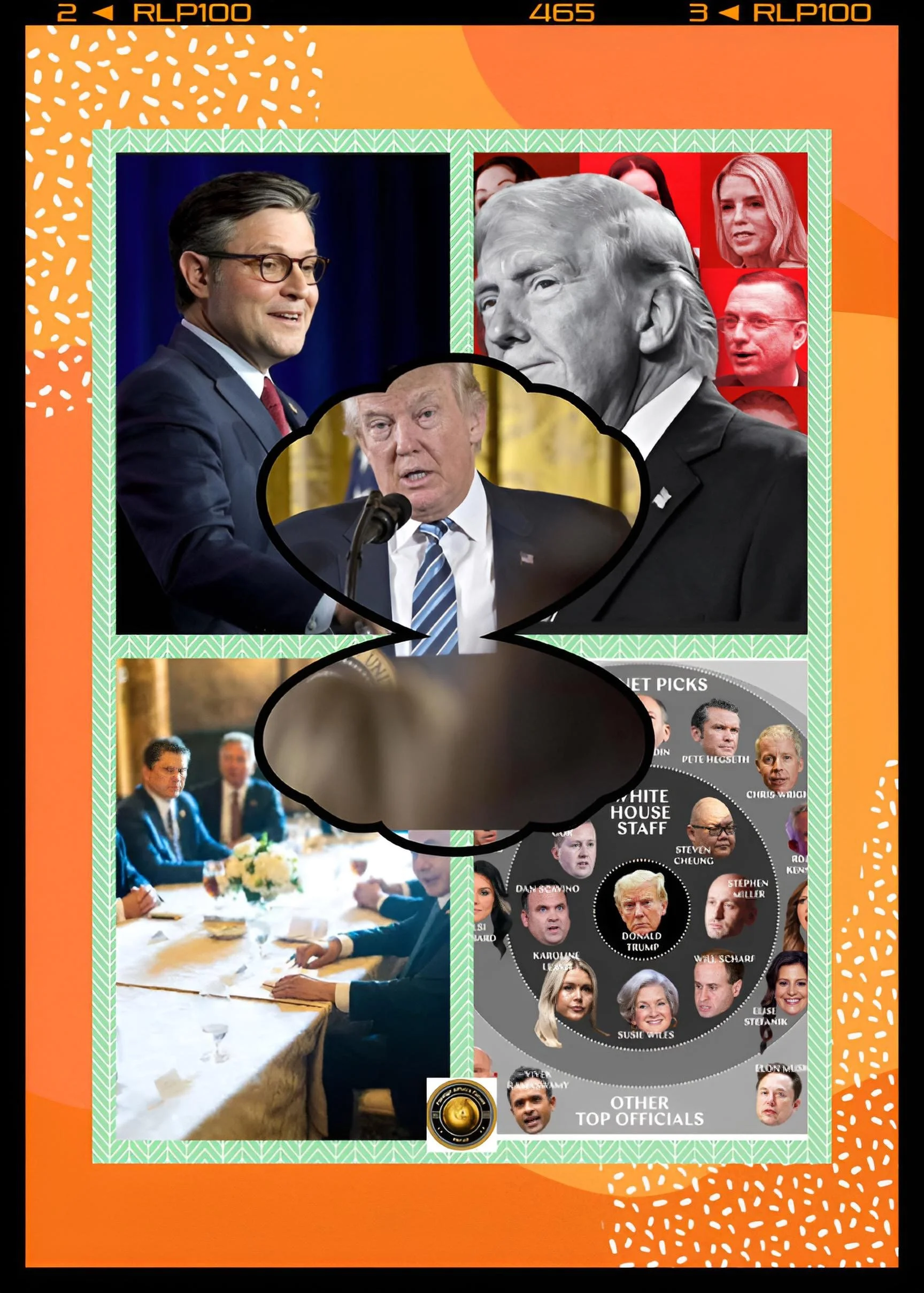
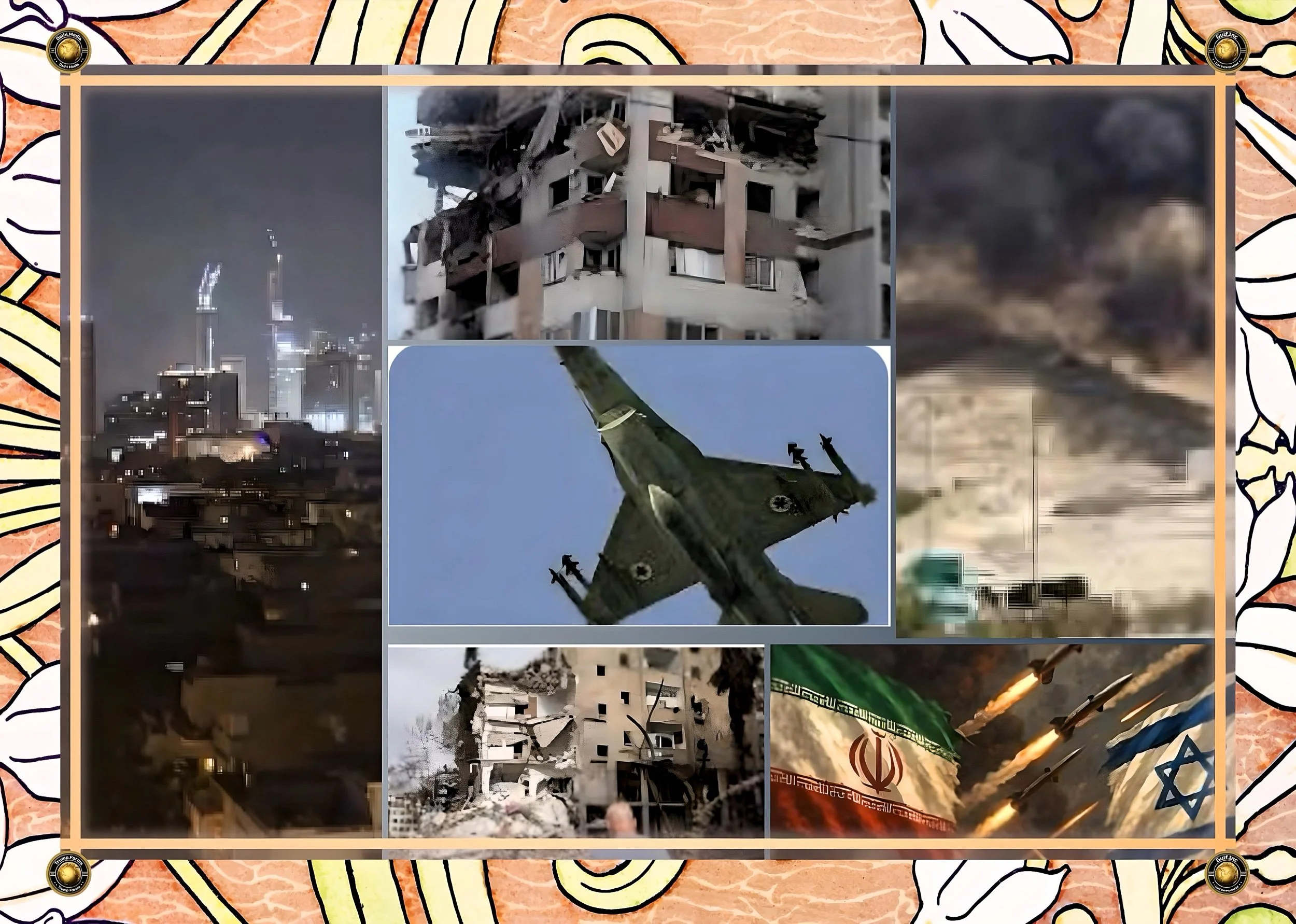
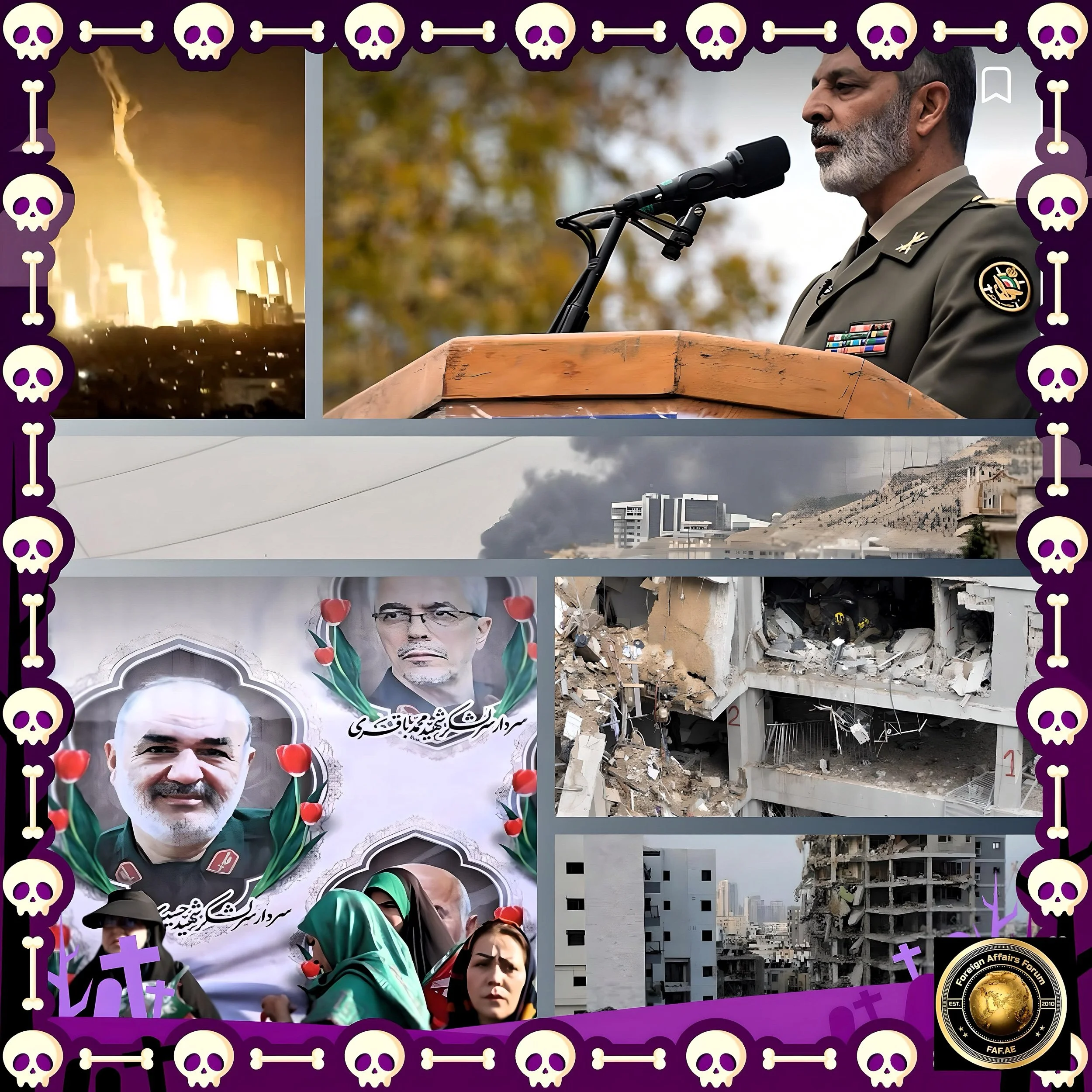
The June 2025 Twelve‑Day War between Israel and Iran marked a turning point in the open militarization of this strategy. Israel’s bombing of Iranian nuclear and military targets, and Iran’s retaliatory missile salvos, produced the first direct, sustained exchange of fire between the two states, moving beyond their long‑standing “shadow war.” Subsequent reporting indicates that Israeli leaders had prepared for such a confrontation over many years and that U.S. intelligence became convinced that Netanyahu was ready to strike Iran’s nuclear infrastructure with or without American participation. Trump, initially cautious about being dragged into another Middle Eastern war, was gradually persuaded that some form of coordinated posture was necessary, particularly once Israel demonstrated both operational reach and domestic resolve during the conflict.
By mid‑June 2025, analysis from Washington‑based outlets described how regime change had effectively surfaced as an unstated goal of Israel’s campaign, even if not formally declared in joint communiqués. Netanyahu’s public rhetoric sharpened. In press briefings, he characterized the Iranian state as a “very fragile regime” that now understood its own weaknesses and suggested that the world might soon witness profound change in Iran’s internal order. Symbolic targeting choices underlined this message: beyond military and nuclear facilities, Israeli strikes reportedly hit state television studios during live broadcasts, described by the Israel Defense Forces as dual‑use facilities but publicly framed by Netanyahu as efforts to cripple the regime’s propaganda apparatus. This crossed a psychological threshold from counter‑proliferation toward political warfare.
In parallel, new commentary from former Israeli diplomats and security officials began to air what had long been discussed discreetly: that a strategic objective of Israel’s Iran policy was not merely to degrade specific capabilities but to weaken the regime to the point that it might fracture or eventually fall. Interviews in regional media and foreign‑policy outlets cited Israeli assessments that Iran was rapidly rebuilding ballistic‑missile production infrastructure and repairing air defences damaged in the June war, arguing that this restoration made further strikes both urgent and justified. Publicized claims of newly reconstructed missile facilities created a narrative in which Iran, far from being deterred, was doubling down, thereby legitimating an expanded campaign under the banner of pre‑emption.
The crucial development in late 2025 has been the reported preparation by Israel to brief Trump on a new menu of military options against Iran, including purely Israeli strikes, U.S.‑supported operations, joint missions, and even scenarios where the United States would act independently. Accounts indicate that before the June war, similar options were physically laid out in the Oval Office and that Trump opted for collaborative action only after Israeli planners convinced him that limited but decisive force was operationally feasible. The forthcoming briefings are expected to reprise this logic, with the added argument that Iran’s missile rebuild, if left unchecked, will restore the very capabilities Israel invested heavily in neutralizing.
Facts and concerns: Ballistic missiles, evidence, and the problem of pretext
Assessing whether the ballistic‑missile programme serves as a “false pretext” for regime‑change ambitions requires dissecting three elements: the empirical state of Iran’s missile forces, the evidentiary basis Israel has offered, and the manner in which this threat is translated into policy prescriptions.
Empirically, there is little doubt that Iran has developed one of the Middle East’s largest and most diverse ballistic‑missile arsenals, spanning short‑, medium‑, and potentially intermediate‑range systems. These missiles form the core of Iran’s deterrence strategy, compensating for its relatively weak air force and signalling the capacity to retaliate against regional adversaries and U.S. bases. Over the past decade, Iran has improved accuracy, payload options, and survivability, including through mobile launchers and underground facilities. This is not an invention of Israeli propaganda; it is widely acknowledged across defence analyses.
Evidence that Iran is rebuilding missile‑related infrastructure after the June 2025 war also appears credible in the narrow technical sense. Satellite imagery, as reported by various outlets, suggests that damaged facilities have been repaired or relocated, while Iranian officials have boasted about rapid reconstruction and resilience. Tehran frames this as a sovereign right to self‑defence, pointing to Israel’s own substantial missile and air‑strike capabilities. For Israel, however, the reconstitution of these sites is proof that the earlier strikes did not impose sufficient long‑term cost and that a more systematic campaign is necessary to neutralize Iran’s strike capacity before it can be brought fully back online.
The concern arises when these facts are embedded in a broader narrative that collapses distinct threat categories—missiles, nuclear potential, regional influence, domestic repression—into a single, existential menace that purportedly admits only one solution: the eventual replacement of the Iranian regime. In this narrative, any diplomatic compromise is cast as appeasement, any inspection regime as inadequate, and any limited military operation as merely a stepping stone toward the ultimate goal. The missile programme thus risks becoming less an object of negotiated limitation and more a convenient, constantly renewable justification for open‑ended coercion.
This dynamic is exacerbated by the political incentives of key actors. For Netanyahu, portraying Iran as an accelerating ballistic threat serves multiple purposes: it unifies domestic opinion, deflects attention from internal crises, and positions Israel as a crucial partner for U.S. administrations confronting a shared adversary. For Trump, being seen as “tough on Iran” satisfies core constituencies, reinforces his image as a leader willing to reject multilateral constraints, and offers opportunities to stage decisive national‑security moments. In such a context, intelligence assessments of Iranian missile activity, however grounded, can be selectively emphasized, de‑contextualized, or framed in worst‑case terms to justify escalatory choices that may in fact be driven by political timing rather than strictly by technical threat thresholds.
Cause‑and‑effect analysis: How narratives, policy choices, and escalation interact
The trajectory from JCPOA withdrawal to the current war‑risk environment reflects a chain of cause‑and‑effect that has steadily narrowed the space for de‑escalation. The initial cause was the deliberate political decision by the Trump administration, strongly supported by Israel, to exit a functioning nuclear accord without securing a more comprehensive replacement. The immediate effect was the erosion of verifiable caps on Iran’s nuclear activities and a sharp deterioration of U.S.–Iran relations. Iran responded by incrementally breaching JCPOA limits while still leaving the door open—at least for a period—to negotiations over mutual compliance.
The second link in the chain was the shift from nuclear‑centric diplomacy to missile‑centric confrontation. Having removed the nuclear deal, Washington and Jerusalem refocused on Iran’s ballistic advances and regional footprint. This created a structural asymmetry. Nuclear issues are inherently amenable to intrusive inspections and quantifiable benchmarks; ballistic missiles, especially when dispersed across a state and integrated with proxies, are far harder to monitor or constrain. By foregrounding missiles as the new red line, policymakers effectively selected a domain where verification is difficult, where thresholds are ambiguous, and where the temptation to rely on preventive strikes is correspondingly higher. The result was a drift toward the logic of pre‑emption.
The third causal layer involves domestic politics. In Israel, the perpetual emphasis on Iran’s threat has long served as a pillar of Netanyahu’s political identity. As his domestic woes deepened, including corruption indictments and polarizing judicial reforms, the appeal of a decisive external confrontation—framed as a struggle against an implacable foe—grew. Strategic analyses have noted the symbolic and political weight of key dates, such as the anniversary of the October 7 attacks, in structuring potential timelines for bold military moves. This creates an incentive to act not only when threats peak but when political calendars demand a display of strength.
In the United States, Trump’s approach to Iran oscillated between exploring dramatic diplomatic deals and flirtation with hard‑line military options. Israeli officials, recognizing this duality, tailored their strategy accordingly: they warned that without visible U.S. resolve, Iran would interpret Trump’s desire for a “big deal” as weakness; they argued that credible military planning was a precondition for successful diplomacy, effectively tying any negotiation to a backdrop of force. As American intelligence observed Israel preparing for unilateral strikes, the risk calculus in Washington shifted. Faced with the prospect of Israel acting independently and dragging the region into conflict, U.S. decision‑makers saw alignment with Israel—supporting or joining its operations—as a way to retain some control over escalation, even if it meant deepening involvement.
The feedback loop is thus clear. Israeli planning and rhetoric raise the spectre of an imminent Iranian breakthrough in missiles or nuclear latency; U.S. leaders, wary of being seen as passive or abandoning an ally, move closer to Israel’s preferred posture; Iran, confronting intensified sanctions and covert attacks, accelerates its missile and nuclear hedging to preserve deterrence; these responses then reinforce Israeli claims that time is running out, justifying further strikes. Within this loop, talk of “regime fragility” and “regime change” is no longer an outlier but a natural extension. If each cycle of pressure leaves the Iranian state seemingly more brittle—economically strained, internally contested—then strategists may infer that one more turn of the screw could finally tip the balance.
Future steps: Strategic options, risks, and potential off‑ramps
Looking ahead, several plausible trajectories emerge, each shaped by the evolving interplay between Israeli planning, U.S. domestic politics, Iran’s responses, and the broader regional environment. The first and most immediate scenario is that Israel proceeds with a new large‑scale strike campaign against Iran’s missile and command infrastructure, either with explicit U.S. backing or under a tacit understanding. Such a campaign would likely draw on the operational lessons of the Twelve‑Day War, combining air, cyber, and special‑operations attacks aimed at blinding Iranian radar, degrading command‑and‑control nodes, and hitting missile launch sites and production facilities. Concurrent or pre‑emptive action against Iranian proxies in Lebanon, Iraq, Syria, and Yemen would be designed to limit Tehran’s ability to retaliate through its regional network.
In this scenario, Israeli leaders might avoid overtly declaring regime change as an objective, instead framing the operation as a necessary escalation to re‑establish deterrence and deny Iran critical military capabilities. Yet by targeting not only weapons systems but also state media, economic nodes, and security institutions closely tied to the regime’s survival, they would in effect pursue a strategy of cumulative regime attrition. Trump, depending on the configuration of his administration and congressional dynamics, could support such operations under the argument that they prevent Iran from achieving “irreversible” missile or nuclear breakthroughs and that they demonstrate American resolve to allies.
A second trajectory, less probable but still conceivable, is a renewed attempt at negotiation, perhaps under severe crisis conditions. Historical precedents—from the 2003 Iraq war to the 2015 nuclear talks—show that intense confrontation can sometimes catalyse diplomatic innovation. If Israel’s and the United States’ appetite for sustained conflict wanes and if Iran calculates that further escalation endangers regime survival more than it enhances deterrence, an opening could emerge for a hybrid framework addressing both nuclear and missile issues, possibly with regional de‑escalation mechanisms. For such diplomacy to succeed, however, the parties would have to abandon maximalist aims, including explicit or implicit regime‑change agendas, and accept intrusive verification in exchange for credible sanctions relief and security assurances. At present, political conditions in all three capitals militate against this level of compromise.
A third, more dangerous path is uncontrolled escalation and regional spillover. Should Israeli or U.S. strikes inflict heavy casualties or damage on Iranian soil, Tehran may feel compelled to respond not only through proxies but directly, targeting Gulf states, U.S. forces, or Israeli population centres with missile barrages and cyber‑attacks. Such exchanges could quickly erode red lines and lead to miscalculations, especially if command‑and‑control systems are under stress. The global economic consequences—especially for energy markets—would be severe. Moreover, the perception in parts of the Global South that Israel and the United States are pushing toward regime change under contested pretexts could deepen geopolitical fragmentation and fuel alternative security alignments with Russia and China.
In all scenarios, a central risk is the corrosion of international norms around the use of force. By elevating ballistic‑missile development—an activity not per se prohibited under international law, though constrained by various resolutions—into a blanket justification for preventive war, major powers risk legitimizing similar behaviour elsewhere. States might claim that a rival’s missile tests warrant strikes on its territory, or that perceived regime fragility justifies pre‑emptive intervention to prevent hypothetical future threats. The long‑term effect would be to weaken the already fragile prohibition on aggression and to normalize regime‑change talk in international security discourse.
Conclusion
Pretext or Peril? The Ballistic‑Missile Narrative Driving Israel and Trump Toward Tehran
The emerging evidence does not support a simplistic thesis of a secret Israel–Trump “conspiracy” engineered solely on fabricated claims about Iran’s ballistic‑missile programme. What it reveals instead is a more complex, and in many ways more troubling, pattern of narrative convergence and policy sequencing. Israeli leaders, driven by deeply held threat perceptions and domestic political incentives, systematically worked to dismantle diplomatic arrangements that constrained Iran’s nuclear programme while elevating ballistic missiles and regime character as existential dangers that demand coercive solutions. Trump’s administrations, predisposed to reject multilateral accords and receptive to Israel’s framing, provided the crucial enabling decisions: withdrawal from the JCPOA, intensified sanctions, and openness to military options framed as necessary to restore deterrence.
In this process, the ballistic‑missile issue has functioned both as a genuine security concern and as a strategic lever. The reality of Iran’s missile capabilities and regional activities cannot be denied. The analytical problem lies in how these facts are interpreted and deployed. When intelligence on missile rebuilding is used not to calibrate arms‑control proposals but to argue that only escalating strikes and weakening the regime can solve the problem, the line between threat assessment and policy advocacy blurs. Regime‑change rhetoric, once the preserve of fringe voices, has migrated into mainstream commentary and unofficial policy discussion, especially in the wake of the Twelve‑Day War and anticipated new strikes.
Ultimately, the concern is that the logic now in motion is self‑reinforcing. Each strike on Iranian facilities, each new round of sanctions, and each public declaration of regime fragility narrows the space for negotiated de‑escalation and makes future confrontation more likely. Iran responds by deepening its missile and nuclear hedging; Israel and the United States cite this as evidence that previous measures were insufficient; and regime change becomes, if not the openly declared objective, then the implicit horizon toward which policy drifts. The absence of a robust, credible diplomatic track addressing both nuclear and missile issues ensures that the ballistic‑missile narrative will continue to serve as a flexible pretext for further coercion.
Breaking this cycle would require an explicit re‑politicization of strategy. Israeli and U.S. leaders would have to acknowledge that their past decisions—particularly the destruction of the JCPOA—contributed to the current crisis and that no amount of tactical brilliance can permanently neutralize Iran’s capabilities without addressing the regime’s security perceptions and domestic dynamics. Iran, for its part, would need to accept that its missile posture and support for proxies are deeply destabilizing for its neighbours and that some degree of restraint and transparency is necessary to avert perpetual confrontation. Absent such shifts, the region is likely to remain trapped in a dangerous equilibrium where war is always just ahead on the horizon and where allegations of conspiracy, whether accurate or exaggerated, reflect a deeper reality: a security architecture that has ceased to prioritize stability and instead treats managed escalation as a default mode of statecraft.