Trump’s Second‑Term Shadow Cabinet: Real‑Estate Envoys, Media Generals, and the Future of U.S. Foreign Policy
Executive summary
Inside Trump 2.0: The Loyalist Foreign‑Policy Machine Redrawing America’s Place in the World
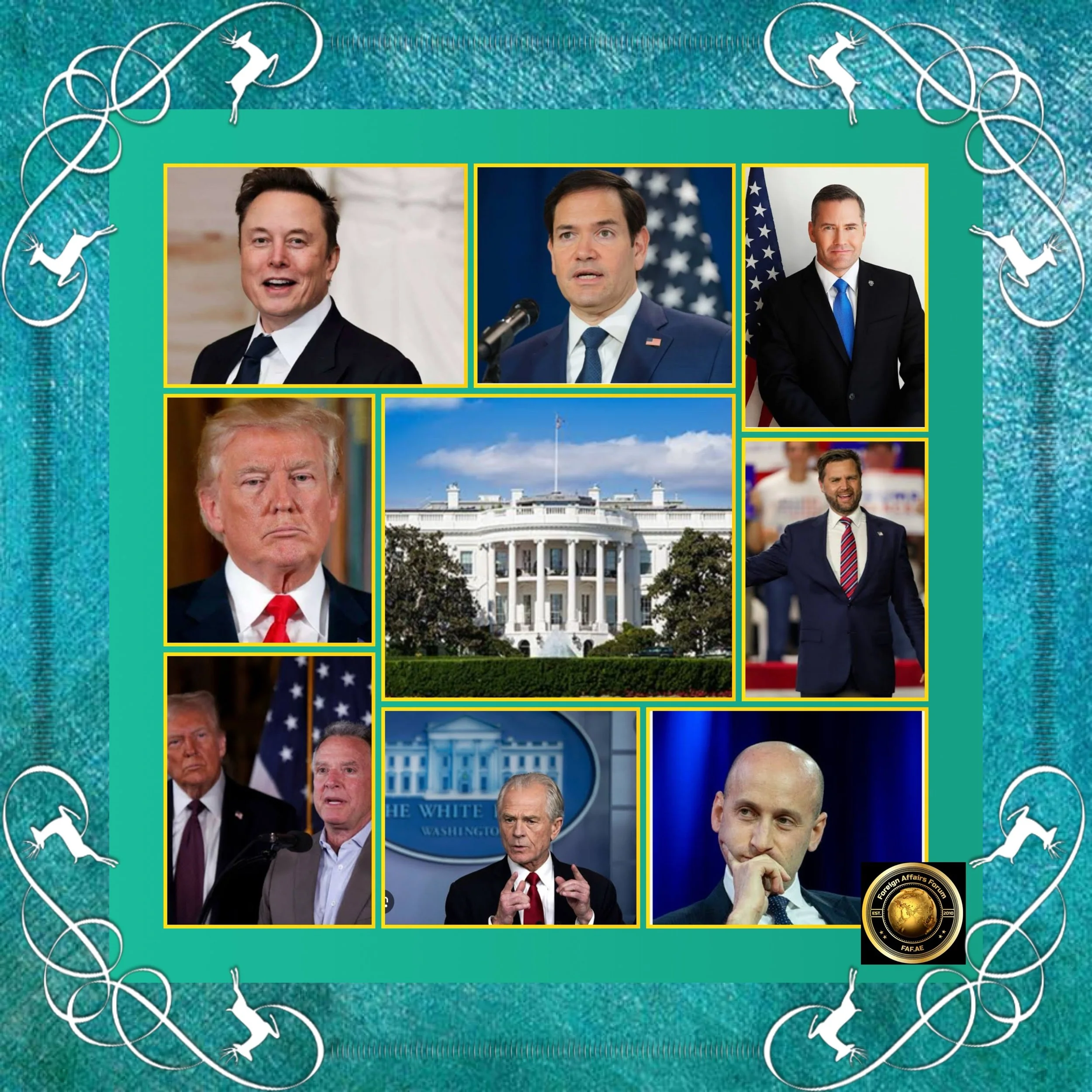
Trump’s second administration has produced a foreign‑policy system that is at once more stable in personnel and more radical in substance. Unlike the first term’s revolving door, Trump 2.0 has consolidated power in a relatively small group of loyalists and unconventional envoys whose influence now shapes an overtly transactional, coercive, and domestically focused “America First” agenda. Marco Rubio at State, Mike Waltz at the National Security Council, Pete Hegseth at the renamed Department of War, Tulsi Gabbard as director of national intelligence, John Ratcliffe at the CIA, and financier‑envoy Steven Witkoff constitute the core axis. Around them sit ideological entrepreneurs such as Stephen Miller and economic nationalists like Jim Bessent and trade official Greer, who translate Trump’s instincts into hard policy on borders, sanctions, and trade.
Collectively, this team has driven a dramatic reorientation of U.S. foreign policy: a hardline Monroe‑Doctrine revival in the Americas; a sharp downgrading of great‑power competition as a guiding framework; the dismantling of traditional soft‑power instruments such as USAID and Voice of America; and a pronounced shift from alliance‑based multilateralism to short‑term deals with both partners and adversaries.
The first year has seen the rebranding of the Pentagon as the “Department of War,” strikes on Iranian nuclear sites, a coercive peace push in Ukraine that leans toward Russian preferences, and an uncompromising pro‑Israel posture in the Gaza and Iran theatres. The key concern is not only the ideological tilt of the agenda but the structural weakening of institutional checks: Trump has systematically surrounded himself with loyalists who see their mandate as implementing his impulses rather than mediating them through the interagency process.
Introduction
No More Adults in the Room: How Trump’s New Inner Circle Is Weaponizing U.S. Power
From chaos management to disciplined personalization
Trump’s first term was often described as a clash between the president’s impulses and the “adults in the room”—career generals, establishment Republicans, and institutionalists who at times blunted his more disruptive inclinations. The second term has been defined by the systematic removal of such counterweights. Transition planning after the 2024 election explicitly prioritized loyalty over technocratic experience, drawing heavily on ideologically aligned legislators and media personalities rather than on traditional foreign‑policy cadres. The result is not the same chaos of 2017–2020, but an administration that is internally more coherent in its worldview and externally more volatile.
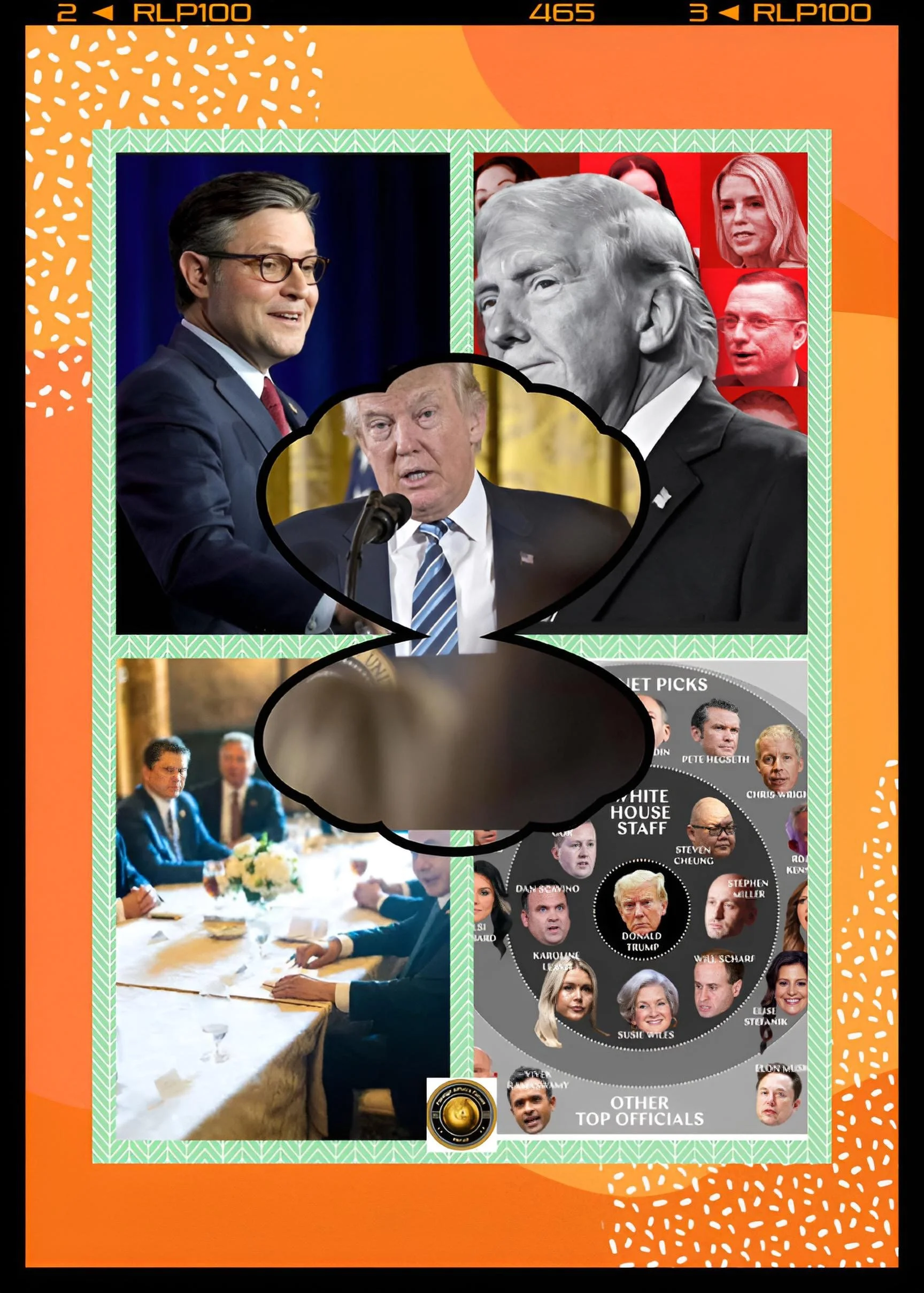
The foreign‑policy ecosystem of Trump 2.0 is organized around several concentric circles. At the centre is Trump himself, who retains a highly personalized, transactional view of international relations and a deep suspicion of multilateral institutions. Immediately around him is a narrow group of confidants who enjoy direct, often informal access: Steven Witkoff, the New York developer turned roving envoy; Stephen Miller, whose portfolio has expanded from immigration to sovereignty‑focused legal warfare abroad; and a small cluster of media‑savvy surrogates who frame foreign policy for Trump’s political base. In the next ring are formal officeholders in the national security apparatus, some of whom are powerful in their own right but all of whom understand that their tenure depends on aligning with the president’s instincts rather than contesting them.
This architecture has important consequences. Policy is centralized, but not bureaucratically; it is personal, hierarchical, and contingent on the president’s favour. The interagency process, designed to vet options and stress‑test assumptions, has been hollowed out by staff cuts, loyalty purges, and a rhetorical campaign against the so‑called “deep state.” The result is that key foreign‑policy players matter to the extent they can either anticipate Trump’s preferences and dress them in implementable form, or shape those preferences through sustained personal interaction.
Key developments
Stable Faces, Unstable World: The Trump 2.0 Insiders Steering Washington into Uncharted Waters
The rise and consolidation of Trump 2.0’s foreign‑policy core
Several appointments and role evolutions in the first year of Trump 2.0 illustrate how this system has taken shape. Marco Rubio’s transition from early‑term secretary of state to dual‑hatted role as both secretary and, later, national security adviser underscores the degree of centralization. Initially appointed to State as a nod to congressional Republicans and foreign‑policy hawks, Rubio increasingly positioned himself as Trump’s chief strategist on China, Latin America, and foreign aid conditionality. As the National Security Council was downsized and restructured, Rubio assumed NSC leadership, concentrating diplomatic and strategic planning authority in a single figure aligned with Trump’s scepticism of expansive commitments and his focus on the Western Hemisphere.
Mike Waltz’s journey from national security adviser to ambassador to the United Nations, and then back into the inner circle as UN envoy with a direct line to Trump, has given the administration a pugnacious, media‑acclimated defender on the multilateral stage. Waltz has not treated the UN as a venue for consensus‑building but as a platform for confrontational messaging on Iran, Gaza, Venezuela, and migration. His presence there complements Rubio’s bilateral and regional diplomacy, forming a tag‑team in which traditional alliance‑management takes a back seat to rhetorical pressure and public conditionality.
At the Pentagon—renamed the Department of War in a symbolic repudiation of what Trump derides as “endless diplomacy”—Pete Hegseth has turned campaign‑trail talking points into organizational reform. The National Defense Strategy unveiled in September 2025 abandons the previous emphasis on long‑term competition with China and Russia, instead prioritizing border security, hemispheric dominance, and rapid punitive operations in the Americas and Middle East. This is not isolationism but selective assertiveness: the administration is prepared to wield force aggressively where it believes immediate U.S. interests are at stake, while discarding missions framed as global public goods.
The intelligence community has been reshuffled to privilege loyalty and ideological alignment. Tulsi Gabbard’s appointment as director of national intelligence and John Ratcliffe’s return, this time as CIA director, reunite two figures who share Trump’s suspicion of traditional intelligence assessments on Russia, Ukraine, and domestic extremism. They have presided over purges of senior analysts deemed insufficiently “America First,” while elevating those more sympathetic to Trump’s instincts on de‑emphasizing Russian malign activity and scrutinizing allies.
Perhaps the most emblematic figure of Trump 2.0’s style is Steven Witkoff, the real‑estate developer whose outsized influence was already evident in the administration’s first 100 days. Witkoff has been entrusted with sensitive portfolios including Middle East stabilization, back‑channel contacts with Russia, and exploratory economic deals in Asia. Lacking diplomatic or security credentials, he openly presents this as an asset, arguing that “fresh eyes” and deal‑making savvy are superior to what he and Trump see as risk‑averse, status‑quo bureaucrats. In practice, this means that conventional foreign‑policy players often find themselves reacting to initiatives launched via informal Witkoff channels.
Facts and concerns
From Soft Power to Shock Power: The Key Players Behind Trump’s Second‑Term Global Gamble
What the configuration reveals about Trump’s foreign‑policy trajectory
Taken together, the composition of Trump 2.0’s foreign‑policy team reveals several factual patterns that give rise to serious concerns. First, the administration has de‑prioritized great‑power competition in formal strategy documents, even as China and Russia expand their global reach. The 2025 National Security Strategy explicitly recasts China and Russia as secondary considerations behind border control, fentanyl interdiction, and hemispheric dominance. This has been accompanied by a willingness to offer concessions to Russia over Ukraine, including signalling openness to recognizing de facto territorial changes and shifting the narrative to shared blame.
Second, the administration has systematically dismantled pillars of U.S. soft power. USAID, Voice of America, and other public‑diplomacy and development instruments have been shuttered or drastically reduced. Trump and his advisers frame this as ending “wasteful” efforts that do not directly advance core national interests. The practical effect is to cede influence in key regions to Chinese, Russian, and regional actors willing to deploy aid, infrastructure finance, and media content. Allies and analysts point to a growing vacuum where U.S. cultural and development presence once buttressed security relationships.
Third, the administration has embraced an explicit “hard power first” posture. Renaming the Department of Defense as the Department of War was more than branding; it signalled a worldview that sees diplomacy as often counterproductive and multilateral institutions as constraints rather than tools. Early‑year actions—airstrikes on Iranian nuclear sites, a muscular enforcement of maritime interdictions in the Caribbean, and the threat of secondary sanctions on European firms trading with Venezuela—demonstrate a readiness to use force and economic coercion with reduced concern for alliance cohesion or procedural niceties.
Fourth, foreign policy has become tightly fused with domestic politics. Immigration, crime, and cultural issues are routinely framed as products of foreign threats or weak borders. The administration’s decision to share the names of all U.S. air travellers with immigration authorities and to use offshore facilities such as Guantánamo as hubs for rapid deportation reflects a securitized migration agenda. Stephen Miller’s expanded role ensures that this agenda is projected outward, with foreign governments pressured to sign “safe third country” agreements and accept U.S. deportees as a condition for trade or military assistance.
These shifts are grounded in deliberate policy choices, not inadvertent drift. The concern is that they hollow out institutional expertise, weaken crisis‑management capacity, and structurally bias the system toward short‑term, optics‑driven coercion rather than sustainable strategy. With fewer experienced career officials to question assumptions or offer alternative perspectives, the likelihood grows that misperceptions and echo chambers will guide decisions on war, peace, and sanctions.
Cause‑and‑effect analysis
Foreign Policy by Loyalist: How Trump’s Tight‑Knit Team Is Rewriting the Rules of U.S. Statecraft
How Trump’s personnel choices are remaking U.S. statecraft
The causal chain linking personnel to policy in Trump 2.0 is unusually direct. Trump’s first‑order preference has always been for personal loyalty and theatrical impact. In his second term, this preference coincides with a broader populist critique of the national security establishment, yielding a purge‑and‑replace strategy: career civil servants are depicted as an obstructive “deep state,” removed or sidelined, and replaced by operatives who view their role as faithful execution of presidential impulses.
This personnel shift produces several downstream effects. With Rubio, Hegseth, Gabbard, Ratcliffe, and Waltz at the apex of their respective institutions, organizational cultures recalibrate. Dissent becomes riskier; alternative options that do not conform to “America First” orthodoxy are less likely to reach the Resolute Desk. For example, when intelligence assessments on Russia’s intentions in Ukraine or Iran’s internal dynamics cut against the administration’s preferred narrative, they are either discounted or reframed through loyalist intermediaries. Over time, this creates a feedback loop in which the system only generates information that appears to validate prior beliefs.
The presence of non‑traditional envoys such as Witkoff adds another causal layer. Informal channels bypass institutional vetting, allowing bold initiatives—whether in Middle East diplomacy, Russia outreach, or trade offers—to gain presidential endorsement without rigorous scenario planning. When these ventures succeed, they reinforce Trump’s conviction that outsiders and instinctive deal‑makers outperform experts; when they fail or create blowback, the costs are often borne by formal institutions that were only partially in the loop.
The downgrading of multilateralism and soft power is both cause and effect of this personnel configuration. Leaders such as Rubio and Waltz are ideologically predisposed to view institutions like the UN, NATO, and the EU with suspicion unless tightly aligned with U.S. priorities. Their stewardship results in a cycle of confrontational rhetoric, funding cuts, and selective engagement, which in turn fuels allied unease and reduces the very leverage such institutions might otherwise provide. As soft‑power tools atrophy, the administration becomes even more dependent on hard power and bilateral transactionalism, confirming its prior belief that only coercion works.
Finally, the concentration of authority and the erosion of interagency processes alter how crises unfold. In previous administrations, including Trump’s first, major decisions—whether on Iran strikes or North Korea summits—typically featured at least some internal debate. In Trump 2.0, the same decisions pass through a much narrower aperture. This increases speed but reduces deliberation. The cause‑and‑effect pattern becomes one of rapid, personalized interventions that reshape geopolitical landscapes—strikes, tariffs, recognition decisions—followed by reactive attempts to manage second‑order consequences with diminished institutional capacity.
Future steps
From Pentagon to ‘Department of War’: The Men and Women Driving America’s Hard‑Edge Turn
Likely trajectories and inflection points
As Trump’s second administration approaches the one‑year mark, several trajectories suggest themselves. The first is further consolidation of the current model. If the president remains satisfied with the performance of his core team and avoids major foreign‑policy shocks that can be easily linked to their missteps, figures like Rubio, Hegseth, Gabbard, Ratcliffe, Waltz, Miller, and Witkoff are likely to deepen their grip. This could mean even more aggressive assertions of a revived Monroe Doctrine in Latin America, including expanded sanctions, covert operations, and support for compliant regimes; tougher conditionality on NATO and East Asian allies; and a willingness to fragment the remnants of the post‑1945 rules‑based order in favour of ad hoc coalitions.
A second possible trajectory is selective recalibration driven by crisis. A serious miscalculation—such as uncontrolled escalation following strikes on Iran, a major cyberattack traced to Russia or China, or a migration‑linked humanitarian disaster—could force Trump to bring in a handful of more traditional crisis managers, at least temporarily. This would not reverse the larger pattern but could blunt its sharpest edges, especially if congressional or market pressure links foreign instability directly to domestic political risk. In this scenario, some of the current key players might see their influence clipped, even if they retain office.
A third trajectory involves the gradual normalization of Trump 2.0’s foreign‑policy line within the broader Republican ecosystem. Rubio’s and Vance’s roles are instructive here. Both have had prior careers as relatively conventional conservatives; their current positions embed them in the institutional fabric of Trumpism. Over time, their articulation of a nationalist, hemispherically focused, soft‑power‑skeptical foreign policy may become the template for future GOP administrations, outlasting Trump himself. If so, today’s personnel choices would have enduring doctrinal consequences, making the return to a pre‑Trump consensus on alliances, multilateralism, and global public goods unlikely.
The main inflection points to watch are not only in personnel but in documents and deals. The evolution of the National Security Strategy, subsequent National Defense Strategy revisions, and any eventual comprehensive agreements on Ukraine, Iran, or migration will reveal how deeply Trump’s key foreign‑policy players have institutionalized their worldview. If those texts anchor concepts like “hardline Monroe Doctrine,” “border and fentanyl security as primary defense missions,” and “zero‑sum burden‑sharing with allies,” then Trump 2.0 will have transformed not only the cast but the script of American statecraft.
Conclusion
The New Architects of American Power: Rubio, Hegseth, Gabbard and the Foreign‑Policy Revolution
A stable cast, a destabilizing script
The central fact about Trump 2.0’s foreign policy at the one‑year mark is that the cast of influential players has been unusually stable by Trumpian standards. There have been no serial national security advisers cycling through the West Wing, no sudden firings of secretaries of state on social media. Instead, a compact group of loyalists and ideological fellow travellers has entrenched itself across the key nodes of power.
This stability, however, serves a destabilizing script: one that privileges loyalty over expertise, hard power over soft power, bilateral deals over multilateral frameworks, and domestic political theatre over long‑term strategic positioning.
The drivers of this script—Rubio at State and the NSC, Hegseth at War, Gabbard and Ratcliffe in intelligence, Waltz at the UN, Miller in the policy engine room, Witkoff in the shadows of informal diplomacy—are not mere cogs in a sprawling bureaucracy. They are co‑authors of a foreign‑policy revolution that seeks to complete what Trump’s first term began: the deliberate dismantling of the post‑1945 liberal international order in favour of a narrower, more transactional version of American power. Their influence is magnified by the weakening of institutional checks and the hollowing out of the career civil service.
Whether this constitutes a durable realignment or a volatile interlude will depend on how the next years unfold. If Trump’s foreign‑policy gambits avoid catastrophic blowback and can be framed as defending American sovereignty and prosperity, the model his team has built will likely endure, shaping Republican orthodoxy and constraining future administrations. If, however, the combination of impulsive decision‑making, degraded expertise, and aggressive coercion produces major crises—uncontrolled conflict with Iran, strategic overreach in the Americas, or a deepening of Chinese and Russian influence in vacated spaces—the same key players may be remembered less as architects of a new doctrine than as accelerants of American strategic retreat.
In either case, understanding Trump 2.0’s foreign policy requires close attention not only to the president’s tweets and speeches, but to the ecosystem of individuals who translate his instincts into action. The story of the second administration’s first year is thus a story of personalization without guardrails: a foreign‑policy machine that runs more smoothly than before, but on a course that could yet collide with the structural realities of a multipolar world.