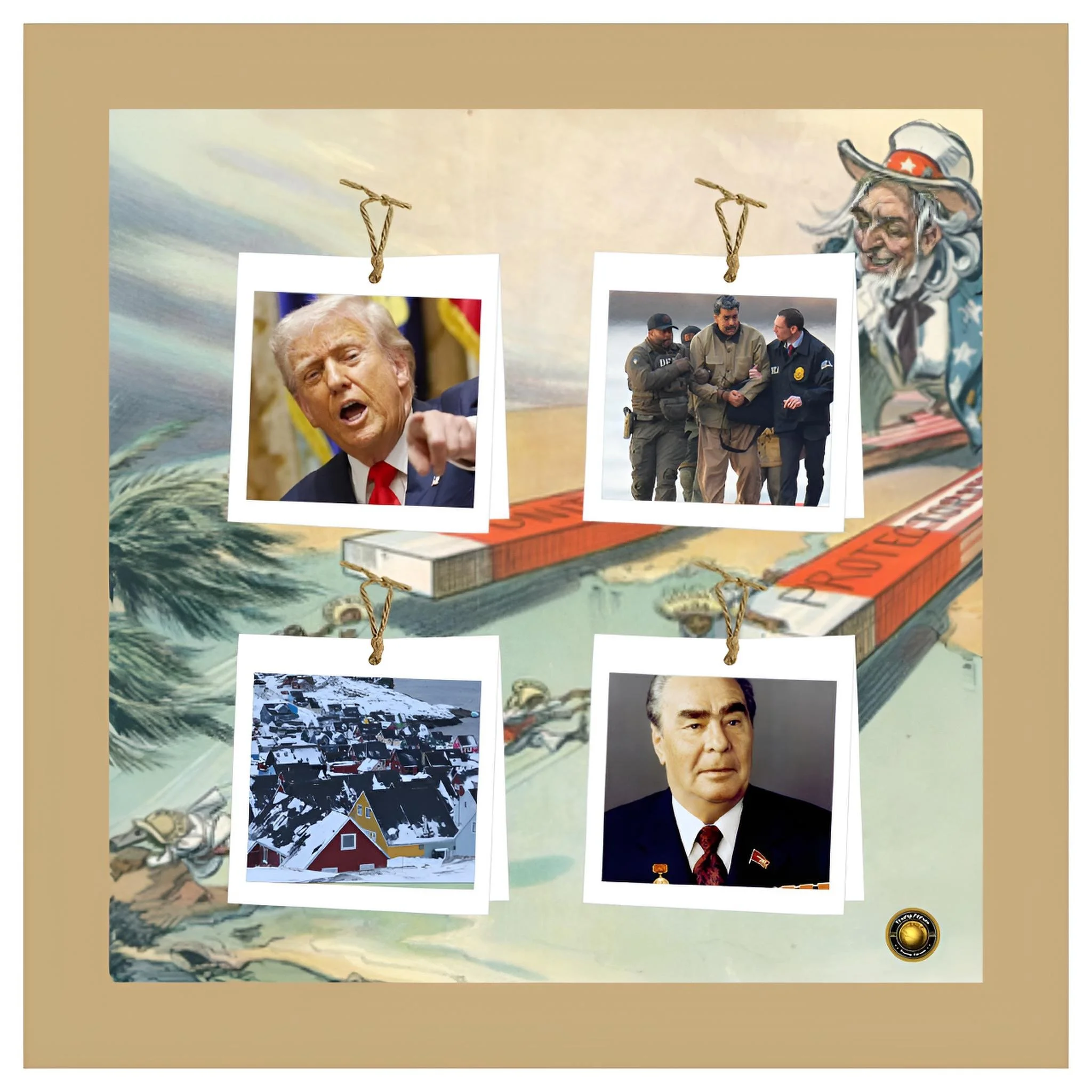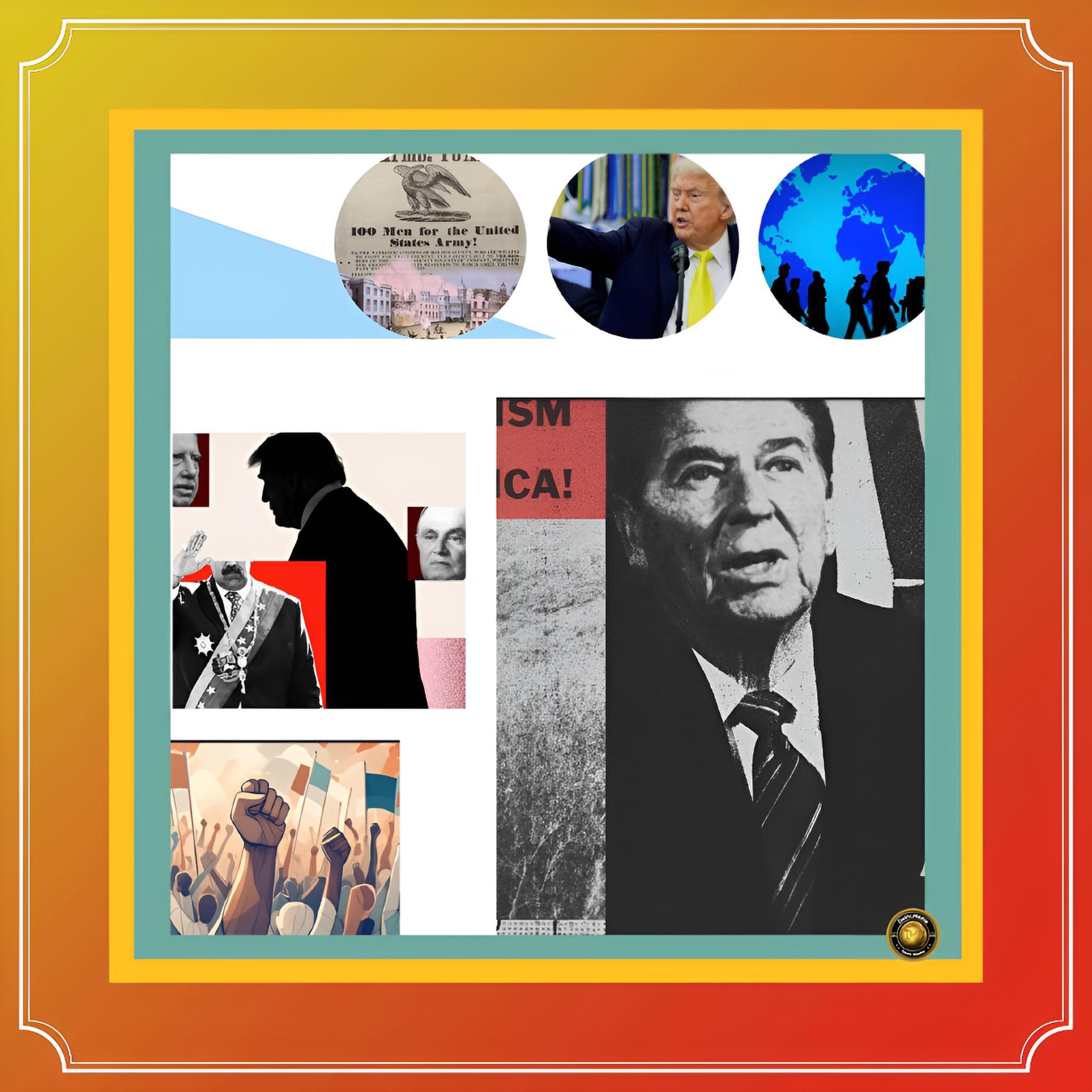
Trump’s Repeated Miscalculation: Why Former Latin American Leaders Warn Against Historical Repeats in the Region
Executive Summary
Trump Administration Isolates U.S. in Western Hemisphere as Latin American Coalition Coalesces Against Military Threats
The Trump administration’s escalating military posture toward Venezuela, combined with aggressive tariff policies and inflammatory rhetoric toward Colombia and Mexico, represents a fundamental departure from decades of calibrated diplomatic engagement in Latin America.
Former presidents Juan Manuel Santos of Colombia and Ernesto Zedillo of Mexico, alongside current leaders including Gustavo Petro and Claudia Sheinbaum, have expressed grave concerns that the administration is repeating historical patterns of unilateral intervention that destabilized the region throughout the twentieth century.
The current strategy—centred on military operations against alleged drug cartels, economic coercion through reciprocal tariffs, and veiled threats of regime change—ignores the complex legacies of past interventions, miscalculates the stability consequences for neighbouring countries, and risks isolating the United States at a critical moment of geopolitical competition in the Western Hemisphere.
The December 2025 censure vote by the Organization of American States, in which twenty nations condemned American actions whilst the United States stood alone in opposition, underscores the profound erosion of regional confidence in Washington’s approach.
Introduction
Trump Administration Isolates U.S. in Western Hemisphere as Latin American Coalition Coalesces Against Military Threats
Since returning to office in January 2025, the Trump administration has placed unprecedented emphasis on reasserting American dominance throughout the Western Hemisphere, fundamentally reorienting United States foreign policy away from partnership-based approaches toward transactional, coercive measures rooted in unilateral assertions of power.
The administration’s articulated National Security Strategy explicitly identifies Latin America as a primary theatre for projecting American influence, countering Chinese and Russian competition, and addressing migration and narcotics trafficking.
However, the methods employed—clandestine CIA operations authorised in Venezuela, over twenty lethal maritime strikes against alleged drug trafficking vessels since September 2025, tariff regimes ranging from ten to fifty percent depending on strategic alignment, military aircraft deployments numbering in the thousands, and rhetorical threats against sovereign governments deemed insufficiently compliant—evoke comparisons to deeply contested historical episodes that left profound scars across the region.
The principal architects of contemporary Trump administration policy, including Secretary of State Marco Rubio and National Security officials, have eschewed the diplomatic conventions and multilateral frameworks that characterised even assertive prior American engagement in Latin America.
Instead, they have embraced what analysts characterise as “transactional coercion,” employing economic punishment and military intimidation as primary instruments of statecraft. This approach has provoked what former leaders and current heads of state describe as an existential threat to regional sovereignty and democratic development.
Historical Context and Precedent
U.S. Power and Intervention in Latin America’s Modern History
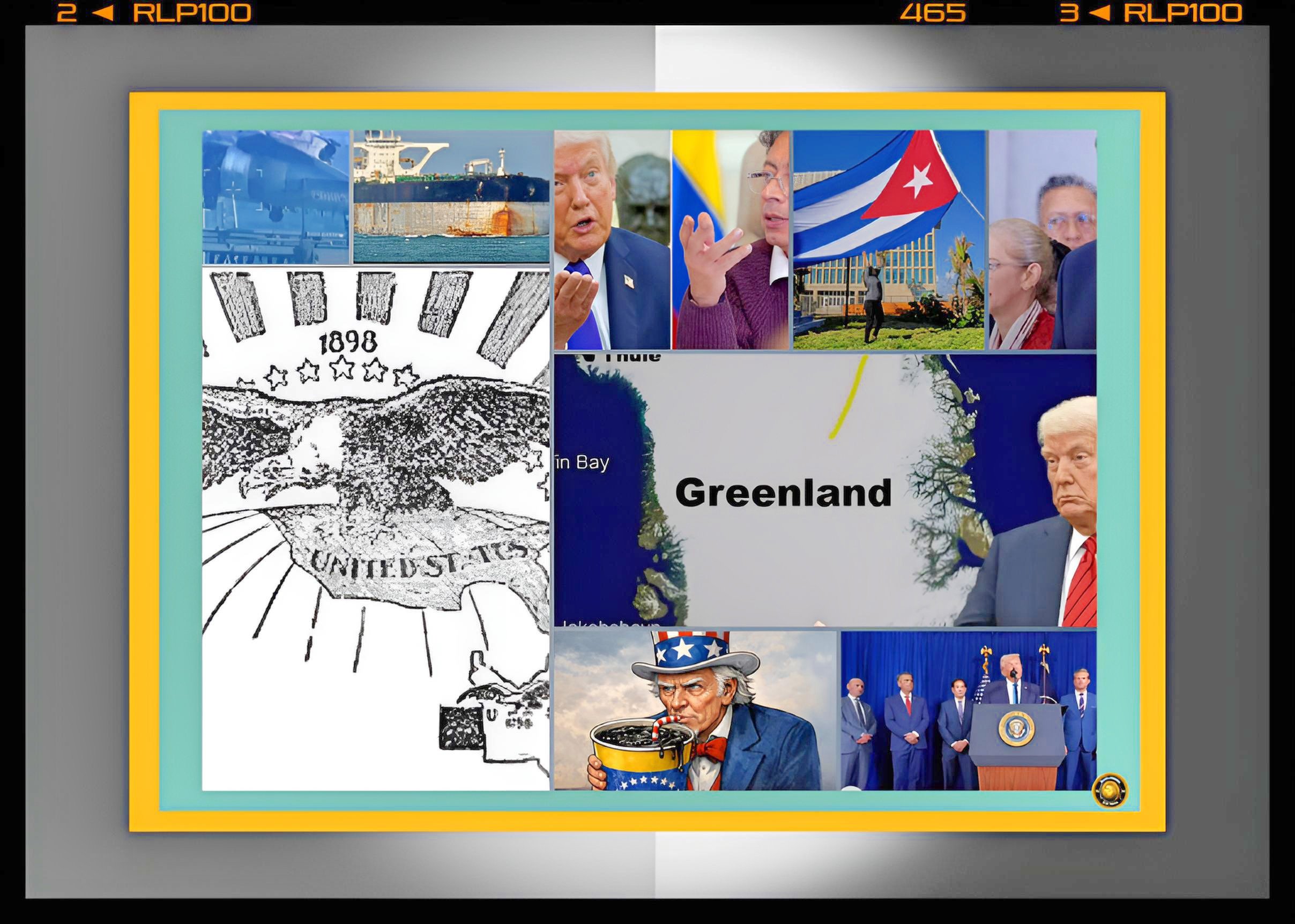
The United States has exercised extraordinary influence throughout Latin America since the articulation of the Monroe Doctrine in 1823, which declared the Western Hemisphere effectively closed to European colonial enterprise whilst implicitly reserving American prerogatives to intervene unilaterally in regional affairs.
The doctrine’s initial formulation evolved significantly following Theodore Roosevelt’s assertion of the Roosevelt Corollary in 1904, which reinterpreted the Monroe Doctrine to justify American intervention in Latin American nations experiencing what Washington deemed “flagrant and chronic wrongdoing,” particularly regarding debt obligations to American creditors and business interests.
Between 1898 and 1935, the United States launched numerous military interventions throughout the Caribbean and Central America, establishing long-term occupations in Cuba, Haiti (1915-1935), the Dominican Republic (1916-1924), Nicaragua (1912-1925 and 1926-1933), Honduras, and Panama.
These interventions, ostensibly undertaken to protect American citizens, prevent European interference, or maintain regional stability, frequently resulted in the installation of compliant governments, the extraction of economic concessions, and the suppression of nationalist movements.
The consequences included the creation of durable anti-American sentiment, the militarization of numerous societies, and the establishment of American military bases that persisted well into the contemporary era.
The interventions of the Cold War era adopted new rationales centred on containing Soviet and communist influence, but the fundamental assertion of American primacy remained consistent.
Most notably, the 1954 CIA-orchestrated coup against Guatemala’s democratically elected President Jacobo Árbenz, undertaken to protect American agricultural interests threatened by land reform, precipitated decades of civil conflict that resulted in approximately two hundred thousand deaths.
The United States similarly supported numerous authoritarian regimes, including Augusto Pinochet’s Chile following a 1973 coup, despite profound human rights violations, because such regimes aligned with American strategic interests during the Cold War competition.
Operation Just Cause in December 1989 represented the most recent major unilateral American military intervention in Latin America prior to the contemporary moment.
The operation, launched by the George H.W. Bush administration against Panamanian strongman Manuel Noriega—a former CIA informant and drug trafficker—resulted in the deaths of numerous civilians, the displacement of thousands, and the installation of a government more amenable to American interests.
Whilst the operation’s initial objectives were achieved swiftly, it reinforced throughout Latin America the perception that Washington reserved the prerogative to violate the sovereignty of neighbouring states when deemed strategically advantageous.
During the Clinton administration, the United States developed Plan Colombia beginning in 1999 and formalised in 2000.
This initiative, ostensibly designed to support Colombian governmental efforts against both drug cartels and left-wing insurgent groups, ultimately allocated more than $1.3 billion in military assistance, training, and intelligence support.
Though Plan Colombia avoided direct large-scale American military intervention comparable to Operation Just Cause, it represented a significant assertion of American influence over Colombian internal security affairs and contributed to a transformation in the Colombian military that enabled subsequent successful campaigns against the FARC and AUC.
The programme remained operational across multiple administrations precisely because it was framed as supporting rather than supplanting Colombian sovereignty, despite substantial American operational involvement.
Contemporary Developments and Recent Administration Actions
Trump’s New Latin America Gamble: Gunboats, Tariffs, and Threats of Regime Change
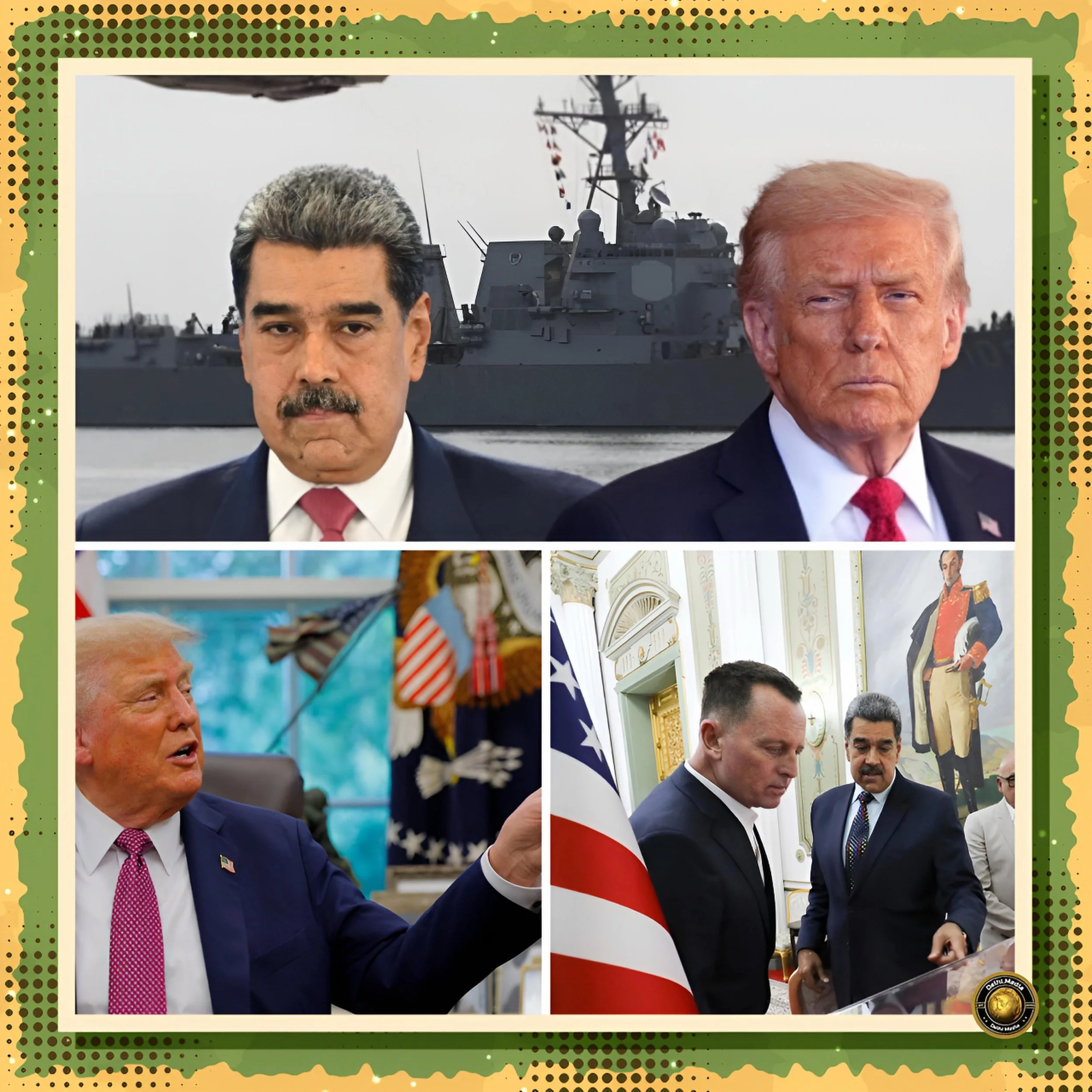
Since assuming office in January 2025, the Trump administration has initiated a dramatic escalation of military operations throughout the Caribbean directed nominally against drug trafficking but increasingly understood as part of a broader campaign to pressure Venezuelan President Nicolás Maduro toward capitulation or departure.
Beginning in early September 2025, American military forces have executed over twenty lethal strikes against vessels in international waters, resulting in at least twenty-seven confirmed deaths, with Pentagon officials subsequently revealing that identification of specific individuals as cartel members was not required to authorise strikes.
In October 2025, the administration covertly authorised the Central Intelligence Agency to undertake clandestine operations within Venezuelan territory, including lethal operations against individuals designated as associated with drug trafficking or opposition to American interests.
Simultaneously, the Department of Defense assembled approximately ten thousand military personnel in the Caribbean region, including deployment of advanced F-35 stealth fighter aircraft, amphibious assault vessels carrying Marine contingents, and eight surface warships alongside submarine assets. This military buildup represents the largest American military presence in the region since the Cold War era.
The administration’s rhetorical positioning evolved substantially throughout December 2025, with President Trump explicitly threatening military action against Colombia specifically, the government of which the Treasury Department had previously designated President Gustavo Petro as an “illegal drug dealer” subject to sanctions.
On December 2, 2025, Trump stated during a Cabinet meeting that “anybody that’s producing cocaine and selling it into our country is subject to attack, not just Venezuela,” specifically naming Colombia as a target.
When Petro warned against such action, Trump responded with explicit threats, declaring on December 10 that Petro “will be next,” language widely interpreted as a threat of either military action or targeted sanctions escalation.
The administration has simultaneously pursued economic coercion through a reciprocal tariff regime imposing duties ranging from ten to fifty percent on Latin American imports depending on perceived alignment with American objectives.
Colombia faced a threatened escalation from twenty-five to fifty percent tariffs following its initial refusal in January 2025 to accept deportation flights, which President Petro had authorised but then cancelled while military aircraft were en route.
Brazil experienced impositions of up to forty percent tariffs on agricultural products ostensibly in response to judicial proceedings against former president Jair Bolsonaro.
Mexico, the United States’ largest trading partner, confronts twenty-five percent tariffs on most automotive and steel products, with threatened additional five percent “special tariffs” relating to water disputes in shared river basins.
Concurrently, the administration has offered selective tariff relief and trade frameworks to countries demonstrating compliance with administration preferences, including Argentina, Ecuador, El Salvador, and Guatemala.
These differentiated treatments, combined with rhetorical praise for right-wing leaders including El Salvador’s Nayib Bukele and Argentina’s Javier Milei, whilst deploying sanctions and inflammatory rhetoric against leftist leaders including Colombia’s Petro and Brazil’s Luiz Inácio Lula da Silva, have created the perception throughout the region that American policy operates according to ideological preferences rather than consistent principles.
Concerns Articulated by Former and Current Leaders
Regional Heavyweights Warn: Trump’s Venezuela Plans Risk Igniting a Latin American Backlash
In December 2025, former Colombian President Juan Manuel Santos and former Mexican President Ernesto Zedillo, both participants in the Elders, an organisation of former international leaders established by Nelson Mandela to promote peace, issued joint statements opposing any military intervention in Venezuela.
Santos, who as president had authorised and managed Plan Colombia, explicitly distinguished between supportive military assistance to allied governments and unilateral American military operations conducted within sovereign territory without governmental consent.
Current Colombian President Gustavo Petro has employed increasingly forceful language in opposing Trump administration actions, warning that Trump risks “awakening the jaguar” with threats of military strikes.
Petro has argued that the Trump administration’s characterisation of Colombia as a cocaine-producing state subject to military attack fundamentally misrepresents Colombian governmental policy and ignores the complexity of security challenges within the country.
He has specifically criticised the administration’s rejection of his “Total Peace” strategy, which seeks to negotiate with insurgent factions rather than pursue purely militarised approaches to internal security.
Mexican President Claudia Sheinbaum, during extended negotiations with Trump regarding tariffs and security cooperation, has firmly rejected suggestions of American military operations on Mexican territory.
Sheinbaum has invoked the Estrada Doctrine, Mexico’s longstanding principle of non-intervention in internal affairs of other nations and opposition to external military interference, positioning Mexican policy in direct contradiction to American assertions of hemispheric primacy. She has specifically stated that Mexico “will not accept foreign intervention,” language employed with deliberate emphasis during December 2025 negotiations.
Brazilian President Luiz Inácio Lula da Silva has characterised American military actions as interference in regional affairs and warned that military intervention in Venezuela to effect regime change could “inflame South America” and precipitate widespread political radicalisation across the continent.
Lula’s adviser Celso Amorim expressed concern that direct intervention would “trigger immense resentment” throughout the region and fundamentally destabilise the democratic progress achieved across numerous Latin American nations in recent decades.
The concerns articulated by former leaders are rooted in historical understanding of how external military interventions, even those undertaken with stated limited objectives, frequently expand in scope and duration beyond initial intentions.
Santos, himself a beneficiary of Plan Colombia and a generally amenable partner with United States security objectives, has expressed concern that unilateral American military operations without governmental invitation represent precisely the pattern of intervention that damaged American standing in the region throughout the twentieth century.
Factual Concerns and Substantive Criticisms
Trump’s Drug War Logic in Latin America Is Strategically Bankrupt
Multiple substantive critiques of the Trump administration’s approach have emerged from security experts, Latin American analysts, and regional officials.
First, the administration’s characterisation of drug trafficking as an “armed attack” subject to American military response conflates law enforcement challenges with acts of war in ways that depart from established international legal precedent and conventions.
The administration notified Congress in October 2025 that the United States was engaged in an “armed conflict” with drug cartels without seeking formal Congressional authorisation for military operations, representing an assertion of executive power without legislative oversight.
Second, the specific focus on Venezuelan cocaine production whilst largely ignoring American consumption patterns, treatment infrastructure deficiencies, and demand-side factors reflects an approach that external analysts argue neglects the principal drivers of narcotic addiction and overdose deaths within American territory.
Counternarcotics experts have noted that neither Colombia nor Venezuela produces fentanyl, the opioid primarily responsible for overdose fatalities within the United States, yet the administration has maintained primary focus on cocaine interdiction in these nations whilst simultaneously reducing funding for addiction treatment and harm reduction programmes domestically.
Third, the administration’s military operations, particularly the lethal strikes on vessels in Caribbean waters, have occurred without formal declarations of war, congressional authorisation, or clearly articulated rules of engagement.
Pentagon officials acknowledged that specific identification of individuals aboard targeted vessels as cartel members was not required to authorise strikes, raising substantial questions regarding proportionality, discrimination between combatants and civilians, and compliance with international humanitarian law principles governing armed conflict.
Fourth, the administration’s threatened military action against Colombia specifically, a nation that has been a principal American security partner for more than two decades, appears disconnected from any clear strategic objective other than demonstrating American capacity to coerce even allied nations into compliance with Trump administration preferences.
Colombian security officials privately acknowledge that while cocaine production remains a security challenge, the Petro administration’s policies represent a departure from previous approaches, not a failure of governmental capacity or willingness to address narcotics trafficking.
Fifth, the selective application of tariff policies and the conditioning of trade access on ideological alignment with Trump administration preferences have created perceptions throughout the region that American foreign policy operates according to inconsistent principles.
Nations demonstrating cooperation with American security objectives, including Mexico despite ongoing disputes, remain subject to significant tariff burdens, whilst ideologically aligned nations receive preferential treatment even when objective security partnerships might argue otherwise.
Cause-and-Effect Analysis
Trump’s Latin America Coercion Backfires: OAS Historic Rebuke Signals Hemispheric Revolt
The Trump administration’s escalating assertiveness in Latin America emerges from several interconnected causes.
The administration’s articulated National Security Strategy explicitly identifies the Western Hemisphere as a primary theatre for great power competition with China and Russia, necessitating reassertion of American influence and prevention of alternative power projection.
The administration has interpreted migration flows and drug trafficking as threats not merely to public health and border security, but to American national security itself, justifying militarised responses to what previous administrations addressed through law enforcement and public health frameworks.
The administration’s historical experience with Trump’s first term in office, when various coercive measures achieved compliance from certain Latin American governments on migration and trade issues, has created confidence that similar pressure tactics will prove effective in current circumstances.
Mexico’s deployment of ten thousand National Guard personnel to southern borders, Panama’s withdrawal from Chinese Belt and Road initiatives, and Colombia’s initial acceptance of deportation flights after threatened tariffs demonstrated that transactional coercion could generate tactical compliance.
The administration has interpreted these successes as validating an approach based on economic and military pressure rather than sustained partnership.
The administration’s alignment with rightist Latin American leaders, including Javier Milei in Argentina and Nayib Bukele in El Salvador, has created the perception that ideology rather than strategic interest guides policy.
Trump administration officials have provided explicit support to Milei’s economic programme and praised Bukele’s security approaches, including his controversial mass incarceration policies, whilst simultaneously deploying sanctions and inflammatory rhetoric against leftist governments.
This ideological orientation contrasts sharply with Cold War era American policy, which supported anti-communist authoritarians regardless of governance quality, suggesting that contemporary administration preferences reflect political ideology rather than consistent strategic doctrine.
The consequences of the Trump administration’s approach have proven measurably counterproductive to stated objectives.
The December 22, 2025, Organisation of American States vote, in which twenty nations formally censured American military actions whilst Washington stood alone in opposition (with five countries abstaining), represents a historic rupture.
This vote marked the first time in the history of the organisation, established in 1948 and headquartered in Washington, that member states formally criticised American actions.
Peru suspended security cooperation and flew the Panamanian flag at its presidential palace in protest, symbolising the depth of regional displeasure.
The escalation of Trump administration threats and military operations has created instability within countries already vulnerable to democratic backsliding or state fragility.
Colombia, transitioning from decades of internal conflict and attempting to implement progressive social and economic policies, now confronts both American threats and internal security challenges exacerbated by the instability created through administration rhetoric.
Venezuela, governed by an authoritarian regime that represents a genuine concern to regional security, faces either capitulation to American pressure or escalating confrontation that could precipitate broader humanitarian and security crises.
The administration’s threat to employ military force without governmental invitation has united regional governments, including those with significant differences on other policy matters, in opposition to American actions.
Brazilian president Lula, Colombian president Petro, and Mexican president Sheinbaum, representing distinct ideological positions, have found common cause in rejecting American assertions of hemispheric prerogative.
This coalition formation, if sustained, could prove substantially more costly to American regional interests than any tactical gains achieved through pressure against individual nations.
Future Trajectories and Strategic Implications
From Colombia to Mexico: Regional Leaders Unite Against U.S. Threats in Historic Break with Washington Policy
Several potential trajectories appear plausible based on current trajectory and stated administration preferences.
The first trajectory involves escalation toward direct military operations within Venezuelan territory, potentially targeting alleged drug production facilities, military installations, or governmental leadership.
The accumulation of military assets, the authorisation of CIA clandestine operations, the public rhetoric regarding imminent “land strikes,” and Trump administration statements regarding consideration of regime change options all suggest that escalation remains within the realm of policy possibility.
Such escalation would represent the most significant American military intervention in Latin America since Operation Just Cause and would carry substantial risks of expanded conflict, humanitarian catastrophe, and regional destabilisation.
A second trajectory involves maintenance of current military pressure whilst limiting kinetic operations to maritime environments and covert CIA actions, combined with intensified economic coercion through tariff escalation and financial sanctions against specified governments and individuals.
This approach would attempt to sustain pressure on Venezuela whilst avoiding the substantial political and military costs of large-scale ground operations.
The administration might simultaneously escalate threats against Colombia and Mexico in pursuit of further compliance on immigration, security, and tariff issues.
A third trajectory involves partial retreat from current postures following either military setbacks, congressional pressure, or recognition of regional alliance fragmentation.
The administration might declare tactical victories based on limited military operations or increased compliance on specific issues, whilst reducing rhetorical emphasis on regime change and attempting to rebuild relationships damaged through inflammatory statements and threats.
The most probable trajectory, based on administration rhetoric and demonstrated preferences, appears to involve continued escalation punctuated by sporadic negotiations and tactical retreats.
The administration has demonstrated willingness to threaten multiple nations simultaneously, deploy military assets rapidly, and employ coercive economic measures whilst simultaneously engaging in bilateral negotiations with specific governments.
This pattern suggests an approach that prioritises maintaining pressure whilst preserving options for both escalation and negotiated settlement.
Analytical Assessment and Strategic Concerns
Trump’s Outdated Monroe Doctrine Gamble: Why Latin America’s New Realities Doom Interventionism
The Trump administration’s approach to Latin America reflects what analysts characterise as a “maximalist” interpretation of American hemispheric prerogatives rooted in historical doctrines including the Monroe Doctrine and Roosevelt Corollary, but deployed in contemporary circumstances that have fundamentally altered the regional balance of power and authority structures.
The administration appears to assume that military and economic pressure can compel compliance from Latin American governments with the same effectiveness that such pressure achieved during periods of greater American technological, economic, and military superiority.
However, several structural realities have transformed since the Cold War era and even since Operation Just Cause in 1989. Latin American nations possess greater military capacity, though still substantially inferior to the United States militarily.
More significantly, democratic governance has expanded throughout the region, creating domestic political constituencies that oppose external military intervention and creating governmental leaders answerable to publics that increasingly resent American assertions of hemispheric dominance.
The rise of alternative sources of international capital, trade partnerships, and security relationships through Chinese, Russian, and intra-Latin American mechanisms has created options for governments seeking to reduce dependence on American market access and security guarantees.
The administration’s approach furthermore misdiagnoses the root causes of the problems it purports to address.
Drug trafficking flows reflect fundamental issues including demand-side factors within the United States, the profitability of illicit trade relative to legal economic opportunities in producer regions, and the capacity of criminal organisations to adapt to enforcement efforts.
These challenges cannot be resolved through military operations against supply-side actors without addressing underlying demand dynamics and economic development deficits within producer regions.
Similarly, migration flows from Central America, characterised throughout Trump administration rhetoric as invasion-like phenomena, reflect structural economic dislocation, gang violence, climate change impacts, and limited economic opportunity within origin countries.
Military operations against drug cartels, whilst addressing one security challenge, do not address the economic desperation that drives migration in the first place.
Mexican president Sheinbaum has explicitly stated that addressing drug trafficking requires addressing causes of drug use, a position reflecting reality-based understanding of complex social phenomena that the administration’s militarised approach does not adequately acknowledge.
The administration’s approach furthermore fails to account for the historical legacies that continue to shape Latin American perceptions of American intervention.
The detailed historical memory of twentieth-century interventions, regime changes, and support for authoritarian governments persists within Latin American societies.
These memories are not abstract historical knowledge but rather constitute living memory within families and communities that experienced American-supported violence and coercion.
Renewed assertions of American hemispheric prerogative therefore activate these historical traumas and create the perception that the region faces a return to earlier patterns of domination.
Conclusion
Trump’s Hemispheric Reckoning: *OAS Historic Censure Exposes Failed Intervention Revival
The Trump administration’s approach to Latin America represents a fundamental departure from the trajectory of American hemispheric relations established during the final decades of the twentieth century and the opening decades of the twenty-first century.
Rather than building upon the partnership frameworks, security cooperation mechanisms, and economic integration arrangements that had characterised American engagement with the region despite significant tensions and disagreements, the administration has reverted to unilateral assertions of power, economic coercion, and military intimidation as primary instruments of statecraft.
The former leaders of Colombia and Mexico, together with current heads of state across the region, have articulated a coherent critique rooted in historical understanding and contemporary strategic analysis.
Their concerns that the Trump administration is repeating historical patterns of intervention that proved destructive to regional stability, corrosive to American standing, and ultimately ineffective at achieving stated objectives reflect substantial historical and analytical warrant.
The December 2025 Organisation of American States censure vote, representing an unprecedented formal condemnation of American actions by an organisation traditionally deferential to United States preferences, provides quantifiable evidence of the administration’s success in alienating regional governments across the political spectrum.
America’s Hemisphere Gamble: Power Plays That Weaken Influence
The strategic consequences of current American policy trends appear likely to be substantially counterproductive to stated American interests.
(1) Rather than reasserting American hemispheric dominance, current policies have catalysed regional coalition formation in opposition to American objectives.
(2) Rather than preventing Chinese and Russian influence expansion, current American alienation of regional governments creates openings for alternative partnerships.
(3) Rather than addressing drug trafficking and migration through militarised approaches, current policy neglects the demand-side and development factors that drive these phenomena and generates political instability that exacerbates rather than ameliorates underlying security challenges.
The trajectory toward greater military assertiveness, economic coercion, and unilateral assertion of hemispheric prerogative therefore appears likely to prove strategically counterproductive even according to the administration’s own strategic objectives.
The historical parallel that should concern policymakers is not the tactical success of Operation Just Cause but rather the longer-term consequences of twentieth-century American interventions, which created durable anti-American sentiment, encouraged alternative alliance formation, and ultimately weakened rather than strengthened American regional influence.
A recalibration toward partnership frameworks, respect for national sovereignty, and acknowledgement of legitimate regional concerns regarding American assertions of power would constitute a strategic necessity rather than a diplomatic preference.
The window for such recalibration narrowed substantially following December 2025 statements and Organisation of American States actions, but remains theoretically available should administration policymakers choose to prioritise longer-term strategic interests over immediate displays of coercive capacity.
*OAS stands for the Organization of American States, a regional intergovernmental body founded in 1948 with 35 member states from the Americas, headquartered in Washington, D.C. It promotes democracy, human rights, security, and economic cooperation in the Western Hemisphere.