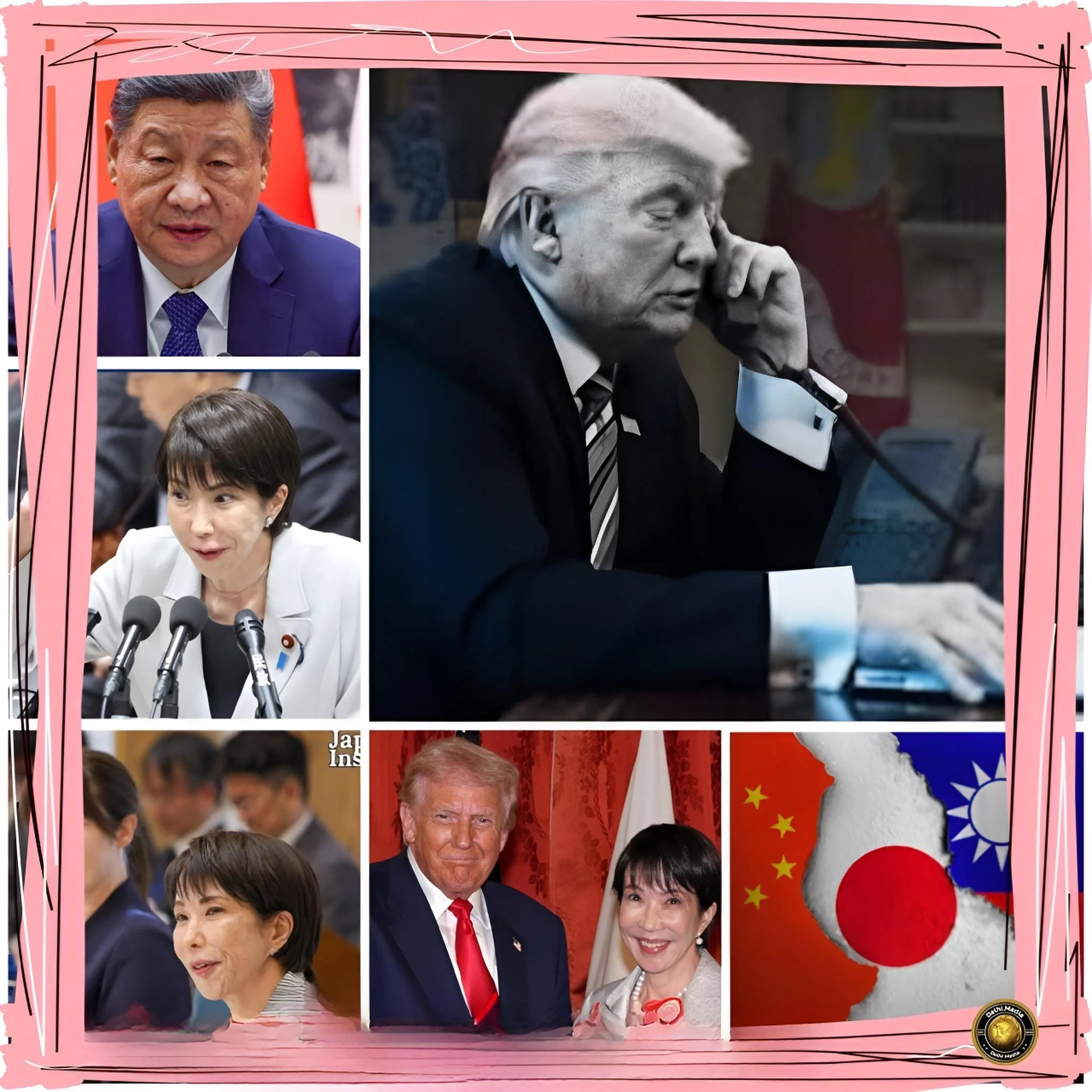
The Escalating Clash Between Japan and China: The Taiwan Statement That Pushed Two Nations to the Brink
Executive Summary
Tokyo vs. Beijing: How Taiwan Sparked a New Era of Strategic Confrontation
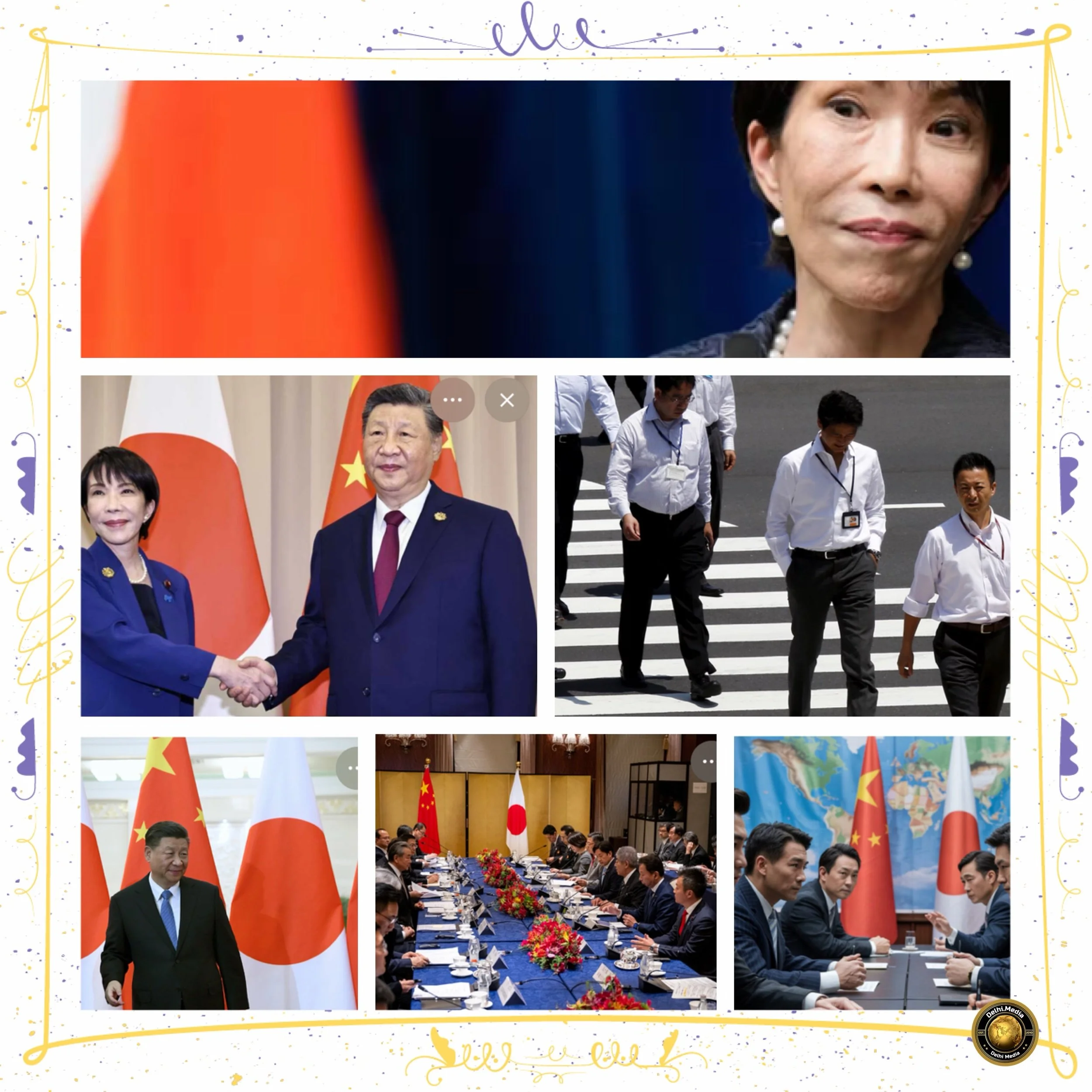
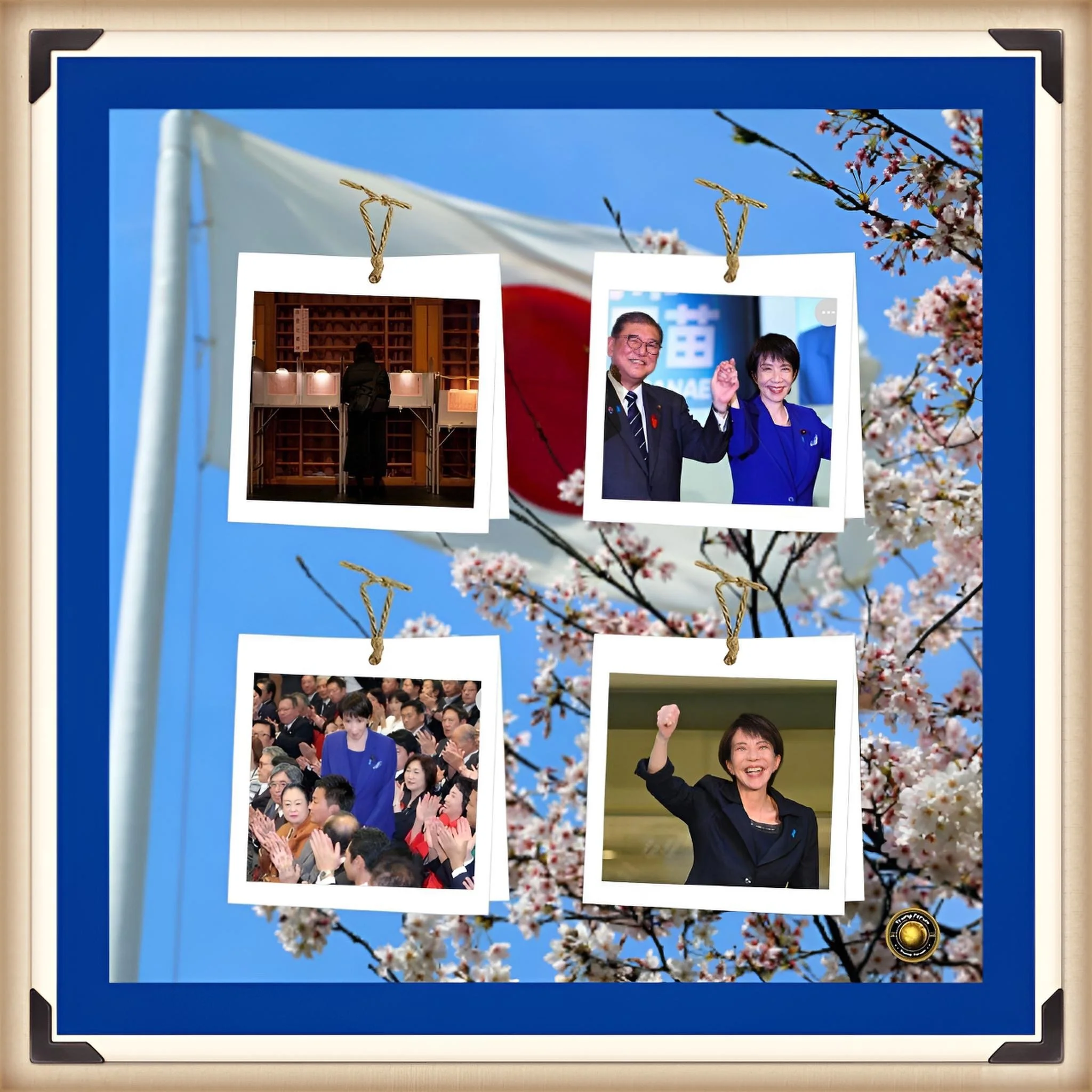
The appointment of Sanae Takaichi as Japan’s first female Prime Minister in October 2025 precipitated a diplomatic crisis of extraordinary proportions when, on November 7, she stated before the Japanese Diet that a Chinese military assault on Taiwan—including a naval blockade scenario—would constitute a “survival-threatening situation” requiring potential Japanese military intervention under the nation’s right to collective self-defense.
This statement, while consistent with previous Japanese security assessments, marked a dramatic departure from Japan’s traditional “strategic ambiguity” policy by explicitly linking Taiwan’s security to Japan’s national survival.
China’s response has been the most sustained and intensely hostile diplomatic campaign against Japan in recent years, featuring threats of violence from high-ranking officials, comprehensive economic sanctions including travel bans and food import suspensions, military provocations involving radar illumination of Japanese fighter jets, and explicit statements that Japan has “crossed a red line” that cannot be tolerated.
Despite intense pressure from both Beijing and Washington, Takaichi has refused to retract her remarks, insisting they reflect longstanding policy.
While Takaichi maintains exceptionally high domestic approval ratings approaching 75 percent, her coalition government rests on an unstable foundation with the Japan Innovation Party, creating speculation about the tenure of her administration.
The crisis represents a watershed moment in East Asian security architecture, marking the transition from implicit deterrence frameworks toward explicit confrontation over Taiwan’s status.
Introduction
The Taiwan Flashpoint: Japan and China Edge Toward Open Hostility
The tension unfolding between Japan and China represents far more than a routine diplomatic disagreement or the byproduct of miscommunication between regional powers. Rather, it constitutes the most serious bilateral crisis between Tokyo and Beijing in several years, triggered by an explicit articulation of Japan’s security interests that Beijing perceives as an intolerable transgression of its core concerns regarding Taiwan.
The fundamental question animating the current dispute centers not on whether Takaichi’s November 7 statement represented novel policy—it did not—but rather on whether Japan’s deliberate articulation of potential military intervention over Taiwan represents a threshold that cannot be crossed without severe consequences.
Beijing has interpreted Takaichi’s remarks precisely as such a crossing, responding with an intensity and coordinated ferocity that exceeds even the baseline of nationalist rhetoric characteristic of contemporary Chinese “wolf warrior” diplomacy.
The strategic timing of this crisis carries particular significance.
Takaichi assumed office in late October 2025 as Japan’s first woman prime minister, inheriting a coalition government explicitly rejected by the more dovish Komeito Party, which abandoned its 26-year partnership with the Liberal Democratic Party specifically because of Takaichi’s more hawkish orientation toward China.
This political realignment transformed Japan’s domestic political landscape, creating space for more assertive security positioning. Yet within weeks, Takaichi found herself navigating not merely routine inter-party coalition management but a crisis with potential ramifications extending far beyond Japanese domestic politics.
The incident reveals the brittleness of the unspoken understandings that have long governed great power competition in East Asia, suggesting that the era of strategic ambiguity may be giving way to something far more volatile and dangerous.
The Statement That Triggered the Crisis: Takaichi’s Exact Words and Context
The Statement That Shook Asia: How Taiwan Became a Tipping Point for Japan–China Relations
On November 7, 2025, during a budget committee meeting in the Lower House of Japan’s Diet, Prime Minister Sanae Takaichi responded to parliamentary questions regarding Taiwan by articulating Japan’s security position with unprecedented directness. When asked about potential Japanese responses to Chinese military action against Taiwan, Takaichi stated that China’s use of military force against Taiwan—explicitly including the scenario of a naval blockade—would represent a “survival-threatening situation” that could justify Japanese invocation of its right to collective self-defense and potentially trigger Japanese military involvement.
The terminology employed by Takaichi carried significant legal and constitutional weight.
The phrase “survival-threatening situation” derives directly from Japan’s 2003 Act on the Peace and Independence of Japan and Maintenance of the Security of the Nation and the People in Armed Attack Situations, which explicitly authorizes the Japanese government and Self-Defense Forces to respond to scenarios threatening Japan’s survival with all available means and measures.
Japan’s 2019 Defense White Paper clarifies that a “survival-threatening situation” applies to circumstances affecting foreign countries that could nonetheless threaten Japan’s survival “depending on its purpose, scale and manner,” and that the Self-Defense Force Law explicitly identifies responses to such situations as unavoidable self-defense measures.
What distinguished Takaichi’s November 7 remarks from previous similar statements made by other Japanese leaders was not their substance—former Prime Minister Shinzo Abe had made comparable observations regarding Taiwan’s security—but rather their explicitness, directness, and the timing of their articulation by a sitting Prime Minister at the highest levels of Japanese governance.
Abe had stated in December 2021 that “a Taiwan emergency is a Japanese emergency and therefore an emergency for the Japan-U.S. alliance,” but Abe was expressing his views as a former prime minister delivering a speech in Taiwan.
Takaichi’s formulation, by contrast, emerged from official parliamentary questioning of an incumbent prime minister, suggesting institutional rather than merely individual commitment to the proposition that Taiwan’s security constituted an essential Japanese security interest.
Significantly, when Takaichi subsequently addressed this issue in a parliamentary session on November 26, she indicated that her November 7 remarks had been somewhat improvisational—that she had not initially intended to reference a specific Taiwan scenario as an example of a “survival-threatening situation.”
Instead, she had been responding to a parliamentary question in ways that reflected her broader conviction that Taiwan’s security possessed direct relevance to Japanese national survival.
This clarification, rather than tempering the subsequent crisis, instead appeared to suggest that Takaichi had articulated her genuine beliefs with perhaps greater candor than diplomatic norms typically permit.
Her insistence, both then and subsequently, that her position remained consistent with longstanding Japanese policy positioning, effectively cemented her refusal to retract.
China’s Response: From “Red Line” to Military Provocations
The Day Tokyo Spoke and Beijing Roared: Inside the Taiwan Dispute Reigniting East Asian Tensions
Beijing’s response to Takaichi’s November 7 statement unfolded with coordinated ferocity that exceeded even standard baseline “wolf warrior” diplomatic rhetoric characteristic of contemporary Chinese foreign policy.
The response proceeded through several escalating phases, each more intense than its predecessor, involving diplomatic protests, economic coercion, military provocations, and veiled threats of violence against the Japanese Prime Minister herself.
The initial official response came on November 8, when Xue Jian, the People’s Republic of China’s Consul General in Osaka, posted on the social media platform X a statement that referenced Takaichi’s Taiwan remarks and declared: “The dirty neck that sticks itself in must be cut off.”
While this particular post was subsequently removed from the platform, it established a rhetorical tone that would characterize the subsequent diplomatic campaign. Japan’s Chief Cabinet Secretary Minoru Kihara deemed Xue’s statement “highly inappropriate,” and Japan formally summoned China’s ambassador in response.
The Chinese Foreign Ministry followed with sustained rhetorical assaults through official channels.
Beginning on November 10, Foreign Ministry spokesman Lin Jian declared that “the Japanese leader blatantly made wrongful remarks on Taiwan at the Diet that imply the possibility of armed intervention in the Taiwan Strait.
It constitutes a gross interference in China’s internal affairs,” and posed the rhetorical question: “What signal is the Japanese leader trying to send to ‘Taiwan independence’ separatist forces?”
Foreign Ministry spokeswoman Mao Ning subsequently stated repeatedly that Japan must “stop playing with fire” and that Takaichi’s remarks had “gravely hurt the sentiments of the Chinese people and poisoned the atmosphere for exchanges between the two countries.”
The escalation intensified significantly when, on November 21, the People’s Republic of China brought its dispute with Japan to the United Nations.
Ambassador Fu Cong delivered an open letter to UN Secretary-General António Guterres in which he characterized Takaichi’s remarks as “the first time Japan has expressed ambitions to intervene militarily in the Taiwan question” and “the first time Japan has issued a threat of force against China, openly challenging China’s core interests.”
Crucially, Fu Cong’s letter contained a warning to other nations: “If Japan dares to attempt an armed intervention in the cross-Strait situation, it would be an act of aggression. China will resolutely exercise its right of self-defence under the UN Charter and international law and firmly defend its sovereignty and territorial integrity.”
The highest-level Chinese official intervention came on November 23, when Foreign Minister Wang Yi issued a public statement directly addressing Takaichi and Japan’s position.
Wang’s statement employed language that established explicit redlines: “It is shocking that Japan’s current leaders have publicly sent the wrong signal of attempting military intervention in the Taiwan issue, said things they shouldn’t have said, and crossed a red line that should not have been touched.” Wang continued by asserting that China must “resolutely respond” to Japan’s actions and that “all countries have the responsibility to prevent the resurgence of Japanese militarism.”
This statement was accompanied by the unveiling of what China’s Foreign Ministry designated the “Three Never-Allows”, a formulation explicitly directed at Japan and Taiwan.
These three assertions represented official Chinese policy declarations:
(1) first, “China will never allow Japanese right-wing forces to turn back the tide of history”
(2) second, “Never allow foreign forces to encroach on China’s Taiwan area”
(3) third, “Never allow a revival of Japanese militarism.”
These three declarations, articulated through official state media and the Foreign Ministry, signaled the comprehensive nature of China’s objections to Japan’s positioning on Taiwan.
Concurrent with this rhetorical assault, China implemented a coordinated program of economic sanctions and military intimidation designed to inflict immediate costs on Japan while signaling resolve to other regional powers.
Beginning on November 14, the Chinese government issued an official travel advisory urging Chinese citizens to “avoid traveling to Japan in the near future,” citing purported safety concerns.
This advisory triggered immediate cancellations throughout the Chinese travel industry, with major travel agencies reporting mass cancellations within 24 hours, affecting both December holiday travel and Lunar New Year holiday plans.
Analysts estimated that the travel restriction could eliminate up to $1.8 billion in Chinese outbound tourism spending to Japan and substantially damage Japan’s goal of recovering pre-pandemic Chinese visitor levels by 2026.
On November 19, the People’s Republic of China imposed a comprehensive ban on seafood imports from Japan—a particularly significant action given that Beijing had only recently lifted a previous such ban in 2023 that had been imposed following Japan’s discharge of treated radioactive water from the Fukushima nuclear facility.
Foreign Ministry spokeswoman Mao Ning stated that the new ban was being implemented because “even if Japanese seafood was exported to China, there would be no market [for it],” and that Japan’s position had created “strong public outrage in China.”
This language effectively characterized the ban as a response to public opinion rather than a technical safety measure, signaling that lifting the ban would require not merely Japanese technical compliance but political capitulation to Chinese demands.
The Chinese government further restricted cultural and intellectual exchange by freezing licensing reviews for Japanese films and cancelling approvals for Japanese musical performances.
These actions culminated in highly publicized disruptions including the interruption mid-song of a performance by Japanese musician Maki Otsuki in Shanghai on November 29, and the cancellation of a concert by pop musician Ayumi Hamasaki the following day, resulting in a 14,000-seat empty venue.
The military dimension of China’s pressure campaign escalated dramatically on December 7-8, when the People’s Liberation Army Navy conducted what the Japanese government characterized as dangerous military provocations.
According to Japanese Defense Ministry reports, on Saturday, December 6, Chinese J-15 fighter jets from the Liaoning aircraft carrier activated their fire-control radar on Japanese F-15 fighter jets on two separate occasions—at 4:32 PM and again approximately two hours later.
These incidents occurred approximately 100 kilometers southeast of Okinawa’s main islands, in the vicinity of the contested Senkaku Islands (known to China as the Diaoyu Islands).
Prime Minister Takaichi responded to these incidents on December 8 by stating that “These radar illuminations represent a perilous action that exceeds what is necessary for the secure operation of aircraft,” characterizing them as “extremely regrettable” and confirming that Japan had submitted a formal protest to China.
Defense Minister Shinjiro Koizumi convened an urgent press briefing characterizing China’s actions as a “dangerous act” and pledging that Japan would respond “resolutely and calmly” to maintain regional peace and stability.
China disputed Japan’s characterization of these incidents entirely.
Senior Colonel Zhang Xiaogang, spokesman for China’s Defense Ministry, asserted that the People’s Liberation Army Navy had been conducting “far-sea training” exercises in areas that China had delineated and announced in advance, and that Japanese aircraft had “repeatedly intruded into the exercise and training zones” and engaged in “maliciously tracking and harassing” China’s Liaoning carrier group.
This fundamentally divergent characterization of the same incident exemplified the erosion of shared frameworks for interpreting military activities in East Asian airspace.
The Core Demands and China’s Escalation Calculus
From Diplomacy to Deterrence: Japan and China’s Collision Over Taiwan Policy
Throughout the escalating crisis, Beijing maintained one consistent demand: that Japan retract Prime Minister Takaichi’s November 7 remarks regarding Taiwan and Japan’s potential military response.
Foreign Ministry spokeswoman Mao Ning stated explicitly on November 17: “Regardless of which party or individual governs Japan, it must adhere to and honor the Japanese government’s commitments on the Taiwan question.
We urge Japan to act responsibly toward history and bilateral relations, stop crossing lines and playing with fire, retract its erroneous words and actions, and genuinely implement its commitments to China through concrete actions.”
China grounded its demand for retraction in what it characterized as Japan’s historical commitments to the “One China” principle dating to the 1972 Sino-Japanese Joint Statement.
The 1972 joint statement declared that “the government of the People’s Republic of China reiterates that Taiwan is an inalienable part of the territory of the People’s Republic of China.
The government of Japan fully understands and respects this stand of the government of the People’s Republic of China, and it firmly maintains its stand under Article 8 of the Potsdam Declaration.” China argued that Takaichi’s remarks constituted a violation of this historical commitment and demanded that Japan “seriously reflect and repent” and “withdraw Prime Minister Sanae Takaichi’s wrongful statements.”
Japan’s unwillingness to comply with this demand proved central to the crisis’s persistence.
When asked on November 21 whether Japan would retract Takaichi’s remarks, Japanese officials firmly declined, instead insisting that Takaichi’s position reflected longstanding policy positions consistently articulated by successive Japanese administrations.
This refusal represented a deliberate Japanese decision to endure Chinese economic and diplomatic pressure rather than capitulate to Beijing’s demands.
As one analysis noted, Japan’s refusal “hardened Tokyo’s stance, reduced decades of strategic ambiguity, and signaled that Japan is increasingly willing to endure diplomatic and economic pressure rather than back down on security positions.”
This dynamic created what might be characterized as a confrontation over the terms of regional order itself.
China sought to establish that explicit articulation of security interests regarding Taiwan represented a transgression of non-negotiable boundaries, while Japan sought to establish that security assessments regarding Taiwan fell within the legitimate scope of sovereign national security deliberation.
The fact that neither side showed signs of capitulation suggested that the crisis would not be resolved through one party conceding to the other’s demands, but rather would persist until the underlying strategic tension found some form of equilibrium.
The U.S. Response and the Regional Strategic Context
Global Shockwaves: Trump Enters the Japan–China Clash Over Taiwan
The Trump Administration’s response to the Japan-China crisis revealed the challenges facing American strategic positioning in East Asia.
Rather than clearly endorsing Japan’s security positioning, the Trump Administration sought to maintain flexibility in its approach to both Japan and China, perhaps anticipating potential negotiations with Beijing over issues ranging from trade to Taiwan’s status itself.
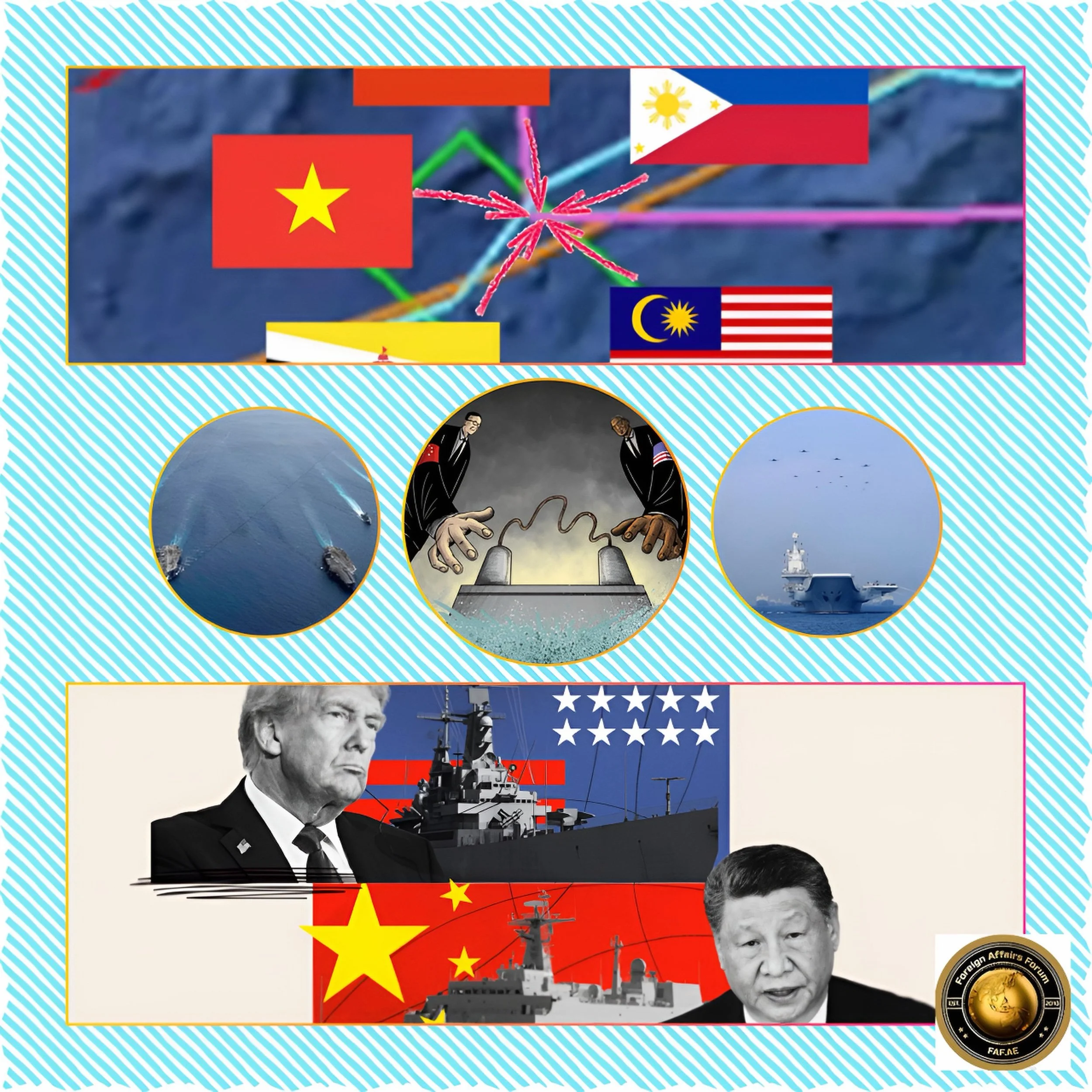
President Trump held a telephone conversation with President Xi Jinping on November 24, reportedly discussing Taiwan among other topics.
The official Chinese summary of that conversation emphasized that “President Xi outlined China’s principled position on the Taiwan question” and asserted that “Taiwan’s return to China is an integral part of the post-war international order. China and the U.S. fought shoulder to shoulder against fascism and militarism.”
Trump’s own account of the same conversation, posted on his Truth Social platform, made no mention of Taiwan whatsoever, instead emphasizing discussions of “Ukraine/Russia, Fentanyl, Soybeans and other Farm Products” and concluding that “Our relationship with China is extremely strong!”
The following day, on November 25, Trump held a separate telephone conversation with Prime Minister Takaichi.
While the specific contents of that conversation were not disclosed publicly, Japanese media reporting indicated that Trump had advised Takaichi against taking further actions that might inflame the dispute with Beijing.
Trump Sparks Firestorm as Japan–China Tensions Explode Over Taiwan
This guidance effectively signaled to Japan that the United States, while maintaining alliance commitments, was reluctant to become directly embroiled in confrontation with China over Taiwan.
The Japanese Foreign Ministry’s own summary of the Trump-Takaichi call was characteristically vague, mentioning only discussion of “various challenges facing the Indo-Pacific region” and pledging that “the two countries will continue working closely under the current international situation.”
This American positioning reflected the Trump Administration’s apparent strategic calculation that maintaining flexibility with China served important American interests in potential trade negotiations and broader great power accommodation.
Taiwan remained implicitly central to American security architecture, but the Administration’s reluctance to explicitly endorse Japan’s positioning on Taiwan suggested that the foundations of traditional U.S. alliance commitments might be less solid than previously assumed.
Takaichi’s Domestic Political Position: High Approval Amid Coalition Fragility
Takaichi Rides High in Polls as Coalition Cracks Deepen
Despite the unprecedented intensity of Chinese pressure and international diplomatic tension, Takaichi’s domestic political position remained remarkably strong throughout the crisis.
Public opinion polling conducted in November 2025 revealed that Takaichi’s approval rating had not merely survived the Taiwan controversy but had actually strengthened.
According to November 2025 polling data, Takaichi’s approval rating reached between 64 and 75 percent across multiple major Japanese polling organizations.
The Kyodo News survey showed her approval rating climbing by 5.5 percentage points to 69.9 percent in November, while NHK and Jiji Press both found support levels in the range of 64 to 66 percent.
Most significantly, polling data indicated that the Taiwan controversy had produced no measurable erosion of support for Takaichi’s government.
Popular but Precarious: Takaichi’s Leadership Tested by Coalition Strains
As one analysis observed, “though with a 71% approval rating in October followed by 72% in November, Takaichi is bucking the trend,” that recent prime ministers had experienced sharp approval rating declines in their second month of office.
The Asahi Shimbun noted that Takaichi had “maintained a historically high starting level of support into her second month,” placing her in rare company with former Prime Ministers
(1) Junichirō Koizumi (who achieved 87 percent approval in 2001)
(2) Shinzō Abe (who achieved 73 percent in 2012 during his second premiership).
However, the durability of Takaichi’s high approval ratings contrasted sharply with the structural fragility of her coalition government.
While Takaichi’s approval ratings approached 75 percent in late November, her coalition partner, the Japan Innovation Party (Ishin), had explicitly refused to provide cabinet members to her government, establishing what Japanese political observers characterized as an “unstable” extra-cabinet cooperation arrangement.
This arrangement departed fundamentally from the traditional coalition model, in which junior partners provided cabinet representation and shared formal responsibility for government operations.
High Approval, Shaky Ground: Inside Takaichi’s Struggle to Steady Japan’s Coalition
Political analysts noted that Takaichi had urgently sought conventional intra-cabinet cooperation with Ishin but that the party leadership, headed by Hirofumi Yoshimura, had refused such arrangements, demanding instead that Ishin lawmakers participate only as external supporters rather than cabinet members.
Within the Liberal Democratic Party itself, significant backlash emerged against Takaichi’s acceptance of such an arrangement, with some party members arguing that “sudden reductions are out of the question” and questioning whether the General Council, which operates on a consensus-building system with approximately 25 members, would approve the necessary reductions in LDP cabinet positions.
Most troublingly for Takaichi’s long-term tenure, the political figures who had previously managed relationships between the LDP and Ishin had either departed from Takaichi’s government or had significantly reduced influence.
Former Prime Minister Yoshihide Suga, who had maintained friendly relations with Ishin leadership, had stepped down from Takaichi’s LDP executive body.
The journalist analyzing Japanese politics observed that the new coordinating link between the parties, Takashi Endo (appointed as a prime ministerial aide), possessed “weaker influence compared to the past” in managing potential conflicts between coalition partners.
Speculation emerged within Japanese political circles regarding Takaichi’s tenure as Prime Minister.
While her exceptional approval ratings provided strong political cover, the structural instability of her coalition arrangement created vulnerability to sudden collapse within two to three months should fundamental disagreements emerge between the LDP and Ishin over major legislation or budget allocations.
One observer noted that “If the LDP’s decision-making body, the General Council, operates under a consensus system with around 25 members, there is a possibility that the proposal to reduce the number of lawmakers may not be adopted as party policy. In this case, there are observations that the coalition could collapse within two months, leading to a short-lived Takaichi administration.”
The Chinese speculation regarding Takaichi’s limited tenure appeared to rest on these structural vulnerabilities.
Takaichi’s Popularity Buffers Japan as China Seeks To Reassert Regional Influence
Beijing’s apparent calculation was that if Takaichi could be forced to either retract her Taiwan remarks or endure sustained economic and diplomatic pressure, the political costs might ultimately undermine her coalition partner’s willingness to continue supporting her government.
Should Ishin withdraw support, particularly if this withdrawal occurred amidst broader public frustration regarding economic impacts of Chinese sanctions (including tourism and seafood export disruptions), a political crisis could force Takaichi’s resignation within months.
Conversely, were Takaichi to attempt to lead Japan through sustained confrontation with China while her coalition partner questioned the wisdom of such confrontation, the resulting internal tensions could trigger rapid government collapse.
Yet public opinion data suggested that Chinese calculations regarding political vulnerability might prove miscalibrated. A December 2025 NHK poll found that while 54 percent of Japanese respondents expressed concern about the economic impacts of China-Japan tensions, Takaichi’s approval rating remained at 64 percent.
This suggested that Japanese publics recognized the stakes of the Taiwan issue with sufficient clarity that they were not immediately punishing Takaichi for standing firm. Whether this public support would persist if Chinese economic sanctions intensified or military provocations escalated remained an open question.
Cause and Effect
Understanding the Strategic Logic Behind the Crisis
The fundamental cause of the Japan-China crisis lay not in Takaichi’s November 7 remarks per se, but rather in the collision between Japan’s increasingly explicit security positioning regarding Taiwan and China’s determination to prevent any external military commitment to Taiwan’s defense.
While previous Japanese leaders had made similar statements regarding Taiwan’s security relevance to Japan, the timing and explicitness of Takaichi’s articulation suggested a new phase in Japanese security strategy that China perceived as requiring immediate forceful response.
Several deeper causal factors animated the crisis.
(1) First, China’s military position in the Taiwan Strait had objectively strengthened significantly, with the People’s Liberation Army Navy expanding its capabilities and Japan reported approximately 100 fighter jet takeoffs from the Liaoning aircraft carrier during the contested exercises near Okinawa.
This expanding Chinese military capability created what Beijing perceived as a window of opportunity to establish political and military dominance in the region before Taiwan and Japan could coordinate effective defensive arrangements.
(2) Second, Takaichi’s appointment as Prime Minister represented a political inflection point within Japan itself.
Unlike her predecessor Shigeru Ishiba, who operated under the constraint of coalition partnership with the dovish Komeito Party, Takaichi’s coalition with the right-leaning Japan Innovation Party freed her from what she perceived as dovish constraints.
The Komeito Party had abandoned its 26-year coalition partnership specifically because of concern regarding Takaichi’s hawkish orientation.
This political realignment in Tokyo signaled to Beijing that Japan was shifting toward more assertive security positioning, potentially creating an opportunity for China to establish new political boundaries before such positioning became institutionalized.[chosun]
(3) Third, the Trump Administration’s apparent willingness to negotiate with China over fundamental Asia-Pacific issues, including potentially moderating American commitment to Taiwan’s defense, created what Beijing perceived as a strategic opportunity to reshape regional arrangements before the Trump Administration fully consolidated its approach toward China.
Taiwan Tensions Boil Over: Trump–Xi Talks and Takaichi’s Stand Push Japan–China Relations to the Edge
The timing of the Trump-Xi telephone conversation on November 24, occurring within weeks of Takaichi’s Taiwan remarks and featuring explicit Chinese assertions regarding Taiwan’s status, suggested that Beijing was simultaneously pursuing diplomatic pressure on Japan while attempting to shape American positioning through direct great power negotiation.
The effects of this collision between Japanese and Chinese strategic interests have manifested across multiple dimensions.
Militarily, the crisis generated what international security analysts would characterize as the most serious incidents between Japanese and Chinese military forces in recent years, with radar illumination incidents suggesting China was prepared to escalate beyond symbolic shows of force.
Economically, Chinese sanctions targeting Japanese tourism and seafood exports imposed immediate costs on specific Japanese constituencies, with tourism industry representatives and fishing communities experiencing direct financial harm.
Politically, the crisis accelerated Japan’s domestic move away from strategic ambiguity and toward explicit positioning on Taiwan, transforming what had been implicit assumptions into stated government policy.
Diplomatically, the crisis revealed the limitations of what regional scholars call “conflict management” approaches to managing great power competition. Rather than stabilizing the situation, Japan’s refusal to retract Takaichi’s remarks and China’s escalating pressure campaign have narrowed the diplomatic space available for future Taiwan-related crises.
As one analyst observed, the episode “reduced decades of strategic ambiguity, and signaled that Japan is increasingly willing to endure diplomatic and economic pressure rather than back down on security positions,” thereby “narrowing the diplomatic space available in future Taiwan Strait crises.”
The most consequential effect may prove to be the psychological conditioning of regional actors regarding what constitutes acceptable discourse on Taiwan.
China’s campaign has explicitly attempted to establish that articulation of potential military commitment to Taiwan’s defense represents a transgression that Beijing will respond to with maximum diplomatic, economic, and military pressure.
Whether regional states—including South Korea, the Philippines, and potentially others—interpret this campaign as successful will shape their own calculus regarding Taiwan’s security and broader alignment with China or the United States.
Future Trajectories
Escalation Scenarios and Potential De-escalation Pathways
The Japan-China crisis is unlikely to resolve in the immediate term, as neither Beijing nor Tokyo has demonstrated willingness to accept terms that the other side has explicitly stated.
China continues to demand that Japan retract Takaichi’s remarks, while Japan has made clear that no retraction is forthcoming.
This standoff creates several possible trajectories for the crisis.
(1) The most dangerous scenario would involve further military escalation beyond radar illumination incidents.
Military incidents could escalate toward actual interception or collision between Chinese and Japanese military aircraft, creating risk of unintended escalation toward military conflict.
The December 6-8 radar incidents themselves represented a significant escalation in the form of direct targeting engagement, exceeding previous patterns of shadowing and proximity operations. Should such incidents become routine, the likelihood of miscalculation would increase substantially.
(2) A second possibility involves the intensification of economic sanctions beyond current measures affecting tourism and seafood imports.
China could target Japanese automobiles, electronics, or other major exports, though such measures would also inflict costs on Chinese consumers and businesses dependent on Japanese imports.
The frozen seafood ban already demonstrates willingness to implement economically costly measures to pursue diplomatic objectives.
(3) A third scenario involves the actual resolution of the crisis through some form of diplomatic accommodation or face-saving arrangement.
Takaichi’s Taiwan Stand Boosts Support but Risks Political Stability
A solution might occur through Japanese statements emphasizing their desire for peaceful resolution combined with explicit reaffirmation of historical commitments to the “One China” principle, without formally retracting the Taiwan remarks themselves.
Alternatively, an American-mediated arrangement might emerge whereby Japan and China establish new understandings regarding military operations in the East China Sea and near the Senkaku Islands designed to reduce incidents, without specifically addressing the Taiwan question.
Most consequentially, the current trajectory suggests that Taiwan itself will emerge as an increasingly explicit flashpoint in regional security deliberations.
Japanese recognition that Taiwan’s security constitutes an essential Japanese interest moves the region from a framework in which Taiwan’s status was managed through strategic ambiguity toward one in which Taiwan’s defense becomes an explicit component of regional security architecture.
This shift could either stabilize the region by making clear what the consequences of Chinese military action would be, or could destabilize it by eliminating the diplomatic flexibility that previous ambiguity had permitted.
For Takaichi specifically, the Taiwan controversy has paradoxically strengthened her domestic political position while potentially shortening her tenure.
Takaichi’s Taiwan Gamble: Strength at Home, Strain Abroad
Public support for her firm stance suggests that capitulating to Chinese demands would prove politically costly.
Yet sustained Chinese pressure, if it generates economic costs that accumulate over time, could eventually generate pressure from her coalition partner and within her own party for a change in strategy or leadership.
The question of whether Takaichi can maintain both high approval ratings and coalition stability while Japan endures Chinese pressure remains unresolved.
Conclusion
A Watershed Moment in East Asian Strategic Architecture
The escalating clash between Japan and China represents far more than a diplomatic dispute between neighboring nations or even a conflict over Taiwan’s status.
Rather, it constitutes a watershed moment in the broader strategic architecture of East Asia, marking the transition from decades of managed ambiguity regarding Taiwan toward explicit great power positioning over Taiwan’s security and political status.
Takaichi’s Taiwan Stand Pushes Japan Into a New Strategic Era
Takaichi’s November 7 statement that a Chinese military assault on Taiwan would constitute a “survival-threatening situation” requiring potential Japanese military response was neither novel in its substance nor unprecedented in its articulation by Japanese leaders.
What distinguished the statement was its timing, its explicitness, and its articulation by an incumbent Prime Minister operating without dovish coalition constraints for the first time in decades.
Beijing’s Fury Meets Tokyo’s Resolve: The Taiwan Remarks That Crossed China’s Threshold
Beijing’s response—characterized by Foreign Minister Wang Yi’s assertion that Japan had “crossed a red line,” combined with comprehensive economic sanctions, military provocations, and what multiple observers interpreted as veiled threats of violence against Takaichi herself—demonstrated that China perceives explicit Japanese commitment to Taiwan’s defense as fundamentally incompatible with Beijing’s strategic interests.
Japan’s unwillingness to retract the Taiwan remarks, despite intense pressure from both Beijing and Washington, reflects a broader shift in Japanese security strategy toward acknowledging what Tokyo has long understood implicitly: that Taiwan’s security constitutes an essential component of Japan’s own security architecture.
The geographic proximity of Taiwan to Okinawa, the dependence of Japanese commerce on sea lines running through the Taiwan Strait, and the strategic reality that a Chinese-controlled Taiwan would give Beijing dominance of the Western Pacific, all support Japan’s assessment that Taiwan’s security represents a Japanese security interest rather than a purely internal Chinese matter.
China’s campaign against Takaichi aims to establish that explicit acknowledgment of these interests represents a transgression that Beijing will not tolerate.
Should China succeed in forcing Japan to retreat from explicit positioning on Taiwan, regional governments would interpret this as validation of Beijing’s assertion that Taiwan constitutes an issue upon which external military commitment is impermissible.
Should Japan succeed in maintaining its position despite Chinese pressure, the region would move toward a new equilibrium in which Taiwan’s security becomes an explicit rather than implicit component of regional security arrangements.
Asia on Edge: Trump, Xi, and Takaichi Ignite the Region’s Most Dangerous Taiwan Crisis in Years
The ultimate trajectory of this crisis will likely depend on developments beyond Japanese and Chinese control, including American strategic positioning, Taiwan’s own diplomatic and military preparations, and whether economic costs imposed by Chinese sanctions generate sufficient domestic pressure in Japan to force reconsideration of current government strategy.
What seems clear is that the era in which major regional powers could maintain ambiguous positions regarding Taiwan’s status is concluding.
The future is likely to involve increasingly explicit positioning regarding Taiwan’s security, with all the risks and opportunities that such clarity entails.
Takaichi’s tenure as Prime Minister, despite current high approval ratings, remains subject to the vicissitudes of a structurally fragile coalition government that could collapse should either political costs accumulate beyond her coalition partner’s tolerance or should Chinese pressure succeed in generating sufficient economic damage to alter public opinion regarding the wisdom of her approach.
For now, however, Takaichi represents a new phase in Japanese strategic assertion, one in which Japan has chosen to endure Chinese pressure rather than retreat from its explicit position on Taiwan.
Whether this represents a durable shift in Japanese strategy or merely a temporary assertion that will eventually moderate remains the fundamental question animating East Asian strategic competition.