Japan’s Foreign Policy Towards China and Current Geopolitical Tensions
Introduction
Overview of Current Crisis and Taiwan Policy
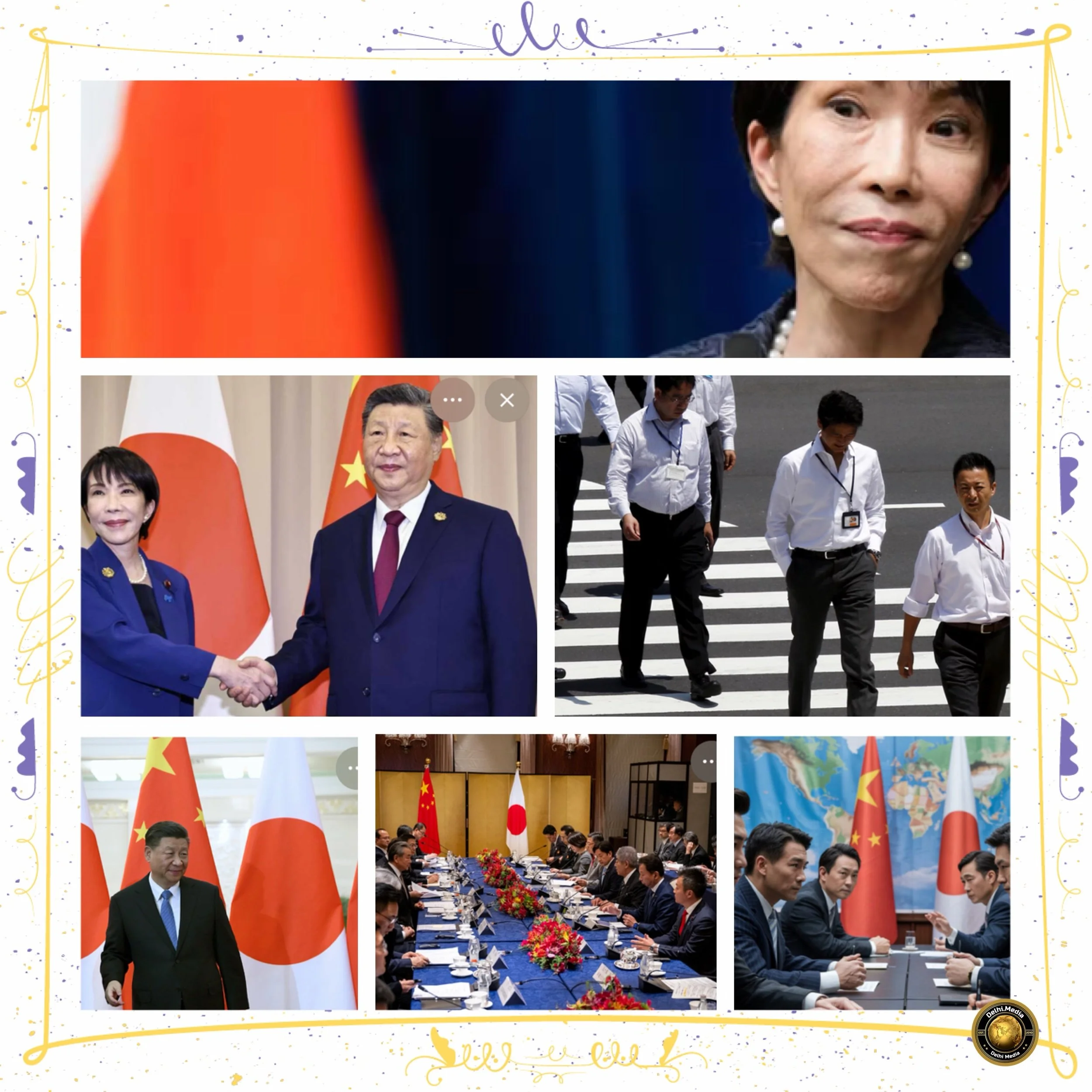
Japan under Prime Minister Sanae Takaichi has entered into the most significant diplomatic crisis with China in over a decade, fundamentally reshaping bilateral relations following statements made on November 7, 2025.
During parliamentary deliberations, Takaichi declared that a Chinese military attack on Taiwan would constitute an “existential crisis” for Japan under its Legislation for Peace and Security, potentially warranting Japanese military intervention—the first time a sitting Japanese prime minister has made such an explicit declaration.
This statement represents a departure from Japan’s historical strategic ambiguity regarding Taiwan, transforming what was previously understood as a tacit policy into an explicit military doctrine.
Escalating Issues Between Japan and China
The diplomatic confrontation has intensified dramatically over the past three weeks. Beijing responded to Takaichi’s remarks with a comprehensive strategy of economic coercion and military posturing.
China has taken the following retaliatory measures:
(1)! suspending all imports of Japanese seafood (which represented over 20% of Japan’s seafood exports to China)
(2) canceling cultural performances by Japanese artists in China
(3) halting approvals for new Japanese films
(4) suspending many commercial flights, issuing travel advisories discouraging Chinese tourists and students from visiting Japan
(5) filing complaints with the United Nations.
(6) Chinese state media and influential academics have suggested additional punitive measures, including banning rare earth mineral exports to Japan
(7) restricting visas for Japanese citizens.
The military dimension of the crisis is particularly alarming.
Chinese warships have navigated near Japanese islands, and Chinese Coast Guard vessels have increasingly approached Japanese-administered territories north of Taiwan.
On November 24, 2025, Japan scrambled fighter jets in response to a Chinese drone flying between Taiwan and Yonaguni Island, Japan’s westernmost territory.
Chinese officials have made explicit threats, with the Chinese consul general in Osaka posting threatening remarks on social media directed at Takaichi, prompting Japan to request UN intervention and formal diplomatic protests.
Beijing has also threatened to invoke UN enemy-state clauses that could justify military action against Japan.
Taiwan’s Status Following World War II
Taiwan’s contemporary political status emerged directly from Japan's surrender in 1945.
Following Japan’s unconditional surrender on September 2, 1945, Taiwan was transferred from Japanese colonial control to the Republic of China (ROC), the government then led by Chiang Kai-shek.
This transfer was formalized through the Cairo Declaration (1943) and reaffirmed in the Potsdam Declaration (1945), both of which stipulated that territories occupied by Japan, including Taiwan, would be restored to China.
Japanese forces in Taiwan formally surrendered to representatives of the ROC on October 25, 1945.
However, Taiwan’s subsequent political status became complicated by the Chinese Civil War.
When Mao Zedong’s Communist forces defeated the Nationalists in 1949, Chiang Kai-shek retreated to Taiwan with the ROC government, establishing what became known as the Republic of China.
Mao proclaimed intentions to “liberate” Taiwan, but the island remained outside the control of the newly established People’s Republic of China (PRC).
The 1951 San Francisco Peace Treaty, which formalized Japan’s surrender, required Japan to renounce its claims to Taiwan but did not resolve the island’s ultimate sovereignty, as the PRC was not a signatory.
This ambiguity has persisted for over seven decades, creating the contemporary political status where Taiwan functions as a de facto independent democratic state while the PRC claims sovereignty and maintains the right to unify by force if necessary.
Historical China-Japan Relations Since 1945
The post-World War II relationship between China and Japan evolved through distinct phases, marked by historical grievances, pragmatic cooperation, and periodic crises.
Immediately following Japan’s surrender, relations remained tense as China pursued recovery from Japanese occupation and Japan grappled with American military occupation and reconstruction.
From 1949 through the early 1970s, Japan and the PRC maintained no formal diplomatic relations, with Japan instead recognizing the ROC on Taiwan. However, informal economic and people-to-people exchanges gradually developed.
A transformative moment occurred in 1972 when Prime Minister Kakuei Tanaka normalized diplomatic relations with Beijing.
The Japan-China Joint Communiqué of September 29, 1972, represented a watershed moment, with Japan explicitly acknowledging China’s position that Taiwan was “an inalienable part of the territory of the People’s Republic of China.”
Simultaneously, China renounced demands for Japanese war reparations, prioritizing strategic cooperation over historical grievances.
The Treaty of Peace and Friendship, signed in 1978 and ratified in 1985, further cemented bilateral relations by including an anti-hegemony clause aimed at the Soviet Union.
Despite this diplomatic framework, the relationship has experienced recurring crises rooted in historical disputes and territorial disagreements.
The 2010 Senkaku Islands incident exemplified ongoing tensions. When a Chinese fishing trawler collided with Japan Coast Guard vessels, Beijing retaliated by restricting rare-earth mineral exports to Japan (essential to Japanese technology manufacturing) and by arresting Japanese businesspeople in China, demonstrating China’s willingness to weaponize economic interdependence.
The Senkaku Islands dispute remains unresolved, with both nations claiming sovereignty over the uninhabited archipelago in the East China Sea, and China having escalated its assertion of control through increased surveillance, maritime patrols, and the establishment of an Air Defense Identification Zone encompassing the disputed territories.
Earlier Japanese leadership, particularly Prime Minister Shinzo Abe during his 2012-2020 tenure, repeatedly apologized for Japan's conduct during World War II.
However, these apologies have never fully satisfied China, which views them as insufficiently sincere or later contradicted by nationalist actions such as visits to the Yasukuni Shrine, which honors World War II war criminals.
This historical dimension continues to complicate contemporary relations, serving as a foundation for nationalist sentiment on both sides.
Sanae Takaichi’s Profile and Intentions on Taiwan
Sanae Takaichi, Japan’s first female prime minister (elected in October 2025), represents a hardline conservative faction within the Liberal Democratic Party and has long advocated for a more assertive stance toward China, particularly regarding Taiwan.
At 64, she is known as Japan’s “Iron Lady,” citing Margaret Thatcher as a significant influence on her conservative political ideology.
A member of Nippon Kaigi, an ultraconservative nationalist organization, Takaichi has been described as holding revisionist views of Japanese history and as the “hawkish” candidate in the 2021 LDP leadership election regarding China policy.
Critically, Takaichi explicitly supports Taiwan’s democratic autonomy and has maintained pro-Taiwan positions throughout her political career.
In April 2025, before becoming prime minister, she visited Taiwan. She met with President Lai Ching-te, repeating former Prime Minister Shinzo Abe’s formulation that “a Taiwan emergency is a Japan emergency.”
Her rhetoric escalated dramatically upon assuming office, with her November 7 parliamentary statement representing an unprecedented, explicit articulation of potential Japanese military intervention in a Taiwan contingency.
The evidence suggests Takaichi’s intentions are not merely rhetorical.
Defense Minister Shinjiro Koizumi announced on November 23, 2025, that Japan was proceeding with the deployment of Type 03 Chu-SAM medium-range surface-to-air missiles on Yonaguni Island, located approximately 110 kilometers from Taiwan.
Takaichi has refused to retract her Taiwan remarks despite Beijing’s demands and international pressure, including a reported November 26 message from U.S. President Donald Trump urging her to “lower the volume” on Taiwan rhetoric.
Rather than walking back her position, Takaichi clarified that she “did not intend to mention specifics” but answered questions “sincerely,” implying her statements reflect genuine policy rather than accidental escalation.
Japan’s Military Mobilization and Defense Budget Expansion
Japan has undertaken substantial military modernization and budget increases that predate Takaichi's premiership but have been accelerated by it.
Before assuming office in October 2025, Takaichi pledged to accelerate Japan’s defense spending target from the previously planned 2027 timeline to fiscal 2025, aiming to reach 2% of GDP—a historic shift from the 1% ceiling established in 1976.
This acceleration was unprecedented: Japan’s Cabinet approved a record defense budget of 8.7 trillion yen (approximately $55.1 billion USD) for fiscal 2025, a 9.4% year-over-year increase.
The strategic priorities embedded in this budget reveal a deliberate focus on Taiwan-related contingencies.
Stand-off weapons systems represent a significant allocation: 939 billion yen targeted toward ground- and sea-launched Type 12 anti-ship missiles, hypersonic gliding projectiles for island defense, and submarine-launched missile development.
Additionally, Japan has acquired foreign systems, including Tomahawk cruise missiles for destroyers and extended-range Joint Air-to-Surface Stand-off Missiles (JASSM-ER) for F-15 fighters, explicitly designed to strike targets at extended distances—capabilities fundamentally incompatible with a purely defensive posture and indicative of plans to counter Chinese military operations potentially far from Japanese territory.
Beyond budgetary measures, Japan has undertaken organizational restructuring of its military.
The Joint Operations Command (JOC) was formally established on March 24, 2025, centralizing command and control of ground, maritime, and air forces for integrated operations coordination with the U.S. Indo-Pacific Command.
This represented the most significant restructuring of Japan’s defense apparatus in decades, enabling rapid mobilization for joint operations beyond Japan’s immediate territorial defense.
In October 2025, the Self-Defense Forces conducted their largest integrated exercise, “SDF Joint Exercise 2025” (07JX), involving 52,000 troops, 4,180 vehicles, 60 vessels, and 310 aircraft across all of Japan and surrounding maritime areas and airspace.
The exercise explicitly included U.S., Australian, and other allied participation, directly addressing Taiwan contingency scenarios with amphibious operations and integrated air defense—exercises China characterizes as preparation for military intervention in the Taiwan Strait.
Trump Administration’s Role and Geopolitical Context
The unfolding crisis occurs amid broader U.S. strategic repositioning under the Trump administration.
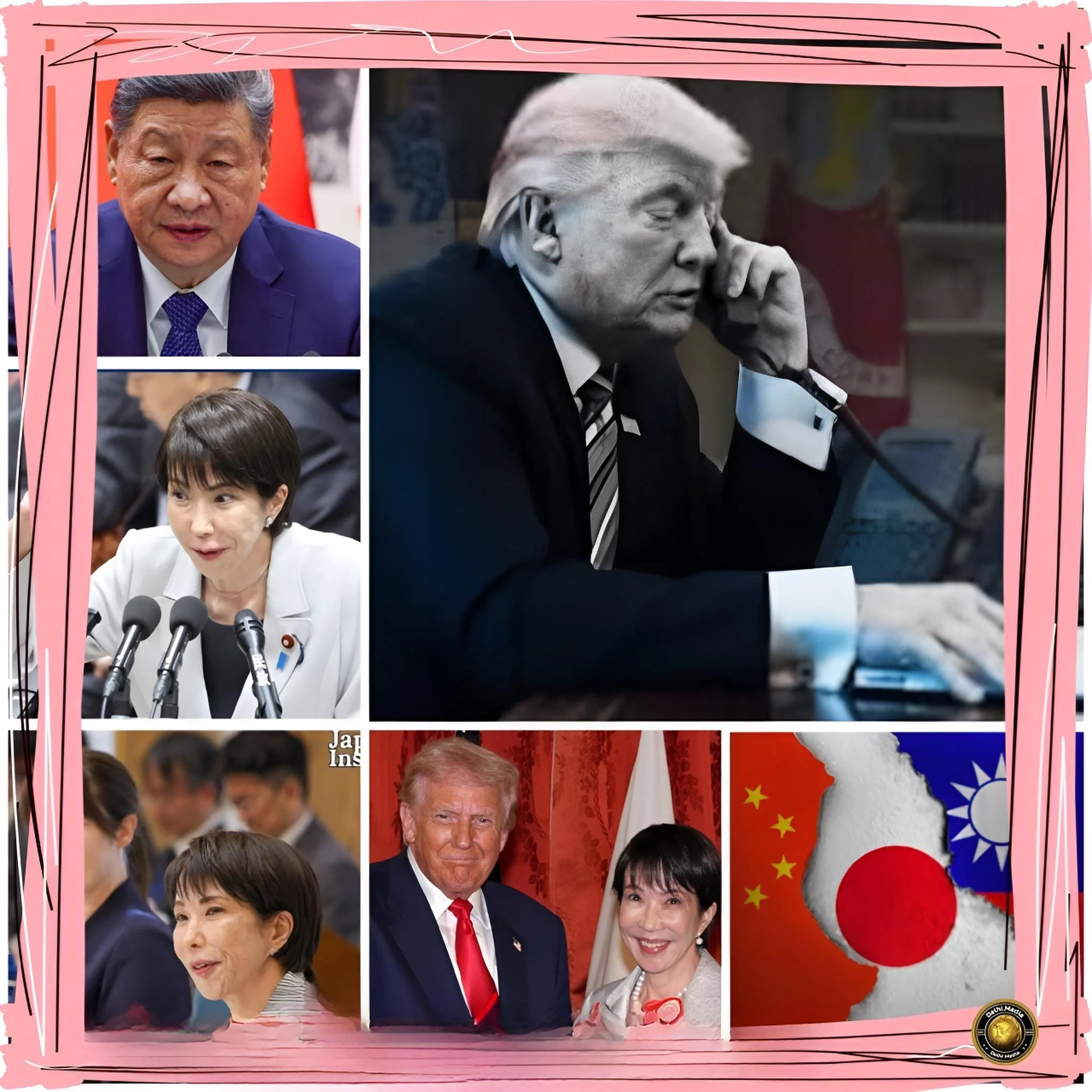
President Trump spoke with both Xi Jinping and Takaichi within hours of each other in late November 2025, reportedly urging Takaichi to tone down rhetoric on Taiwan while remaining noncommittal about U.S. security commitments to Taiwan.
Trump indicated intentions to visit Beijing in April 2026, suggesting efforts to manage great-power competition rather than escalate conflicts.
However, the U.S. ambassador to Japan publicly expressed support for Takaichi, stating that the United States backs her stance, and that the Trump administration has not withdrawn security guarantees to Japan or Taiwan.
China’s Strategic Concerns and Military Response
China perceives Japan’s military transformation as a fundamental challenge to the regional balance of power and, specifically, as preparation for intervention in what Beijing regards as an internal matter—Taiwan.
Chinese Foreign Minister Wang Yi stated that Takaichi’s comments “crossed a red line” and called for preventing “the resurgence of Japanese militarism.”
The Chinese government has connected contemporary Japanese actions to historical patterns, citing the Mukden Incident of 1931 (Japan’s pretext for invading Manchuria) as a parallel to current Japanese assertions of “existential crisis” justifying military action.
China has simultaneously intensified its own military activities.
In recent years, China dispatched two aircraft carrier task forces through segments of Japan’s exclusive economic zone and has increased surveillance activities around Japanese territories.
The recent incursions of Chinese warships and Coast Guard vessels near Japanese-administered islands should be understood within this context of escalating military assertiveness aimed at demonstrating Chinese capabilities and challenging Japanese administration of disputed territories.
Conclusion
Japan’s foreign policy transformation under Prime Minister Sanae Takaichi represents a historic pivot from decades of postwar strategic ambiguity to explicit security commitments regarding Taiwan, coupled with unprecedented military modernization.
The current crisis reflects not merely rhetorical escalation but substantive military deployments, organizational restructuring, and budget commitments that align Japan’s defense posture with Taiwan's defense contingencies.
China has responded with economic coercion and military posturing, creating the most serious bilateral tension since 2023 and potentially the most severe since the 2010 Senkaku Islands crisis.
This confrontation occurs within a longer historical context in which China and Japan have oscillated between pragmatic cooperation and nationalist confrontation since normalizing relations in 1972, with enduring grievances rooted in Japan’s colonial rule over Taiwan (1895-1945) and its invasion of China (1937-1945).
Taiwan’s status as a democratic de facto independent state with PRC sovereignty claims remains the fundamental structural issue underlying contemporary tensions.
Takaichi’s explicit articulation of Taiwan’s importance to Japan’s security represents a consequential shift in Japanese strategic doctrine, with implications that extend far beyond bilateral relations and potentially reshape the entire regional security architecture in East Asia.