DONALD TUSK’S interests in the UKRAINE-RUSSIA ceasefire and key negotiation challenges
Executive Summary
Donald Tusk, Poland’s Prime Minister, has positioned himself as a key European voice resisting what he views as an American-drafted peace plan that disproportionately favors Russian interests.
His November 29 statement, reminding NATO allies of the alliance’s founding mission—defending the West against Soviet/Russian aggression—was a pointed rebuttal to elements of the Trump administration’s 28-point (later 19-point) proposal.
Tusk’s core interests center on Poland’s national security, the preservation of NATO’s deterrent capability, and the prevention of a peace settlement that establishes a precedent for Russian territorial conquest.
However, the negotiation landscape is marked by profound confusion, contradictions, and rapidly shifting positions across multiple parties, creating significant uncertainty about a final resolution.
Introduction
Tusk’s Strategic Interests in the Ceasefire
Poland’s Existential Security Calculus
Tusk’s engagement in Ukraine peace negotiations reflects Poland’s acute sense of vulnerability as a frontline NATO state.
Poland shares a direct border with Belarus—a key Russian ally—and has experienced repeated Russian hybrid attacks on its territory, including drone incursions in September 2025 that breached NATO airspace and forced Article 4 consultations.
On November 16, 2025, sabotage on Poland’s Warsaw–Lublin rail line was publicly labeled by Tusk as “state terrorism,” with Polish authorities suspecting Russian-backed operatives.
These incidents underscore Tusk’s conviction that Ukraine’s collapse would directly threaten Polish security and potentially embolden Russian testing of NATO’s eastern defenses.
Tusk’s primary ceasefire interest is therefore conditional: he supports ending the war only if it does not establish unfavorable precedents for NATO, Polish security, or future Russian revisionism.
In statements made in Angola on November 23, he articulated this position clearly, stating that “any agreement does not in any way weaken Poland, Europe, or our security” and warning that “the collapse of Ukraine means a threat to Poland.”
Resisting American Diplomatic Leadership
A secondary interest, though politically delicate, is ensuring that European voices are not sidelined by American diplomatic dominance.
The Trump administration’s rapid presentation of the 28-point plan—without extensive prior consultation with NATO allies—created friction.
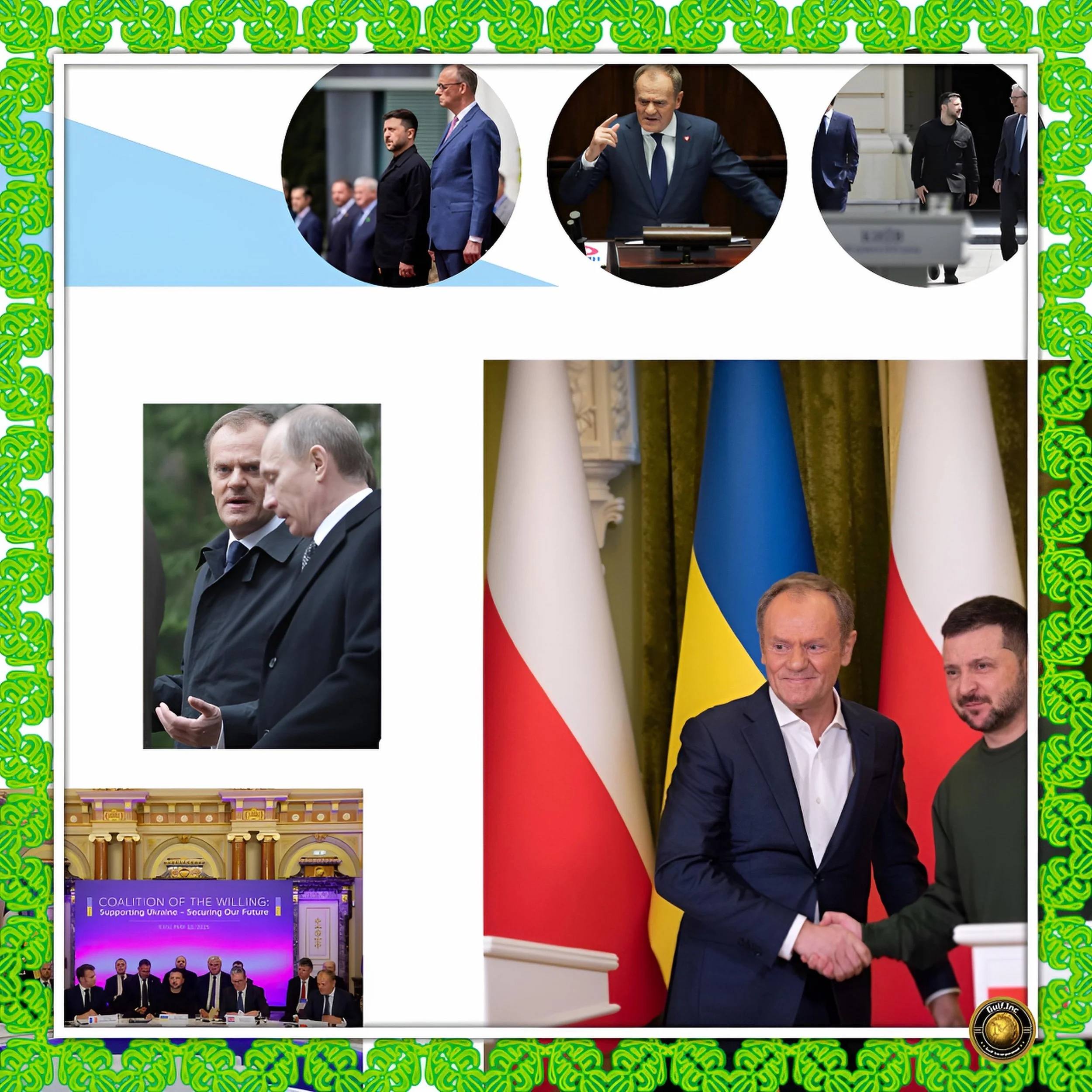
Tusk joined European leaders (Keir Starmer of the UK, Friedrich Merz of Germany, and Emmanuel Macron of France) in pushing back against specific terms, while carefully avoiding public rejection of Trump himself.
This reflects Poland’s tactical dilemma: it cannot afford to alienate the U.S., given NATO’s military dependence on American capabilities, but it also cannot accept a peace that undermines European security architecture.
Territorial Sovereignty and NATO Cohesion
Tusk specifically rejected provisions on military limitations and foreign military presence that he characterized as Russian manipulation designed to splinter NATO.
When the draft plan included restrictions on NATO fighter jets and troop deployments, Tusk framed these as traps: “Everything indicates that this is a Russian perspective, and it is a form of manipulation or a trap.”
This reflects his concern that Russia aims to use a peace settlement to create wedges between NATO members by demanding that European nations reduce security commitments to Ukraine or each other.
Key Facts About the Current Negotiations
The Trump Peace Proposal: Evolution and Reversal
On November 20-21, 2025, the Trump administration circulated a 28-point peace plan drafted with input from Russian representatives. The document contained sweeping provisions favoring Russian objectives, including:
Territorial Recognition
Ukraine must recognize Russia’s control of Crimea, Luhansk, Donetsk (including ~25% currently held by Ukraine), and freeze lines in Kherson and Zaporizhzhia[axios]
NATO Exclusion
Ukraine must constitutionally commit to never joining NATO; NATO must halt expansion.
Military Caps
Ukraine’s Armed Forces are limited to 600,000 troops and are restricted in weaponry.
No Foreign Troops
NATO forces are prohibited from stationing in Ukraine.
Amnesty Clause
Complete immunity for all wartime actions, including alleged Russian war crimes.
Frozen Assets
$100 billion in Russian assets directed to Ukraine reconstruction, with the U.S. taking 10% of the profits; the remaining funds placed in joint U.S.-Russia investment vehicles for future collaboration.
Rapid Elections
Ukraine is required to hold elections within 100 days of any agreement.
European and Ukrainian reactions were swift and largely negative. Tusk, von der Leyen, Starmer, Merz, and Macron all flagged unacceptable elements.
By November 23, following talks in Geneva between U.S. Secretary of State Marco Rubio and Ukrainian delegations, the plan was revised to 19 points, with some provisions softened or removed.
Confusion Over Plan Authorship
Significant confusion emerged regarding who drafted the original 28-point plan.
Critics noted the document “repeated many of the talking points previously voiced by the Kremlin,” and even “the language of the plan looked to some as if it was translated from Russian.”
When U.S. lawmakers suggested that Secretary Rubio attributed the plan to Russia, Rubio denied this, insisting it was “an American one, based on ‘the input from the Russian side.’”
This ambiguity—whether the plan represented genuine U.S. policy or was heavily influenced by Russian demands—fueled European skepticism and accusations of the United States outsourcing diplomacy to Moscow.
Putin’s Cautious Positioning
On November 27, Putin characterized the U.S. plan as merely “a collection of topics proposed for dialogue” rather than a binding agreement.
However, he signaled willingness to engage, stating: “If Ukrainian troops withdraw from the areas they currently control, fighting will cease. If they choose not to withdraw, we will accomplish this through force.”
This framing—presenting Russian demands as negotiable while asserting military readiness to enforce them—reflects Putin’s strategy of maintaining battlefield advantage while keeping diplomatic channels open.[pbs]
The Corruption Crisis in Kyiv
On November 28, Andriy Yermak, Zelensky’s chief of staff and Ukraine’s lead peace negotiator, resigned following anti-corruption raids at his residence.
Yermak was implicated (though not directly charged) in a $100 million kickback scheme involving state energy company Energoatom.
His departure marks a critical moment: Yermak was scheduled to travel to Miami to meet with Trump’s team just hours after his resignation announcement.
The scandal has already resulted in the ouster of two cabinet ministers and poses an existential threat to Zelensky’s political authority and negotiating credibility.
A Ukrainian official described the situation as “a perfect storm” with “a great deal of uncertainty at this moment.”
Key Points of Confusion and Contradiction
Contradiction 1
Sovereignty vs. Strategic Constraints
The core contradiction is between the plan’s opening affirmation of “Ukraine’s sovereignty” (Point 1) and its subsequent restrictions on Ukraine’s free choice.
Ukraine cannot simultaneously possess sovereignty while being constitutionally prohibited from joining NATO or from choosing its own military posture.
The European counter-proposal changed Point 1 from “confirmed” to “reconfirmed” sovereignty, a minimal but symbolically important distinction.
Contradiction 2
Security Guarantees Without Clear Enforcement
The plan envisions a U.S. security guarantee in the event of a Russian attack, including “a decisive coordinated military response,” but does not specify what the U.S. role would entail.
Without clarity on triggers, scope, and American willingness to enforce, the guarantee is essentially rhetorical.
This is particularly problematic given Trump’s stated skepticism toward NATO commitments and his history of conditioning military support on political or financial concessions.
Contradiction 3
Frozen Assets Ambiguity
The proposal to place remaining frozen Russian assets (after the initial $100 billion allocation) in a joint U.S.-Russia investment vehicle directly contradicts European positions and creates a moral hazard: it incentivizes Russia to honor the agreement by promising profitable collaboration, yet simultaneously appears to reward Russian aggression by normalizing economic ties.
Tusk made clear that Europe intends to resolve this through the December EU Council discussions, implying the current language is unacceptable.
Contradiction 4
Military Weakness as Peace Term
The original plan’s 600,000-troop cap on Ukraine’s military was positioned as a peace condition, yet it mirrors Russia’s objective to degrade Ukrainian defensive capability.
Tusk and others argued this weakens Ukraine against future Russian aggression and sets a precedent for imposed military limitations—a concept with no historical precedent in Western peace settlements.
This was reportedly removed from the revised 19-point plan, but confusion remains about the final terms.
Contradiction 5
Amnesty vs. Accountability
The broad amnesty clause for “all wartime actions” directly contradicts Ukraine’s and Europe’s stated commitment to accountability for alleged Russian war crimes, including mass civilian casualties, forced deportations, and torture documented by international human rights organizations.
European leaders have indicated this is a “red line,” but the status of the revised plan’s amnesty provision remains unclear.
Contradiction 6
NATO Expansion Ban vs. NATO Cohesion
Point 3 stipulates that NATO must halt its expansion and that Russia must refrain from invading neighboring nations.
Yet this creates a false equivalency: NATO expansion is a voluntary membership process involving sovereign choice; Russian invasion is military conquest.
The provision also implies NATO must police itself to satisfy Russian demands, a precedent that could undermine NATO’s collective defense principle.
Analysis and Advanced English Clarifications
Why the Plan Was Seen as a Disaster for Ukraine/Europe
The 28-point proposal was widely interpreted as a capitulation to Russian maximalist demands because:
Territorial Handover
Forcing Ukraine to recognize Russian control of territories it currently holds violates the principle that peace should freeze conflict at current control lines, not reward military occupation.
NATO Exclusion Permanence
Constitutionalizing NATO exclusion creates an irreversible constraint, whereas negotiated commitments can be revisited if circumstances change.
Military Asymmetry
Capping Ukraine’s military at 600,000 while Russia has over 3 million active personnel creates permanent strategic inferiority.
Precedent Risk
If this peace settlement is allowed, it establishes that military aggression can be rewarded through territorial recognition—a norm that destabilizes international law and invites future revisionism.
The Diplomatic Theater Around Revisions
The shift from 28 to 19 points was not a U-turn but a recalibration. European leaders carefully avoided publicly rejecting Trump, instead offering “amendments” and “counter-proposals.”
This reflects the geopolitical reality: without U.S. military and financial commitment, Ukraine cannot sustain the war. Yet accepting unfavorable terms could set precedents that undermine European security.
The revised plan’s exact terms remain somewhat unclear in public reporting, suggesting ongoing confidential negotiations.
Why Tusk’s NATO Reminder Matters
Tusk’s November 29 statement—“I wish to remind our allies that NATO was created to defend the West against Soviet aggression, that is against Russia”—was not historical nostalgia but a direct challenge to diplomatic frameworks that treat Russia as a negotiating partner on equal footing with Western institutions.
It reasserted NATO’s founding principle: that member security is collective and non-negotiable, not subject to external revision or Russian veto.
This is Tusk’s warning that Poland will not accept a settlement that transforms NATO into a constrained alliance subordinate to Russian interests.
The Yermak Resignation’s Negotiating Impact
Yermak’s departure during active peace talks is highly destabilizing because:
(1) He was the only Ukrainian official with direct rapport with Trump’s team
(2) His replacement is unknown; continuity of negotiating position is uncertain
(3) The corruption scandal weakens Ukraine’s moral authority on governance issues, including EU accession standards
Lastly, Russia may view the chaos as a window to extract additional concessions from a destabilized negotiating partner.
Europe’s Lack of Agency
A critical observation from European analysts: Europe has been largely reactive rather than proactive.
Von der Leyen’s statements about “the centrality of the EU” and Ukraine’s “sovereign right to choose its own destiny” are described as “the world as she would like it to be, not the world as it is.”
Europe has not presented a unified, credible alternative to Trump’s framework, leaving member states (especially Poland) to defend their interests through bilateral engagement rather than collective action.
Likely Trajectories and Uncertainties
The Stalled Negotiations
As of November 29, 2025, the talks are in flux. Yermak’s resignation, the unclear status of the revised 19-point plan, and the divergence among American, Russian, Ukrainian, and European positions suggest prolonged uncertainty.
A ceasefire in the immediate term appears unlikely.
Tusk’s Red Lines in the future
Based on his public statements, Tusk will likely
(1) Block any NATO concessions that weaken the alliance’s eastern flank commitment.
(2) Demand European involvement in security guarantees to Ukraine, not only U.S. guarantees.
(3) Push for frozen assets resolution by December to ensure Europe has agency over reparations.
(4) Insist on a territorial freeze along current lines, not recognition of Russian-held Ukrainian territory.
Lastly, refuse military limitations on Ukraine that exceed European defense standards.
Conclusion
The U.S.-Europe Tension
Trump’s apparent willingness to settle, even on terms unfavorable to Ukraine, will likely intensify transatlantic friction.
If Trump and Zelensky reach a bilateral agreement without meaningful European input, Europe risks strategic irrelevance while bearing the long-term security consequences of a destabilized continent.
Tusk’s interest in the Ukraine ceasefire is fundamentally about Poland’s survival as a secure NATO member in a hostile region.
His opposition to the initial 28-point plan reflects not obstructionism but a clear-eyed assessment that a peace settlement rewarding Russian aggression would create precedents enabling future Kremlin adventurism.
The current negotiation landscape is marked by profound contradictions between stated principles (Ukrainian sovereignty, NATO unity) and concrete proposals (NATO exclusion, military caps, territorial recognition).
The resignation of Ukraine’s chief negotiator adds a layer of uncertainty that may either accelerate a settlement (if Russia seizes the moment) or further delay resolution.
Europe’s challenge is to move from reactive criticism to proactive diplomacy—a shift Tusk has called for, but one that currently requires unified European action, presently lacking.