Hong Kong Fire Tragedy: The Wang Fuk Court Disaster - Part I
Introduction
Summary of the Tragedy
The fire at Wang Fuk Court in Hong Kong’s Tai Po district is now the deadliest in Hong Kong since 1948.
As of November 29, 2025, the confirmed death toll stands at 128 people (including one firefighter), with approximately 200 individuals still missing and 79 injured.
The blaze erupted on Wednesday, November 26, 2025, at approximately 2:51 PM local time, and spread with catastrophic speed across seven of eight 32-story residential towers in the public housing complex, which housed around 4,600 residents.
What Happened: Timeline and Events
The Fire’s Outbreak and Spread
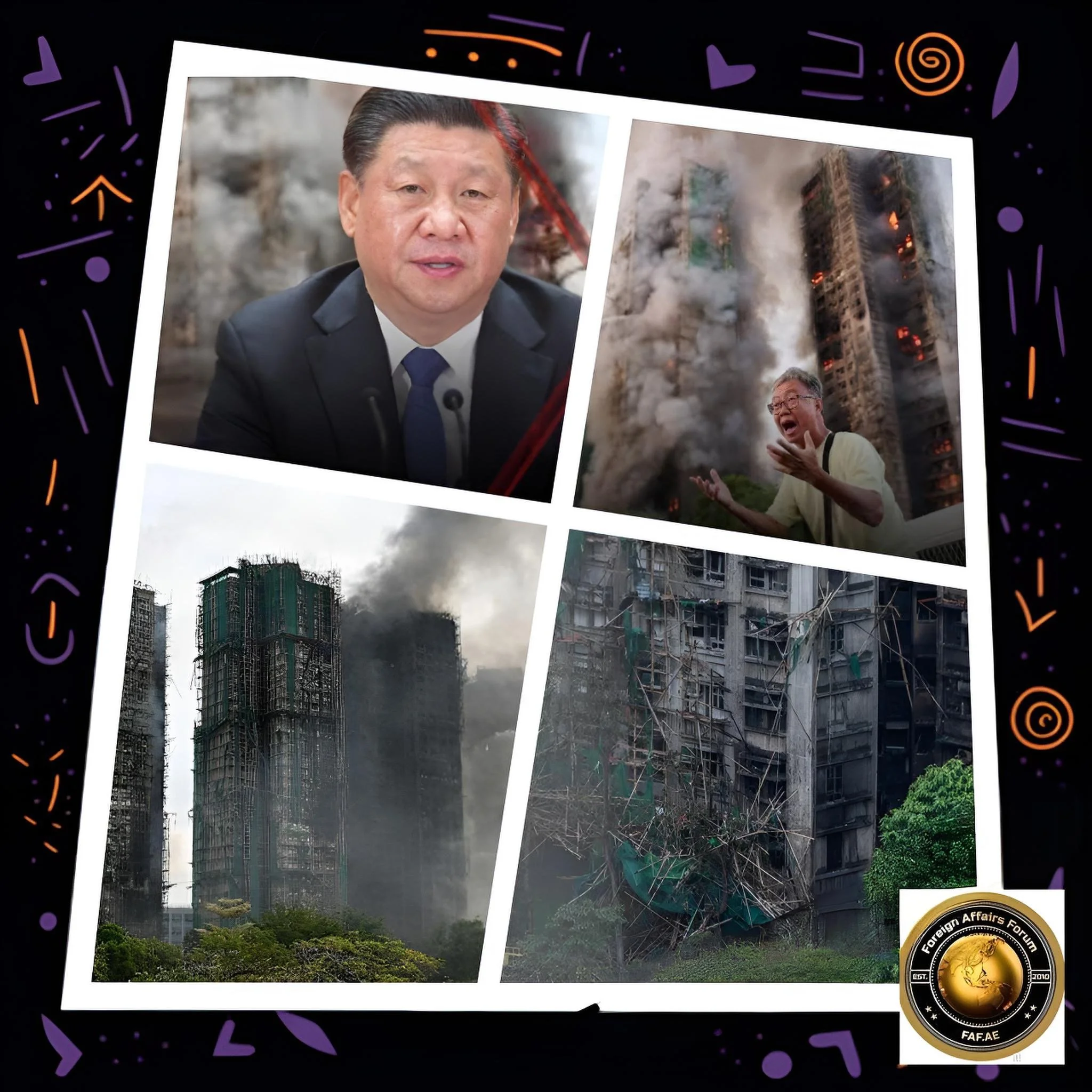
The fire began on the exterior scaffolding of one building (Wang Cheong House, Block F) and spread with terrifying speed due to a combination of highly flammable materials
The eight-tower complex has been undergoing major exterior wall renovations since July 2024.
All buildings were wrapped in bamboo scaffolding covered with green construction netting (safety mesh).
Crucially, expanded polystyrene foam boards had been installed covering windows on every floor near lift lobbies as insulation—these proved highly combustible.
When the scaffolding netting ignited, flames raced vertically up the building's exterior.
The polystyrene foam then caught fire, shattering windows and allowing flames to spread indoors.
Temperatures reached 500°C (932°F), causing the fire to reignite in areas even after being extinguished.
The fire was escalated to five-alarm—Hong Kong’s highest alert level—by 6:22 PM local time, and it took until approximately 10:18 AM on Friday, November 28 (nearly 44 hours) to fully extinguish the blaze.
Firefighting Response
More than 2,300 firefighters and over 140 fire engines were deployed in the response. Firefighters faced extreme conditions:
(1) Dense smoke and extreme heat impeded access to upper floors.
(2) Scaffolding collapse and reignition made rescue operations perilous.
(3) One firefighter, Ho Wai-ho, 37, died in the line of duty after collapsing at the scene; 12 other firefighters were injured.
Chinese President Xi Jinping called for “all-out efforts” to fight the fire and minimize casualties.
Key Contributing Factors
Flammable Materials and Safety Failures.
Investigators have identified several “atypical” factors that caused the fire to spread so rapidly:
Warnings Ignored
Residents had raised safety concerns for nearly a year before the fire:
As early as September 2024, residents complained about the flammable nature of the green mesh and other materials.
The Labour Department conducted 16 inspections of the renovation site since July 2024, including one just one week before the fire.
Contractors were warned in writing multiple times to comply with fire safety regulations, but the guidelines lacked the power to enforce them—there were no criminal penalties for noncompliance.
A former security staff member claimed the fire alarm system had been intentionally turned off as early as May 2025 so workers could move in and out more conveniently.
Arrests and Investigation
Criminal Charges
Within days of the fire, authorities launched criminal investigations for manslaughter and gross negligence.
Three senior staff members of the renovation contractor, Prestige Construction & Engineering Co. Limited, were arrested on Thursday, November 27, on suspicion of manslaughter.
Police stated they had “reason to believe that those responsible for the company demonstrated gross negligence, which… caused the fire to spread uncontrollably, resulting in significant casualties.”
The Independent Commission Against Corruption (ICAC) arrested eight additional individuals on Friday, November 28, including two directors of Will Power Architects Company, the consultancy overseeing the project.
The total number of arrests reached 11 by Saturday.
Authorities seized bidding documents, employee lists, computers, and phones from the contractor’s office.
Ongoing Inquiry
A full police investigation into the cause of the fire is expected to take 3 to 4 weeks. Inspections have been ordered.
(1) All 11 other residential projects where Prestige Construction was involved.
(2) All public housing estates are undergoing major renovations citywide.
Historical Context: Hong Kong’s Fire History
This disaster has grim precedents in Hong Kong’s history.
The 1996 Garley Building fire—previously the worst peacetime building fire in Hong Kong—also involved bamboo scaffolding and spread rapidly due to an open elevator shaft creating a chimney effect.
That disaster led to significant fire safety reforms, but the Wang Fuk Court tragedy has now surpassed it, prompting renewed calls for stricter regulations.
Government Response and Relief Efforts
Three Days of Mourning
Hong Kong declared a three-day mourning period from November 29 to December 1:
National and Hong Kong flags flown at half-mast.
A three-minute moment of silence was observed at 8 AM on November 29.
All “nonessential” government activities suspended; entertainment events cancelled or postponed.
Financial Assistance
The government has established support measures for victims:[aljazeera +2]
HK$10,000 (≈$1,284 USD) per affected household.
HK$200,000 (≈$25,700 USD) for families of the deceased.
HK$50,000 (≈$6,400 USD) living allowance for displaced households.
A HK$300 million (≈$39 million USD) relief fund was established.
Approximately 500 displaced residents are currently housed in nine temporary shelters, with hundreds of volunteers distributing food and supplies.
Policy Reforms Under Discussion
The disaster has triggered urgent policy debates
Bamboo vs. metal scaffolding
Officials are now discussing a transition to metal scaffolding, which is more fire-resistant but heavier, slower to assemble, and more expensive.
Stricter enforcement
Current Labour Department guidelines on fire-retardant netting do not include any legal penalties for violations. Calls are growing to make these standards legally binding.
Citywide inspections
The Buildings Department and Labour Department have launched a two-week citywide inspection of all renovation sites with extensive scaffolding.
Key Questions That Remain
While much is now known, several critical questions are still under investigation:
What ignited the fire?
The exact source remains undetermined. Residents had complained about workers smoking on site, but no definitive cause has been established.
Why did the netting burn so rapidly?
Preliminary tests suggest the netting met fire-retardant standards, but its properties may have degraded over time, or the materials may not have performed as certified under real fire conditions.
Why were fire alarms not working?
Investigations revealed that alarms in all eight blocks were malfunctioning, and allegations suggest that workers intentionally disabled them.
Will there be accountability beyond the contractor?
Questions are being raised about regulatory oversight and whether government inspectors should have acted more decisively on repeated warnings.
Conclusion
The Wang Fuk Court fire is a catastrophic failure of fire safety during a routine renovation project.
The combination of flammable construction materials (polystyrene foam, netting that may not have met standards), traditional bamboo scaffolding, disabled fire alarms, and ignored safety warnings created a deadly trap for thousands of residents.
With 128 confirmed dead, around 200 still missing, and 11 people arrested on manslaughter and corruption charges, this is Hong Kong’s deadliest fire in 77 years.
The tragedy has exposed serious gaps in Hong Kong’s building safety regulations—particularly the lack of legal penalties for violating fire safety guidelines during renovations.
It has also prompted urgent policy discussions about the future of bamboo scaffolding, the enforcement of fire-retardant material standards, and the need for more robust inspections of aging high-rise buildings.
For many Hong Kong residents, the disaster at Wang Fuk Court is a stark reminder that the city’s iconic skyline of densely packed towers carries real risks that demand vigilant oversight.