Novorossiya Rising: Putin’s Imperial Ambitions Reach Beyond Ukraine’s Borders
Executive Summary
The Contradiction at the Heart of Negotiations
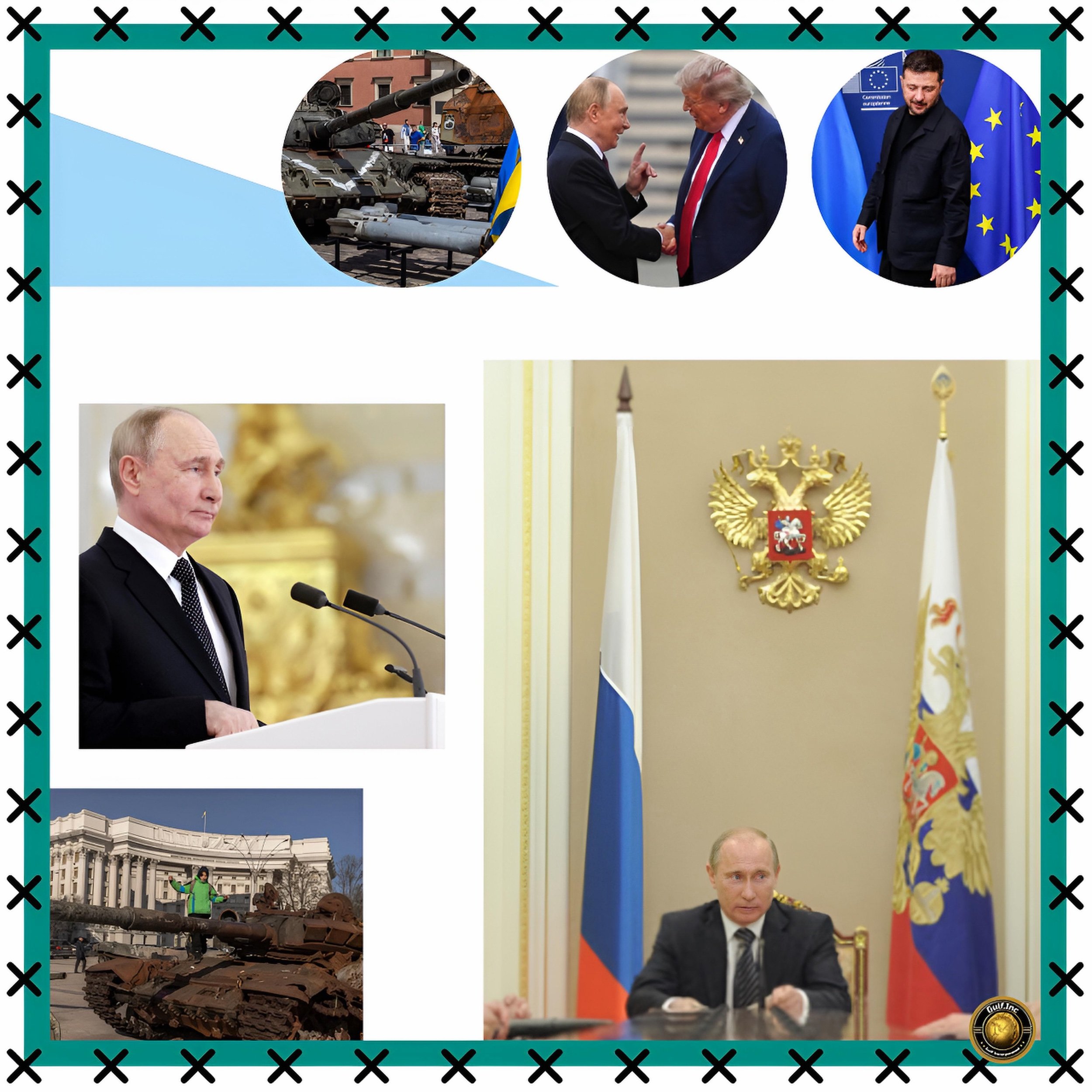
On December 27, Russian President Vladimir Putin issued a threat that encapsulates the fundamental paradox of ongoing Ukraine peace negotiations. If Ukraine refuses a peaceful resolution, Russia will achieve all its war objectives through military force. Hours later, Russia unleashed approximately 500 drones and 40 missiles—including hypersonic Kinzhals—upon Kyiv, killing at least one person and wounding dozens, in what Zelenskyy characterized as Russia’s “true response” to peace discussions. The timing was deliberate: precisely 24 hours before Zelenskyy’s scheduled December 28 meeting with Trump in Florida.
Putin’s Maximalist Gambit: Why Military Threats Reveal the Illusory Nature of Ukraine Peace Talks
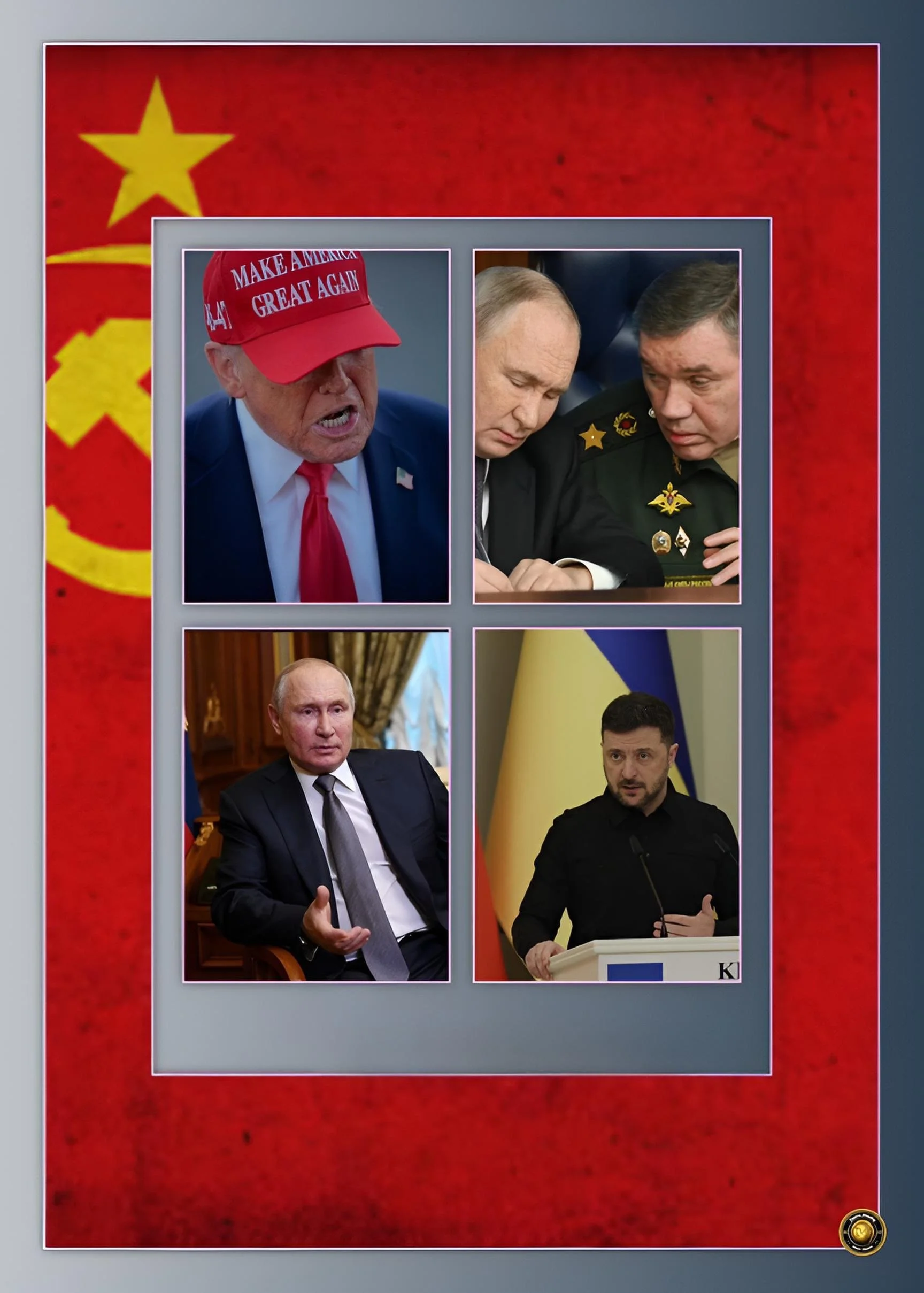
This pattern—escalation coupled with diplomatic overture—reveals a more profound strategic crisis that transcends conventional peace architecture. Putin’s stated territorial ambitions extend far beyond the Donbas regions Russia claims officially. In his June 2025 address, Putin declared unambiguously: “I consider the Russian and Ukrainian peoples one people. In this sense, all of Ukraine is ours.” His invocation of “Novorossiya”—Catherine the Great’s 18th-century imperial designation for Ukrainian territories—signals maximalist territorial objectives encompassing Odesa, Kharkiv, the entire Black Sea coastline, and roughly half of Ukraine. Meanwhile, Russia hemorrhages over 1.2 million military casualties since February 2022, sustaining daily losses of approximately 300 soldiers in 2025 alone, with 2026 mobilization targets of an additional 409,000 troops recruited from convicts, foreign nationals, and individuals with chronic medical conditions including HIV and hepatitis. The December 28 Trump-Zelenskyy meeting confronts an unbridgeable structural gap: no agreement can simultaneously satisfy Russia’s maximalist demands and Ukraine’s sovereignty requirements without rendering any settlement fundamentally unstable and susceptible to renewed Russian aggression. Most critically, Trump’s strategic objectives—securing critical minerals dominance against China, establishing operational control over Ukraine’s Zaporizhzhia Nuclear Power Plant, and accessing $200 billion in frozen Russian assets for cryptocurrency mining and Arctic rare earth cooperation—place American interests at odds with traditional Western alliance commitments to Ukrainian sovereignty.
The Historical Trap
Why Russia’s Peace Promises Mean Nothing
To understand Putin’s December 27 threat credibly requires confronting an uncomfortable historical truth: Russia does not negotiate peace settlements—it manufactures tactical pauses. The pattern is consistent and devastating across three decades of Russian military operations.
During the First Chechen War (1994–1996), Russia signed the Khasavyurt Accord and subsequent 1997 peace treaty, withdrawing forces with apparent finality. Within two years, Moscow reinvaded under manufactured pretenses, initiating the Second Chechen War (1999–2009) with far greater brutality. The Minsk Agreements of 2014–2015, billed as permanent settlement of the Donbas conflict, established ceasefire mechanisms and supposed international oversight. They collapsed spectacularly when Russia launched its full-scale invasion in February 2022, rendering years of diplomatic effort worthless. In Syria (2015–present), Russia’s announced “military withdrawal” in March 2016 proved transparently tactical: Moscow was rotating forces for a renewed offensive that commenced within weeks, using the diplomatic interlude to consolidate territorial control and reposition military assets.
A consistent Kremlin methodology emerges from this historical record: diplomacy functions not as a pathway to conflict resolution but as tactical camouflage permitting military reorganization, consolidation of territorial gains, and preparation for resumed offensives once political attention fades. This historical learning shapes Ukraine’s current intransigence on security guarantees. Zelenskyy’s repeated emphasis that security guarantees represent “the most important thing”—superseding even territorial questions—reflects bitter experience with the 1994 Budapest Memorandum, wherein Ukraine relinquished its entire nuclear arsenal in exchange for written security assurances from the U.S., UK, and Russia. Russia violated that agreement in 2014 when annexing Crimea, a breach rendered even more egregious by the full-scale 2022 invasion.
For Ukraine’s leadership, any ceasefire proposal without binding, institutionally enforced security guarantees represents capitulation to a predetermined Russian violation schedule. The Trump administration’s proposed “Peace Council” chaired by Trump himself, with authority to impose sanctions for Russian violations, offers theoretical enforcement—but depends entirely on perpetual American willingness to prioritize Ukrainian security over commercial interests with Russia. Historical precedent suggests such commitment decays rapidly once the crisis atmosphere dissipates and new administrations assume power. Without enforcement institutions capable of preventing Russian violations of agreements, security guarantees remain paper promises vulnerable to violation whenever circumstances permit. Without resolution of the fundamental question of Ukrainian political orientation—whether Ukraine integrates with the West or remains within Russia’s sphere of influence—any settlement risks merely postponing the conflict rather than resolving it structurally.
The Contradiction Between Putin’s Stated and Maximalist Ambitions
Putin’s December 27 statement that Russia will pursue “all objectives” of its “special military operation” by force presents itself as a threat to complete conquest of the formally claimed territories: Donetsk, Luhansk, Zaporizhzhia, Kherson oblasts, plus Crimea. Yet Putin’s own rhetoric, when analyzed without diplomatic veneer, reveals ambitions substantially exceeding these stated positions and approaching total Ukrainian subjugation.
In his June 2025 St. Petersburg address, Putin discarded pretense: “I consider the Russian and Ukrainian peoples to be one people. In this sense, all of Ukraine is ours.” This framing—treating Ukraine as ethnically and historically Russian—resurrects imperial ideology last heard explicitly during Soviet expansion. Putin’s repeated invocation of “Novorossiya” (New Russia), a term originating from Catherine the Great’s 18th-century southern imperial conquests, encodes his territorial conception: Novorossiya encompasses not merely the disputed Donbas but approximately half of Ukraine, including the strategically vital port cities of Odesa and Kharkiv, the entire Black Sea coastline, and the Mykolaiv and southern Zaporizhzhia regions.
Valery Gerasimov, Russia’s chief of general staff, presented a map during an August 2025 briefing that illustrated the Kremlin’s actual territorial vision with precision: a dividing line extending not to the Donbas boundary but to the Black Sea coast, creating a landbridge from Russia through occupied Ukrainian territory to Transnistria, the pro-Russian separatist enclave in Moldova. This cartographic revelation demolished any remaining ambiguity about Russian war aims. U.S. intelligence assessments corroborate this interpretation definitively. Recent assessments confirm that Putin has abandoned neither his aim to capture all of Ukraine nor his broader objective to reclaim Soviet-era European territories. The Atlantic Council’s analysis is particularly illuminating: Putin views the approximately 80 percent of Ukraine beyond Kremlin control—territories that would continue integrating with NATO and the European Union under virtually all proposed peace frameworks—as an existential threat to his imperial restoration project. From this perspective, any peace agreement that preserves Ukrainian independence and Western integration represents a strategic defeat incompatible with Putin’s foundational ideological vision.
The implication is devastating for peace negotiations: Russia cannot accept the proposed 20-point framework because that framework preserves the very outcome—Ukrainian Western integration—that Putin views as strategically intolerable. This structural incompatibility means that diplomatic breakthroughs, while theoretically possible, would require either Ukraine’s capitulation on Western integration or Putin’s fundamental abandonment of his imperial ideology—neither outcome appears remotely achievable.
The Unsustainable Military Mathematics Behind Putin’s Threats
Putin’s December 27 threat to achieve war objectives through military force confronts a critical constraint that should render any realistic analyst skeptical: Russia’s military system is approaching physical and demographic limits to sustained combat operations.
As of December 26, 2025, Russia has accumulated 1,203,310 military casualties—killed, wounded, captured, missing—across nearly four years of full-scale invasion. The trajectory of these losses tells a story of exponential deterioration: approximately 120,000 casualties by mid-2022, accelerating to 950,000 by late 2024, and exceeding 1.2 million by year-end 2025. Daily casualty rates have accelerated to approximately 300 soldiers in 2025, compared to 200–250 in 2024—a 50 percent increase in loss intensity precisely as Russia’s recruitment pool shrinks and mobilization becomes increasingly difficult.
To contextualize this toll: Russia has incurred more military fatalities in the Ukraine conflict (approximately 250,000–450,000 confirmed dead by late 2025) in 3.5 years than across all Soviet and Russian military operations combined over the 77-year period following World War II. This represents an unprecedented casualty rate for a Russian military operation in the post-WWII era. Equipment losses compound the hemorrhage: since January 2024 alone, Russia has lost approximately 1,149 armored fighting vehicles, 3,098 infantry fighting vehicles, 300 self-propelled guns, and 1,865 tanks, experiencing loss ratios of 2:1 to 5:1 in Ukraine’s favor. The Center for Strategic and International Studies assessed Russia’s achievement grimly: “an extraordinary blood price for seizing less than 1 percent of Ukrainian territory since January 2024.”
Confronted with these losses, Russia has escalated its mobilization to unsustainable levels. In 2025, Russia exceeded its formal mobilization target of 403,000 soldiers, reaching 103 percent quota by early December. The Kremlin has announced a 2026 mobilization target of 409,000 additional personnel. Yet this recruitment pipeline has undergone profound degradation: Russia has shifted from traditional conscription toward contract soldiers compensated at rates the Kremlin has been forced to increase repeatedly due to recruitment challenges. The recruitment pool now encompasses convicts released from Russian prisons in exchange for military service, approximately 150 foreign nationals recruited in December 2025 alone (with another 200 preparing to join), and individuals with chronic medical conditions—including HIV-positive soldiers and those with active hepatitis infections.
The mathematical projection is stark: at Russia’s current casualty rate of 300 soldiers daily, the Kremlin would sustain approximately 110,000 additional casualties in 2026 alone. Over a hypothetical five-year extension of the current conflict, cumulative Russian losses would exceed 2 million personnel—a demographic catastrophe that would reverberate catastrophically through Russian society, particularly in peripheral regions and among the non-elite populations from which recruitment disproportionately occurs. According to the Institute for the Study of War, Russia’s current rate of territorial advance would require until August 2027 merely to completely capture even the Donetsk region alone—and that assumes no significant Ukrainian counteroffensives.
Putin’s threat to achieve war objectives through military force thus reveals a profound strategic contradiction: Russia lacks the military capacity to achieve its stated maximalist objectives on any realistic timeline while sustaining current casualty rates without triggering the domestic political instability Putin fears most. The threat itself becomes an admission of weakness disguised as aggressive rhetoric.
Trump’s True Objectives: Minerals, Cryptocurrency, and Energy Control
The Trump administration’s role in December 28 negotiations cannot be understood through conventional geopolitical frameworks of alliance solidarity or humanitarian concern. Rather, Trump’s objectives reflect a comprehensive minerals diplomacy and energy infrastructure strategy fundamentally at odds with both Ukrainian sovereignty and traditional Western alliance commitments.
Trump’s primary strategic interest centers on critical minerals dominance against China’s near-monopoly on global rare earth production (69 percent of total supply). Ukraine possesses approximately 19 million tons of graphite (potentially the world’s fifth-largest deposit), one-third of Europe’s proven lithium reserves, 7 percent of global titanium supplies, and significant uranium deposits—resources essential for battery manufacturing, aerospace applications, and military technology historically dominated by Chinese producers and suppliers.
The April 2025 U.S.-Ukraine Mineral Resources Agreement, signed by Treasury Secretary Scott Bessent and Ukrainian First Deputy Prime Minister Yulia Svyrydenko, formalized American access to 50 percent of revenues from future critical mineral extraction in exchange for reconstruction assistance. This arrangement ensures that Trump administration economic interests—specifically counter-China strategy through supply-chain diversification—remain central to any peacetime settlement. Most crucially, this agreement applies only to future deposits; existing Ukrainian mining operations remain under Ukrainian control but are effectively subordinated to American strategic priorities.
However, Trump’s strategic vision extends substantially beyond mineral extraction to encompassing control over Ukraine’s energy infrastructure, particularly through competing proposals for managing the Zaporizhzhia Nuclear Power Plant—Ukraine’s largest energy facility and a strategic chokepoint in any post-settlement arrangement. Trump initially proposed in March 2025 that the United States assume complete operational control of all Ukrainian nuclear facilities. By December, his administration shifted to a tripartite consortium model allocating 33 percent stakes to Russia, Ukraine, and the United States, with American operational management authority. This shift is strategic: American management authority ensures that whatever revenues the plant generates—whether from electricity sales, environmental remediation contracts, or other schemes—flow through U.S.-controlled mechanisms.
Most revealing is the reported American interest in utilizing Zaporizhzhia’s electricity for cryptocurrency mining operations. This proposal directly contradicts Trump’s public commitment to ensuring Bitcoin is “mined, minted, and made in the U.S.” The contradiction dissolves upon closer examination: offshore, nuclear-powered Bitcoin mining using Ukrainian electricity—technically not “in the U.S.”—avoids complications arising from American cryptocurrency regulations while providing Trump-aligned financial interests with extraordinarily cheap power. The economics are compelling: a single 1-megawatt operation at Zaporizhzhia could generate $4.5 million in annual revenue with a six-month break-even period, providing stable, low-cost power to cryptocurrency mining while simultaneously positioning the Trump administration as operator and profit-taker from a strategically contested asset.
Furthermore, Trump’s 28-point peace framework explicitly allocates American financial institutions access to approximately $200 billion in frozen Russian government assets, with the framework stipulating American receipt of “percentage of profits” from all joint ventures. The framework simultaneously establishes long-term U.S.-Russia economic cooperation in Arctic rare earth mining, artificial intelligence development, and data center construction—frameworks contingent on post-settlement Russian reintegration into the global economy.
One unnamed European official characterized this arrangement as “an economic parallel of the 1945 Yalta Conference,” wherein geopolitical spheres of influence are delineated through economic coordination and profit-sharing rather than military power. The Zaporizhzhia negotiations thus represent not merely a technical question about nuclear plant management, but rather a microcosm of Trump’s broader objective: establishing American commercial dominance over Ukraine’s strategic resources while simultaneously integrating Russia into a U.S.-led economic framework that subordinates traditional European alliance relationships to American transactional interests.
The implication is strategically troubling: Trump’s negotiating posture treats Ukraine not as an ally deserving Western solidarity against Russian aggression, but as a strategic resource to be exploited and divided between American and Russian economic spheres. This approach replicates Cold War spheres-of-influence logic, wherein larger powers partition smaller nations’ resources and political orientation according to great-power interests rather than democratic choice or national self-determination.
The Escalation Pattern: Military Threats as Diplomatic Theater
Russia’s December 27 bombardment of Kyiv—approximately 500 drones and 40 missiles including hypersonic Kinzhals targeting energy infrastructure and civilian areas—deserves analytical attention beyond immediate tactical assessment. The bombardment created approximately three hours of impact across Kyiv, killing at least one civilian and injuring 22–30 others, with roughly one-third of the capital left without electricity or heating. The assault’s destructive capacity was substantial, yet the timing proved even more significant than the firepower deployed.
This massive attack occurred precisely 24 hours before Zelenskyy’s scheduled December 28 meeting with Trump in Florida. The timing was evidently deliberate—intended to signal Russian intransigence to the incoming American president and to rhetorically position Russia as diplomatically recalcitrant. Zelenskyy’s interpretation, stated explicitly to journalists, captured the messaging: “Russian representatives hold long talks, but in reality, Kinzhals and ‘shaheds’ speak for them. This is the true attitude of Putin and his inner circle.”
This rhetorical positioning served multiple purposes: it characterized Russia as the obstacle to peace, implicitly suggesting to Trump that American diplomatic leverage should focus on Russian intransigence rather than Ukrainian obstruction. By attacking hours before the Trump-Zelenskyy meeting, Russia attempted to demonstrate to the American president that while Ukraine was willing to negotiate, Russia’s actual commitments were military, not diplomatic. Simultaneously, Kremlin officials maintained rhetorical openness to negotiations. Foreign Ministry spokeswoman Maria Zakharova claimed “slow but steady progress” in talks, while Kremlin spokesman Dmitry Peskov stated that Moscow and Washington had “agreed upon to continue the dialogue.” This rhetorical positioning—maintaining diplomatic openness while conducting major military operations—is consistent with Russia’s well-established negotiating methodology: use military leverage to establish negotiating strength while retaining the option to escalate if diplomatic terms prove unacceptable.
The pattern exemplifies Russia’s strategic approach: warfare and diplomacy are not separate tracks but integrated instruments of power projection, each reinforcing the other. Russia demonstrates military commitment through bombardment while maintaining diplomatic credibility through rhetorical openness, creating strategic ambiguity that permits escalation or de-escalation depending on negotiations’ direction.
The Territorial Verification Crisis: Competing Claims, Disputed Reality
Compounding the diplomatic challenge is a fundamental verification problem regarding Russian territorial claims that threatens to render any negotiated settlement subject to irreconcilable competing interpretations.
Putin stated that Russian forces had captured the towns of Myrnohrad (Donetsk) and Huliaipole (Zaporizhzhia), characterizing their seizure as creating “favorable conditions” for complete capture of Donetsk and opening “favorable prospects” for renewed Russian advance. However, Ukraine’s General Staff and the Center for Countering Disinformation of Ukraine’s National Security and Defense Council explicitly denied these claims, stating that battles for these settlements were ongoing and that Russian forces maintained no territorial control over the towns. DeepState, an independent Ukrainian military analysis group tracking battlefield conditions in real time, and international observers similarly failed to confirm Russian occupation.
This pattern—unverified Russian claims of territorial conquest—has characterized Russian military communications throughout 2025. In December’s annual press conference, Putin claimed complete Russian occupation of Kupiansk, a strategically important Kharkiv Oblast city that Zelenskyy visited publicly in recent weeks. Putin dismissed the Ukrainian president’s appearance as insignificant, implying he was visiting conquered territory. Yet available evidence from Ukrainian and independent sources indicates that Kupiansk remains contested or under Ukrainian control, not fully Russian-held as Putin claimed.
The verification crisis has devastating strategic implications for peace negotiations. If territorial provisions depend on recognizing Russian-held territories, disputes over which areas Russia actually controls could render any settlement subject to competing interpretations and irreconcilable implementation disputes. The 20-point peace framework’s proposed demilitarized zones and “free economic zones” presumably depend on verified delineation of control lines. Yet the absence of agreed-upon current boundary definitions introduces fundamental ambiguity into the entire settlement architecture, potentially creating pretexts for Russian claims of Ukrainian violations whenever the Kremlin finds strategic utility in escalation.
The Security Guarantee Dilemma: Paper Promises or Binding Commitments
Zelenskyy’s repeated emphasis that security guarantees represent “the most important thing”—more critical than territorial questions—reflects Ukraine’s historical learning from the Budapest Memorandum disaster and present assessment of any settlement’s sustainability.
The proposed NATO Article 5-like guarantees in the 20-point framework represent an attempt to substitute for NATO membership, which the Trump administration appears unwilling to offer and Russia opposes categorically. However, a fundamental credibility gap haunts any non-NATO security framework. The Budapest Memorandum was unilateral and non-binding; violation carried no automatic enforcement mechanism. The proposed 20-point framework attempts to address this deficiency through a Trump-led “Peace Council” with sanctions authority to punish Russian violations.
Yet this architecture depends entirely on perpetual Trump administration willingness to enforce sanctions against Russia in perpetuity—through Trump’s eventual departure from office and successive administrations with potentially different strategic priorities. Historical precedent suggests strongly that security guarantee enforcement decays over time as political administrations change and initial crisis urgency fades. The U.S. maintained Article 5 commitments to Europe for 75+ years, but that commitment was institutionalized through NATO’s permanent bureaucratic structure. A Trump-led Peace Council lacks such institutional permanence, making its enforcement authority contingent on American political will rather than structural mechanism.
Ukraine’s insistence on legally binding, internationally monitored, and enforcement-backed security guarantees reflects justified recognition that written agreements unsupported by institutional capacity or willingness to enforce are historically worthless. Russia’s track record corroborates this skepticism definitively: Moscow violated the Budapest Memorandum within a decade (2014 Crimea seizure), violated the Minsk Agreements (2022 full-scale invasion), and has repeatedly abandoned negotiated settlements once military circumstances changed favorably.
The proposed framework does maintain approximately 30 bilateral security agreements between Ukraine and other countries, which theoretically provide redundancy in security guarantees. However, the effectiveness of these bilateral arrangements during a major Russian invasion remains speculative, particularly if Russia achieves territorial control over significant Ukrainian regions and threatens further expansion.
Future Scenarios: Four Paths from the December 28 Negotiations
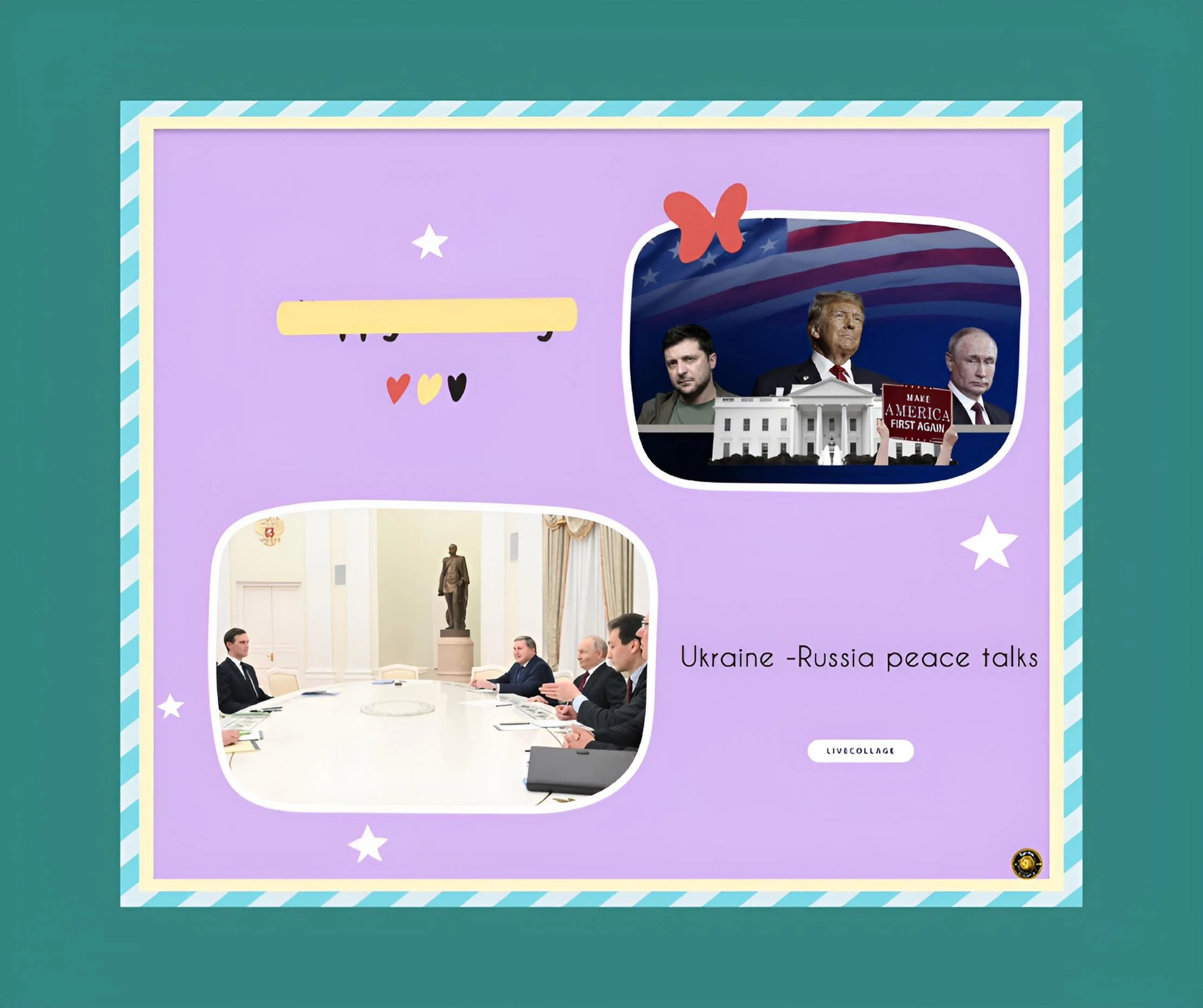
The December 28 Trump-Zelenskyy meeting represents the critical decision point determining whether peace negotiations lead to sustainable settlement or prolonged conflict. The meeting’s outcome will likely depend on Trump’s assessment of whether Russia is negotiable on core issues or whether Putin genuinely views any settlement short of maximalist territorial objectives as strategically unacceptable. Four scenarios appear plausible.
Breakthrough Compromise
Trump leverages relationships with both Putin and Zelenskyy to broker an agreement on demilitarized zones, economic arrangements, and security guarantees that both parties reluctantly accept. Implementation would require sustained U.S. enforcement and monitoring. Historical precedent (Chechnya, Syria, Minsk) suggests high risk of Russian violation once the crisis atmosphere dissipates and American attention redirects toward other priorities.
Frozen Conflict
Negotiations conclude with an agreement to freeze the conflict along current lines, similar to the Korean Peninsula model. Military forces remain deployed, economic sanctions remain partially in place, and the settlement achieves ceasefires without resolving underlying political or territorial disputes. This pathway postpones resolution indefinitely but avoids continued mass casualties during an extended negotiation process.
Negotiation Collapse
Putin’s maximalist rhetoric and operational behavior reflect genuine rejection of any settlement that doesn’t guarantee permanent Ukrainian neutrality and military demilitarization, which Zelenskyy and the Trump administration find unacceptable. Negotiations collapse, military operations resume with increased intensity, and the conflict extends through 2026 and beyond with renewed casualties and destruction.
Partial Agreement with Continued Conflict
Negotiations achieve agreement on subsidiary issues (prisoner exchanges, humanitarian corridors, nuclear safety protocols) while deferring territorial and security questions to future negotiations. Fighting continues in contested areas while diplomatic processes remain nominally active, replicating the current status quo with formalized diplomatic structure.
The Demographic Catastrophe: Why Indefinite War Is Unsustainable
Beneath diplomatic posturing lies an uncomfortable reality that should motivate both Russia and Ukraine toward settlement: neither nation can indefinitely sustain the current level of military commitment without catastrophic demographic and economic consequences. Russia’s situation is particularly dire. At current casualty rates of approximately 300 soldiers daily, Russia would suffer approximately 110,000 additional casualties in 2026 alone. Over a hypothetical five-year conflict extension, cumulative Russian losses would exceed 2 million personnel—a demographic catastrophe reverbrating throughout Russian society, particularly in peripheral regions and among non-elite populations from which recruitment disproportionately occurs. A nation cannot sustain 2 million military casualties without experiencing profound social disruption, economic contraction, and potential domestic political instability.
Ukraine’s situation, while less numerically catastrophic, is similarly unsustainable. Despite impressive military performance, Ukraine faces ongoing civilian casualties, infrastructure destruction (one-third of Kyiv already lacks electricity and heating from December 27 alone), and severe economic exhaustion. Ukraine’s capacity to sustain 800,000 military personnel while maintaining civilian economic activity in non-occupied regions is severely constrained by population losses, economic contraction, and limitations on external aid provision. The humanitarian costs aggregate horrifically: over 1.2 million Russian casualties, approximately 60,000–100,000 Ukrainian military deaths with potentially higher totals including wounded, and immeasurable civilian suffering. These costs are unsustainable absent either a decisive military victory (which appears unachievable for either party given current force balances) or a negotiated settlement creating structural mechanisms preventing renewed aggression.
The December 27–28 diplomatic window represents not merely a political opportunity but a strategic necessity. Indefinite continuation of current military operations serves neither Russia’s nor Ukraine’s long-term interests. Yet the fundamental incompatibility between Russian maximalist demands and Ukrainian sovereignty requirements suggests that any negotiated settlement will require either extraordinary diplomatic ingenuity or external enforcement mechanisms that current frameworks do not provide.
Conclusion: The Paradox of Coercive Diplomacy
Putin’s December 27 threat that Russia would achieve its war objectives by military force if diplomacy fails encapsulates a strategic paradox requiring rigorous scholarly analysis. Russia lacks the military capacity to achieve its stated maximalist objectives on any realistic timeline while sustaining current casualty rates without triggering domestic political instability. Simultaneously, any settlement short of maximalist objectives would represent, in Putin’s ideological framework, a strategic defeat incompatible with his vision of Russian imperial restoration.
Ukraine confronts a symmetrical but inverse paradox: it cannot indefinitely withstand Russian military pressure and infrastructure destruction without risking state collapse or permanent territorial partition, yet it cannot capitulate to Russian maximalist demands without surrendering sovereignty in ways that render the nation a permanent security vassal of Moscow. The Trump administration’s positioning introduces a third paradox: Trump’s stated commitment to achieving peace coexists with strategic objectives (minerals dominance, nuclear infrastructure control, cryptocurrency mining operations, access to frozen Russian assets) that profit from prolonged conflict’s creation of desperation among Ukrainian negotiators and opportunity among American financial interests seeking exceptional returns.
The historical precedent is sobering. Russian approaches to conflict termination across Chechnya, the Caucasus, Syria, and Moldova demonstrate consistent patterns: diplomacy functions as tactical interlude rather than mechanism for conflict resolution. Without enforcement institutions capable of preventing Russian violation of agreements, security guarantees remain paper promises vulnerable to violation whenever circumstances permit. Without resolution of the fundamental question of Ukrainian political orientation—whether Ukraine integrates with the West or remains within Russia’s sphere of influence—any settlement risks merely postponing the conflict rather than resolving it structurally.
The December 28 Trump-Zelenskyy meeting will determine whether American diplomatic leverage can bridge the structural impasse between Russian maximalism and Ukrainian sovereignty requirements. Available evidence suggests that it cannot. If so, the negotiation collapse will likely precipitate intensified military operations, extended conflict duration through 2026 and beyond, and humanitarian catastrophe exceeding current suffering levels. The window for sustainable peace appears to be closing, rendering the following 72 hours of Trump-Zelenskyy-Putin diplomacy not merely significant but genuinely consequential for regional security architecture across the next decade. What emerges from December 28 will either initiate a new era of managed coexistence or inaugurate years of additional bloodshed and state fragmentation across Eastern Europe and the Mediterranean.