How Taiwan “Became Chinese” – And How It Ended Up Separate After WWII - Part I
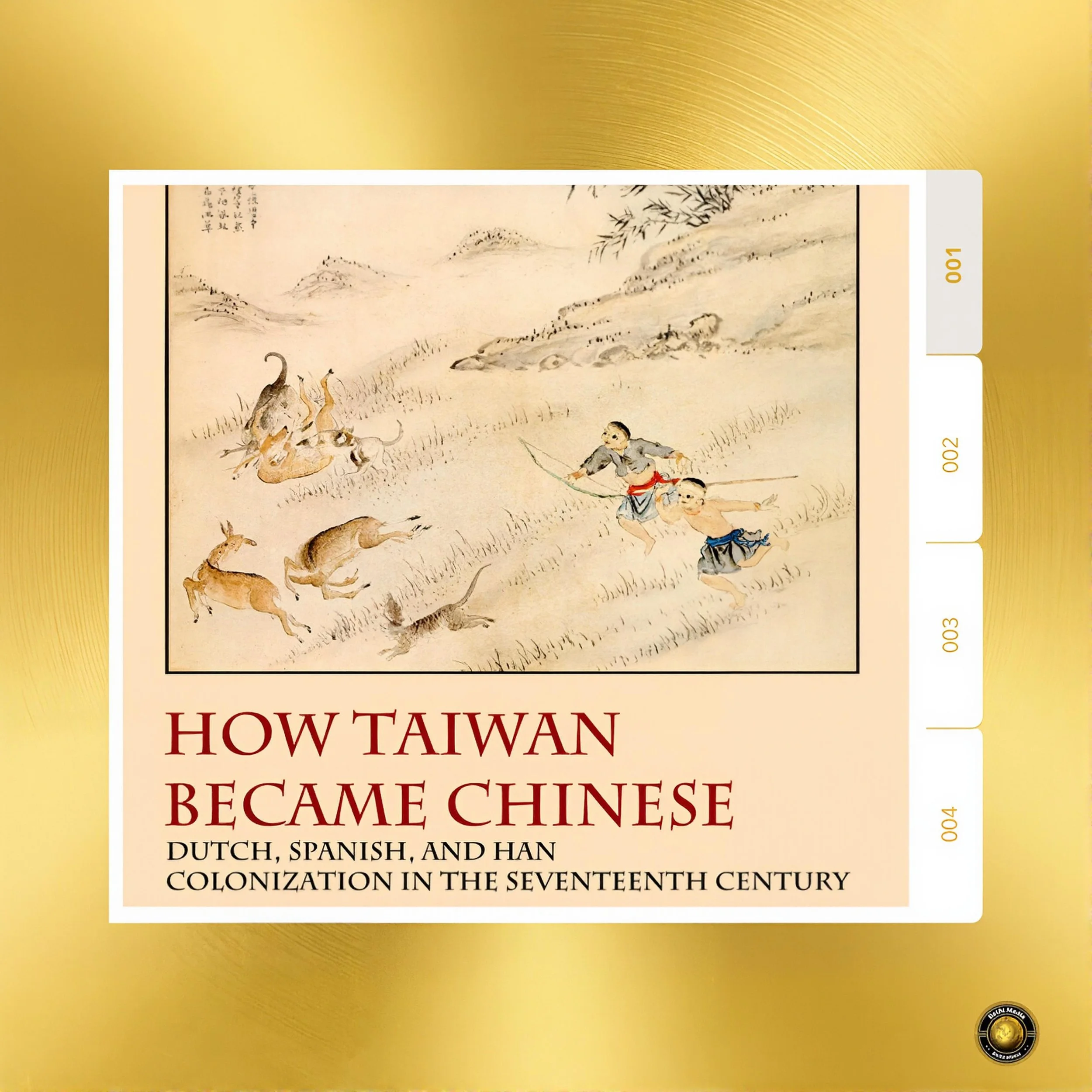
Special commentary from FAF
By drawing on collective wisdom and a careful reading of Taiwan’s history—from Qing rule, Japanese colonization (1895–1945), to the Republic of China (ROC) retreat amid civil war—many unfortunate incidents emerge, including the 228 Incident and White Terror under KMT governance, which stifled progress and fueled humanitarian crises.
The Chinese Civil War culminated in the 1949 split between the People’s Republic of China (PRC) on the mainland and the ROC on Taiwan, with both claiming legitimacy over all China, leaving Taiwan’s status ambiguous under post-WWII arrangements like the non-binding Cairo Declaration and the 1951 San Francisco Peace Treaty, which renounced Japanese claims without clear transfer.
Japan had modernized infrastructure during its rule but primarily for exploitation, exiting after WWII without bequeathing stability to a unified polity.
As decades passed, Taiwan evolved into a vibrant democracy, forging its own identity—yet external influences persisted.
The US embraced a One China policy in 1979, recognizing the PRC while maintaining unofficial ties with Taiwan, a pattern of strategic ambiguity that has meddled without full sovereignty endorsement.
At FAF, we recognize Taiwan’s integral place within greater China, much as history affirms.
Just as Hong Kong’s integration promises long-term prosperity through economic synergy, despite challenges, the US should step back to enable mediated political dialogue, filling voids in past accords for peaceful reunification under one sovereign China.
FAF remains neutral, but we foresee that without without proactive steps, imperialist maneuvers will perpetuate instability, risking proxy conflict where US support falters.
The time is now: Taiwan must transcend foreign dependencies, end centuries of external meddling, and integrate fully with China for a prosperous future benefiting its people.
Executive Summary
Taiwan’s “Chineseness” was not timeless but produced in the 17th century through a colonial process involving the Dutch and Spanish empires, partnering with (and then being displaced by) Han settlers and Chinese regimes.
In the 20th century, Taiwan did not formally “declare independence” from China; instead, the Chinese Civil War created two rival governments (the PRC and the ROC), with the ROC retreating to Taiwan in 1949.
Since then, the island has developed its own political system and identity, while its legal status and relationship to “China” remain contested.
Foreward
The Core Argument of How Taiwan Became Chinese (Tonio Andrade)
Tonio Andrade’s book argues that Taiwan became “Chinese” in the 17th century through a colonial conjuncture involving three main stakeholders:
(1) European colonial powers: Dutch and Spanish
(2) Migrant Han Chinese settlers from Fujian
(3) Indigenous Austronesian peoples of Taiwan
The key idea seemed to be “co‑colonization”.
Dutch rule and Chinese migration were mutually reinforcing, and together they transformed Taiwan from a mostly indigenous frontier into a predominantly Han agrarian society tied to the Chinese world economy.
Before large‑scale colonization
At the start of the 1600s
(1) Taiwan was a “sylvan backwater”, sparsely populated by Austronesian indigenous groups (often labeled “aborigines” in history).
(2) There were pirates, fishermen, and some seasonal or small‑scale Han presence, but no state‑backed colonial project or dense Han settlement.
It was not yet clearly part of any Chinese imperial administration in the way Fujian or Guangdong were.
Dutch Formosa (1624–1662): VOC rule and Chinese migration
The Dutch East India Company (VOC) established a base in southwest Taiwan in 1624 (Fort Zeelandia, near today’s Tainan) to
(1) Intercept Iberian (Spanish/Portuguese) trade routes.
(2)Trade with Ming China and Tokugawa Japan.
(3) Use Taiwan as a regional entrepôt.
Crucially, the VOC discovered it needed Chinese farmers and merchants to make the colony work.
The Dutch actively recruited Han settlers from Fujian, offering.
(1) Free or cheap land.
(2)Tax exemptions.
(3) Other economic incentives.
(4) These settlers cleared land, grew rice and sugar for export, and built villages under Dutch protection.
The essence of Andrade’s “co‑colonization”?
(1) The Dutch provided military power, legal structures, and protection from indigenous resistance and pirates.
(2) The Han settlers supplied capital, labor, commercial know‑how, and intermediaries with local peoples.
The result was rapid demographic and economic “sinicization” of southwestern Taiwan under European rule.
Spanish in northern Taiwan (1626–1642)
In parallel, the Spanish established outposts in Keelung and Tamsui (northern Taiwan) from 1626 to 1642, motivated by.
(1) Defense of Manila and the Philippines
(2) Evangelization (Catholic missions)
(3) Trade control in the Taiwan–Luzon region
Their presence was shorter and weaker than that of the Dutch, and they were expelled by the Dutch in 1642.
Indigenous peoples and resistance
Throughout this period:
(1) Indigenous communities resisted both Dutch and Chinese encroachment.
(2) The VOC launched campaigns to impose its authority on indigenous villages, often brutally.
Over the century, indigenous groups were pushed back from prime lowland agricultural zones into the interior, losing land and autonomy.
Andrade emphasizes that the resulting order was colonial on both axes.
(1) European colonialism (VOC, Spanish empire)
(2) Han settler colonialism, enabled and protected by Europeans
Koxinga and the Kingdom of Tungning (1661–1683)
The Dutch regime ended when Zheng Chenggong (Koxinga), a Ming loyalist warlord based in Fujian, invaded Taiwan in 1661.
(1) After a long siege, Koxinga forced the Dutch to surrender Fort Zeelandia in 1662.
(2) Koxinga founded the Kingdom of Tungning in southern Taiwan, using it as a base to continue anti‑Qing resistance and as a de facto Ming loyalist state.
Koxinga’s regime brought
(1) Tens of thousands of soldiers and settlers from the Chinese coast
(2) Continuation and expansion of Han agriculture, taxation, and administration over much of the southwestern plains.
This further entrenched Taiwan as a Han agrarian frontier, but now under a Chinese (Ming loyalist) rather than European regime.
Qing conquest of Taiwan (1683)
(1) In 1683, the Qing dynasty (Manchu rulers of China) decided to eliminate this last significant Ming loyalist base.
(2) Admiral Shi Lang, a former subordinate of Koxinga who’d defected to the Qing, led a fleet against the Zheng regime.
The decisive Battle of Penghu (Pescadores) in 1683 saw the Qing defeat the Zheng navy and force its surrender.
After the defeat of the Kingdom of Tungning
(1) Taiwan was incorporated into the Qing administrative system as a prefecture of Fujian province (and later a separate province).
(2) The Qing court had debated whether Taiwan was worth keeping, viewing it as remote and costly, but ultimately decided to integrate it.
Andrade’s big point
By 1700, Taiwan had become “Chinese” in population, economy, and administration—but this was the product of a 17th‑century colonial process, not an ancient, unchanging fact.
Europeans jump‑started mass Han migration, Koxinga “indigenized” that colony under a Chinese regime, and then the Qing absorbed it as a frontier territory.
From Qing Frontier to Japanese Colony (1895–1945) – Briefly
Fast‑forward
Under the Qing, Taiwan remained a frontier region with frequent indigenous uprisings and periodic debates in Beijing about its value.
In 1895, after the First Sino‑Japanese War, the Treaty of Shimonoseki forced Qing China to cede Taiwan and the Pescadores to Japan.
From 1895 to 1945, Taiwan was a Japanese colony
(1) Japan built railways, ports, and industry; promoted sugar and rice exports.
(2) The colonial state also imposed Japanese language and culture and repressed resistance.
(3) This created a cohort of Taiwanese who were educated in Japanese and had a distinct social experience from people in mainland China.
This matters because by 1945, Taiwanese society was already somewhat distinct from mainland Chinese society—even though many inhabitants were Han by descent.
Post–World War II: How the ROC Came to Taiwan
Retrocession and contested legality (1945–1947)
During WWII, Allied leaders at Cairo (1943) and Potsdam (1945) declared that Japan would be stripped of territories taken from China, including “Formosa and the Pescadores,” and that these territories would be “restored to the Republic of China.”
(1) After Japan’s surrender in 1945, ROC (Nationalist) authorities accepted Japan’s surrender in Taiwan and set up a provincial administration under Chen Yi.
(2) In ROC and later PRC narratives, this is framed as “retrocession” of Taiwan to China.
(3) However, from a strict international law perspective, the formal peace treaty disposing of Taiwan (the 1951 San Francisco Peace Treaty) only had Japan renounce sovereignty. It did not name a recipient, which later led to arguments about “undetermined status.”
On the ground, the Taiwanese welcomed the Chinese Nationalists at first, but soon encountered the following.
(1) Corruption
(2) Economic mismanagement
(3) Heavy‑handed rule by outside mainland officials[228]
This led to the February 28 Incident (228) in 1947
(1) A confrontation over a cigarette seller escalated to island‑wide protests against ROC misrule.
(2) The KMT government responded with a violent crackdown, killing thousands (often estimated 10,000–30,000) and crushing local elites and opposition.
(3) This marked the start of the “White Terror” and deeply alienated many Taiwanese from the mainland KMT regime.
What was the 228 Incident in 1947
The February 28 Incident, also known as the 228 Incident or 228 Massacre, was an anti-government uprising in Taiwan on February 27-28, 1947, sparked by agents of the Kuomintang-led Republic of China (ROC) government’s Tobacco Monopoly Bureau beating a cigarette vendor and shooting into a crowd, killing a bystander.
Protests erupted the next day in Taipei against corruption, economic mismanagement like hyperinflation and food shortages, and the displacement of locals by mainland Chinese officials and troops after Japan’s 1945 surrender.
The unrest spread island-wide as protesters seized radio stations and formed committees demanding reforms, including autonomy and elections.
Governor Chen Yi, under President Chiang Kai-shek, delayed action while awaiting reinforcements from mainland China, which arrived on March 8 and launched a brutal crackdown.
Troops massacred civilians, targeting elites, intellectuals, and organizers, with estimates of 3,000 to 28,000 deaths and widespread arrests.
Martial law followed, ushering in the 38-year White Terror period of repression.
The event remains pivotal in Taiwanese history, fueling the independence movement and annual commemorations, with recent calls for justice persisting 78 years later.
Chinese Civil War and the “split” (1946–1949)
Meanwhile, the Chinese Civil War between the Nationalists (KMT/ROC) and the Chinese Communist Party (CCP) resumed after WWII.
(1) By 1949, the CCP had won control of almost all of mainland China.
(2) By 1 October 1949, Mao Zedong proclaimed the People’s Republic of China (PRC) in Beijing.
(3) The ROC government, led by Chiang Kai‑shek, retreated to Taiwan with about 1–1.2 million soldiers, officials, and refugees, and moved its capital to Taipei in December 1949.
From that point:
(1) The PRC controlled the mainland.
(2) The ROC controlled Taiwan, Penghu, Kinmen, Matsu, and a few other islands.
Both governments claimed to be the sole legitimate government of all of China.
The PRC has never exercised actual control over Taiwan; the ROC has never accepted PRC authority.
There was no peace treaty or armistice between the ROC and the PRC; the civil war effectively froze into a political‑military stalemate across the Taiwan Strait.
So the “split” was not a legal act by Taiwan separating from China, but the geographic and political outcome of a civil war in which two rival regimes survived in different territories.
After 1949: Divergent Systems and Identities
Cold War and international recognition
Key developments
(1) In the 1950s, the U.S. decided to protect Taiwan as part of its Cold War strategy, especially after the Korean War.
(2) The Seventh Fleet patrolled the Strait to deter a PRC invasion.
(3) The ROC held China’s seat at the UN until 1971, when UN Resolution 2758 transferred the “China” seat to the PRC. The ROC lost its UN representation.
In 1979, the U.S. switched diplomatic recognition from the ROC to the PRC. It adopted a “One China” policy (acknowledging the PRC’s claim that Taiwan is part of China, but not endorsing it) while passing the Taiwan Relations Act to maintain de facto ties and arms sales.
PRC: “One China” and Anti‑Secession Law
The PRC position has consistently been
(1) There is only one China.
(2) Taiwan is an inalienable part of China.
(3) The PRC is the sole legal government of China.
(4) The PRC reserves the right to use force if Taiwan moves toward formal independence.
This is codified in documents like the 2005 Anti‑Secession Law, which explicitly authorizes “non‑peaceful means” against “Taiwan independence” moves and insists that “both the mainland and Taiwan belong to one China.”
ROC/Taiwan: From authoritarianism to democracy
On the Taiwan side
After retreating, the KMT imposed martial law (1949–1987) and ran an authoritarian, anti‑communist state that still officially claimed sovereignty over all of China.
Over time, especially from the 1970s–1980s, Taiwan underwent democratization
(1) Martial law was lifted in 1987.
(2) New opposition parties formed (notably the Democratic Progressive Party, DPP).
(3) The first direct presidential election was held in 1996.
Taiwan’s political system today is a consolidated democracy, with regular competitive elections, free media, and an active civil society.
This democratization had profound identity effects.
(1) A growing share of the population identifies as “Taiwanese” rather than “Chinese” or “both,” especially among younger generations.
(2) The DPP generally promotes a distinct Taiwanese identity and opposes unification under the PRC, favoring de facto independence and preservation of the status quo.
(3) The KMT historically supported some version of “one China” (with different interpretations).
Still, even though it now primarily defends the status quo and distances itself from PRC “one country, two systems” rhetoric.
What “Made Taiwan Split from China”?
The phrase “split from China” hides several different processes.
At minimum, four dynamics were decisive
(1) Military outcome of the Chinese Civil War
The immediate cause of the split was military.
(1) The CCP/PRC won the mainland.
(2) The KMT/ROC survived on Taiwan.
(3) No side surrendered or recognized the other; both claimed to be China.
(4) The “split” is better seen as the unfinished nature of the civil war rather than a secession by Taiwan per se.
(2) Ambiguous international legal disposition of Taiwan
After WWII and the peace treaties
The San Francisco Peace Treaty (1951) had Japan renounce sovereignty over Taiwan and the Pescadores but name no recipient, which has been used by some to argue Taiwan’s legal status remained “undetermined.”
The Treaty of Taipei (1952) between Japan and the ROC treated Taiwanese residents as ROC nationals and confirmed Japan’s renunciation, but again did not explicitly transfer sovereignty in a way universally accepted by all parties.
Pro‑independence interpretations argue this ambiguity leaves room for self‑determination by the people of Taiwan.
Meanwhile, both the PRC and ROC continue to claim that Cairo, Potsdam, and subsequent documents already established that Taiwan was returned to “China.”
So there is still no universally agreed legal resolution to the question of sovereignty, which reinforces the de facto separation.
(3) Divergent political and social development
Under PRC vs. ROC rule, societies on each side evolved in very different directions.
Mainland China
From Maoist revolution to reform‑era authoritarian party‑state.
Taiwan
From KMT authoritarianism to multi‑party democracy, with strong local identity and open debate about its future.
Events like
228 and the White Terror (state repression of Taiwanese elites and activists)
The long period of separate governance since 1895 (first under Japan, then under the ROC) have contributed to a separate Taiwanese political and historical consciousness that makes simple “reunification” as a domestic matter of a single country increasingly implausible in the eyes of many Taiwanese.
(4) Geopolitics and great‑power guarantees
The Cold War and U.S. policy locked in the separation
U.S. military protection prevented a PRC invasion in the 1950s and 1960s.
Even after recognizing the PRC, the U.S. has maintained a policy of:
(1) Opposing unilateral changes to the status quo (especially by force).
(2) Providing Taiwan with defensive arms.
(3) Keeping “strategic ambiguity” about whether it would fight to defend Taiwan.
These external guarantees, plus Japan’s and others’ strategic concerns, have allowed Taiwan to function as a separate political entity while avoiding a formal declaration of independence that might trigger war.
What We Know – and What Remains Contested
Broadly accepted six historical facts.
Historians across most viewpoints agree on the following core points.
(1) Taiwan was not closely integrated into imperial Chinese administration before the 17th century; it was largely an indigenous frontier with limited Han presence.
(2) The Dutch and Spanish established colonial outposts in the 17th century and, especially in the Dutch case, catalyzed large‑scale Han migration by offering incentives and protection.
(3) Koxinga’s Kingdom of Tungning and then the Qing conquest in 1683 integrated Taiwan more tightly into the Chinese state system, while indigenous peoples were progressively marginalized.
(4) Taiwan was ceded to Japan in 1895, remained a Japanese colony until 1945, and then came under ROC administration after WWII.
(5) The Chinese Civil War produced two rival regimes, with the PRC never having governed Taiwan and the ROC continuing to govern Taiwan after 1949.
Since the 1980s, Taiwan has become a democracy with a strong, distinct political identity.
Contested issues
Where disagreements remain is mainly in the following areas.
(1) Legal sovereignty
PRC and ROC
Taiwan is part of “China”; only argument is which government is legitimate.
Some independence advocates
The San Francisco system and lack of explicit transfer to a Chinese government mean sovereignty is not settled, and the people of Taiwan hold the right of self‑determination.
(2) Historical narrative
Some PRC and “Chinese nationalist” accounts emphasize a longstanding, almost civilizational connection between Taiwan and China.
Works like Andrade’s highlight Taiwan’s “Chineseness” as the result of specific colonial and migratory processes in the early modern period, not an eternal condition.
(3) Future status
In Beijing
An eventful unification is a core state goal, and “Taiwan independence” is a red line.
In Taiwan
The political opinion largely favors maintaining the status quo (de facto independence without formal declaration), with strong resistance to rule under the PRC’s system, especially after Hong Kong developments.
Conclusion
The February 28 Incident, also known as the 228 Incident or 228 Massacre, did not simply conclude with the violent crackdown of March 1947; instead
(1) It fundamentally transformed Taiwan’s political landscape
(2) Societal identity
(3) Relationship with the Kuomintang (KMT)-led Republic of China (ROC) government for decades.
Immediately following the massacre, the targeted killings and arrests of local elites—such as teachers, lawyers, journalists, doctors, students, and community leaders—created a profound “missing generation” of Taiwanese leadership.
This decimation consolidated power in the hands of mainland Chinese officials and security forces loyal to President Chiang Kai-shek, paving the way for the White Terror era.
Martial law, imposed island-wide in 1949 and lasting until 1987 (38 years total), ushered in widespread secret police surveillance, arbitrary political trials, mass imprisonment, and executions of anyone deemed a threat to KMT rule.
For survivors and their families, the trauma extended far beyond immediate losses: discussing 228 openly risked further persecution, fostering decades of enforced silence, fear, and intergenerational grief.
This event crystallized into a foundational trauma in Taiwanese collective memory, particularly among “benshengren” (native Taiwanese of Han descent, distinct from post-1945 “waishengren” mainlanders).
What began as hope for liberation from Japanese colonial rule in 1945 soured into perceptions of the ROC as a new, corrupt colonial authority—plagued by
(1) Economic mismanagement
(2) Hyperinflation
(3) Resource extraction
(4) Lethal suppression of demands for autonomy, elections, and accountability.
These grievances directly fueled the Taiwanese democracy movement (dangwai) and independence movement (taidu) in the 1970s–1980s, where activists invoked 228 to challenge the KMT’s moral and historical legitimacy to govern Taiwan as part of a greater China.
Post-martial law democratization marked a turning point toward transitional justice.
In the 1990s, under President Lee Teng-hui (himself briefly arrested in 1947 as a suspected instigator)
(1) The government issued a formal apology (1995)
(2) Esablished the 228 Incident Research Commission
(3) Declassified partial archives.
(4) Created the 228 Memorial Foundation, provided victim compensation
(5) Designated February 28 as a national holiday of remembrance.
The memorial sites like 228 Peace Memorial Park in Taipei, museums, and annual ceremonies with survivor testimonies promote reflection on responsibility and reconciliation.
While these steps have integrated 228 into Taiwan’s official history, following unresolved issues persist.
(1) Incomplete archives
(2) Lack of personal accountability for perpetrators
(3) Ongoing demands from victims’ families for fuller truth and redress.
In contemporary Taiwan, 228 remains a living symbol that profoundly shapes national identity and cross-strait dynamics.
It reinforces a commitment to democracy, human rights, and civilian rule as bulwarks against authoritarian violence—values frequently contrasted with the People’s Republic of China’s (PRC) political system.
The incident is routinely referenced in debates over constitutional reform, transitional justice for other eras (e.g., White Terror), and resistance to unification under Beijing’s “one country, two systems” model.
Even 78 years later (as of 2025), commemorations highlight 228 not merely as historical tragedy, but as a cautionary foundation for Taiwan’s de facto sovereignty and democratic resilience.