US Military Capacity for Hemispheric Intervention: A Comprehensive Assessment of Venezuelan Conflict Feasibility, Systemic Constraints, and Geopolitical Consequences
Executive Summary
Strategic Overextension and the Paradox of Overwhelming Tactical Superiority
The United States maintains what might be characterized as unilateral conventional military dominance over Venezuela’s degraded defensive apparatus, yet paradoxically confronts acute constraints on the strategic sustainability of protracted power-projection missions across multiple theaters simultaneously.
This apparent contradiction—wherein overwhelming material superiority coexists with fundamental logistical and strategic vulnerability—epitomizes the contemporary predicament confronting American force planning and the Pentagon’s increasingly untenable commitment structure.
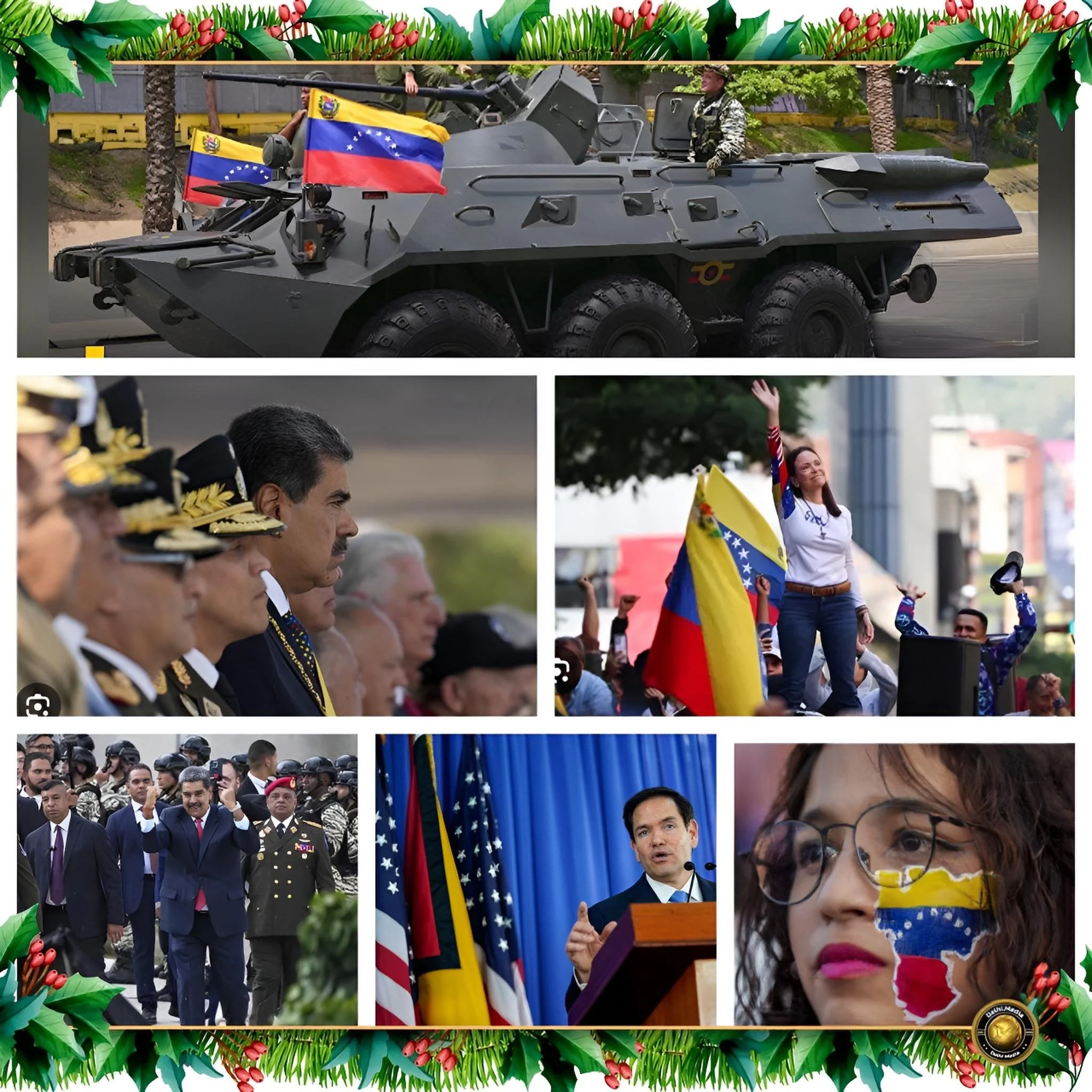
Venezuela’s military apparatus, hobbled by decades of resource deprivation, technological obsolescence, and organizational decay precipitated by systemic governmental dysfunction, presents minimal capacity for conventional resistance against sustained American air and naval operations.
The Venezuelan armed forces’ inventory of aging Soviet-era armaments, compounded by persistent procurement deficiencies and the unavailability of spare parts, renders meaningful opposition to American expeditionary forces contingent upon asymmetric methodologies or external force projection by allied powers with greater capability.
Conversely, the Pentagon confronts a multifaceted simultaneity dilemma in which expanding commitments in the Venezuelan battlefield would require either deferring responsibilities in existing conflict zones (Ukraine, Gaza, Syria) or accepting elevated strategic risk in designated priority competition domains (Indo-Pacific deterrence against China).
Senior military leadership has articulated with unprecedented candor that American force structure cannot simultaneously execute two peer competitor conflicts while managing tertiary theater obligations. This constraint appears increasingly immutable absent dramatic resource mobilization or strategic repositioning.
Introduction
Tactical Military Architecture: The Anatomy of Overwhelming Preponderance
Contemporary Force Dispositions and Projection Capabilities
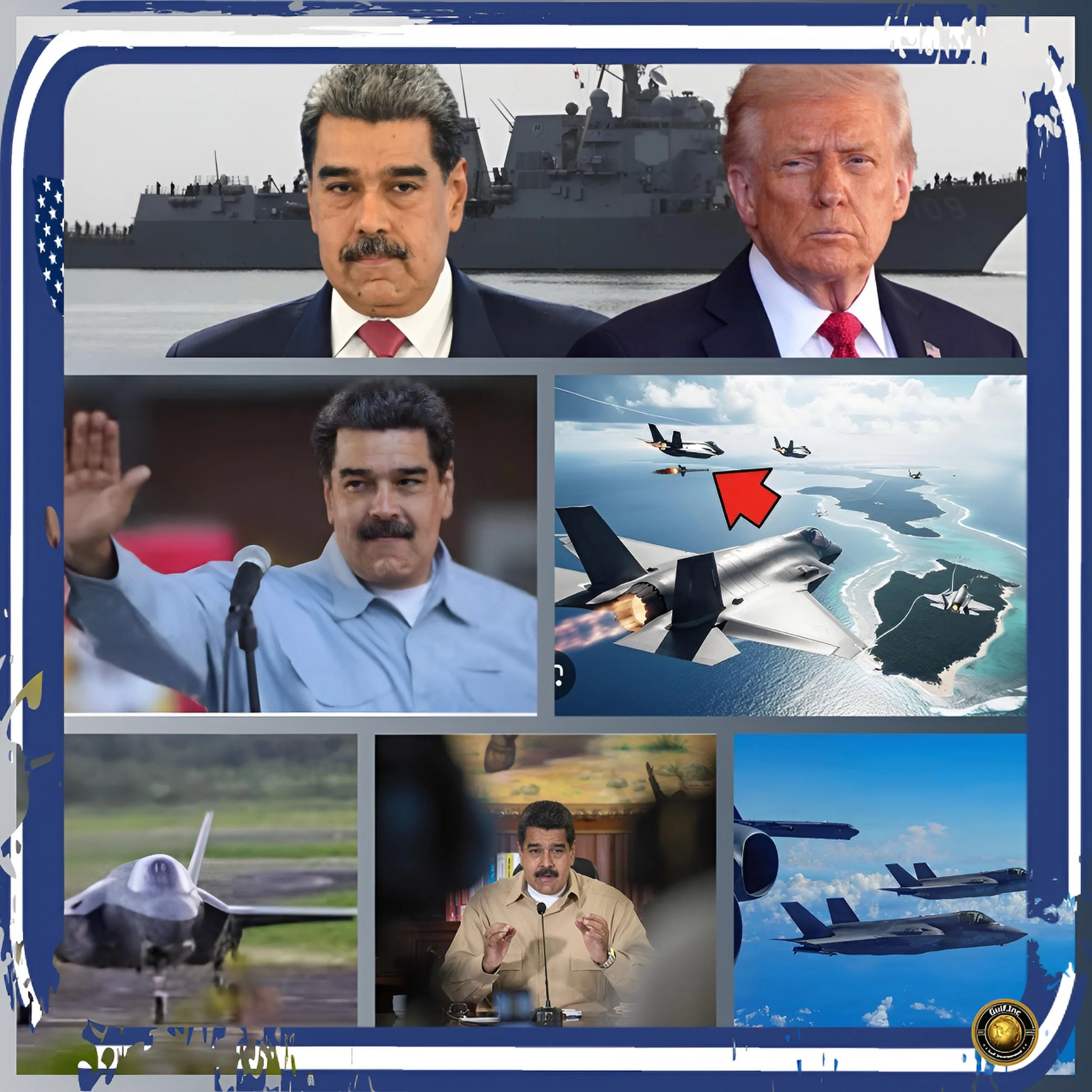
The United States has consolidated what might represent the most substantial American military concentration in the Caribbean since the Cuban Missile Crisis, comprising a force architecture that incorporates multiple operational domains and weapon systems categories
Naval and Air Component
The deployment of the USS Gerald R. Ford carrier strike group represents the most consequential force-projection element, embodying a maritime combat power concentration that fundamentally alters regional force-balancing equations.
The carrier strike group’s integrated air wing incorporates aircraft variants spanning the operational spectrum
(1) F/A-18 Super Hornet multirole fighters
(2) EA-18G Growler electronic warfare platforms
(3) MH-60 rotorcraft for antisub and transport functions
(4) E-2D Hawkeye airborne early warning systems providing comprehensive electromagnetic surveillance and control capabilities.
The integrated air defense suite presents Venezuelan forces with an essentially insurmountable challenge absent Iranian, Chinese, or Russian force projection—capabilities that proliferated analysis suggests remain unavailable or severely constrained.
Complementing carrier aviation, shore-based fighter aircraft deployed to Puerto Rico extend operational reach through aerial refueling.
F-35C Lightning II variants, despite marginal combat radius constraints requiring tanker support, represent qualitative fighter advantages so pronounced that Venezuelan air defense and fighter opposition capacity becomes academically moot absent unexpected technological surprises or force projection from external powers.
Over a dozen surface combatants, including guided-missile destroyers and cruisers armed with Tomahawk cruise missiles and integrated air defense systems, provide a layered defensive architecture and precision strike capability.
Attack submarines operating in contested waters introduce underwater combat domains wherein Venezuelan subsistence capabilities remain notional, presenting unilateral American undersea warfare dominance.
Ground Force Posture
Approximately 15,000 ground personnel, primarily concentrated in Puerto Rico and forward-deployed positions, provide an insufficient force structure for amphibious assault operations against defended beaches or conventional territorial conquest requiring occupation and administration.
CSIS military analysis establishes definitively that meaningful amphibious operations would require a force structure exceeding 50,000 personnel, with operational planners historically preferring 150,000+ personnel to achieve overwhelming force ratios that enable rapid victory and the establishment of an occupation.
The contemporary ground force structure instead positions contingencies toward air and missile strike campaigns or supporting operations for putative anti-Maduro Venezuelan elements engaged in internal insurrection or regime overthrow activities.
Target Architecture and Operational Theory of Victory
American military planning documentation establishes a few distinct operational targeting frameworks reflecting divergent strategic endstates:
Cartel-Focused Targeting Architecture
Operations emphasizing cartel disruption maintain rhetorical focus on narcotics interdiction and counterdrug operations, targeting specifically identified trafficking organizations, clandestine airfields accommodating drug shipments, and maritime staging areas.
This operational framework preserves the theoretical distinction between anti-cartel operations and anti-regime activities, maintaining a facade of a counternarcotics mission rather than an explicit regime-change intervention.
Regime Change Architecture
Alternatively, targeting frameworks that emphasize military installations, government command-and-control centers, integrated air defense systems, and regime-supporting military infrastructure implicitly advance regime change objectives.
Such targeting sequences would necessitate the destruction of Venezuelan state military capacity to enable opposition force consolidation and governmental succession, proceeding substantially beyond discrete cartel-disruption operations.
Infrastructure and Economic Target Considerations
Notably, petroleum infrastructure—refineries, upgrade facilities (Petropiar, PetroMonagas processing complexes), and export terminals—would ostensibly remain unattacked in short-war scenarios, as economic devastation requires a temporal duration exceeding swift military resolution timeframes.
However, American naval blockade capacity provides alternative mechanisms for constraining Venezuelan oil exports and appropriating revenues toward opposition government formations without requiring kinetic infrastructure degradation.
Operational Vulnerabilities and Force Sustainability Constraints
Carrier Battle Group Temporal Constraints
The USS Gerald R. Ford’s extended deployment creates, according to senior military analysts, an unsustainable “drawn bow” posture that demands either immediate operational launch or force redeployment.
Naval force structuring principles establish that only three carriers maintain sea-going status concurrently, with the remaining inventory undergoing maintenance cycles, training reconstitution, or overhaul operations.
Protracted Caribbean deployments necessarily divert carrier force availability from other strategic nodes—particularly the
(1) Indo-Pacific, critical to China deterrence
(2) Middle East, for stabilization missions
(3) NATO alliance reassurance operations.
The Pentagon faces acute pressure to deploy forces, in which indefinite Caribbean maintenance of an offensive posture consumes carrier availability desperately needed elsewhere, creating operational inefficiency and diminishing overall American power-projection capacity across strategic competition domains.
Aerial Refueling Constraints
Puerto Rico-based fighter aircraft operations depend on aerial tanker support for sustained operations against Venezuelan targets.
Still, they are constrained by KC-135 Stratotanker and KC-46A Pegasus inventory limitations and competing demands across global operations.
Middle-range combat missions requiring refueling sorties impose cumulative logistical burdens, reducing sortie-generation capacity and potentially constraining sustained air-campaign intensity.
Force Rotation and Reconstitution Requirements
Extended ground force deployments necessitate personnel rotation cycles, training reconstitution, equipment maintenance protocols, and logistical supply replenishment, creating temporal rhythms incompatible with perpetual operational tempo.
The Pentagon’s existing commitments in Syria, Iraq, eastern Europe, and global counterterrorism operations consume personnel rotation capacity, forcing either reduced deployment rotations (generating personnel burnout and retention challenges) or reduced readiness at other commands.
Venezuela’s Asymmetric Defensive Capabilities and Unconventional Resistance Architecture
Venezuelan Military Hardware and Defensive Systems
Despite manifold technological and organizational deficiencies, Venezuela’s military apparatus incorporates specific defensive capabilities, imposing operational complications on American forces absent appropriate countermeasures and suppressive fire architectures:
Russian Air Defense Systems
Venezuelan procurement priorities historically emphasized Russian-supplied integrated air defense systems, including S-300 and Pantsir-S1 platforms.
While aging and requiring sophisticated maintenance regimens, these systems retain the theoretical capacity to engage American aircraft at extended ranges, necessitating suppressive strikes, electronic warfare, or tactical modifications to aircraft approach vectors.
The Pantsir-S1 platform, in particular, provides integrated short-range air defense capability with dual-armament architecture combining missiles and rotary cannons for point-defense functions.
Maritime Anti-Ship Capabilities
Venezuelan naval inventory incorporates Russian-supplied Exocet-class anti-ship missiles and other maritime strike weapons, creating potential threats to American surface combatants absent appropriate defensive architectures.
Modern American destroyers and cruisers equipped with Aegis combat systems theoretically offer overwhelming defensive advantages.
Yet, asymmetric munition deployments introduce targeting complexities and the potential for tactical surprise attacks against concentrated American surface formations.
Iranian Drone Assets and Proxy Capabilities
The Venezuela-Iran strategic partnership has proliferated unmanaged aerial vehicle technologies, enabling Venezuelan forces to conduct surveillance, reconnaissance, and potentially strike missions using remotely operated platforms.
While qualitatively inferior to American autonomous capabilities, proliferated drone assets impose numerical threats and potential for coordinated swarm attacks against American force concentrations.
Attrition-Based Ground Defense Strategy
Venezuelan military strategy cannot meaningfully prevent American air superiority or naval dominance; instead, defensive calculations emphasize inflicting maximum attrition through sustained ground operations, urban warfare, and protracted insurgency operations.
Venezuela’s dense northern coastal population concentration (encompassing Caracas, Maracaibo, and other major urban centers) provides advantageous terrain for insurgent operations and forced American occupation requirements exceeding swift victory scenarios.
Bolivarian Militia and Internal Security Apparatus
The Venezuelan state maintains the Bolivarian Militia, an irregular military formation comprising approximately 1.6 million personnel enrolled in state-sponsored militias.
While demonstrably inferior in conventional warfighting capacity relative to professional military structures, the militia apparatus provides regime-supporting political legitimacy, internal security functions, and potential guerrilla/resistance fighters in the event of military defeat.
The militia’s political indoctrination and nationalist mobilization provide greater cohesion than mere technical military training, suggesting potential for sustained irregular resistance despite conventional military collapse.
Venezuelan Deterrent Logic: Miscalculation and Escalation Dynamics
Venezuelan strategic planners comprehend the fundamental asymmetry confronting them and likely perceive deterrence value primarily through asymmetric escalation mechanisms.
(1) chemical weapons threats
(2) destabilization of neighboring states
(3) activation of Iranian-backed proxy networks across the hemisphere
(4) potential nuclear materials proliferation (given Venezuelan nuclear cooperation agreements with Russia and Iran).
These mechanisms lack credible execution capabilities but provide Venezuelan leadership with potential escalation cards to deter or complicate American intervention calculations.
Strategic Overextension: The “Simultaneity Problem” and Force Planning Crisis
Contemporary Conflict Constellation and Logistical Saturation
American power projection capacity encounters unprecedented strain from competing demands across multiple geographic theaters and strategic competition domains:
Ukraine conflict Commitments
The Ukraine conflict has absorbed approximately $65 billion in direct American military aid since 2022, constituting a sustained logistical commitment spanning precision-guided munitions, air defense systems, armored vehicles, artillery ammunition, and sophisticated surveillance platforms.
These supply flows consume production capacity from American military-industrial firms, compete for finite skilled personnel resources, and impose training and technical advisory burdens on American military leadership.
The Ukraine commitment represents a fundamentally open-ended obligation absent Russian capitulation or negotiated settlement, creating a perpetual drain on American military resources and strategic attention.
European allies cannot meaningfully substitute for the American role, as American supply chains and military-industrial capacity remain uniquely positioned to support Ukraine's generation of military power.
Gaza and Levantine masarah
The Gaza conflict has generated $21.7 billion in American military aid transfers to Israel, with concurrent military commitments in Syria, Iraq, and broader Middle East deterrence missions against Iranian forces and proxies.
The simultaneous management of these Middle Eastern obligations alongside European and Indo-Pacific commitments strains the availability of air defense systems (critical for both Israel and European NATO allies), precision-strike munitions, advanced surveillance platforms, and specialized military-to-military assistance personnel.
Syria and Special Operations Theater
Approximately 900 American military personnel maintain a presence in Syria, conducting counterterrorism operations against ISIS remnants and providing intelligence collection functions.
While reduced compared to peak Iraq/Syria operations, the commitment nonetheless consumes personnel rotations, aerial support sorties, and maintenance of logistics infrastructure across extended lines of communication.
Indo-Pacific Deterrence and China Contingency Posture
Nominal American military strategy prioritizes China containment and potential Taiwan defense contingencies as paramount strategic competition concerns.
However, American carrier battle groups, amphibious ready groups, and forward-deployed air wings in the Indo-Pacific cannot simultaneously maintain extensive Caribbean deployments.
The USS Gerald R. Ford deployment represents a diversion of carrier capacity from the Indo-Pacific, where only two carriers maintain a concurrent presence, creating pressure that elevates strategic risk in the Pentagon’s identified priority theater.
Military-Industrial Production Bottlenecks and Munitions Constraints
The Pentagon confronts qualitatively transformed resource constraints compared to the Cold War competitive posture, in which American industrial capacity could surge during conflict mobilization.
Contemporary conflicts emphasize precision-guided munitions, advanced surveillance systems, and specialized platforms requiring sophisticated manufacturing processes, extended production lead times, and constrained supply from limited industrial vendors
Precision Strike Munitions Shortage
Tomahawk cruise missile production capacity, constrained by a single contractor (Raytheon Technologies), cannot simultaneously satisfy
(1) European demand for long-range strike capabilities (JASSM, Storm Shadow variants)
(2) Mediterranean operations
(3) Indo-Pacific deterrence requirements,
(4) Potential Venezuelan intervention campaign.
Production lead times stretch across multiple fiscal years, creating inflexibility for surge operations.
Advanced Cruise Missile production has proven insufficiently robust for sustaining Ukraine aid commitments while maintaining strategic reserve stockpiles.
Congressional testimony acknowledges persistent production constraints that limit the ability to replenish stockpiles depleted during Ukraine operations.
Air Defense System Limitations
Patriot air defense system production, critical for both Ukraine and European NATO allies, cannot simultaneously satisfy new American commitments without diverting from allied support.
The Patriot missile production constraint has become a limiting factor in European deterrence posture, with European nations expressing concern about American capability to defend NATO territory while supporting Ukraine.
The THAAD (Terminal High Altitude Area Defense) system, deployed globally for continental air defense missions, faces similar production constraints—deployment flexibility.
Surveillance and Reconnaissance Asset Scarcity
American autonomous aerial systems (MQ-4C Triton and RQ-4 Global Hawk variants) provide persistent surveillance capabilities essential for strategic monitoring, tactical targeting, and intelligence collection.
These platforms’ scarcity constrains simultaneous deployment across Ukraine, the Middle East, and the Indo-Pacific war-nodes.
Venezuelan intervention would necessarily divert surveillance resources from priority areas, degrading American capability to monitor
(1) Russian forces,
(2) Chinese military developments
(3) Iranian proxy activities.
Personnel and Technical Expertise Constraints
Extended military operations consume trained personnel, particularly elite special operations forces, intelligence specialists, language experts, and technicians maintaining sophisticated systems.
Existing commitments have generated personnel shortages across multiple military specialties, creating retention challenges and reduced military readiness in non-deployed units.
Defense Planning Architecture: Articulated Capacity Limitations
Senior Pentagon leadership has articulated with unusual directness the constraints limiting American force-planning assumptions
Generational Military Leadership Assessment
General CQ Brown, former Chairman of the Joint Chiefs of Staff (2023-2025), explicitly affirmed that the American military cannot simultaneously execute two major peer competitor conflicts, establishing a de facto ceiling on American strategic capacity.
This assessment contradicts historical assumptions about dual- location war planning that undergirded American force sizing through the early 2020s.
Senator Mike Rounds and other defense-focused Congressional leadership have concurred that the force structure currently approved and budgeted cannot sustain two major wars concurrently, directly establishing that the addition of the Venezuelan region would necessarily degrade American capacity in assigned priority competition domains.
National Defense Strategy Force-Sizing Critiques
The 2025 Army War College analysis of force-sizing doctrine explicitly acknowledges that the American defense establishment faces “strategic insolvency,” in which the costs of preferred strategic ends exceed the resources the nation has demonstrated a willingness to allocate to national security.
This fundamental imbalance generates “more risks than can be covered” through the existing force structure.
The analysis contends that either American strategic commitments must contract substantially or defense resources must expand precipitously—neither prospect appears politically feasible within contemporary fiscal and political constraints.
Systemic Consequences of Hemispheric Intervention: Economic, Humanitarian, and Geopolitical Ramifications
Petroleum Market Disruption and Global Energy Architecture Destabilization
Venezuelan petroleum production has recovered to approximately 1.0-1.1 million barrels per day as of October 2025, representing a meaningful contribution to global supply, particularly in specialized product markets that demand heavy-sour crude varieties.
Quality-Differentiated Significance
Venezuelan heavy-sour crude production is targeted explicitly at global refinery infrastructure optimized for high-complexity processing units.
The US Gulf Coast refinery system accounts for roughly 45% of global heavy-sour processing capacity, with Venezuelan crude historically accounting for 30-40% of heavy-sour feedstock.
This specialized quality distinction means that Venezuelan production disruptions create qualitative supply shortages rather than merely quantitative volume losses.
Diesel Market Tightness
The International Energy Agency has signaled that global diesel markets are currently experiencing structural tightness, with middle distillate (diesel/heating oil) availability constrained relative to demand.
Venezuelan supply disruption affecting diesel yield from heavy crude refining would exacerbate existing middle-distillate supply deficits, elevating diesel costs globally.
Diesel market impacts prove more consequential than crude price impacts, as diesel serves as a critical input for virtually all transportation and industrial sectors.
Price Transmission Mechanisms and Inflation Consequences
CSIS and Atlantic Council energy analyses project that sustained Venezuelan production outage (30-50% capacity reduction lasting 3-6 months) would elevate diesel crack spreads from the historical $8-15/barrel range to $15-25/barrel premium range, translating into 10-15% global diesel price increments.
Such diesel price increases would cascade through transportation costs, manufacturing logistics, and industrial production, contributing measurably to global inflation trajectories already challenged by energy market tightness and geopolitical fragmentation.
American air and naval blockade mechanisms, even absent kinetic infrastructure strikes, would arrest Venezuelan export capacity, generating a supply disruption equivalent to military infrastructure degradation.
War Risk Insurance and Shipping Cost Escalation
Conflict conditions would elevate marine war risk insurance premiums by 100-400% above standard rates, increasing shipping costs substantially and adding marginal cost pressures to crude transported through contested waters.
These insurance premium increases would apply to all petroleum and refined product shipments traversing Caribbean and western Atlantic waters.
Humanitarian Catastrophe and Displacement Crisis
Baseline Venezuelan Crisis Context
Venezuela currently faces humanitarian conditions among global extremes, with economic collapse precipitating approximately 7.7-7.72 million displaced persons internationally (exceeding Syrian and Ukrainian displacement volumes), widespread malnutrition affecting substantial population percentages, and systematic degradation of health, education, and sanitation infrastructure.
National GDP contracted by more than 80% between 2013 and 2020, with recovery stunted by persistent governance dysfunction and sanctions pressure.
Conflict-Driven Humanitarian Escalation
Initiation of American military operations would catastrophically accelerate humanitarian deterioration through multiple mechanisms.
(1)!Military operations targeting urban centers, critical infrastructure, and government facilities would generate direct casualties among civilian populations, particularly in the dense Caracas metropolitan area (approximately 4 million residents).
(2)Urban warfare, even utilizing precision-targeting protocols, inevitably produces civilian casualties through targeting errors, collateral damage, and infrastructure destruction affecting civilian population survival systems.
Economic devastation from operational disruption would arrest already-limited food production, distribution, and medical care systems.
Venezuela currently imports substantial food quantities given its destroyed agricultural capacity, and conflict-disrupted import logistics would trigger food security crises within weeks.
Malnutrition-vulnerable populations (particularly children and older people) would experience accelerated health deterioration and excess mortality.
Refugee and Migration Explosion
Humanitarian deterioration would generate a refugee exodus dwarfing the existing Venezuelan displacement crisis.
Latin American host nations (Colombia, Peru, Ecuador, Chile) already accommodate over 7 million Venezuelan displaced persons, with social services, employment capacity, and housing infrastructure severely strained.
Conflict-driven displacement would potentially add 2-5 million additional persons to displacement trajectories, overwhelming receiving nation capacities and creating a humanitarian catastrophe across northern South America.
The United States would face consequent migration pressures toward American borders, generating domestic political complications alongside genuine humanitarian obligations.
Regional Destabilization and Horizontal Escalation Mechanisms
Colombian Oil Production Vulnerability
The Maduro regime, facing existential threats, could strategically activate Iranian-backed ELN (National Liberation Army) insurgent forces to target Colombian oil infrastructure, particularly Caño Limón production and Coveñas terminal facilities.
Colombia exports approximately 40% of its crude production directly to the United States, and the combined Venezuelan-Colombian supply disruption is creating a compound effect on American refinery feedstock availability.
Guyana Border Instability
Venezuela maintains territorial claims against Guyana, with ExxonMobil’s offshore Stabroek field developments generating substantial Guyanese oil production.
Conflict-created instability could trigger Venezuelan provocative actions along disputed maritime boundaries, necessitating American protection of Guyanese infrastructure and expanding American military commitment footprint.
Caribbean Destabilization and Spillover
Puerto Rico hosts American military infrastructure, population, and strategic military value.
Expanded conflict could generate Puerto Rican refugee movements, internal instability, and potential attacks against American military installations.
Dominican Republic, another prominent Caribbean cooridor, could experience displacement pressures and destabilization from the Venezuelan conflict's proximity.
Geopolitical Beneficiary Analysis: Great Power Competition Dimensions
China: Strategic Winner Through American Overextension
Economic Leverage Expansion and Debt Dynamics
China maintains approximately $60 billion in cumulative Venezuelan loans, establishing structural leverage over Venezuelan policy and economic decision-making.
American military intervention would further devastate the Venezuelan economy, deteriorating government revenue capacity, limiting debt repayment capability, and potentially forcing Venezuela to renegotiate its Chinese debt arrangements, which would be favorable to Chinese interests.
A destabilized, defeated Venezuelan government emerging from American military operations would desperately require economic reconstruction assistance.
China’s positioning as an existing creditor and infrastructure partner creates a natural pathway for expanded Chinese economic influence, investment, and political leverage over the Venezuelan successor regime.
Beijing has explicitly demonstrated a willingness to expand its influence through debt-trap mechanisms, infrastructure investment, and commercial engagement with politically isolated regimes.
Critical Minerals and Strategic Resources
Venezuelan nickel production, constrained by current political conditions and sanctions pressure, could be substantially expanded through Chinese investment and technical partnerships following American-induced regime change.
China has secured mining concessions for significant nickel deposits, with productive capacity expansion limited by current political constraints.
Venezuelan gold production, concentrated in the Orinoco region, represents a strategic resource for Chinese industrial and reserve purposes.
Expanded Chinese investment access through post-conflict economic reconstruction would advance Chinese diversification of gold supply sourcing away from Australian, African, and Southeast Asian dependencies.
Indo-Pacific Deterrence Degradation
American military concentration in the Caribbean reduces Indo-Pacific presence available for China deterrence and Taiwan contingency preparations.
The USS Gerald R. Ford carrier strike group deployment represents a meaningful reduction in Pacific Fleet operational availability, coinciding with a period of elevated Chinese military activity and potential Taiwan-constraint operations.
Regional Geopolitical Influence Repositioning
American military intervention in Latin America would validate Chinese characterizations of American imperialism and regional intervention patterns.
Latin American nations would observe American willingness to employ military force against regional states for regime-change purposes, generating receptivity to Chinese alternative partnerships and positioning China as a non-interventionist development partner.
Chinese Belt and Road Initiative investments across Latin America could be repositioned as an alternative to American military domination, enhancing Chinese diplomatic appeal and institutional influence throughout the region.
Russia: Rhetorical Positioning with Constrained Material Contribution
Strategic Partnership Affirmation
Russia has recently formalized strategic partnership agreements with Venezuela, positioning Moscow as an allied power supporting Venezuelan sovereignty against American intervention.
This rhetorical posturing advances Russian narratives on global multipolarity and the development of anti-American coalitions, without necessarily requiring meaningful military contributions.
UKRAINIAN war Implications
Russia’s capacity to meaningfully support Venezuelan defense against American intervention remains severely constrained by Russia's commitment to Ukraine, consuming Russian military production and force structure.
Russian air defense systems and military personnel deployed to Venezuela represent a marginal contribution relative to American force concentration, and Russian support provision would necessarily acknowledge the limitation of Russian capacity to defend client states against American military power.
Long-Range Strategic Messaging
Public affirmation of Venezuelan support and expressions of solidarity generate domestic political benefits for Russia and reinforce narratives of Russian commitment to anti-American alignment.
However, the material constraints underlying Russian support highlight a fundamental asymmetry between Russian and American power-projection capacity.
Iran: Deepened Isolation and Proxy Vulnerability
Strategic Partnership Validation and Demonstration
Iranian 20-year strategic partnership with Venezuela would face an ultimate test through American military intervention.
Iranian inability to meaningfully support Venezuelan defense (given its physical distance, potential American naval blockade, and military constraints) would demonstrate a limitation of Iranian deterrent capability and potentially devalue Iranian security partnerships for prospective client states.
Iranian drone and asymmetric warfare capabilities deployed in Venezuela could provide tactical complications for American forces, but would prove insufficient for preventing American military victory.
The asymmetric warfare demonstration would likely discourage other potential Iranian clients from over-relying on Iranian security guarantees.
Economic Reconstruction Opportunities
Conversely, post-conflict reconstruction could create opportunities for expanded Iranian economic and technical partnership with the Venezuelan successor government.
However, American sanctions and political constraints would limit Iranian participation in reconstruction, constraining Iranian benefits from the Venezuelan conflict.
American Military-Industrial Complex: Substantial Beneficiary Within Domestic System
Defense Contracting Revenue Expansion
Extended Venezuelan military operations would require procuring precision-guided munitions, air defense systems, fighter aircraft, naval vessels, and electronic warfare platforms from American defense contractors.
The top five defense companies (Lockheed Martin, RTX, Boeing, General Dynamics, Northrop Grumman) have collectively received $771 billion in Pentagon contracts between 2020 and 2024, with the Venezuelan conflict generating additional procurement demand.
Protracted occupation and pacification operations would extend defense contractor revenue streams across multiple fiscal years, creating corporate incentives for sustained American military presence independent of strategic conflict resolution.
Supply Chain and Production Capacity Expansion
Defense contractor efforts to expand munitions production, increase aircraft manufacturing, and accelerate defense technology development would generate substantial corporate revenue and profit expansion, particularly for specialized defense technology firms.
Conflict Termination Scenarios and Strategic Endstate Uncertainty
Military Victory Paradox and Occupation Requirements
American military forces can achieve a decisive tactical victory against Venezuelan conventional defense systems within days to weeks of an intensive air and missile campaign.
Air superiority would become uncontested, Venezuelan surface-to-air defenses would face suppression, and any Venezuelan attempts at conventional military resistance would encounter overwhelming American military response.
However, military victory presents a distinct challenge from strategic conflict termination and the establishment of a sustainable post-conflict political order.
Successful occupation of Venezuelan territory (particularly Caracas and major urban centers) would require substantially larger force structure than currently deployed, estimated minimally at 50,000-100,000 American military personnel and potentially exceeding 150,000 for occupation establishment and pacification operations.
Opposition Government Viability Uncertainty
American military planners contemplate support for Venezuelan opposition movements as a post-conflict governing entity.
However, Venezuelan opposition fragmentation, historical governmental dysfunction, and absence of credible administrative capacity present an acute challenge regarding the establishment of legitimate governance.
An American-supported successor government would require an extended period of American military oversight, reconstruction assistance, and governance support—extending American commitment far beyond swift military operations into a protracted occupation.
Pacification and Counterinsurgency Requirements
Venezuelan interior regions, particularly the Orinoco oil belt and the Amazon basin territories, contain population concentrations and organized criminal networks capable of sustained insurgent operations against American occupation and the opposition government.
Pacification requirements could extend military commitment across years, consuming personnel rotations, logistics resources, and strategic attention.
The Pentagon’s historical experience with post-conflict occupation (Iraq, Afghanistan) demonstrates acute challenges regarding transition from military operations to occupation governance and eventual military withdrawal without generating renewed conflict.
Diplomatic Off-Ramp Scenarios
Recent Trump administration statements (late November 2025) indicate openness to diplomatic engagement with the Maduro regime, potentially providing negotiated alternatives to military confrontation.
Sanctions Relief and Economic Concessions Framework
A negotiated resolution could include sanctions relief in exchange for Venezuela's commitment to enhanced drug interdiction cooperation, a reduced Iranian military presence, and political liberalization.
Such a framework would avoid military intervention costs while achieving stated policy objectives regarding narcotics trafficking, Iranian influence, and Venezuelan governance.
Oil Production and Export Normalization
The American administration could negotiate an expansion of Venezuelan oil production and the normalization of oil exports in exchange for sanctions relief and economic recognition, benefiting American energy markets and global oil price stability while avoiding the costs of military conflict.
Regional Mediation and Third-Party Involvement
International mediation through third parties (potentially Mexico, Colombia, or Caribbean nations) could facilitate dialogue platforms that avoid direct American military confrontation while achieving a diplomatic resolution.
Analytic Synthesis: Strategic Calculus and Rational Choice Framework
Cost-Benefit Analysis from an American Strategic Perspective
Strategic Benefits Analysis
American military intervention against Venezuela would generate limited tangible strategic benefits relative to costs.
(1) Narcotics interdiction benefits remain marginal, as the preponderance of opioid trafficking transits through Mexico and American ports rather than Venezuelan maritime routes.
(2) Satellite interdiction of Venezuelan drug shipments provides an alternative mechanism to military intervention for disrupting drug-trafficking supply chains.
(3) Venezuelan regime change would establish an American-backed government in South America, generating geopolitical positioning benefits within American hemispheric strategy.
However, these positioning benefits appear marginal relative to strategic costs and geopolitical complications.
Strategic Cost Analysis
Conversely, strategic costs appear substantial and multi-dimensional:
A diversion of force structure from the Indo-Pacific would measurably degrade American capacity to deter China and prepare for potential Taiwan contingencies—the Pentagon’s identified priority strategic competition domain.
A humanitarian catastrophe would generate international condemnation, delegitimize American foreign policy leadership, and provide adversary narratives regarding American imperialism and interventionism.
Energy market disruption would raise global inflation, creating economic challenges for American allies and potentially complicating the achievement of practical American economic policy objectives.
An extended military occupation commitment would consume Congressional support, military personnel, and fiscal resources across years or decades, generating political fatigue and strategic overextension.
Rational Choice Framework Assessment
From a rational strategic analysis framework, Venezuelan military intervention appears unjustified by the benefit-cost rationale.
The Pentagon’s stated inability to fight multiple major conflicts simultaneously suggests that Venezuelan intervention would necessarily degrade American capacity in priority domains, resulting in a net strategic loss.
Political and Domestic Imperatives as Potential Drivers
The persistence of military preparation alongside diplomatic soundings suggests potential divergence between technical military advice and political decision-making imperatives.
Domestic political considerations might drive the administration's willingness to employ military force notwithstanding unfavorable strategic calculus:
Nationalist Mobilization and Political Positioning
Military action against Venezuela would generate nationalist political mobilization in the American domestic context, potentially benefiting the Trump administration politically by demonstrating executive strength and hemispheric assertion.
Deterrent Signaling and Regional Credibility
American military action would signal a credible willingness to use force against regional regimes, potentially deterring other Central/South American governments perceived as insufficiently responsive to American policy preferences.
Drug War Narratives and Law-and-Order Political Messaging
Military intervention framed as narcotics-focused counteroffensive could generate political support among constituencies prioritizing drug trafficking reduction and law-and-order policies.
However, these political rationales appear insufficient for overriding technical military assessments and strategic cost considerations
Conclusion
The United States maintains overwhelming tactical military superiority, sufficient to achieve a swift battlefield victory against Venezuela's conventional defense systems.
Air superiority, naval dominance, and precision strike capability render Venezuelan military resistance futile absent meaningful external military support from Russia, China, or Iran—capabilities these powers cannot credibly provide given operational constraints and competing strategic priorities.
However, tactical military superiority cannot obscure fundamental strategic vulnerability. American force structure cannot simultaneously manage existing commitments in Ukraine, Gaza, and Syria, execute a primary Venezuelan intervention, maintain adequate Indo-Pacific deterrence, and fulfill treaty obligations to NATO allies.
The Pentagon’s explicit acknowledgment of inability to execute two peer competitor wars establishes operational ceiling constraining American commitment capacity.
A disruption in Venezuelan oil production would elevate global diesel prices, exacerbate global inflation trajectories, and impose substantial economic costs across American allies and the American domestic economy.
Humanitarian catastrophe accompanying military intervention would generate 2-5 million additional Venezuelan refugees, destabilizing Latin American host nations and forcing American immigration system absorption capacity expansion.
The geopolitical beneficiary analysis demonstrates that China emerges as principal strategic winner through American overextension, distraction from Indo-Pacific, and creation of regional instability creating opportunities for Chinese economic influence expansion.
Russia and Iran experience marginal benefits and potential strategic costs from demonstrated inability to support client states against American military power.
American defense contractors benefit substantially from expanded military procurement demand, suggesting potential corporate incentive alignment with military intervention despite unfavorable strategic calculus.
From rational strategic analysis, Venezuelan military intervention appears unjustified by benefit realization relative to strategic, economic, and humanitarian costs.
The continued military preparation alongside diplomatic engagement suggests ongoing administration recalibration regarding optimal policy approach, with diplomatic resolution pathways potentially offering superior cost-benefit profiles compared to military intervention.
Strategic recommendation supporting framework: American policy should prioritize diplomatic negotiation with Venezuelan government aimed at sanctions relief-for-governance concessions exchange, combined with existing naval presence maintaining deterrent posture against Venezuelan destabilization activities.
This approach would preserve American strategic capacity for priority Indo-Pacific competition, avoid humanitarian catastrophe, minimize energy market disruption, and achieve stated policy objectives regarding narcotics interdiction and Iranian influence reduction through negotiated mechanisms rather than military confrontation.
The fundamental conclusion emerging from the comprehensive analysis: American overwhelming tactical superiority confronts counterbalancing strategic overextension, creating a situation in which capacity exceeds strategic wisdom and force availability exceeds commitment sustainability.
American decision-makers face a choice between rational strategic restraint or perpetuation of overextended commitment structure generating cumulative strategic risk and potential for strategic failure across multiple competition domains simultaneously.