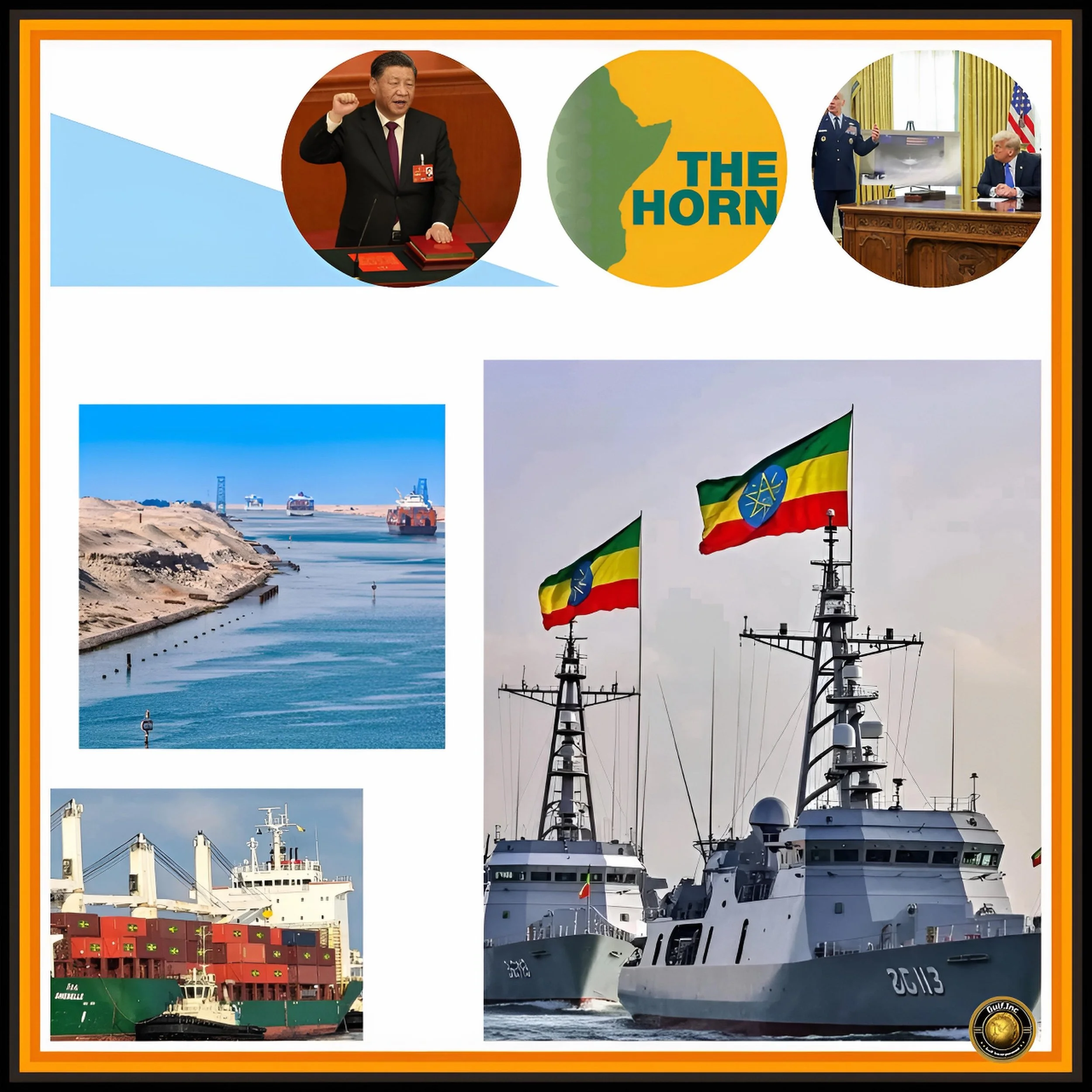
Ethiopia’s Maritime Push: Strategic Imperatives, Historical Grievances, and Emerging Conflict with Eritrea
Executive Summary
Ethiopia’s escalating demands for direct access to the Red Sea represent one of the most significant geopolitical flashpoints in contemporary African affairs, with bilateral tensions between Addis Ababa and Asmara reaching levels not seen since the 1998-2000 Eritrean-Ethiopian War.
Prime Minister Abiy Ahmed has framed maritime access as an “irreversible” national priority and an “existential matter” for a nation of 130-million people, increasingly employing language suggesting willingness to achieve this goal through military means if diplomatic and economic arrangements prove insufficient.
Eritrea, conversely, views these pronouncements as existential threats to its hard-won sovereignty, characterizing Ethiopia’s maritime ambitions as either impossible delusion or veiled territorial aggression aimed at Eritrean coastal territory.
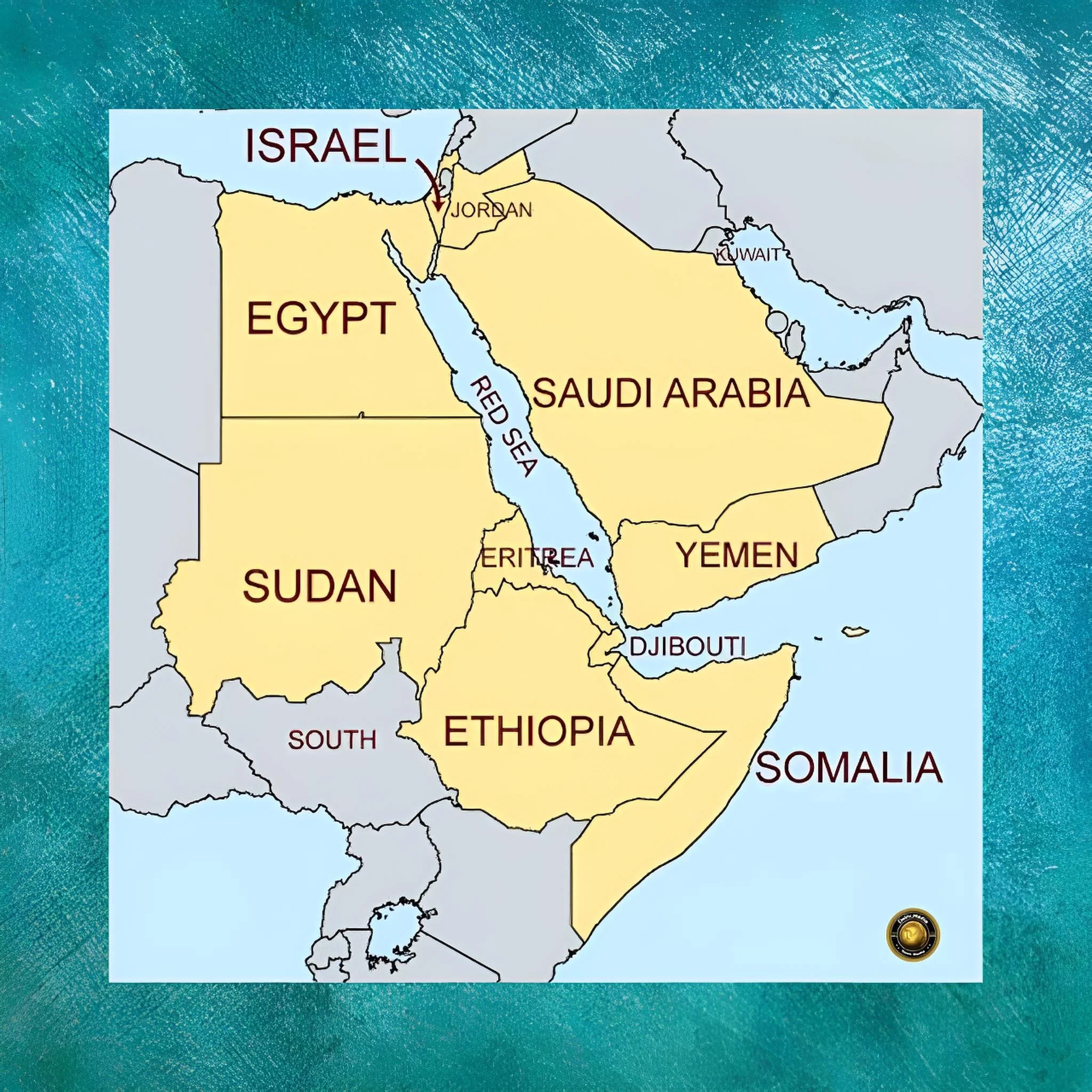
The dispute transcends bilateral concerns, engaging the interests of major regional and global powers including the United States, Egypt, Saudi Arabia, China, and the UAE, while simultaneously threatening one of the world’s most critical maritime chokepoints—the Bab el-Mandeb Strait—through which approximately 13 percent of international trade and nearly 30 percent of global container traffic transits annually.
Introduction
Historical Context: Colonial Legacy and Eritrean Independence
The contemporary Ethiopia-Eritrea maritime dispute originates in colonial-era ambiguities and the asymmetric consequences of Eritrean independence in 1993.
Ethiopia maintained a coastline stretching over 2,000 kilometers until Eritrea’s secession, with Assab serving as Ethiopia’s primary commercial and naval port, handling two-thirds of the nation’s maritime trade prior to independence.
The port was not merely a trading installation but represented centuries of Ethiopian maritime engagement with Red Sea commerce and strategic positioning.
The legal status of Assab remains profoundly contested between Ethiopian and Eritrean interpretations of colonial history and international law.
Ethiopian legal scholars argue that Assab was never formally incorporated into colonial Eritrea through valid treaty mechanisms, noting that Italy’s 1935 invasion of Ethiopia violated prior agreements and that the 1947 Italian peace treaty explicitly terminated Italian colonial claims over African territories.
Under Ethiopia’s interpretation, Assab’s colonial demarcation remains legally ambiguous and potentially subject to renegotiation, particularly given that the territory’s population and natural hinterland comprise primarily Afar ethnic communities with stronger economic ties to Ethiopia than to Eritrean highlands.
Eritrea’s position, conversely, grounds Eritrean sovereignty over Assab in the principle of uti possidetis juris—the established international law principle that newly independent states retain the borders they possessed at independence—and emphasizes that Eritrea itself was federated with Ethiopia from 1952-1962 with precisely the same borders that now define the independent nation.
Eritrea contends that the Eritrea-Ethiopia Boundary Commission’s 2002 delimitation decision, which was rendered “final and binding,” definitively established Eritrean sovereignty over Assab and all other disputed territories.
The 1998-2000 Eritrean-Ethiopian War, which killed approximately 70,000-100,000 combatants and displaced hundreds of thousands of civilians, ostensibly resolved these territorial disputes through the Algiers Agreement of December 2000.
However, the peace framework systematically failed to address the underlying maritime question or provide mechanisms for Ethiopian access to Red Sea ports. This omission—whether deliberate or inadvertent—left the fundamental economic and strategic grievance unresolved for the past quarter-century.
Contemporary Maritime Strategies: Multiple Pathways and Regional Complications
Ethiopia has pursued three distinct maritime access strategies since 2023, each generating different regional reactions and diplomatic complications:
First Strategy
Somaliland Port Access Through Military Lease
In January 2024, Ethiopia signed a preliminary Memorandum of Understanding with Somaliland (a self-declared independent region within Somalia) granting Ethiopia access to the Red Sea port of Berbera, reportedly in exchange for future Ethiopian recognition of Somaliland’s independence and a 19-kilometer (12-mile) lease of Red Sea coastline for 50 years.
The strategic logic is elegant rather than confronting Eritrea directly, Ethiopia gains maritime access through a different regional partner while simultaneously providing Somaliland with international diplomatic legitimacy from a major African nation.
This approach triggered immediate regional complications.
Somalia’s central government vehemently opposed the arrangement, interpreting it as a violation of Somali sovereignty and territorial integrity, and recalled its ambassador to Ethiopia in protest.
However, Turkish mediation produced the December 2024 Ankara Declaration, under which Somalia and Ethiopia ostensibly resolved their dispute by agreeing to bilateral arrangements allowing Ethiopian maritime access under Somali sovereign authority—though the agreement conspicuously failed to explicitly address or cancel the Somaliland MoU, leaving ambiguity about Ethiopia’s concrete maritime access prospects.
As of November 2025, the Somaliland pathway remains nominally operational but faces implementation uncertainty due to Somalia’s continued sovereignty claims and international community hesitation regarding a military lease arrangement that would effectively fracture Somalia’s territorial integrity.
Second Strategy
Direct Eritrean Port Negotiation and Development Proposals
Prime Minister Abiy Ahmed has repeatedly offered to develop Eritrea’s port of Assab jointly, framing this as economically mutually beneficial and politically face-saving for Eritrea.
Abiy explicitly noted during October 2025 parliamentary remarks that he personally raised this proposition during diplomatic visits with Eritrean President Isaias Afewerki, proposing Assab’s redevelopment into a modern port facility that would generate revenue for both nations while providing Ethiopia strategic access.
Eritrea has categorically rejected this framework, viewing any Ethiopian military or quasi-military presence on Eritrean territory as incompatible with sovereignty and as an opening wedge toward territorial annexation.
Eritrean officials emphasize that Eritrea itself does not deny Ethiopia port access through negotiated arrangements or commercial leases, but opposes the notion of Ethiopian forces exercising autonomous authority over any portion of Eritrean maritime territory.
Third Strategy
Military Positioning and Strategic Posturing
Beginning in early 2025, both Ethiopia and Eritrea deployed substantial military forces to their shared 600-mile frontier, with satellite imagery revealing troop concentrations particularly near the Assab region and evidence of fortification construction and heavy weapons deployment by Eritrean forces.
Ethiopia’s Field Marshal Birhanu Jula has issued increasingly explicit warnings, stating that Ethiopia possesses “reliable capability” and will “strengthen our defense forces, speed up our development, and secure a sea outlet,” while Field Marshal Birhanu framed Ethiopia’s maritime access claim in demographic terms—asking rhetorically how the interests of 130-million Ethiopians could be subordinated to the interests of 2-million Eritreans.
These deployments suggest active military contingency planning for potential force projection toward Red Sea coastline, whether through conventional military operations or through support for ethnic or insurgent movements within Eritrea’s Afar population.
The Strategic Importance of Maritime Access for Ethiopia
Ethiopia’s maritime ambitions extend beyond simple economics or port access, representing instead a comprehensive vision of national reconstruction and regional positioning:
Economic Imperative
Ethiopia’s continued dependence on Djibouti for 95 percent of its seaborne trade creates multiple vulnerabilities. Any disruption to Djibouti’s port operations—whether through internal instability, regional conflict, or deliberate denial by rival powers—could cripple Ethiopian commerce and economic development.
Establishing direct maritime access would diversify Ethiopia’s trade routes, reduce costs associated with Djibouti transit fees, and enable Ethiopia to participate directly in global supply chains without intermediaries.
Ethiopia’s manufacturing sector ambitions, essential to the government’s development vision, require reliable and cost-effective maritime access for export of finished goods and import of raw materials.
An industrial economy cannot sustainably depend on a single port in a foreign nation, particularly when that nation has limited incentive to maintain price competitiveness with Ethiopian alternatives.
Strategic Positioning in Regional Hierarchy
For Prime Minister Abiy, maritime access has become symbolic of Ethiopia’s rightful position as the Horn of Africa’s preeminent regional power—the continental heavyweight demographically, economically, and militarily.
Remaining landlocked is increasingly characterized as an artificial constraint imposed by colonial accident and Eritrean intransigence, rather than a natural or inevitable geographic fact.
Overcoming this constraint would reposition Ethiopia within African and global affairs as a “normal” state with commensurate strategic agency.
Internal Legitimacy and Nationalist Mobilization
After nearly a decade of domestic crises—the Tigray war (2020-2022), ethnic violence, economic contraction, and contested political legitimacy—Abiy’s administration has increasingly channeled nationalist sentiment toward the Red Sea issue.
This represents a classical leadership pivot away from internal failure toward external ambition, potentially consolidating political support through nationalist mobilization around a concrete national project.
The framing of maritime access as “irreversible” reflects not merely policy assertion but rather Abiy’s apparent belief that backing down from this claim would fatally undermine his political position and governing legitimacy within Ethiopia.
US Strategic Support
The November 2025 visit of AFRICOM Commander General Dagvin Anderson to Ethiopia, where he publicly endorsed Ethiopia’s maritime access aspirations and suggested that Red Sea access would enhance Ethiopia’s regional peace contributions, signals significant US strategic backing for Ethiopian maritime ambitions.
This represents a potential shift in American policy toward Ethiopia and carries implicit threat communications to Eritrea and Egypt regarding US willingness to support Ethiopian strategic positioning in the Red Sea region.
Regional Responses and Emerging Alignments
Ethiopia’s maritime push has triggered sharp responses from regional powers, revealing complex and somewhat contradictory coalition formations:
Egyptian Opposition
Egypt has emerged as the most vehement regional opponent of Ethiopian Red Sea access, with Foreign Minister Badr Abdelatty declaring that “Ethiopia will remain a land-locked nation until Judgment Day, with no role whatsoever in the Red Sea.” This language reflects Cairo’s comprehensive opposition rooted in multiple strategic concerns:
(1) Egypt views Red Sea governance as the exclusive prerogative of littoral (coastal) states, and argues that involving landlocked powers would set dangerous precedent compromising Red Sea security architecture and undercutting Egyptian and Saudi Arabian leadership over this critical corridor.
(2) Egypt interprets Ethiopian maritime ambitions through the lens of the broader Nile water dispute. Ethiopia’s construction of the Grand Ethiopian Renaissance Dam (GERD) represents an existential threat to Egyptian water security and economic survival, as Egypt depends almost entirely on Nile flows for irrigation and hydropower.
For Cairo, preventing Ethiopian strategic elevation through Red Sea access represents partial compensation for the GERD challenge and maintains pressure on Ethiopia across multiple dimensions.
(3) Egypt fears that US backing for Ethiopian maritime positioning signals diminishing American commitment to Egyptian strategic primacy in the Eastern Mediterranean and Red Sea, and represents potential realignment of great power support away from Cairo toward competing regional powers.
Saudi Arabian Mediation Efforts
Saudi Arabia, traditionally interested in Red Sea stability and regional economic development, has undertaken mediation initiatives between Ethiopia and Eritrea while simultaneously pursuing its own strategic interests.
Saudi Arabia’s mediation reflects Riyadh’s desire to prevent military conflict disrupting Red Sea commerce and energy transit, but also Saudi Arabia’s complex balancing act between maintaining alliance with Egypt while avoiding total obstruction of Ethiopia’s legitimate economic interests.
Saudi officials have indicated willingness to support Ethiopia’s maritime goals within frameworks that protect Eritrean sovereignty and do not disrupt Red Sea governance architecture.
However, Saudi Arabia’s leverage over Ethiopia remains constrained by competing relationships with Egypt and by Egyptian influence over Saudi decision-making regarding Red Sea affairs.
United States Strategic Positioning
The US shift toward explicit support for Ethiopian maritime access represents a significant recalibration of American Horn of Africa strategy.
Under the AFRICOM command structure and civilian policy frameworks, Washington appears to be elevating Ethiopia as a potential primary regional partner for counterterrorism operations (particularly against Al-Shabaab), broader containment of Iranian influence (particularly Iranian support to Houthi forces threatening global shipping), and maintenance of US strategic presence in the Red Sea region as China’s influence expands.
This American positioning potentially signals that Washington views Ethiopian elevation as strategically preferable to either Egyptian hegemony or Chinese-Russian acquisition of increasing influence over Red Sea governance.
However, this represents a significant complication to US-Egypt relations, which already face strain over Egypt’s growing ties with China and Russia, and divergences over Gaza policy and Middle East strategy.
Eritrea’s Defensive Posture and External Support
Eritrea has mobilized substantial military reserves and has maintained strategic alignment with Russia and Iran, though external military support capabilities for Eritrea remain severely constrained by Eritrea’s isolation and limited financial resources.
Eritrea’s historical alignment with Russia provides some diplomatic cover, but Russian capacity to provide meaningful military support to Eritrea while sustaining Ukraine operations is minimal.
Eritrea has positioned itself as a guardian of Red Sea sovereignty and coastal state prerogatives, creating implicit alignment with Egypt and Saudi Arabia around limiting landlocked state influence over maritime affairs.
This alignment remains fragile and contested, but provides Eritrea diplomatic platforms for international legitimation of its position.
Military Capabilities and War Scenario Analysis
Ethiopian Military Advantages
Ethiopia possesses overwhelming conventional military superiority relative to Eritrea across nearly all operational domains: air force capabilities (including Russian-supplied aircraft), ground force size and equipment diversity, air defense systems, and especially armor and mechanized infantry assets.
Ethiopia’s population of 130 million provides demographic reserves for military mobilization substantially exceeding Eritrea’s 5-6 million inhabitants.
Ethiopia’s recently reestablished naval force, though nascent, provides capabilities for extended maritime operations in Red Sea waters and represents expansion of operational domains beyond traditional continental focus.
Eritrean Defensive Capabilities
Eritrea compensates for quantitative inferiority through defensive positioning advantages, fortified borders, internal cohesion rooted in nationalist mobilization, and specific military capabilities including Russian-supplied air defense systems (particularly S-300 and Pantsir-S1 platforms), anti-ship missiles, and Iranian-supplied drone systems.
Eritrea’s smaller population and limited territory potentially favor defensive strategies emphasizing attrition of larger Ethiopian forces attempting territorial conquest or forced maritime access seizure.
Urban warfare in Eritrean population centers, particularly Asmara, would impose substantial costs on Ethiopian forces even possessing superior equipment and firepower.
Escalation Pathways and Scenario Probabilities
Current analysis suggests three potential conflict trajectories with varying probability distributions
Limited Border Skirmishes (55 percent probability)
Sporadic military clashes along contested border areas, primarily involving proxy militia groups and ethnic tensions in Afar regions, without escalation to full-scale conventional war.
This scenario preserves both leaderships’ ability to claim nationalist victories while maintaining plausible deniability regarding aggressive intent, and appears consistent with current military mobilization patterns and rhetoric escalation trajectories.
Direct Military Escalation (25 percent probability)
Ethiopian attempt to secure a land corridor toward Red Sea coastline through military force, triggering Eritrean full mobilization and conventional war response with potential regional spillover effects and intervention by external powers.
This scenario would require either dramatic shift in Ethiopian decision-making calculus or escalation miscalculation triggering unplanned transition from limited skirmishes to major war.
Negotiated Resolution or Stalemate (20 percent probability)
Mediated agreements, potentially involving Saudi Arabian or international frameworks, producing either compromises on port access through Somaliland or Djibouti alternatives, or maintaining status quo with reduced rhetorical escalation and military posturing.[crisisgroup]
The Afar Dimension: Weaponized Ethnicity and Proxy Warfare
A critical but underappreciated dimension of the Ethiopia-Eritrea tensions involves the Afar ethnic population inhabiting border regions and territories surrounding the Assab port.
The Afar constitute the majority population in the Assab region historically and geographically, with stronger economic and cultural ties to Ethiopian Afar communities than to Eritrean highland populations.
Ethiopia has implicitly suggested that Afar self-determination principles might provide alternative pathways to Red Sea access beyond direct Eritrean territorial conquest—essentially arguing that Afar populations themselves might legitimately claim rights to Assab as part of a broader Afar autonomy or independence project.
This framing weaponizes ethnic identity and potentially creates proxy warfare mechanisms through which Ethiopian forces might pursue maritime objectives without direct military confrontation with Eritrean armed forces.
Eritrea perceives this Afar dimension as precisely the territorial conquest mechanism it fears—using ethnicity and autonomy rhetoric as justification for territorial partition of Eritrea and annexation of key coastline.
This perception deepens Eritrean conviction that the stakes of the conflict encompass national survival itself, not merely maritime commerce.
Global Implications and Systemic Ramifications
Red Sea Security and Global Trade
The Bab el-Mandeb Strait already faces unprecedented security threats from Houthi forces attacking commercial shipping, necessitating major naval deployments from multiple nations and significantly elevating insurance and shipping costs.
An Ethiopia-Eritrea military conflict would further destabilize Red Sea security architecture, potentially triggering additional shipping disruptions, elevated maritime insurance premiums, and disruptions to global energy supplies and manufacturing supply chains.
Given that approximately 13 percent of global trade transits through the Red Sea, any significant interruption to shipping could generate global economic consequences including inflation, supply chain disruptions, and potential recession in energy-dependent economies.
East Africa Regional Stability
The tensions also activate complex regional rivalries and potential interventionist dynamics.
Somalia faces pressure to position itself regarding the Ethiopia-Eritrea dispute; Kenya confronts questions about whether regional tensions might draw it into broader conflict; Sudan, already wracked by civil war, faces potential spillover effects from Red Sea instability; and Djibouti must navigate preserving its role as regional mediator while protecting its own port and military facility interests.
Great Power Competition
The Ethiopia-Eritrea conflict increasingly serves as proxy battleground for great power competition in Africa.
US support for Ethiopian maritime positioning potentially signals American intent to maintain strategic presence and influence in the Red Sea region and to compete against Chinese and Russian influence expansion.
China’s existing investments in Ethiopian development and infrastructure, combined with growing Chinese naval presence in the Indian Ocean and Red Sea, suggest potential Chinese interests in Red Sea stability—though Beijing might calculate that regional conflict creates opportunities for Chinese mediation and influence expansion.
Russia’s support for Eritrea remains more rhetorical than material, but signals Russian interest in maintaining competitive positioning in global affairs and preventing complete American hegemony over Horn of Africa strategy.
Diplomatic Initiatives and Conflict Prevention Mechanisms
UN and African Union Concern
The November 2025 joint African Union-United Nations communiqué expressed explicit concern about Ethiopia-Eritrea tensions and called for “more coordinated preventive action” by both organizations, advocating for full implementation of the 2018 Cessation of Hostilities Agreement and utilization of established dispute resolution mechanisms.
However, both organizations lack enforcement capacity to compel resolution absent great power diplomatic pressure or regional consensus supporting conflict prevention.
Unresolved Implementation Issues
The peace framework established in 2018 remains substantially unimplemented, particularly regarding Eritrean military withdrawal from Tigray and normalization of border crossings.
These implementation failures suggest that peace architecture itself may be inadequate to address underlying grievances or that implementation failures create space for renewed tensions.[english.elpais]
Conclusion
Ethiopia’s push for Red Sea maritime access represents a fundamentally consequential struggle reshaping Horn of Africa geopolitics, with implications extending to global trade security, great power competition, and the fragile peace architecture established in 2018.
While both nations possess incentives to avoid full-scale military conflict, the combination of hardened rhetorical positions, military mobilization, nationalist political imperatives, and unresolved underlying disputes creates conditions for potential escalation from current limited skirmishes toward major warfare.
The maritime dispute transcends bilateral concerns, involving US strategic positioning, Egyptian hegemonic defense, Saudi Arabian mediation efforts, Chinese economic interests, and Russian efforts to maintain competitive influence.
Resolution appears unlikely absent major power diplomatic intervention or Ethiopian achievement of maritime access through mechanisms not requiring Eritrean concessions—a outcome that appears increasingly improbable given both regional alignments and legal frameworks governing international maritime law.
The coming months will reveal whether current military mobilization represents serious preparation for warfare or represents negotiating leverage designed to extract maritime concessions through threat of force. Either interpretation carries substantial risks for regional stability and global economic security.