Israel's West Bank operational escalation and the strategic incoherence of American assurances: A comprehensive analysis
Executive Summary
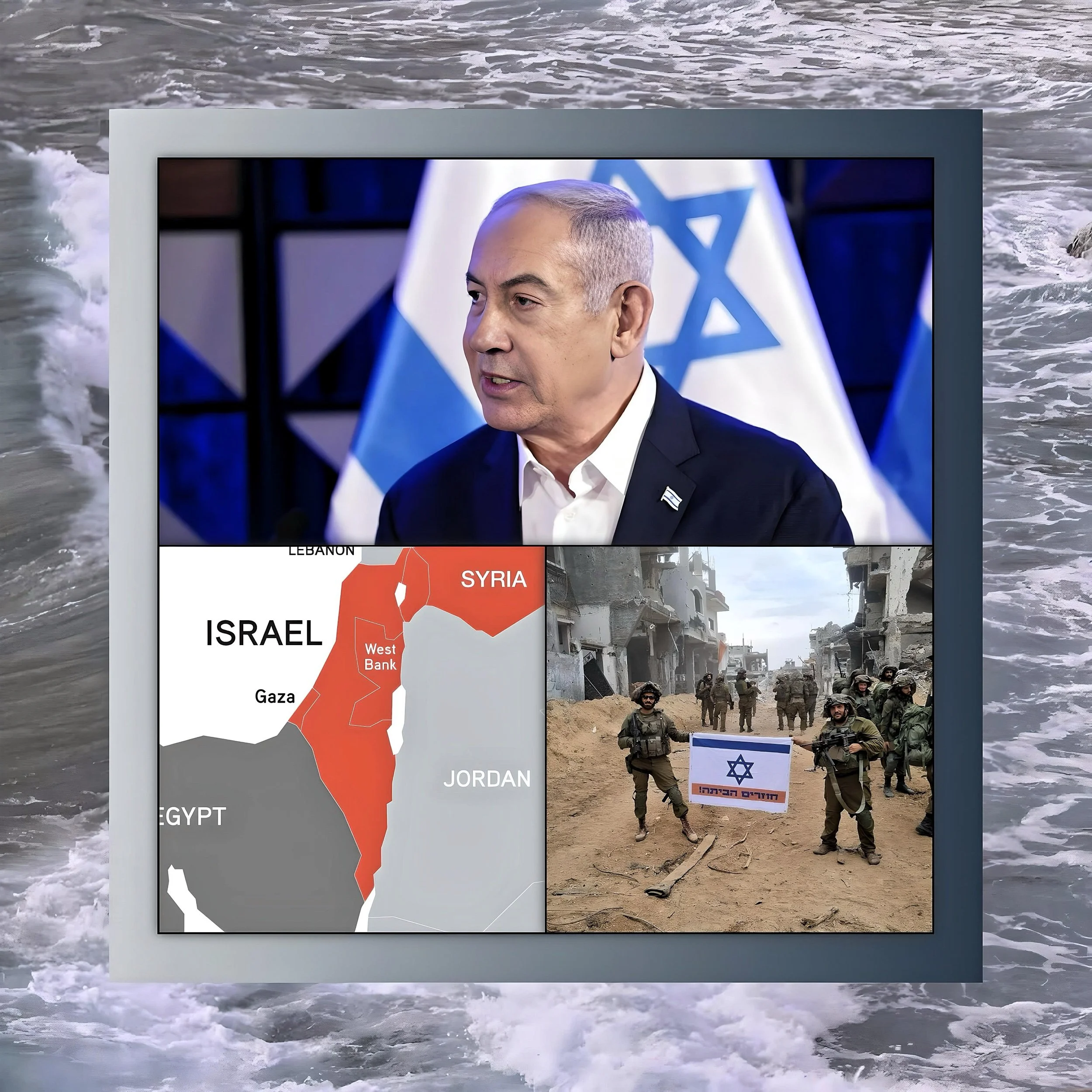
Israel has commenced a substantially escalated military campaign in the occupied West Bank characterized as Operation “Iron Wall” (instituted January 2025) and its concurrent tactical manifestations—most notably the siege of Tubas governorate initiated November 26, 2025.
These operations constitute not conventional “invasion” preparations but rather a methodical consolidation of permanent occupation through systematic territorial consolidation, administrative appropriation, and the institutionalization of demographic displacement.
The temporal concurrence of these operations with Netanyahu’s acute electoral vulnerabilities suggests domestic political imperatives substantially influence operational timing and scope.
Concomitantly, the Trump administration’s rhetorical opposition to West Bank annexation lacks substantive enforcement mechanisms, rendering such declarations functionally ineffectual.
The supplantation of conditionality provisions by President Trump in February 2025—rescinding Biden-era human rights safeguards on military assistance—operationally emancipates Israel from meaningful constraints, thereby creating a profound divergence between declarative policy and material enablement.
Introduction
Israel’s “Operation Iron Wall” (launched January 2025) and the November 26, 2025, Tubas siege escalate West Bank control through military entrenchment, displacing 40,000+ Palestinians from refugee camps like Jenin and Tulkarm—the largest since 1967—while demolishing 850+ structures and causing 1,001 deaths since October 2023.
These moves advance de facto annexation via settlements (48,000+ units since 2022) and Smotrich’s civilian oversight of land, water, and demolitions, timed amid Netanyahu’s fragile coalition and looming 2026 elections.
Key Drivers
Netanyahu’s minority government (50-57 seats) relies on far-right partners like Smotrich and Ben-Gvir, who push maximalist goals: Smotrich controls Area C administration for “sovereignty by 2025,” legalizing outposts and accelerating demolitions; operations boost electoral “toughness” amid 40-45% approval ratings.
Trump opposes formal (de jure) annexation rhetorically—vowing loss of US support—but provides $21.7B+ in aid, rescinds Biden human rights conditions (Feb 2025), and lacks enforcement, echoing first-term settlement/Golan endorsements.
US-Israel Paradox
Trump’s declarations (e.g., Rubio calling annexation “imprudent”) clash with material aid (90,000 tons munitions, $3.8B/year MOU), prioritizing Iran containment, Abraham Accords, and defense ties over constraints—HRW deems displacements war crimes, yet no US leverage halts incrementalism.
Arab Constraints and Risks
Saudi/UAE normalization hinges on Palestinian statehood; UAE stalled 2020 annexation via threats, but de facto steps continue unchecked, risking PA collapse, Hamas growth, and violence surge (757 settler attacks in H1 2025).
Formal bills stalled narrowly (Oct 2025), but administrative “annexation by stealth” persists.
Analysis and Trajectory
The paper frames operations as occupation consolidation, not counterterrorism: Iron Wall/Tubas create “facts on the ground” (permanent IDF presence, bifurcating settlements like E1), exploiting US “autopilot” aid and Netanyahu’s electoral calculus.
Arab leverage (not US rhetoric) curbs de jure moves, but weakening PA/statehood viability enables 15,000-20,000 annual units, potential 2026 annexation push, Accords jeopardy, and escalated resistance—rendering formal laws redundant. In layman terms: Israel renovates the “house” bit by bit with US funding and nods, while Arab deals keep the deed unsigned—for now.
Territorial Consolidation Strategy: Operational Architecture and Humanitarian Implications
Operational Parameters and Military Deployment
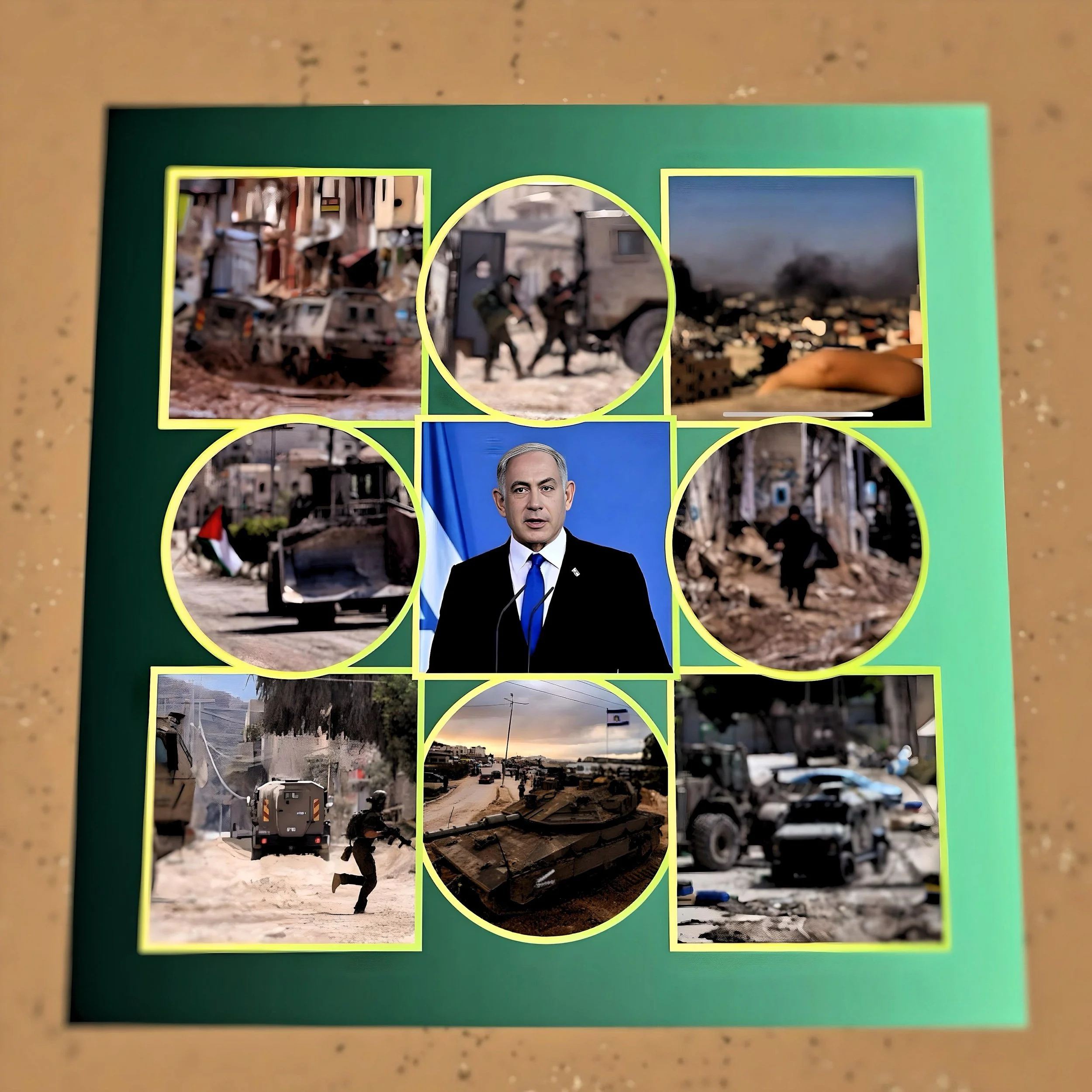
The November 26, 2025 Tubas operation represents the tactical complement to the broader “Iron Wall” counterterrorism framework initiated across refugee camp concentrations in northern West Bank.
Israeli Defense Force deployments incorporate three regional brigades—the Commando Brigade, Menashe Regional Brigade, and Sameria Regional Brigade—augmented by specialized Border Police (Magav) formations, helicopter gunship aviation, and mechanized assault equipment including military bulldozers.
The geographical locus encompasses the demographic nexus bounded by villages incorporating Tubas, Tammun, al-Aqaba, Tayaseer, and Wadi al-Far’a—historically characterized as operational strongholds for Palestinian Islamic Jihad and Hamas organizational substrates.
The operational designation emphasizes counterterrorism imperatives; however, the scope, duration projections (described as multi-day operations spanning several days minimum), and administrative sequelae—including curfews encompassing entire governorates and closure of ingress/egress points—manifest characteristics of prolonged occupation consolidation rather than episodic counterterrorism.
Cumulative Displacement and Structural Devastation
Operation Iron Wall, which commenced its systematic implementation on January 21, 2025, has precipitated humanitarian consequences of extraordinary magnitude
Forced Displacement Dynamics
40,000-42,000 Palestinian civilians compulsorily displaced from refugee concentrations in Jenin, Tulkarem, and Nur Shams—constituting the largest single displacement event within the West Bank territorial configuration since the 1967 territorial acquisition
Indefinite military occupation maintained within refugee encampments, with Defence Minister Israel Katz’s explicit articulation that Israeli forces would constitute permanent territorial fixtures “at minimum through the conclusion of the calendar year”
Infrastructural Obliteration
850+ residential and commercial structures systematically demolished across the three primary refugee camp complexes
28,872 housing units advanced through various developmental phases across the occupied West Bank (2024 data), representing an 18% escalation compared to the historical average
Approximately 1,400 Palestinian domiciles subjected to demolition orders exclusively within the Iron Wall operational parameters
Mortality and Morbidity Profiles
1,001 Palestinian fatalities documented across West Bank territories since October 7, 2023, with pediatric casualties constituting approximately 21% of aggregate mortality
213 children specifically enumerated among documented fatalities
Disproportionate utilization of kinetic military technologies—including shoulder-fired munitions, rotary-wing gunship platforms, and main battle tank ordnance—within civilian-populated environs
Human Rights Watch’s comprehensive forensic documentation (November 2025) concludes that operational parameters constitute war crimes and crimes against humanity under international humanitarian law frameworks, specifically identifying systematic utilization of violence instrumentalization and fear-based coercion mechanisms to execute forcible population transfer, deployment of sniper systems during civilian evacuation procedures, and systematic impediment to displaced populations’ territorial repatriation.
Domestic Electoral calculus and coilation fragmentation dynamics
Structural Coalition Vulnerability
Netanyahu’s governing coalition exists in a profoundly precarious parliamentary configuration, devoid of the institutional stability typically required for sustained executive authority:
Coalition Composition and Deterioration
Government perdition of parliamentary majority in July 2025 following the withdrawal of ultra-Orthodox denominational parties (United Torah Judaism—7 Knesset seats; Shas—11 seats) precipitated by intergenerational conscription disputes within religious community frameworks
Current governing ensemble constitutes a de facto minority apparatus comprising approximately 50-57 parliamentary seats (out of 120-seat threshold requirement of 61)
Operative legislative incapacity necessitating utilization of government-by-decree mechanisms and parliamentary maneuvers
Electoral mandates scheduled for October 2026, although Netanyahu reportedly contemplates acceleration to June 2026, contingent upon budgetary passage or parliamentary confidence procedures
Polling Metrics and Electoral Trajectory
Likud party sustains leadership positioning (25-33 projected seats), yet projected coalition aggregation declines to 47-57 seats—substantially subthreshold for viable governance formation
Netanyahu’s personal approbation metrics
40-45% favorability, with majority populations registering unfavorable disposition
Constituent majorities (48-76%) demonstrate preference for electoral cycle acceleration preceding scheduled dates
Opposition formations, particularly Bennett’s reconstituted political entity, poll at 15-21 seats, while centrist assemblies consolidate formerly fragmented constituencies
Far-Right Coalition Pressurization and Ideological Maximalism
Netanyahu maintains governmental continuity through accommodation of coalition constituents harboring maximalist territorial objectives and ideological absolutism regarding Palestinian territorial autonomy:
Finance Minister Bezalel Smotrich (Religious Zionism faction)
Smotrich constitutes the instrumentally consequential participant within the governing ensemble through bureaucratic repositioning rather than ostensive political bombast.
Through formalized administrative mechanisms—specifically the February 2023 Memorandum of Understanding delineating responsibilities within the Defense Ministry—Smotrich has effectuated a paradigmatic transformation in occupation administrative structures.
(1) Authority concentration encompassing land allocation, settlement authorization, infrastructure allocation (electricity, water, telecommunications), archaeological site designation, and Palestinian domiciliary demolition determinations
(2) Effectively possesses gubernatorial authority over West Bank territories despite maintaining civilian finance ministry designation, with delegated jurisdiction over approximately 3 million Palestinians and 500,000 Israeli settler populations
(3) In June 2023, abolished authorization requirements mandating prime ministerial and defense ministerial approval for incremental settlement expansion initiatives—operationally transferring settlement expansion determinants exclusively to Smotrich’s administrative portfolio
Public articulation of annexationist objectives: “2025 will constitute the annum of West Bank sovereignty” (August 2025); advanced comprehensive annexation framework encompassing 82% of Palestinian territories (September 2025)
National Security Minister Itamar Ben-Gvir (Otzma Yehudit faction)
Though more theatrically provocative in public discourse, Ben-Gvir’s operational influence concentrates upon law enforcement apparatus.
(1) Precipitated documented reduction in enforcement actions against settler violence, with Shin Bet security services characterizing organized settler attacks as manifestations of terrorism
(2) Demands predicated upon maximalist security frameworks: capital punishment legislation for Palestinians, complete Hamas organizational obliteration preceding any conflict cessation, Palestinian Authority organizational exclusion from any governance reconstruction
Coalition viability contingent upon accommodation of such demands, thereby institutionalizing escalatory security paradigms
Electoral-Security Nexus
Netanyahu orchestrates a calculated political equilibrium necessitating simultaneous management of Trump administration pressure (cautioning against formal annexation) whilst satisfying far-right coalition partners demanding tangible territorial acquisitions.
Security achievements—particularly demonstrated operational “victories” within West Bank theaters—constitute domestic electoral messaging assets compensating for governance failures attributable to October 7 intelligence breakdowns.
Analysts broadly concur that foreign policy instrumentalization for electoral purposes will intensify throughout the pre-electoral interval, with operational escalations temporally calibrated to maximize electoral resonance rather than respond exclusively to security imperatives.
The American startegic paradox: Rhetorical oppositio unmoored from material constraint
Public Declarations of Opposition to Annexationist Trajectories
The Trump administration has promulgated ostensibly unambiguous declarative opposition to West Bank territorial annexation
October 2023 Statement Iterations
President Trump
“It won’t happen. I furnished my commitment to Arab state constituencies…Israel would forfeit entirety of United States supportive apparatus should such territorial appropriation transpire”
Vice President J.D. Vance
Characterized preliminary Knesset annexation vote as “extraordinarily imprudent political theater,” further asserting that “Trump administration policy doctrine precludes any West Bank territorial incorporation by Israel”
Secretary of State Marco Rubio
Cautioned that annexation would prove “counterproductive” to comprehensive Gaza peace architectural frameworks[politico]
September UN General Assembly Assurances
Trump administration officials conducted diplomatic consultations with Arab state leadership echelons, explicitly pledging non-permissibility of Israeli territorial expansion and presenting comprehensive 21-point peace architectural framework encompassing international stabilization deployment within Gaza territories.
Material Enablement Contradicting Declarative Posturing
Notwithstanding public rhetorical opposition, actual material support provisions and strategic assistance allocations demonstrate substantive divergence:
Military Assistance Magnitude
(1) $21.7+ billion military assistance dispensed since October 2023 Gaza conflict initiation
(2) $39.2 billion in active Foreign Military Sales case portfolios (751 individual cases) as of April 2025
(3) $3.8 billion annually committed through extant Memorandum of Understanding (operative through 2028)
$500 million dedicated to cooperative missile defense system development (Iron Dome, Arrow systems iterations, David’s Sling platforms)
Ninety thousand metric tons of munitions, weaponry, and military equipment delivered via 800 transport aircraft and 140 maritime vessels since October 2023 commencement.
Rescission of Humanitarian Safeguards
The Trump administration in February 2025 rescinded Biden-era national security memoranda requiring recipients of military assistance to furnish written compliance assurances regarding international humanitarian law observance and facilitation of humanitarian assistance accessibility.
Trump administration personnel characterized Biden-era conditions as “baseless and politicized impositions upon military assistance allocation at temporal junctures when allied entities confronted multifront survival-imperative warfare scenarios.”
This procedural modification operationally emancipates Israel from conditionality frameworks, rendering military assistance functionally detached from observational criteria regarding civilian casualty minimization, humanitarian access facilitation, or international law compliance verification.
Absence of Enforcement Specifications
Despite rhetorical threats that Israel would “forfeit all United States supportive apparatus,” Trump administration personnel have failed to operationalize such declarations through
(1) Specification of material consequences accompanying annexation scenarios
(2) Articulation of aid reduction thresholds or temporal windows
(3) Conditional linkage between assistance provision and restraint demonstrations
(4) Verification mechanisms monitoring compliance with stated policy objectives
Historical Precedential Analysis: Trump Administration’s Prior Israel-Palestine Policy Architecture
The Trump administration’s contemporary rhetorical positioning requires contextual evaluation against prior territorial policy orientations
First Trump Administration (2017-2021) Territorial Precedent
Unilaterally declared Jewish settlements “not inconsistent with international law”—constituting explicit repudiation of decades-long U.S. foreign policy consensus
Relocated U.S. embassy to Jerusalem, operationally recognizing contested territorial status quo
Endorsed Israeli Golan Heights sovereignty appropriation—territory occupied from Syria via military conquest
2020 peace plan architecture explicitly permitted Israeli settlement and Jordan Valley territorial annexation[wlrn]
Only sustained Arab state pressure—specifically UAE’s conditional threat to collapse Abraham Accords normalization—forestalled formal annexation proclamations[mei +1]
Strategic Interest Misalignment and Incentive Structures
U.S. policy incoherence reflects competing strategic imperatives insufficiently reconciled through policy integration:
Competing Strategic Priorities
Military-Industrial Partnership Deepening
U.S. defense sector derives substantial revenue from Israeli weapon system acquisition, joint missile defense development, and technological collaboration arrangements. Continued high-volume military assistance ensures sustained defense contractor revenue streams and operational military platform field-testing environments.
Regional Normalization Architecture
Trump administration priority encompasses accelerating Abraham Accords expansion—particularly Saudi-Israeli normalization—conceived as geopolitical achievement demonstrative of administration diplomatic efficacy.
Iranian Containment Imperative
Israel constitutes instrumentally critical regional counterbalance to Iranian power projection, with U.S.-Israeli defense cooperation calibrated toward constraining Iranian strategic expansion.
Arab Partner Satisfaction Requirements
Maintaining cooperative arrangements with Gulf Cooperation Council constituent states necessitates credible rhetorical opposition to Palestinian territorial displacement and demonstrated commitment to viable Palestinian governance pathway.
Qualitative Military Edge (QME) Obligation
U.S. legislation (2008) formalized legal obligation to maintain Israeli military capability superiority vis-à-vis any conceivable regional coalition, requiring offsetting weaponry provision when arms transfers occur to regional competitors.
These priorities generate acute tensions effective opposition to annexation requires credible enforcement capacity and willingness to constrain military assistance.
De facto versus de jure annexation: The strategic incrementalism paradigm
Formal Annexation Legislative Stalling
While formal annexation bills have progressed through preliminary Knesset readings, they have not achieved legislative finalization:
October 2025 Knesset Votes
Two preliminary annexation bills advanced to first reading votes (out of four required parliamentary passages for legislative enactment):
Avi Maoz-sponsored legislation passed initial reading 25-24 (extremely narrow margin)
Alternative Religious Zionism faction initiative passed 31-9
Netanyahu’s Likud party failed to support primary proposal, characterizing bills as “opposition provocative theatrics”
Legislation remains at committee processing stage; however, the narrowness of voting margins and absence of Netanyahu coalition support suggests formal annexation faces substantial legislative obstruction from prime minister’s political positioning requiring accommodation of Trump administration opposition whilst maintaining coalition cohesion.
De Facto Appropriation Through Administrative-Military Mechanisms
Formal legislative annexation constitutes merely one territorial acquisition pathway; Netanyahu government has operationalized substantive territorial control through administrative, military, and bureaucratic mechanisms:
Settlement Expansion Acceleration
48,000 settlement housing units advanced since Netanyahu government formation (December 2022)—representing average annual advancement of approximately 17,000 units
18,988 housing units advanced through planning apparatus during 2024—“historically unprecedented” quantity per OCHA documentation
October 2025
1300-unit settlement expansion approved south of East Jerusalem (Har HaRusim neighborhood)—characterized as “unprecedented expansion” within Gush Etzion settlement bloc
August 2025
3,400-unit “E1” settlement plan approved near Ma’ale Adumim (strategically located to bifurcate Palestinian territorial contiguity and isolate East Jerusalem)
Peace Now characterization of E1 plan
(1) “fatal blow” to two-state solution viability
(2) Systematic Home Demolition and Palestinian Displacement
(3) Record Palestinian domiciliary demolitions throughout 2024, with quantitative escalation compared to prior annual records
Smotrich’s administrative control over demolition authorization mechanisms (transferred from military to civilian political echelon) has accelerated structural destruction pace
2023 recorded “markedly more” Palestinian home demolitions than 2022; 2024 surpassed 2023 quantities[crisisgroup]
Administrative Authority Transfer and Institutional Restructuring
Smotrich’s February 2023 ministerial portfolio restructuring institutionalized what Crisis Group analysts term “sovereignty in all but name.” Transfer of civilian control mechanisms from military governance to Smotrich’s administrative portfolio encompasses:
Land allocation and ownership registration determinations
Settlement planning authorization and construction permitting
Infrastructure allocation (electricity, water, telecommunications)
Archaeological site designation and cultural heritage control
Palestinian structure demolition determinations
Outpost legalization and funding mechanisms
Roads network construction and Palestinian access restriction implementation
Policy Architecture Explicitly Termed “Annexation by Stealth”
Crisis Group analysis characterizes Smotrich’s administrative strategy as “sovereignty without formal legal status,” observing that while the coalition agreement specifies “West Bank legal status remains unchanged,” the practical governance transfer has effectuated civilian-controlled annexation functionally equivalent to formal incorporation in all meaningful dimensions—excluding only ceremonial legal designation.
ARAB STATE RESPONSES AND THE ABRAHAM ACCORDS CONSTRAINT
Saudi Normalization Prerequisites and Conditional Architecture
Saudi Arabia, the prepotent Gulf Cooperation Council actor, has consistently articulated annexation as incompatible with normalization pathway:
Pre-Condition Articulation
Saudi Foreign Ministry explicit requirement: normalization requires “credible, irreversible efforts towards Palestinian statehood” establishment
Saudi Ambassador Princess Reema bint Bandar: “Two-state solution constitutes sole framework terminating bloodshed, Gaza reconstruction, and sustainable future viability”
Saudi government formation of international coalition (autumn 2024) pushing two-state solution implementation
Summer 2025: Saudi Foreign Minister reaffirmed kingdom efforts “advancing implementation of relevant UN resolutions mandating two-state establishment”
Recent Normalization Stagnation (November 2025):
Crown Prince Mohammed bin Salman’s November 2025 meeting with Trump reportedly included explicit pushback on normalization timeline accelerations
Reports indicate MBS informed Trump that “Saudi society not prepared” for normalization—characterized as disappointing and angering Trump administration officials
Three administration sources informed AP that Saudi normalization normalization unlikely “anytime soon”[state]
UAE Precedential Constraint Mechanism
The UAE’s demonstrated capacity to constrain annexation represents the historical precedent most directly applicable:
2020 Annexation Forestallment
Explicit UAE threat that Abraham Accords normalization would collapse if annexation proceeded
Netanyahu government postponed formal annexation legislative initiatives
Demonstrated that Arab state diplomatic leverage proves more consequential than Trump administration rhetorical warnings
The 2020 precedent illustrates that Trump administration opposition lacks sufficient credibility independent of Arab state enforcement capacity.
When substantive normalization benefits remained available, Netanyahu ceased formal annexation pursuit; absent such incentive structure, administrative de facto annexation proceeds unconstrained.
Credibility assessment : Evaluating American Assurance substantially
Structural Factors Undermining Assurance Credibility
Multiple institutional and political factors render U.S. opposition to annexation functionally rhetorical:
Institutional Veto Absence
Congressional review procedures exist for major weapon transfers but have never been exercised to block Israeli arms sales
President Trump invoked expedited waiver procedures (permitting national security emergency claims) for Israel sales throughout his second term
No enforcement mechanism exists subordinating military assistance to restraint compliance
Conditions removal in February 2025 eliminated last humanitarian safeguards
Domestic Political Constraint Structures
Bipartisan U.S. political consensus favors Israeli support, with over 300 Republican lawmakers characterizing military aid as “vital and cost-effective” (2021)
Evangelical Christian constituent base strongly supports Israeli territorial expansion
Democratic party base increasingly divided on Israel-Palestine policy, but institutional Democratic apparatus remains significantly pro-Israel
Congressional action inhibiting Israeli military assistance faces substantial political resistance
Historical Precedential Pattern
Trump’s first administration explicitly endorsed annexation permissibility
Biden administration’s February 2024 conditions on military assistance proved insufficient to constrain Israeli operations
Trump administration’s first-term acceptance of Golan Heights annexation established precedent that U.S. ultimately acquiesces to territorial expansionism
Pattern suggests that despite rhetorical opposition, actual enforcement capacity remains theoretical rather than operationalized
Time-Inconsistency Problem
Long-term military assistance commitments (current MOU through 2028; proposed 20-year MOU frameworks) create political obligation structures permitting Israeli exploitation of U.S. credibility concerns.
Netanyahu government calculus: violating annexation “red lines” generates reputational costs for U.S., rendering enforcement politically difficult—effectively creating hostage situation where U.S. credibility becomes leverageable asset.
What Actually Constrains Israel
Evidence suggests Arab state normalization incentives, not American rhetoric, provide substantive constraint:
Abraham Accords Normalization as Leverage
UAE’s 2020 explicit threat proved more efficacious than years of U.S. rhetorical opposition
Saudi Arabia’s conditioning of normalization upon Palestinian statehood pathway generates material incentive for Netanyahu to defer formal annexation
Trump administration’s interest in normalizing Saudi-Israeli relations creates secondary U.S. interest alignment with Arab state constraints
However, constraints weaken if:
(1) Palestinian governance collapses further, rendering statehood objective moot
(2) Saudi domestic political constraints relax, permitting normalization without Palestinian preconditions
(3) Trump administration deprioritizes normalization achievement
Current trajectory suggests Arab state normalization remains feasible only if formal annexation avoided; however, de facto annexation through settlement expansion and administrative appropriation continues unconstrained.
Strategic imlications and trajectory analysis
Short-Term Operational Trajectory (November 2025-June 2026)
Projected Scenario Configuration
Continued de facto annexation through settlement expansion: Israeli government advances 15,000-20,000 additional housing units annually through planning approval processes.
Sustained West Bank military operations
Iron Wall operational continuations occur episodically in northern refugee camps and demographically significant Palestinian population centers
Formal annexation legislation stalled
Netanyahu maintains public opposition to annexation bills sufficient to prevent legislative passage while credible normalization pathway remains available
Electoral strategic utilization
Security operations temporally calibrated to electoral maximization, demonstrating “toughness” to right-wing constituency whilst avoiding formal annexation triggering Arab state punishment
Electoral Timing Contingency
Should Netanyahu call elections for June 2026 (probable if budget negotiations fail by March 2026), potential exists for late-term annexation legislation advancement during transitional governmental phases to
Satisfy far-right coalition partner demands prerequisite to coalition sustenance
Create irreversible territorial facts preventing successor administrations from reversing acquisitions
Position Netanyahu oppositionally as defender of Israeli territorial integrity within opposition framing
Medium-Term Regional Consequences (2026-2028)
Abraham Accords Sustainability Jeopardy
Formal West Bank annexation would precipitate
UAE normalization reduction to minimal technical cooperation or formal retraction
Indefinite postponement of Saudi normalization (experts characterize delay as “at least one decade”)
“Outright condemnation by all Arab states”; potential Arab League punitive mechanisms
Setback to regional integration architecture commensurate with “one decade” retrospective progress reversal.
Palestinian Authority Institutional Collapse Risk
Continuation of displacement, home demolitions, and Israeli military domination:
Palestinian Authority increasingly perceived as Israeli collaborator
Hamas and Palestinian Islamic Jihad organizational strengthening within West Bank populations
Potential for organizational expansion beyond current refugee camp concentrations toward broader West Bank territorial dominance
Escalated Palestinian armed resistance probability
Violence Escalation Dynamics
Documented cumulative trajectory
(1) 1,001 Palestinian fatalities (West Bank, October 2023-October 2025)
(2) 757 settler attacks within six-month period (first half 2025)
(3)!Israeli military weapons deployment (shoulder-fired munitions, attack helicopters, tank ordnance) against civilian-populated areas
Institutional law enforcement deterioration regarding settler violence (characterized as “terrorism” by security services)
CONCLUSION
THE ARCHITECTURE OF STRATEGIC INCOHERENCE
Israel is not undertaking preparation for conventional “large-scale invasion” of West Bank territories—it maintains continuous military occupation apparatus.
Current operations represent qualitative intensification of occupation consolidation: permanent military entrenchment, systematic displacement, administrative annexation proceeding beneath formal legislative threshold, and de facto territorial incorporation through settlement expansion and infrastructure development.
The characterization of American assurances as “substantially rhetorical” is empirically substantiated through multiple analytical frameworks.
Policy-Practice Divergence
Public opposition to annexation contradicted by unconditional military assistance provision, rescission of humanitarian conditions, and absence of enforcement mechanisms
Historical Precedential Pattern
Trump administration’s first-term acceptance of annexationist territorial claims (Golan Heights, settlements declarations) suggests precedential inclination toward ultimate acquiescence.
Institutional Constraint Absence
Conditionality mechanisms eliminated, congressional veto capacity unutilized, and long-term military assistance commitments creating political obligation structures favoring Israeli strategic latitude.
Strategic Priority Misalignment
U.S. interests in regional normalization (serving containment objectives regarding Iran and geopolitical positioning versus China) conflict with interest in Palestinian territorial protection, generating policy coherence deficits.
Credible Constraint Limitation
Arab state normalization incentives—not American rhetoric—provide substantive constraint, and such constraints weakening as Palestinian governance deteriorates and formal annexation becomes more plausible.
The Trump administration’s policy framework has operationalized what Stimson Center analysts term strategic assistance “on autopilot”—decoupled from interest-based evaluation, conditionality frameworks, or regular strategic reassessment.
Netanyahu government exploitation of this structural permissiveness proceeds incrementally but systematically, implementing de facto annexation whilst maintaining plausible deniability regarding formal territorial incorporation.
The trajectory suggests that absent either Arab state enforcement capacity or renewed American conditionality—currently absent under Trump administration policy doctrine—Israeli territorial consolidation will continue accelerating through administrative and military mechanisms, ultimately rendering formal annexation legislation superfluously redundant to already-implemented de facto appropriation.