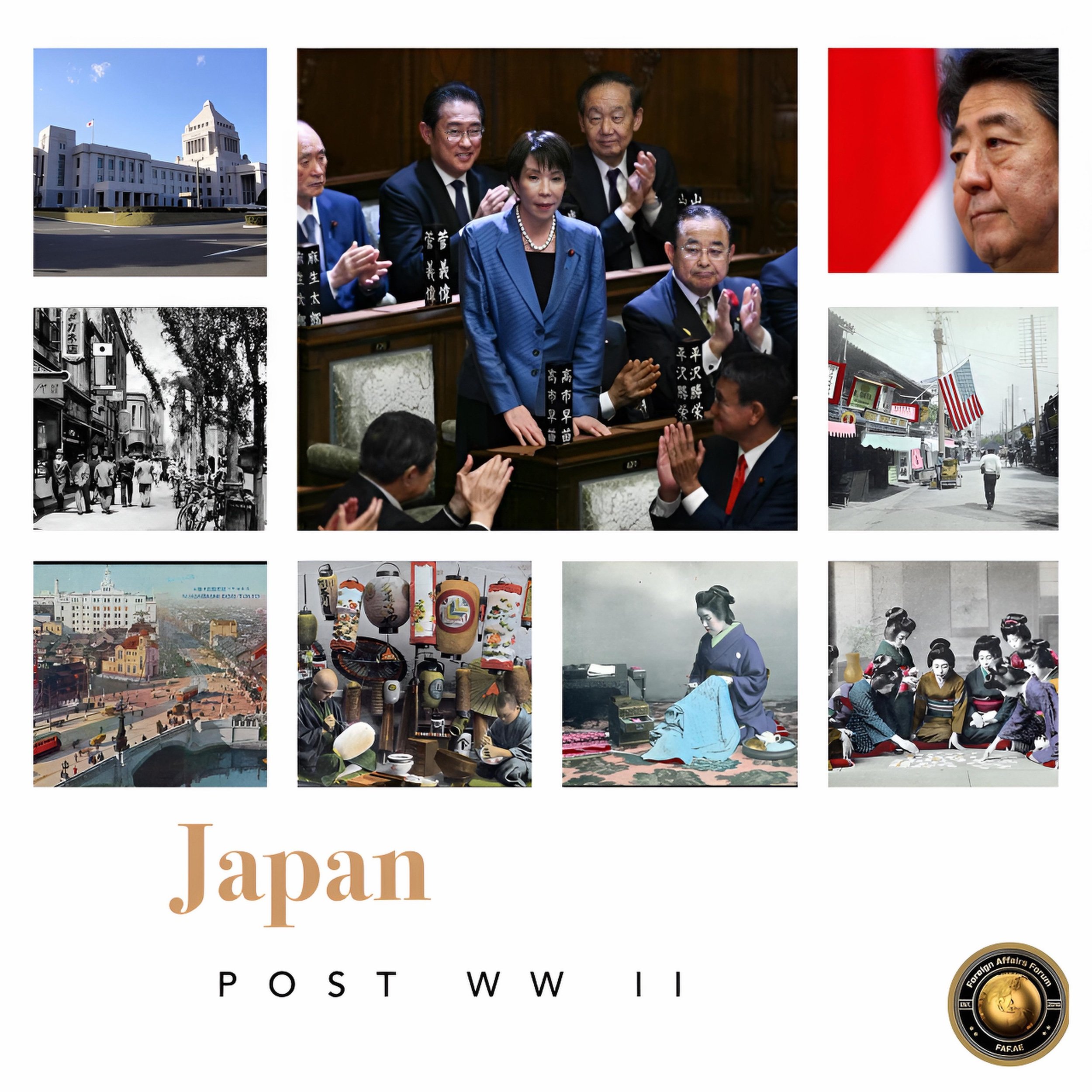
Japanese Prime Minister Shigeru Ishiba resignation : historic electoral defeats : Japan benefits from the Trump tariff plan.
Executive Summary
Japanese Prime Minister Shigeru Ishiba announced his resignation following a series of significant electoral losses that marked a turning point in his administration.
These historic defeats not only dampened his political standing but also raised questions about the direction of the government moving forward.
In a broader context, Japan experienced notable economic impacts as a result of the Trump administration's tariff plan, which was designed to reshape trade relations.
This plan appeared to provide both challenges and opportunities for the Japanese economy, influencing various sectors and prompting discussions on how Japan can strategically adapt to the evolving trade landscape.
Introduction
On September 7, 2025, Japanese Prime Minister Shigeru Ishiba announced his resignation amid escalating intra-party dissent following a historic loss of majority control by the ruling Liberal Democratic Party (LDP) in both houses of the National Diet.
This marks a significant turning point since the LDP’s establishment in 1955, culminating in Ishiba's tenure becoming one of the shortest in Japan's political history, having assumed office in October 2024.
Historic Electoral Defeats Drive Party Crisis
The immediate impetus for Ishiba's resignation was the LDP's disappointing performance in the July 2025 Upper House elections, where the ruling coalition, comprising the LDP and Komeito, failed to secure a majority in the 248-seat chamber, achieving a mere 21.6% of the national vote—the lowest in the party’s history.
This followed an earlier defeat in October 2024, when the coalition lost its majority in the more powerful Lower House for the first time in 15 years.
Collectively, these setbacks signify an unprecedented crisis for the LDP, which has dominated Japanese politics for nearly seven decades and indicates a historic moment where the party failed to control either house.
Internal Party Pressure and Factional Opposition
Internal pressures mounted as right-wing factions within the LDP sought a change in leadership, attributing the poor electoral outcomes directly to Ishiba’s leadership.
Notably, three former LDP factions, though officially disbanded post-political scandals, collaborated to orchestrate Ishiba’s ousting.
Influential figures such as Taro Aso, a prominent conservative voice known for his opposition to Ishiba, along with several cabinet ministers, were instrumental in instigating calls for an extraordinary leadership vote—an action that would effectively function as a no-confidence motion.
Economic Challenges and Policy Paralysis
Ishiba’s resignation preempted this potentially damaging vote, which was scheduled for September 8, aimed at averting further fractures within the party.
Economically, the electoral defeats were largely fueled by public dissatisfaction driven by rising living costs and stagnant wages.
The spike in rice prices—doubling over the past year due to poor harvests—became emblematic of the government’s perceived economic inadequacies.
This cost-of-living crisis resonated with the electorate, prompting opposition parties to campaign on platforms promising tax reductions and increased welfare spending.
Populist factions, including the right-wing Sanseito, gained traction through anti-immigration rhetoric, while the Democratic Party for the People emerged as the third-largest party by advocating for higher take-home salaries.
US Trade Deal Timing and Trump Tariffs
Ishiba initially resisted calls for his resignation, citing the necessity of concluding critical trade negotiations with the United States regarding tariffs imposed by President Trump.
These negotiations culminated in a significant trade agreement finalized just prior to his resignation, wherein Japan committed to a $550 billion investment in U.S. projects in exchange for reduced tariffs of 15% on Japanese exports, particularly automobiles.
Ishiba framed Trump’s tariff measures as a “national crisis,” arguing that the resolution of these negotiations provided a suitable juncture for his departure.
Resignation due to Trump tariff?
Japanese Prime Minister Shigeru Ishiba resigned primarily due to his party’s historic electoral losses and mounting internal pressure—not because of President Trump’s tariffs.
The Liberal Democratic Party (LDP) lost its majority in both houses of parliament, triggering calls from within the party for Ishiba to take responsibility and step down.
Although Ishiba cited the conclusion of trade negotiations relating to U.S. tariffs as an appropriate moment to depart, the dominant reason for his resignation was the collapse of traditional support and the threat of a split within the ruling party, not the Trump tariff alone.
Political Instability and Economic Implications
The political instability following Ishiba’s resignation raises concerns about the economic ramifications for Japan.
The minority government framework complicates legislative initiatives, necessitating negotiations with opposition parties for legislative passage.
Analysts caution that the forthcoming leadership transition could hinder the drafting of next year’s budget and influence the Bank of Japan’s interest rate strategies.
Market reactions have already displayed signs of instability, with the yen depreciating and government bond yields escalating amidst anticipations of policy paralysis.
Conclusion
The current situation underscores a significant shift in the Japanese political landscape, ending the LDP’s near-continuous dominance since 1955.
Fragmentation within the party signals broader structural changes in Japanese society—stemming from demographic transitions, ongoing economic stagnation, and evolving voter expectations.
Potential successors to Ishiba include veteran LDP member Sanae Takaichi, who previously contested Ishiba for party leadership, and Agriculture Minister Shinjiro Koizumi.
The incoming leader will face considerable challenges, including uniting a divided party, addressing economic headwinds, managing U.S.-Japan relations under the Trump administration, and preparing for the next general election slated for 2026.
The resignation of Ishiba highlights the enduring effectiveness of electoral accountability in Japan's democratic framework, despite the presence of a dominant-party system.
His departure, occurring after a mere eleven months in office, serves as a stark reminder that even seasoned politicians struggle to endure the challenges posed by poor electoral results, significant opposition within their own parties, and widespread public discontent regarding economic conditions.
This situation exemplifies the complexities of navigating political survival in a landscape where voter expectations and party dynamics can swiftly shift, ultimately leading to a precarious position for even the most experienced leaders.