Saudi Prince Mohammed Bin Salman’s White House visit: Major agreements and updates - Is the $1 trillion investment pledge in the US achievable?
Introduction
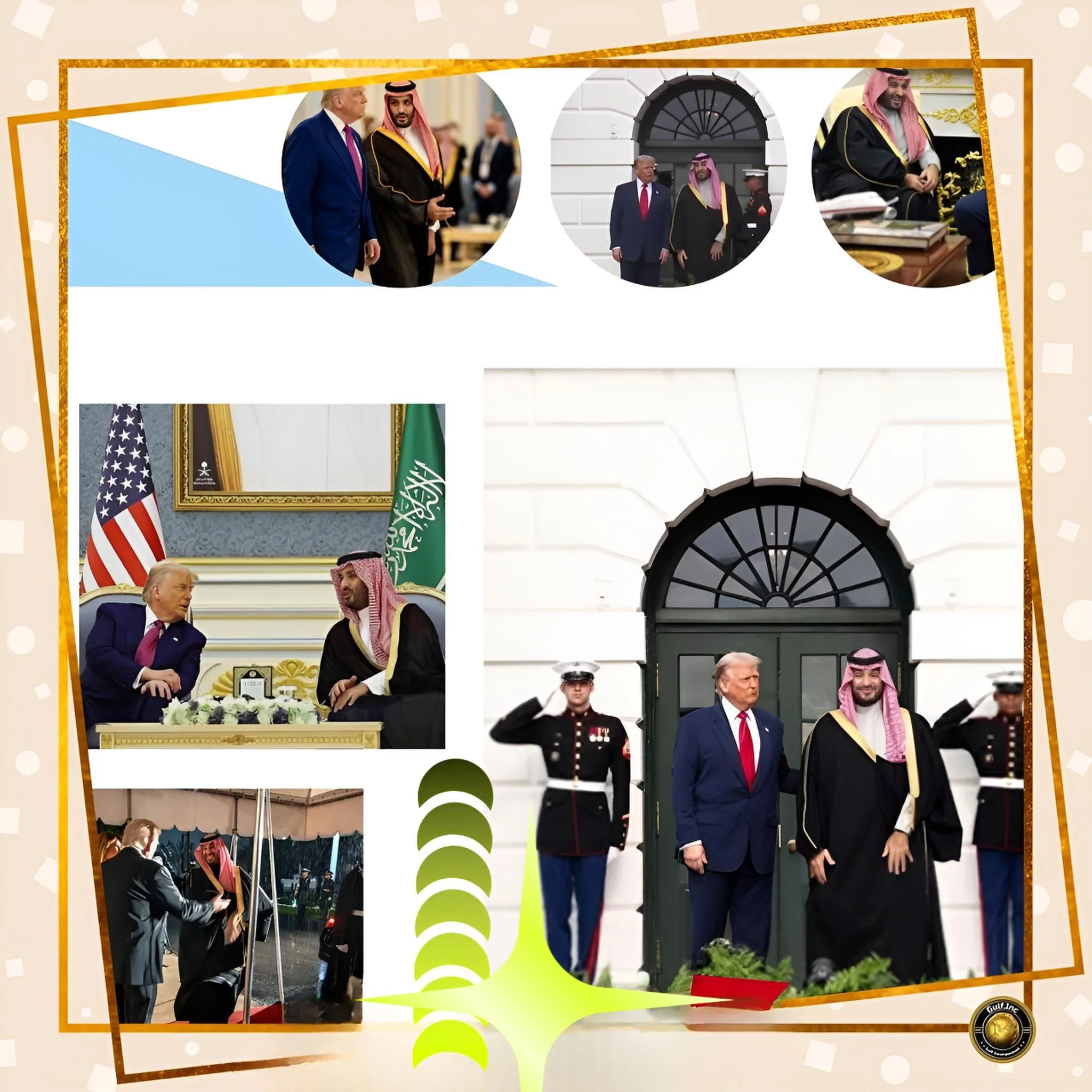
Crown Prince Mohammed bin Salman’s visit to the White House on November 17-18, 2025, marked a historic diplomatic summit focused on defense, economic cooperation, and regional stability.
The elaborate ceremony—complete with military flyover, horses, and state dinner—underscored the administration’s prioritization of the U.S.-Saudi relationship despite longstanding human rights concerns.
Major Agreements Signed
The two nations finalized a comprehensive suite of strategic partnerships
U.S.-Saudi Strategic Defense Agreement (SDA)
This landmark agreement represents a significant deepening of defense cooperation, establishing the United States as Saudi Arabia’s primary strategic defense partner.
The agreement streamlines defense industry operations, opens Saudi markets to U.S. firms, and introduces burden-sharing mechanisms to help defray U.S. military costs in the region.
Arms Sales Package
The U.S. approved a major defense sale including F-35 fighter jets and nearly 300 Abrams tanks—marking the first sale of F-35s to an Arab nation and representing a significant policy shift with potential regional military implications.
General Atomics is also in discussions to sell up to 130 MQ-9B drones and 200 Gambit loyal wingman drones to the kingdom.
Civil Nuclear Energy Cooperation
The two nations signed a Joint Declaration completing negotiations on civil nuclear energy cooperation, establishing a multi-billion-dollar, decades-long partnership with American companies positioned as Saudi Arabia’s primary nuclear cooperation partners.
Critical Minerals and AI Frameworks
Additional agreements include a Critical Minerals Framework and an AI Memorandum of Understanding, positioning the United States to support Saudi Arabia’s technology and infrastructure ambitions.
Economic Investment Surge
A cornerstone of the visit was the expansion of Saudi investment commitments from the previously pledged $600 billion to nearly $1 trillion.
Prince Mohammed emphasized that increased demand for computing power and advanced AI chips within the kingdom would drive these investments, framing them as commercially motivated rather than merely strategic.
Trump praised this announcement extensively, emphasizing that it would create high-paying American jobs across multiple sectors, including technology, AI, materials, and critical minerals.
Political and Economic Issues
No Imminent Israeli Normalization: While Trump has made the Abraham Accords a personal priority, MBS made clear that Saudi Arabia will not normalize relations with Israel immediately.
The crown prince steadfastly conditioned any normalization on a credible path toward Palestinian statehood.
According to reports and diplomatic analysis, MBS essentially conveyed to Trump: “Yes to normalization with Israel, but not now.”
The Saudi position reflects the reality that since October 7, 2023, normalization is no longer viewed as inevitable or cost-free domestically.
Defense and Deterrence: A primary Saudi objective was securing a binding defense agreement that signals to the region that any major attack on Saudi territory constitutes a red line for Washington.
The SDA appears to address this ambition, though details on explicit security guarantees remain opaque compared to the executive order Trump issued for Qatar after Israeli strikes there.
Technology and Supply Chain Control
Saudi Arabia sought access to advanced AI chips and sophisticated semiconductor technology—a request that tested U.S. security establishment concerns about technology transfer to the kingdom.
The Trump administration appears willing to prioritize commercial interests and strategic alliance-building over traditional export control reservations.
Gaza and Regional Stability
UN Security Council Approval: Notably, on November 17—one day before MBS’s White House arrival—the UN Security Council passed a historic resolution authorizing Trump’s comprehensive Gaza peace plan.
The vote was 13-0 in favor, with Russia and China abstaining.
This resolution provides international legitimacy to the establishment of a Trump-led “Board of Peace” and the creation of a temporary International Stabilization Force (ISF) in Gaza.
Gaza Reconstruction Framework
Trump’s 20-point plan, which formed the basis for the ceasefire that took effect October 10, 2025, envisions.
Immediate cessation of hostilities with all hostages and prisoners released.
Demilitarization of Gaza under independent oversight
Establishment of an interim Palestinian technocratic administration excluding Hamas.
A Trump-chaired Board of Peace overseeing reconstruction until the Palestinian Authority can resume control.
Gaza transformed into a “terror-free zone” without occupation or annexation by Israel
A path toward Palestinian statehood and self-determination.
International Stabilization Force
The ISF will comprise peacekeepers from Muslim-majority nations such as Indonesia and Azerbaijan, operating under unified command to oversee demilitarization, protect civilians, train Palestinian police forces, and escort humanitarian aid.
However, key details remain undefined, including final force composition and rules of engagement.
Saudi Arabia’s Role
Although Saudi Arabia and the UAE have reportedly declined to contribute troops directly to the ISF, Saudi support for international stabilization efforts and coordination on Gaza’s political framework remains significant.
During the visit, Trump should have leveraged this moment to secure Saudi backing for a Gaza Stabilization Fund—a mechanism to clear unexploded ordnance, secure aid corridors, and prepare for ISF deployment.
Human Rights and Domestic Controversies
Trump notably defended MBS against questions about the 2018 killing of Washington Post journalist Jamal Khashoggi, dismissing concerns with the statement, “Things happen, but he knew nothing about it, and we can leave it at that.”
The crown prince called the killing “painful” and a “huge mistake” by Saudi Arabia, emphasizing that the kingdom has strengthened procedures.
Similarly, when asked about Saudi Arabia’s alleged role in 9/11, MBS stated, “I feel painful about families of 9/11 in America, but we have to focus on reality.”
The visit included prominent attendees such as Elon Musk, Tim Cook, Cristiano Ronaldo, and other business and cultural figures, signaling the administration’s focus on commercial and cultural integration over governance reform concerns.
Strategic Implications
For the Trump Administration
The visit consolidates Trump’s vision of himself as a global dealmaker and positions the U.S.-Saudi partnership as central to Middle East stability.
The symbolic elevation of MBS—despite the Khashoggi killing and human rights record—reflects the administration’s priority on strategic and economic interests over governance concerns.
For Saudi Arabia
MBS secured major military capabilities (F-35s, AI technology), a formal defense pact reducing vulnerability to regional threats, and nuclear cooperation prospects—all while avoiding immediate normalization commitments that would undermine his standing domestically and regionally.
For Regional Dynamics
The agreements reinforce Saudi Arabia’s position as a central strategic partner but do not resolve the underlying tension between Israeli security interests and Palestinian political rights—the core obstacle to broader Arab-Israeli normalization.
Conclusion
Fiscal Capacity and Resource AllocationSaudi Arabia’s announcement of a $1 trillion investment commitment in the United States is highly ambitious, especially in light of the kingdom’s recent budgetary pressures and domestic spending constraints.
However, several factors determine the feasibility of this pledge.
Fiscal Situation and Budget Constraints
Saudi Arabia is projected to run a budget deficit of5.3% of GDP in2025, a significant increase from previous estimates, due to weak oil prices and continued heavy spending on Vision2030 projects.
The government’s total expenditure for2025 is estimated at SAR1.33 trillion ($355 billion), with revenues at SAR1.09 trillion ($290 billion), resulting in a SAR245 billion ($65.3 billion) shortfall.
Despite these deficits, Saudi Arabia maintains substantial financial reserves and a robust sovereign wealth fund, the Public Investment Fund (PIF), which held about $925 billion in assets at the end of2025 and aims to reach $1.1 trillion by year-end.
The kingdom has indicated plans to refocus its PIF away from high-cost, low-return real estate megaprojects toward more liquid and globally diversified investments, such as logistics, minerals, and technology, to secure better returns.
Resource Allocation and Project Delays
Many high-profile projects—including NEOM, FIFA initiatives, and AI developments—have faced delays and cost overruns, prompting the government to reprioritize investments and shift funds to sectors with faster, more certain returns.
There have been recent budget cuts or pauses in some large-scale domestic projects, including Riyadh and Jeddah infrastructure, to balance fiscal pressures and manage risk.
The Saudi government has increased borrowing capacity and maintains strong external reserves, but continued high deficits could constrain future spending if oil prices remain low or economic diversification lags.
Realistic Capacity for $1 Trillion Commitment
The $1 trillion pledge is not an immediate outlay but a commitment spread over several years, leveraging both direct government funds and sovereign wealth assets.
Most analysts believe Saudi Arabia has sufficient financial resources to back the pledge, especially as it can deploy PIF assets and seek international partnerships or debt financing for major investments.
However, the scale of the commitment raises concerns about the opportunity cost for domestic priorities and the risk of further straining public finances if oil revenues falter.
Saudi Arabia possesses the resources to commit $1 trillion to U.S. investments, but the pledge comes amid significant fiscal and strategic trade-offs, with budget deficits and reprioritization of domestic spending.
The actual disbursement will depend on continued oil revenues, PIF asset growth, and global market conditions.