Gen-Z Protests in Mexico Gain Momentum - Voilnce and corruption
Introduction
The Generation Z protest movement in Mexico has rapidly gained traction, culminating in a major demonstration on November 15, 2025, that turned violent and attracted international attention.
This represents a significant moment in Mexico’s political landscape, with young people taking to the streets against systemic issues that have plagued the country for years.
Scale and Geographic Reach
The demonstrations were remarkably widespread.
Thousands of protesters participated in simultaneous marches held across 52 cities in Mexico, as well as in the United States, Canada, the Netherlands, and Germany.
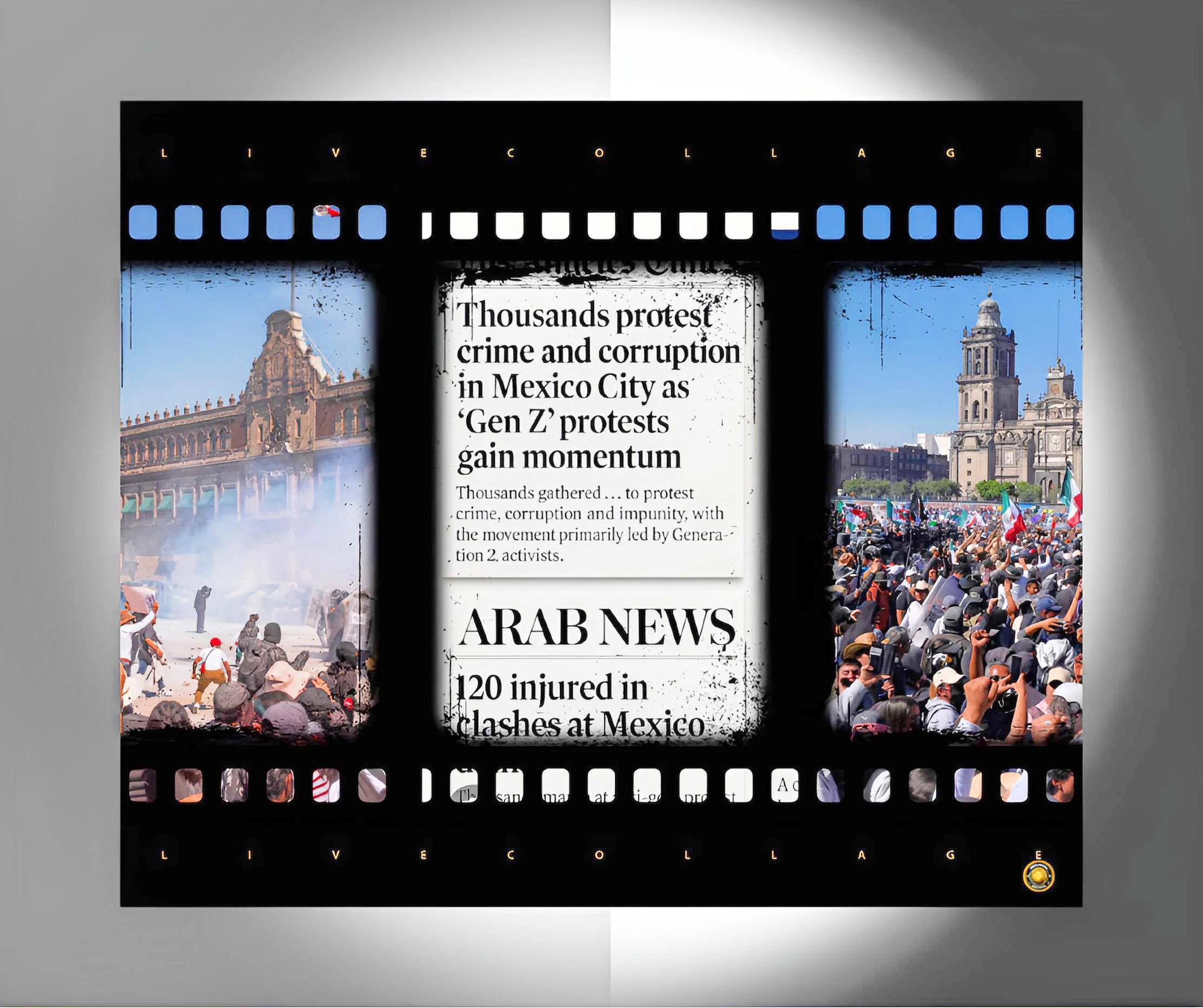
In Mexico City alone, the protest drew several thousand participants, making it the first major Gen-Z-led demonstration against government corruption in the capital.
The Immediate Trigger: Murder of Uruapan Mayor Carlos Manzo
The catalyst for these protests was the assassination of Uruapan Mayor Carlos Manzo on November 1, 2025.
Manzo was shot dead at a public Day of the Dead festival.
He had been notably vocal about organized crime in Michoacán and had repeatedly called on the federal government to address criminal violence in his state, but his requests were reportedly ignored.
His death became a symbol of the government’s failure to protect even its own officials, galvanizing young people to take action.
Underlying Grievances: Violence, Corruption, and Impunity
The protests reflect deeper frustrations among Generation Z about systemic problems that have long plagued Mexico. Young protesters cite several key issues
Violence and insecurity
Mexico continues to be gripped by drug cartel violence, with tens of thousands of Mexicans killed every year due to organized crime.
Young people feel the government has failed to provide basic security.
Corruption and impunity
Protesters chanted slogans like “Carlos did not die.
The government killed him,” expressing their belief that authorities are complicit in allowing violence to persist.
The message is that crimes go unpunished and those in power face no consequences.
Systemic dysfunction
Some demonstrators expressed frustration with “power being concentrated across all branches and controlled by the same group across the country,” suggesting deeper concerns about checks and balances in governance.
A 43-year-old physician who participated said she was marching for better security because “doctors are also exposed to the insecurity gripping the country, where you can be murdered and nothing happens”.
The Protest Organization and Messaging
A group identifying itself as Generation Z Mexico released a social media manifesto claiming the movement is nonpartisan and represents young Mexicans frustrated with violence, corruption, and abuses of authority.
The movement adopted the One Piece pirate flag—a skull and crossbones symbol from the Japanese manga series—as the defining icon, which has become a global symbol of Gen-Z rebellion.
This symbol emerged organically as part of broader Gen-Z protest movements internationally.
The Violence and Police Response
The demonstration in Mexico City began peacefully at the Angel of Independence monument but took a dramatic turn when it reached the Zócalo near the National Palace.
A group identified as the “black bloc” broke through the crowd and attacked fences guarding the National Palace with hammers and stones.
Police responded with tear gas and fire extinguishers, leading to significant clashes.
The violent confrontation resulted in substantial casualties
Over 100 police officers injured, with 60 treated on-site and 40 transported to hospitals (four requiring specialized care)
20 civilians injured and attended to by paramedics.
20 people arrested on charges of violent acts, with another 20 referred for administrative offenses.
Protesters threw rocks, fireworks, sticks, and chains, and some took police shields and communication radios.
Government Response and Skepticism
President Claudia Sheinbaum condemned the violence, saying “Violence must never be used for change; always peacefully”.
However, she was notably skeptical of the protest itself, suggesting the march may have been infiltrated by right-wing political opponents and amplified by bots on social media.
She questioned how many genuine young people participated, noting that “in reality, there were very few young people”.
The government also announced plans to deploy more than 10,000 troops and police to fight organized crime, framing this as their response to security concerns.[youtube]
International Context: Part of a Broader Gen-Z Movement
Mexico’s Gen-Z protests are part of a global phenomenon in 2025. Similar youth-led movements have emerged in multiple countries demanding action on inequality, democratic backsliding, and corruption.
The most significant precedent was the “Gen Z” protests in Nepal in September, which followed a ban on social media and led to the resignation of that nation’s prime minister.
Other countries experiencing Gen-Z-style unrest include Morocco, Kenya, and Madagascar.
Conclusion
The Mexican Gen-Z protests represent a critical moment where young people are challenging both endemic drug cartel violence and what they perceive as government failure and complicity.
While the movement claims to be nonpartisan, the government’s dismissive response and accusations of opposition infiltration have added a partisan dimension to what began as a grassroots outcry against systemic violence and corruption.